Pediatric Epilepsy: Diagnosis, Causes, and Treatment Options

Pediatric epilepsy refers to recurring unprovoked seizures caused by sudden abnormal electrical activity in the brain. Seizures in children can look very different, from staring spells to body stiffening, jerking, or loss of awareness.
Key Takeaways
- Pediatric epilepsy refers to recurring unprovoked seizures caused by sudden abnormal electrical activity in the brain.
- Seizures in children can look very different, from staring spells to body stiffening, jerking, or loss of awareness.
- Diagnosis usually involves a medical history, neurological evaluation, and tests such as EEG and brain imaging when needed.
- Treatment may include anti-seizure medicines, lifestyle measures, dietary therapy, devices, or surgery in selected cases.
- Regular follow-up is important because epilepsy can affect safety, learning, sleep, mood, and development.
Pediatric epilepsy is a neurological condition in which a child has repeated, unprovoked seizures. With careful diagnosis and an individualized treatment plan, many children achieve good seizure control and continue to grow, learn, and participate in daily life.
Overview of Pediatric Epilepsy
Pediatric epilepsy is a condition in which a child has repeated seizures that are not caused by a temporary trigger such as high fever, low blood sugar, or an acute infection. A seizure happens when there is a sudden burst of abnormal electrical activity in the brain. This can briefly affect movement, awareness, behavior, sensation, or breathing pattern, depending on which part of the brain is involved.
Epilepsy in children is not a single disease. It includes many seizure types and epilepsy syndromes, each with its own pattern, likely cause, and expected course. Some forms are mild and improve with age, while others need long-term treatment and closer developmental support. Because the child’s brain is still growing, early recognition and appropriate management are especially important.
Many families feel frightened when a child has a first seizure. Reassurance is important: a single seizure does not always mean epilepsy, and even when epilepsy is diagnosed, treatment can often reduce or prevent further seizures. The goals of care are not only seizure control but also protection of learning, behavior, sleep, and quality of life.
Symptoms and Seizure Types in Children
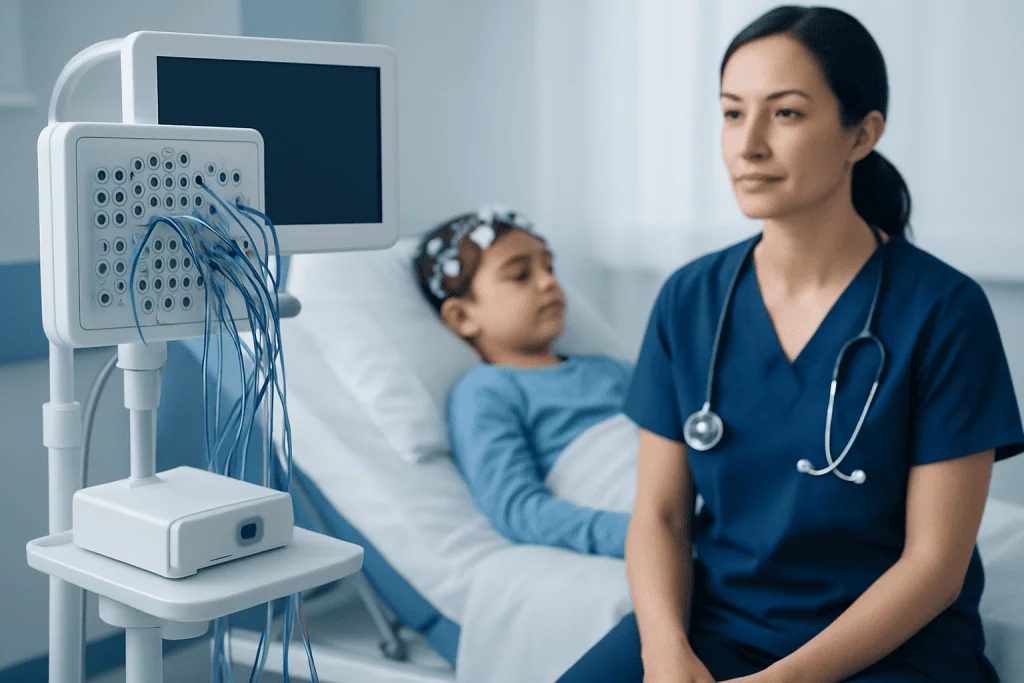
Seizures in children do not always look dramatic. Some involve shaking of the arms and legs, but others are much subtler. A child may suddenly stare, stop responding, make repetitive movements such as lip smacking, become briefly confused, or seem to lose muscle tone and fall. In infants, seizures can appear as repeated stiffening, jerking, eye deviation, or unusual pauses in activity.
Symptoms depend on whether the seizure starts in one part of the brain or affects both sides from the beginning. Focal seizures may cause twitching in one limb, strange sensations, fear, nausea, or altered awareness. Generalized seizures can include absence seizures with short staring spells, tonic-clonic seizures with stiffening and rhythmic jerking, myoclonic seizures with quick jerks, or atonic seizures with sudden dropping.
After a seizure, some children recover quickly, while others may feel sleepy, confused, weak, or have a headache for minutes to hours. Parents and teachers may also notice signs between seizures, such as problems with concentration, learning, mood, or sleep. Keeping a record of what happened before, during, and after an episode can be very helpful for diagnosis.
- Blank staring or unresponsiveness
- Sudden stiffening, jerking, or rhythmic movements
- Loss of awareness or confusion
- Falls or sudden loss of muscle tone
- Unusual sensations, automatisms, or repeated movements
- Sleepiness or headache after an episode
Causes and Risk Factors

Pediatric epilepsy can have many causes, and in some children no exact cause is identified even after testing. Possible causes include genetic factors, structural differences in the brain, birth-related brain injury, prior brain infection, head trauma, metabolic disorders, and developmental brain conditions. In some cases, seizures are part of a broader neurological syndrome.
The child’s age can provide clues. Seizures in newborns and infants may be linked to problems around birth, brain malformations, or inherited metabolic conditions. In older children, epilepsy may be associated with genetic syndromes, previous injury, inflammation, or less commonly a structural lesion such as a childhood brain tumor. Brain infections or complications such as a brain abscess can also trigger seizures, although these situations usually cause acute symptomatic seizures rather than chronic epilepsy.
Risk factors include a family history of epilepsy, developmental delay, previous febrile seizures in some situations, known neurological disorders, and certain prenatal or perinatal complications. Finding a cause is useful because it may guide treatment choices, help estimate outlook, and identify whether other parts of the child’s health should be monitored.
How Pediatric Epilepsy Is Diagnosed
Diagnosis begins with a detailed history. The doctor will ask what the event looked like, how long it lasted, whether the child had fever or illness, what happened afterward, and whether there were triggers such as sleep deprivation or flashing lights. Videos taken safely by caregivers can be very valuable, because some non-epileptic events can resemble seizures.
A physical and neurological examination follows. The doctor assesses development, movement, reflexes, and any signs that suggest an underlying brain or metabolic condition. Blood tests may be used when a temporary cause of seizure is suspected, especially after a first event.
One of the main tests is an electroencephalogram, or EEG, which records the brain’s electrical activity. EEG can help identify whether seizure activity appears generalized or focal and may support recognition of a specific epilepsy syndrome. In many children, evaluation involves neurophysiology testing and, when needed, brain imaging such as MRI through advanced neuroradiology assessment to look for structural causes. Diagnosis and ongoing care are often coordinated by specialists in pediatric neurology care.
Not every child needs the same tests. The diagnostic plan depends on the seizure type, age, examination findings, developmental history, and whether there are warning signs of another neurological condition. In some cases, genetic testing or metabolic evaluation is recommended, particularly when seizures begin very early or are accompanied by developmental differences.
Treatment Options for Childhood Epilepsy
Treatment is individualized. For many children, the first approach is anti-seizure medication chosen according to seizure type, age, other medical conditions, and side-effect profile. The aim is to stop seizures with the fewest adverse effects possible. Families are usually advised to give medicines consistently and not to stop them suddenly unless a doctor instructs otherwise.
If seizures continue despite medication, the care team may reconsider the diagnosis, repeat testing, or look for a specific epilepsy syndrome. Some children benefit from dietary therapy, such as a medically supervised ketogenic-style diet. Others may be considered for epilepsy surgery if seizures come from a clearly defined brain area that can be treated safely. In carefully selected cases, neuromodulation therapies may help reduce seizure burden.
Treatment also includes emergency planning. Families may be taught seizure first aid and may receive a rescue medication plan for prolonged seizures, based on the child’s specialist guidance. Support for school, behavior, sleep, and emotional wellbeing is an important part of care, because seizure control alone does not address every challenge a child may face.
When epilepsy is linked to another neurological problem, treatment may also focus on that underlying condition. Regular follow-up helps the team assess medication effects, growth, school performance, and whether the child may eventually outgrow the epilepsy or safely try reducing treatment in the future.
Prevention, Self-care, and Living Well With Epilepsy
Epilepsy itself cannot always be prevented, but everyday measures can lower the chance of seizure triggers and improve safety. Good sleep is especially important, as sleep deprivation can provoke seizures in some children. Medicines should be taken exactly as prescribed, and follow-up visits should be kept even when the child seems well.
Parents, caregivers, and teachers benefit from knowing basic seizure first aid. During a seizure, the child should be placed on a safe surface, turned onto the side if possible, and protected from injury. Nothing should be put in the mouth. Timing the seizure is useful, and emergency help should be sought if the seizure is prolonged, repeated without recovery, or associated with breathing difficulty or injury.
Children with epilepsy can often participate in school, play, and sports with sensible precautions. Swimming should be supervised closely, heights should be approached carefully, and older children may need guidance about screens, sleep, and future driving rules depending on local laws. Families should also watch for headaches, mood changes, or attention difficulties; some children may also have other neurological symptoms that deserve evaluation, such as persistent dizziness or headache, though these are not the same as conditions like tension-type headache.
Near the end of the care pathway, some families seek multidisciplinary review for complex epilepsy. Acibadem International’s specialists in pediatric neurology and related fields, at JCI-accredited hospitals, diagnose and treat children with epilepsy and support international patients through coordinated care.
When to See a Doctor
A child should be evaluated promptly after a first unprovoked seizure or any repeated unexplained episodes such as staring spells, sudden falls, or nighttime shaking. Medical review is also important if a child with known epilepsy develops more frequent seizures, new seizure types, troublesome medication side effects, or changes in development, behavior, or school performance.
Urgent medical attention is needed if a seizure lasts longer than a few minutes, if seizures happen back-to-back without full recovery, if the child has trouble breathing, or if the event occurs in water or causes injury. Immediate care is also important when seizure-like symptoms happen with high fever in a very young infant, severe headache, persistent vomiting, weakness, or signs of serious infection.
Parents should trust their observations. Even if an event is brief, repeated episodes deserve professional assessment because accurate diagnosis can prevent delays in treatment and reduce uncertainty. A pediatrician or pediatric neurologist can help determine whether the spells are epileptic seizures or another condition that needs different care.
Frequently asked questions
What is pediatric epilepsy?
Pediatric epilepsy is a condition in which a child has repeated unprovoked seizures. These seizures happen because of abnormal electrical activity in the brain and can vary widely in appearance and severity.
Does one seizure mean a child has epilepsy?
Not always. A single seizure can happen for many reasons, and epilepsy is usually diagnosed when there is a tendency for repeated unprovoked seizures. A doctor considers the child’s history, examination, and test results before making the diagnosis.
What tests are used to diagnose epilepsy in children?
Doctors often use a detailed history, physical and neurological examination, and an EEG to look at brain electrical activity. Some children also need MRI or other imaging, as well as blood, genetic, or metabolic tests depending on the situation.
Can pediatric epilepsy be treated successfully?
Many children respond well to treatment and have good seizure control. Treatment may include anti-seizure medicines, dietary therapy, devices, or surgery in selected cases, along with support for learning, sleep, and emotional health.
Can children outgrow epilepsy?
Some children do outgrow certain epilepsy syndromes, while others need longer-term management. The outlook depends on the seizure type, underlying cause, age at onset, and how well seizures respond to treatment.
What should parents do during a seizure?
Parents should help keep the child safe by moving nearby objects away, placing the child on a safe surface, and turning them onto the side if possible. They should not restrain the child or put anything in the mouth, and they should seek emergency help if the seizure is prolonged or breathing is affected.
References
- World Health Organization
- International League Against Epilepsy
- Centers for Disease Control and Prevention
- National Institute of Neurological Disorders and Stroke
- American Academy of Pediatrics
This article is for general information only and is not a substitute for professional medical advice. Please consult a qualified doctor about your individual situation.
Pediatric Epilepsy in Turkey — costs, top hospitals & a free quote
JCI-accredited · board-certified surgeons · reply within 24h
Add us as a Preferred Source to see more of our trusted health content across Google Search, AI Overviews and Discover.

Neurology
Diagnosis and treatment of disorders of the brain, spinal cord, nerves and muscles.
51 specialists in this unit