Spinal Cord Disorders: Early Symptoms That Need Neurology Evaluation

Spinal cord disorders can affect movement, sensation, balance, and bladder or bowel control. Symptoms may begin gradually or suddenly, depending on the cause.
Key Takeaways
- Spinal cord disorders can affect movement, sensation, balance, and bladder or bowel control.
- Symptoms may begin gradually or suddenly, depending on the cause.
- Early neurology evaluation is important when symptoms are persistent, progressive, or involve walking or bladder changes.
- Diagnosis often includes a neurological examination, MRI, and specialized nerve testing.
- Treatment depends on the underlying cause and may involve medicines, rehabilitation, or surgery.
Spinal cord disorders are conditions that affect the bundle of nerves carrying messages between the brain and body. Early symptoms such as weakness, numbness, balance problems, or changes in bladder and bowel function should be assessed promptly because timely treatment can help protect nerve function.
Overview of spinal cord disorders
Spinal cord disorders are conditions that damage, compress, inflame, infect, or otherwise disrupt the spinal cord. The spinal cord is a central pathway for nerve signals traveling between the brain and the rest of the body. When it is affected, symptoms may involve strength, sensation, coordination, and automatic body functions such as bladder and bowel control.
These disorders are not all the same. Some develop because of age-related changes in the spine, such as narrowing of the spinal canal. Others are linked to inflammation, autoimmune disease, tumors, infection, bleeding, poor blood supply, or injury. A person may have symptoms in the neck, trunk, arms, or legs depending on which part of the spinal cord is involved.
Because the spinal cord is so important, symptoms that suggest a spinal cord problem should not be ignored. Early recognition can make a meaningful difference. In some cases, prompt treatment may relieve pressure on the cord or reduce inflammation before more lasting nerve damage develops.
Early symptoms that need neurology evaluation
Early spinal cord symptoms are sometimes subtle. A person may first notice unusual numbness, tingling, a tight band-like sensation around the chest or abdomen, leg heaviness, or increasing clumsiness when walking. Some describe frequent tripping, trouble with stairs, or difficulty using their hands for buttons, writing, or fine tasks.
Weakness is another important sign. It may affect one or both legs, or both arms and legs depending on the level of the problem. Symptoms can be constant or come and go at first. Neck or back pain may be present, but some spinal cord disorders cause little pain, so the absence of severe pain does not rule out a serious issue.
Changes in bladder or bowel function deserve special attention. New urgency, hesitancy, incontinence, or trouble emptying the bladder can be related to spinal cord involvement, especially when they appear together with numbness or weakness. Sexual dysfunction can also occur.
Symptoms that generally need medical evaluation include:
- Persistent numbness or tingling in the arms, legs, or trunk
- New weakness or heaviness in the limbs
- Balance problems, unsteady gait, or frequent falls
- Loss of hand coordination or dexterity
- Bladder or bowel changes with neurological symptoms
- A sudden change after trauma or a rapid worsening over hours to days
Causes and risk factors

Spinal cord disorders can arise from many different causes. Compression is one of the most common. This may happen because of a herniated disc, bone spurs, spinal stenosis, ligament thickening, or a tumor pressing on the cord. Compression can develop slowly over time or more abruptly after injury.
Inflammatory and autoimmune conditions can also affect the spinal cord. These include transverse myelitis and disorders related to the immune system, sometimes in association with multiple sclerosis or other neuroimmune diseases. In these cases, the body’s inflammatory response damages the cord or its protective covering. Specialized services such as neuroimmunology evaluation may be involved when an inflammatory cause is suspected.
Other causes include infection, reduced blood flow, bleeding, congenital abnormalities, and cavities within the cord such as syringomyelia. Trauma is another major cause, ranging from sports injuries to falls and motor vehicle accidents. A related condition page is spinal cord injury, which usually presents more suddenly and often requires urgent care.
Risk factors depend on the cause but may include older age, degenerative spine disease, autoimmune disease, cancer, infection, osteoporosis, blood vessel disease, and recent trauma. Some people have no clear risk factor at first, which is why careful medical assessment is important when symptoms suggest cord involvement.
How doctors diagnose spinal cord disorders
Diagnosis begins with a detailed history and neurological examination. The doctor asks when symptoms began, whether they are getting worse, and whether there have been falls, infection, cancer history, autoimmune disease, or spinal injury. During the examination, strength, reflexes, sensation, walking, balance, muscle tone, and coordination are checked.
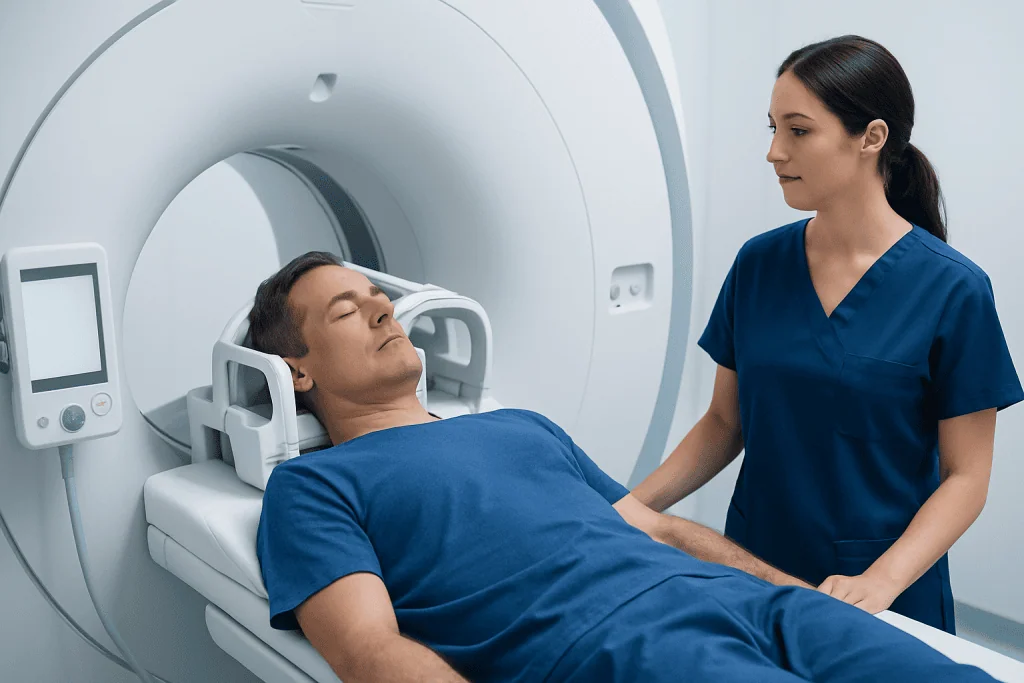
MRI is often the most important imaging test because it can show the spinal cord, discs, spinal canal, and nearby soft tissues in detail. In some cases, doctors also use CT scans or other imaging to look at the bones of the spine more closely. Advanced imaging support such as neuroradiology may help clarify the location and nature of the problem.
Depending on the suspected cause, blood tests may look for infection, inflammation, vitamin deficiencies, autoimmune markers, or other medical conditions. Some patients may need a lumbar puncture to examine cerebrospinal fluid. Electrical tests may also be used to assess how well nerves and pathways are functioning; this can include neurophysiology testing when appropriate.
The main goal of diagnosis is to identify whether the condition is compressive, inflammatory, infectious, vascular, or traumatic, because treatment can differ significantly. In urgent situations, doctors focus first on causes that may quickly threaten nerve function and require immediate intervention.
Treatment options
Treatment depends on the underlying cause, how severe the symptoms are, and how quickly they are progressing. When pressure on the spinal cord is the problem, treatment may involve medication to reduce swelling and, in some cases, surgery to relieve compression. Surgery may be considered for herniated discs, severe spinal stenosis, fractures, tumors, or other structural conditions affecting the cord.
If the cause is inflammatory or autoimmune, treatment may include corticosteroids or other immune-targeted therapies under specialist guidance. Infectious causes are treated with the appropriate antimicrobial therapy. Vascular causes, bleeding, or tumors are managed according to the specific diagnosis and may involve several specialists.
Rehabilitation is often a key part of care. Physical therapy can help maintain strength, flexibility, posture, and safe walking. Occupational therapy may assist with hand function and daily activities. Symptom management may also address muscle stiffness, pain, fatigue, or bladder problems. Some patients may need input from teams focused on neuromuscular diseases or spinal rehabilitation depending on the pattern of weakness and functional change.
For international patients, Acibadem International’s multidisciplinary specialists and JCI-accredited hospitals diagnose and treat spinal cord disorders with coordinated care across neurology, imaging, rehabilitation, and when needed, surgical teams.
Prevention and self-care
Not all spinal cord disorders can be prevented, but some general measures may lower risk or support spinal health. Preventing falls, using seat belts, following workplace safety practices, and using proper sports protection can reduce traumatic injuries. Managing chronic conditions such as diabetes, high blood pressure, and autoimmune disease may also support overall nerve and vascular health.
Good posture, regular exercise, and maintaining muscle strength can help support the spine, although they do not prevent every spinal cord condition. People with known degenerative spine disease should follow medical advice about activity, lifting technique, and symptom monitoring. Smoking cessation and healthy weight management may also be beneficial for spine and circulation health.
Self-care should not replace medical evaluation when warning signs are present. A person should avoid repeatedly attributing progressive weakness, walking changes, or numbness to aging, stress, or simple back strain without assessment. Keeping a record of when symptoms began, what makes them better or worse, and whether bladder or bowel changes are present can help the doctor evaluate the condition more accurately.
When to see a doctor urgently
A person should seek prompt medical care if there is new weakness, rapidly worsening numbness, trouble walking, or loss of coordination. These symptoms may point to spinal cord compression or inflammation that needs timely evaluation. Sudden symptoms after an accident or fall should also be assessed urgently, even if pain seems manageable.
Emergency care is especially important when neurological symptoms are paired with bladder retention, new incontinence, bowel dysfunction, numbness around the groin or saddle area, severe back pain with weakness, or fever suggesting infection. Symptoms that come on suddenly may sometimes overlap with other neurological emergencies such as stroke, so urgent assessment is important when there is uncertainty.
If symptoms are mild but persistent, gradually worsening, or interfering with daily life, arranging a neurology appointment is still a wise step. Early evaluation offers the best chance of identifying the cause and starting the right treatment plan before symptoms become more limiting.
Frequently asked questions
What are the first signs of a spinal cord disorder?
Early signs may include numbness, tingling, weakness, leg heaviness, balance problems, or loss of hand coordination. Some people also notice bladder urgency, trouble emptying the bladder, or a band-like tight sensation around the body.
Can spinal cord disorders cause symptoms without severe back pain?
Yes. Some spinal cord conditions cause little or no significant back pain, especially in the early stages. Neurological changes such as weakness, numbness, clumsiness, or walking difficulty may be more important clues.
Are spinal cord disorders always emergencies?
Not always, but some are urgent and should be evaluated quickly. Sudden weakness, rapidly worsening symptoms, trouble walking, or new bladder and bowel changes need prompt medical attention.
Which doctor evaluates spinal cord symptoms?
A neurologist often evaluates spinal cord symptoms and coordinates testing such as neurological examination, MRI, and nerve studies. Depending on the cause, care may also involve neurosurgeons, rehabilitation specialists, or other doctors.
How are spinal cord disorders treated?
Treatment depends on the cause. It may include medicines to reduce inflammation, antibiotics for infection, surgery to relieve compression, rehabilitation therapies, and supportive treatment for symptoms such as stiffness or bladder dysfunction.
Can spinal cord symptoms improve with early treatment?
In many cases, early treatment can help prevent further damage and may improve symptoms. Recovery depends on the cause, how severe the problem is, and how quickly treatment begins.
References
- World Health Organization
- National Institute of Neurological Disorders and Stroke
- National Institute for Health and Care Excellence
- American Association of Neurological Surgeons
- Merck Manual Professional Edition
This article is for general information only and is not a substitute for professional medical advice. Please consult a qualified doctor about your individual situation.
Spinal Cord Disorders in Turkey — costs, top hospitals & a free quote
JCI-accredited · board-certified surgeons · reply within 24h
Add us as a Preferred Source to see more of our trusted health content across Google Search, AI Overviews and Discover.

Neurology
Diagnosis and treatment of disorders of the brain, spinal cord, nerves and muscles.
51 specialists in this unit