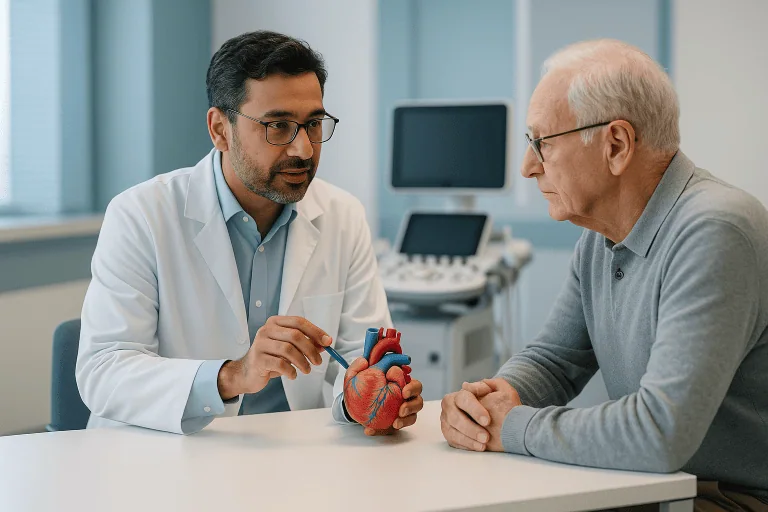
Cardiac Rehabilitation
Cardiac rehabilitation is a supervised program combining exercise, education, nutrition, and risk-factor control to help patients recover after heart events, procedures, or chronic heart disease.
Quick answer
Cardiac rehabilitation is a medically supervised programme of monitored exercise, education and risk-factor management for people recovering from a heart attack, heart surgery, stent placement or heart failure. Over several weeks to months, a multidisciplinary team gradually rebuilds stamina and strength while addressing blood pressure, cholesterol, diabetes, smoking, nutrition, sleep and the emotional side of recovery.
Cardiac Rehabilitation: What It Is and Who It Helps
Cardiac rehabilitation is a supervised, multidisciplinary programme for people recovering from heart disease, a heart procedure or a major cardiovascular event. It combines monitored physical activity with education, nutrition support, lifestyle counselling and medical risk-factor management, and it is designed for the stage of care that begins when hospital treatment ends. If you have had a heart attack, bypass surgery, a valve procedure, angioplasty, stent placement or a heart failure diagnosis, cardiac rehabilitation is the structured pathway back to strength, independence and confidence in daily life.
Patients often ask what is cardiac rehab in plain terms. The honest answer: it is the bridge between hospital treatment and normal life. It translates clinical care into daily routines, how to walk safely, when to rest, what to eat, how to return to sexual activity, when it is reasonable to fly, how to resume work, and which sensations should prompt medical review. It is not simply “exercise after a heart problem”. It is a structured medical programme that connects recovery, prevention and lifestyle change in one plan.
A heart diagnosis can change the way you see your body. After a cardiac event, many patients feel grateful to be alive but uncertain about what comes next. You may wonder whether it is safe to exercise, how much activity is too much, which foods truly matter, whether chest discomfort is normal, or how to lower the chance of another event. For international patients, these questions can feel heavier still when care involves travel, an unfamiliar health system or a second opinion abroad. Cardiac rehabilitation exists precisely to replace this uncertainty with a clear plan, a professional team and measurable progress.
Modern heart care does not end when a procedure is completed or the acute event has passed. The weeks and months afterwards are a critical opportunity: cardiovascular fitness can improve, modifiable risks can be reduced, anxiety and fear can be addressed, and habits that protect the heart over time can be built. Cardiac rehabilitation provides an evidence-based framework for all of this, with clearly stated limits. It does not remove every risk. What it offers is supervision, structure and honest measurement of where you are.
What is a cardiac rehabilitation program?
A cardiac rehabilitation program is a structured course of monitored exercise, education, nutrition counselling and medical risk-factor management, usually prescribed by a cardiologist or cardiac surgeon after a heart event or procedure. It is coordinated by a team that may include rehabilitation physicians, cardiologists, physiotherapists, exercise specialists, nurses, dietitians and psychologists, depending on what you need. The central component is therapeutic exercise performed at a level that is safe for your heart, walking, cycling, treadmill activity, resistance training, flexibility work, breathing exercises and functional conditioning. During supervised sessions, your heart rate, blood pressure, symptoms, heart rhythm, oxygen level or perceived exertion may be checked according to your clinical condition. The goal is gradual improvement, not pushing the body beyond safe limits. Programmes typically run over several weeks or months, and the exact structure depends on your diagnosis, medical stability, travel plans and the recommendations of your care team.
What does “cardiac” mean?
“Cardiac” simply means relating to the heart. It comes from the Greek word for heart, kardia, and appears throughout medicine: cardiology is the study and treatment of the heart, cardiac surgery is surgery on the heart, and a cardiac event is anything acute that happens to it. Cardiac rehabilitation, then, is rehabilitation of the heart, and of the body, habits and confidence that depend on it.
Who May Need Cardiac Rehabilitation
Cardiac rehabilitation may be recommended for a wide range of people with cardiovascular disease. It is commonly used after a heart attack, coronary angioplasty or stent placement, coronary artery bypass graft surgery, valve repair or replacement, heart failure treatment, heart transplantation, or treatment for certain rhythm and vascular conditions. It may also benefit patients with stable coronary artery disease, angina, cardiomyopathy or multiple cardiovascular risk factors, when supervised conditioning and education are clinically appropriate. Eligibility is a medical decision, not a marketing one: the referring team weighs what happened to your heart, how stable you are now, and what you need to return safely to daily life.
Are you a cardiac rehab candidate if in your 90s and wheelchair bound?
You can still be a cardiac rehab candidate in your 90s and wheelchair bound, age and mobility limitations alone do not rule a person out, although they change what the programme looks like. For a patient who cannot stand or walk unaided, exercise can be adapted: seated aerobic work, arm ergometry, resistance bands, breathing training and supported transfers all have a place. Goals shift too. Instead of treadmill endurance, the priorities may be maintaining independence, making transfers safer, reducing breathlessness during everyday tasks and protecting whatever functional capacity remains. Monitoring is usually closer, progression slower, and the decision to proceed rests entirely on an individual medical assessment of stability, other conditions and realistic benefit. Patients who travel for treatment with their own equipment can plan the practicalities in advance, see arriving with mobility equipment: wheelchairs, walkers and assistance.
Patients often arrive with a mixture of physical symptoms and emotional concerns. You may feel unusually tired, short of breath with activity, weak after hospitalisation, nervous about walking alone, or unsure how to interpret chest sensations. Some patients avoid activity because they fear another event. Others try to return too quickly to their previous routine and become discouraged when the body does not respond as expected. Both extremes can interfere with recovery, and cardiac rehabilitation exists to establish safe limits and realistic progression between them.
Before starting, the care team evaluates whether the programme is appropriate and what level of supervision is needed. This assessment may include a review of your medical history, recent hospital records, procedure reports, medications, blood pressure, cholesterol levels, diabetes status, kidney function, heart rhythm, symptoms and physical capacity. Depending on your condition, tests such as an electrocardiogram, echocardiography, stress testing, cardiopulmonary exercise testing, rhythm monitoring, blood tests or imaging may be used to define your baseline and guide a safe training intensity.
Eligibility is never based on one test alone. The team looks at the full clinical picture: what happened to the heart, how stable you are now, what treatments have been performed, which risk factors remain, and what daily life demands of you. Patients with complex conditions, advanced heart failure, multiple chronic diseases, recent surgery or implanted cardiac devices, may still be candidates, but their programmes require more individualised planning and closer monitoring.
International patients often seek cardiac rehabilitation after receiving emergency care in their home country, after completing surgery, or after being advised to pursue structured recovery but finding limited access locally. Others want an independent view on whether their current activity plan is safe. In these situations, medical records, imaging, discharge summaries, medication lists and recent test results allow a team to design an appropriate pathway without repeating unnecessary steps.
Conditions and Indications Cardiac Rehabilitation Addresses
Cardiac rehabilitation is used after both acute cardiac events and planned cardiovascular procedures. One of the most common indications is recovery after myocardial infarction: a heart attack. After a heart attack, the heart muscle and the entire cardiovascular system need careful reconditioning. Rehabilitation can help improve exercise tolerance, support consistent use of prescribed treatment, and reduce the modifiable risk factors that contribute to recurrent events.
Patients who have undergone coronary angioplasty or stent placement also commonly benefit. Although the blocked artery has been treated, the underlying tendency toward atherosclerosis remains: a stent fixes a segment of artery, not the disease process. Rehabilitation addresses that broader process through physical conditioning, cholesterol management, blood pressure control, smoking cessation, diabetes care, nutrition and long-term prevention.
After coronary artery bypass graft surgery, whether performed conventionally or as robotic cardiac surgeryrehabilitation supports recovery from both the heart disease and the operation itself. Patients may need help regaining stamina, improving posture and breathing, protecting the breastbone during healing, managing discomfort safely and returning to daily activities step by step. A supervised programme makes this recovery more organised and less intimidating than working it out alone.
Valve surgery and catheter-based valve procedures are frequently followed by cardiac rehabilitation. Many valve patients lived with reduced exercise capacity for months or years before treatment, so endurance has to be rebuilt gradually, with monitoring for symptoms, rhythm changes, blood pressure responses and medication-related issues along the way.
For people with heart failure, cardiac rehabilitation can be especially valuable when carefully prescribed. The programme focuses on improving functional capacity, reversing deconditioning, supporting fluid and medication management, and teaching patients to recognise changes that may require medical attention. Exercise training in heart failure must be individualised, but appropriately selected patients often gain meaningful improvements in daily activity tolerance and quality of life.
Other indications include stable angina, cardiomyopathy, certain adult congenital heart conditions, recovery after heart transplantation, peripheral artery disease, and prevention-focused programmes for patients with high cardiovascular risk. Some patients with a treated cardiac arrhythmia or an implanted device are also suitable, with rhythm-aware monitoring built into their sessions. The common principle across all of these: when heart disease affects function, safety, lifestyle or future risk, cardiac rehabilitation provides a medically supervised strategy for recovery and prevention.
The Phases of Cardiac Rehabilitation
Programmes are typically divided into phases, moving from hospital bed to independent long-term maintenance. Naming conventions vary slightly between countries, but the underlying structure is broadly consistent.
What are the 4 phases of cardiac rehabilitation?
The four phases of cardiac rehabilitation run from the hospital ward to lifelong self-management:
- Phase 1, inpatient: gentle mobilisation begins in hospital after surgery or an acute event: sitting, standing, short assisted walks, breathing exercises and basic education about what has happened and what comes next.
- Phase 2, early outpatient: the structured, supervised core of the programme after discharge. Monitored exercise sessions, education and risk-factor work continue over several weeks or months, with intensity set and adjusted by the team.
- Phase 3, later outpatient: supervision loosens as capacity and confidence grow. The focus shifts to independent training habits, functional goals such as work and travel, and consolidating lifestyle changes.
- Phase 4, maintenance: long-term, largely self-directed exercise and prevention, with periodic medical follow-up.
Not every patient passes through all four phases in the same way. Someone recovering from an uncomplicated stent procedure may move quickly; someone recovering from complex surgery or heart failure may spend longer in the supervised phases. The structure serves the patient, not the other way round.
What occurs in the last phase of cardiac rehabilitation?
The last phase of cardiac rehabilitation is maintenance: you exercise independently, using the training habits, intensity limits and self-monitoring skills learned in the supervised phases. There is no fixed end point: the aim is to preserve the fitness, risk-factor control and confidence you have gained, indefinitely. Practically, this means a regular personal exercise routine, continued attention to diet, weight, sleep, stress and smoking status, consistent use of prescribed medication, and scheduled follow-up with your cardiology team so that progress is reviewed and the plan adjusted as your health changes. Many patients describe this phase as the point at which rehabilitation stops being a programme and becomes simply how they live.
How Cardiac Rehabilitation Sessions Work
Everything begins with a detailed evaluation. The team reviews your diagnosis, recent hospital course, procedures, test results, medications, symptoms and personal goals. Blood pressure, resting heart rate, oxygen saturation, weight, functional level and exercise history may all be assessed, and additional testing may be used to see how your heart responds to activity. This preparation matters because the safest and most effective programme is one built around your specific cardiovascular profile, not a generic template.
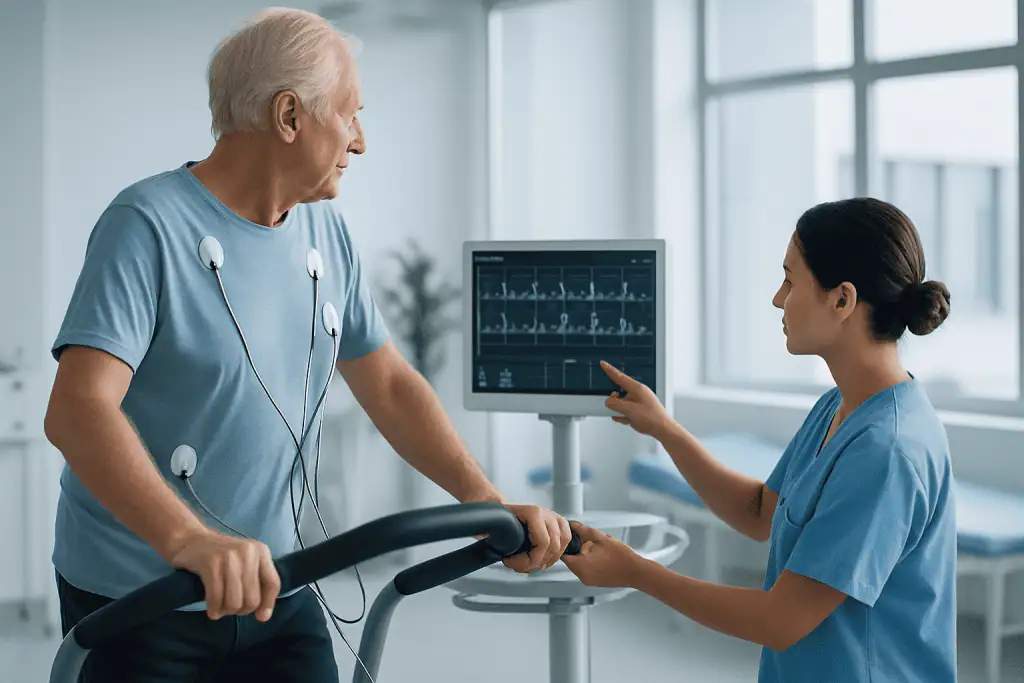
Your physician and rehabilitation team then define exercise limits and monitoring requirements. Some patients need continuous electrocardiographic monitoring during early sessions, particularly those with rhythm concerns, recent events, implanted devices or higher clinical risk. Others are monitored with periodic checks of heart rate, blood pressure, oxygen saturation and symptoms. Intensity is usually guided by a combination of measured data and how hard the activity feels to you.
Before each session, the team may ask about chest pain, breathlessness, dizziness, fatigue, medication changes, swelling, sleep, blood sugar or other symptoms. This check-in determines whether the session should proceed, be modified or be reviewed by a physician first. For patients with diabetes, blood glucose may be checked before or after activity. For heart failure patients, weight changes and symptoms such as swelling or increased breathlessness carry particular weight in the day’s decision.
A typical supervised session follows a consistent sequence:
- Check-in: symptoms, measurements and any changes since the last session are reviewed.
- Warm-up: gentle movement prepares the heart and circulation for effort.
- Aerobic exercise: treadmill walking, stationary cycling, stepping or other controlled activity at your prescribed intensity.
- Resistance and flexibility work: introduced gradually where appropriate, using light weights, bands or body weight.
- Cool-down: effort tapers off in a controlled way while the team observes your recovery response.
What are typical cardiac rehab exercises?
Cardiac rehab exercises fall into three groups: aerobic conditioning (walking, treadmill work, stationary cycling, stepping), resistance training (light weights, elastic bands, body-weight movements, introduced gradually) and supporting work (flexibility, balance and breathing exercises, plus functional conditioning for real-life tasks such as stairs and carrying). What distinguishes cardiac exercise from ordinary gym training is dosage: intensity, duration and progression are prescribed from your test results and adjusted from your monitored responses, session by session. Programmes usually start at a conservative level and build as tolerance improves: the deliberate opposite of “push through it”.
Technology supports safety, measurement and personalisation rather than complicating the experience. Exercise testing helps define training zones. Electrocardiographic monitoring can detect rhythm changes during exertion. Blood pressure and oxygen monitoring show how the body responds to activity. Echocardiography, stress testing, cardiac imaging and laboratory tests may be used within the broader care pathway to assess heart function and risk, and digital records and structured assessment tools let the team track progress over time, so you can see your improvement in numbers you were measured against, not in vague reassurance.
Education is delivered throughout the programme rather than as a single lecture. You learn how your heart condition developed, what your medications do, which side effects are worth reporting, and why consistent treatment matters. Nutrition counselling typically covers reducing saturated and trans fats, moderating salt, increasing vegetables and fibre, managing weight, and adapting all of it to your cultural food preferences, because advice you cannot live with is advice you will not follow. Smoking cessation support, stress management, sleep counselling and psychological support are added when needed.
What are cardiac symptoms?
Cardiac symptoms are the sensations that can signal a heart problem: chest pressure, tightness or discomfort, breathlessness at rest or on exertion, palpitations or an irregular pulse, unusual fatigue, dizziness or light-headedness, and swelling in the ankles or legs. A central part of rehabilitation education is learning which of these are expected during your particular recovery and which need medical review: a distinction that depends heavily on your diagnosis, your procedure and your medications, which is why it is taught individually rather than from a generic list.
What drink calms the heart?
No drink calms the heart in a clinical sense, and any product marketed that way deserves scepticism. What is true: plain water supports normal circulation, and staying hydrated matters, especially during exercise. It is also true that some drinks can do the opposite of calming, high-caffeine drinks, energy drinks and alcohol can trigger palpitations or raise blood pressure in some people. Your rehabilitation team can tell you what is sensible for your condition and your medications, which is far more useful than any single beverage.
Emotional recovery is often as important as physical conditioning. Anxiety and low mood are common after heart events. Some patients become hyperaware of every heartbeat; others feel frustrated by temporary limitations. Rehabilitation offers a practical kind of reassurance: watching your own body respond safely to supervised exercise, week after week, reduces fear in a way that verbal reassurance rarely does, and helps you rebuild trust in your own capacity.
Session length varies with your condition and phase of recovery, but each appointment combines structured exercise with education within a planned time. Outpatient programmes often continue for several weeks, with frequency determined by clinical need, travel schedule and your goals. Some patients transition to a home-based maintenance plan after their supervised sessions; others benefit from longer follow-up. Progress itself is staged: early on, the emphasis is safe movement, breathing, wound awareness after surgery and low-intensity conditioning. Over time it shifts toward endurance, strength, risk-factor control and independence. By the later stages, most patients are preparing for long-term exercise habits, return to work, travel and normal routines, with a clearer understanding of what is safe and what warrants medical attention.
Why Starting at the Right Time Matters
The period after a cardiac event or procedure is a window of opportunity. Early, medically appropriate rehabilitation helps prevent deconditioning, restores confidence and establishes the habits that protect the heart over time. When patients remain inactive for too long, muscle strength declines, stamina falls, and ordinary activities start to feel harder, which feeds fear, which feeds avoidance, which feeds further decline. Breaking that cycle early is one of the strongest arguments for a structured programme.
Delaying rehabilitation can also mean delaying control of the very risk factors that caused the problem. High blood pressure, high cholesterol, diabetes, smoking, excess weight, poor sleep and chronic stress continue to affect the arteries and heart muscle while they go unaddressed. Cardiac rehabilitation gathers these issues into one coordinated plan, and it does so while motivation is typically at its strongest, in the months immediately after the event.
There are also plain safety reasons to recover under professional guidance rather than alone. Without supervision, some patients exercise too intensely; others avoid beneficial activity out of fear. A structured programme defines what is safe, what should be modified and when symptoms require medical review, decisions that are difficult to make well on your own after a serious cardiac event.
Acting early does not mean rushing. It means starting at the right time, in the right setting, at the right intensity. For some patients, that begins with gentle walking on the hospital ward. For others, outpatient rehabilitation starts after a follow-up visit, wound healing, medication adjustment or additional testing. The decision is individualised, especially after recent surgery or with unstable symptoms, severe heart failure, rhythm problems or other complex conditions. For patients facing a planned cardiac operation, the same logic can run in reverse: building strength, breathing capacity and mobility beforehand, described in our guide to prehabilitation before surgerycan make the recovery that follows easier to manage.
Benefits of Cardiac Rehabilitation
Cardiac rehabilitation offers physical, medical and emotional benefits by combining supervised exercise with education and long-term prevention strategies. The table below sets out what each benefit means in practical terms.
| Benefit | What It Means for You |
|---|---|
| Safer return to activity | Exercise is introduced gradually, with monitoring and guidance based on your diagnosis, symptoms, medications and heart function. |
| Improved stamina and strength | Structured conditioning can help you walk farther, climb stairs more comfortably and return to daily routines with greater confidence. |
| Better risk-factor control | Blood pressure, cholesterol, diabetes, smoking, weight, stress and nutrition are addressed as part of one coordinated prevention plan. |
| Greater understanding of your heart condition | You learn which symptoms are expected, which are warning signs, how medications help and how to make informed choices after treatment. |
| Emotional support after a cardiac event | Supervised progress can reduce fear of movement, support motivation and help patients cope with anxiety or loss of confidence. |
| Long-term heart health planning | The programme helps turn short-term recovery into sustainable habits for exercise, eating, medication adherence and follow-up care. |
Recovery Timeline After Starting Cardiac Rehabilitation
Every patient progresses differently, and the pace depends on the diagnosis, the procedure and your starting condition. The timeline below describes how many patients experience the phases of supervised cardiac rehabilitation, treat it as a typical shape, not a schedule you must match.
| Time Period | What Patients Can Expect |
|---|---|
| Day 1 | Your team reviews your medical history, current symptoms, medications and goals. Baseline measurements are taken, and your initial activity level is set conservatively for safety. |
| First Week | Sessions focus on learning safe movement, monitoring your body’s response, understanding warning signs and building confidence with low-to-moderate intensity activity. |
| First Month | Exercise time and intensity may increase gradually. Education on nutrition, medications, stress, smoking cessation, blood pressure, cholesterol and diabetes becomes more detailed. |
| Later Programme Phase | The programme becomes more functional and personalised, preparing you for work, travel, home exercise, recreational activity and long-term prevention. |
| Longer Term | You continue with a maintenance plan, follow-up appointments, lifestyle changes and self-monitoring strategies designed to preserve progress and reduce future cardiovascular risk. |
Factors That Influence Outcomes
Results depend on several medical and personal factors, and it is worth understanding them before you begin, because they explain why two patients on the same programme can progress at very different speeds. The most important factor is the underlying heart condition itself. A patient recovering after an uncomplicated stent procedure will usually progress differently from someone recovering after complex bypass surgery, advanced heart failure, valve surgery or a prolonged hospital stay. Heart muscle function, rhythm stability, blood pressure response, lung health, kidney function, diabetes, anaemia, obesity, orthopaedic limitations and neurological conditions can all shape the pace and structure of rehabilitation.
Timing matters too. Patients who begin medically appropriate activity before significant deconditioning develops usually find it easier to regain stamina. But safety always comes first: if symptoms are unstable, or if there are concerns such as uncontrolled arrhythmia, significant fluid overload, severe valve disease, untreated ischaemia or post-surgical complications, those issues must be addressed before exercise intensity increases. A programme that respects these limits progresses more slowly at first and more reliably in the end.
Medication adherence strongly influences outcomes. Drugs prescribed after a cardiac event or procedure may include antiplatelet therapy, anticoagulants, beta-blockers, ACE inhibitors or related medications, cholesterol-lowering therapy, diuretics, diabetes medications or rhythm-control treatment. Rehabilitation does not change your prescriptions, that remains entirely between you and your treating doctor, but it does explain why each medication is used, which helps patients take them consistently and recognise side effects worth raising with the physician.
Lifestyle changes are the other major determinant. The sessions in the rehabilitation centre matter, but long-term benefit depends on what happens between sessions and after the programme ends. A heart-healthy eating pattern, smoking cessation, weight management, sleep quality, stress control and regular follow-up all contribute to a better result. For patients with diabetes, blood sugar control carries particular weight, because it affects the blood vessels, kidneys, nerves and healing capacity.
Psychological readiness shapes recovery more than most patients expect. Fear, depression, family stress, work pressure and uncertainty about the future can reduce motivation or make symptoms feel more distressing. Addressing emotional health is not separate from cardiac care; it is part of what keeps patients active, adherent and engaged with daily life.
A good result is measured in practical terms: improved exercise tolerance, better control of risk factors, fewer limitations in daily life, a clearer understanding of your condition and a sustainable plan for the future. For many patients, success means walking without fear, travelling with confidence, returning to work safely or knowing how to respond if symptoms change. Cardiac rehabilitation does not remove every risk, no programme can, but it gives you the tools and the support to manage risk more effectively than you could alone.
Finding a Programme: Close to Home or Abroad
Looking for a programme close to home is often the first thing patients do after discharge, and the instinct is sound: programmes only work if you attend them, and attendance is far easier when the centre is close to home. If a well-run local programme exists, distance alone is a good reason to use it. Where local access is limited, long waiting times, no supervised programme nearby, or no team experienced with your particular condition, some patients consider structured rehabilitation abroad, sometimes combined with the cardiology follow-up or second opinion they were already seeking. Others use a hybrid approach: an initial supervised block in a specialist centre, followed by a home-based maintenance plan with remote or periodic review. None of these routes is inherently better; the right one depends on your clinical stability, your support at home and what your treating cardiologist advises.
Does health insurance cover cardiac rehabilitation?
Many national health systems and private insurers cover cardiac rehabilitation for people with qualifying diagnoses, typically a recent heart attack, coronary bypass surgery, stable angina, heart valve repair or replacement, angioplasty or stenting, heart transplantation and certain cases of chronic heart failure. Coverage rules, approved settings and session arrangements vary between countries and change over time, so the details are best confirmed directly with the insurer and the referring physician. Public and private systems have their own eligibility rules, which is worth checking before committing to any programme, at home or abroad.
Cardiac Rehabilitation at Acibadem
International patients considering cardiac rehabilitation abroad usually want more than an exercise schedule. They want a medically integrated environment where cardiology, rehabilitation, diagnostics, lifestyle medicine and follow-up planning are connected. At Acibadem, cardiac rehabilitation is provided within hospitals that support complex cardiovascular care, so patients are evaluated and monitored by physicians and rehabilitation professionals working in coordination with the broader heart team, including the Physical Medicine and Rehabilitation unit.
Care plans are individualised rather than generic. The team considers your diagnosis, procedure history, current heart function, rhythm status, medications, other medical conditions and personal goals. If you have had a coronary intervention, bypass surgery, valve treatment, heart failure care or another cardiac procedure, the rehabilitation plan is aligned with the clinical details of that treatment. When cases are complex, multidisciplinary discussion helps ensure that recommendations reflect cardiology, cardiac surgery, rehabilitation, nutrition and other relevant perspectives rather than any single view.
Diagnostic pathways support safe and appropriate rehabilitation. Depending on the patient, evaluation may include electrocardiography, echocardiography, stress testing, laboratory work, rhythm assessment, cardiac imaging or functional testing. During rehabilitation itself, monitoring tools let clinicians observe the body’s response to exercise and adjust intensity. These technologies exist to make rehabilitation more precise, not more complicated for the patient.
Practical coordination matters for anyone travelling for care. Acibadem International provides dedicated services for patients from abroad, including multilingual communication, appointment planning, medical record coordination, hospital admission support when needed, and help with the logistics around treatment. Services are available in more than 20 languages, so patients and families can understand the medical plan and communicate comfortably with the care team. When patients travel for rehabilitation, existing records, imaging, discharge summaries and medication lists let the team design a pathway and estimate a realistic length of stay without repeating unnecessary steps; our guide to rehabilitation planning after medical treatment explains how this fits into a broader recovery plan.
The experience is also shaped by families. Cardiac recovery affects spouses, adult children and caregivers, who often worry about activity limits, medication routines, diet and warning signs. Education can include family members when appropriate, so the home environment supports the patient’s recovery rather than creating confusion or unnecessary restriction. Choosing care abroad is a significant decision, and what it requires above all is clarity: an honest assessment, a plan that reflects your medical complexity, and communication you can actually follow.
Moving Forward With a Safer Recovery Plan
Cardiac rehabilitation is one of the most important steps many patients can take after a heart event, a heart procedure or a diagnosis of chronic cardiovascular disease. It answers the questions that follow hospital treatment: how to exercise safely, what to change, what to monitor and how to return to daily life with confidence. It shifts the focus from fear to progress, from uncertainty to measurable recovery.
If you or a loved one has recently experienced a heart attack, stent placement, bypass surgery, a valve procedure, a heart failure diagnosis or another cardiac condition, a supervised rehabilitation programme may well form part of the recovery your treating team recommends. The right plan depends on your medical history, current condition, test results and goals, and on when your cardiologist judges it safe to begin. With careful assessment and a personalised plan, recovery becomes what it should be: structured, supervised and easier to understand.
Preparation
- A cardiology assessment is performed to review medical history, medications, exercise capacity, and recent test results. Patients may need an ECG, echocardiography, stress testing, or lab work before starting. Wear comfortable clothes and shoes, and follow medication and meal instructions given by the care team.
Aftercare
- Patients continue prescribed exercises, heart-healthy nutrition, medication adherence, and risk-factor management after supervised sessions. Progress is monitored with regular follow-up, and exercise intensity is adjusted safely. Seek medical advice promptly for chest pain, severe shortness of breath, dizziness, or palpitations.
Frequently Asked Questions
What affects the cost of cardiac rehabilitation?
The main factors are the rehabilitation setting, level of medical supervision, required diagnostic tests, number and intensity of sessions, involvement of specialists, and whether travel support, translation, transfers, or accommodation are included.
How can I get a personalised quote?
You can request a free consultation by sharing your diagnosis, recent reports, procedure details, medication list, and recovery goals. The cardiac team can then recommend a suitable programme and prepare a personalised estimate.
Is cardiac rehabilitation usually offered as a package?
It may be offered as a coordinated package, especially for international patients. Inclusions can vary, but may cover cardiology assessment, supervised exercise, education, nutrition support, care coordination, and selected logistics.
Will I need tests before starting the programme?
Many patients need an assessment before exercise begins. This may include a cardiology consultation, ECG, blood tests, imaging, or an exercise capacity assessment, depending on medical history and risk level.
Can I continue rehabilitation after returning home?
Many patients can continue with a home plan or remote follow-up if the specialist considers it safe. The team may provide exercise guidance, lifestyle advice, and recommendations to share with your local doctor.
Is this information medical or financial advice?
No. This is general educational information. A cardiologist or rehabilitation specialist should assess your suitability, and a personalised quote should be requested before making treatment or travel plans.
Medically reviewed by the Acıbadem International Medical Board September 13, 2026
See our medical review board →
Update history
- PublishedJune 8, 2026
- Medical review approvedSeptember 13, 2026
- Last content updateSeptember 12, 2026
References1
- Cardiac Rehabilitation medlineplus.gov
Trusted care for international patients
From the Acibadem Blog

Who Is Referred to Cardiac Rehab After a Heart Attack, Stent, Surgery or Heart Failure
Cardiac rehab is routinely recommended for anyone who has had a heart attack, a coronary stent, bypass or heart valve surgery, a heart transplant,…

Before Cardiac Rehabilitation Starts: The Stress Test, ECG and Fitness Assessment Explained
A cardiac rehab assessment before starting usually combines a resting electrocardiogram (ECG), an exercise stress test or a walking test, blood pressure and blood…