Elbow Surgery
Elbow surgery treats fractures, ligament injuries, stiffness, arthritis, and sports-related damage using open or minimally invasive techniques to restore stability, motion, and function.
Quick answer
Elbow surgery is operative treatment of the elbow's bones, ligaments, tendons, nerves or joint surfaces. Depending on the problem, it can fix a fracture with plates or screws, reconstruct a torn ligament, release a compressed nerve, remove damaged tissue for tennis elbow, or replace a severely arthritic joint. It is usually considered when pain, instability or loss of movement persists despite non-surgical care.
What Is Elbow Surgery?
Elbow surgery is operative treatment performed on the bones, cartilage, ligaments, tendons, joint capsule, nerves or joint surfaces of the elbow. It is used to fix fractures, reconstruct torn ligaments, release stiffness, relieve nerve compression, repair ruptured tendons or replace severely damaged joint surfaces. It is usually considered for people whose pain, instability, weakness or loss of movement has not improved with structured non-surgical care, or whose injury is too displaced or unstable to heal well in a cast or brace.
The elbow is a small joint with a demanding job. It lets you lift, reach, push, pull, rotate the forearm and place your hand exactly where you need it. When the joint is injured, stiff, unstable or painful, ordinary tasks become difficult: carrying a bag, opening a door, working at a keyboard, serving a tennis ball, lifting a child, sleeping through the night. If you are reading this page, you are probably weighing the same questions most patients bring to a first appointment, will the injury heal on its own, is elbow surgery genuinely necessary, how much motion can realistically come back, and how long until you can work or train again. This page answers those questions as directly as the evidence allows.
Understanding the anatomy explains why elbow surgery is so varied. Three bones meet at the elbow: the humerus in the upper arm, and the radius and ulna in the forearm. Together they form a joint system that bends, straightens and rotates the forearm. Stability comes from the shape of the bones, the joint capsule and strong ligaments on the inner and outer sides of the joint. Tendons anchor the muscles that move the wrist, hand and fingers. Important nerves, including the ulnar nerve, the one that tingles when you knock your “funny bone”, pass within millimetres of the joint. Many critical structures share a narrow space, which is why elbow problems demand careful diagnosis and precise surgical planning.
Elbow surgery is not one operation but a family of procedures. Some are performed open, through an incision that gives the surgeon direct access to the damaged area. Others are arthroscopic: small incisions, a camera and fine instruments working inside the joint under magnified vision. Complex cases sometimes combine both approaches. The choice depends on the condition being treated, the severity of the damage, the quality of your bone and soft tissue, and the surgeon’s judgement about which technique gives the most reliable result in your specific situation.
The procedures most often grouped under the term include:
- Fracture fixation with plates, screws, pins or wires
- Ligament repair or reconstruction for instability
- Arthroscopic removal of loose bodies and bone spurs
- Release of scar tissue and joint capsule for stiffness
- Tendon repair, including distal biceps and triceps ruptures
- Nerve decompression or transposition, most often involving the ulnar nerve
- Surgery for tennis elbow or golfer’s elbow when conservative care has failed
- Partial or total elbow replacement for advanced arthritis or joint destruction
Whatever the procedure, the goals are consistent: less pain, better stability, more useful movement, protected nerve function and a safe return to the activities that matter to you.
Is elbow surgery a major surgery?
It depends entirely on the procedure. Removing a loose fragment arthroscopically or releasing a compressed nerve is a relatively contained operation, often performed as day surgery. Fixing a complex fracture, reconstructing a ligament with a tendon graft or replacing the joint is major surgery, involving anaesthesia, implants, sometimes a hospital stay and months of structured rehabilitation. Even the smaller elbow procedures deserve respect, because the elbow stiffens easily after any intervention and nerves run close to every surgical approach. It is sensible to treat any elbow operation as something to prepare for properly rather than a minor errand.
What is the most common elbow surgery?
Fracture fixation and ulnar nerve decompression are among the most frequently performed elbow operations worldwide, with elbow arthroscopy and tennis elbow release also common. There is no single universal answer, because the pattern varies by country, age group and hospital type: trauma units fix more fractures, sports medicine clinics see more ligament and tendon work, and upper-limb units perform more nerve surgery. What matters for you is not the league table but whether the operation being proposed matches your specific diagnosis and your goals.
Who May Need Elbow Surgery?
You may need elbow surgery after a sudden injury, a sports-related overuse problem, or a progressive condition that has not responded to non-surgical treatment. Symptoms vary with the underlying cause, but patients commonly describe pain that interferes with daily tasks, difficulty bending or straightening the arm, weakness when lifting or gripping, a sensation that the joint may give way, locking or catching inside the joint, visible deformity, persistent swelling, numbness or tingling in the ring and little fingers, or an inability to return to work or sport despite months of effort.
In traumatic injuries, surgery is considered when the bones are displaced, the joint surface is disrupted, the elbow is unstable, or the fracture pattern is unlikely to heal well in a cast or brace. Examples include complex fractures around the joint, fracture-dislocations, olecranon fractures, radial head fractures and distal humerus fractures. Timing matters in these injuries, because the elbow can become stiff remarkably quickly after trauma: a fact that shapes both the decision to operate and the rehabilitation that follows.
In sports and activity-related conditions, surgery may be needed for complete ligament tears, recurrent instability, tendon ruptures, or pain that persists despite structured rehabilitation, appropriate injections, activity modification and medication. Throwing athletes, racquet-sport players, gymnasts, weightlifters and manual workers each develop characteristic injury patterns, because repetitive stress loads specific structures of the elbow in specific ways. A treatment plan that ignores the demands of your sport or occupation is incomplete.
Diagnosis begins with a detailed history and physical examination. The surgeon evaluates where the pain sits, how far the joint moves, how strong and stable it is, whether nerves are irritated, what injuries came before, and what your work and sport actually require of the arm. Imaging is then chosen to answer specific questions rather than ordered by routine. X-rays assess bone alignment, fractures, arthritis, joint space and loose bodies. CT scans define complex fractures or bone deformity in three dimensions. MRI shows ligaments, tendons, cartilage, bone bruising and soft-tissue injury. Ultrasound is useful for dynamic assessment of tendons and nerves in selected cases. Nerve conduction studies may be recommended when ulnar nerve compression or other nerve involvement is suspected.
A thorough diagnostic work-up also protects patients from unnecessary surgery. Existing medical records, imaging studies, operative reports and therapy notes are reviewed alongside the fresh examination to establish whether an operation is likely to be appropriate at all. This matters, because a proportion of patients who believe they need surgery are better served by continued non-surgical care, and a careful assessment establishes that before any irreversible decision is made.
Conditions Treated With Elbow Surgery
Elbow surgery addresses a wide range of problems affecting bone, cartilage, ligaments, tendons, nerves and soft tissue. The case for operating is strongest when the condition causes significant pain or loss of function, threatens the stability of the joint, involves displacement or deformity, or has failed a genuine trial of non-operative treatment. Fracture care and tennis elbow are covered in their own sections below; the remaining major indications are these.
Ligament injuries cause instability, particularly when the ulnar collateral ligament on the inner side of the elbow or the lateral ligament complex on the outer side is torn. Throwing athletes, and patients who have dislocated the elbow, may need ligament repair or reconstruction if the joint keeps giving way after rehabilitation. Reconstruction typically uses a tendon graft to rebuild the torn ligament.
Elbow stiffness develops after trauma, previous surgery, arthritis, burns, prolonged immobilisation or inflammatory disease. When therapy and splinting fail to restore a useful arc of motion, surgical release of scar tissue, removal of bone spurs or release of the contracted capsule may be considered. The elbow’s tendency to stiffen is one of its defining clinical features, and it explains why modern rehabilitation favours early, controlled movement over long periods in plaster.
Arthritis of the elbow results from age-related wear, previous injury, inflammatory disease or years of heavy repetitive use. Mild to moderate arthritis can sometimes be treated arthroscopically, by debriding damaged tissue and removing loose bodies. Advanced arthritis with severe pain and loss of function may justify joint replacement in carefully selected patients: a decision that involves weighing pain relief against permanent lifting restrictions.
Tendon disorders include chronic lateral epicondylitis (tennis elbow), medial epicondylitis (golfer’s elbow), distal biceps tendon rupture and triceps tendon rupture. Most tendon irritation settles without an operation. Complete ruptures, and chronic cases that have exhausted comprehensive non-surgical treatment, are the ones that reach the operating theatre.
Nerve compression, particularly cubital tunnel syndrome affecting the ulnar nerve, causes numbness and tingling in the ring and little fingers, hand weakness, and symptoms that worsen when the elbow stays bent. If symptoms progress or nerve testing shows significant compression, surgery can release the tight tissue around the nerve or reposition the nerve to reduce tension on it. Peripheral nerve problems at the elbow are usually managed by orthopaedic upper-limb surgeons, though complex nerve injuries sometimes draw on expertise from neurosurgery as well.
Loose bodies, cartilage lesions and mechanical locking occur after trauma, with arthritis, or in osteochondritis dissecans: a cartilage condition seen especially in young athletes. Arthroscopy can remove loose fragments, smooth damaged surfaces or treat selected cartilage defects, restoring smooth mechanics to a joint that has been catching or locking.
Elbow Fracture Surgery
An elbow fracture is a break in one or more of the three bones that meet at the joint: the distal humerus, the olecranon at the tip of the ulna, the radial head, or the coronoid process, and it is one of the most common reasons for elbow surgery. Because the elbow is a joint rather than a straight length of bone, many of these fractures involve the joint surface itself. A joint surface that heals even a few millimetres out of position can mean permanent stiffness, grinding and early arthritis, which is why displaced elbow fractures are fixed surgically far more often than, say, a simple wrist fracture.
The standard operation is open reduction and internal fixation: the surgeon repositions the bone fragments precisely, then stabilises them with plates, screws, pins or tension-band wires chosen for the specific fracture pattern. Solid fixation serves two purposes. It lets the bone heal in an anatomical position, and, just as important at the elbow, it allows movement to begin early, before stiffness sets in. Some radial head fractures that cannot be reconstructed are treated by replacing the radial head with a small implant instead. Severe open injuries with skin and soft-tissue damage occasionally need reconstructive input from plastic and reconstructive surgery alongside the bone work.
Fractures around the elbow in children are a different clinical world: growing bone heals differently, growth plates must be protected, and treatment decisions follow their own rules. Children with these injuries are assessed and treated within dedicated paediatric pathways: the paediatric surgery framework exists precisely because children are not small adults.
How long does it take to recover from a broken elbow?
A broken elbow typically needs a period of weeks for the bone itself to unite, and several months for motion, strength and confidence to return, with the exact course depending on which bone broke, how badly, and how it was treated. A simple, stable fracture managed in a brace recovers faster than a fracture-dislocation fixed with plates. Expect a protected phase first, then progressively freer movement, then strengthening. The last few degrees of straightening are usually the slowest to return, and some patients keep a small permanent loss of extension even after a well-healed fracture. Your surgeon’s follow-up X-rays, not the calendar alone, determine when each stage can begin.
What does a smashed elbow mean for treatment?
A smashed elbow is the everyday term for a comminuted fracture, bone broken into multiple fragments, often with the joint surface involved and sometimes with dislocation or ligament injury on top. These are the most demanding elbow injuries to treat. Surgery aims to rebuild the joint surface fragment by fragment and fix it securely enough for early motion; when the fragments are too small or damaged to reconstruct, options include replacing part of the joint. Recovery after this kind of injury is measured in months, rehabilitation is intensive, and honest surgeons will tell you at the outset that the goal is a functional elbow, not necessarily an elbow identical to the one you had before the accident.
Tennis Elbow Surgery
Tennis elbow surgery treats chronic lateral epicondylitis, degeneration of the tendon that anchors the forearm’s extensor muscles to the outer bump of the elbow, when a proper course of non-surgical care has failed. The name misleads: most people with tennis elbow have never held a racquet. Repetitive gripping and wrist extension at work, at a keyboard or in the gym are just as capable of overloading this tendon. The condition is common; the operation is not, because the large majority of cases settle with time, load management, therapy and, in selected patients, injections.
Is there a surgery for tennis elbow?
Yes. When symptoms persist despite many months of well-conducted conservative treatment, structured physiotherapy, activity modification, bracing and appropriate injections, surgery becomes a reasonable option. It is deliberately positioned as a last resort, not because the operation is unusually risky, but because so many patients improve without it that operating early would expose people to surgery they never needed. If you have genuinely exhausted non-surgical care and the pain still limits your grip, your work or your sleep, that is the profile of a surgical candidate.
What do tennis elbow operations involve?
Tennis elbow operations remove or release the degenerated portion of the tendon at its attachment on the outer elbow, leaving healthy tissue to heal. This can be done through a small open incision or arthroscopically, and the choice depends on the surgeon’s assessment and whether anything inside the joint also needs attention. Most tennis elbow surgeries are day procedures under general or regional anaesthesia, with a light dressing or short-term splint afterwards. Golfer’s elbow, the mirror-image problem on the inner side, is approached on the same logic, with the added consideration that the ulnar nerve lies close to the surgical field.
How long after tennis elbow surgery can I straighten my arm?
Usually within days, gently, and with your surgeon’s specific protocol taking priority over any general timeline. Tennis elbow release does not destabilise the joint, so prolonged immobilisation is rarely needed; most protocols encourage early wrist and elbow motion to prevent stiffness while avoiding forceful gripping and lifting in the first weeks. Comfortable, complete straightening tends to arrive earlier here than after fracture or ligament surgery. What takes longer is grip strength, loading the healing tendon is increased gradually over weeks to months.
How long after tennis elbow surgery can I build Lego?
Light fine-motor hobbies, Lego, models, knitting, playing an instrument gently, are usually among the first activities to return, often once the wound has settled and light gripping is comfortable, typically within the first few weeks. They involve precision rather than force, which makes them good early rehabilitation rather than a threat to the repair. The honest caveat: long sessions may fatigue the healing tendon at first, so build up duration gradually and let discomfort, and your therapist’s guidance, set the pace.
How Elbow Surgery Is Performed: From Preparation to Recovery
Elbow surgery begins well before the operating theatre. The medical team reviews your diagnosis, imaging, general health, medications, allergies, previous operations and anaesthesia history. Blood tests, cardiac evaluation or additional imaging may be requested depending on your age, medical conditions and the planned procedure. If you take blood thinners, diabetes medication, immune-suppressing drugs or supplements that affect bleeding, your physicians will give you specific instructions about whether and when any of them should be adjusted: those decisions belong to your treating doctors, not to a checklist.
The pre-operative conversation matters more at the elbow than at most joints. Your surgeon explains the goal of the operation, the planned incision or arthroscopic approach, any implants or grafts, the nerve-related considerations of your particular procedure, and the rehabilitation plan. Protection and early movement have to be balanced precisely: too much immobilisation breeds stiffness, while too much stress too soon risks failure of the repair. Understanding what you may and may not do in each phase, before the operation, not after, is one of the strongest predictors of a smooth recovery.
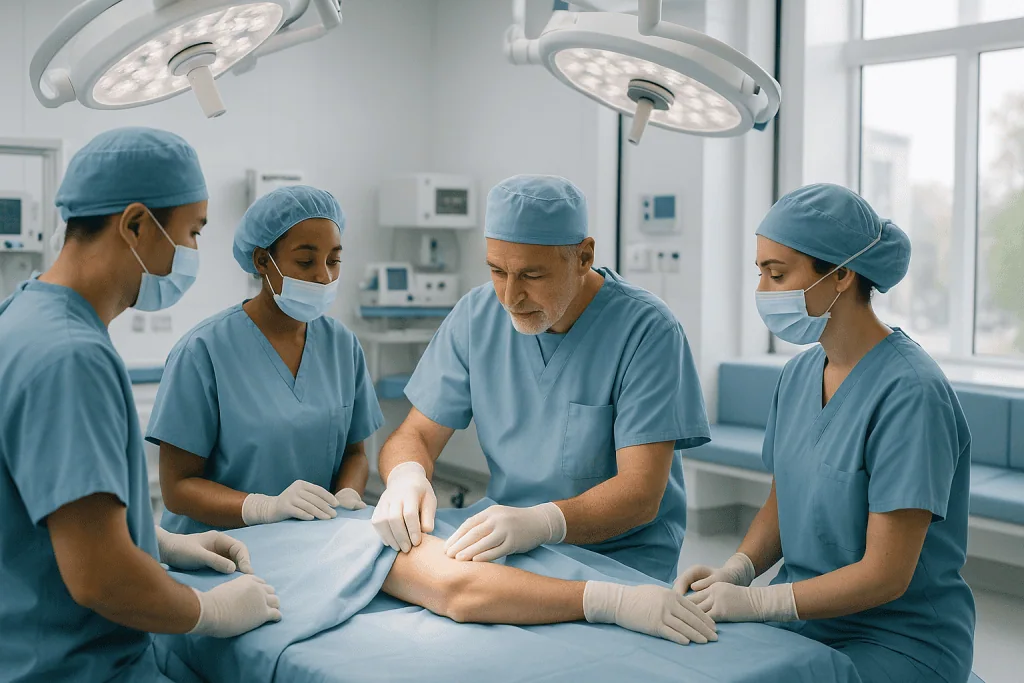
On the day of surgery, anaesthesia may be general, regional (a nerve block that numbs the arm), or a combination, depending on the operation and your health. A regional block also helps with pain control in the first hours after surgery. You are positioned to give the surgeon safe access to the elbow, the area is prepared with sterile technique, and in fracture work intraoperative imaging is used to confirm alignment and implant placement as the operation proceeds.
In arthroscopic elbow surgery, the surgeon makes several small incisions around the joint and inserts a camera that projects a magnified view onto a monitor. Fine instruments remove loose bodies, release scar tissue, debride inflamed tissue, smooth bone spurs or treat selected cartilage and soft-tissue problems. Arthroscopy disturbs less soft tissue than open surgery for the right indications, but the elbow is one of the more demanding joints to work in arthroscopically, because nerves and vessels sit close to every portal. Experience with elbow-specific arthroscopy is not a luxury; it is the core safety factor.
In open elbow surgery, a planned incision gives direct access to the injured or diseased structure. Open approaches are usually needed for complex fractures, tendon repairs, ligament reconstruction, nerve surgery and joint replacement. In fracture fixation, fragments are repositioned and stabilised with implants matched to the fracture pattern. In ligament reconstruction, torn tissue is repaired or rebuilt with a tendon graft. In tendon repair, sutures and anchors reattach the tendon to bone. In nerve decompression, the surgeon releases the tight tissue around the nerve and may transpose the nerve to a position where it sits under less tension.
For severe arthritis or joint destruction that cannot be reconstructed, elbow replacement removes the damaged joint surfaces and replaces them with artificial components designed to relieve pain and restore useful motion. It can transform daily life for the right patient, typically someone with inflammatory arthritis, advanced degenerative disease or a fracture that cannot be rebuilt, but it comes with a permanent condition attached: lifelong limits on lifting, to protect the implant. Candidacy is assessed carefully, and the trade-offs are discussed openly before any decision.
The technology involved serves specific purposes rather than spectacle. High-resolution and three-dimensional imaging support diagnosis and pre-operative planning of complex fracture geometry or deformity. Intraoperative imaging confirms alignment and fixation in real time. Arthroscopic camera systems provide magnified vision inside a joint the size of a walnut. Modern fixation materials and suture systems let surgeons restore anatomy while handling soft tissue gently, which, at the elbow, directly affects how much motion you keep.
Operating time varies widely. A limited arthroscopy or nerve release is comparatively short; complex fracture reconstruction, revision surgery or joint replacement takes considerably longer. Some procedures are day surgery; others involve one or more nights in hospital for pain control, wound monitoring, nerve checks or medical observation. Afterwards, the arm is protected in a dressing, splint, brace or sling appropriate to the procedure, pain is managed with a personalised plan, and the team monitors circulation, swelling, finger movement, sensation and any sign of nerve irritation.
Rehabilitation is not an appendix to elbow surgery: it is half the treatment. Physiotherapy typically progresses through swelling control, scar care, range-of-motion work, graded strengthening, attention to shoulder mechanics and posture, nerve-gliding exercises where relevant, and finally work- or sport-specific retraining. The plan is adjusted continuously against healing, pain, stiffness, imaging and the stability of the repair. Gentle hand, wrist and shoulder movement often begins within days; elbow motion begins early for some procedures and after a protected interval for others.
Recovery After Elbow Surgery
Recovery follows a recognisable arc regardless of procedure, protect, move, strengthen, return, but the pace differs enormously between a day-case arthroscopy and a rebuilt fracture-dislocation. The table below sets out what most patients can expect; your own protocol takes precedence over it.
| Time Period | What Patients Can Expect |
|---|---|
| Day 1 | The arm is protected in a dressing, splint, brace or sling. Pain control, swelling management, finger movement and nerve checks are the priorities. Some patients go home the same day; others stay in hospital for observation. |
| First week | Swelling and bruising are normal. You receive instructions on wound care, safe positioning, medication use and early movement. Hand, wrist and shoulder exercises are usually encouraged unless specifically restricted. |
| First month | Follow-up visits assess healing and motion, with imaging where needed. Physiotherapy becomes more active, with controlled elbow movement and a gradual return to daily function. Lifting is commonly restricted after repairs and fracture fixation. |
| Two to three months | Progressive strengthening begins if healing allows. Work duties resume in stages, depending on the physical demands of the job and the type of surgery performed. |
| Longer term | Recovery after major reconstruction, complex fracture surgery or joint replacement continues over several months. Athletes and manual workers usually need sport- or task-specific conditioning before returning to higher loads. |
What is the recovery time for elbow surgery?
Anywhere from a few weeks to the better part of a year, depending on the operation. A straightforward arthroscopy or nerve release often allows a return to light activity within weeks. Fracture fixation, ligament reconstruction and tendon repair sit in the middle, with protected phases followed by months of strengthening. Elbow replacement and complex reconstruction occupy the long end. Two things shorten every timeline: an accurate diagnosis matched to the right procedure, and disciplined rehabilitation. Nothing lengthens a timeline faster than skipping the therapy.
How long after elbow surgery can I straighten my arm?
For many procedures, gentle straightening begins within days; for repairs that need protection, it begins after a defined interval set by your surgeon, and complete, comfortable extension is typically the last movement to return. The elbow loses its final degrees of straightening more stubbornly than any other motion, which is why therapists work on extension early and persistently. After significant trauma or reconstruction, a small permanent loss of terminal extension is possible even with excellent rehabilitation, and a candid surgeon will tell you so before the operation, not after.
How long after elbow surgery can I drive?
Not while your arm is in a splint or sling, not while strong pain medication affects your reactions, and not until you can control the vehicle confidently in an emergency, which in practice means weeks for most procedures and longer after major reconstruction. There is a legal dimension too: in many countries you must be able to demonstrate proper control of the car, and insurers may not cover a driver who cannot. Confirm the timing with your surgeon at follow-up rather than judging it from how the arm feels on a good day.
How to sleep after elbow surgery?
Most patients sleep best on their back or on the non-operated side, with the arm supported on pillows so the hand rests slightly above the level of the heart. Elevation reduces overnight swelling, which is the main cause of early post-operative night pain. Keep any splint or brace on at night if you were told to wear it, and place a pillow along your side to stop yourself rolling onto the arm. Broken sleep is common in the first week or two and improves as swelling settles; it does not mean something has gone wrong.
Why Acting Early Matters and the Risks of Delay
The elbow punishes delay more than most joints, chiefly through stiffness. Late diagnosis or prolonged immobilisation makes motion harder to restore even when the underlying fracture or soft-tissue injury is eventually treated well. In displaced fractures, waiting allows bone to begin healing in a poor position, which can mean deformity, lost motion, chronic pain or post-traumatic arthritis, problems that are harder to fix than the original injury.
Instability compounds over time as well. An elbow that repeatedly shifts damages its cartilage and bone surfaces with every episode. Athletes compensate with altered throwing or lifting mechanics, and the shoulder, wrist and nerves pay for it. Ruptured tendons retract and scar, making late repair more complex than early repair. Progressive nerve compression can leave persistent numbness or hand weakness that decompression may only partly reverse once muscle wasting has begun.
None of this means every elbow problem needs urgent surgery, many conditions are managed safely with medication, bracing, injections, activity modification and therapy, and a good surgeon says so plainly. What it does mean is that early specialist evaluation is valuable in itself, because it separates the injuries that can be watched from the ones with a closing treatment window. A second opinion obtained soon after injury protects that window.
Benefits of Elbow Surgery
The benefits you can realistically expect depend on your diagnosis, the technique used and the rehabilitation that follows, but the aims are consistent across procedures.
| Benefit | What It Means for You |
|---|---|
| Pain reduction | Repairing damaged structures, removing loose bodies, treating arthritis or relieving nerve compression can reduce pain during activity and at rest. |
| Improved stability | Ligament repair, reconstruction or fracture fixation helps the elbow feel secure during lifting, pushing, throwing and weight-bearing. |
| Better range of motion | Procedures for stiffness, scar tissue, bone spurs or mechanical blockage help you bend, straighten and rotate the forearm more effectively. |
| Restored strength and function | Tendon repair combined with structured rehabilitation supports a graded return to work, self-care, household tasks and selected sports. |
| Protection against further damage | Timely treatment of unstable fractures, dislocations, ligament tears and locking reduces the risk of progressive joint damage. |
| A clearer long-term plan | A surgical plan comes with imaging follow-up and rehabilitation milestones, so you know what the coming months should look like. |
Factors That Influence the Outcome
The result of elbow surgery is shaped by the original diagnosis, the severity of injury, the timing of treatment, the quality of bone and soft tissue, nerve involvement, surgical technique and, not least, your commitment to rehabilitation. A loose body removal and a complex fracture-dislocation are different undertakings with different recovery profiles, and honest expectations are part of good care, not an afterthought.
The condition of the joint surface sets the ceiling. If cartilage is well preserved, restoring stability or removing a mechanical block can return good function. If arthritis is advanced, the realistic goal shifts towards reducing pain and preserving useful motion rather than recreating a normal elbow.
Timing shapes complexity. Displaced fractures, acute tendon ruptures and unstable dislocations are more straightforward to treat early. Chronic stiffness, long-standing deformity and delayed tendon repair can still be addressed in many cases, but the surgery is more involved and the recovery less predictable.
Nerve health deserves specific attention. The ulnar nerve is vulnerable in many elbow conditions and many elbow operations. When nerve symptoms are mild and recent, decompression can halt progression. When muscle wasting is established, recovery is slower and sometimes incomplete. Your surgical team assesses nerve function carefully before and after treatment for exactly this reason.
Rehabilitation quality often decides how much of the surgical result you actually keep. Elbow therapy demands precision: the joint needs movement to avoid stiffness while the repair needs protection to heal, and the balance shifts week by week. A therapist experienced in upper-limb work guides that balance, and your side of the bargain is the unglamorous part: home exercises, brace discipline, swelling control and respecting the restrictions.
General health influences healing. Smoking, poorly controlled diabetes, inflammatory disease, poor nutrition, certain medications and low bone density all affect wound healing, bone union, infection risk and tendon or ligament recovery. These factors are reviewed before surgery so that whatever can be optimised, is.
A good result is not defined by an X-ray or a neatly healed incision. It means the elbow is stable enough, comfortable enough and mobile enough for the life you actually lead. For one person that is office work and independence in daily tasks; for another it is safe manual labour or a staged return to competitive sport. Personal goals belong in the surgical plan from the first conversation.
Elbow Surgery at Acibadem
At Acibadem, elbow surgery is planned through detailed diagnostic and clinical assessment rather than a standard pathway applied to every patient. Orthopaedic surgeons, sports medicine specialists, radiologists, rehabilitation physicians and physiotherapists contribute to the care plan, with neurologists or pain specialists involved where nerve symptoms or chronic pain complicate the picture. Complex cases: a fracture-dislocation, an athlete’s ligament reconstruction, arthritis in a patient with inflammatory disease, are reviewed across specialties so that fixation strategy, nerve status, rheumatological management and rehabilitation timing are considered together rather than in sequence.
Diagnostics are used to answer questions, not to accumulate images: Is the joint surface displaced? Is the ligament completely torn? Is a loose fragment causing the locking? Is the ulnar nerve compressed? Is the bone quality adequate for fixation? Digital X-ray, cross-sectional imaging, MRI, ultrasound and nerve studies are deployed according to the clinical question, and the answers drive the choice between open, arthroscopic, reconstructive and replacement techniques.
Rehabilitation is treated as part of the surgical plan rather than an afterthought. Brace protocols, exercise progressions and imaging follow-up recommendations are set out explicitly, so that every stage of recovery has a defined purpose and the therapy team can adjust the programme against healing rather than guesswork. Written guidance covers what to expect week by week, which restrictions apply in each phase, and which milestones signal readiness to progress. Some patients who go through this assessment are advised that continued non-surgical care serves them better than an operation; that advice is given as readily as a surgical recommendation.
Weighing the Decision
Elbow problems are frustrating because they compromise the whole arm: pain, stiffness, instability or weakness at this one joint limits work, sport and independence out of proportion to its size. The encouraging reality is that most elbow conditions respond well when three things line up: an accurate diagnosis, a procedure matched to the actual problem, and rehabilitation carried through properly.
If surgery has been raised as an option, the useful questions to put to your treating surgeon are specific ones. What exactly is damaged, and what does the imaging show? What happens if we wait? Which procedure is proposed, and why that one rather than the alternatives? What will I be able to do at one month, three months and six months? What restrictions are permanent, if any? A surgeon who answers those questions plainly, including the limits of what the operation can achieve, is giving you the information a sound decision requires. The elbow rewards precision, in surgery and in decision-making alike.
Preparation
- Before elbow surgery, the orthopedic team evaluates X-rays, MRI or CT scans, medical history, medications, and anesthesia suitability. Blood tests and cardiac assessment may be requested depending on age and health status. Patients are usually asked to stop blood-thinning medications when advised and avoid eating or drinking before anesthesia.
Aftercare
- After surgery, the elbow may be protected with a splint, brace, or sling, and pain is managed with prescribed medication. Physical therapy is often started gradually to reduce stiffness and restore range of motion. Patients should keep the wound clean, attend follow-up visits, and avoid lifting or sports until cleared by the surgeon.
Frequently Asked Questions
What affects the cost of elbow surgery?
The final cost depends on the diagnosis, complexity of the injury, surgical technique, implant or graft needs, imaging, anesthesia, hospital stay, medications, and rehabilitation plan. International patient services, interpreter support, transfers, and accommodation arrangements may also affect the overall budget.
How can I get a personalised quote for elbow surgery in Turkey?
You can request a free consultation and share your medical reports, imaging, diagnosis, and current symptoms. After review by the orthopedic team, the hospital can provide a personalised treatment plan and quote based on your clinical needs.
Does a package usually include physiotherapy?
Some packages may include selected in-hospital rehabilitation or initial physiotherapy guidance, while extended outpatient therapy may be planned separately. It is important to confirm what is included in the written quote before travel.
Will implants or grafts change the cost?
Yes. Plates, screws, anchors, wires, graft materials, or elbow prosthetic components can influence the final cost. The need for these materials depends on the injury pattern, joint stability, bone quality, and surgical plan.
Is minimally invasive elbow surgery always less costly?
Not always. Arthroscopy may reduce soft tissue disruption in suitable cases, but costs can still be affected by equipment, surgical time, anesthesia, hospital policies, and rehabilitation needs. A specialist decides whether arthroscopic or open surgery is appropriate.
Is this information medical or financial advice?
No. This is general educational information and should not replace advice from a qualified specialist or a formal hospital quotation. A free consultation can help clarify the most suitable treatment option and expected package details for your case.
Medically reviewed by the Acıbadem International Medical Board September 1, 2026
See our medical review board →
Update history
- PublishedJune 7, 2026
- Medical review approvedSeptember 1, 2026
- Last content updateSeptember 1, 2026
References3
- Elbow Injuries and Disorders medlineplus.gov
- Tennis elbow nhs.uk
- Elbow Pain my.clevelandclinic.org
Trusted care for international patients
From the Acibadem Blog
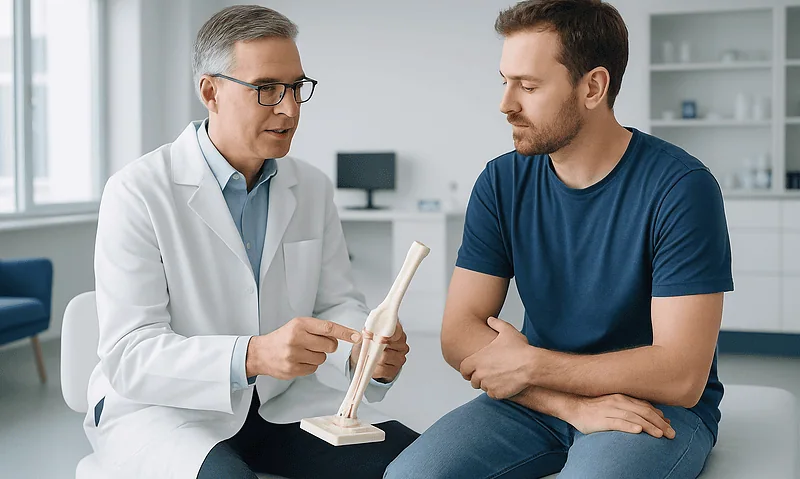
Open vs Arthroscopic Elbow Surgery: Which Elbow Problems Suit Keyhole Techniques
Arthroscopic (keyhole) elbow surgery suits problems inside the joint itself: loose bone fragments, early arthritis debris, stiff scar tissue, some cartilage lesions and selected…
Elbow Surgery Recovery: Why Early Movement Matters and How Stiffness Is Prevented
Elbow surgery recovery time varies by procedure: bone typically knits in about six to eight weeks, while regaining full strength and motion usually takes…