ESS
ESS (endoscopic sinus surgery) is a minimally invasive ENT procedure that opens blocked sinus passages to improve drainage and breathing in chronic sinus disease.
Quick answer
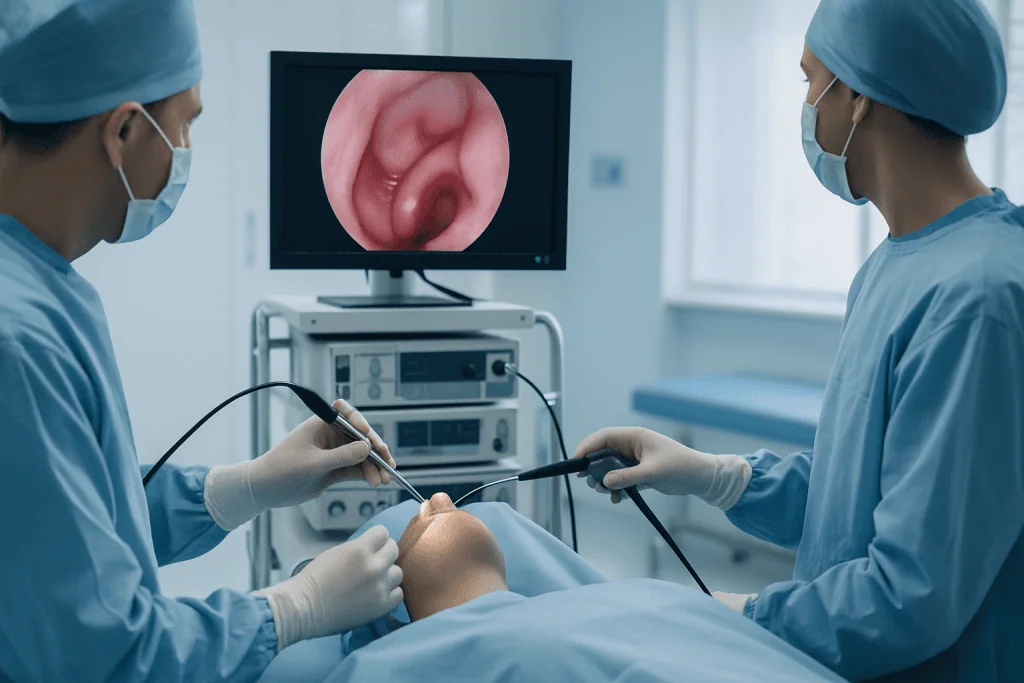
Endoscopic sinus surgery (ESS) is a minimally invasive procedure performed through the nostrils using a thin camera and fine instruments. It opens blocked sinus drainage pathways, removes obstructing tissue such as nasal polyps and restores ventilation, usually with no external incisions. It is considered for chronic or recurrent sinus disease that has not improved with appropriate medical treatment.
What Is Endoscopic Sinus Surgery (ESS)?
Endoscopic sinus surgery, usually shortened to ESS, is a minimally invasive ear, nose and throat procedure performed entirely through the nostrils. A thin camera called an endoscope gives the surgeon a magnified view of the nasal passages, and delicate instruments are used to open blocked sinus drainage pathways, remove obstructing tissue and restore normal ventilation. Because the approach uses the natural nasal openings, there are usually no external facial incisions and no visible scarring. ESS is considered for people whose sinuses remain blocked or inflamed despite appropriate medical treatment, and for a smaller group of conditions that need surgical access regardless of how well medication has worked.
To understand what the operation does, it helps to understand what the sinuses are. The sinuses are air-filled spaces within the bones of the face and skull. There are four paired groups: the maxillary sinuses in the cheeks, the ethmoid sinuses between the eyes, the frontal sinuses in the forehead and the sphenoid sinuses deep behind the nose. They are lined with mucosa, a soft tissue that produces mucus and helps filter and humidify the air you breathe. In healthy sinuses, mucus drains through small natural openings into the nasal cavity and is cleared without you noticing. When those openings become narrowed or blocked, by swelling, polyps, infection, anatomical variation or scarring, mucus accumulates, bacteria can overgrow and inflammation becomes persistent. That cycle of blockage and inflammation is what patients experience as pressure, congestion, drainage and repeated infection.
The goal of ESS is not simply to “remove sinus disease”. It is to restore ventilation and drainage through the natural sinus openings, reduce the burden of chronic inflammation and allow ongoing medical therapy to work more effectively. The procedure is most commonly performed for chronic rhinosinusitis, particularly when symptoms continue despite well-directed medication. It is also used to remove nasal polyps, improve access for topical medications, treat selected fungal sinus disease, drain complications of sinus infection and manage certain benign tumours or lesions within the nasal and sinus cavities.
The technique has evolved considerably over recent decades. Surgery today is guided by high-resolution endoscopic views and preoperative imaging, usually a CT scan of the sinuses. In selected cases, image-guidance systems help the surgeon navigate complex anatomy by correlating surgical instruments with the patient’s own imaging in real time. The modern emphasis is precise, tissue-sparing surgery that supports long-term sinus function, not aggressive removal of normal structures. A well-planned ESS leaves as much healthy mucosa in place as possible, because that lining is what keeps the sinuses working after they heal.
Is ESS the same as FESS?
Yes: ESS and FESS describe the same operation, and the terms are used almost interchangeably. FESS stands for functional endoscopic sinus surgery. The word “functional” was added to emphasise the central idea of the technique: rather than stripping out sinus tissue, the surgeon opens the natural drainage pathways so the sinuses can function again on their own. Some surgeons now simply say ESS because virtually all modern endoscopic sinus surgery follows this functional philosophy. If your referral letter, imaging request or previous operative report says FESS, it refers to the same family of procedures described on this page.
Is endoscopic sinus surgery a major operation?
ESS is a genuine operation performed close to delicate structures, but it is minimally invasive by design. It is usually carried out under general anaesthesia, involves no external cuts and, in many cases, allows patients to go home the same day or after one night of observation. How significant the surgery feels depends on its extent: opening a single blocked sinus is a shorter, more limited procedure than treating widespread nasal polyps across all sinus groups, or revising previous surgery. Because the sinuses sit next to the eye sockets and the base of the skull, the operation demands detailed imaging, careful planning and experience with endoscopic anatomy, which is exactly why the preoperative work-up matters as much as the surgery itself.
Does ESS change the shape of your nose?
No. ESS works inside the nasal and sinus cavities and does not alter the external appearance of the nose. It is not a cosmetic procedure and it is different from rhinoplasty. That said, some patients have both sinus disease and structural nasal obstruction, such as a deviated septum or enlarged turbinates. In these situations, the ENT surgeon may discuss performing septoplasty or turbinate reduction during the same operation, both to improve nasal airflow and to create better surgical access to the sinuses. These additions are internal corrections; they too leave the outside of the nose unchanged.
When Chronic Sinus Problems Begin to Affect Daily Life
Living with chronic sinus disease can be exhausting in ways that are difficult to explain to others. It may begin as repeated congestion, facial pressure, thick nasal drainage or a diminished sense of smell. Over time, it can affect sleep, concentration, exercise, work, travel and the simple comfort of breathing through the nose. Many people try multiple courses of medication, nasal sprays, rinses or antibiotics before they begin to wonder whether something structural is preventing the sinuses from healing properly. That question, is the anatomy itself blocking recovery, is precisely the one a surgical evaluation is designed to answer.
If you are weighing up treatment, the questions tend to be practical. Is surgery truly necessary, or would better medical therapy be enough? How safe is the operation, and how long does recovery take? Will it actually reduce the cycle of infections and inflammation, or only interrupt it? These are reasonable questions, and a careful diagnostic process should answer them before any operation is scheduled.
It is worth stating plainly that chronic sinus disease is not one single disorder. It may involve infection, allergy, nasal polyps, anatomical narrowing, immune factors, asthma or a combination of these. Two patients with identical symptoms can have entirely different underlying problems, and entirely different treatment plans. Understanding the cause is the first step toward choosing the right treatment, and it is the reason no two ESS operations are planned the same way.
Who May Need ESS?
ESS may be considered when sinus symptoms are persistent, recurrent or complicated, and when medical therapy has not provided adequate relief. The decision rests on symptoms, nasal endoscopy findings, imaging and your overall health, never on symptoms alone. Careful evaluation matters because not every blocked or congested nose needs surgery. Allergies, migraines, reflux, medication overuse, environmental irritants and other conditions can mimic or contribute to sinus symptoms, and operating on the sinuses will not fix a problem that lives elsewhere.
Typical symptoms that lead patients to seek evaluation include:
- Persistent nasal congestion or obstruction
- Thick nasal discharge or postnasal drip
- Facial pressure, heaviness or pain around the cheeks, forehead or between the eyes
- Reduced or lost sense of smell
- Repeated sinus infections requiring antibiotics
- Chronic cough related to postnasal drainage
- Fatigue, poor sleep or reduced quality of life linked to nasal and sinus symptoms
- Worsening asthma or lower airway symptoms associated with chronic sinus inflammation
How is chronic sinusitis diagnosed before surgery?
Diagnosis begins with a detailed consultation, followed by direct examination of the nose. The ENT physician asks about symptom duration, previous treatments, allergies, asthma, prior surgeries, medication use, dental history and any features that fall outside typical sinusitis, such as vision changes, severe headache or neurological symptoms. A nasal endoscopy is usually performed in the clinic: a slim endoscope is passed into the nostril to inspect the nasal passages, the sinus drainage areas, the septum and turbinates, and to check for polyps, pus, crusting or swelling. This examination often reveals findings that cannot be seen with a simple light and speculum.
In selected cases, further testing is added: MRI when soft-tissue detail is needed, allergy testing, immune evaluation, microbiology cultures or a dental assessment when a tooth-related sinus infection is suspected. This layered diagnostic pathway distinguishes chronic sinusitis from the many conditions that imitate it, and it gives the surgeon an accurate map of what needs to be treated and why.
Do you need a CT scan before sinus surgery?
Yes: a CT scan of the sinuses is a standard part of planning ESS. CT imaging confirms the diagnosis by showing which sinuses are inflamed or opacified, and it maps the bony anatomy: the position of the sinus openings, the thickness of walls near the eye and skull base, and anatomical variations that influence how the surgeon operates. Because every patient’s sinus anatomy differs, the CT functions as the surgical roadmap. When image-guided navigation is used during the operation, it is this scan that the navigation system references.
When is surgery considered instead of more medication?
Surgery becomes a reasonable option when symptoms and objective findings persist despite appropriate medical therapy, or when the condition itself requires a procedure regardless of medication. In practice, ESS may be appropriate for chronic sinus symptoms lasting for months, recurrent acute infections, nasal polyps that have not responded sufficiently to medication, or complications related to blocked sinuses. It is also considered when disease physically prevents topical treatments from working, steroid rinses cannot help inflamed sinus cavities that they cannot reach. In that sense, surgery and medication are not rivals: ESS often exists to make medical therapy effective again.
Conditions and Indications Treated With ESS
Endoscopic sinus surgery addresses conditions in which sinus drainage, ventilation or access for treatment is impaired. The surgical plan varies according to which sinuses are involved, maxillary, ethmoid, frontal, sphenoid or a combination, and why they are diseased.
Chronic rhinosinusitis without nasal polyps
Chronic rhinosinusitis without nasal polyps is one of the most common indications for ESS. Patients typically have long-standing inflammation, recurrent infection, facial pressure and persistent drainage. Surgery opens the narrowed sinus pathways, allows trapped mucus to clear and, just as importantly, creates access so that saline rinses and topical medication can reach the sinus lining after the operation.
Chronic rhinosinusitis with nasal polyps
Chronic rhinosinusitis with nasal polyps is another frequent reason for surgery. Polyps are soft, non-cancerous inflammatory growths that can block the nasal passages and sinus openings, and they are often associated with asthma, aspirin-exacerbated respiratory disease, allergy or other inflammatory patterns. ESS can remove obstructing polyps and open the affected sinuses, but the inflammatory tendency that produced the polyps does not disappear with surgery. Long-term medical management remains important, because polyps can recur: a point every patient with this diagnosis should hear clearly before deciding on an operation.
Recurrent acute rhinosinusitis
Recurrent acute rhinosinusitis means repeated distinct episodes of sinus infection with genuine recovery in between. When endoscopy and imaging point to an anatomical blockage or a persistent inflammatory focus that keeps triggering these episodes, ESS may help reduce their frequency or severity in carefully selected patients. Selection is the key word: if the episodes have another driver, opening the sinuses will not address it.
Fungal sinus disease
Fungal sinus disease covers a spectrum, from non-invasive fungal balls, dense collections of fungal material within a single sinus, to more complex inflammatory forms. Several of these require surgical removal of the fungal material and restoration of drainage, which endoscopic surgery achieves well. Invasive fungal sinusitis, which is rare and considerably more serious, requires urgent evaluation and multidisciplinary management that extends well beyond a standard ESS.
Sinus mucoceles
Sinus mucoceles are mucus-filled expansions of a sinus cavity that develop when a sinus opening is completely obstructed. As they slowly enlarge, they can press on nearby structures, including the eye socket. Endoscopic surgery is used to drain the mucocele and permanently open the affected sinus so that it does not re-form.
Benign tumours, cysts and lesions
Selected benign tumours, cysts or lesions within the nasal and sinus cavities can be removed or biopsied endoscopically, depending on their location, behaviour and pathology. Suspicious or complex lesions require careful imaging first and, when appropriate, review by the relevant specialist boards so that the approach, endoscopic, combined or otherwise, matches the pathology rather than a default technique.
Complications of sinus infection
Complications of sinus infection, such as infection extending toward the eye socket or surrounding tissues, sometimes require urgent endoscopic drainage in addition to medical treatment. These cases are managed with close attention to vision, neurological status and infection control, and they illustrate why the sinuses’ proximity to the eyes and skull base shapes every aspect of this surgery. ESS is generally safe in appropriately selected patients, but it remains a delicate operation in a complex area, and it should be planned with thorough imaging by physicians experienced in endoscopic anatomy.
How ESS Is Performed: From Preparation to Recovery
Preoperative Assessment and Treatment Planning
Before ESS, your ENT physician reviews your medical history, previous medications, allergy and asthma history, imaging and nasal endoscopy findings. Existing CT scans, operative reports, pathology results and an up-to-date medication list are all part of this assessment, so that earlier findings inform the plan and investigations are not repeated unnecessarily.
Many patients complete a period of optimised medical therapy before surgery is recommended. This may include saline irrigations, intranasal steroid sprays or rinses, allergy treatment, antibiotics when bacterial infection is suspected, or short courses of oral medication in selected cases. Surgery is generally proposed when symptoms and objective findings persist despite this therapy, or when the condition itself, a fungal ball or a mucocele, for example, requires procedural treatment from the outset.
Preoperative testing depends on your age, general health and the anaesthesia plan, and may include blood tests, an electrocardiogram, chest assessment or an anaesthesia consultation. Patients taking blood thinners, certain supplements or other medications that affect bleeding risk receive specific instructions from the treating team as part of this planning. Smoking impairs healing and mucosal recovery, so stopping before surgery is strongly advised. Finally, the surgeon explains exactly which sinus areas need treatment, maxillary, ethmoid, frontal or sphenoid, and whether septoplasty or turbinate reduction should be added. The plan is tailored, not standardised.
What Happens on the Day of Surgery?
ESS is most often performed under general anaesthesia, which keeps you comfortable and completely still while the surgeon works in millimetre-scale anatomy. Limited procedures are sometimes done with local anaesthesia and sedation in selected settings. Once anaesthesia is established, the operation follows a broadly consistent sequence:
- The surgeon passes the endoscope through the nostril and inspects the nasal and sinus anatomy on a high-definition monitor.
- The diseased areas identified on CT are located and correlated with the endoscopic view, with navigation assistance in selected cases.
- Obstructing tissue, polyps or fungal material is removed with fine or powered instruments, working through the natural openings.
- Narrowed drainage pathways are widened, preserving healthy mucosa around them.
- If planned, septoplasty or turbinate reduction is performed through the same nostril approach.
- The surgical field is checked for bleeding, and dissolvable materials or soft packing are placed if needed.
Technology supports safety and precision at each step. High-resolution CT defines the anatomy in advance; endoscopic visualisation provides magnified views inside the nose; powered instruments allow controlled removal of soft tissue or polyps. Image-guided navigation may be used in revision surgery, extensive polyposis, distorted anatomy, frontal sinus disease or disease near the skull base or eye socket. These tools do not replace surgical judgement: they extend the surgeon’s anatomical awareness in exactly the situations where landmarks are hardest to read.
How long does endoscopic sinus surgery take?
Many ESS procedures are completed within a few hours, but the duration varies widely. Limited surgery on one or two sinuses is shorter; extensive polyp surgery across all sinus groups, revision operations through scar tissue, or combined procedures such as septoplasty take longer. Your surgeon can give a realistic estimate for your specific plan once imaging and endoscopy findings are on the table: a generic figure means little for an operation this individualised.
Is nasal packing still used after sinus surgery?
Less often than in the past, and in gentler forms. At the end of surgery, dissolvable materials or soft nasal packing may be placed depending on the case and the surgeon’s preference. The firm, uncomfortable packing many patients remember or have read about is used far less frequently today, though some patients still need temporary support inside the nose to control bleeding and stabilise healing tissue. If packing is used, the team explains when and how it will be removed or absorbed.
Immediately After the Procedure
You are monitored as you wake from anaesthesia, with attention to breathing, bleeding, comfort and nausea control. Some patients go home the same day; others stay overnight for observation, particularly after extensive surgery or when medical conditions warrant monitoring. In the first days, nasal stuffiness, mild bleeding or blood-tinged drainage, facial pressure, fatigue and reduced smell are all normal. Congestion can feel worse before it improves, because swelling and crusting temporarily narrow the newly opened passages. Discomfort is usually manageable with the medications your team prescribes or recommends, although individual experiences vary.
Postoperative care is not an afterthought: it is part of the operation’s success. Saline irrigations are commonly recommended to clear crusts and support healing. Your physician may prescribe topical steroids, antibiotics, pain medication or other treatments according to your condition and, where relevant, the pathology and culture results from surgery. Follow-up visits allow the surgeon to examine the healing sinus openings endoscopically, remove crusts where needed and adjust the plan. These visits matter most for patients with nasal polyps or inflammatory disease, where lasting control is a partnership between surgery and ongoing medical care.
When can you fly after sinus surgery?
Not immediately, air travel is usually postponed until early healing is under way. The timing depends on the extent of surgery, bleeding risk and healing progress at follow-up, so it is set individually rather than by a fixed rule. Pressure changes during flight and the dry cabin environment are the practical concerns: both can irritate freshly operated tissue and provoke bleeding or discomfort in the first phase of recovery. If a flight cannot be moved, discuss the timing with your surgeon in advance so the recovery plan accounts for it.
Recovery and Return to Normal Activities
Most patients resume light daily activities within several days, depending on general health and the extent of surgery. Strenuous exercise, heavy lifting, bending, swimming and anything that raises pressure in the nose are restricted for a short period. Forceful nose-blowing is avoided until the surgeon confirms it is safe, and sneezing with the mouth open is often recommended during early healing to protect the operated areas. Simple environmental measures help too: humidified air, adequate fluids and avoiding smoky or dusty surroundings all reduce crusting and dryness while the lining recovers.
Breathing improvement is rarely immediate. The nose can feel blocked while swelling and crusting persist, and many patients notice gradual improvement over several weeks as inflammation settles and the sinuses clear. Sense of smell may improve, particularly when obstruction from polyps has been relieved, but smell recovery is variable and depends on the underlying inflammatory condition: an honest surgeon will not promise it.
Longer-term results usually depend on continuing the medical plan. ESS creates access and drainage; it does not remove the underlying tendency toward allergy, asthma-related inflammation or polyp formation. Patients with chronic inflammatory sinus disease may need ongoing nasal steroid therapy, saline irrigation, allergy management or newer medical options when appropriate, guided by their treating physician. This long-term strategy is what protects the result the surgery achieved.
Recovery Timeline After ESS
Recovery is individual, and the extent of surgery shapes it, but the following timeline gives a realistic sense of what many patients experience after endoscopic sinus surgery.
| Time Period | What Patients Can Expect |
|---|---|
| Day 1 | Mild bleeding, nasal blockage, fatigue and facial pressure are common. Patients are monitored after anaesthesia and receive instructions for medications, activity limits and nasal care. |
| First Week | Congestion and crusting may continue. Many patients begin saline irrigations as instructed. Light activities are usually possible, but strenuous exercise and heavy lifting are limited. |
| First Month | Breathing often improves gradually as swelling decreases. Follow-up visits may include endoscopic cleaning and adjustment of medications. Most daily routines resume with physician guidance. |
| Longer Term | Sinus control depends on the original condition. Patients with polyps, allergy or asthma-related inflammation may need ongoing topical therapy and periodic ENT follow-up. |
Potential Benefits of ESS
The benefits of ESS vary by diagnosis, but the procedure is intended to improve sinus drainage, reduce obstruction and support better long-term control of chronic inflammation. The table below summarises what each of these means in practice, noting that improvement develops gradually and depends on the underlying condition.
| Benefit | What It Means for You |
|---|---|
| Improved sinus drainage | Opening blocked sinus pathways can help mucus clear more normally and may reduce the cycle of congestion, pressure and infection. |
| Better nasal airflow | When obstruction is related to polyps, swelling or associated structural problems, patients may breathe more comfortably through the nose after healing. |
| Reduced facial pressure and congestion | Many patients experience a meaningful decrease in sinus pressure, heaviness and chronic stuffiness, although improvement develops gradually. |
| Enhanced delivery of topical medication | After the sinuses are opened, saline rinses and prescribed topical therapies may reach inflamed areas more effectively. |
| Fewer or less severe infections in selected patients | For patients with recurrent infections related to poor drainage, surgery may reduce the frequency or intensity of episodes. |
| Improved quality of life | Better breathing, sleep, smell, comfort and energy can support daily activities, travel and work, depending on the underlying condition. |
Risks and Safety Considerations
Any honest discussion of ESS includes its risks. The most common issues after surgery are minor and temporary: bleeding, crusting, congestion, mild discomfort and short-term changes in smell while the lining heals. Scar tissue or adhesions can occasionally form inside the nose during healing, which is one of the reasons follow-up endoscopic checks are scheduled: the surgeon can identify and manage these early.
Because the sinuses border the eye sockets and the base of the skull, more serious complications are possible, though they are rare in experienced hands. These include injury to structures around the eye and leakage of the fluid surrounding the brain, known as a cerebrospinal fluid leak. Modern imaging, meticulous technique and, where appropriate, image-guided navigation exist precisely to minimise these risks. Your surgeon should discuss them with you directly, in the context of your own anatomy and disease extent, so that consent is informed rather than formal.
Risk is also shaped by the patient’s situation: revision surgery through altered anatomy, extensive polyps, bleeding tendencies and certain medical conditions all change the calculation. This is why the preoperative assessment is thorough, and why the extent of surgery is matched to the disease rather than maximised by default.
Why Acting Early Matters
Chronic sinus disease is not always dangerous, but leaving persistent symptoms unassessed allows inflammation to become more entrenched and quality of life to erode. Ongoing congestion and drainage disrupt sleep, reduce productivity and deepen fatigue. Repeated infections lead to frequent antibiotic courses, missed work and travel limitations. In patients with asthma or lower airway sensitivity, uncontrolled sinus inflammation can contribute to respiratory symptoms: the upper and lower airways behave as one connected system.
Some presentations fall outside routine sinusitis and are assessed differently. Symptoms confined to one side of the nose, symptoms associated with bleeding, vision changes, severe headache, facial swelling, eye pain, double vision, persistent loss of smell or neurological symptoms, and sinus disease in patients with weakened immune systems, can indicate conditions that need more specialised evaluation. ENT physicians treat these features as reasons for closer investigation rather than as variations of an ordinary blocked nose.
Delay can also make eventual surgery more complex. Extensive polyps, scarring from repeated inflammation, accumulated fungal debris or complications near the orbit demand more detailed planning. In revision surgery, scar tissue and altered anatomy increase technical difficulty. Timely diagnosis lets the physician choose the most appropriate treatment before symptoms and anatomical changes progress to that point.
Acting early does not mean rushing to the operating theatre. It means obtaining an accurate diagnosis, understanding what is actually causing your symptoms and choosing a plan based on evidence and individual risk. For some patients, optimised medical therapy is sufficient and surgery never enters the picture. For others, ESS becomes the most reasonable next step once it is clear that the sinuses remain blocked despite well-directed care.
What Influences Outcomes After ESS?
A good result after endoscopic sinus surgery starts with accurate diagnosis. ESS works best when symptoms match objective evidence of sinus disease on nasal endoscopy and imaging. If facial pain is actually caused by migraine, dental disease, nerve pain or another condition, sinus surgery will not resolve it: the anatomy will look better afterwards while the symptom remains. Careful evaluation exists to prevent exactly this: treating the wrong problem well.
The type and extent of disease matter next. Patients with a localised obstruction have a different recovery and long-term outlook than patients with diffuse inflammatory disease, extensive nasal polyps, aspirin-exacerbated respiratory disease or immune conditions. Revision surgery is more complex, because previous operations alter the normal landmarks and create scar tissue; detailed imaging and surgical experience carry particular weight in these cases.
Patient health influences healing. Smoking, uncontrolled diabetes, certain immune disorders, blood-thinning medication and untreated allergy all affect bleeding risk, infection risk and mucosal recovery. Asthma and chronic inflammatory conditions should be well managed before and after surgery where possible. The best outcomes tend to come from coordinated care between ENT physicians, allergy or pulmonology specialists and the patient’s primary physician.
Surgical technique is its own outcome factor. Modern ESS emphasises preservation of healthy mucosa, precise opening of obstructed drainage pathways and respect for the surrounding anatomy. Overly aggressive tissue removal can increase scarring or dryness; incomplete treatment can leave persistent blockage. The goal is balanced surgery that improves function while minimising unnecessary trauma, neither more nor less than the disease requires.
Postoperative care completes the picture. Saline rinses, topical medications and follow-up endoscopic examinations help the sinuses heal in an open position. Some patients need debridement, gentle removal of crusts and debris during office visits. Others need medication adjustments based on healing, pathology or culture results. Patients who skip follow-up or abandon medical therapy too early face a higher risk of persistent inflammation or recurrence, which is a preventable way to lose a good surgical result.
Can nasal polyps or sinusitis come back after surgery?
Yes, recurrence is possible, and expectations should be set accordingly before the operation. ESS can be very helpful for properly selected patients, but chronic sinus disease is often a long-term inflammatory condition that surgery reshapes rather than erases. Polyps in particular can regrow when the underlying inflammatory tendency remains active, which is why continued topical therapy and periodic ENT review are part of the plan for many patients. The realistic aim is durable control, fewer symptoms, better function and better response to medical treatment, not the permanent elimination of every future cold, allergy flare or sinus episode. Patients who understand this distinction participate more actively in their own long-term sinus health, and generally do better for it.
How ESS Is Approached at Acibadem
Confidence in the diagnosis matters as much as the operation itself. At Acibadem, ENT care is delivered within a hospital setting where imaging, anaesthesia, laboratory services and surgical support are integrated in one place, which is particularly relevant for patients with complex sinus disease, revision surgery, asthma, medication sensitivities or other conditions that require careful perioperative planning.
The evaluation is individualised. ENT physicians assess symptoms, nasal endoscopy findings, CT imaging and previous treatment history before any recommendation is made. Where a condition overlaps with allergy, pulmonary disease, infectious disease, ophthalmology, neurosurgery or pathology, multidisciplinary input is incorporated; for selected complex lesions or tumours, specialist boards review imaging and pathology to guide the safest plan. A patient with an isolated maxillary blockage does not receive the same approach as a patient with severe polyposis and asthma, and a revision case is discussed with a different risk framing than a first, limited procedure.
Continuity is planned into the pathway as well. Patients receive discharge instructions, medication plans and clear follow-up recommendations: a meaningful point for ESS, where recovery continues well after discharge and guidance on rinses, medication, activity limits and follow-up timing shapes the final result as much as the operation itself.
Deciding Whether ESS Is Right for You
The first step is never a commitment to surgery. It is a careful review of your symptoms, prior treatments, nasal endoscopy findings and sinus imaging, followed by a frank discussion of the options, including the option of better medical therapy without an operation. A well-run evaluation should leave you able to answer three questions: what is actually causing my symptoms, what would surgery realistically change, and what will managing this condition look like over the years ahead.
For some patients, the honest answer is that improved medical therapy or allergy management is the better plan, at least for now. For others, endoscopic sinus surgery offers a genuine opportunity to restore drainage, improve nasal airflow and reduce the burden of chronic inflammation that medication alone has not controlled. Second opinions have particular value in this field: if you have already been advised to undergo surgery, have had previous sinus operations, have nasal polyps, or continue to have symptoms despite multiple treatments, an independent review of your imaging and endoscopy findings can either confirm the plan or refine it.
Whatever you decide, the measure of good care remains the same: an accurate diagnosis, an honest explanation of what surgery can and cannot do, a procedure performed with appropriate planning and technique, and long-term follow-up that treats chronic sinus disease as the ongoing condition it usually is. With that framework in place, ESS is not a leap of faith: it is a considered step in a managed plan.
Preparation
- Before ESS, an ENT specialist reviews your symptoms, nasal endoscopy findings, and sinus CT scans. You may need to stop blood-thinning medicines as advised and avoid eating or drinking before anesthesia. Any active infection or allergy issues may be treated before surgery.
Aftercare
- After ESS, mild congestion, bleeding, and nasal crusting are common for a short time. Saline rinses, prescribed medicines, and follow-up endoscopic cleaning help healing and reduce recurrence risk. Avoid strenuous activity, nose blowing, and smoking until your doctor confirms it is safe.
Frequently Asked Questions
What affects the cost of ESS?
The main factors include the extent of sinus disease, whether nasal polyps or anatomical blockage are present, the need for CT imaging or other tests, surgeon experience, hospital setting, anesthesia, postoperative care, and whether additional nasal procedures are performed. Travel and accommodation may also affect the overall budget for international patients.
How can I get a personalised quote for ESS in Turkey?
You can request a complimentary consultation by sharing your symptoms, previous treatments, nasal endoscopy findings if available, CT images, and relevant medical history. An ENT specialist can review your case and the international patient team can explain what the proposed package includes.
What is usually included in an ESS package for international patients?
Package content varies by case and hospital policy, but it may include specialist evaluation, surgery, anesthesia, hospital services, routine postoperative checks, coordination support, and interpreter assistance. Imaging, medications, hotel stay, transfers, or extra consultations may be included or quoted separately depending on the plan.
Why might the quote change after the specialist review?
The quote may change if imaging shows more extensive disease, revision surgery is required, additional procedures are recommended, or extra medical clearance is needed. Final planning depends on specialist assessment and patient safety considerations.
Is ESS covered by insurance?
Coverage depends on your insurer, policy terms, medical necessity criteria, and whether the hospital is within your approved network. Patients should confirm coverage directly with their insurer; hospital teams can usually provide medical documentation for preauthorization when needed.
Is this comparison medical or financial advice?
No. This information is educational and should not replace advice from an ENT specialist or financial guidance from your insurer or advisor. A consultation is recommended for a diagnosis-based treatment plan and a personalised quote.
Medically reviewed by the Acıbadem International Medical Board September 1, 2026
See our medical review board →
Update history
- PublishedJune 8, 2026
- Medical review approvedSeptember 1, 2026
- Last content updateSeptember 1, 2026
References2
- Sinusitis medlineplus.gov
- Sinusitis (sinus infection) nhs.uk
Trusted care for international patients
From the Acibadem Blog

Who Is a Candidate for Endoscopic Sinus Surgery (ESS)? Chronic Sinus Disease and Nasal Polyps
Endoscopic sinus surgery is usually considered for adults with chronic rhinosinusitis, meaning sinus inflammation lasting 12 weeks or more, whose symptoms persist despite an…

Preparing for ESS: Treating Active Infection and Allergies Before Endoscopic Sinus Surgery
Preparing for endoscopic sinus surgery usually means arriving with the nose as calm as it can be. Surgeons commonly ask patients to settle any…