Intralase
Intralase is a bladeless femtosecond laser technique used to create a precise corneal flap during LASIK vision correction. It may improve comfort, accuracy, and suitability for selected patients.
Quick answer
IntraLase is a femtosecond laser used to create the corneal flap during LASIK, replacing the mechanical blade of older techniques. The laser separates a thin, precisely mapped flap; an excimer laser then reshapes the cornea underneath to correct short-sightedness, long-sightedness or astigmatism. The flap is repositioned without stitches. IntraLase is one step within LASIK, not a separate vision-correction procedure.
What Is IntraLase Eye Surgery?
IntraLase is a bladeless femtosecond laser used to create the corneal flap during LASIK vision correction. It replaces the mechanical blade, the microkeratome, of older LASIK techniques with ultrafast laser pulses that separate corneal tissue along a precisely mapped plane. IntraLase is not a separate vision-correction procedure in its own right: it is one step inside LASIK, and the excimer laser treatment that follows is what actually reshapes your cornea and changes your prescription.
Choosing laser vision correction is a personal decision, and usually a practical one. You want to wake up and see clearly, exercise without glasses, travel without a bag of contact lens supplies, or simply feel less dependent on lenses day to day. It is also reasonable to feel cautious. Your eyes are delicate, your vision matters more than convenience, and the sensible questions, am I a candidate, how does the flap work, what can go wrong, how long does healing take, deserve straight answers. If you have been comparing clinic listings at home, or weighing clinics anywhere else in the world, you will have seen the word “bladeless” used as a selling point. This page explains what the technology genuinely does, and just as importantly, what it does not.
Here is the mechanical picture. During LASIK, the cornea is reshaped so that light focuses more accurately on the retina. That reshaping is performed by an excimer laser on the inner layers of the cornea. To reach those layers, a very thin flap is first created on the front surface of the cornea and gently lifted. Once the excimer treatment is complete, the flap is laid back into position, where it adheres naturally without stitches. The flap step is critical to both safety and visual quality, which is why the method used to create it attracts so much attention.
With IntraLase, the flap is made by femtosecond laser pulses rather than a blade. The pulses create microscopic bubbles within the corneal tissue at a planned depth, and the surgeon separates the flap along that pre-programmed plane. Because the pattern is mapped in advance, the surgeon can plan flap thickness, diameter, side-cut angle and hinge position with a level of control that a mechanical instrument cannot match. This forms part of the broader family of laser surgery techniques in which computer-guided energy replaces manual cutting.
How is an IntraLase flap different from a microkeratome flap?
The difference is how the tissue is separated: a microkeratome uses an oscillating blade travelling across the cornea, while IntraLase uses laser pulses placed at a programmed depth before any tissue is lifted. A blade flap’s thickness can vary slightly with corneal curvature and the pass of the instrument. A femtosecond flap follows the plan entered into the laser, including the geometry of its edge and the position of its hinge. For patients with certain corneal measurements or refractive profiles, that predictability may be the deciding factor in whether LASIK is offered at all.
One caution before going further. “Bladeless” is a fair description of the method, but it does not mean without risk. Every eye procedure carries potential complications, and the value of IntraLase lies in adding precision to one critical step, not in removing the need for careful screening, an honest surgeon, and a treatment plan built on your measurements rather than on marketing.
Bladeless LASIK Marketing: What the Word Actually Means
Search for laser eye surgery in almost any city and nearly every result leads with the word “bladeless”; in almost every case, the technology behind that word is a femtosecond laser such as IntraLase. The same pattern holds across most of the world. Clinics label it in different ways, femtosecond LASIK, all-laser LASIK, IntraLASIK, or simply laser eye surgery bladeless LASIK in search listings, but the underlying step is the same: a laser-created corneal flap followed by an excimer laser correction.
That sameness is worth dwelling on, because it changes what you should actually be comparing. Whether you are reading about local practices, private clinics, or hospital ophthalmology departments on the other side of the world, the flap-creation technology is broadly the same class of device. What varies far more between providers is the depth of the preoperative screening, the quality of the corneal imaging, and, hardest to advertise, the surgeon’s willingness to decline a patient whose measurements are not favourable. A clinic that says no when the numbers are wrong is protecting your sight.
The sheer volume of laser eye surgery advertising can make the decision feel time-pressured. Medically, there is rarely any urgency. Refractive surgery is elective, your prescription should be stable before anyone treats it, and the most useful thing you can do in any city is insist on a full diagnostic work-up and a plain-spoken discussion of alternatives before committing to a date.
Who Is a Candidate for IntraLase-Assisted LASIK?
Candidates are adults with a stable refractive error, short-sightedness (myopia), long-sightedness (hyperopia) or astigmatism, healthy eyes, corneas of adequate thickness and regular shape, and realistic expectations about what laser vision correction can and cannot do. The prescription should have been stable for a suitable period before surgery is considered, because treating a moving target invites disappointment.
People arrive at this decision by different routes. Some find that glasses interfere with sport or work. Some have grown intolerant of contact lenses, or struggle with lens-related dryness. Some were assessed elsewhere, told their corneal thickness was borderline for a blade-created flap, and want to know whether femtosecond technology changes the calculation. In selected cases it can widen the range of patients who may be considered, because the flap can be planned more precisely, but it does not make LASIK appropriate for everyone, and it never overrides an unfavourable cornea.
Candidacy is decided by measurement, not by conversation. A complete evaluation typically includes your refraction, corneal curvature, corneal thickness (pachymetry), corneal topography or tomography of both the front and back surfaces, pupil size, tear film quality and eye pressure. The ophthalmologist may also examine the retina and optic nerve, particularly if your prescription is high or other risk factors are present. Contact lens wearers are asked to leave their lenses out for a period before measurement, because lenses temporarily mould the corneal surface and can distort the numbers on which the whole plan depends.
What disqualifies you for LASIK?
The most common disqualifiers are corneas that are too thin or irregularly shaped, suspected or confirmed keratoconus, an unstable prescription, significant untreated dry eye disease, certain autoimmune or inflammatory conditions, uncontrolled diabetes, and pregnancy-related vision changes. Unrealistic expectations are also a legitimate reason to defer. Being unsuitable for LASIK does not mean being unsuitable for everything: depending on the findings, alternatives such as surface laser treatment (PRK or LASEK), implantable lenses, refractive lens exchange, or simply continuing with optical correction may be discussed. Some medicines can affect corneal healing; your surgeon reviews your medication list as part of the assessment, and any decisions about medicines rest with the doctors who prescribe them.
Is it worth getting LASIK after 40?
It can be, but the trade-offs change and deserve a candid discussion. From the mid-forties onwards, presbyopia, the age-related loss of near focusing, arrives regardless of any surgery. LASIK that corrects your distance vision will not stop it, so many patients over 40 who have LASIK will still need reading glasses for close work. Some choose monovision or blended strategies, in which one eye is tuned for distance and the other for near, but these approaches suit some visual systems and not others, and they should be trialled and discussed before anything irreversible is done. For patients in their late forties and fifties, a lens-based procedure is sometimes the more logical route than corneal surgery. Whether you are researching providers at home or a hospital abroad, the honest answer to “is it worth it after 40” comes from testing, not from age alone.
Conditions IntraLase-Assisted LASIK Can Address
IntraLase-assisted LASIK treats refractive errors, focusing problems caused by the relationship between the shape of the cornea, the length of the eye and the eye’s optical system. When light does not focus precisely on the retina, vision blurs at distance, at near, or at both.
- Myopia (short-sightedness): distant objects appear blurred while near objects may remain clear.
- Hyperopia (long-sightedness): near vision is effortful and, at higher degrees, distance vision is also affected.
- Astigmatism: irregular curvature causes distortion, shadowing or blur at multiple distances. Combinations of astigmatism with myopia or hyperopia can also be planned into a single treatment.
The femtosecond flap becomes especially relevant when flap precision is central to the surgical plan, patients with specific corneal anatomy, patients whose surgeon wants a customised flap architecture, or cases where the surgeon judges that laser flap creation offers a better safety margin than a mechanical method. Again, this is a decision based on measurements, not preference.
It is equally important to be clear about what this procedure does not do. IntraLase-assisted LASIK reduces refractive error; it does not treat cataracts, glaucoma, macular degeneration, diabetic retinopathy or progressive corneal disease. If screening uncovers any of these, the priority shifts to evaluating and managing the underlying condition, and elective vision correction waits, sometimes indefinitely.
How IntraLase Treatment Is Performed
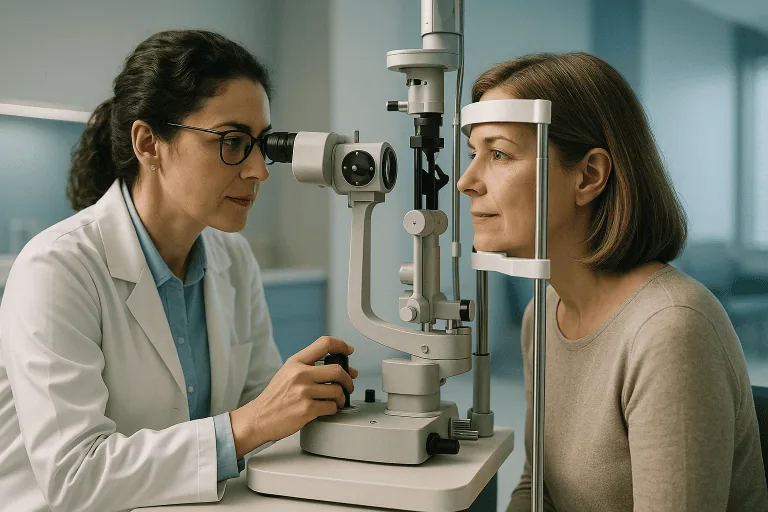
The pathway begins well before the procedure day. A detailed consultation determines whether your eyes suit LASIK at all and whether a femtosecond flap is the right method for them. Prior eye records and measurements can inform the planning when they exist, but final candidacy always depends on in-person testing on calibrated equipment. Corneal topography and tomography map the front and back surfaces of the cornea, looking for irregularities that raise risk. Pachymetry measures thickness. Tear film assessment establishes whether dry eye needs treatment first. Wavefront or optical-quality measurements may be added for selected patients to understand higher-order aberrations that influence night vision. None of this replaces clinical judgement; it feeds it.
If you are suitable, the plan is explained in full, expected benefits, limitations, possible side effects and alternatives, along with practical instructions about eye drops, make-up avoidance, transport and the recovery period. You should not drive immediately after the procedure, and follow-up visits are part of the treatment, not an optional extra.
On the day itself, the sequence runs as follows:
- Step 1: Anaesthetic drops. The eye surface is numbed with drops. Sedation is not usually necessary, though some patients receive medication to help them relax.
- Step 2: Docking. A docking interface gently stabilises the eye under the femtosecond laser. You feel firm pressure for a short time, and your vision may dim temporarily. This is expected.
- Step 3: Flap creation. The IntraLase laser delivers rapid pulses that separate the corneal tissue along the programmed plane, at the planned depth, diameter and hinge position.
- Step 4: Flap lift and excimer treatment. The surgeon lifts the flap, and the excimer laser reshapes the underlying tissue according to your refractive plan. Eye-tracking technology monitors small eye movements to help maintain alignment. This is the step that actually corrects myopia, hyperopia or astigmatism.
- Step 5: Repositioning. The flap is laid back, its alignment checked, and it settles naturally without stitches.
The laser work itself is brief, often minutes per eye, although you will spend considerably longer at the clinic for preparation and postoperative checks. You go home the same day. Early on, vision may be blurry, hazy, watery or light-sensitive, and most patients are advised to rest with their eyes closed for the first hours.
Does IntraLase LASIK hurt?
Most patients describe pressure rather than sharp pain during the procedure, because anaesthetic drops numb the eye surface throughout. The docking stage feels like firm pressure on the eye and can be briefly uncomfortable; vision dimming during it can be disconcerting if nobody has warned you, which is why a good team explains it in advance. In the hours after treatment, burning, watering and a gritty, foreign-body sensation are common and usually settle with rest and the prescribed drops. Discomfort that is severe, worsening or persistent is not part of the expected course, and it is assessed at your follow-up rather than waited out.
Can you make a free cap using IntraLase?
A free cap is a corneal flap created without a hinge, so that the disc of tissue detaches completely rather than folding back. With mechanical microkeratomes, an unplanned free cap was a recognised complication of the blade pass. With IntraLase, the hinge position and side-cut geometry are programmed into the laser pattern before any tissue is separated, which makes an accidental free cap far less likely, though no surgical step is entirely beyond complication. Surgeons can also deliberately programme a hingeless cut for certain lamellar corneal procedures, where a complete cap of tissue is intended. For a routine LASIK patient, the practical takeaway is that the flap’s hinge is part of the plan, not left to the mechanics of a blade.
Why Acting Early Matters
IntraLase-assisted LASIK is elective, not urgent. Acting early does not mean rushing into surgery; it means getting properly evaluated before assumptions harden, in either direction.
A timely consultation can surface problems that should be treated before any laser touches the eye. Dry eye disease, eyelid inflammation, allergic eye disease and contact-lens-related corneal changes all distort measurements and complicate healing. Treating the ocular surface first improves comfort and makes the surgical plan more reliable. Early assessment can also uncover findings such as irregular corneal shape or early keratoconus, where LASIK is not advisable and a different pathway is needed: a discovery better made in a consulting room than after a procedure.
Delay cuts both ways. Waiting may prolong dependence on glasses or lenses when a reasonable option exists; it may also postpone the diagnosis of a condition that needs monitoring in its own right. If you have been told elsewhere that you are not a candidate, a second opinion is legitimate, but so is respecting a sound medical reason for saying no. A responsible refractive programme is willing to decline surgery when the risk profile is unfavourable, and that willingness is one of the better markers of quality you can look for.
If you are travelling for treatment, early planning also matters logistically. You need time to leave contact lenses out before measurement, to complete testing, to attend early follow-up, and to plan your journey home sensibly. A well-timed visit removes pressure from decisions that should never be made under pressure.
Benefits of IntraLase-Assisted LASIK
For appropriately selected patients, the femtosecond flap offers several practical and clinical advantages within a carefully planned LASIK procedure. None of them substitutes for good screening; all of them depend on it.
| Benefit | What It Means for You |
|---|---|
| Bladeless flap creation | The corneal flap is created with femtosecond laser pulses rather than a mechanical blade, allowing a highly controlled approach to flap depth and shape. |
| Precise flap planning | Your surgeon can plan flap thickness, diameter, hinge position and side-cut characteristics based on your corneal measurements and treatment goals. |
| Potentially improved suitability in selected cases | Some patients with specific corneal considerations may be better candidates for laser flap creation than for a mechanical method, depending on the full evaluation. |
| Rapid visual recovery for many patients | Functional vision often improves quickly after LASIK, although individual healing varies and temporary dryness or visual fluctuation can occur. |
| No stitches for the flap | The flap is repositioned after the excimer laser correction and adheres naturally as the cornea heals. |
Recovery Timeline After IntraLase-Assisted LASIK
Recovery is measured in days and weeks rather than months, but the exact course depends on your prescription, ocular surface health, corneal response and how closely you follow the postoperative instructions. Prescribed drops usually include an antibiotic and an anti-inflammatory for a limited period, alongside lubricating drops; protective eyewear during sleep is often recommended for the first nights to prevent accidental rubbing. Follow-up visits let the surgeon check flap position, healing, visual recovery and tear film stability.
| Time Period | What Patients Can Expect |
|---|---|
| Day 1 | Vision may be clearer but can be hazy or fluctuating. Watering, light sensitivity, mild burning or a gritty sensation are common. Resting the eyes and using prescribed drops are important. |
| First week | Many patients return to desk work and routine activities with medical approval. Eye rubbing, swimming, eye make-up and dusty environments should be avoided until the physician confirms it is safe. |
| First month | Vision generally becomes more stable, although dryness, halos, glare or fluctuation may still occur, especially at night or after long screen use. Follow-up care remains important. |
| Longer term | The cornea continues to settle. Most patients enjoy reduced dependence on glasses or contact lenses, but some still need glasses for certain tasks, especially as age-related near vision changes arrive. |
Most patients notice improved functional vision quickly, but the final quality of vision continues to refine as the cornea heals and the tear film stabilises. Temporary dryness, glare, halos, fluctuating focus and light sensitivity can all occur along the way; they typically ease with time and appropriate care, and anything persistent belongs on the agenda of your follow-up visits.
Can you fly, swim or skydive after IntraLase LASIK?
Yes to all three eventually: the question is timing, and your surgeon sets it based on how your flap and surface are healing. Flying as a passenger is generally the least demanding of the three, though cabin air is dry and lubricating drops make the journey more comfortable; our guide on flying after eye surgery compares the considerations for LASIK with those for other eye procedures. Swimming waits until your physician clears it, because pools, lakes and seawater carry infection risk to a healing surface. Skydiving: a question patients who have had IntraLase with a WaveLight excimer platform genuinely ask, combines wind blast, pressure from tight goggles and very dry fast-moving air, all of which involve the flap and the tear film. It is not off the table for life, but it needs explicit clearance and well-fitted protective eyewear, and the timing is a conversation with your surgeon rather than a rule you can look up.
Factors That Influence Outcomes
A good result depends on several factors working together, and it is worth understanding each of them before you decide.
Patient selection comes first. Even the most advanced laser planning cannot make LASIK appropriate for an eye with an unsafe corneal profile, uncontrolled surface disease or an unstable prescription. The most successful treatment plans begin with an honest decision about whether to proceed at all.
Corneal thickness and shape carry particular weight. LASIK removes a precise amount of tissue to reshape the eye, and the cornea that remains after both the flap and the excimer treatment must be structurally sound. Where there is evidence of weakness or irregularity, the risk of postoperative ectasia or visual-quality problems rises, and your physician may recommend a different approach entirely. This is exactly the situation in which a surgeon’s willingness to say no matters more than the brand of laser in the next room.
Tear film quality shapes both measurement and comfort. Dry eye distorts preoperative readings and amplifies postoperative irritation. Patients who already notice dryness, lens intolerance or screen-related discomfort may need the surface treated before LASIK is even considered, which improves the reliability of the plan as well as the experience of recovery.
The degree and type of refractive error set expectations. Mild to moderate prescriptions behave differently from higher ones. Astigmatism correction depends on accurate alignment. Larger pupils and specific optical aberrations can predispose to night-vision symptoms such as halos and glare, which is precisely why modern wavefront-style assessment exists: to identify and discuss these risks before surgery rather than after. A fuller discussion of complications and how they are weighed is in our guide to laser eye surgery risks, side effects and safety.
Age and visual demands matter. LASIK reshapes the cornea; it does not stop the eye from ageing. Patients in their forties and beyond develop presbyopia and may still need reading glasses after distance correction. Monovision and blended strategies exist, but they require testing and honest discussion, not assumption.
Healing is individual. Inflammation, dryness, epithelial healing, adherence to the drop regimen and environmental exposure all influence recovery. Using the drops as prescribed, attending every follow-up and reporting unusual symptoms early are unglamorous, decisive contributions you make to your own outcome.
Finally, expectations should be realistic. The aim is to reduce dependence on glasses or contact lenses, not to manufacture perfect vision in every situation. Some patients still prefer glasses for night driving, prolonged screen work or fine near tasks. Enhancement procedures can be considered in selected cases where residual refractive error remains, but only when corneal measurements and healing stability allow it.
What happens 10 years after LASIK?
The corneal reshaping itself is long-lasting, but the eye around it keeps ageing, and both facts matter a decade on. Some patients experience gradual drift in their prescription over the years, particularly if the original error was high; presbyopia arrives on schedule regardless of any surgery, so near tasks eventually call for reading glasses. The flap interface remains identifiable in the cornea indefinitely, which is clinically relevant: in selected cases it can be lifted years later for an enhancement, and any future eye surgeon should know you have had LASIK. Just as importantly, LASIK does not prevent cataract, glaucoma or retinal disease, so routine eye examinations remain part of life afterwards: the surgery changes your focus, not your need for eye care.
How Acibadem Approaches IntraLase Evaluation for International Patients
Patients travelling for eye surgery want more than access to a machine. They want a team that communicates clearly, follows careful diagnostic pathways and coordinates care in an organised way from first assessment through follow-up. At Acibadem, refractive surgery is treated with the same seriousness as any other medical decision: the procedure is recommended only when the clinical findings support it, and patients are told plainly when they do not.
Ophthalmology care at Acibadem combines modern diagnostic testing with physicians who evaluate both your refractive goals and your wider eye health. In practice, an IntraLase evaluation means detailed corneal imaging, refraction testing, ocular surface assessment and a personalised discussion of whether LASIK, another refractive procedure or non-surgical correction fits your eyes best. Where screening identifies an additional eye condition, you are directed to the relevant ophthalmic subspecialist rather than pushed towards an elective treatment that no longer fits the picture. Multidisciplinary review is especially valuable for patients with diabetes, autoimmune disease, previous eye surgery, corneal concerns or retinal risk factors: the treatment plan should reflect the whole patient, not just the glasses prescription.
For patients coming from abroad, Acibadem International provides multilingual coordination of appointments, records and travel logistics. Timing matters in refractive surgery: contact lens discontinuation, preoperative measurements, treatment day and early follow-up all need to fit sensibly within one planned visit, and a coordinated schedule removes avoidable stress from that sequence. If you are researching the broader picture of having laser vision correction abroad, our LASIK eye surgery treatment guide walks through the pathway in detail.
Clarity is part of the care. Before surgery you should understand what IntraLase does, what the excimer laser does, what recovery is likely to involve, which side effects can occur, and when you can expect to return to work, travel, exercise and screens. You should also understand that final candidacy is confirmed only after in-person testing, including the possibility that the answer is no. IntraLase is not chosen because it is fashionable; it is chosen when the surgeon judges that femtosecond flap creation is the right method within a broader, evidence-based LASIK plan.
Deciding With Confidence
The most important step before any laser vision correction is a thorough eye evaluation, wherever in the world you have it. Online research, including this page, can help you understand the procedure, but it cannot measure your corneas, confirm the stability of your prescription, or weigh whether another option would serve your eyes better.
A few questions are worth settling with any surgeon before you commit: Am I genuinely a candidate on today’s measurements, not last year’s? What are the specific risks for my corneas and my prescription? What does recovery look like for someone with my job and my habits? What is the plan if I am not suitable for LASIK, and what is the plan if residual error remains afterwards? These questions have individualized answers, and a responsible team gives them before a date is booked, not after.
If IntraLase-assisted LASIK is appropriate for you, the pathway is well defined: preparation, a brief laser procedure, a recovery measured in days and weeks, and structured follow-up. If it is not appropriate, that finding is not a failure of the process: it is the process working, steering you towards safer alternatives or sensible monitoring instead. Either way, the decision belongs to measured eyes and an honest conversation, not to advertising.
Preparation
- A detailed eye examination checks corneal thickness, refraction, tear film, and overall eye health. Contact lenses may need to be stopped before testing and surgery, as advised by the ophthalmologist. Patients should avoid eye makeup, perfumes, and lotions on the procedure day and arrange transport home.
Aftercare
- Mild burning, watering, or blurred vision can occur during the first hours after Intralase-assisted LASIK. Use prescribed eye drops, avoid rubbing the eyes, and wear protective shields if recommended. Follow-up visits are important to monitor healing and visual recovery.
Frequently Asked Questions
What affects the cost of IntraLase LASIK?
The final cost depends on candidacy testing, corneal imaging, the laser platform, surgeon experience, hospital or clinic setting, medications guidance, follow-up needs and whether international patient services are included.
How can I get a personalised quote?
A personalised quote is usually prepared after reviewing your eye prescription, medical history and any previous eye tests. A free consultation can help determine whether IntraLase LASIK is appropriate and what your care plan would include.
Is IntraLase always more suitable than other laser eye surgery options?
Not always. IntraLase may be helpful for selected patients, but the safest option depends on corneal thickness, eye surface health, prescription stability and lifestyle needs. A refractive surgery specialist should decide suitability.
What should I check before comparing clinics?
Ask what diagnostic tests are included, which laser technology is used, who performs the assessment and surgery, what follow-up is provided, and whether the hospital or clinic follows recognised quality and safety standards.
Do international packages usually include travel support?
Some international hospital packages may include translation, appointment coordination and assistance with accommodation or transfers, while others focus only on medical services. Inclusions should be confirmed before travel.
Medically reviewed by the Acıbadem International Medical Board September 13, 2026
See our medical review board →
Update history
- PublishedJune 8, 2026
- Medical review approvedSeptember 13, 2026
- Last content updateSeptember 12, 2026