Laminate Veneers
Laminate veneers are thin, custom-made porcelain shells bonded to the front of teeth to improve their color, shape, size, or alignment for a natural-looking smile.
Quick answer
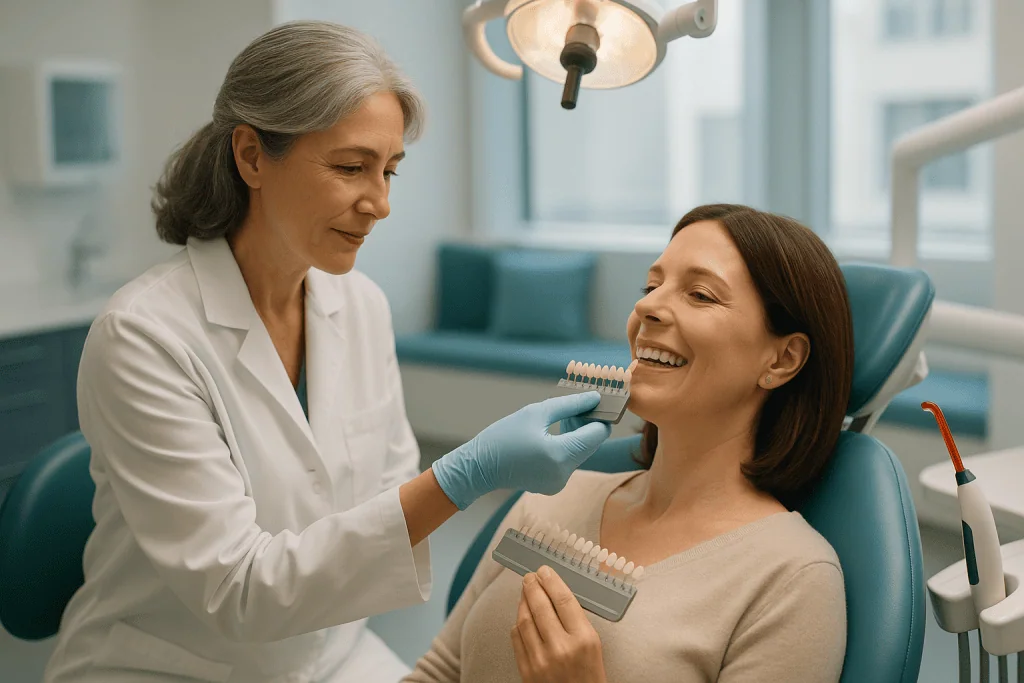
Laminate veneers are very thin shells of dental porcelain bonded to the front surfaces of teeth to improve their colour, shape and proportion. Treatment typically involves a clinical assessment, minimal reshaping of enamel, digital scans or impressions, laboratory fabrication of each veneer, and a bonding appointment, usually spread across more than one visit. With good oral hygiene and regular dental review, well-planned veneers can last many years.
Veneers: a considered approach to improving your smile
Veneers are thin, custom-made shells bonded to the visible front surfaces of teeth to change their colour, shape and proportion. Laminate veneers are the porcelain form of this treatment, restorations roughly as thin as a contact lens, fabricated individually for each tooth and fixed in place with a specialised dental adhesive. They are designed for adults whose teeth are structurally healthy but whose smile does not look the way they want it to.
If you are reading this page, your concern is probably about more than cosmetics. You may avoid photographs, cover your mouth when you laugh, or feel that your smile undermines how you present yourself professionally or socially. Discolouration that no longer responds to whitening, small gaps between front teeth, worn or chipped edges, uneven tooth shapes and mild misalignment can all erode confidence in ways that are easy to dismiss and hard to live with.
Choosing veneers is still a genuine dental decision, not a beauty purchase. Even minimal-preparation treatment usually alters a small amount of enamel, and that change is permanent. Porcelain needs long-term care, and a poorly planned case can create problems that outlast the initial result. International patients ask sensible questions: Will the veneers look natural? Do the teeth have to be filed down? How many appointments are needed? How long do they last? What happens if one chips? These questions matter wherever you are treated, and they matter particularly if you are weighing up laminate veneers in Turkey and planning treatment around a travel schedule. This page answers them plainly.
At Acibadem, veneer planning starts with your oral health, not your shade preference. Dentists in the Dental & Oral Health units assess the enamel, gums, bite and neighbouring teeth before recommending veneers, or before recommending something else entirely, such as whitening, orthodontic treatment, bonding, crowns or gum contouring. A cosmetic improvement that ignores the underlying dentistry is not an improvement. The sections below explain what these restorations are, who they suit, how treatment works step by step, and what honest expectations look like.
What are laminate veneers?
Laminate veneers are very thin restorations, most commonly made from high-quality dental porcelain or ceramic, designed to cover the front, and sometimes the biting edge, of a tooth. Each one is fabricated individually to match a planned shade, translucency, contour and surface texture. Once bonded to the tooth with a specialised adhesive system, the veneer becomes a durable part of the visible tooth surface rather than a removable cover. It does not sit on the tooth the way a false nail sits on a fingernail; the bond between porcelain and enamel is what gives the restoration its strength.
Veneers are usually placed on teeth that show when you smile: most often the upper front teeth and, depending on your smile line and your goals, sometimes the lower front teeth as well. Treatment may involve a single tooth, several teeth or a broader smile design. The number is not a fashion decision. It is determined by how many teeth are visible when you speak and laugh, the degree of colour or shape change you want, the natural symmetry of your smile, and whether neighbouring teeth need to be balanced so that the treated teeth do not stand out.
In many cases, a small amount of enamel is gently reshaped to create room for the veneer and allow it to sit naturally within the arch. This is called minimal-preparation treatment. Some patients are candidates for little or no preparation at all, but so-called no-prep veneers are not appropriate for every tooth. If there is not enough space, layering porcelain over an unprepared tooth can make the teeth look bulky, alter speech, irritate the gums or disturb the bite. The most conservative approach is not automatically the one that removes the least enamel; it is the one that achieves a healthy, balanced, functional result with the least necessary alteration. That distinction is worth remembering when you compare clinics and claims.
What are veneers made of?
Porcelain veneers are the standard answer: thin shells of dental ceramic that reproduce many of the optical qualities of natural enamel. Porcelain reflects and transmits light rather than blocking it, which allows the dentist and the dental laboratory to build depth, subtle variation and edge translucency into each restoration instead of producing a flat, uniformly white surface. Well-made porcelain reads as a tooth, not as a covering.
Porcelain is also comparatively resistant to staining from coffee, tea, red wine and tobacco, more so than natural enamel and considerably more so than composite resin, although the margins where the restoration meets the tooth, and the neighbouring natural teeth, still depend on careful daily hygiene. The main alternative material is composite resin, applied either directly in the mouth or as laboratory-made shells. Composite typically involves less enamel change and is easier to repair, but it has different longevity and stain behaviour. The trade-offs are examined in detail in our guide to porcelain versus composite veneers.
What are emax laminate veneers?
E.max laminate veneers are veneers made from lithium disilicate, a reinforced glass-ceramic marketed under the E.max brand name and widely used in cosmetic dentistry. The material’s appeal is that it combines strength with lifelike translucency, which means it can be pressed or milled into very thin sections without becoming fragile or opaque. That makes it well suited to front teeth, where light handling matters most.
E.max is not automatically the right choice for every case. Traditional feldspathic porcelain, layered by hand, can achieve exceptionally subtle results in experienced laboratory hands, and other ceramic systems exist with their own characteristics. The honest position is that material selection belongs to the treating dentist and the dental technician, based on your enamel, the colour change required, the thickness available and the forces in your bite, not to a brochure.
How do dental veneers differ from crowns and bonding?
Dental veneers cover only the visible face of a tooth, sometimes wrapping over the biting edge; a crown covers the entire tooth. A crown is usually indicated when a tooth has extensive decay, a large fracture, significant structural weakness or previous large restorations, situations where a thin facing would not be enough. A veneer, by contrast, is primarily an aesthetic restoration for a tooth that is otherwise structurally sound. Recommending a veneer for a badly broken-down tooth, or a crown for a healthy one, are both planning errors.
Composite bonding sits at the other end of the spectrum. It can be a sensible option for small chips, minor gaps or single-tooth touch-ups, and it generally requires little or no enamel removal. Its stain resistance, surface polish over time and repair characteristics differ from porcelain, which is one reason a thorough consultation compares the options rather than defaulting to one.
Who may need laminate veneers?
Laminate veneers may be considered by adults whose teeth and gums are healthy but who want to address visible aesthetic concerns. Patients often seek treatment because their teeth appear dark, uneven, worn, chipped, too small, irregularly shaped or mildly crowded. Others have older composite restorations on front teeth that no longer match the surrounding enamel, or developmental differences in tooth shape or enamel appearance that have bothered them since adolescence.
Common concerns that lead people to ask about veneers include:
- Persistent tooth discolouration that has not improved sufficiently with professional whitening
- Small gaps between front teeth
- Chipped, fractured or worn incisal edges
- Teeth that appear short, narrow, pointed or out of proportion
- Mild rotation, asymmetry or uneven alignment of front teeth
- Surface irregularities, minor enamel defects or visible old fillings
- Uneven tooth colour following trauma, root canal treatment, medication exposure during tooth development, or enamel formation differences
- A wish to improve smile symmetry while keeping a natural, credible appearance
Diagnosis begins with a comprehensive dental examination, not a shade chart. The dentist reviews your medical and dental history, evaluates the teeth and gums, checks for cavities and signs of gum disease, and examines how the upper and lower teeth meet. Digital photographs, intraoral scans or impressions, and dental X-rays are used when clinically appropriate. These records let the team assess the tooth structure beneath the visible surface and plan the position, length and shape of the proposed restorations with precision rather than guesswork.
Bite assessment deserves particular attention. Patients who clench or grind their teeth, bruxism, can still be candidates, but they need individualised planning and may be advised to wear a protective night guard after treatment. Significant bite instability, active jaw pain, untreated decay, gum inflammation or severe misalignment should generally be addressed before any cosmetic veneer work begins. Porcelain placed on an unstable foundation fails early, however beautiful it looks on day one.
For international patients, preliminary planning often starts with recent dental records, clear smile photographs and a written description of goals, which allow a useful first discussion before travel. A final recommendation, however, depends on an in-person clinical examination. Digital images cannot fully establish enamel quality, gum health, bite forces or the precise treatment a mouth actually needs, and a responsible plan is never finalised from photographs alone.
Conditions and aesthetic concerns laminate veneers can address
Veneers are not a treatment for every dental problem, but they can be highly effective for selected cosmetic and restorative indications. The best candidates generally have healthy gums, sufficient enamel for strong bonding, stable oral hygiene habits and realistic expectations about what porcelain can and cannot change.
Veneers can improve teeth affected by intrinsic discolouration, colour changes related to certain medications taken during tooth development, enamel formation differences, ageing or previous trauma. Because the porcelain masks the tooth surface rather than bleaching it, veneers can address discolouration that sits within the tooth more predictably than whitening can in some cases. When a single tooth is darker than its neighbours, shade planning becomes especially delicate, because the restoration must block the underlying colour while still blending with the surrounding natural teeth.
They can also correct minor shape and alignment concerns. Veneers can close limited spaces, rebuild worn edges, soften pointed canines, lengthen teeth that appear short and create a more balanced relationship between the central and lateral incisors. For more substantial crowding, rotations or bite discrepancies, orthodontic treatment is usually the healthier and more predictable first step. Trying to correct a major alignment problem with porcelain alone tends to require excessive tooth reduction or produce contours that never look quite right.
Veneers can be useful where enamel is irregular because of mild developmental defects, superficial pitting or small areas of damage, and they can replace older aesthetic restorations where appropriate. They are not usually recommended for teeth with extensive decay, large existing fillings, severe cracks, inadequate enamel or major structural loss. In those situations a crown, a filling, root canal treatment, periodontal care, orthodontics or another intervention is likely to serve you better, and a dentist who tells you so is doing their job.
Patients with active gum disease need periodontal treatment before veneers are considered. Healthy, stable gums frame a natural-looking smile and support clean, predictable margins around the restorations. The same principle applies to untreated decay or active infection: necessary dental treatment always comes before elective cosmetic work.
How laminate veneer treatment is performed
Veneer treatment is a carefully sequenced process combining clinical dentistry, laboratory craftsmanship and aesthetic judgement. Depending on the complexity of the case, it is completed over several appointments, and international treatment plans are built around enough time for each stage rather than compressing steps that should not be compressed. In outline, the sequence runs as follows:
- Consultation, examination and records, photographs, scans or impressions, and X-rays where indicated
- Smile design and planning, sometimes with a diagnostic mock-up you can see and feel in your own mouth
- Conservative tooth preparation, with temporary veneers where needed
- Laboratory fabrication of the final porcelain restorations
- Try-in, bonding and bite adjustment
- Review, refinement and long-term maintenance planning
Consultation, smile assessment and treatment planning
Your first visit involves a detailed discussion of what you would like to change, and, just as importantly, what you want to keep. Some patients want a subtle refinement that still reads as their own smile; others want a noticeably brighter shade or clearer symmetry. The dentist considers your facial proportions, skin tone, lip movement, gum display, tooth proportions and the way you speak and smile. Good aesthetic treatment is individualised; it is not the application of a standard tooth shape and a standard shade to every face.
Digital photography, intraoral scanning, radiographic imaging where indicated and smile-design software may all support the planning stage. These tools allow the team to analyse tooth dimensions and create a visual guide for the case. In selected cases a diagnostic wax-up or digital simulation shows the proposed change in tooth shape and position, and a temporary mock-up can be placed over your teeth so you can judge how altered length or contour looks and feels in your own mouth, before anything irreversible happens.
Planning may also include professional whitening of the natural teeth before the veneers are made. Porcelain does not whiten after placement, so if you want the surrounding natural teeth brighter, whitening generally comes first. The final veneer shade is then chosen to harmonise with the stabilised colour of the whole smile.
Do veneer teeth need to be filed down?
Veneer teeth, the natural teeth prepared to receive veneers, usually need only a very thin layer of enamel adjusted, and in selected cases none at all. The image of teeth ground down to pegs belongs to aggressive crown preparation, not to properly planned laminate work. At the preparation appointment, the dentist may use a local anaesthetic for comfort, particularly if enamel reshaping is needed or several teeth are being treated. A fine layer of enamel is reduced from the front surface and, in some cases, the biting edge. The amount varies with the original tooth position, the colour change required, the thickness of the porcelain and the planned final contour.
Conservative preparation matters for a structural reason: porcelain bonds most reliably to enamel. The dentist aims to preserve as much healthy tooth structure as possible while still creating room for a veneer that is neither too thick nor too opaque. Some cases need almost nothing; others need more detailed contouring to correct tooth position or accommodate a substantial shade change. Whichever applies to you, the reasoning should be explained before treatment begins, and it is fair to expect that explanation.
After preparation, precise digital scans or conventional impressions are taken and sent to the dental laboratory. Temporary veneers may be placed to protect the prepared teeth and maintain your appearance while the permanent restorations are made. In very minimal-preparation cases, temporaries may not be necessary at all.
Laboratory fabrication and aesthetic customisation
Dental technicians fabricate the veneers to the prescribed design, shade and material specification. Modern digital workflows improve the precision of scanning, planning and communication between the clinic and the laboratory, and the clinical team can specify variations in translucency, surface texture, edge definition and shade gradients that help each restoration resemble natural enamel rather than a uniform facade.
Technology supports precision; it does not replace judgement. The final design has to account for how your teeth interact with your lips, how light falls across your smile and how your bite functions under real chewing forces. That is why high-quality veneer treatment is a genuine collaboration between the treating dentist, the laboratory team and you, and why the laboratory stage should not be rushed to fit a flight.
Try-in, bonding and final adjustments
At the placement visit, each veneer is first evaluated for fit, shade, shape and harmony with the adjacent teeth. The dentist may seat the veneers temporarily with a try-in paste so that you can see the result in a mirror, in daylight, before anything is permanently fixed. Minor adjustments can still be made at this stage; after bonding, they cannot, which is exactly why the try-in exists.
Once you and the dentist approve the result, the tooth surfaces and the veneers are prepared for bonding. Specialised adhesive systems create the strong connection between porcelain and enamel on which the whole treatment depends. Each veneer is positioned precisely, bonded and polished. The dentist then checks your bite, your speech and the edge contacts, refining where necessary to avoid concentrating pressure on any single restoration.
The length of this appointment varies with the number of veneers and the complexity of the case. A single veneer can be placed relatively quickly; a multi-tooth smile rehabilitation needs more time for assessment, bonding and adjustment. Your dental team should set out the expected schedule before you commit.
Technology used in laminate veneer care
Modern planning may draw on digital intraoral scanning, high-resolution dental photography, computer-assisted smile simulation, digital shade analysis and precision laboratory manufacturing. These tools reduce the inaccuracies associated with conventional impressions, sharpen communication about the intended design and allow closer evaluation of fit and proportion.
Diagnostic imaging may be used to assess roots, supporting bone, existing restorations and hidden dental problems before treatment starts. Magnification and enhanced lighting support meticulous preparation and bonding. The specific technology used is chosen for your clinical needs and discussed as part of your plan: it is a means to a careful result, not a selling point in itself.
Recovery and aftercare
Recovery after veneer placement is usually brief, because the procedure is minimally invasive compared with surgical dentistry. Some patients notice mild sensitivity to cold, heat or pressure for several days, especially after enamel preparation, and the gums may feel slightly tender if they were retracted during treatment. These effects commonly settle as the mouth adapts.
You can generally eat and drink once the anaesthetic has worn off, though it is sensible to start with softer foods if your teeth or gums feel sensitive. Avoid biting hard foods directly with the front teeth in the early period, and follow any instructions relating to temporary veneers. Once the permanent restorations are bonded, they are designed for normal daily function, but not for biting fingernails, opening packaging, holding objects or cracking ice. Porcelain forgives ordinary use, not abuse.
Why early assessment matters
Cosmetic dental concerns may feel elective, but an early professional assessment can pick up problems that should not be papered over. A chipped or discoloured tooth may be the visible sign of trauma, decay, a leaking old restoration, enamel erosion, grinding or an underlying nerve problem. Gaps and shifting tooth positions can sometimes be associated with gum disease. Treating the cause before changing the appearance protects both the result and the health of your mouth.
Delay has a cost of its own. Active decay, gum inflammation or a fractured tooth left untreated can progress, and what starts as a candidate for a conservative restoration can become a more complex case if infection, structural loss or gum recession develops. Untreated clenching and grinding, likewise, keeps wearing natural teeth and loads excessive force onto any veneers, crowns or fillings placed over them.
Early assessment does not mean early veneers. In some cases the most appropriate recommendation is to begin with hygiene care, whitening, orthodontics, a night guard, gum treatment or simple bonding. A responsible cosmetic plan starts by identifying the least invasive option that can safely meet your goals, and sometimes that option is not porcelain.
Benefits of laminate veneers
For appropriately selected patients, laminate veneers offer a specific set of practical and aesthetic advantages. The table below summarises what each one means in daily life.
| Benefit | What it means for you |
|---|---|
| Natural, enamel-like appearance | Porcelain can be customised for shade, translucency, texture and shape, helping the restored teeth blend with the character of your smile rather than announcing themselves. |
| Improved colour consistency | Veneers can mask selected types of persistent discolouration and create a more even shade across the visible teeth. |
| Conservative tooth coverage | Unlike full crowns, veneers generally cover only the visible front portion of a tooth and may require less removal of healthy tooth structure. |
| Correction of minor shape concerns | They can improve chipped edges, uneven lengths, small gaps and minor asymmetries where the underlying teeth are healthy. |
| Resistance to everyday staining | High-quality porcelain is less likely than natural enamel or composite resin to absorb common food and drink stains, though good oral hygiene remains essential. |
| Individualised smile design | The number, shape, brightness and proportions of the veneers can be planned around your facial features, bite and preference for a subtle or a more noticeable change. |
Are laminate veneers good?
For the right patient, yes, laminate veneers are one of the most conservative and natural-looking ways to change the colour, shape and balance of visible teeth. The qualifier matters. They are good when the teeth underneath are healthy, when enough enamel exists for a strong bond, when the bite is stable and when the design respects your face rather than a template. They are a poor choice when used to disguise untreated disease, to straighten a significantly crowded arch or to rebuild teeth that really need crowns. The question to ask is not whether veneers are good in general, but whether they are good for your teeth, and that answer comes from an examination, not a website.
What are the downsides of laminate veneers?
The honest list is short but real. First, most cases involve removing a thin layer of enamel, and that step is irreversible: once a tooth has been prepared, it will always need a veneer or another restoration on that surface. Second, porcelain can chip, crack or debond under excessive force, particularly in people who grind their teeth or use their teeth as tools. Third, veneers do not whiten; if the surrounding natural teeth change colour over the years, the match can drift. Fourth, they are not permanent in the strict sense, gum changes, wear, trauma or decay at the margins can eventually mean repair or replacement. Finally, veneers placed for the wrong indication tend to disappoint: they cannot fix a bite problem, stop grinding or substitute for gum treatment. None of these downsides is an argument against veneers; all of them are arguments for careful case selection.
Recovery timeline after laminate veneer placement
Recovery varies with the extent of preparation, gum sensitivity, the number of teeth treated and your general oral health, but the pattern below is typical.
| Time period | What patients can expect |
|---|---|
| Day 1 | Mild numbness may persist until the local anaesthetic wears off. Teeth or gums can feel slightly sensitive; it is best to avoid very hard foods or extreme temperatures until comfort returns. |
| First week | Most patients adapt quickly to the new tooth surfaces. Minor sensitivity, awareness of changed contours or a slight speech adjustment usually settles within several days. A bite review can be arranged if any tooth feels high or uncomfortable. |
| First month | The gums and bite should feel settled. Continue brushing and flossing, and attend any recommended review appointment. Persistent sensitivity, roughness, pressure on biting or changes around the gumline are worth reporting to your dentist. |
| Longer term | Veneers need the same routine care as natural teeth, including professional examinations and hygiene visits. A night guard may be advised for patients who grind or clench. |
What influences outcomes and long-term results?
A good veneer result depends on far more than the porcelain. Careful diagnosis, suitable case selection, conservative preparation, accurate bonding, laboratory craftsmanship and your own ongoing care all shape how the restorations look and how long they serve. Strong bonding to healthy enamel is particularly important, which is why dentists check that enough enamel is available before recommending treatment at all.
Gum health plays a central role. Inflamed or receding gums change the appearance of the veneer margins and make a stable, attractive result harder to maintain. Periodontal problems should be treated first, and regular hygiene care should continue afterwards: brushing twice daily with a non-abrasive toothpaste, cleaning between the teeth and attending routine examinations protect both the veneers and the natural teeth beneath them.
Bite forces are the other major factor. Porcelain is durable in normal function but vulnerable to concentrated stress. People who grind their teeth, bite pens, chew ice or open things with their teeth put their restorations at higher risk. Where indicated, a custom night guard reduces the load on the veneers during sleep: a small discipline that protects a significant investment of enamel and effort.
How long do laminate veneers last?
With sound planning, quality materials and consistent care, laminate veneers commonly remain functional and attractive for many years, but no honest dentist will promise a fixed lifespan, because longevity depends on factors that differ from mouth to mouth. Bonding quality, enamel availability, gum stability, bite forces, grinding habits, diet, hygiene and plain accident all play a part. Veneers are best understood as long-lasting rather than permanent: gum changes, normal wear, trauma, shifts in the bite or decay at the restoration margins can eventually require attention. Understanding this before treatment, not after, is part of making an informed decision.
What happens if a veneer chips or comes loose?
A veneer that debonds intact can often simply be rebonded, provided the tooth beneath is healthy and the restoration is undamaged. A small chip may sometimes be smoothed and polished, or repaired with composite, depending on its size and position. A larger fracture usually means the veneer is remade. The right response depends on the nature and location of the damage, which is why an assessment comes before any decision. What matters most is prevention: respecting the front teeth’s limits, wearing a night guard if one has been prescribed, and keeping up routine dental reviews so small problems are found while they are still small.
How much are laminate veneers?
There is no single honest answer, because the cost of laminate veneers is built from variables that differ in every case. The main drivers are the number of teeth being treated, the material and laboratory work involved, the experience of the clinical team, whether preparatory treatment is needed first, hygiene care, gum treatment, fillings, whitening or orthodontics, and the complexity of the smile design itself. A quotation for a single veneer and a quotation for a full smile rehabilitation are describing two very different pieces of dentistry, which is why headline per-tooth figures rarely tell the whole story.
When you compare quotations, look at what they itemise rather than what they total: the examination and records, any preparatory work, the veneers themselves, temporary restorations, the try-in and bonding appointments, follow-up reviews and, where relevant, a night guard. A plan that lists these stages transparently is easier to trust than a single round number.
How much do laminate veneers cost in Turkey?
Quotations in Turkey vary between clinics and cases for exactly the reasons above, so a responsible answer starts with your records rather than a price list. The same drivers apply: the number of veneers, the material, the laboratory, the preparatory work and the time your case genuinely needs. For a fuller discussion of how pricing is structured and what a complete quotation should include, see our guide to how much veneers cost in Turkey.
Laminate veneers in Turkey: planning treatment as an international patient
Many international patients arrange laminate veneer treatment in Turkey, and the practical question they ask is usually the same: can this be done properly within a planned visit? The answer depends on the number of teeth involved, whether preparatory treatment is needed, laboratory timelines and the value of leaving time for review and adjustment. A realistic schedule is set after your case has been reviewed: the aim is to allow proper clinical evaluation, not to rush a permanent dental decision to fit a return flight.
How many visits are needed?
Most porcelain veneer cases involve at least two clinical stages, assessment and preparation, then try-in and bonding, with laboratory fabrication in between, and complex cases need more. Some patients complete treatment within a single stay; others plan two shorter visits, particularly when whitening, gum treatment or other preparatory work has to settle first. Our guide to suitability and the number of visits needed walks through the common scheduling patterns in detail.
What a typical care pathway covers
A typical international pathway begins before travel, with a preliminary review of recent dental records, X-rays where available and clear smile photographs, together with a description of what you want to change. This allows a provisional plan and an honest indication of what is feasible. On arrival, the in-person examination confirms or revises that plan, enamel quality, gum health and bite forces can only be verified clinically. The treatment stages then follow the sequence described earlier on this page: records and design, preparation, laboratory fabrication, try-in, bonding and review. Where a case involves more than cosmetics, gum concerns, significant tooth wear, missing teeth, jaw symptoms or extensive previous dental work, care at Acibadem can be coordinated across the relevant specialties, including prosthodontics, restorative dentistry, periodontology, endodontics, orthodontics and oral and maxillofacial surgery. International patients are supported with appointment planning, medical documentation, interpretation and communication with the clinical team before and after the visit.
Travel and follow-up practicalities
Build slack into your itinerary. Bonding should not happen on the day you land, and it is sensible to remain available for a short review after placement so that any high spot in the bite or minor edge refinement can be handled before you fly home. Ask in advance how remote follow-up works: reputable teams will explain how reviews are conducted after you return, what your own local dentist can monitor at routine check-ups, and what documentation you will take home, records of the materials used, the design and the maintenance advice. Long-term success then rests on the same habits as anywhere else: daily hygiene, routine examinations and a night guard if one has been recommended.
A smile that feels like your own
Laminate veneers can be an elegant way to improve the colour, shape and balance of visible teeth when they are planned carefully and placed on healthy foundations. The most satisfying results are the quiet ones: veneers that look credible, feel comfortable, function well under real chewing forces and stay consistent with the character of your face. The right time to decide is after a thorough clinical examination, when you know whether veneers suit your teeth, how many would be involved, whether other treatment should come first and what long-term care will be required. If you have already received a cosmetic recommendation elsewhere, particularly one involving a large number of teeth, a second professional opinion is a reasonable and common step before committing to anything permanent.
Preparation
- A dentist examines your teeth and gums, discusses your smile goals, and may take digital impressions or photographs. Any active decay or gum disease should be treated before veneers are placed. Patients may be advised to avoid teeth whitening shortly before shade selection.
Aftercare
- Avoid biting hard foods, ice, or non-food objects with veneered teeth, especially during the first days. Maintain daily brushing, flossing, and regular dental check-ups to protect the veneers and surrounding teeth. A night guard may be recommended for patients who grind or clench their teeth.
Frequently Asked Questions
What are laminate veneers and what problems can they correct?
Laminate veneers are very thin, custom-made porcelain or ceramic shells bonded to the front surfaces of teeth. They can improve the appearance of discoloration, minor chips, worn edges, small gaps, uneven shapes, and mildly misaligned teeth. Veneers are mainly a cosmetic solution and may not be suitable when there is significant decay, gum disease, severe crowding, or bite instability. Acibadem dental specialists assess your teeth, gums, bite, and smile goals before recommending treatment.
How is the laminate veneer procedure performed?
Treatment usually begins with a dental examination, photographs, digital planning, and shade selection. The dentist may gently reshape a small amount of enamel, depending on the planned veneer type. Impressions or digital scans are used to design the veneers in a laboratory. At the final visit, the dentist checks the fit, color, and bite before bonding each veneer securely. Temporary veneers may be used in some cases while the final restorations are being made.
Do laminate veneers require shaving down natural teeth?
Many laminate veneers require only minimal enamel preparation, while some no-prep or ultra-thin options may require little or no reshaping. However, the amount of preparation depends on tooth position, existing restorations, tooth color, and the desired final shape. Removing too little or too much enamel can affect the result, so careful planning is important. Acibadem specialists provide a personalized assessment and explain whether minimal-prep, no-prep, or conventional veneers are appropriate.
Are laminate veneers painful to get?
Most patients experience little discomfort during veneer preparation. Local anesthesia can be used if enamel reshaping is needed or if you have sensitive teeth. After treatment, mild temporary sensitivity to hot or cold foods may occur, especially during the first days after bonding. This usually settles as your teeth adapt. If discomfort, bite pressure, or sensitivity continues, the dentist should review the veneers promptly to ensure the fit and bite are comfortable.
How long do laminate veneers last?
With good oral hygiene and regular dental care, laminate veneers can remain attractive and functional for many years. Their lifespan depends on the material, bonding quality, bite forces, oral habits, and whether you grind or clench your teeth. Veneers can chip, loosen, stain around their edges, or require replacement over time. Avoiding hard biting habits, wearing a night guard if recommended, and attending dental check-ups can help protect your investment.
Can I get laminate veneers if I have crooked, missing, or damaged teeth?
Veneers can camouflage mild crowding, small rotations, uneven edges, and minor gaps, but they do not move teeth or replace missing teeth. More significant misalignment may be better treated with orthodontics first. Teeth with extensive damage, large fillings, root canal treatment, or weak enamel may need crowns or other restorations instead. Missing teeth generally require options such as dental implants or bridges. A personalized dental evaluation determines the safest and most natural-looking approach.
How many days do I need to stay in Turkey for laminate veneers?
The required stay depends on the number of veneers, the type of material, laboratory scheduling, and whether preliminary treatments are needed. Many international patients complete treatment over several appointments during one visit, while complex cases may require more time or a follow-up visit. Your dental team can provide an estimated schedule after reviewing your scans, X-rays, and treatment plan. It is sensible to allow time for fitting adjustments and final bite checks before traveling home.
What is the difference between porcelain laminate veneers and composite bonding?
Porcelain or ceramic laminate veneers are laboratory-made restorations known for their natural translucency, color stability, and resistance to staining. Composite bonding uses tooth-colored resin applied and shaped directly on the tooth, often with less preparation and a shorter treatment time. Composite may be easier to repair but can be more prone to staining or wear. The best choice depends on your smile goals, tooth condition, bite, budget considerations, and expected maintenance needs.
Can laminate veneers stain or change color after treatment?
High-quality ceramic veneers are highly resistant to staining from coffee, tea, red wine, and smoking, although the natural teeth and bonding material around them can still change color. Veneers themselves cannot be whitened with bleaching products after placement. For this reason, dentists often recommend whitening natural teeth before selecting the final veneer shade when appropriate. Regular brushing, professional cleaning, and avoiding tobacco help maintain a bright, balanced smile.
What should I avoid after getting laminate veneers?
After veneers are placed, avoid using your teeth to open packages, bite nails, or chew hard objects such as ice, pens, and hard candy. Limit habits that place excessive pressure on the front teeth, including biting directly into very hard foods. Brush twice daily with a non-abrasive toothpaste, clean between teeth, and attend routine dental visits. If you clench or grind your teeth, a custom night guard may be recommended to reduce the risk of chipping or debonding.
What factors have the greatest effect on the cost of laminate veneers?
The main factors include the number of teeth treated, porcelain type and laboratory work, the complexity of smile design, the dentist’s experience, and any dental treatment needed before veneer placement. A clinical examination is needed to determine the full plan.
What is usually included in a laminate veneer treatment quote?
Quotes may include consultation, dental examination, imaging or digital planning, veneer fabrication, fitting appointments and follow-up. However, inclusions vary, so ask for a written treatment plan that clearly explains what is and is not included.
Can I receive a quote before travelling to Turkey?
A preliminary estimate may be possible after sharing suitable photographs, dental records and your goals. A definitive plan and quote require an in-person examination, as tooth health, bite and gum condition must be assessed. You can request a free consultation for personalised guidance.
Will I need treatment before getting veneers?
Possibly. Cleaning, gum care, treatment of decay, replacement of unsuitable fillings, whitening, orthodontic care or bite management may be recommended before cosmetic treatment. This can affect both the treatment timeline and the final cost.
How should international patients plan follow-up care?
Ask how many visits are expected, what reviews are planned after fitting and how to arrange care at home if needed. Keep copies of your treatment records and discuss maintenance, night guards where appropriate, and what to do if a veneer feels loose or damaged.
Medically reviewed by the Acıbadem International Medical Board September 8, 2026
See our medical review board →
Update history
- PublishedAugust 3, 2026
- Medical review approvedSeptember 8, 2026
- Last content updateSeptember 8, 2026
Planning tools for this treatment
Indicative figures for orientation only: your written plan and quote follow a free medical review.
Trusted care for international patients
Veneer costsledger-based guide ranges, or browse the full Turkey Medical Price Index.
From the Acibadem Blog
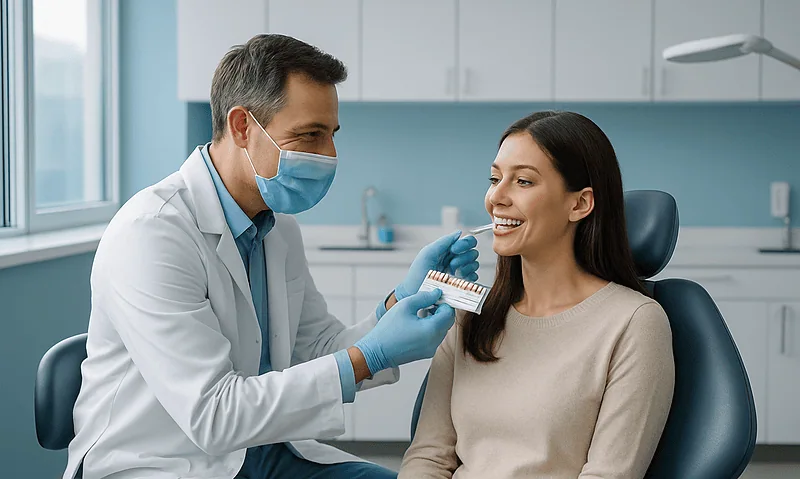
How Laminate Veneers Are Placed: Impressions, Minimal Preparation and Bonding the Shells
A laminate veneers procedure usually unfolds over two or three dental visits spread across a few weeks. The dentist first assesses the teeth and…