Peptic Ulcer Treatment
Peptic ulcer treatment targets sores in the stomach or duodenum, commonly caused by H. pylori infection or NSAID use. Care may include endoscopy, medication, and lifestyle guidance.
Quick answer
A peptic ulcer, commonly called a stomach ulcer, is an open sore in the lining of the stomach or duodenum, most often caused by H. pylori infection or anti-inflammatory painkillers. Treatment combines acid-suppressing medication, antibiotics when H. pylori is present, and a review of ulcer-causing medicines. Endoscopy is used to confirm the diagnosis, take biopsies and stop active bleeding. Most ulcers heal without surgery.
What Is a Stomach Ulcer?
A stomach ulcer is an open sore in the lining of the stomach. The broader medical term is peptic ulcer, which covers sores in the stomach itself, gastric ulcers, and in the duodenum, the first part of the small intestine, duodenal ulcers. Most peptic ulcers are caused by infection with the bacterium Helicobacter pylori, usually shortened to H. pylori, or by regular use of nonsteroidal anti-inflammatory drugs (NSAIDs) such as ibuprofen, naproxen and certain prescription pain relievers, and most heal with medication once the cause is identified and addressed.
The word “peptic” refers to acid-related injury in the digestive tract. Acid is a normal and necessary part of digestion. The stomach and duodenum protect themselves from it with a layer of mucus and a constant repair process in the lining underneath. When those defences are weakened, by bacterial infection, by medicines that interfere with the protective layer, or by other factors, acid begins to erode the tissue it normally helps you digest food with. The result is a defined break in the lining, deeper than the surface irritation of gastritis. An ulcer is not simply “stomach irritation”, and it does not behave like one.
This distinction matters because it shapes treatment. Irritation settles when you remove the irritant. An ulcer is a wound in an acid bath: it needs the acid reduced so it can close, and it needs the underlying cause removed so it does not open again. Without both steps, a stomach ulcer may go quiet for weeks and then return, or it may progress silently towards bleeding, perforation or narrowing of the digestive tract. Peptic ulcer disease is common, and in most people it responds well to treatment, but only when the treatment is built around the actual cause rather than the symptoms alone.
What is the difference between a gastric ulcer and a duodenal ulcer?
A gastric ulcer sits in the stomach, while a duodenal ulcer sits just beyond it, in the first portion of the small intestine. Both belong to the same disease family and share the same main causes, but they are not managed identically. Duodenal ulcers are almost never cancerous, and once the cause is treated, follow-up can often be limited to confirming that H. pylori has cleared. Gastric ulcers need more careful handling. A small number of ulcers in the stomach can resemble or conceal stomach cancer, which is why gastric ulcers are usually biopsied at diagnosis and sometimes re-examined by endoscopy to confirm they have fully healed. The two types can also announce themselves differently: duodenal ulcers often hurt on an empty stomach or at night, while gastric ulcers tend to hurt soon after eating.
Stomach Ulcer Symptoms
Stomach ulcer symptoms range from a mild, nagging discomfort after meals to episodes of pain that wake you at night, and, in a significant number of people, to almost nothing at all until a complication appears. The most typical picture includes:
- Burning or gnawing pain in the upper abdomen, between the breastbone and the navel
- Pain that improves or worsens with eating, depending on where the ulcer sits
- Nausea, bloating and a sense of fullness after small amounts of food
- Burping, indigestion and reduced appetite
- Unexplained weight loss when symptoms persist
Ulcer symptoms tend to come and go. Many people have days or weeks of discomfort, followed by a quiet period that convinces them the problem has resolved. This fluctuating pattern is one of the main reasons diagnosis is delayed: the pain responds to antacids, the antacids run out, the pain returns. Temporary relief tells you that acid is involved. It does not tell you that the lining has healed.
What does stomach ulcer pain feel like?
Most people describe stomach ulcer pain as burning, gnawing or aching, located in the upper middle abdomen. Its relationship to food is often the most telling feature. Duodenal ulcers typically hurt two to five hours after a meal, or during the night, when the stomach is empty and acid meets the ulcer without food to buffer it, eating or taking an antacid often eases the pain for a while. Gastric ulcers more often hurt shortly after eating, which can lead people to eat less and lose weight. These patterns are useful clues, but they are not reliable enough to diagnose an ulcer on their own, and plenty of ulcers do not follow the textbook. Reflux, gallbladder disease, pancreatitis and functional dyspepsia can all produce similar pain, which is why proper assessment matters more than pattern-matching.
What are the signs of peptic ulcers that suggest a complication?
The signs that a peptic ulcer has become complicated are quite different from everyday indigestion. Vomiting blood, or vomiting material that looks like coffee grounds, points to bleeding high in the digestive tract. Black, tar-like stools indicate digested blood passing through the bowel. Slower, hidden blood loss shows up as anaemia, fatigue, breathlessness on exertion, paleness and dizziness. Sudden, severe abdominal pain can signal perforation, a hole through the wall of the stomach or duodenum. Persistent vomiting with early fullness and weight loss can mean the ulcer has narrowed the outlet of the stomach. In clinical practice, all of these are treated as urgent problems requiring hospital assessment. Two facts about complicated ulcers deserve emphasis. First, they can occur with little or no preceding pain, so-called silent ulcers are well documented, particularly in older adults. Second, people taking blood thinners, aspirin, steroids or anti-inflammatory medicines can develop serious bleeding even when their symptoms have been mild.
What Causes Peptic Ulcers?
Peptic ulcers are caused, in the great majority of cases, by one of two things: infection with H. pylori, or the use of NSAID pain relievers. Everything else, smoking, alcohol, severe physiological stress, certain rare medical conditions, mainly acts by making the lining more vulnerable or by slowing healing once an ulcer exists. Identifying which cause applies to you is the single most important step in treatment, because the two causes are dealt with in completely different ways.
H. pylori infection
H. pylori is a bacterium that colonises the stomach lining, often from childhood, and can persist for decades without symptoms. In some people it triggers chronic inflammation that weakens the mucosal defences and allows acid to create an ulcer. It is one of the most widespread chronic bacterial infections in the world, and it does not clear on its own. Treating the ulcer’s symptoms while leaving the infection in place is a recipe for recurrence: the pain settles, the acid suppression stops, and the same weakened lining breaks down again. This is why eradication therapy, a combination of antibiotics with acid suppression, sits at the centre of treatment when the infection is found, and why physicians who manage infectious diseases and gastroenterology take antibiotic resistance and prior treatment history seriously when choosing a regimen.
NSAIDs and other medicines
NSAIDs cause ulcers by interfering with the chemical signals the stomach uses to maintain its protective mucus layer. The injury is not only local irritation from a tablet touching the lining; it happens through the bloodstream, which is why even coated tablets and injectable forms carry risk. Low-dose aspirin taken for cardiovascular protection belongs to the same drug family. Steroids amplify the risk when combined with NSAIDs. Anticoagulants and some antidepressants do not usually cause ulcers themselves, but they make any ulcer that forms far more likely to bleed seriously. The practical consequence: an ulcer in someone taking daily aspirin after a heart procedure is a coordination problem between specialties, not a simple instruction to stop a tablet.
What about stress, spicy food and coffee?
Emotional stress and diet are rarely the sole cause of a true peptic ulcer, despite their long-standing reputation. They can aggravate symptoms and may slow healing, but they do not usually create the ulcer. The exception is severe physiological stress, major surgery, extensive burns, intensive care illness, which can produce stress ulcers through a different mechanism. Smoking is a genuine and underestimated factor: it delays ulcer healing and increases the chance of recurrence. Alcohol irritates the lining and raises bleeding risk, particularly alongside certain medicines. Very rarely, an acid-hypersecretion condition such as Zollinger–Ellison syndrome drives multiple or unusually resistant ulcers; this is considered when ulcers keep recurring without an obvious cause.
Peptic Diseases and Conditions Addressed by Treatment
Peptic diseases are the group of conditions caused by acid-related injury to the upper digestive tract, and peptic ulcer treatment is built to address several distinct situations within that group. The label on the ulcer changes what the treatment plan contains.
H. pylori-associated ulcers require eradication therapy. Symptom treatment alone reduces pain temporarily, but if the infection remains, the ulcer tends to return. A confirmation test after therapy is often recommended, because antibiotic resistance and incomplete courses can leave the infection in place even when you feel well.
NSAID-associated ulcers arise when pain relievers weaken the protective lining. If the medicine can be stopped, healing is usually straightforward. If it cannot, because you take aspirin for coronary artery disease, or anti-inflammatories for severe arthritis: the plan involves protective medication and coordination with the doctor who prescribed the drug, balancing ulcer healing against the medical reason the drug exists.
Bleeding ulcers present with vomited blood, black stools, anaemia or sudden weakness. These cases usually require urgent endoscopy, during which the physician can treat the bleeding point directly, followed by acid-suppressing medication and monitoring.
Refractory or recurrent ulcers are ulcers that fail to heal on schedule or return after treatment. These prompt a structured reassessment: was the medication taken as prescribed, is there continuing NSAID exposure the patient did not connect to the problem, has H. pylori truly cleared, is smoking involved, is there a rare acid-producing condition, and, in gastric ulcers, could the lesion be something other than a benign ulcer.
Complicated ulcersperforation, obstruction, severe bleeding, involve more than gastroenterology. Perforation is a surgical emergency. Obstruction develops when swelling or scarring narrows the passage from stomach to intestine, causing vomiting, fullness and weight loss. Managing these situations draws on surgeons, anaesthesiologists, radiologists and intensive care alongside the endoscopy team.
One clarification worth making: not every condition with “ulcer” in its name belongs to this family. Ulcerative colitis, for example, is an inflammatory disease of the large bowel with entirely different causes, symptoms and treatment. Sharing a word does not mean sharing a disease.
How a Stomach Ulcer Is Diagnosed
Diagnosis begins with a detailed history and physical examination. Expect specific questions: where the pain sits, how it relates to meals and to night-time, which medicines you take, including over-the-counter painkillers, aspirin, blood thinners, steroids and supplements, whether you have had ulcers or H. pylori testing before, your smoking and alcohol habits, and any previous endoscopy reports. Blood tests may check for anaemia, infection, inflammation, and liver and kidney function, both to assess the ulcer’s effects and to confirm which medicines are safe for you.
Testing for H. pylori
Testing for H. pylori can be done several ways: a breath test, a stool antigen test, or a biopsy taken during endoscopy. The choice depends on your situation, and the timing matters, recent courses of acid-suppressing medication or antibiotics can produce falsely reassuring results, which is why your care team will advise on when each test is reliable. The same tests are used again after eradication therapy to confirm the infection has actually cleared, since symptom relief alone does not prove it.
When is an upper endoscopy needed?
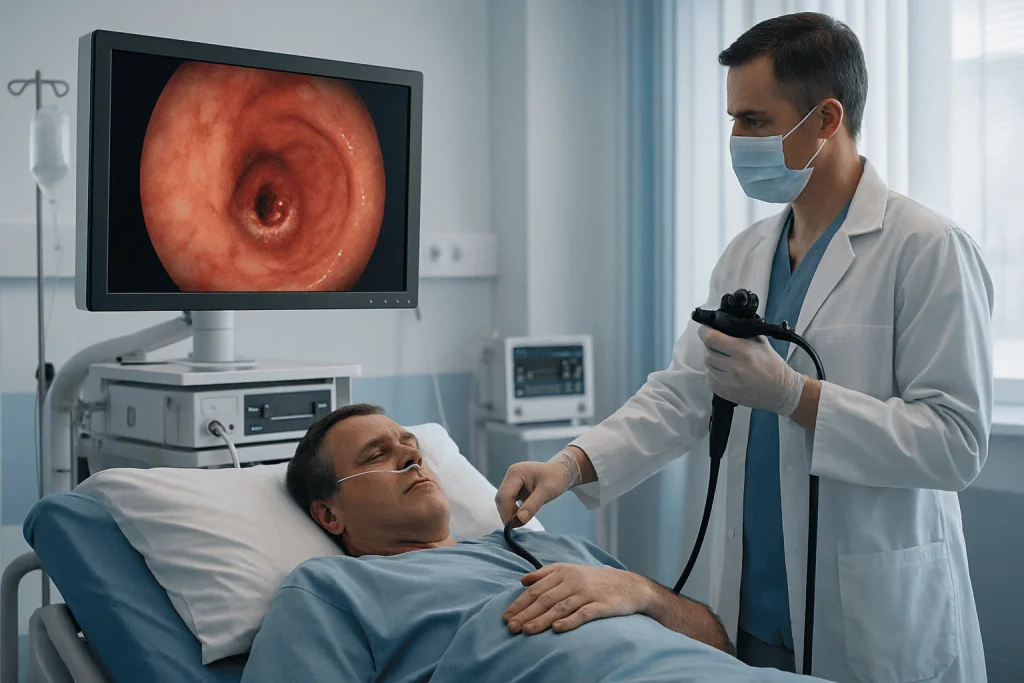
Upper endoscopy, also called gastroscopy, is recommended when there are alarm features, suspected bleeding, recurrent symptoms, new symptoms starting at an older age, or any concern about a gastric ulcer. It is also used when initial treatment fails, or when a precise diagnosis is needed before decisions about surgery, anticoagulation or long-term medication. During the procedure, a thin flexible tube with a camera passes through the mouth into the oesophagus, stomach and duodenum. The physician sees the lining directly in magnified detail: ulcers, inflammation, bleeding points, scarring, narrowing or suspicious tissue changes. Small biopsies can be taken to test for H. pylori, grade inflammation, and exclude malignancy in gastric ulcers or unusual lesions. You will not usually feel the biopsy itself: the stomach lining does not sense cutting the way skin does. Most endoscopies are performed with sedation, and the examination itself is short, though the full visit is longer because of preparation, monitoring and recovery time.
How Is a Stomach Ulcer Treated?
A stomach ulcer is treated with acid-suppressing medication to let the lining heal, combined with treatment of the underlying cause: antibiotics if H. pylori is present, and a structured review of any ulcer-causing medicines. Endoscopic techniques handle active bleeding from inside the digestive tract. Surgery is reserved for a small minority with severe complications. The typical pathway runs in a clear sequence:
- Clinical assessmenthistory, examination and medication review to gauge cause and urgency.
- Diagnostic testingblood work, H. pylori testing and endoscopy where indicated.
- Acid suppressionusually a proton pump inhibitor, for a duration set by the ulcer’s size, site and severity.
- Cause-specific treatmenteradication therapy, or an NSAID protection plan agreed with your prescribing doctor.
- Follow-upconfirmation of H. pylori clearance, and repeat endoscopy for gastric ulcers when needed.
Preparation and initial assessment
Before treatment begins, the care team reviews your symptoms, medical history, allergies and every medicine you take. Mention aspirin, anticoagulants, anti-inflammatories, steroids, osteoporosis medicines, antidepressants, supplements, and any recent antibiotics or acid-suppressing tablets, some of these affect bleeding risk during endoscopy, and others distort H. pylori test results. If endoscopy is planned, you will be asked not to eat or drink for a defined period beforehand, and the team will give you specific instructions about which of your regular medicines to take or pause on the day, particularly for diabetes, blood pressure and anticoagulation. Those decisions belong to your treating doctor, not to a general checklist. Bring prior endoscopy reports, pathology results, imaging and a complete medication list if you have them; they frequently change what needs to be repeated.
Medication treatment
Most patients receive a proton pump inhibitor, a medicine that strongly reduces acid production and gives the ulcer an environment in which it can close. How long you take it depends on the ulcer’s size, location, cause and whether complications occurred: a short course for some, a longer supervised course for others, especially after bleeding or when a necessary medicine keeps the risk alive. If H. pylori is confirmed, the regimen combines acid suppression with two or more antibiotics, sometimes with an additional protective agent. The exact combination is chosen around local resistance patterns, your allergy history and any previous antibiotic exposure. Two points are non-negotiable for a good result: complete the full course even if you feel better within days, and have the follow-up test that confirms the infection has gone. Acid suppression and ulcer healing go together, but neither substitutes for eradication when infection is the cause. If NSAIDs contributed, your doctor decides whether they can be stopped, replaced with alternative pain strategies, or continued alongside gastroprotective medication: a decision that weighs your cardiac, kidney, rheumatological and pain-management needs, not the ulcer alone.
Endoscopic treatment of bleeding ulcers
When an ulcer is actively bleeding, or shows features that predict re-bleeding, treatment can often be delivered during the same endoscopy that finds it. Techniques include injection therapy, thermal coagulation, mechanical clips and topical haemostatic agents, chosen according to the ulcer’s appearance and position. This is how many bleeding ulcers are controlled without open surgery. Procedures involving bleeding take longer than diagnostic examinations, and hospital observation follows. After any sedated procedure, you remain monitored until fully alert, and you should not drive that day.
Can stomach ulcers heal on their own?
Some small ulcers can quieten down without treatment, but this is unreliable and it is not the same as being resolved. If the cause remains: an untreated H. pylori infection, or a painkiller you take every week: the lining stays vulnerable and the ulcer tends to return, sometimes announcing itself the second time with bleeding rather than pain. There is also a subtler trap: pain relief does not mean the ulcer has healed. Symptoms often settle well before the tissue closes, which is exactly when people abandon their medication. Waiting an ulcer out trades a straightforward course of treatment against the risk of a complication that arrives without warning.
Is surgery ever needed for a peptic ulcer?
Rarely, yes. Surgery is reserved for perforation, for bleeding that cannot be controlled endoscopically, and for obstruction that does not respond to other measures. The combination of effective acid suppression, H. pylori eradication and endoscopic haemostasis means the overwhelming majority of peptic ulcers are managed without an operation: a genuine change from how this disease was treated a generation ago.
Recovery After Peptic Ulcer Treatment
Symptom improvement often begins within days of starting acid suppression, but the ulcer itself takes weeks to close. Keep taking the medication as prescribed for its full duration; the quiet period in the middle of the course is when the real healing happens. Recovery varies with the cause, the ulcer’s severity and whether bleeding occurred, but most patients follow a recognisable pattern.
| Time Period | What You Can Expect |
|---|---|
| Day 1 | After consultation or endoscopy, you receive a treatment plan. If sedation was used, rest for the remainder of the day and do not drive. In bleeding cases, hospital monitoring may be required. |
| First week | Acid-suppressing medication begins to reduce irritation. Symptoms often improve, though some discomfort can persist. If you are on H. pylori therapy, take the antibiotics exactly as prescribed. |
| First month | Most ulcers are actively healing. The care team may adjust medication, review biopsy results, check blood counts if bleeding occurred, and confirm you are clear of ulcer-triggering medicines. |
| Weeks 4 to 8 | Treatment is completed or extended depending on the ulcer type. Testing to confirm H. pylori eradication is scheduled at the appropriate interval after therapy ends. |
| Longer term | Gastric ulcers, recurrent ulcers or ongoing medication risks may call for follow-up endoscopy or preventive treatment. Recurrence is far less likely once the cause is controlled. |
Follow-up differs by ulcer type. A duodenal ulcer that responded well and had a clear cause may need nothing more than confirmation that H. pylori has cleared. A gastric ulcer often warrants closer follow-up, sometimes including repeat endoscopy to confirm complete healing and rule out anything more serious underneath. If you were treated for bleeding, expect blood count monitoring, iron replacement where appropriate, and a considered reassessment, by your doctors, of any blood-thinning or anti-inflammatory medicines you take.
Why Acting Early Matters
Early evaluation keeps a manageable ulcer from becoming an emergency. Many people delay because the symptoms fluctuate, respond to antacids, or get filed under stress and diet. The delay has three specific costs.
The first is bleeding. An ulcer can erode into a blood vessel, producing either slow blood loss over months, iron-deficiency anaemia, fatigue, dizziness, falling exercise tolerance, or sudden major bleeding with black stools, vomited blood, fainting or shock, requiring hospitalisation and urgent endoscopy. The second is perforation: a hole through the wall of the stomach or duodenum, causing sudden severe pain and infection inside the abdomen, and typically requiring emergency surgery. The third is obstruction: ulcers near the stomach’s outlet can swell or scar until food no longer passes normally, leading to persistent vomiting, dehydration and weight loss.
There is also a diagnostic reason not to wait. Upper abdominal symptoms overlap across gallbladder disease, pancreatitis, reflux disease, medication injury and, less commonly, cancer. Attributing them to “an ulcer” without assessment risks treating the wrong problem, and attributing them to “indigestion” risks missing a real one. A proper diagnostic pathway settles the question rather than managing it indefinitely with antacids.
Benefits of Peptic Ulcer Treatment
When treatment is built around the ulcer’s cause and followed through, the gains are concrete and measurable in daily life.
| Benefit | What It Means for You |
|---|---|
| Relief of ulcer symptoms | Burning pain, nausea, indigestion and meal-related discomfort typically ease as acid is controlled and the ulcer begins to heal. |
| Healing of the ulcer lining | Medication reduces acid injury and allows the stomach or duodenal lining to repair, lowering ongoing inflammation and pain. |
| Treatment of H. pylori infection | Eradication therapy addresses one of the main causes of peptic ulcers and helps reduce recurrence risk when successful. |
| Reduced risk of complications | Timely treatment lowers the likelihood of serious events such as gastrointestinal bleeding, obstruction or perforation. |
| Safer long-term medication planning | If aspirin, anticoagulants or anti-inflammatories are medically necessary, the care team balances ulcer protection against your other priorities. |
| A clearer diagnosis | Endoscopy and biopsy, where indicated, confirm the ulcer, identify its cause, and help exclude conditions that need different treatment. |
Factors That Influence Healing and a Good Result
The outlook for peptic ulcer disease is generally favourable when the cause is found and dealt with. What separates a good result from a frustrating one usually comes down to a handful of factors, most of them within reach.
The first is whether H. pylori is present and genuinely eradicated. Antibiotic resistance, missed doses, stopping early because the pain went away, or an incomplete previous course all make eradication harder. This is why physicians choose regimens around your treatment history and recommend a confirmation test afterwards rather than assuming success.
The second is medication exposure. Continuing NSAIDs, aspirin, steroids or blood thinners without a protective plan delays healing and raises bleeding risk. Some people genuinely cannot stop these medicines, after a stent, a stroke, or in chronic inflammatory disease, and for them the answer is a coordinated plan between specialties, not a blanket instruction to discontinue.
The third is the ulcer itself. Duodenal ulcers usually heal well with acid suppression and cause-specific treatment. Gastric ulcers require the extra step of biopsy and healing confirmation. Larger ulcers, ulcers that bled, and ulcers in patients with significant other conditions need closer monitoring.
The fourth is what you do during healing. Smoking demonstrably delays ulcer healing and raises recurrence risk; stopping is one of the most useful contributions you can make to your own outcome. Alcohol irritates the lining and compounds bleeding risk with certain medicines. And follow-up is part of the result, not an optional extra: persistent pain, symptoms returning after treatment, black stools, vomiting or unexplained weight loss all deserve reassessment rather than another round of self-treatment. Keeping written records of your treatment, which medicines you took and for how long, what the biopsies showed, whether eradication was confirmed, makes it far easier for any physician who sees you later to continue the plan correctly.
Diet, Lifestyle and Preventing Recurrence
There is no single “ulcer diet” that applies to everyone, and food alone does not usually cause ulcers. The practical rule during healing is straightforward: limit whatever consistently worsens your symptoms, for some people that is coffee, for others spicy or acidic food, or large late meals, while keeping your nutrition balanced. Rigid restriction has no proven advantage over sensible moderation. One old remedy deserves a specific correction: milk was long recommended for ulcers because it briefly soothes the burning, but it also stimulates acid production afterwards, so it is neither a treatment nor something you must avoid, simply a food like any other.
Prevention after healing is mostly about the cause. If H. pylori was eradicated and confirmed clear, that risk is dealt with. If painkillers were the problem, the lasting protection is avoiding unnecessary NSAIDs and letting your doctor choose alternatives or protective medication when anti-inflammatory treatment is genuinely needed, including for everyday aches, where NSAID use often creeps back unnoticed. Not smoking, moderating alcohol, and finishing any prescribed course completely round out the list. None of this is dramatic; all of it is what keeps a healed ulcer healed.
Peptic Ulcer Care at Acibadem
Peptic ulcer care at Acibadem is organised around the idea that an ulcer is a diagnostic problem before it is a prescription. Gastroenterology, endoscopy, laboratory medicine, radiology, pathology, anaesthesia, surgery and intensive care work within the same hospital structure, which matters most in the cases where the ulcer is not simple: active bleeding, recurrent disease, anaemia, complex medication needs, or a gastric ulcer where malignancy has to be excluded before anyone relaxes.
Endoscopy units use high-resolution imaging systems that let physicians inspect the stomach and duodenal lining in detail, document findings, take biopsies and perform endoscopic haemostasis in the same session when bleeding is found. Laboratory testing supports the diagnosis of anaemia, infection and organ function alongside H. pylori status; pathology evaluation clarifies biopsy findings; imaging is added when perforation or obstruction is suspected. Treatment decisions follow evidence-based protocols but are adapted to the person: a patient on daily aspirin after a cardiac procedure needs a different plan from someone taking occasional ibuprofen for sports pain, and a young patient with a duodenal ulcer and confirmed H. pylori needs different follow-up from an older patient with a gastric ulcer, weight loss and anaemia.
What a Good Outcome Looks Like
A good outcome from peptic ulcer treatment is not a few quiet weeks. It is a confirmed diagnosis, a healed lining, a cause that has been removed or brought under control, and a written plan that survives your journey home: which medicines you took and for how long, what the biopsies showed, whether eradication was confirmed, and what follow-up, if any, remains. Most people with a peptic ulcer get exactly that outcome once the disease is taken seriously and treated at its root. The ulcers that cause lasting trouble are, overwhelmingly, the ones that were managed symptom by symptom while the cause stayed in place.
Preparation
- Patients should share current medications, especially NSAIDs, aspirin, blood thinners, and acid-reducing drugs. If endoscopy is planned, fasting is usually required for several hours beforehand. H. pylori testing, blood tests, or stool tests may be requested.
Aftercare
- Take prescribed antibiotics or acid-suppressing medication exactly as directed and avoid NSAIDs unless approved by the doctor. Follow dietary and smoking or alcohol guidance to support healing. A follow-up visit or repeat endoscopy may be recommended if symptoms persist or complications are suspected.
Frequently Asked Questions
What affects the cost of peptic ulcer treatment?
The main factors are the need for endoscopy, biopsy or pathology, H. pylori testing, medication type and duration, sedation, follow-up visits, and whether complications such as bleeding are present. Hospital setting, specialist review, language support, and travel coordination can also affect the overall quote.
How can I get a personalised quote from Acibadem?
You can request a free consultation and share your symptoms, previous test results, medication list, and any endoscopy reports. The international patient team can help arrange specialist review and provide a personalised estimate based on the recommended care plan.
Is endoscopy always needed for a peptic ulcer?
Not always. Some patients may start with non-invasive assessment and medication, while others need endoscopy because of age, symptom pattern, warning signs, bleeding risk, or persistent symptoms. A gastroenterologist decides the safest approach.
Does H. pylori treatment change the cost?
Yes, if H. pylori is present, treatment usually includes specific medication and may require follow-up testing to confirm eradication. The final cost depends on the test method, prescribed medicines, and whether further evaluation is needed.
Can peptic ulcer care be arranged as an international patient package in Turkey?
In many cases, consultation, diagnostic planning, endoscopy coordination, reports, translation support, and follow-up guidance can be organised together. The exact package depends on clinical need and is confirmed after specialist assessment.
Medically reviewed by the Acıbadem International Medical Board August 31, 2026
See our medical review board →
Update history
- PublishedJune 8, 2026
- Medical review approvedAugust 31, 2026
- Last content updateSeptember 8, 2026
References3
- Peptic Ulcer medlineplus.gov
- Stomach ulcer nhs.uk
- Peptic Ulcer Disease my.clevelandclinic.org
Trusted care for international patients
From the Acibadem Blog

Painkillers, Aspirin and Blood Thinners With a Peptic Ulcer: What Your Doctor Reviews
With a peptic ulcer, doctors usually review every pain reliever and blood thinner you take. NSAIDs such as ibuprofen and naproxen strip the stomach's…