ReLEx SMILE
ReLEx SMILE is a minimally invasive, flapless laser vision correction procedure for eligible myopia and astigmatism. It reshapes the cornea through a small incision to reduce dependence on glasses or contact lenses.
Quick answer
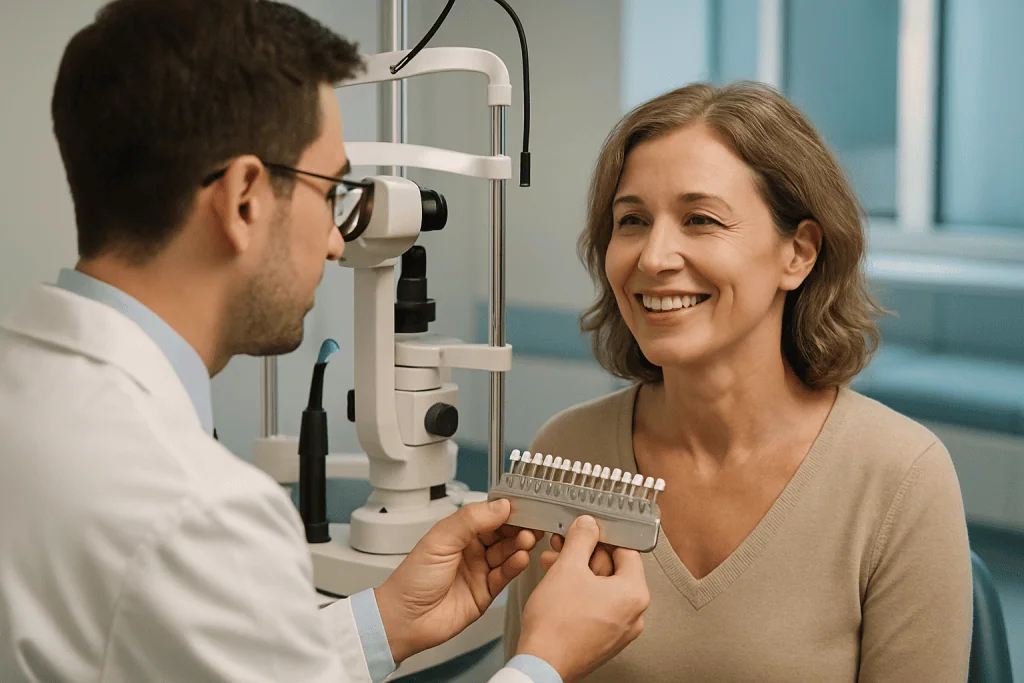
ReLEx SMILE (small incision lenticule extraction) is a laser vision correction procedure for short-sightedness, with or without astigmatism. A femtosecond laser shapes a thin disc of tissue, a lenticule, inside the cornea, and the surgeon removes it through an incision of a few millimetres. No corneal flap is created. Suitability depends on prescription stability, corneal thickness and shape, and overall eye health, confirmed through detailed preoperative testing.
What Is SMILE Eye Surgery?
SMILE eye surgery, short for Small Incision Lenticule Extraction, is a laser vision correction procedure for myopia (short-sightedness), with or without astigmatism. ReLEx SMILE, the full name of the technique, uses a femtosecond laser to shape a thin, lens-shaped disc of tissue inside the cornea, called a lenticule, which the surgeon then removes through an incision of only a few millimetres. Removing this precisely calculated piece of tissue changes the curvature of the cornea, so that light focuses more accurately on the retina. No corneal flap is created, which is the main structural difference between SMILE and LASIK.
Most people who look into smile eye surgery arrive at the same practical questions. Is the procedure safe for my eyes? How long will recovery take? What happens if I am not a candidate for LASIK? Glasses and contact lenses work well for many people, but they can be inconvenient during travel, sport, long screen-based workdays or in dry environments, and some patients develop contact lens intolerance over time. SMILE exists for eligible patients who want to reduce that dependence.
It is worth saying plainly: laser vision correction is a medical decision, not a lifestyle purchase. The cornea, the tear film, prescription stability, pupil size, eye pressure, retinal health and your personal visual goals all matter. A careful preoperative evaluation determines whether ReLEx SMILE is appropriate, whether a different procedure would be safer or more effective, or whether laser correction should be avoided altogether. At Acibadem, this decision is made through a structured ophthalmology assessment, supported by modern diagnostic imaging and an individualised discussion of benefits, limitations and realistic expectations.
How does removing a lenticule change your vision?
Removing a lenticule flattens the cornea by a precisely planned amount, which reduces the eye’s focusing power and corrects the refractive error. The cornea is the clear front surface of the eye and contributes a large share of the eye’s total focusing power. In myopia, the eye focuses light in front of the retina rather than on it, which makes distant objects appear blurry while near objects may remain clear. Astigmatism occurs when the cornea or the eye’s internal lens has an uneven curvature, causing blur or distortion at multiple distances.
The lenticule that the laser creates is not a uniform disc. Its thickness profile is calculated from your individual measurements so that, once it is removed, the remaining corneal shape corrects both the spherical component of your prescription (the short-sightedness) and, where present, the cylindrical component (the astigmatism). This is why the quality of preoperative measurement matters as much as the surgery itself: the plan is only as accurate as the data behind it.
Why does “flapless” matter?
Flapless means the corneal surface is never cut and lifted as a hinged flap, which changes the risk profile of the procedure. In LASIK, a thin flap of corneal tissue is created, folded back during treatment and repositioned afterwards. In SMILE, the surgeon works through a small opening of a few millimetres, and the outer layers of the cornea above the treated zone remain largely intact. This can be relevant for people whose work or hobbies involve physical contact, dust or impact risk, and for patients concerned about flap-related complications.
Flapless does not, however, remove risk altogether. SMILE still involves tissue removal inside the cornea, still requires detailed eligibility testing, and still depends on careful surgical technique and appropriate follow-up. It also does not treat every refractive error. Farsightedness, presbyopia, irregular corneas and unstable prescriptions generally call for a different approach, and other forms of laser surgery or lens-based procedures may be more suitable. The right option can only be identified after a full eye examination.
Who May Benefit from SMILE Laser Eye Surgery?
SMILE laser eye surgery is considered by adults who want to reduce their dependence on glasses or contact lenses and who meet specific eye health and prescription criteria. Many candidates have worn corrective lenses for years and want more visual freedom for professional, personal or athletic reasons. Others have developed contact lens intolerance, dryness, irritation or recurrent discomfort that makes daily lens wear increasingly difficult.
The everyday problems that bring patients to a refractive consultation are usually simple ones: blurred distance vision without glasses, difficulty recognising faces or road signs at a distance, dependence on prescription lenses for driving, and the inconvenience of lenses during sport, swimming or travel. Patients with astigmatism often describe something slightly different, shadowing around letters, ghosting, eye strain or reduced clarity even at moderate distances.
A strong candidate profile usually includes a stable prescription over time, healthy corneas of adequate thickness and regular shape, and no active eye disease that would interfere with healing or visual quality. Age, occupation, hobbies, night-driving needs and expectations all feed into the decision. A patient who works long hours at screens needs a careful tear-film assessment, because dry eye affects both comfort and measurement accuracy. A patient who plays contact sports may be particularly interested in the flapless approach.
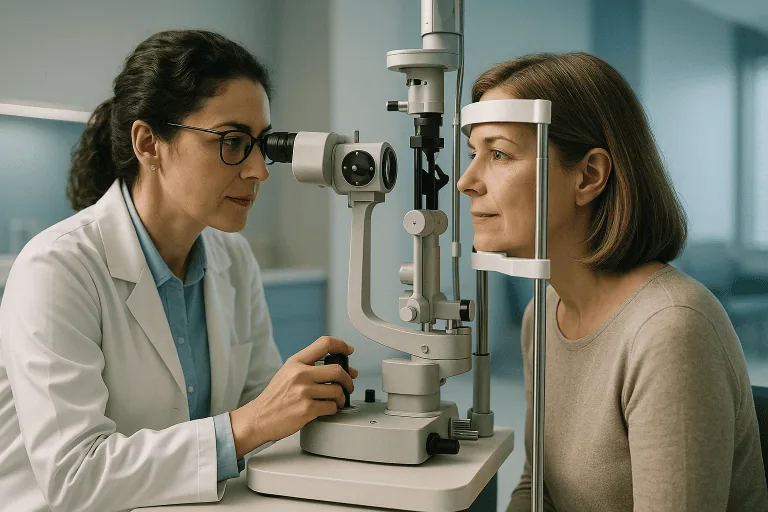
Candidacy is established through a comprehensive ophthalmic evaluation, not a glasses prescription alone. Testing typically includes refraction, corneal topography or tomography, corneal thickness measurement, tear-film evaluation, pupil assessment, eye pressure measurement and, when indicated, a dilated retinal examination. These tests are designed to detect conditions such as keratoconus, irregular astigmatism, dry eye disease, cataract, glaucoma risk or retinal changes, any of which can change the treatment plan entirely.
Some patients who arrive interested in SMILE leave with a different recommendation. LASIK, PRK, phakic intraocular lenses or lens-based procedures may be more appropriate depending on age, prescription, corneal shape and overall eye health. A responsible refractive consultation includes this comparison openly and explains why a specific procedure is or is not recommended for your eyes.
Who is not a candidate for SMILE?
SMILE is generally unsuitable for patients with keratoconus or suspected corneal ectasia, corneas that are too thin or irregular, an unstable or still-changing prescription, significant corneal scarring, uncontrolled dry eye, active ocular inflammation or infection, uncontrolled glaucoma, or a visually significant cataract. It is also not the right tool when the main refractive error is farsightedness or presbyopia, and it is usually deferred during pregnancy and breastfeeding because hormonal changes can temporarily alter the prescription. Certain autoimmune or wound-healing disorders can also rule the procedure out or require additional caution.
Contact lens wearers face a practical requirement before the decision can even be made: lenses temporarily mould the corneal surface, so patients are asked to stop wearing them for a period before evaluation. Soft lenses need a shorter break; rigid or specialty lenses need longer. Only when the cornea has returned to its natural shape are the measurements reliable enough to plan surgery.
Conditions ReLEx SMILE Treats
ReLEx SMILE is primarily used for myopia, commonly called nearsightedness or short-sightedness. In myopia, close objects may be clear while distant objects appear blurry, because the eye is too long relative to its focusing power or because the cornea bends light too strongly. SMILE reduces the cornea’s focusing power by reshaping it from within, helping distant images focus closer to the retina.
The procedure can also address myopic astigmatismprescriptions that combine short-sightedness with an astigmatic component. In these cases, the lenticule is calculated to correct both the spherical and the cylindrical parts of the refractive error as precisely as possible within safety parameters.
Can ReLEx SMILE correct astigmatism?
Yes: ReLEx SMILE can correct regular myopic astigmatism within clinically appropriate treatment ranges, provided the cornea is healthy and the prescription is stable. The lenticule is shaped asymmetrically to neutralise the astigmatic error along its specific axis, so precise alignment during treatment matters. Two limits are worth understanding honestly. First, SMILE treats regular astigmatism; irregular astigmatism, such as that caused by keratoconus or corneal scarring, is a different problem and generally a contraindication rather than an indication. Second, correcting your current astigmatism does not make the eye immune to future change. The eye continues to age, and refractive error can shift over a lifetime for reasons unrelated to the surgery. SMILE corrects the error you have today; it does not permanently freeze the optics of the eye.
Taken together, the procedure may be considered for patients who:
- Have stable myopia, with or without astigmatism, within a treatable range
- Want to reduce dependence on glasses or contact lenses
- Have adequate corneal thickness and a regular corneal shape
- Do not have active eye infection, uncontrolled dry eye or progressive corneal disease
- Have realistic expectations about outcomes, recovery and the possible need for glasses in certain situations
- Understand that age-related near-vision changes, such as presbyopia, can still develop later in life
How SMILE Surgery Is Performed
SMILE surgery is performed as an outpatient procedure under topical anaesthetic drops, and the process divides naturally into preparation, the treatment itself, the first hours afterwards and structured follow-up.
Preparation Before the Procedure
Preparation begins with a detailed consultation and diagnostic testing. Your ophthalmologist reviews your prescription history, medical background, current medications, prior eye conditions, contact lens habits and daily visual needs. The purpose is to establish not only whether SMILE can be performed, but whether it is the most appropriate and safest option for you specifically.
Advanced corneal imaging maps the shape and thickness of the cornea in fine detail. These measurements detect subtle irregularities that a standard eye exam can miss, and they determine how much tissue can safely be removed. Tear-film assessment matters just as much, because untreated dry eye distorts measurements and affects postoperative comfort. If dry eye or eyelid inflammation is found, treating it before surgery is often recommended, and in some cases the decision is postponed until the ocular surface is healthy.
Soft contact lens wearers are asked to stop wearing lenses before the preoperative measurements; rigid or specialty lenses require a longer discontinuation period, and your care team gives instructions specific to your lens type. On the day of surgery, patients are usually advised to avoid eye makeup, perfume and facial creams near the eyes, and to arrange transport home or to their accommodation, since driving immediately afterwards is not possible.
What happens during the SMILE operation?
During a SMILE operation, eye drops numb the surface, you remain awake, and most patients report pressure or awareness rather than pain. The treatment follows a defined sequence:
- Anaesthetic drops numb the eye, and a small device gently keeps the eyelids open so you cannot blink during treatment.
- The surgeon aligns your eye under the laser, confirms the treatment parameters and stabilises the eye.
- The femtosecond laser creates the lenticule inside the cornea and forms the small access incision at the surface. This laser phase is brief, typically a matter of seconds per eye.
- Using fine instruments, the surgeon separates the lenticule from the surrounding corneal tissue through the incision.
- The lenticule is extracted through the incision, completing the reshaping of the cornea.
- The surgeon checks the eye, and protective and healing drops are applied.
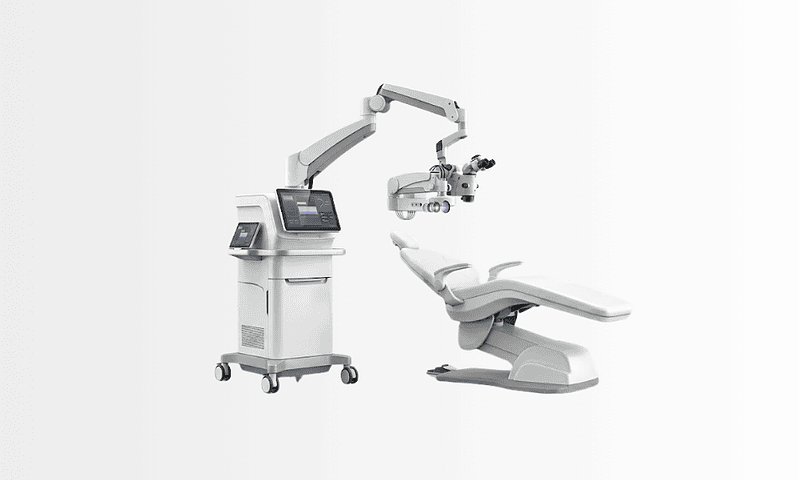
The technology behind ReLEx SMILE relies on highly focused, ultrafast laser pulses that work within the corneal tissue without removing the outer surface layer in the way surface ablation procedures do. Diagnostic imaging and planning software guide the treatment design, while surgical magnification supports accuracy during lenticule dissection and extraction. The emphasis throughout is on precise measurement, careful patient selection and controlled tissue handling.
The treatment itself takes only a short time per eye, though your total time in the surgical area is longer because of preparation, verification and immediate postoperative checks. Both eyes are often treated on the same day when appropriate, but that decision rests with the surgeon and depends on your individual findings.
Immediately After Treatment
Vision is usually blurry or misty at first, many patients describe it as looking through fog or water, and this is expected. Mild burning, tearing, light sensitivity or a foreign-body sensation can occur in the first hours. Eye drops are prescribed to support healing and reduce the risk of inflammation and infection, and protective eyewear may be recommended, particularly during sleep in the early period, to prevent accidental rubbing.
You receive specific instructions covering drops, hygiene, screen use, showering, exercise, swimming, makeup and travel. Most patients can return to many routine activities within a few days, but recovery is individual. Vision often improves noticeably in the first days and continues to refine over the following weeks; some fluctuation, glare, halos or dryness during the healing period is common and usually settles.
Follow-Up and Recovery Process
Follow-up visits allow the ophthalmology team to check healing, visual acuity, corneal clarity and comfort at defined intervals. Patients are advised not to rub their eyes during early healing. Swimming pools, saunas and dusty or contaminated environments may need to be avoided temporarily. Screen work can usually resume gradually, with frequent blinking breaks and lubricating drops if dryness occurs. Driving should only resume once your surgeon confirms your vision meets safe and legal requirements.
If your plans involve air travel soon after the procedure, the cabin environment is worth understanding in advance, aircraft air is dry and can aggravate early postoperative dryness. Our guide on flying after eye surgery compares what different eye procedures mean for travel timing.
Although many patients notice functional visual improvement quickly, the final result takes longer to stabilise. Healing quality, dryness, prescription strength and individual corneal response all influence the pace. Your surgeon will explain what is typical for your eyes and which symptoms warrant prompt review at a follow-up visit.
SMILE and LASIK: Honest Comparisons
Because most people researching smile eye surgery are also researching LASIK, the comparison questions deserve direct answers rather than marketing.
Is SMILE riskier than LASIK?
Neither procedure is simply “riskier” than the other; they carry different risk profiles, and which profile suits you depends on your eyes. SMILE avoids flap-related complications entirely, because no flap exists: there is nothing to dislodge, wrinkle or grow tissue beneath. On the other hand, SMILE involves manual dissection and extraction of the lenticule, which demands surgical skill, and managing a residual prescription after SMILE is generally more complex than lifting a LASIK flap for retreatment. Dry eye can occur after either procedure. Both are established techniques in appropriately selected patients; the meaningful question is not which is riskier in the abstract, but which is safer for your cornea, your prescription and your lifestyle, and that is a question your preoperative testing answers.
Is SMILE Pro better than LASIK?
SMILE Pro is a newer generation of the SMILE platform, built around a faster femtosecond laser with refinements such as shorter laser time and additional alignment aids, but “better than LASIK” is not a claim that holds for every eye. A faster laser phase can make the experience easier for the patient and reduce the window in which eye movement matters, yet the fundamental trade-offs between lenticule extraction and flap-based treatment remain the same. For some patients LASIK remains the more appropriate choice; for others, a lenticule-based procedure fits better. Platform generation matters less than candidacy, measurement quality and surgical experience.
What are the downsides of SMILE eye surgery?
The honest downsides of smile eye surgery are these: it treats only myopia and myopic astigmatism, so farsighted and presbyopic errors need other solutions; visual sharpness can take somewhat longer to reach its best level in the early days compared with some patients’ experience of LASIK; retreatment for residual error is less straightforward and usually involves a different technique; temporary dryness, glare, halos and fluctuating vision can occur during healing; and, as with any corneal refractive procedure, it does not prevent presbyopia, cataract or other age-related eye changes from developing later. Rare intraoperative issues, such as difficulty completing lenticule separation, are also part of a candid consent discussion. None of these downsides makes SMILE a poor procedure: they make it a procedure for the right patient, selected carefully.
Why Acting Early Matters
Laser vision correction is elective, so “early” does not mean rushing into surgery. It means seeking evaluation at the right time, before years of contact lens irritation, prescription uncertainty or undiagnosed corneal changes complicate the decision. A thorough assessment clarifies whether you are a candidate now, whether treatment should be postponed, or whether monitoring is the safer path.
For some patients, delaying evaluation allows dry eye disease or lens-related inflammation to worsen. Chronic irritation affects measurement accuracy and postoperative comfort, and treating it early can expand your options and improve planning reliability. Similarly, identifying subtle corneal irregularity early prevents an unsuitable procedure and steers management in a safer direction.
Age matters too. Younger patients need demonstrated prescription stability before any refractive surgery. Patients in their forties and beyond should discuss presbyopia, the age-related loss of near focusing ability, openly, because SMILE improves distance vision but does not prevent a future need for reading glasses. Early consultation helps you understand timing and choose a strategy that fits your stage of life.
The real risk of delay is not that SMILE becomes impossible. It is that untreated ocular surface disease, unstable prescriptions or changing visual needs quietly narrow your choices. A careful evaluation gives you information. It may lead to surgery; it may equally lead to observation, treatment of the ocular surface first, or a different correction plan.
Benefits of ReLEx SMILE
For eligible patients, ReLEx SMILE offers several practical and clinical advantages, each of which should be read in the context of your individual eye health and expectations rather than as a promise.
| Benefit | What It Means for You |
|---|---|
| Flapless laser correction | No corneal flap is created, which may reduce flap-related concerns and can be relevant for patients with active lifestyles or certain occupational needs. |
| Small incision approach | The corneal surface is disturbed through a limited opening, which may support comfort and a relatively quick return to routine activities for many patients. |
| Reduced dependence on glasses or contact lenses | Many suitable patients achieve improved unaided distance vision, making everyday activities such as travel, exercise and driving more convenient. |
| Precise corneal reshaping | The treatment is planned from detailed diagnostic measurements so that the internal tissue removal matches the refractive error being treated. |
| Potential comfort for contact lens-intolerant patients | Patients who struggle with lens-related dryness or irritation may benefit from an alternative that reduces daily lens wear, if they are medically suitable. |
Recovery Timeline After SMILE Eye Surgery
Recovery after smile eye surgery varies from person to person, but the following timeline describes what many patients can generally expect when healing is uncomplicated.
| Time Period | What Patients Can Expect |
|---|---|
| Day 1 | Vision may be cloudy or hazy, with mild tearing, light sensitivity or a foreign-body sensation. A postoperative check may be performed, and prescribed drops are started. |
| First Week | Vision often improves noticeably, though fluctuations can occur. Many patients resume office work and daily activities with precautions against rubbing, contamination and eye strain. |
| First Month | Visual clarity usually continues to refine. Dryness, glare or halos may gradually improve. Follow-up visits assess healing and confirm activity guidance. |
| Longer Term | Vision tends to stabilise further. Some patients may still need glasses for specific tasks, night driving or future age-related near-vision changes, depending on their eyes and lifestyle. |
These stages are a guide, not a schedule your eyes are obliged to follow. Higher corrections, drier eyes and individual healing biology can all shift the pace, which is why the follow-up plan is agreed before surgery rather than improvised afterwards.
What Influences a Good Result?
A good ReLEx SMILE outcome begins with appropriate patient selection. The most important factors are prescription stability, corneal thickness, corneal shape, tear-film quality, pupil characteristics and the absence of disease that could impair healing or visual quality. Even a technically excellent procedure cannot compensate for an unsuitable cornea or unrealistic expectations.
Measurement accuracy is equally critical. Contact lenses temporarily alter corneal shape, which is why the lens-free period before testing is non-negotiable. Dry eye, allergies and eyelid inflammation can distort measurements and should be managed before surgery. High-quality diagnostics let the surgeon confirm that the cornea is regular, strong enough and appropriate for tissue removal.
The degree of myopia and astigmatism influences predictability. Lower and moderate prescriptions can behave differently from higher corrections, and patients with high refractive errors may retain a small residual prescription or need glasses in specific situations. Because enhancement after SMILE is more complex than after some other laser procedures, the initial planning discussion should cover, in advance, how residual refractive error would be managed if it occurs.
Healing biology varies. Temporary dryness, glare, halos or fluctuating vision affect some patients and usually improve, but they need monitoring and occasionally treatment. Using drops correctly, attending every follow-up appointment and, above all, not rubbing your eyes all support recovery. Expectations matter too: SMILE is designed to reduce dependence on corrective lenses for distance vision, not to make the eye immune to time. Presbyopia can still develop with age, and cataract, retinal disease or glaucoma can affect vision later in life, independently of prior laser correction.
Finally, surgeon experience and team coordination matter. Refractive surgery is a process, evaluation, planning, treatment, early recovery and long-term guidance, and the result depends on each step being done carefully, with clear communication between patient and clinical team throughout.
Can ReLEx SMILE be done twice?
Not in the same way: the lenticule extraction itself is generally a once-per-eye procedure, so a second correction, if ever needed, is usually performed with a different technique. If a residual or recurrent refractive error develops, surgeons most commonly consider a surface ablation procedure such as PRK on the reshaped cornea, or in selected cases other approaches, depending on how much corneal tissue remains and how regular the surface is. Whether any retreatment is possible at all depends on the individual cornea, which is one more reason conservative initial planning matters. This is a scenario worth raising explicitly at your first consultation, so you understand your options before committing rather than after.
Risks and Side Effects to Understand
Every refractive procedure carries risks, and SMILE is no exception. The common, usually temporary effects include dryness, light sensitivity, glare, halos around lights at night and fluctuating vision during healing. Less common issues include residual refractive error requiring glasses or retreatment, corneal inflammation or infection, and rare intraoperative difficulties with lenticule separation or extraction. Long-term corneal weakening (ectasia) is a rare but serious risk across corneal laser procedures, which is precisely why thorough corneal imaging and honest exclusion of borderline candidates are central to safe practice. The most useful way to weigh these risks is during the consent discussion, with your own corneal measurements in front of you, so that abstract possibilities become concrete, personal probabilities you can judge against the expected benefit.
How Acibadem Approaches ReLEx SMILE
The evaluation for SMILE at Acibadem is personalised. Ophthalmologists review your prescription history, corneal imaging, ocular surface health and lifestyle goals before recommending any treatment plan. When the findings suggest SMILE is not the most appropriate choice, patients are counselled about other options, or advised against surgery. Saying no is part of responsible refractive care, and a consultation that cannot end in “no” is not an evaluation.
Modern diagnostic pathways sit at the centre of planning: detailed corneal mapping, thickness measurement, refractive testing and ocular health assessment identify suitable candidates and reduce avoidable risk. The surgical technology creates precise corneal tissue planes through a small access incision, while structured postoperative monitoring supports recovery.
Care is also integrated within a broader hospital environment. If an eye examination reveals another medical issue, diabetes-related eye findings, cataract, glaucoma suspicion or retinal concerns, referral pathways exist within the hospital network, so that refractive decisions are made with the whole patient in mind, not only the glasses prescription.
Before You Decide: What a Thorough Evaluation Should Cover
Whatever clinic you choose, your prescription alone cannot determine candidacy. A complete refractive evaluation should measure corneal shape and thickness, assess your tear film and ocular surface, confirm prescription stability, examine the retina where indicated, and end with a plain-language discussion of which procedure, SMILE, LASIK, PRK, a lens-based option or none, fits your eyes and your life.
Useful questions to raise during that discussion include: Is my prescription stable enough for surgery now? What does my corneal imaging show, and is anything borderline? How would a residual prescription be handled in my case? What would my recovery restrictions be, given my job and hobbies? And what will my vision realistically look like at forty-five, fifty-five and beyond?
For many eligible patients, ReLEx SMILE meaningfully reduces reliance on glasses or contact lenses and makes daily life more convenient. For others, a different method offers a better balance of safety and effectiveness. The value of a careful evaluation, and, where useful, a second opinion, is that it lets you make that choice on medical evidence rather than on hope, and with a clear understanding of both what the procedure can do and what it cannot.
Preparation
- A detailed eye examination, refraction testing, corneal mapping, and tear film assessment are performed to confirm suitability. Contact lenses may need to be stopped before testing as advised by the ophthalmologist. On the day of treatment, avoid eye makeup, perfume, and creams around the eyes.
Aftercare
- Use prescribed eye drops and artificial tears as directed, and avoid rubbing the eyes. Protective eyewear may be recommended during sleep for the first days. Avoid swimming, dusty environments, and heavy eye strain until cleared, and attend scheduled follow-up visits.
Frequently Asked Questions
What affects the cost of ReLEx SMILE?
The final cost depends on your prescription, corneal measurements, diagnostic tests, surgeon assessment, hospital or clinic setting, technology used, aftercare plan and any travel support you request. A personalised quote is provided after eligibility is reviewed.
How can I get a personalised quote for ReLEx SMILE in Turkey?
You can request a free consultation with the international patient team. They will usually ask for your recent eye prescription, medical history and any available eye examination results before arranging specialist review.
Is ReLEx SMILE always cheaper as part of a package?
Not always. A package can be convenient when it clearly includes diagnostics, surgeon consultation, the procedure and follow-up, but the value depends on what is included and whether the plan is clinically appropriate for you.
Will I know the total cost before travelling?
A preliminary estimate can often be shared before travel, but the final treatment plan may depend on in-person corneal scans and a specialist examination. If ReLEx SMILE is not suitable, another option may be recommended.
Does accreditation affect the treatment cost?
Accreditation such as JCI can reflect structured quality and safety processes, which may be part of the overall hospital service model. It should be considered alongside surgeon expertise, diagnostics, technology and aftercare.
Is this comparison medical or financial advice?
No. This information is educational and does not replace a specialist examination or financial guidance. A free consultation can help clarify suitability, likely inclusions and a personalised quote.
Medically reviewed by the Acıbadem International Medical Board September 14, 2026
See our medical review board →
Update history
- PublishedJune 8, 2026
- Medical review approvedSeptember 14, 2026
- Last content updateSeptember 14, 2026
Trusted care for international patients
From the Acibadem Blog

How ReLEx SMILE Reshapes the Cornea Through a Keyhole Incision
SMILE eye surgery works by using a femtosecond laser to cut a thin, lens-shaped disc of tissue, called a lenticule, inside the cornea, then…
Why Your Surgeon Sends You Home With Eye Shields After ReLEx SMILE
Surgeons give eye shields after ReLEx SMILE to protect the cornea while it seals, mainly during sleep, when people rub their eyes or press…
ReLEx SMILE vs LASIK: What the Missing Flap Changes for Dry Eye and Recovery
The core smile vs lasik difference is the corneal flap. LASIK lifts a hinged flap of the cornea's surface and reshapes the tissue underneath;…

ReLEx SMILE Recovery: When Screens, Workouts and Swimming Come Back
Most people return to desk work and light screen use within one to two days of SMILE eye surgery, while vision keeps sharpening and…