

Melanoma Treatment
Melanoma is an aggressive skin cancer that requires early diagnosis, accurate staging and personalized treatment. Care may include surgery, immunotherapy, targeted therapy, radiation therapy or chemotherapy.
Quick answer
Melanoma is an aggressive form of skin cancer that is treated according to its stage, location, and molecular features. At Acibadem in Turkey, care focuses on early diagnosis, precise staging, and a personalized treatment plan that may include surgery, immunotherapy, targeted therapy, radiation therapy, or chemotherapy.
Facing a Melanoma Diagnosis: What Patients Often Need to Know First
Melanoma is a serious form of skin cancer, and hearing the diagnosis can be unsettling. Many patients immediately wonder whether the cancer has spread, how quickly treatment should begin, whether surgery will be disfiguring, and whether newer medicines such as immunotherapy or targeted therapy may be appropriate. For international patients considering care abroad, these concerns are often accompanied by practical questions about diagnostic accuracy, coordination between specialists, travel timing, language support, and continuity of care after returning home.
Melanoma can behave differently from one person to another. Some melanomas are detected very early and can often be treated effectively with surgery alone. Others are thicker, ulcerated, located in complex areas, or have spread to lymph nodes or distant organs, requiring a coordinated treatment plan that may include surgery, drug therapy, radiation therapy, or a combination of approaches. This is why accurate staging and individualized decision-making are central to melanoma care.
Early diagnosis matters because melanoma has a greater tendency than many other skin cancers to spread beyond the original skin lesion. At the same time, advances in imaging, pathology, immunotherapy, molecular testing, and multidisciplinary cancer care have changed the outlook for many patients. The goal is to identify the exact stage and biology of the melanoma, choose treatment based on evidence-based protocols, and preserve quality of life as much as possible.
At Acibadem, melanoma care is planned within an integrated oncology environment. Dermatology, surgical oncology, medical oncology, radiation oncology, nuclear medicine, radiology, pathology, plastic and reconstructive surgery, and other specialists may be involved depending on the stage and location of the disease. For patients traveling from abroad, this coordinated approach can be particularly important because decisions often need to be made efficiently, clearly, and with full understanding of the patient’s medical history and expectations.
What Melanoma Treatment Is
Melanoma treatment refers to the complete medical strategy used to remove, control, or manage melanoma based on its stage, location, molecular features, and the patient’s overall health. It is not a single procedure. Treatment may range from a focused surgical excision for an early skin melanoma to a complex plan involving lymph node evaluation, systemic immunotherapy, targeted therapy, radiation therapy, or chemotherapy in selected cases.
The first step is determining how advanced the melanoma is. This process is called staging. Staging considers features such as the tumor thickness, whether the skin surface over the melanoma is ulcerated, whether cancer cells are found in lymph nodes, and whether there is evidence of spread to other organs. Pathology evaluation is essential because the microscopic details of the tumor guide treatment decisions.
For many early-stage melanomas, surgery is the primary treatment. The surgeon removes the melanoma with a margin of normal-looking skin around it to reduce the risk that cancer cells remain in the area. In some patients, a sentinel lymph node biopsy may also be recommended to evaluate the first lymph node or nodes most likely to receive drainage from the melanoma site.
For higher-risk or advanced melanoma, treatment may include systemic therapies. Immunotherapy helps the immune system recognize and attack cancer cells. Targeted therapy is used when the melanoma has certain genetic changes, commonly involving pathways that help cancer cells grow. Radiation therapy may be used in selected cases, such as after surgery in areas at higher risk of recurrence, for symptoms caused by metastases, or for melanoma involving the brain or bones. Chemotherapy is used less often today than in the past but may still have a role in specific circumstances.
The most appropriate plan depends on the individual patient. A thin melanoma on the arm is approached differently from a melanoma on the face, under the nail, in the eye, on a mucosal surface, or one that has spread to lymph nodes or distant organs. Modern melanoma care is therefore both highly medical and highly personal.
Who May Need Melanoma Treatment
Anyone diagnosed with melanoma needs evaluation by an experienced medical team, even when the lesion appears small. Some patients come to care after a biopsy has already confirmed melanoma. Others seek evaluation because of a suspicious mole, a changing skin lesion, an abnormal spot noticed by a dermatologist, or a concerning lymph node.
Common warning signs include a mole or pigmented lesion that changes in size, shape, color, or texture. Dermatologists often refer to the ABCDE signs: asymmetry, border irregularity, color variation, diameter that is larger or increasing, and evolution over time. However, melanoma does not always follow these classic patterns. It may appear as a dark streak under a nail, a pink or red bump without much pigment, a sore that does not heal, or a new lesion on skin that has not been exposed to the sun.
Symptoms that may lead to evaluation include itching, bleeding, tenderness, crusting, rapid growth, or a change in a longstanding mole. In more advanced cases, patients may notice swollen lymph nodes, unexplained weight loss, persistent pain, headaches, breathing symptoms, or neurologic changes. Many early melanomas cause no discomfort at all, which is why careful skin examination and timely biopsy are important.
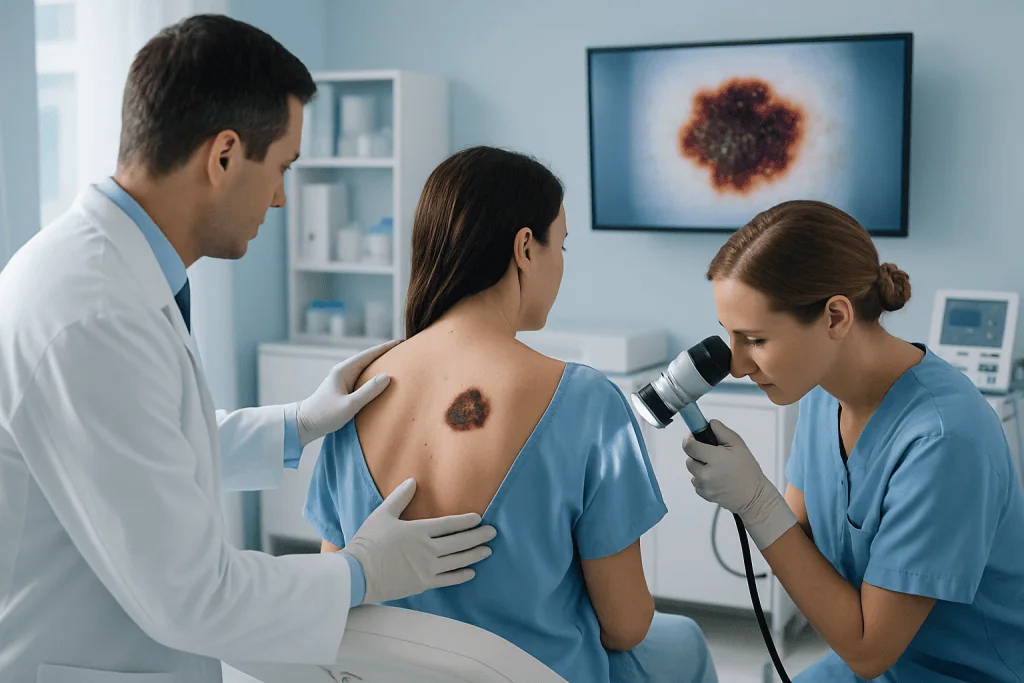
Diagnosis usually begins with a clinical skin examination, often supported by dermoscopy, which allows the dermatologist to view structures beneath the skin surface more clearly. If melanoma is suspected, the lesion is biopsied and examined by a pathologist. The pathology report provides essential information, including tumor thickness, ulceration, mitotic activity, margin status, and sometimes subtype. These details help determine whether further surgery, lymph node evaluation, imaging, or systemic treatment is needed.
Patients may seek melanoma care in several situations:
- A suspicious lesion has been found and biopsy is needed.
- A biopsy has confirmed melanoma and the patient needs definitive treatment planning.
- Initial surgery has been performed elsewhere and the patient wants a second opinion on margins, staging, or additional therapy.
- Sentinel lymph node biopsy or lymph node surgery is being considered.
- Melanoma has returned locally, regionally, or in distant organs.
- Advanced melanoma requires immunotherapy, targeted therapy, radiation therapy, or combined treatment.
- The melanoma is located in a cosmetically or functionally sensitive area, such as the face, scalp, hands, feet, nail unit, genital region, or mucosal surfaces.
Because melanoma treatment decisions can affect both survival and quality of life, a structured evaluation is important before therapy begins. For international patients, bringing original biopsy slides, pathology reports, imaging files, operative notes, and medication records can help the care team confirm the diagnosis and avoid unnecessary repetition.
Conditions and Indications Addressed by Melanoma Care
Melanoma care addresses a spectrum of disease, from very early tumors confined to the upper layers of the skin to metastatic melanoma involving distant organs. Treatment is adapted to each stage and subtype.
Early-stage cutaneous melanoma is melanoma limited to the skin. It is often treated with wide local excision, and the need for sentinel lymph node biopsy depends on tumor thickness and other risk features. The aim is complete removal and accurate risk assessment.
Intermediate or high-risk melanoma may include thicker tumors, ulcerated tumors, or melanomas with other microscopic features associated with a higher chance of recurrence. These patients often require discussion by a multidisciplinary tumor board to determine whether lymph node evaluation, adjuvant therapy, or closer surveillance is appropriate.
Regional melanoma involves nearby lymph nodes or in-transit metastases, which are deposits of melanoma in the skin or soft tissue between the original tumor and regional lymph nodes. Management may include surgery, systemic therapy, radiation therapy, or localized treatments depending on extent and resectability.
Metastatic melanoma has spread to distant organs such as the lungs, liver, brain, bones, or distant skin and lymph node sites. Treatment often focuses on systemic therapy, especially immunotherapy or targeted therapy when molecular testing identifies an actionable mutation. Radiation therapy and surgery may also play roles in selected situations.
Acral melanoma occurs on the palms, soles, or under the nails. It may be diagnosed later because it can resemble trauma, fungal infection, or benign pigmentation. Treatment requires careful surgical planning to preserve function whenever possible.
Mucosal melanoma arises in mucosal tissues, such as the nasal passages, mouth, anorectal region, or genital tract. It is less common and often more complex, requiring site-specific expertise and multidisciplinary planning.
Ocular melanoma involves structures of the eye and requires specialized ophthalmic oncology assessment. Its treatment pathway differs from skin melanoma and may involve eye-preserving therapies, surgery, radiation-based approaches, and systemic surveillance.
Recurrent melanoma may return near the original scar, in lymph nodes, or in distant organs. Recurrence requires reassessment of pathology, imaging, prior treatments, and molecular profile to choose the next evidence-based option.
How Melanoma Treatment Is Performed
Melanoma treatment begins with confirmation of the diagnosis and careful staging. The process is designed to answer several key questions: What type of melanoma is it? How deep is it? Has it reached lymph nodes or organs? Are there molecular features that affect treatment? What approach offers the best balance of disease control, safety, appearance, function, and the patient’s personal circumstances?
Preparation and Diagnostic Review
Before treatment, the medical team reviews the biopsy report, prior photographs if available, personal and family history, sun exposure history, previous skin cancers, immune status, medications, and other medical conditions. A full skin examination may be performed to look for additional suspicious lesions. Regional lymph nodes are examined clinically.
When patients arrive with an outside diagnosis, pathology review may be recommended. This is especially important if the melanoma is thick, unusual, recurrent, or located in a complex site. Expert pathology assessment helps confirm the diagnosis and clarify features that influence treatment.
Imaging is not required for every early melanoma, but it may be used for higher-risk or symptomatic patients. Ultrasound, computed tomography, magnetic resonance imaging, or positron emission tomography combined with CT may be considered depending on the stage and clinical question. These technologies help assess lymph nodes and detect possible spread. For brain evaluation in advanced melanoma, MRI may be used because it provides detailed images of brain tissue.
Molecular testing may be performed in higher-risk or advanced melanoma to identify mutations that can guide targeted therapy. This testing does not replace staging, but it adds another layer of information that can be essential for treatment selection.
Surgery for Melanoma
Surgery is the cornerstone of treatment for most localized melanomas. The standard approach is wide local excision, in which the surgeon removes the melanoma scar or residual lesion along with a measured margin of surrounding normal tissue. The recommended margin depends on melanoma thickness and location. The purpose is to remove microscopic disease that may extend beyond what is visible on the skin.
If the melanoma is in an area where appearance or function is especially important, such as the face, eyelid region, ear, fingers, toes, or sole of the foot, surgical planning may involve reconstructive techniques. Plastic and reconstructive surgeons may help close the wound, restore contour, and preserve movement. Reconstruction may be performed during the same operation or staged, depending on the situation.
Sentinel lymph node biopsy may be recommended for certain melanomas based on thickness and risk features. During this procedure, mapping techniques help identify the first lymph node or nodes that drain the area of the melanoma. These nodes are removed through a small incision and examined for microscopic cancer cells. The result provides important staging information and may influence recommendations for additional therapy or surveillance.
If lymph nodes are clinically enlarged or confirmed to contain melanoma, treatment may include surgery to remove involved nodes, systemic therapy, radiation therapy, or a combination. In many modern treatment pathways, the timing of drug therapy and surgery is discussed carefully, particularly for stage III melanoma.
Immunotherapy, Targeted Therapy, Radiation Therapy and Chemotherapy
Immunotherapy has become a major part of treatment for many patients with advanced or high-risk melanoma. These medicines work by helping immune cells recognize and attack melanoma cells. They may be used after surgery to reduce the risk of recurrence in selected high-risk patients, before surgery in some situations, or as the main treatment for metastatic disease. Because immunotherapy can activate the immune system throughout the body, it can also cause inflammation-related side effects affecting organs such as the skin, bowel, liver, lungs, thyroid, or other glands. Careful monitoring is essential.
Targeted therapy may be appropriate when melanoma contains specific mutations, most commonly in genes involved in cell growth signaling. These medicines are designed to block abnormal signals that help cancer cells grow. They are usually given as oral medications and can produce meaningful disease control in selected patients, although side effects and resistance patterns must be monitored.
Radiation therapy uses carefully planned beams of radiation to treat cancer in a defined area. In melanoma, it may be used after surgery when there is a higher risk of local or regional recurrence, to treat symptoms from metastases, to manage certain lymph node regions, or to treat brain metastases using highly focused techniques when appropriate. Modern radiation planning uses imaging to shape the dose around the target while limiting exposure to nearby healthy tissues.
Chemotherapy has a more limited role in melanoma than it once did because immunotherapy and targeted therapy are often preferred when suitable. However, chemotherapy may still be considered in selected cases, particularly when other options are not appropriate or have already been used.
Typical Duration and Care Experience
The length of melanoma treatment varies widely. A patient with an early melanoma may complete surgery as an outpatient procedure and recover over several weeks. A patient needing sentinel lymph node biopsy may spend more time in preoperative mapping, surgery, and pathology review. Patients receiving immunotherapy, targeted therapy, or radiation therapy may follow a treatment schedule over months or longer, with regular monitoring and imaging.
For international patients, treatment planning often begins before travel through review of medical records. Once in Turkey, appointments may include dermatology assessment, imaging, pathology review, surgical consultation, oncology consultation, and tumor board discussion when indicated. Acibadem International teams support scheduling, language interpretation, hospital navigation, and communication with the clinical departments so patients and families can understand each step.
Recovery Process
Recovery depends on the treatment performed. After local excision, patients typically manage wound care, temporary activity restrictions, and follow-up for suture removal or healing assessment. If a larger reconstruction is required, recovery may involve more detailed wound instructions and longer healing time. After sentinel lymph node biopsy or lymph node surgery, patients may have soreness, swelling, drain care in some cases, and guidance to reduce the risk of lymphedema.
Patients receiving systemic therapy need regular monitoring for treatment response and side effects. Blood tests, physical examinations, symptom review, and periodic imaging may be part of follow-up. Radiation therapy side effects depend on the treated area and may include fatigue, skin changes, or site-specific symptoms. The care team provides instructions on when to report fever, worsening pain, shortness of breath, diarrhea, neurologic symptoms, new swelling, or other concerning changes.
Why Acting Early Matters
Melanoma is often highly treatable when found early, but it can become more difficult to control once it grows deeper into the skin or spreads to lymph nodes and organs. Acting early improves the opportunity for complete surgical removal and accurate staging before the disease becomes more complex.
Delaying evaluation of a suspicious lesion can allow the melanoma to increase in thickness. Tumor thickness is one of the most important factors used to estimate risk and guide treatment. A delay may also affect whether a sentinel lymph node biopsy is recommended and may increase the chance that additional therapy will be needed.
Delay can be especially risky for melanomas that do not look typical. Amelanotic melanomas, which have little or no pigment, may be mistaken for benign pink bumps. Nail melanomas may be attributed to trauma. Acral melanomas on the sole of the foot may be treated as a wart or callus. Mucosal melanomas may cause symptoms that resemble common inflammatory conditions. Persistent or changing lesions deserve medical evaluation.
For patients already diagnosed, timely staging is equally important. Starting the wrong treatment before confirming stage or molecular profile can complicate future decisions. A careful but efficient pathway helps avoid both unnecessary delay and rushed treatment based on incomplete information.
Benefits of Melanoma Treatment
The benefits of melanoma treatment depend on the stage of disease and the therapies used, but the main goals are accurate control of cancer, preservation of function and appearance, and long-term surveillance.
| Benefit | What It Means for You |
|---|---|
| Accurate diagnosis and staging | Pathology review, imaging when needed, lymph node assessment, and molecular testing help define the true extent of disease before treatment decisions are made. |
| Complete removal of localized melanoma | For early melanoma, surgery aims to remove the cancer with appropriate margins while planning closure in a way that supports healing, function, and appearance. |
| Personalized treatment selection | Therapy can be adapted to tumor thickness, lymph node status, mutation profile, prior treatments, medical history, and patient preferences. |
| Access to modern systemic therapies | Immunotherapy and targeted therapy may be considered for high-risk or advanced melanoma when clinically appropriate. |
| Coordinated specialist input | Complex cases can be reviewed by relevant specialists so surgery, drug therapy, radiation therapy, reconstruction, and follow-up are aligned. |
| Structured follow-up | Ongoing skin checks, imaging when indicated, and symptom monitoring help detect recurrence or new skin cancers as early as possible. |
Recovery Timeline After Melanoma Treatment
Recovery varies according to the stage of melanoma and the type of treatment, but many patients find it helpful to understand the general pattern of care after diagnosis and treatment.
| Time Period | What Patients Can Expect |
|---|---|
| Day 1 | After a biopsy or excision, patients usually receive wound care instructions and guidance on activity. If systemic therapy is started, baseline blood tests and side effect education are reviewed. |
| First Week | Mild discomfort, swelling, bruising, or tightness around the surgical site may occur. Patients are advised to watch for signs of infection and to avoid strain on the treated area. |
| First Month | Pathology results are reviewed, sutures may be removed, and additional treatment decisions are finalized. Patients who had lymph node procedures may need more detailed recovery guidance. |
| During Active Therapy | Patients receiving immunotherapy, targeted therapy, or radiation therapy attend scheduled visits for monitoring. Side effects should be reported early, even if they seem mild at first. |
| Longer Term | Follow-up focuses on skin surveillance, lymph node examination, imaging when appropriate, management of late effects, sun protection, and education about signs of recurrence. |
What Influences Outcomes and a Good Result
Melanoma outcomes are influenced by several factors, many of which are assessed during diagnosis and staging. The most important include tumor thickness, ulceration, mitotic activity, lymph node involvement, whether the melanoma has spread to distant organs, the melanoma subtype, and the patient’s overall health. Response to systemic therapy also varies between individuals.
Early stage at diagnosis is strongly associated with better outcomes. A thin melanoma that is completely removed generally has a more favorable outlook than a thick melanoma with nodal or distant spread. However, even within the same stage, individual risk can differ. This is why pathology details and multidisciplinary review are valuable.
The quality of the first biopsy and surgery matters. An appropriate biopsy technique helps the pathologist measure depth accurately. Correct surgical margins reduce the chance of local persistence. Sentinel lymph node biopsy, when indicated, provides staging information that may change the treatment plan. For melanomas in complex locations, experience in both cancer surgery and reconstruction can affect function, healing, and appearance.
For advanced melanoma, molecular testing and careful treatment sequencing may influence results. Some patients are better candidates for immunotherapy; others may benefit from targeted therapy if specific mutations are present. In some cases, therapy before surgery may be considered to shrink disease or assess response. These decisions require expertise because each option has benefits, risks, and timing considerations.
General health also plays a role. Autoimmune disease, organ transplant history, chronic infections, liver or kidney disease, and certain medications can affect treatment choices. Patients receiving immunotherapy need close monitoring because side effects can be serious if not recognized early. Patients on targeted therapy need attention to fever, skin effects, heart function in selected cases, liver tests, eye symptoms, and other potential adverse effects.
A good result in melanoma care is not defined only by removing a lesion. It includes accurate staging, appropriate therapy, safe management of side effects, thoughtful reconstruction when needed, and a surveillance plan that the patient can realistically follow. It also includes clear communication, because patients need to understand what was found, what was done, what risks remain, and what symptoms should prompt urgent contact.
Why International Patients Choose Acibadem for Melanoma Care
International patients seeking melanoma treatment abroad often want more than an appointment with a single physician. They need a reliable diagnostic pathway, access to multiple specialties, clear explanations in their language, efficient scheduling, and a treatment plan that can be communicated to their doctors at home. Acibadem’s model is designed around this type of coordinated care.
Acibadem hospitals are JCI-accredited, reflecting structured standards for patient safety, clinical processes, infection control, and quality improvement. For melanoma patients, this matters because care may involve surgery, pathology, imaging, oncology medications, radiation therapy, and follow-up across several departments. Coordination reduces fragmentation and helps each specialist work from the same clinical information.
Multidisciplinary evaluation is especially important in melanoma. A patient with an early lesion may primarily need dermatology, pathology, and surgical care. A patient with stage III disease may require input from surgical oncology, medical oncology, nuclear medicine, radiology, and radiation oncology. A patient with melanoma on the face or hand may also need reconstructive expertise. A patient with metastatic disease may need molecular testing, systemic therapy planning, brain imaging, radiation oncology assessment, and supportive care. Specialist boards and tumor boards help align these decisions with international and evidence-based treatment protocols.
Diagnostic technology supports accurate staging and treatment planning. Dermoscopic evaluation assists in assessing suspicious skin lesions. High-quality pathology helps define tumor depth and risk features. Cross-sectional imaging, metabolic imaging, ultrasound, and MRI may be used when clinically appropriate to evaluate lymph nodes or distant disease. Radiation planning systems help deliver treatment to defined targets while limiting exposure to nearby tissues. Surgical mapping techniques can support sentinel lymph node biopsy in patients who need it.
Experienced physicians are central to melanoma care, but experience is most valuable when supported by a system that encourages collaboration. Dermatologists, surgeons, oncologists, radiologists, pathologists, nuclear medicine specialists, radiation oncologists, anesthesiologists, nurses, rehabilitation professionals, and international patient coordinators may all contribute to the patient’s pathway. This is particularly helpful when patients arrive with incomplete records or complex prior treatment histories.
Personalized treatment planning is another important reason patients consider Acibadem. Melanoma care is not based solely on the name of the diagnosis. Treatment is adapted to the stage, location, molecular findings, cosmetic and functional priorities, medical history, and the patient’s ability to remain in Turkey or continue parts of care at home. When long-term therapy is required, the team may help patients understand how monitoring can be coordinated after travel.
Acibadem International provides dedicated services for patients traveling from abroad, including assistance with appointment organization, medical record review, interpretation in more than 20 languages, hospital guidance, and coordination of clinical visits. These services do not replace medical decision-making, but they help patients and families move through a complex cancer pathway with clearer communication and fewer logistical barriers.
For patients from the United States and other countries, another important consideration is second opinion care. Some patients want confirmation of the initial pathology report. Others want to understand whether immunotherapy, targeted therapy, or surgery is appropriate, or whether the sequence of treatment should change. A second opinion can be valuable when the melanoma is high-risk, recurrent, metastatic, rare in subtype, or located in a challenging anatomical area.
Taking the Next Step
A melanoma diagnosis deserves careful attention, but it also deserves clarity. The most important next step is to establish the exact stage of the disease and to understand which treatment options are appropriate for your situation. For some patients, this may mean a focused surgical procedure and ongoing skin surveillance. For others, it may involve a more complex plan using immunotherapy, targeted therapy, radiation therapy, or combined treatment.
If you are considering melanoma treatment at Acibadem, you can request a consultation or a second opinion with your available medical records, including biopsy results, pathology slides if available, imaging studies, operative reports, and current medication lists. The clinical team can review your information, recommend the next diagnostic steps, and explain which specialists should be involved.
Melanoma care is time-sensitive, but it should also be thoughtful. With accurate staging, multidisciplinary planning, and a personalized treatment strategy, patients can make informed decisions about their care and understand what to expect before, during, and after treatment.
This information is general and is not a substitute for professional medical advice. Diagnosis and treatment decisions should be made with a qualified physician who can evaluate your individual condition.
Preparation
- Preparation usually includes dermatologic examination, biopsy review, imaging for staging and laboratory tests. Your oncology team reviews medications, allergies and previous treatments before creating a personalized plan. If surgery is planned, fasting and anesthesia instructions may be required.
Aftercare
- Aftercare may include wound care, follow-up imaging, skin checks and monitoring for treatment side effects. Patients should protect skin from UV exposure and report new or changing moles promptly. Long-term surveillance is important because melanoma can recur or spread.
Turkey vs UK, Germany & USA
Melanoma care costs vary because treatment depends on the depth and spread of the cancer, molecular test results and the therapies recommended by the oncology team. Comparing countries can help international patients understand the main cost and experience factors before requesting a personalised quote.
The overall experience and cost of melanoma treatment are influenced by diagnostics, staging, surgery, systemic medicines, hospital standards and travel logistics.
| Factor | Turkey | UK | Germany | USA |
|---|---|---|---|---|
| Price drivers | Often structured as self-pay international packages; final cost depends on pathology, imaging, surgery, medicines and follow-up needs. | Private care costs depend on consultant fees, hospital charges, diagnostics and systemic therapies; public pathways may have eligibility and referral rules. | Costs are influenced by specialist centre fees, diagnostics, hospital stay, systemic treatment and follow-up planning. | Costs can vary widely by hospital, physician fees, facility charges, insurance status, medicines and imaging. |
| Hospital and surgeon factors | International departments may coordinate dermatology, surgical oncology, medical oncology, radiation oncology and pathology in one pathway. | Care may be delivered through private hospitals or specialist cancer centres, with consultant choice affecting fees and timing. | University hospitals and oncology centres may offer multidisciplinary melanoma care, with costs reflecting centre type and specialist involvement. | Academic and private cancer centres may offer advanced therapies, with separate billing for clinicians, facilities and diagnostics. |
| Accreditation and quality | Patients may choose JCI-accredited hospitals with international patient services and multilingual coordination. | Quality oversight depends on the hospital and clinical governance framework; international accreditation may vary by facility. | Quality systems and specialist cancer networks vary by provider; accreditation and tumour board access should be checked. | Accreditation, cancer centre designation and insurance network status can affect both care pathway and out-of-pocket cost. |
| Waiting times | Private international scheduling may allow coordinated appointments after medical records are reviewed. | Public referral pathways can involve waiting; private appointments may be faster depending on consultant and facility availability. | Scheduling depends on the centre, urgency, diagnostic requirements and specialist availability. | Access may be fast in private settings, but timing can depend on insurance authorisation, referrals and centre capacity. |
| Travel and language logistics | Travel planning, translation, airport transfers and accommodation guidance may be coordinated for international patients. | English-language care is straightforward for many patients, but travel, accommodation and local navigation remain separate considerations. | Interpreter support may be needed; international offices may assist with appointments and logistics. | English-language care is common, but long-distance travel, accommodation and insurance administration can add complexity. |
| Package inclusions | Packages may include specialist consultation, selected tests, procedure planning, hospital stay and coordination, depending on the case. | Private quotes may be itemised by consultation, diagnostics, surgery, medicines and hospital fees. | Quotes may separate diagnostics, inpatient care, procedures, medicines and physician fees. | Billing may be highly itemised, with separate charges for facility, physician, pathology, imaging and medication services. |
What affects your final cost
- Depth and location of the melanoma and whether it has spread to lymph nodes or other organs.
- Need for biopsy review, advanced pathology, molecular testing and imaging.
- Type and extent of surgery, including reconstruction or sentinel lymph node procedures when indicated.
- Use of immunotherapy, targeted therapy, radiation therapy or chemotherapy.
- Hospital category, specialist team involvement, length of stay and follow-up plan.
- Travel, accommodation, translation services and the need for a companion.
Compare your options
Melanoma treatment is personalised according to stage, tumour features, molecular results, overall health and patient preferences. Suitability for any option is decided by a specialist after examination and review of test results.
| Option | What it is | Typical use | Key considerations |
|---|---|---|---|
| Diagnostic biopsy and pathology review | Removal or sampling of the suspicious skin lesion followed by microscopic assessment. | Used to confirm melanoma, measure tumour features and guide staging. | Accurate pathology is essential because it influences surgery, imaging and systemic treatment decisions. |
| Wide local excision | Surgical removal of the melanoma site with a margin of healthy tissue. | Common treatment for localised melanoma after diagnostic confirmation. | Margin planning, cosmetic outcome, wound closure and reconstruction needs can affect the care pathway. |
| Sentinel lymph node biopsy | A procedure to check the first draining lymph node area for microscopic spread. | Considered for selected patients based on tumour depth and risk features. | It helps staging and further treatment planning, but it is not suitable for every patient. |
| Immunotherapy | Medicines that help the immune system recognise and attack melanoma cells. | Used for some higher-risk, recurrent or advanced melanomas, and sometimes after surgery. | Requires careful assessment, monitoring for immune-related side effects and follow-up blood tests or imaging. |
| Targeted therapy | Medicines aimed at specific melanoma mutations, such as BRAF-related pathways. | Used when molecular testing shows an actionable mutation. | Eligibility depends on genetic testing; side effects, treatment duration and resistance patterns are reviewed by oncology specialists. |
| Radiation therapy | Focused radiation delivered to a defined area. | May be used for symptom control, selected lymph node areas, brain involvement or after surgery in specific cases. | Planning depends on tumour site, previous treatments and nearby sensitive organs. |
| Chemotherapy | Anti-cancer medicines that affect rapidly dividing cells. | Less commonly used than immunotherapy or targeted therapy in many melanoma pathways, but may be considered in selected situations. | Choice depends on prior treatments, disease behaviour, general health and specialist recommendation. |
Trusted care for international patients
General information only — not medical or financial advice. Final costs depend on the factors above and your individual case; request a free, personalised quote.
Doctors Performing This Treatment

Prof. Dr. Abdullah Büyükçelik
Medical Oncology
Prof. Dr. Ahmet Öztürk
Hematology
Prof. Dr. Ali Arican
Medical Oncology
Prof. Dr. Ayşen Timurağaoğlu
Hematology
Prof. Dr. Aziz Yazar
Medical Oncology
Prof. Dr. Başak Oyan Uluç
Medical Oncology
Prof. Dr. Bülent Karabulut
Medical Oncology
Prof. Dr. Bülent Orhan
Medical Oncology
Prof. Dr. Eren Erken
Hematology
Prof. Dr. Ersin Özaslan
Medical Oncology
Prof. Dr. Faysal Dane
Medical Oncology
Prof. Dr. Gökhan Demir
Medical Oncology
Prof. Dr. Gül Başaran
Medical Oncology
Prof. Dr. Gülsan Sucak
Hematology
Prof. Dr. Handan Onur Topuzlu
Medical Oncology
Prof. Dr. Hüseyin Engin
Medical Oncology
Prof. Dr. Meliha Nalçacı
Hematology
Prof. Dr. Mustafa Çetiner
Hematology
Prof. Dr. Okan Kuzhan
Medical Oncology
Prof. Dr. S. Sami Kartı
Hematology
Prof. Dr. Salim Başol Tekin
Hematology
Prof. Dr. Siret Ratip
Hematology
Prof. Dr. Soner Solmaz
Hematology
Prof. Dr. Taner Korkmaz
Medical OncologyMedical Units
Available at These Hospitals











Diseases This Treats
Frequently Asked Questions
What mainly affects the cost of melanoma treatment?
The main factors are diagnostic tests, pathology and molecular testing, imaging, surgical complexity, hospital stay, and whether immunotherapy, targeted therapy, radiation therapy or chemotherapy is needed. The final plan must be based on specialist review.
How can I get a personalised quote for melanoma care in Turkey?
You can request a free consultation by sharing your pathology report, biopsy details, imaging results, previous treatment records and current photos if relevant. The medical team can then recommend the next steps and prepare a personalised estimate.
Does a melanoma treatment package include all therapies?
Packages vary by patient and hospital. Some may include consultation, selected diagnostics, surgery and coordination services, while medicines, advanced imaging, radiation therapy or extended follow-up may be quoted separately.
Will I need to travel more than once?
This depends on the treatment plan. Some patients travel for diagnosis review and surgery, while others need ongoing systemic therapy, radiation therapy or follow-up imaging that may require longer stays or coordinated shared care at home.
Is the lowest quote always the best option?
Not necessarily. Patients should consider the completeness of staging, pathology quality, specialist experience, hospital accreditation, medication access, follow-up planning, language support and what is included in the quote. This information is general and is not medical or financial advice.