

Pituitary Tumor
Pituitary tumor treatment manages benign or rarely malignant growths near the pituitary gland using monitoring, medication, endoscopic surgery, or radiosurgery depending on size, hormones, and vision impact.
Quick answer
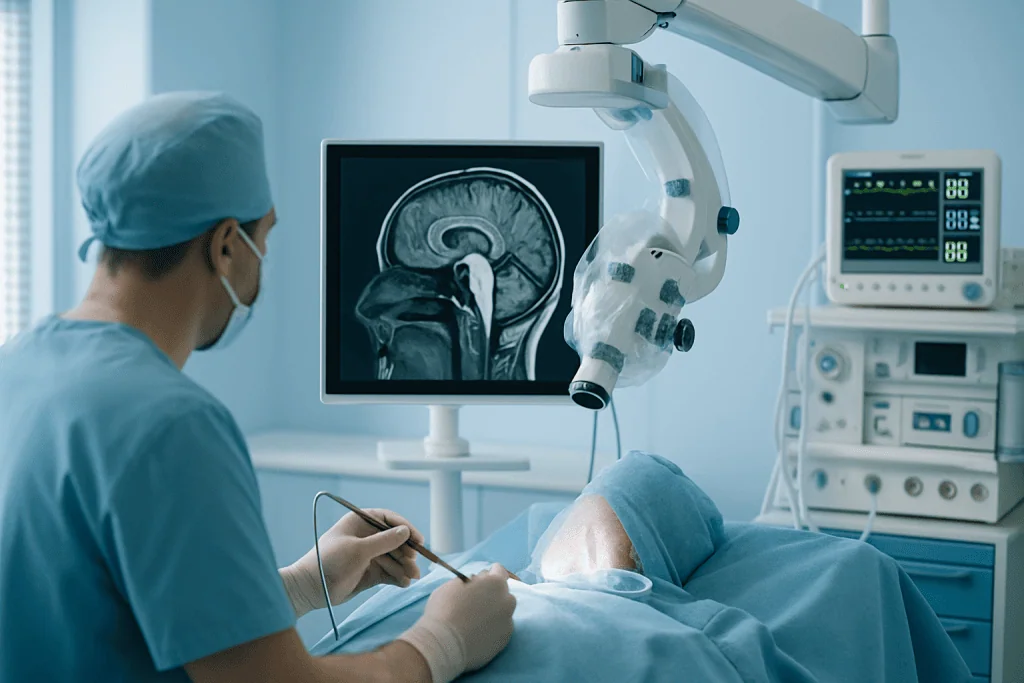
Pituitary tumor treatment manages abnormal growths in or near the pituitary gland with observation, medication, minimally invasive endoscopic surgery, or radiosurgery, depending on the tumor’s size, hormone activity, and effect on vision or nearby structures. At Acibadem in Turkey, evaluation and treatment planning are tailored by a multidisciplinary team using imaging, hormone testing, and neurosurgical and endocrine expertise.
Understanding the Decision to Treat a Pituitary Tumor
Learning that you have a pituitary tumor can feel unsettling, especially because the pituitary gland sits deep inside the head and controls hormones that affect many parts of the body. Some patients discover the tumor after months of headaches, changes in vision, fatigue, menstrual changes, low libido, unexplained weight change, or problems with fertility. Others are told about a pituitary lesion after an MRI performed for an unrelated reason. In either situation, the first questions are often urgent and personal: Is it cancer? Will it affect my vision? Do I need brain surgery? Can my hormones return to normal?
Most pituitary tumors are benign adenomas, meaning they are not cancer and do not spread to distant organs. However, benign does not always mean harmless. A pituitary tumor may press on the optic nerves, affect nearby brain structures, or produce excess hormones that disturb metabolism, blood pressure, growth, reproductive function, stress response, and overall well-being. Rarely, pituitary tumors can behave aggressively or be malignant, which requires specialized evaluation and long-term management.
The goal of pituitary tumor treatment is to protect vision, control hormone imbalance, reduce or remove tumor pressure, and preserve normal pituitary function whenever possible. For some patients, careful monitoring is the safest and most appropriate option. For others, medication, endoscopic surgery through the nose, radiotherapy, or stereotactic radiosurgery may be recommended. The right plan depends on the tumor’s size, hormone activity, location, growth pattern, symptoms, and the patient’s overall health.
Because the pituitary gland is small but highly influential, treatment decisions are best made by a team experienced in pituitary disorders. Neurosurgeons, endocrinologists, neuroradiologists, radiation oncologists, ophthalmologists, pathologists, and specialized nursing teams often contribute to the plan. For international patients, the quality of diagnosis, clarity of communication, and coordination of care are just as important as the treatment itself.
What Pituitary Tumor Treatment Is
Pituitary tumor treatment is a personalized medical and surgical strategy for managing abnormal growths in or near the pituitary gland. The pituitary gland is located at the base of the brain in a small bony space called the sella turcica. It produces hormones that regulate other glands, including the thyroid, adrenal glands, ovaries, and testes. It also influences growth, lactation, water balance, and several essential body functions.
Pituitary tumors are generally classified in two important ways. The first is by size. A microadenoma is smaller than 10 millimeters, while a macroadenoma is 10 millimeters or larger. Larger tumors are more likely to press on the optic chiasm, the area where the optic nerves cross, which can cause visual field loss. The second classification is by hormone activity. A functioning pituitary tumor produces too much of a hormone, while a nonfunctioning pituitary tumor does not produce active hormones but may still cause symptoms by growing and pressing on nearby structures.
Treatment may include one or more of the following approaches:
- Monitoring: Regular MRI scans, hormone testing, and visual evaluations may be appropriate for small, nonfunctioning tumors that are not causing symptoms or growth.
- Medication: Some hormone-producing tumors, especially prolactinomas, often respond well to medication that lowers hormone production and may shrink the tumor.
- Endoscopic transnasal transsphenoidal surgery: Many pituitary tumors can be removed through the nose using an endoscope, avoiding a large external incision and reducing manipulation of normal brain tissue.
- Radiotherapy or stereotactic radiosurgery: Focused radiation may be used when a tumor remains after surgery, recurs, cannot be safely removed, or continues to produce hormones despite other treatments.
- Hormone replacement or hormone-lowering therapy: Some patients need medication to replace hormones that are low or to control excess hormone effects before or after tumor treatment.
Modern pituitary care is not simply about removing a mass. It involves understanding the tumor’s biology, measuring hormone effects accurately, assessing vision, protecting normal pituitary function, and planning long-term follow-up. In many cases, a successful treatment plan combines immediate symptom control with careful surveillance over time.
Who May Need Pituitary Tumor Treatment
Patients may need evaluation or treatment for a pituitary tumor when symptoms, hormone findings, imaging results, or visual changes suggest that the tumor is active or growing. Some patients have clear signs of hormone excess. Others have nonspecific symptoms that develop slowly and are easy to attribute to stress, aging, menopause, weight change, or other medical conditions.
Common symptoms that may lead to a pituitary tumor diagnosis include persistent headaches, blurred or double vision, loss of side vision, menstrual irregularity, infertility, erectile dysfunction, reduced libido, unexpected milk production from the breasts, fatigue, dizziness, unexplained weight gain or loss, easy bruising, muscle weakness, changes in facial appearance, enlarged hands or feet, excessive sweating, high blood pressure, diabetes, or increased thirst and urination. Some patients have no symptoms and are diagnosed after imaging for headaches, trauma, sinus problems, or another unrelated issue.
Diagnosis usually begins with a detailed medical history and physical examination, followed by targeted testing. A high-resolution MRI of the pituitary region helps define the tumor’s size, location, relation to the optic nerves, and extension into nearby structures such as the cavernous sinus. Blood tests measure pituitary hormones and the hormones controlled by the pituitary gland. Depending on the suspected tumor type, testing may include prolactin, growth hormone-related markers, cortisol pathway testing, thyroid function, sex hormones, and adrenal function. In selected cases, dynamic endocrine testing is needed to assess hormone production more precisely.
Vision testing is particularly important for larger tumors or tumors close to the optic chiasm. A formal visual field test can detect subtle loss of peripheral vision before a patient notices it in daily life. An ophthalmologic assessment may also evaluate visual acuity, eye movement, and optic nerve health.
A patient may be advised to consider treatment if the tumor is causing visual impairment, pressing on nearby structures, producing excess hormones, growing on serial imaging, causing pituitary hormone deficiency, or creating a risk of sudden complications such as pituitary apoplexy. Treatment may also be considered when the diagnosis is uncertain and tissue confirmation is needed.
Conditions and Indications Pituitary Tumor Treatment Addresses
Pituitary tumor treatment addresses a spectrum of pituitary adenomas and related sellar region lesions. The treatment pathway varies depending on the specific condition and the patient’s symptoms.
Nonfunctioning pituitary adenomas are often diagnosed when they become large enough to cause headaches, visual field loss, or pituitary hormone deficiency. Because they do not usually cause a distinctive hormone syndrome, they may remain unnoticed until they reach macroadenoma size. Surgery is commonly considered when they compress the optic apparatus or continue to grow.
Prolactinomas produce excess prolactin. They may cause irregular or absent menstrual periods, infertility, breast milk production unrelated to pregnancy, low testosterone, erectile dysfunction, low libido, and bone loss over time. Many prolactinomas are treated first with medication rather than surgery, although surgery may be considered when medication is not tolerated, does not work adequately, or when urgent decompression is needed.
Growth hormone-producing adenomas can cause acromegaly in adults, with gradual enlargement of the hands, feet, jaw, and facial features, along with joint pain, sleep apnea, sweating, diabetes, hypertension, and increased cardiovascular risk. Surgery is often part of treatment, supported by medication or radiotherapy when needed.
ACTH-producing adenomas can cause Cushing disease, a condition associated with excess cortisol. Symptoms may include central weight gain, rounded facial appearance, thin skin, easy bruising, muscle weakness, high blood pressure, diabetes, mood changes, osteoporosis, and increased infection risk. Accurate diagnosis is essential because cortisol disorders can be complex and may require specialized endocrine testing.
TSH-producing adenomas are uncommon tumors that cause excess thyroid hormone stimulation. They may lead to symptoms of hyperthyroidism such as rapid heartbeat, weight loss, tremor, heat intolerance, and anxiety. Management often requires close coordination between endocrinology and neurosurgery.
Recurrent or residual pituitary tumors may require additional treatment after prior surgery, medication, or radiation. These cases benefit from careful review of previous imaging, operative reports, pathology, hormone trends, and prior radiation exposure.
Some lesions near the pituitary gland are not adenomas but may mimic them on imaging, such as Rathke cleft cysts, craniopharyngiomas, meningiomas, inflammatory lesions, or metastatic tumors. Distinguishing among these conditions matters because treatment and follow-up may differ significantly.
How Pituitary Tumor Treatment Is Performed
Preparation and Treatment Planning
Preparation begins with confirming the diagnosis and understanding the tumor’s effect on the patient. The care team reviews MRI findings, hormone levels, visual test results, symptoms, medications, previous surgeries, and relevant medical conditions. For international patients, it is helpful to provide prior MRI images, laboratory results, pathology reports if available, medication lists, and a short summary of symptoms and timeline.
Endocrine optimization may be needed before treatment. For example, cortisol deficiency must be recognized and managed because it can affect surgical safety. Patients with excess cortisol, growth hormone, or thyroid hormone may require medications before surgery to reduce risk. If the patient is taking blood thinners or has diabetes, high blood pressure, sleep apnea, heart disease, or other medical issues, these are evaluated before the procedure.
When surgery is recommended, the team explains the planned approach, expected hospital stay, possible need for hormone replacement, and specific risks. Imaging may be used to map the nasal corridor, sphenoid sinus, tumor boundaries, optic nerves, carotid arteries, and cavernous sinus. Modern planning often includes high-resolution MRI, CT when needed for bony anatomy, and image-guidance systems that help the surgeon navigate precisely during the operation.
The Procedure Itself
The most common surgical approach for many pituitary tumors is endoscopic transnasal transsphenoidal surgery. In this operation, the surgeon reaches the pituitary gland through the nostril and sphenoid sinus using a slender endoscope with a camera and specialized instruments. This approach avoids opening the skull in many cases and provides a direct route to the sella, where the pituitary gland is located.
During surgery, the patient is under general anesthesia. The surgical team works through the nasal passage to access the sphenoid sinus, opens the sellar floor, and carefully removes tumor tissue while aiming to preserve normal pituitary gland and surrounding structures. Magnified endoscopic visualization allows the team to distinguish tumor from normal anatomy. Image guidance may assist with orientation, especially in complex anatomy or repeat surgery. In selected cases, intraoperative assessment and specialized reconstruction techniques are used to reduce the risk of cerebrospinal fluid leakage.
Some tumors extend into areas that are difficult to reach completely, such as the cavernous sinus, where critical nerves and the carotid artery are located. In these situations, the safest strategy may be partial removal to relieve pressure and obtain diagnosis, followed by medication or focused radiation if needed. A small number of patients with tumors that extend significantly above or to the side of the pituitary region may require a different surgical route, but this is less common than the endoscopic nasal approach.
Medication-Based Treatment
Medication is central for certain pituitary tumors. Prolactinomas frequently respond to dopamine agonist medications, which can lower prolactin levels and reduce tumor size. Patients taking these medicines need monitoring for effectiveness, side effects, and hormone recovery. Medication may also be used for acromegaly, Cushing disease, or other hormone-secreting tumors, either before surgery, after surgery, or when surgery is not the best initial option.
Hormone replacement may be needed if the tumor or its treatment reduces normal pituitary function. Replacement therapy may include thyroid hormone, hydrocortisone or other adrenal support, sex hormone replacement, growth hormone in selected adults, or medication for water balance if diabetes insipidus occurs. These treatments are tailored by endocrinologists and adjusted over time based on symptoms and laboratory results.
Radiotherapy and Stereotactic Radiosurgery
Radiation treatment may be considered for residual, recurrent, invasive, or medically resistant pituitary tumors. Stereotactic radiosurgery delivers highly focused radiation to a defined target, while fractionated radiotherapy gives treatment in smaller doses over multiple sessions. The choice depends on the size and location of the remaining tumor, distance from the optic nerves, prior radiation, hormone activity, and overall treatment goals.
Radiation can be effective in controlling tumor growth and gradually reducing hormone overproduction in selected patients, but its effects may take time. Long-term endocrine follow-up is important because pituitary hormone deficiencies can develop months or years later. The radiation oncology team works with neurosurgery and endocrinology to balance tumor control with protection of vision and normal pituitary function.
Typical Duration, Hospital Stay, and Early Recovery
The duration of pituitary surgery varies with tumor size, anatomy, prior treatment, and complexity, but many endoscopic procedures are completed within a few hours. Patients usually spend time in a monitored recovery area and may stay in the hospital for observation, hormone testing, fluid balance monitoring, and neurologic checks. The length of stay varies, but many patients are able to leave once they are stable, eating, walking, and safe for discharge.
After surgery, the team monitors sodium levels, urine output, cortisol status, vision, headaches, and signs of cerebrospinal fluid leak. Nasal congestion, fatigue, mild headache, and altered smell are common early experiences. Patients are usually advised to avoid heavy lifting, straining, forceful nose blowing, and certain activities during the initial healing period. Follow-up MRI and hormone testing are scheduled according to the tumor type and treatment plan.
Why Acting Early Matters
Not every pituitary tumor requires immediate intervention, but every pituitary tumor deserves appropriate evaluation. Delay can allow a growing tumor to press further on the optic nerves, sometimes causing visual loss that may not fully recover if compression is prolonged. Hormone-producing tumors can also affect the body gradually but seriously. Excess growth hormone, cortisol, or thyroid stimulation can increase the risk of cardiovascular disease, diabetes, bone loss, sleep apnea, mood changes, and other complications.
Early diagnosis also helps prevent avoidable pituitary hormone deficiency. A tumor that compresses normal pituitary tissue may reduce production of essential hormones, including those needed for adrenal function. Unrecognized adrenal insufficiency can be medically dangerous, particularly during illness or surgery. In rare cases, sudden bleeding or loss of blood supply within a pituitary tumor, known as pituitary apoplexy, can cause severe headache, visual loss, eye movement problems, low blood pressure, or altered consciousness. This requires urgent medical attention.
Timely specialist review does not always mean immediate surgery. It means the patient receives a clear risk assessment, understands the choices, and begins the most appropriate plan before complications progress. For international patients, a structured second opinion can be especially valuable when prior recommendations differ or when the best timing of treatment is uncertain.
Benefits of Pituitary Tumor Treatment
The potential benefits of treatment depend on the tumor type, size, hormone activity, and the patient’s condition before treatment.
| Benefit | What It Means for You |
|---|---|
| Protection or improvement of vision | Removing or reducing pressure on the optic nerves may help preserve sight and, in many patients, improve visual field problems caused by compression. |
| Control of excess hormones | Treatment can reduce abnormal hormone production that affects metabolism, fertility, blood pressure, blood sugar, body composition, and long-term health. |
| Relief from pressure-related symptoms | Patients with large tumors may experience improvement in headaches, pressure symptoms, or nerve-related complaints when the mass effect is reduced. |
| Preservation of normal pituitary function | Careful planning aims to protect healthy pituitary tissue and identify hormone deficiencies early so they can be treated appropriately. |
| Clear diagnosis and long-term plan | Pathology, imaging, and endocrine follow-up help define whether monitoring, medication, radiation, or additional care is needed after initial treatment. |
Recovery Timeline After Pituitary Tumor Treatment
Recovery varies according to whether treatment involves observation, medication, surgery, radiation, or a combination of approaches, but the following timeline reflects common expectations after endoscopic pituitary surgery.
| Time Period | What Patients Can Expect |
|---|---|
| Day 1 | Monitoring focuses on vision, neurologic status, urine output, sodium level, cortisol function, pain control, and nasal symptoms. Many patients are encouraged to walk with assistance. |
| First Week | Fatigue, nasal congestion, mild headache, and reduced smell may be present. Patients follow activity restrictions and receive instructions about warning signs, medications, and follow-up testing. |
| First Month | Energy gradually improves. Endocrine testing may be repeated, nasal healing is assessed, and the care team reviews whether hormone replacement or additional therapy is needed. |
| Longer Term | MRI surveillance and hormone monitoring continue. Some patients need medication adjustments, radiation planning, fertility guidance, or long-term endocrine follow-up depending on tumor type. |
Factors That Influence Outcomes
Outcomes after pituitary tumor treatment are influenced by several medical and technical factors. Tumor size is important, but location and behavior are equally significant. A small hormone-producing tumor can cause major systemic effects, while a larger nonfunctioning tumor may mainly cause pressure symptoms. Tumors that remain within the sella are generally more accessible surgically than tumors that invade the cavernous sinus or wrap around critical blood vessels.
The type of hormone produced by the tumor strongly affects treatment planning. Prolactinomas often respond well to medication, while many growth hormone-producing and ACTH-producing tumors are treated with surgery as a key component of care. Nonfunctioning macroadenomas may require surgery primarily to protect vision and reduce pressure. Residual tumor after surgery does not always mean treatment has failed; in some cases, a safe planned subtotal removal followed by monitoring or radiosurgery is the most appropriate strategy.
Vision before treatment is another major factor. Patients whose optic nerves have been compressed for a shorter time may have a better chance of visual improvement than those with long-standing severe visual loss. Endocrine status before treatment also matters. If normal pituitary function has already been reduced, some deficiencies may improve after decompression, while others may require ongoing replacement.
Surgical experience and team coordination influence the safety and effectiveness of treatment. Pituitary surgery requires familiarity with endoscopic skull base anatomy, tumor consistency, vascular relationships, cerebrospinal fluid leak prevention, and postoperative endocrine management. A good result depends not only on the procedure itself but also on preparation, hormone assessment, visual testing, pathology review, and long-term follow-up.
Patient factors also play a role. Age, general health, cardiovascular risk, diabetes, sleep apnea, bone health, pregnancy plans, medication tolerance, and prior treatments can all affect the plan. For international patients, the ability to continue follow-up after returning home is an important consideration. A well-designed treatment plan should include clear documentation, medication instructions, imaging recommendations, and communication with the patient’s local physicians when appropriate.
Why International Patients Choose Acibadem for Pituitary Tumor Care
International patients considering pituitary tumor treatment abroad often look for more than a surgical appointment. They need an accurate diagnosis, a carefully reasoned treatment recommendation, clear communication in their language, and a hospital environment prepared for complex medical care. At Acibadem, pituitary tumor care is organized around these needs, with multidisciplinary evaluation and coordinated support for patients traveling from other countries.
Acibadem’s JCI-accredited hospitals provide care within internationally recognized quality and safety frameworks. Pituitary cases may be reviewed by relevant specialist teams, including neurosurgery, endocrinology, neuroradiology, radiation oncology, ophthalmology, pathology, anesthesiology, and intensive care when needed. This collaborative approach is particularly important for tumors that affect hormones, vision, fertility, metabolism, or the skull base.
Diagnostic pathways use modern imaging and laboratory assessment to define the tumor accurately before treatment. High-resolution pituitary MRI helps evaluate tumor boundaries, optic nerve compression, cavernous sinus involvement, and postsurgical anatomy in recurrent cases. Endocrine testing is interpreted in context, because pituitary hormone disorders can be subtle and sometimes require repeated or dynamic testing. Visual field analysis helps determine whether the optic pathway is affected and provides a baseline for recovery assessment.
When surgery is needed, endoscopic transnasal techniques may allow surgeons to reach the pituitary region through the natural nasal corridor in many patients. The use of magnified endoscopic visualization, image guidance, microsurgical instruments, and careful reconstruction methods supports precision and helps reduce avoidable trauma to surrounding structures. For tumors that are not best managed with surgery alone, focused radiation techniques and medical therapies are considered within an evidence-based treatment plan.
Acibadem International supports patients before, during, and after travel. Services may include medical record review, appointment coordination, language assistance in more than 20 languages, airport and accommodation guidance, cost estimate coordination through appropriate channels, and communication with clinical teams. For a patient traveling from the United States, Europe, the Middle East, Africa, or elsewhere, this structure can make a complex medical journey more understandable and manageable.
Personalized planning is central to pituitary tumor care. A young patient seeking fertility preservation, a patient with acromegaly and heart risk, a patient with Cushing disease and fragile health, and a patient with a nonfunctioning tumor threatening vision may all need different priorities. The aim is to recommend the least invasive effective approach while preserving long-term health, vision, and endocrine function as much as possible.
Taking the Next Step
A pituitary tumor diagnosis can raise difficult questions, but it also creates an opportunity to clarify what is happening and choose a careful path forward. Many pituitary tumors are treatable, and some can be safely monitored. Others require timely medication, surgery, radiation, or combined care to protect vision and hormone health. The most important step is a thorough evaluation by a team experienced in pituitary disease.
If you have been diagnosed with a pituitary tumor, have conflicting recommendations, or are seeking a second opinion, Acibadem can review your medical records, imaging, hormone results, and symptoms to help define the next appropriate step. A consultation can clarify whether observation, medication, endoscopic surgery, radiosurgery, or another approach is most suitable for your situation.
This information is general and is not a substitute for professional medical advice. Diagnosis and treatment decisions should be made with a qualified physician who can evaluate your individual condition.
Preparation
- Preparation usually includes pituitary MRI, hormone blood tests, visual field testing, and assessment by neurosurgery and endocrinology teams. Patients may need to adjust hormone medications, stop certain blood thinners, and fast before surgery if an operation is planned.
Aftercare
- Aftercare focuses on monitoring vision, hormone levels, fluid balance, and possible nasal or sinus symptoms after transsphenoidal surgery. Follow-up MRI and endocrinology visits help detect recurrence and guide hormone replacement, medication, or radiosurgery if needed.
Turkey vs UK, Germany & USA
Pituitary tumor treatment costs and pathways vary according to tumor type, hormone activity, vision impact, and the treatment method selected. The comparison below is general information only and a specialist assessment is needed for a personalised plan and quote.
This comparison focuses on factors that can influence cost and patient experience when considering pituitary tumor care abroad or locally.
| Factor | Turkey | United Kingdom | Germany | USA |
|---|---|---|---|---|
| Price drivers | Private hospital setting, neurosurgeon and endocrinology input, MRI and hormone tests, surgery or radiosurgery needs, length of stay, and follow-up plan. | Public or private pathway, consultant fees, imaging, endocrine testing, theatre and hospital charges, and whether care is insured or self-funded. | Hospital category, specialist team fees, advanced imaging, pathology, inpatient stay, and rehabilitation or endocrine follow-up needs. | Hospital network, insurance status, surgeon and facility fees, imaging, anesthesia, pathology, and separate billing for different services. |
| Hospital and surgeon factors | International patient departments may coordinate neurosurgery, endocrinology, ophthalmology, imaging, and translation in one pathway. | Care may involve separate referrals between neurosurgery, endocrinology, and ophthalmology, especially across public and private systems. | Multidisciplinary pituitary centers are available, with structured diagnostic work-up and coordinated specialist review. | Specialist pituitary programs are available, but coordination and billing can vary widely by provider and insurance arrangements. |
| Accreditation and quality | International patients may choose JCI-accredited hospitals with established safety, imaging, intensive care, and surgical protocols. | Quality is regulated through national standards, with private and public providers following local governance and audit systems. | Hospitals operate under national quality and safety frameworks, with many centers offering advanced neurosurgical technology. | Quality oversight is provider-specific, with accreditation and specialist center status varying between hospitals. |
| Waiting times | Private international pathways may allow coordinated scheduling after review of medical records and imaging. | Waiting time depends on public versus private access, clinical urgency, and local service capacity. | Scheduling varies by hospital, specialist availability, and urgency of symptoms such as vision changes. | Timing depends on insurance authorization, provider availability, and the complexity of the case. |
| Travel and language logistics | Travel, translation, airport transfer, accommodation guidance, and remote record review may be arranged through an international patient team. | Usually easier for local residents; international patients may need to organize travel, accommodation, and interpreter support separately. | International services may be available in larger centers, but language support and travel planning differ by hospital. | International access is possible, but travel, lodging, insurance communication, and billing navigation can be complex. |
| Typical package scope | Packages may include specialist consultation, preoperative tests, hospital stay, surgery-related services, translation support, and care coordination, depending on the plan. | Private quotes may be separated into consultant, hospital, anesthesia, imaging, and follow-up components. | Quotes are often itemized by diagnostics, procedure, hospital stay, and specialist consultations. | Estimates may involve multiple providers and separate charges for hospital, surgeon, anesthesia, imaging, and laboratory services. |
What affects your final cost
- Tumor size, location, hormone activity, and pressure on the optic nerves.
- Whether monitoring, medication, endoscopic surgery, open surgery, radiosurgery, or combined care is recommended.
- Need for MRI, hormone panels, visual field testing, pathology, and ongoing endocrine follow-up.
- Surgeon experience, hospital accreditation, intensive care availability, and multidisciplinary team involvement.
- Length of hospital stay, medication needs, complication management, and follow-up visits.
- Travel, accommodation, translation, and personal assistance services for international patients.
Compare your options
Pituitary tumor treatment is selected according to tumor behavior, hormone production, symptoms, imaging findings, and overall health. Suitability is decided by a specialist after clinical assessment.
| Option | What it is | Typical use | Key considerations |
|---|---|---|---|
| Active monitoring | Regular specialist follow-up with MRI, hormone tests, and vision checks. | Small tumors that are not causing symptoms, hormone excess, or vision problems. | Requires reliable follow-up; treatment may change if the tumor grows or symptoms develop. |
| Medication | Drug therapy to control hormone production or reduce tumor activity in selected tumor types. | Often considered for prolactin-producing tumors and for some hormone-related conditions. | Effectiveness depends on tumor type; side effects and long-term endocrine monitoring should be discussed. |
| Endoscopic transsphenoidal surgery | A minimally invasive approach through the nose and sphenoid sinus to reach the pituitary area. | Commonly used when a tumor causes vision pressure, hormone excess, growth, or when tissue diagnosis is needed. | Requires an experienced skull base team; risks can include hormone changes, fluid leak, bleeding, infection, and need for further treatment. |
| Open neurosurgery | A cranial surgical approach used when the tumor cannot be safely accessed through the nasal route. | Selected complex tumors with extensive spread, unusual anatomy, or involvement of nearby structures. | Usually involves a more complex recovery and detailed planning with neurosurgery, endocrinology, and imaging teams. |
| Stereotactic radiosurgery or radiotherapy | Focused radiation treatment to control tumor growth or residual tumor tissue. | May be used after surgery, for recurrent tumors, or when surgery is not suitable. | Effects may develop gradually; long-term monitoring is needed for pituitary hormone function and nearby nerve safety. |
| Hormone replacement and supportive care | Medication and follow-up to replace or balance pituitary-related hormones when needed. | Used before or after treatment if the pituitary gland is underactive or hormone levels change. | Care is individualized and may require ongoing endocrinology follow-up and dose adjustments. |
Trusted care for international patients
General information only — not medical or financial advice. Final costs depend on the factors above and your individual case; request a free, personalised quote.
Doctors Performing This Treatment

Prof. Dr. Akin Sabanci
Neurosurgery
Prof. Dr. Ali Kurtsoy
Neurosurgery
Prof. Dr. Altay Bedük
Neurosurgery
Prof. Dr. Aytekin Akyüz
Neurology
Prof. Dr. Ayşe Sağduyu Kocaman
Neurology
Prof. Dr. Deniz Konya (m)
Neurosurgery
Prof. Dr. Dilaver Kaya
Neurology
Prof. Dr. Elif Ilgaz Aydınlar
Neurology
Prof. Dr. Erkin Sönmez
Neurosurgery
Prof. Dr. Gökhan Bozkurt
Neurosurgery
Prof. Dr. Hakan Murat Göksel
Neurosurgery
Prof. Dr. Hakan Seçkin
Neurosurgery
Prof. Dr. Halit Çavuşoğlu
Neurosurgery
Prof. Dr. Hatem Hakan Selçuk
Interventional Neuroradiology
Prof. Dr. Hüseyin Hayrı Kertmen
Neurosurgery
Prof. Dr. Kamil Kadir Topalkara
Neurology
Prof. Dr. Kayihan Uluç
Neurology
Prof. Dr. Kağan Tun
Neurosurgery
Prof. Dr. Kenan Koç
Neurosurgery
Prof. Dr. Koray Özduman
Neurosurgery
Prof. Dr. Mehmet Zafer Berkman
Neurosurgery
Prof. Dr. Melih Bozkurt
Neurosurgery
Prof. Dr. Memet Özek
Neurosurgery
Prof. Dr. Müfit Kalelioğlu
NeurosurgeryMedical Units
Available at These Hospitals












Frequently Asked Questions
What affects the cost of pituitary tumor treatment?
Cost is influenced by tumor size and location, hormone activity, vision involvement, the need for surgery or radiosurgery, imaging and laboratory tests, hospital stay, medications, and follow-up with neurosurgery, endocrinology, and ophthalmology.
How can I get a personalised quote?
You can request a free consultation and share your MRI reports, hormone test results, visual field tests, current medications, and previous treatment history. A specialist team can then review your case and prepare a personalised treatment plan and quote.
Is surgery always needed for a pituitary tumor?
No. Some pituitary tumors can be monitored, and some hormone-producing tumors may respond to medication. Surgery or radiosurgery may be considered when there is growth, hormone excess, pressure on vision pathways, or other medical indications. Suitability is decided by a specialist.
What is usually included in an international patient package?
Depending on the hospital and treatment plan, a package may include specialist consultations, preoperative tests, hospital services, surgery-related care, translation support, care coordination, and assistance with travel logistics. Inclusions should always be confirmed before treatment.
Will I need follow-up after treatment?
Yes. Pituitary tumor care usually requires follow-up to monitor hormone levels, vision, MRI findings, and medication needs. Follow-up may be arranged locally or coordinated with the treating hospital, depending on your travel plans and medical needs.