Benign Breast Lump
Benign Breast Lump means a non-cancerous breast change. Learn symptoms, causes, diagnosis, treatment options and when to see a doctor.

Quick answer
A benign breast lump is a non-cancerous growth or area of breast tissue change, such as a cyst or fibroadenoma, that may be found during self-exam or imaging and is assessed to confirm it is not breast cancer. At Acibadem in Turkey, evaluation typically includes breast examination, imaging such as ultrasound or mammography, and when needed biopsy, with treatment ranging…
A benign breast lump is a non-cancerous area of swelling, thickening or a mass in the breast tissue. Although many breast lumps are not cancer, every new or changing lump should be assessed by a qualified doctor to confirm the cause and guide safe care.
Overview
A benign breast lump is a non-cancerous lump, thickened area or swelling within the breast. It may feel firm, rubbery, smooth, tender or fluid-filled, depending on the cause. Benign lumps can occur in one breast or both breasts and may change during the menstrual cycle, pregnancy, breastfeeding or menopause.
The term benign means that the lump does not have the ability to spread to other parts of the body like cancer. However, it is not possible to reliably tell whether a lump is benign by touch alone. For this reason, doctors usually recommend a structured assessment that may include a clinical breast examination and imaging tests.
Common types of benign breast lumps include simple breast cysts, fibroadenomas, areas of fibrocystic change, lipomas, fat necrosis, intraductal papillomas and inflammatory lumps such as abscesses. Some are monitored without treatment, while others may need drainage, biopsy or removal if they are painful, enlarging or uncertain on tests.
Symptoms
A benign breast lump may be discovered during self-examination, while bathing or dressing, or during a routine medical check-up. Some lumps cause no discomfort, while others are tender or painful, especially before a menstrual period. The lump may feel round and mobile, soft and fluid-like, firm and rubbery, or irregular after an injury or inflammation.
Symptoms that can occur with benign breast conditions include breast fullness, localized pain, swelling, sensitivity, a feeling of heaviness, or lumpiness that changes with the menstrual cycle. A cyst may appear quickly and feel smooth or tense. A fibroadenoma often feels firm, well-defined and movable under the skin.
Although many of these features are reassuring, certain symptoms should always be evaluated promptly. These include a lump that persists after the next menstrual cycle, a lump that is growing, nipple discharge that is bloody or occurs without squeezing, skin dimpling, nipple inversion that is new, redness with fever, or a hard lump that feels fixed in place.
- New or changing breast lump
- Persistent localized breast pain or swelling
- Visible changes in breast shape or skin texture
- Nipple discharge, especially if bloody or one-sided
- Redness, warmth or tenderness suggesting infection
Causes & Risk Factors
Benign breast lumps can develop for several reasons. Hormonal changes are a common factor, especially in people who menstruate. Breast tissue naturally responds to estrogen and other hormones, which can lead to cyclical swelling, tenderness and lumpiness. These changes may become more noticeable before a period and improve afterward.
Breast cysts are fluid-filled sacs that may develop when small ducts or lobules in the breast become filled with fluid. Fibroadenomas are solid benign tumors made of glandular and fibrous tissue, often seen in younger adults. Fat necrosis can occur after breast injury, surgery or radiotherapy and may feel like a lump because damaged fatty tissue becomes firm.
Other benign causes include blocked milk ducts, mastitis during breastfeeding, breast abscesses, lipomas and benign growths within milk ducts. Risk factors can include age, hormonal fluctuations, pregnancy, breastfeeding, prior breast procedures, breast trauma and a personal history of benign breast disease. A family history of breast cancer does not mean a lump is cancer, but it may influence the type and timing of assessment.
Benign breast lumps are more common in women, but breast lumps can also occur in men and should not be ignored. In men, causes may include gynecomastia, cysts, infection or other breast changes. Any person with a new breast lump should seek medical evaluation rather than assuming the cause.
Diagnosis
Diagnosis begins with a medical history and clinical breast examination. The doctor asks when the lump was noticed, whether it changes with the menstrual cycle, whether there is pain, discharge, fever, pregnancy, breastfeeding, prior breast surgery or injury, and whether there is a personal or family history of breast disease. The examination checks the breast, nipple, skin and nearby lymph nodes.
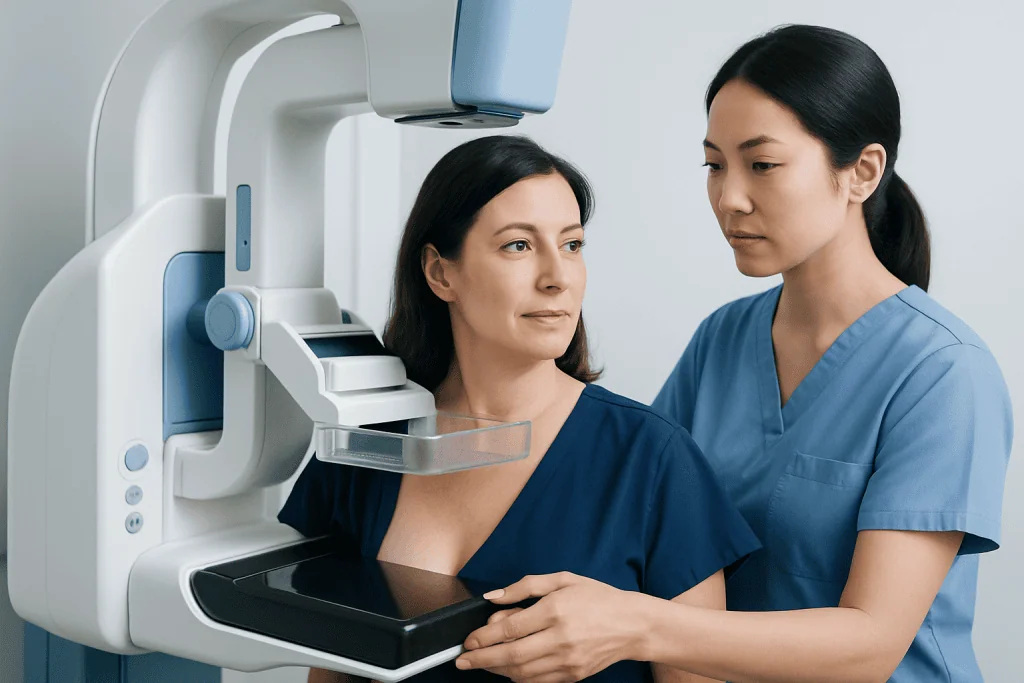
Imaging is often used to understand whether a lump is solid, fluid-filled or related to surrounding breast tissue. Ultrasound is commonly used for many breast lumps and is especially helpful for distinguishing cysts from solid masses. Mammography may be recommended depending on age, symptoms, breast density and clinical findings. In some cases, breast MRI is considered when additional detail is needed.
If imaging suggests a simple cyst and the findings match the examination, no further testing may be needed. If a lump is solid, complex, enlarging or unclear, a biopsy may be recommended. A core needle biopsy removes a small tissue sample for laboratory review, allowing doctors to confirm whether the lump is benign and identify the exact type.
Doctors often use a combined approach sometimes called triple assessment: clinical examination, imaging and tissue sampling when needed. This method helps reduce uncertainty and supports safe decision-making. The choice of tests depends on the person’s age, symptoms, imaging appearance and overall risk profile.
Treatment Options
Treatment for a benign breast lump depends on the diagnosis, symptoms, size, growth pattern and patient preference. The right approach is decided by a breast specialist or qualified doctor after assessment. Many benign lumps do not require urgent treatment and can be safely monitored when clinical and imaging findings are clearly reassuring.
Observation may be recommended for a small, painless fibroadenoma or a stable benign change. Follow-up visits or repeat imaging may be used to check that the lump is not growing or changing. This approach is most appropriate when the diagnosis is clear and the patient understands which changes should prompt review.
Procedures may be needed for certain lumps. A painful or large cyst may be drained with a needle, often with ultrasound guidance. A biopsy may be performed if the diagnosis is uncertain. Surgical removal may be considered if a lump is enlarging, uncomfortable, cosmetically concerning, difficult to classify, or if biopsy results suggest a type of benign lesion that should be removed.
If the lump is related to infection, treatment may include supportive care, medication prescribed by a doctor and drainage if an abscess forms. If pain is related to cyclical breast changes, doctors may recommend supportive measures such as a well-fitting bra, lifestyle adjustments and individualized medical advice. Specific medicines or procedures should only be used under the guidance of a clinician who has assessed the patient.
Living With / Prognosis
The outlook for a benign breast lump is generally good because benign lumps are non-cancerous. Some remain stable for years, some shrink, and others may change with hormones, pregnancy, breastfeeding or menopause. Even after a benign diagnosis, patients are encouraged to stay aware of their normal breast appearance and texture.
Living with a benign breast condition often involves understanding what is normal for the individual. Breast tissue can feel naturally uneven, and tenderness may come and go. Keeping track of changes can help patients describe symptoms clearly at medical visits, but repeated checking many times a day can increase anxiety and is usually not helpful.
Regular breast screening should continue according to age, personal risk and national or specialist recommendations. A previous benign lump does not remove the need for future evaluation if a new lump appears. Patients with a strong family history, previous high-risk breast biopsy results or known genetic risk may need a tailored follow-up plan.
Acibadem International’s multidisciplinary specialists and JCI-accredited hospitals diagnose and treat benign breast conditions for international patients, including assessment, imaging, biopsy and surgery when appropriate. Care decisions should always be individualized after review by a qualified breast specialist.
When to See a Doctor
A doctor should assess any new breast lump, even if it feels soft, smooth or movable. Prompt evaluation is especially important if the lump does not go away after one menstrual cycle, is increasing in size, feels hard or fixed, or is associated with changes in the skin or nipple. Early assessment helps identify benign causes and ensures that serious conditions are not missed.
Medical review is also needed for breast redness, warmth, swelling, fever or severe tenderness, as these may indicate infection or an abscess. People who are breastfeeding should seek care if a painful lump persists despite frequent feeding or milk expression, or if they feel unwell. Men with a breast lump, nipple discharge or breast skin changes should also consult a doctor.
Patients should seek urgent medical advice if there is rapidly worsening swelling, significant pain with fever, or a painful red area that is spreading. For non-urgent but persistent changes, an appointment with a family doctor, gynecologist, breast surgeon or breast clinic is appropriate. A clear diagnosis can provide reassurance and guide the safest next steps.
Frequently asked questions
What is a benign breast lump?
A benign breast lump is a non-cancerous area of breast tissue that may feel like a mass, swelling or thickening. Common examples include cysts, fibroadenomas and hormonal breast changes. A doctor should assess new or changing lumps to confirm the cause.
Can a benign breast lump turn into cancer?
Most benign breast lumps do not turn into cancer. However, some benign breast conditions may require closer follow-up depending on biopsy findings and personal risk factors. This is why a confirmed diagnosis and specialist advice are important.
How can a doctor tell if a breast lump is benign?
Doctors use a combination of medical history, breast examination and imaging such as ultrasound or mammography. If the lump is solid, complex or uncertain, a needle biopsy may be recommended. Laboratory review of tissue can confirm whether a lump is benign.
Does every benign breast lump need to be removed?
No, many benign breast lumps do not need removal if the diagnosis is clear and the lump is stable. Observation with follow-up may be enough. Removal may be considered if the lump grows, causes symptoms, creates uncertainty or has biopsy features that require surgery.
Are painful breast lumps usually benign?
Painful breast lumps are often related to benign causes such as cysts, hormonal changes or inflammation. However, pain alone cannot confirm that a lump is benign. Any persistent, new or changing lump should be checked by a qualified doctor.
What should a patient do after finding a breast lump?
The patient should arrange a medical appointment for a breast examination and appropriate imaging. It can help to note when the lump was first noticed, whether it changes with the menstrual cycle and whether there are other symptoms. The patient should avoid pressing or checking the area repeatedly, as this can increase soreness and anxiety.
References
- World Health Organization
- American Cancer Society
- National Cancer Institute
- Mayo Clinic
- American College of Radiology
This article is for general information only and is not a substitute for professional medical advice. Please consult a qualified doctor about your individual situation.
Treatments for This Condition
Doctors Who Treat This Condition





Related Articles

Can Bariatric Surgery Help Fatty Liver Disease?

Weight Loss Before Bariatric Surgery: How Much Is Usually Recommended?

Sleeve Gastrectomy for BMI 30 to 35: When Lower-BMI Patients May Qualify

Can You Reverse Type 2 Diabetes After Bariatric Surgery?

One-Anastomosis Gastric Bypass vs Gastric Sleeve: Which Weight Loss Surgery Fits Your Goals?

Weight Loss Surgery in Turkey: How to Choose the Right Hospital and Surgeon

Bypass Stomach Operation: Who May Be a Good Candidate?

Gastric Balloon Side Effects: What Is Normal and What Needs Medical Review

Bariatric Surgery Recovery: What to Expect in the First 30 Days

Bypass Stomach Operation: Benefits, Risks, and Long-Term Changes

Obesity and Sleep Apnea: When Weight Loss Treatment May Help