

Warts: HPV Skin Growths and Removal Methods

Warts are caused by HPV strains that infect the top layer of skin through tiny breaks or irritated areas. Common warts, plantar warts, flat warts, and filiform warts can look different and may need different treatment approaches.
Key Takeaways
- Warts are caused by HPV strains that infect the top layer of skin through tiny breaks or irritated areas.
- Common warts, plantar warts, flat warts, and filiform warts can look different and may need different treatment approaches.
- Over-the-counter salicylic acid products may help some non-genital warts, but they require consistent use and should not be used on the face, genitals, or by some high-risk patients without medical advice.
- Dermatologists can remove or treat warts with options such as cryotherapy, prescription medicines, curettage, laser treatment, or immunotherapy when appropriate.
- People should seek medical evaluation for painful, bleeding, rapidly changing, widespread, or uncertain skin growths, and for warts in children, people with diabetes, or those with weakened immunity.
Warts are common, usually harmless skin growths caused by certain types of human papillomavirus, or HPV. Many warts improve over time, but treatment can help when they are painful, spreading, persistent, or cosmetically bothersome.
Overview
Warts are small growths on the skin caused by infection with specific types of human papillomavirus, commonly called HPV. These viruses affect the upper layer of the skin and encourage extra skin cell growth, which creates a raised, rough, flat, or thickened area. Warts are benign, meaning they are not cancer, and most skin warts do not cause serious health problems.
Warts are very common in both children and adults. They may appear on the hands, fingers, feet, knees, face, or other areas that are exposed to friction or small skin injuries. Some warts disappear on their own as the immune system recognizes the virus, but this can take months or longer. Others remain, multiply, or become uncomfortable, especially when located on pressure-bearing areas such as the soles of the feet.
Although warts are contagious, they do not spread as easily as many viral infections. Transmission usually requires direct contact with the wart or with surfaces contaminated by HPV, especially when the skin is wet, softened, scratched, or irritated. Understanding how warts behave can help patients choose safe self-care and know when professional treatment is best.
Types of Warts
Different HPV types tend to cause different wart patterns. Common warts often appear on the hands, around the nails, or on the fingers. They are usually firm, raised, and rough, with a surface that may look like cauliflower. Small dark dots may be visible inside; these are tiny clotted blood vessels, not roots or seeds.
Plantar warts develop on the soles of the feet. Because body weight presses them inward, they may look flatter than common warts and can feel like stepping on a small pebble. They may occur alone or in clusters called mosaic warts. Plantar warts can be confused with calluses, but warts often interrupt the normal skin lines and may be tender when squeezed from the sides.
Flat warts are smaller, smoother, and less raised. They may appear in larger numbers, especially on the face, backs of the hands, or legs. Filiform warts are narrow, finger-like growths that often occur around the mouth, nose, eyelids, or beard area. Genital warts are caused by different HPV types and require separate medical evaluation; patients should not use ordinary wart removers on genital or mucosal areas.
Symptoms and Appearance

Most warts are identified by their appearance. They may be skin-colored, white, pink, gray, brown, or slightly yellow, depending on skin tone and location. The surface may be rough, smooth, thickened, or thread-like. Warts can be single or multiple, and they may slowly enlarge over time.
Warts are often painless, but they may become uncomfortable when rubbed by shoes, clothing, razors, or sports equipment. Plantar warts can cause pain during walking or standing. Warts around the nails may split the skin, cause tenderness, or affect nail growth. If a wart is picked, scratched, or shaved over, it can bleed and may spread to nearby skin.
Some skin changes can resemble warts but are not warts. Corns, calluses, skin tags, seborrheic keratoses, molluscum contagiosum, and some precancerous or cancerous lesions can look similar in certain situations. A dermatologist can assess growths that are changing, unusual in color, painful, bleeding, or not responding to appropriate treatment.
Causes and Risk Factors
Warts develop when HPV enters the outer layer of skin through tiny breaks. These breaks may be too small to see and can occur after shaving, nail biting, picking at hangnails, friction from shoes, or minor cuts. The virus can spread from one area of the body to another, known as autoinoculation, especially when a person scratches or picks at an existing wart.
HPV that causes ordinary skin warts can live for some time in warm, moist environments. Shared changing rooms, swimming pool decks, communal showers, and gym mats may increase exposure, especially for plantar warts. However, not everyone exposed develops a wart. A person’s immune response plays an important role in whether the virus takes hold.
Risk factors include childhood or adolescence, frequent minor skin injuries, nail biting, barefoot walking in shared wet areas, and close contact with someone who has warts. People with eczema, weakened immune systems, organ transplants, certain immune-suppressing medicines, or chronic illnesses may develop more persistent or widespread warts. In these cases, medical care is especially important because warts may be harder to clear and may require a tailored plan.
Diagnosis
A healthcare professional can usually diagnose warts through a skin examination. The doctor looks at the shape, surface, location, and pattern of the growth. They may gently pare a thickened area, especially on the sole of the foot, to look for the characteristic pinpoint blood vessels and to distinguish a wart from a corn or callus.
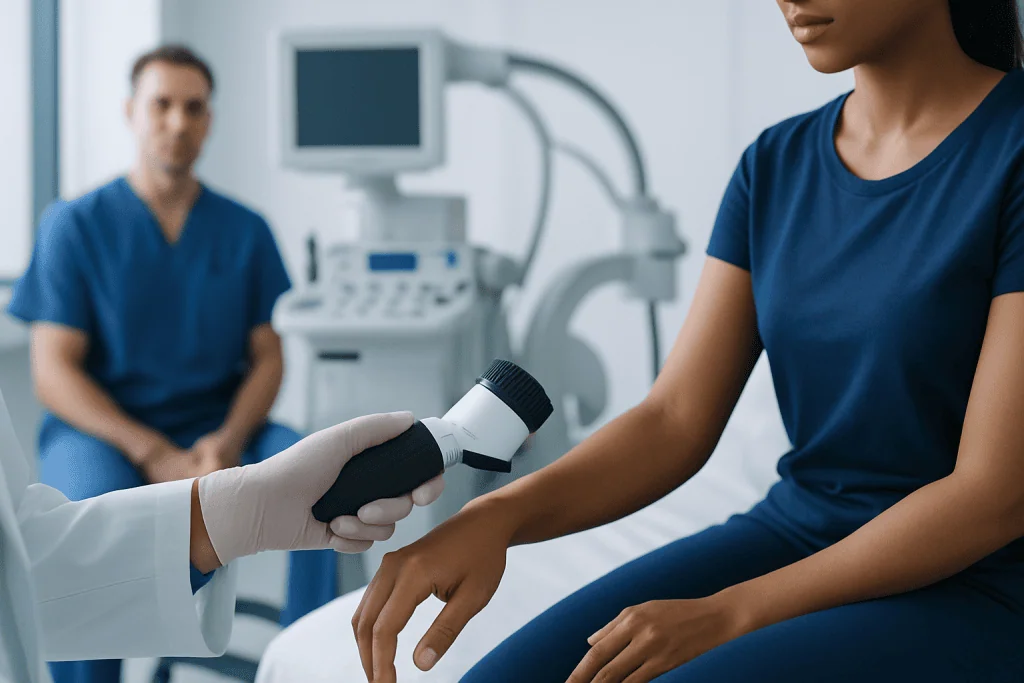
Dermoscopy, a handheld magnifying device with light, may help dermatologists examine the skin structure more closely. This can be useful when the diagnosis is uncertain or when the growth is on the face, nails, or feet. In most typical cases, laboratory tests are not needed.
A biopsy may be recommended if a lesion has unusual features, changes rapidly, bleeds without clear injury, has irregular color, or does not behave like a typical wart. During a biopsy, a small sample is removed and examined under a microscope. This helps rule out other skin conditions and ensures that treatment is appropriate.
Treatment Options and Removal Methods
Treatment depends on the wart type, location, symptoms, number of lesions, patient age, immune status, and personal preference. Because many warts resolve naturally, watchful waiting may be reasonable for small, painless warts that are not spreading. However, treatment may be chosen for discomfort, cosmetic concerns, frequent irritation, spread to other areas, or persistence.
Over-the-counter salicylic acid is a common first option for many non-genital warts on the hands or feet. It works gradually by softening and removing layers of infected skin and is usually most effective when used consistently as directed on the product label. Patients should protect surrounding healthy skin and avoid using these products on the face, genitals, open wounds, moles, or uncertain growths. People with diabetes, poor circulation, nerve damage, or immune suppression should ask a doctor before using at-home wart treatments, especially on the feet.
In a dermatology clinic, cryotherapy is frequently used. This involves freezing the wart with liquid nitrogen to damage the affected tissue and stimulate an immune response. More than one session may be needed. Other professional options include prescription topical medicines, careful trimming or curettage, electrosurgery, laser therapy, chemical blistering agents, or immune-based treatments that encourage the body to target HPV. The best choice depends on the wart and the patient’s overall health.
Patients should avoid cutting out warts at home, burning them, or using unproven remedies that can cause burns, scarring, infection, or delayed diagnosis. Wart treatment can take time, and recurrence may happen because HPV can remain in nearby skin. A calm, consistent approach with medical guidance usually gives the safest results.
Prevention and Self-Care
It is not always possible to prevent warts, but several habits can reduce the chance of spreading HPV. Patients should avoid picking, scratching, or biting warts and should wash hands after touching them. Keeping skin moisturized and protecting small cuts can reduce openings where HPV may enter.
For foot warts, wearing sandals or water shoes in communal showers, locker rooms, and pool areas can help reduce exposure. Feet should be kept clean and dry, and socks should be changed regularly. People should avoid sharing towels, nail clippers, pumice stones, socks, shoes, or razors with someone who has warts.
Self-care may include covering a wart with a clean bandage if it is irritated or likely to be rubbed. Athletes should cover warts during activities that involve close skin contact or shared equipment. If shaving over an area with warts, patients should take care to avoid nicking the wart and spreading the virus. Separate grooming tools may be helpful until the wart clears.
When to See a Doctor
Medical evaluation is recommended when a skin growth is painful, bleeding, rapidly changing, dark or irregular in color, spreading quickly, or uncertain in diagnosis. Patients should also see a doctor for warts on the face, genitals, around the eyes, under or around the nails, or on the soles of the feet when walking becomes uncomfortable. Children with multiple warts, people with diabetes or poor circulation, and anyone with a weakened immune system should avoid self-treatment and seek professional advice.
A doctor can confirm the diagnosis, discuss whether treatment is necessary, and recommend the safest removal method for the location and skin type. If one treatment does not work, another approach may be considered. Warts can be persistent, so follow-up is sometimes part of care.
Acibadem International’s multidisciplinary specialists and JCI-accredited hospitals diagnose and treat dermatologic conditions, including warts, for international patients. Patients planning care abroad should bring any previous treatment details, photos of changes over time if available, and a list of medicines or immune-related conditions to support an accurate consultation.
Frequently asked questions
Are warts dangerous?
Most common skin warts are harmless and are not cancer. They may still be bothersome, painful, or contagious to nearby skin. A doctor should check any growth that looks unusual, changes quickly, bleeds, or does not resemble a typical wart.
Do warts go away on their own?
Yes, many warts gradually disappear as the immune system controls the HPV infection. This can take months or longer, and some warts persist or spread. Treatment may be helpful if the wart is painful, growing, cosmetically concerning, or affecting daily activities.
Can a person get warts from touching someone else’s wart?
Warts can spread through direct contact, but infection is more likely when the skin has small cuts, irritation, or moisture-related softening. HPV can also spread indirectly through shared items or wet communal surfaces. Good hand hygiene, covering warts, and not sharing personal items can reduce the risk.
Is it safe to remove a wart at home?
Some over-the-counter wart treatments may be suitable for typical common or plantar warts, but they must be used exactly as directed. Home treatments should not be used on the face, genitals, open skin, moles, or uncertain lesions. People with diabetes, poor circulation, nerve problems, or weakened immunity should consult a doctor first.
Why do warts come back after treatment?
Warts may recur because HPV can remain in nearby skin even after the visible growth is removed. Some treatments also require repeated sessions to fully clear the wart. Avoiding picking, protecting the skin, and following the treatment plan can help reduce recurrence.
What is the difference between a plantar wart and a callus?
A plantar wart is caused by HPV and often interrupts the normal lines of the skin, sometimes showing small dark dots. A callus is thickened skin caused by repeated pressure or friction and usually preserves skin lines. Because they can look similar, a dermatologist or podiatry-trained clinician can confirm the diagnosis when there is uncertainty or pain.
References
- American Academy of Dermatology
- Mayo Clinic
- National Health Service
- Centers for Disease Control and Prevention
- DermNet New Zealand
This article is for general information only and is not a substitute for professional medical advice. Please consult a qualified doctor about your individual situation.
Joint and spine care in Turkey — expert assessment & treatment
JCI-accredited · board-certified surgeons · reply within 24h
Add us as a Preferred Source to see more of our trusted health content across Google Search, AI Overviews and Discover.

Related Treatments
Related Conditions
More from the Health Library



Related Specialists

Prof. Dr. Sedef Şahin
Dermatology
Prof. Dr. Şükrü Yazar
Aesthetic Plastic & Reconstructive Surgery
Prof. Dr. Emel Öztürk Durmaz
Dermatology
Prof. Dr. Özlem Dicle
Dermatology