Pediatric Epilepsy Surgery: Who May Be a Candidate and How Evaluation Works

Surgery is mainly considered for children with seizures that are not well controlled by anti-seizure medicines. The goal of evaluation is to find where seizures begin, whether that area can be treated safely, and which procedure offers the best chance of benefit.
Key Takeaways
- Surgery is mainly considered for children with seizures that are not well controlled by anti-seizure medicines.
- The goal of evaluation is to find where seizures begin, whether that area can be treated safely, and which procedure offers the best chance of benefit.
- Testing may include EEG, MRI, video-EEG monitoring, neuropsychological assessment, and other advanced imaging or functional studies.
- Not every child is a candidate for curative surgery, but some may benefit from palliative procedures or neuromodulation.
- Early specialist assessment is important because frequent seizures can affect learning, behavior, safety, and development.
Pediatric epilepsy surgery can be an important treatment option for some children whose seizures continue despite appropriate medication. A careful, step-by-step evaluation helps doctors identify who may benefit, what type of procedure may be suitable, and how to balance seizure control with safety and child development.
Overview of Pediatric Epilepsy Surgery
Pediatric epilepsy surgery refers to operations or device-based procedures used to reduce or stop seizures in children. It is usually considered when seizures continue despite appropriate treatment with anti-seizure medicines. In many children, medication works well, but in others, seizures remain frequent or disabling and may interfere with development, learning, sleep, behavior, and daily safety.
The main idea behind surgery is straightforward: if doctors can identify the part of the brain where seizures start and show that treatment can be done safely, surgery may offer a better chance of seizure control than continuing ineffective medication alone. In some children, the goal is complete seizure freedom. In others, the goal may be fewer or less severe seizures and a better quality of life.
Pediatric epilepsy surgery is not one single operation. It includes different approaches, such as removing or disconnecting the seizure focus, separating pathways that allow seizures to spread, or using device-based therapies that change abnormal brain signaling. Because children are still growing and developing, decisions are made carefully by a team with experience in pediatric epilepsy, neurology, neurosurgery, imaging, and child development, often through services such as pediatric neurology care.
Who May Be a Candidate
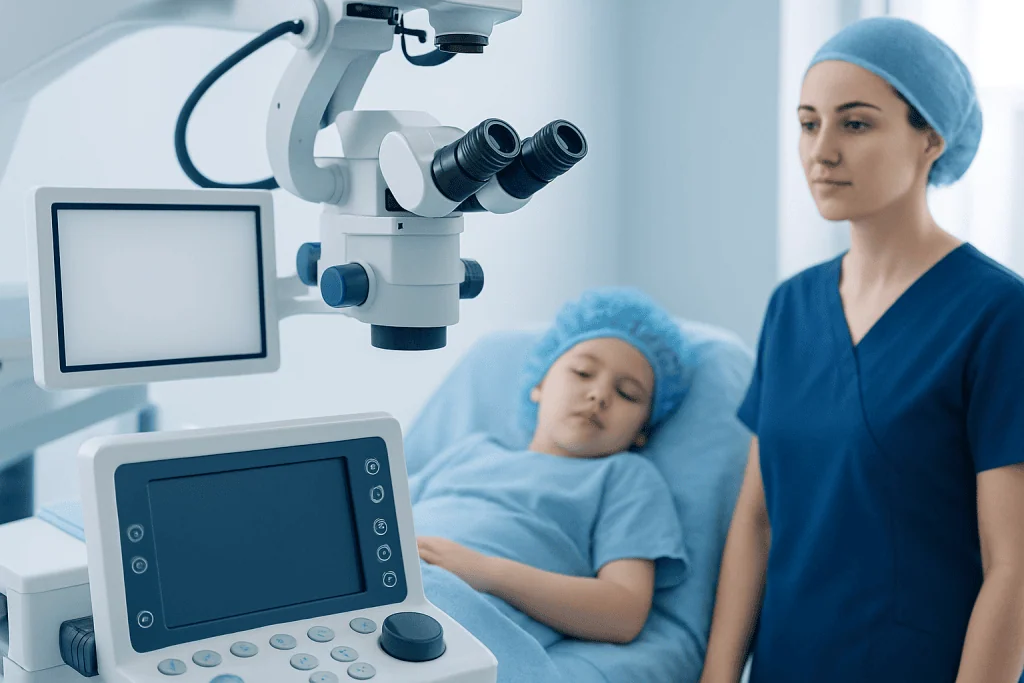
The most common reason to consider pediatric epilepsy surgery is drug-resistant epilepsy. This generally means seizures have continued despite trials of two appropriate anti-seizure medications used correctly. When that happens, the chance that additional medicines alone will fully control seizures becomes lower, and a specialist evaluation may be helpful.
A child may be more likely to be considered for surgery if tests suggest that seizures begin in one specific brain area. This can happen with conditions such as focal cortical dysplasia, scars from prior injury or infection, some congenital brain differences, or certain tumors, including a childhood brain tumor that is linked to seizures. In other cases, surgery may still be considered even when the condition is more widespread, especially if a disconnective or palliative procedure could reduce seizure burden.
Doctors also consider how strongly seizures affect the child’s life. Factors include seizure frequency, risk of injury, prolonged seizures, school disruption, developmental slowdown or regression, medication side effects, and overall family burden. Even very young children may be evaluated if seizures are severe, because waiting too long can sometimes allow ongoing seizures to affect brain development.
Being a candidate does not automatically mean a child will have surgery. It means the child may benefit from a detailed assessment to understand whether surgery is possible, what type is most appropriate, and what outcomes can realistically be expected.
How the Evaluation Works

Evaluation for pediatric epilepsy surgery is usually done in stages. The first stage often reviews the child’s seizure history, previous treatments, birth and developmental history, neurological examination, and results of earlier EEGs or brain scans. Families are often asked to describe what seizures look like, how long they last, and how often they happen. Videos recorded safely at home can sometimes help clinicians compare events with EEG findings.
One of the most important tests is prolonged video-EEG monitoring, which records the child’s behavior and brain activity at the same time. This helps confirm that the events are epileptic seizures, shows how seizures begin and spread, and may help locate the seizure focus. These recordings are part of advanced neurophysiology evaluation and are central to surgical planning.
Brain imaging is another key part of the process. MRI looks for structural changes such as malformations, scars, or lesions that may be causing seizures. Depending on the case, specialists may also use functional imaging or advanced techniques through neuroradiology assessment to gather more detail when a standard MRI is unclear or when several possible seizure areas need to be compared.
Many children also have cognitive, language, and behavioral testing to understand how epilepsy is affecting development and which brain functions need special protection. A structured neuropsychological assessment can help the team plan treatment while considering memory, attention, learning, and emotional well-being. In selected cases, additional tests may include PET, SPECT, magnetoencephalography, functional MRI, or invasive EEG monitoring with electrodes placed on or in the brain to define the seizure source more precisely.
Tests Doctors Use to Decide Safely
The purpose of testing is not only to identify where seizures start, but also to determine whether that area can be treated without causing unacceptable problems with movement, sensation, language, vision, or memory. For this reason, evaluation combines several pieces of information rather than relying on a single test. Doctors compare the seizure story, EEG findings, MRI results, and developmental profile to see whether they point to the same place.
Sometimes the results fit together clearly, and the path forward is relatively direct. In other children, the picture is more complex. Seizures may begin in more than one region, scans may look normal, or the likely seizure area may be close to brain regions that control important functions. In such cases, the team may recommend more testing rather than rushing to surgery.
When there is concern about eloquent brain areas, the team may use functional studies to map language, motor, or sensory pathways. In older children and adolescents, this can involve special imaging tasks or other mapping methods. In younger children, doctors tailor testing to the child’s age, developmental stage, and ability to cooperate.
Families should know that a detailed workup can take time. This careful process is meant to improve safety and to make sure that potential benefits, risks, and alternatives are understood as clearly as possible before any procedure is recommended.
Treatment Options After Evaluation
If the evaluation shows that seizures come from a specific area that can be treated safely, resective surgery may be recommended. This means removing the seizure focus or the lesion causing seizures. In some children, disconnective procedures are used instead. These do not remove large amounts of brain tissue but interrupt pathways that allow seizures to spread. The exact procedure depends on the child’s epilepsy type, brain anatomy, age, and developmental needs.
Some children are not candidates for curative surgery, but may still benefit from palliative treatment aimed at reducing seizure frequency or severity. Examples include corpus callosotomy for drop attacks in selected cases or device-based therapies such as neuromodulation when seizures are difficult to localize or surgery is not suitable. These approaches may not stop all seizures, but they can still improve safety and daily function.
Medication often remains part of treatment even after surgery, at least for a period of time. Decisions about continuing or reducing medicines are individualized. Follow-up is important to monitor seizure control, development, school performance, mood, and possible side effects or complications.
Families may also hear about epilepsy related to specific structural causes, such as neurofibromatosis, where seizures can sometimes be part of a broader neurological picture. In these situations, treatment planning focuses on the whole child rather than seizures alone, with close coordination among specialists.
Benefits, Risks, and Recovery
The potential benefit of pediatric epilepsy surgery is better seizure control, and in some children, complete seizure freedom. Better seizure control may also support development, attention, sleep, behavior, and participation in school and daily life. For families, successful treatment can reduce emergency visits, injuries, and the uncertainty that repeated seizures often bring.
At the same time, surgery has real risks, and these depend on the procedure and the part of the brain involved. Possible concerns include infection, bleeding, weakness, vision changes, speech or memory difficulties, or seizures that continue after surgery. Doctors discuss these risks carefully in relation to the child’s current seizure burden and the expected benefits of treatment.
Recovery varies by procedure. Some children recover quickly after a shorter hospital stay, while others need longer observation, rehabilitation, or therapy support. After surgery, follow-up appointments help track healing, seizure outcomes, medications, and developmental progress. Rehabilitation services may be recommended if speech, movement, learning, or daily functioning need extra support.
A balanced discussion is central to decision-making. Families are encouraged to ask what outcome is realistic, whether the goal is seizure freedom or seizure reduction, what changes might be expected after surgery, and how the child’s long-term development may be affected with and without the proposed procedure.
What Families Can Do During the Process
Families play an important role in epilepsy surgery evaluation. Keeping a seizure diary can help track how often events happen, how long they last, possible triggers, and whether there are changes after medication adjustments. If a doctor recommends it, safely recorded home videos can also be useful. Bringing school reports and developmental observations may help the team understand how seizures affect daily function.
It is also helpful for caregivers to prepare questions before specialist visits. They may want to ask whether the child has drug-resistant epilepsy, what the tests are expected to show, whether surgery aims to cure or reduce seizures, and what alternatives exist if surgery is not suitable. Clear communication can make a complex process feel more manageable.
Families should continue prescribed medication unless the treating doctor advises otherwise. Good sleep, seizure safety precautions, and consistent follow-up remain important throughout evaluation. If the child has a rescue medication plan, caregivers and school staff should understand when and how it is used.
Near the end of the evaluation pathway, some families seek care at centers with broad pediatric epilepsy expertise. Acibadem International’s multidisciplinary specialists in JCI-accredited hospitals diagnose and treat children with complex epilepsy for international patients, with coordinated input from neurology, neurosurgery, imaging, and child development teams.
When to See a Specialist
A child should be referred for specialist assessment when seizures continue despite appropriate medication, when the diagnosis is uncertain, or when seizures are causing injuries, developmental concerns, or repeated hospital visits. Early referral matters because persistent seizures can affect learning and behavior, and some surgical options are more helpful when considered before problems become more entrenched.
Urgent medical attention is needed if a seizure lasts longer than usual, if seizures happen back-to-back without recovery, if the child has trouble breathing, is injured during a seizure, or does not return to their usual state afterward as expected. Families should follow the emergency plan provided by their doctor and know when to call emergency services.
Even when surgery is not ultimately recommended, a specialist evaluation can still be valuable. It may confirm the epilepsy type, identify better medication strategies, suggest dietary or device-based therapies, or clarify whether another condition is contributing to events. A thorough assessment helps families move forward with a clearer plan and better understanding of the child’s condition.
Frequently asked questions
When is pediatric epilepsy surgery usually considered?
It is usually considered when a child’s seizures continue despite trials of appropriate anti-seizure medications. Doctors also consider how much the seizures affect safety, development, learning, and quality of life.
Does being evaluated mean a child will definitely need surgery?
No. Evaluation means the child may be a possible candidate and that specialists want to see whether surgery is appropriate, safe, and likely to help. Some children are found to be better suited to medication changes, dietary therapy, or device-based treatment instead.
What tests are commonly used in epilepsy surgery evaluation?
Common tests include EEG, prolonged video-EEG monitoring, and brain MRI. Depending on the situation, children may also need neuropsychological testing, PET or SPECT scans, functional imaging, or invasive EEG monitoring.
Can very young children have epilepsy surgery?
Yes, in selected cases. Age alone does not rule out surgery, and sometimes early treatment is important when severe seizures are affecting development. The decision depends on the epilepsy type, the child’s overall health, and the results of the evaluation.
What are the goals of pediatric epilepsy surgery?
The best possible goal is seizure freedom, but that is not the only aim. In some children, surgery is intended to reduce seizure frequency or severity, improve safety, or support better development and day-to-day functioning.
Will a child still need medication after surgery?
Many children continue anti-seizure medication for some time after surgery. Decisions about reducing or stopping medicines depend on seizure control, the type of surgery, EEG findings, and the treating specialist’s judgment.
References
- International League Against Epilepsy
- American Epilepsy Society
- National Institute of Neurological Disorders and Stroke
- National Institute for Health and Care Excellence
- American Academy of Neurology
This article is for general information only and is not a substitute for professional medical advice. Please consult a qualified doctor about your individual situation.
Pediatric Epilepsy in Turkey — costs, top hospitals & a free quote
JCI-accredited · board-certified surgeons · reply within 24h
Add us as a Preferred Source to see more of our trusted health content across Google Search, AI Overviews and Discover.

Neurology
Diagnosis and treatment of disorders of the brain, spinal cord, nerves and muscles.
51 specialists in this unit