

Alopecia Areata: Patchy Hair Loss and Treatment Options
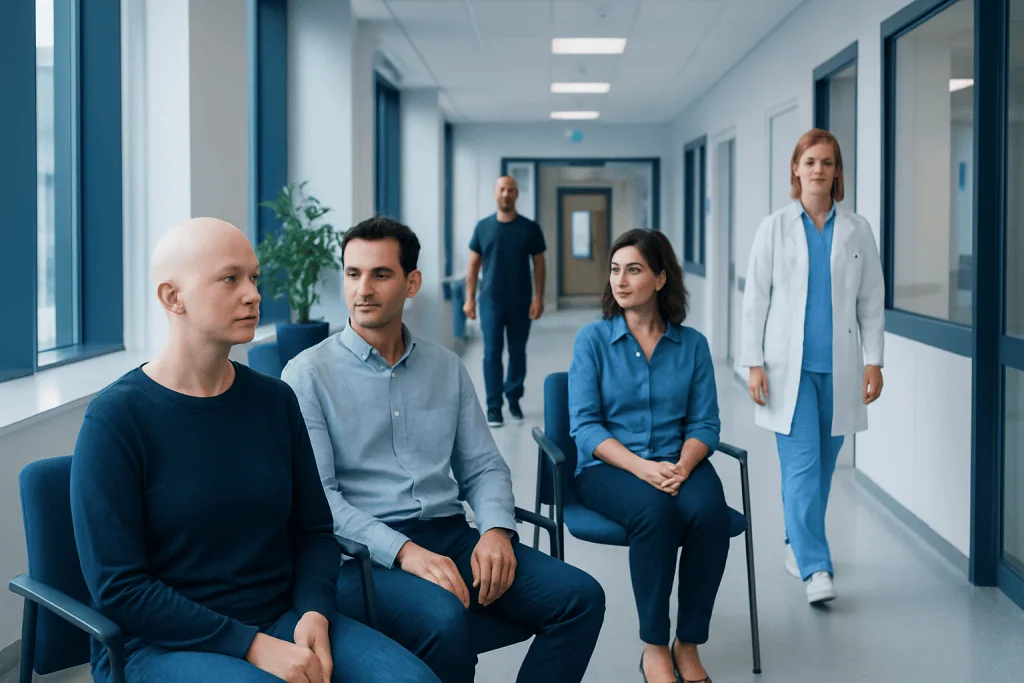
Alopecia areata is not contagious and is usually related to the immune system mistakenly targeting hair follicles. Hair loss often appears as smooth, round patches on the scalp, beard, eyebrows, or other body areas.
Key Takeaways
- Alopecia areata is not contagious and is usually related to the immune system mistakenly targeting hair follicles.
- Hair loss often appears as smooth, round patches on the scalp, beard, eyebrows, or other body areas.
- Diagnosis is usually made with a scalp and hair examination, and sometimes dermoscopy, blood tests, or a small skin biopsy.
- Treatment may include corticosteroids, topical medicines, minoxidil, contact immunotherapy, or newer targeted medicines for more extensive disease.
- Stress does not usually cause alopecia areata by itself, but emotional support and gentle hair care can help patients cope well.
- Medical review is important if hair loss is sudden, widespread, painful, scaly, or associated with other symptoms.
Alopecia areata is an autoimmune condition that causes round or oval patches of hair loss, most often on the scalp. Many people experience some regrowth, and dermatologists can offer treatment options based on the pattern, severity, age, and overall health of the patient.
Overview
Alopecia areata is a common form of autoimmune hair loss. In this condition, the immune system mistakenly reacts against hair follicles, causing hair to shed in distinct patches. The follicles usually remain alive beneath the skin, which means hair regrowth is possible, although the timing and amount of regrowth can vary from person to person.
The most typical pattern is one or more smooth, round or oval patches on the scalp. However, alopecia areata can also affect the beard, eyebrows, eyelashes, or body hair. Some people have only a small patch that regrows, while others develop repeated episodes or more extensive hair loss.
Alopecia areata can occur at any age, including childhood, and it affects all hair types and skin tones. It is not caused by poor hygiene, hair washing, or routine hair styling, and it is not contagious. Because hair has a strong personal and social meaning, the emotional impact can be significant even when the condition is medically harmless.
Symptoms and Patterns of Hair Loss
The main symptom of alopecia areata is patchy hair loss that may develop over days or weeks. The skin in the affected area is usually smooth and normal in color, without scarring. Some patients notice mild tingling, itching, or sensitivity before hair sheds, but many have no discomfort at all.
Hair loss patterns can differ. Alopecia areata most often causes small patches, but it may also affect a band-like area around the sides and back of the scalp, a pattern known as ophiasis. In alopecia totalis, all scalp hair is lost. In alopecia universalis, hair loss involves the scalp and body. These extensive forms are less common, but they may need more specialized treatment and follow-up.
Dermatologists may look for short broken hairs, sometimes called exclamation mark hairs, near the edge of a patch. Nail changes can also occur in some people, such as tiny pits, ridges, roughness, or splitting. These signs can help support the diagnosis, especially when hair loss is early or mild.
Symptoms that suggest another condition include redness, scaling, crusting, pain, pus, or scarring. Ringworm of the scalp, traction alopecia, trichotillomania, lupus-related hair loss, thyroid-related shedding, and nutritional problems can sometimes resemble alopecia areata. A medical evaluation helps identify the correct cause and avoids unnecessary or ineffective treatments.
Causes and Risk Factors

Alopecia areata is considered an autoimmune condition. This means the immune system, which normally protects the body from infection, becomes overactive around hair follicles. The follicles are not usually destroyed, but their normal hair growth cycle is interrupted, leading to shedding and visible patches.
The exact trigger is not always clear. Genetics can play a role, and the condition may be more likely in people with a personal or family history of autoimmune conditions. These may include thyroid disease, vitiligo, atopic dermatitis, allergic conditions, type 1 diabetes, rheumatoid arthritis, or other immune-related disorders. Having one of these conditions does not mean a person will definitely develop alopecia areata.
Stress is often discussed by patients because hair loss itself is stressful and some episodes appear after major life events. Current medical understanding suggests stress may influence immune activity in some individuals, but alopecia areata is not simply caused by stress or by worrying too much. Patients should not blame themselves for the condition.
Hair care habits usually do not cause alopecia areata. However, tight hairstyles, harsh chemical processing, or repeated pulling can cause other types of hair loss and may make the scalp more vulnerable to breakage. A dermatologist can help distinguish autoimmune hair loss from hair shaft damage or traction-related loss.
Diagnosis
Diagnosis usually begins with a careful medical history and examination of the scalp, hair, nails, and sometimes other body areas. The doctor may ask when the hair loss began, whether it is spreading, whether there are symptoms such as itching or scaling, and whether the patient has any autoimmune, thyroid, allergic, or skin conditions. Family history and medications may also be reviewed.
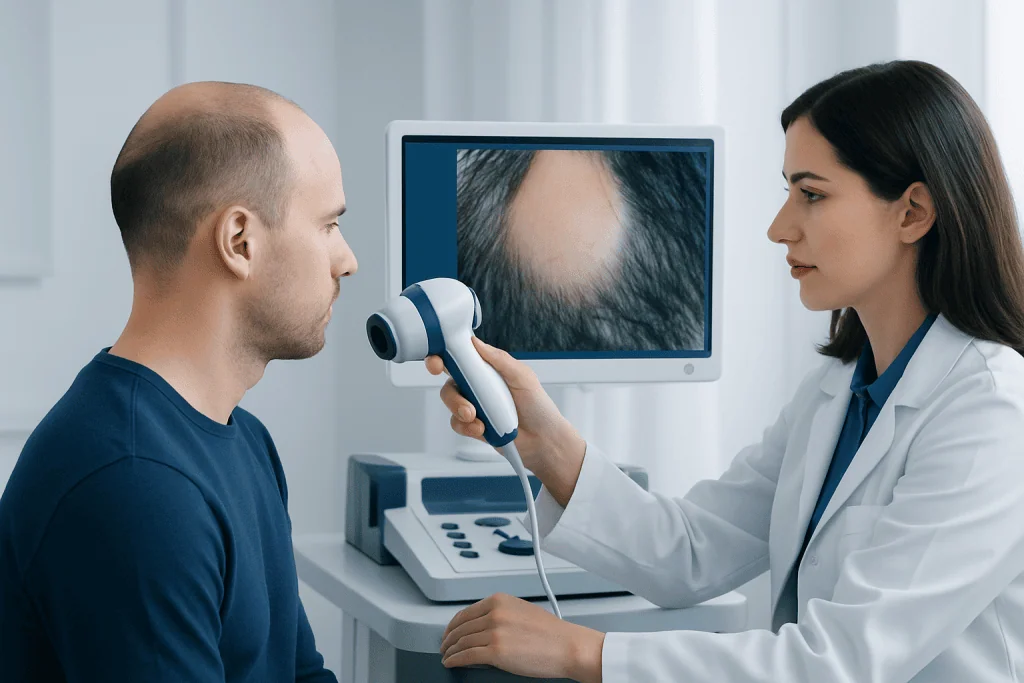
A dermatologist often uses dermoscopy, also called trichoscopy, which is a magnified examination of the scalp and hair follicles. This can reveal characteristic features such as yellow dots, black dots, tapered hairs, or short regrowing hairs. These findings help confirm alopecia areata and assess disease activity.
Laboratory tests are not needed for every patient. Blood tests may be recommended if there are symptoms or signs suggesting thyroid disease, anemia, vitamin deficiencies, hormonal changes, or another medical condition. In unclear cases, a small scalp biopsy may be performed under local anesthesia to examine the skin and follicles under a microscope.
Accurate diagnosis is important because different types of hair loss require different care. For example, fungal infection of the scalp needs antifungal medicine, while scarring alopecia requires early treatment to protect remaining follicles. A timely assessment helps patients receive the most appropriate plan.
Treatment Options
Treatment depends on the age of the patient, the amount of hair loss, how quickly it is progressing, previous episodes, medical history, and personal preferences. Some small patches regrow without treatment, especially when hair loss is limited and recent. Even when observation is reasonable, follow-up can be helpful to monitor changes and discuss options if new patches appear.
Corticosteroids are among the most commonly used treatments. For adults with small scalp patches, a dermatologist may inject a corticosteroid directly into the affected area to calm local immune activity. Topical corticosteroid creams, lotions, foams, or solutions may be used for children or for sensitive areas, although response can vary. These medicines should be used under medical guidance to reduce the risk of skin thinning or irritation.
Other topical treatments may be recommended in selected cases. Minoxidil can support hair regrowth, often as an add-on treatment rather than a cure for the immune process. Anthralin or contact immunotherapy may be considered by specialists for more persistent or widespread alopecia areata. Contact immunotherapy intentionally creates a mild allergic reaction on the scalp to redirect immune activity, and it requires regular clinic visits and careful monitoring.
For more extensive or severe alopecia areata, newer targeted medicines may be considered. Janus kinase inhibitors, often called JAK inhibitors, can help some patients by affecting immune signaling pathways involved in hair follicle inflammation. These medicines are not suitable for everyone and require assessment for benefits, risks, monitoring needs, and possible side effects. Treatment decisions should always be made with a qualified dermatologist or relevant specialist.
Living With Alopecia Areata and Self-Care
Self-care cannot replace medical treatment, but it can protect the scalp and support overall well-being. Gentle hair care is recommended, including avoiding tight hairstyles, minimizing heat styling, and using mild products if the scalp is sensitive. If bald patches are exposed to sunlight, sunscreen, hats, or scarves can help prevent sunburn.
Cosmetic and practical options can make daily life easier. Some people use hair fibers, scalp concealers, eyebrow pencils, false eyelashes, wigs, hairpieces, or head coverings. Choosing these options is a personal decision, not a sign that someone has given up on treatment. A dermatologist, hair specialist, or trained wig consultant can help patients choose safe and comfortable products.
Nutrition is important for general hair health, but special diets have not been proven to cure alopecia areata. A balanced diet that includes adequate protein, iron, zinc, vitamin D, and other nutrients supports normal hair growth. Supplements should be used only when a deficiency is identified or a doctor recommends them, because excess supplementation can be harmful or unnecessary.
Emotional support is also part of care. Children and adults may feel self-conscious, frustrated, or worried about recurrence. Counseling, patient support groups, and open conversations with family, teachers, or employers can reduce stress and improve coping. Patients should be reassured that alopecia areata is a recognized medical condition and help is available.
When to See a Doctor
A person should see a dermatologist or qualified doctor if hair loss appears suddenly, forms round patches, spreads quickly, or affects eyebrows, eyelashes, beard, or body hair. Medical review is also important if there is scalp pain, redness, scaling, crusting, pus, or scarring, because these features may suggest infection or another inflammatory condition.
Children with patchy hair loss should be assessed promptly, as scalp fungal infection and other pediatric conditions can look similar. People with symptoms such as fatigue, weight changes, cold intolerance, irregular menstrual cycles, or other systemic concerns may need evaluation for thyroid, hormonal, nutritional, or autoimmune conditions.
Patients who already have alopecia areata should seek follow-up if treatment is not helping, if side effects occur, or if hair loss becomes more widespread. Early discussion can help adjust treatment and provide support before the condition becomes more distressing.
Acibadem International provides diagnosis and treatment for hair and dermatology conditions, including alopecia areata, through multidisciplinary specialists in JCI-accredited hospitals for international patients. A personalized medical evaluation is the safest way to understand the cause of hair loss and choose suitable treatment options.
Frequently asked questions
Is alopecia areata contagious?
No. Alopecia areata is not contagious and cannot be spread through touch, shared combs, pillows, or close contact. It is related to immune system activity around hair follicles, not an infection.
Will hair grow back after alopecia areata?
Many people with limited patchy alopecia areata experience regrowth, sometimes even without treatment. However, the course is unpredictable, and some people have repeated episodes or more extensive hair loss. A dermatologist can help estimate the pattern and discuss suitable treatment.
What is the best treatment for alopecia areata?
There is no single best treatment for everyone. Small patches may be treated with corticosteroid injections or topical medicines, while more extensive disease may require specialized therapies such as contact immunotherapy or targeted systemic medicines. The safest choice depends on age, severity, medical history, and treatment goals.
Can stress cause alopecia areata?
Stress alone is not usually considered the direct cause of alopecia areata. In some people, stressful events may coincide with a flare or affect immune balance, but patients should not blame themselves. Managing stress can still be helpful for coping and overall health.
Is alopecia areata the same as male or female pattern hair loss?
No. Alopecia areata usually causes distinct smooth patches and is autoimmune in nature. Male and female pattern hair loss is typically gradual, affects characteristic scalp areas, and is influenced by genetics and hormones. A dermatologist can often tell the difference through examination.
Should children with alopecia areata be treated?
Children should be evaluated by a doctor to confirm the diagnosis and rule out other causes such as fungal infection. Treatment may include gentle topical medicines or observation, depending on the child’s age and extent of hair loss. Emotional support is especially important for children and families.
Can diet or supplements cure alopecia areata?
No specific diet or supplement has been proven to cure alopecia areata. Good nutrition supports general hair health, and deficiencies should be corrected when identified. Supplements should be discussed with a doctor, especially because taking unnecessary high doses can be unsafe.
References
- American Academy of Dermatology Association
- British Association of Dermatologists
- National Institute of Arthritis and Musculoskeletal and Skin Diseases
- European Academy of Dermatology and Venereology
- DermNet New Zealand
This article is for general information only and is not a substitute for professional medical advice. Please consult a qualified doctor about your individual situation.
Alopecia Areata in Turkey — costs, top hospitals & a free quote
JCI-accredited · board-certified surgeons · reply within 24h
Add us as a Preferred Source to see more of our trusted health content across Google Search, AI Overviews and Discover.

Plastic, Reconstructive & Aesthetic Surgery
Reconstructive and aesthetic procedures for the face and body, performed by experienced surgeons.
35 specialists in this unitRelated Treatments
Related Conditions
More from the Health Library



Related Specialists
Prof. Dr. Sedef Şahin
Dermatology
Prof. Dr. Şükrü Yazar
Aesthetic Plastic & Reconstructive Surgery
Prof. Dr. Emel Öztürk Durmaz
Dermatology
Prof. Dr. Özlem Dicle
Dermatology