Alopecia Areata Causes Patchy Hair Loss That Can Regrow

Alopecia areata is an autoimmune condition in which the immune system attacks hair follicles, causing smooth, round patches of hair loss. It is not contagious, and because the follicles usually stay alive, regrowth is often possible. A dermatologist can confirm the diagnosis and rule out other causes of shedding.
Key Takeaways
- Alopecia areata happens when the immune system mistakenly targets hair follicles.
- It commonly causes sudden, smooth patches of hair loss, but the pattern can vary.
- Diagnosis is usually based on a skin and scalp examination, sometimes with additional tests.
- Treatment may help hair regrow, though the condition can be unpredictable and may return.
- Early assessment by a dermatologist can help confirm the diagnosis and discuss treatment options.
Did you spot a smooth, round bald patch that seemed to appear out of nowhere? That’s often the first sign of alopecia areata, an autoimmune condition that causes hair loss — most often in smooth, round or oval patches on the scalp, beard area, or other parts of the body.
It can be upsetting. But it is not contagious, and many people benefit from medical evaluation, treatment, and supportive hair-care strategies.
Overview: what alopecia areata means
Alopecia areata is a form of hair loss caused by immune system activity around hair follicles. In this condition, the body mistakenly attacks its own hair follicles, which can interrupt normal hair growth. The follicles usually remain alive, which means regrowth is often possible even after noticeable shedding.
The condition most often appears as sudden, well-defined patches of hair loss on the scalp. However, it may also affect the eyebrows, eyelashes, beard, or body hair. Some people have only one or two patches, while others may experience more extensive hair loss over time.
Alopecia areata is not an infection, and it is not contagious. It does not mean the person has poor hygiene or caused the hair loss through routine washing or brushing. Because hair is closely linked to identity and self-confidence, the emotional effect can be significant, even when the medical condition itself is not dangerous.
It’s easy to mistake alopecia areata for other causes of shedding — which is why a proper diagnosis matters. A dermatologist can tell it apart from hair loss due to hormonal changes, nutritional issues, scarring disorders, or a fungal scalp infection.
How it can look and feel
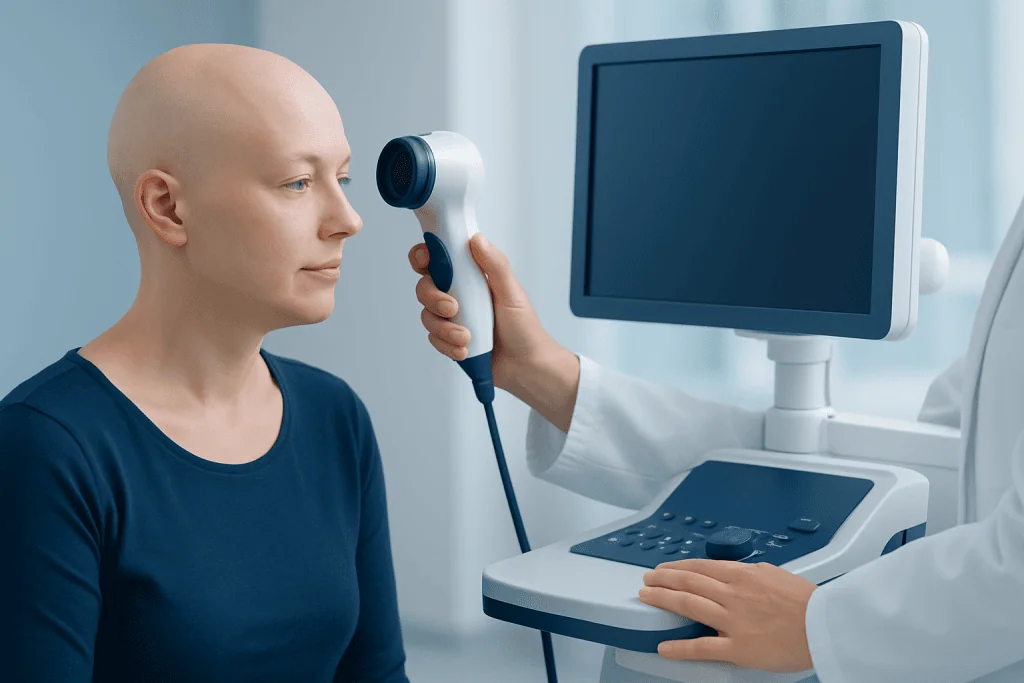
The most familiar sign of alopecia areata is one or more smooth bald patches that appear over days or weeks. The skin in these areas is usually normal-looking, without marked scaling, crusting, or scarring. Some people notice small broken hairs at the edge of a patch, sometimes called “exclamation mark” hairs because they are narrower near the base.
Hair loss can affect more than the scalp. Eyebrows, eyelashes, beard hair, and body hair may also thin or disappear. In some cases, the pattern is diffuse and resembles more general thinning rather than clearly defined patches, which can make diagnosis less obvious.
Most people do not have pain, but some report itching, tingling, burning, or tenderness before or during hair loss. Nail changes can also occur. These may include tiny dents in the nails, roughness, ridging, or brittle texture.
- Single or multiple round bald patches
- Sudden shedding over a short time
- Loss of eyebrow, eyelash, or beard hair
- Changes in fingernails or toenails
- Periods of regrowth followed by recurrence
Why alopecia areata happens

Alopecia areata is considered an autoimmune condition. This means the immune system, which normally protects the body from infections, mistakenly targets structures in the hair follicle. The result is inflammation around the follicle that disrupts hair growth and can push hairs into a resting or shedding phase.
The exact reason this process begins is not always clear. Genetics appear to play a role, and some people have a family history of alopecia areata or other autoimmune diseases. The condition may occur at any age and in any sex, although the timing, pattern, and severity can differ from person to person.
Alopecia areata is sometimes associated with other immune-related conditions, such as thyroid disease, vitiligo, atopic conditions, or other forms of autoimmune illness. Emotional stress is often blamed by patients, but stress alone is not considered the direct cause. It may, however, act as one of several factors that influence flare-ups in some individuals.
One thing worth knowing: alopecia areata is not the same as hair loss from tight hairstyles, harsh chemical damage, or age-related pattern hair loss. Sorting out which one you have guides treatment — and spares you unnecessary worry.
Patterns, course, and what to expect over time
Here’s the frustrating part: the course is unpredictable. Some people have a single episode and the hair simply grows back on its own. Others go through repeated cycles of loss and regrowth, or develop wider areas that need ongoing treatment and follow-up.
Doctors may describe the condition in different patterns. Patchy alopecia areata affects one or more localized areas. Alopecia totalis refers to loss of all scalp hair, and alopecia universalis refers to loss of hair across the entire body. These names describe the extent of involvement, but they do not fully predict how a person will respond to treatment.
When hair grows back, it may initially appear soft, fine, or lighter in color before returning to its usual texture and shade. For some patients, treatment can help encourage regrowth or reduce immune activity. For others, monitoring and supportive care may be part of the plan, especially when the hair loss is limited and recent.
Because several hair and scalp conditions can mimic one another, patients with changing or extensive hair loss may benefit from a broader dermatologic assessment, including evaluation for scalp disorders when clinically appropriate.
How doctors diagnose alopecia areata
Diagnosis usually begins with a medical history and a close examination of the scalp, skin, hair, and nails. A dermatologist will ask when the hair loss started, whether it happened suddenly, whether there is itching or discomfort, and whether the patient has a personal or family history of autoimmune disease.
Often, the appearance of the hair loss is typical enough that no complex testing is needed. The doctor may use a dermatoscope, a handheld magnifying device, to look more closely at the scalp and hair shafts. In uncertain cases, a hair-pull test, blood tests, or a small skin biopsy may be recommended to rule out other causes.
Your doctor may also order tests if symptoms point to another issue, such as thyroid imbalance or nutritional deficiency. The point isn’t just to put a name on the condition — it’s to find out whether something treatable is contributing to your hair loss.
When assessment points to a broader skin or scalp issue, patients may be referred for specialized dermatology evaluation to confirm the diagnosis and tailor treatment according to age, disease pattern, and treatment goals.
Treatment options and supportive care
Treatment for alopecia areata depends on the extent of hair loss, the patient’s age, the areas involved, and how long the condition has been present. In many cases, dermatologists use anti-inflammatory treatments aimed at calming the immune response around hair follicles. Common medical approaches may include topical medications, injected corticosteroids into small patches, or other prescription therapies chosen according to individual need.
For more extensive or persistent disease, doctors may discuss additional options such as contact immunotherapy or systemic treatments. Because alopecia areata can be long-lasting or recurrent, treatment often focuses on both encouraging regrowth and managing relapses over time. Response varies from person to person, so regular follow-up is important.
Supportive care also matters. Gentle hair care, protection of exposed scalp from sun and cold, and cosmetic strategies such as eyebrow products, wigs, scarves, or false eyelashes can help patients feel more comfortable. If visible hair loss affects mood, confidence, or social life, emotional support and counseling can be helpful alongside medical treatment.
When a patient has broader concerns about scalp health or appearance, a care team may discuss options in hair restoration services if appropriate, although active autoimmune hair loss is usually managed medically first. In selected cases, care may involve coordination with medical dermatology specialists experienced in autoimmune and inflammatory skin conditions.
Daily self-care and protecting hair health
Although self-care does not cure alopecia areata, it can make day-to-day management easier. Patients are usually advised to avoid hairstyles that pull tightly on the hair, minimize heat or harsh chemical treatments, and use mild cleansing products if the scalp is sensitive. These steps help reduce avoidable hair shaft damage while treatment is underway.
If eyebrows or eyelashes are affected, protecting the eyes becomes more important. Sunglasses may help shield the eyes from dust and sunlight, while head coverings or sunscreen can protect exposed scalp areas. Products designed for cosmetic coverage can also reduce self-consciousness during periods of active shedding.
Looking after your general health helps your body overall — but steer clear of unproven supplements or restrictive diets without medical guidance. Worried about iron, vitamin, or thyroid problems? Let a clinician guide the testing rather than diagnosing yourself. And be patient with yourself: hair regrowth takes time, so reliable information and realistic expectations really matter.
Near the end of the care journey, some patients benefit from multidisciplinary support. Acibadem International’s specialists in JCI-accredited hospitals diagnose and treat hair and scalp conditions for international patients, including cases that need coordinated dermatologic assessment.
When to seek medical care
See a doctor if hair loss appears suddenly, forms distinct patches, involves your eyebrows or eyelashes, or keeps spreading. Get checked too if there’s scalp redness, scaling, pain, or scarring — those can point to a different condition that needs prompt treatment.
Children with patchy hair loss should be assessed by a qualified clinician, as should adults with extensive shedding or repeated relapses. Medical review is also important if nail changes appear or if there is a personal history of autoimmune disease. Early evaluation can help clarify the cause and open the door to treatment before the condition progresses.
If hair loss leaves you distressed, embarrassed, or avoiding social situations, you deserve support — not just a diagnosis. Alopecia areata rarely harms your physical health, but the emotional impact is real, and it shouldn’t be brushed aside.
Frequently asked questions
Is alopecia areata permanent?
Not always. Many people experience regrowth, especially when the hair follicles are still intact, but the condition can return after improvement. The course is unpredictable, so follow-up with a dermatologist is often helpful.
Can stress cause alopecia areata?
Stress is not considered the sole cause of alopecia areata. It is an autoimmune condition, though stress may play a role in triggering or worsening episodes in some people. A doctor can help rule out other causes of hair loss as well.
Is alopecia areata contagious?
No. Alopecia areata cannot be passed from one person to another through touch, sharing items, or close contact. It is caused by an immune system reaction, not an infection.
How is alopecia areata different from common hair thinning?
Alopecia areata often causes sudden, smooth patches of hair loss, while common pattern hair loss usually develops gradually and follows a typical distribution. The underlying causes are also different, so diagnosis matters before starting treatment.
Will the hair grow back the same as before?
Sometimes it does, but regrowing hair may initially be finer, softer, or lighter in color. Over time, it can return closer to its previous texture and shade. This process varies from person to person.
Do I need tests for alopecia areata?
Many cases can be diagnosed from the medical history and scalp examination alone. Tests may be recommended if the diagnosis is uncertain or if the doctor suspects another condition, such as thyroid disease or nutritional deficiency.
This article is for general information only and is not a substitute for professional medical advice. Please consult a qualified doctor about your individual situation.
Alopecia Areata in Turkey — costs, top hospitals & a free quote
7 JCI-accredited hospitals · board-certified surgeons · reply within 24h
Add us as a Preferred Source to see more of our trusted health content across Google Search, AI Overviews and Discover.

Medically reviewed by the Acıbadem International Medical Board — August 24, 2026
See our medical review board →
Update history
- PublishedJuly 18, 2026
- Medical review approvedAugust 24, 2026
- Last content updateAugust 24, 2026
References2
- Alopecia areata — MedlinePlus — medlineplus.gov
- Alopecia Areata — Cleveland Clinic — my.clevelandclinic.org
Plastic, Reconstructive & Aesthetic Surgery
Reconstructive and aesthetic procedures for the face and body, performed by experienced surgeons.
35 specialists in this unitDermatology Specialists at Acibadem



Related Treatments
Related Conditions
More from the Health Library

Hyperkeratosis: Early Signs, Risk Factors, and How It Is Treated

Urticarial Vasculitis: Early Signs, Risk Factors, and How It Is Treated

How Cellulite Treatments Work and What They Can Achieve

Photodermatitis: When Sunlight and a Trigger Inflame the Skin

A Navel Stone Is Hardened Debris Trapped in the Belly Button