Double Vision and Neurological Conditions: Possible Causes and Next Steps

Double vision may be monocular (in one eye) or binocular (only when both eyes are open), and this difference helps guide diagnosis. Neurological causes include cranial nerve palsies, migraine, multiple sclerosis, myasthenia gravis, and stroke.
Key Takeaways
- Double vision may be monocular (in one eye) or binocular (only when both eyes are open), and this difference helps guide diagnosis.
- Neurological causes include cranial nerve palsies, migraine, multiple sclerosis, myasthenia gravis, and stroke.
- Sudden double vision with weakness, trouble speaking, severe headache, or imbalance needs urgent medical attention.
- Diagnosis often includes an eye and neurological exam, and may require imaging or blood tests.
- Treatment depends on the cause and may involve medication, prisms, eye patching, or specialist care.
Double vision, also called diplopia, can happen for several reasons, including problems affecting the nerves, muscles, or brain pathways that control eye movement. While some causes are temporary and manageable, sudden or persistent double vision should be evaluated to identify the cause and guide treatment.
Overview: what double vision can mean
Double vision means seeing two images of a single object. Doctors call this diplopia. The images may appear side by side, one above the other, or slightly tilted. Some people notice it all the time, while others only experience it when looking in certain directions or when tired.
One of the first questions doctors ask is whether the double vision remains when one eye is covered. If it continues in just one eye, it is called monocular diplopia and is more often related to an eye problem such as refractive error, cataract, or corneal disease. If it disappears when either eye is closed, it is called binocular diplopia and usually means the eyes are not aligned properly.
Neurological conditions most often cause binocular double vision. This happens because the brain, cranial nerves, and eye muscles must work together very precisely to keep both eyes aimed at the same target. A problem anywhere along that pathway can disrupt coordination and create two separate images.
Double vision is not always an emergency, but it should not be ignored. A careful evaluation can distinguish between relatively benign causes and conditions that need prompt treatment, including stroke.
Symptoms and related signs
People describe double vision in different ways. Some see two clear, separate images. Others notice blurred overlapping images, shadowing, or ghosting. The symptom may be constant or come and go. It may affect distance vision, reading, or both.
Associated symptoms can offer important clues. Neurological causes may be accompanied by drooping of one eyelid, eye pain, headache, dizziness, imbalance, facial numbness, slurred speech, weakness, or difficulty swallowing. In some cases, symptoms worsen later in the day or after prolonged activity, which can suggest muscle fatigue rather than a structural eye problem.
Doctors also look at whether the images are horizontal, vertical, or diagonal. Horizontal double vision may occur when the eyes cannot move inward or outward correctly. Vertical double vision can point to weakness in muscles that move the eye up or down. Changes in symptom pattern with head position or fatigue may also help narrow the cause.
- Double vision only with both eyes open often suggests misalignment.
- Sudden onset is generally more concerning than long-standing stable symptoms.
- Pain, a new severe headache, or other neurological symptoms increase the need for urgent assessment.
Possible neurological causes

Several neurological conditions can lead to double vision. A common mechanism is weakness or paralysis of one of the cranial nerves that control eye movement: the third, fourth, or sixth nerve. These nerve palsies can result from diabetes-related small blood vessel disease, inflammation, infection, pressure from a mass, or reduced blood flow. Depending on the nerve affected, a person may also have eyelid drooping or an enlarged pupil.
Brain and brainstem disorders can also interfere with eye coordination. These include stroke, demyelinating diseases such as multiple sclerosis, tumors, trauma, or increased pressure inside the skull. In some people, double vision appears together with numbness, imbalance, or difficulty speaking, making a neurological cause more likely. Migraine, especially certain forms of migraine care, may also cause temporary visual symptoms or eye movement problems in some patients.
Another important cause is myasthenia gravis, an autoimmune disorder that disrupts communication between nerves and muscles. It often causes fluctuating double vision and eyelid drooping that worsen with fatigue. Disorders affecting the muscles or the junction between nerves and muscles are often assessed through services focused on neuromuscular diseases.
Less commonly, infections or inflammatory diseases involving the nervous system may affect the pathways that control eye movements. In those situations, coordinated assessment in fields such as neuroimmunology or neuroinfectious diseases may be helpful. Not every neurological symptom means a serious disorder, but a new pattern should be evaluated carefully.
Risk factors and situations that raise concern
Some risk factors make neurological causes of double vision more likely. Older age, diabetes, high blood pressure, high cholesterol, and smoking increase the risk of blood vessel-related nerve palsies and cerebrovascular events. Autoimmune disease can raise the possibility of myasthenia gravis or inflammatory neurological disorders. A recent infection, head injury, or known cancer history may also be relevant.
The timing and context matter. Sudden double vision during a severe headache, after trauma, or together with loss of balance or weakness is more concerning than long-standing mild symptoms that are unchanged. Episodes that come and go with exhaustion may suggest a fatigable disorder, while progression over weeks may point to inflammation, compression, or another ongoing process.
Certain associated symptoms should prompt faster medical review. These include a droopy eyelid with a dilated pupil, facial weakness, new numbness, confusion, severe eye pain, or a thunderclap headache. These patterns do not confirm a diagnosis on their own, but they can signal problems that need urgent attention.
People who already have a neurological diagnosis may still need reassessment if double vision is new. For example, someone with vascular risk factors may develop a transient event such as a transient ischemic attack, while another person may have progression of a known condition. New symptoms should not be assumed to be harmless without a professional evaluation.
How doctors diagnose the cause
Diagnosis begins with a detailed history and a focused examination. Doctors ask when the double vision began, whether it is constant, whether it improves by closing one eye, and whether it changes with direction of gaze or fatigue. They also review other symptoms, medical conditions, medications, and any recent illness or injury.
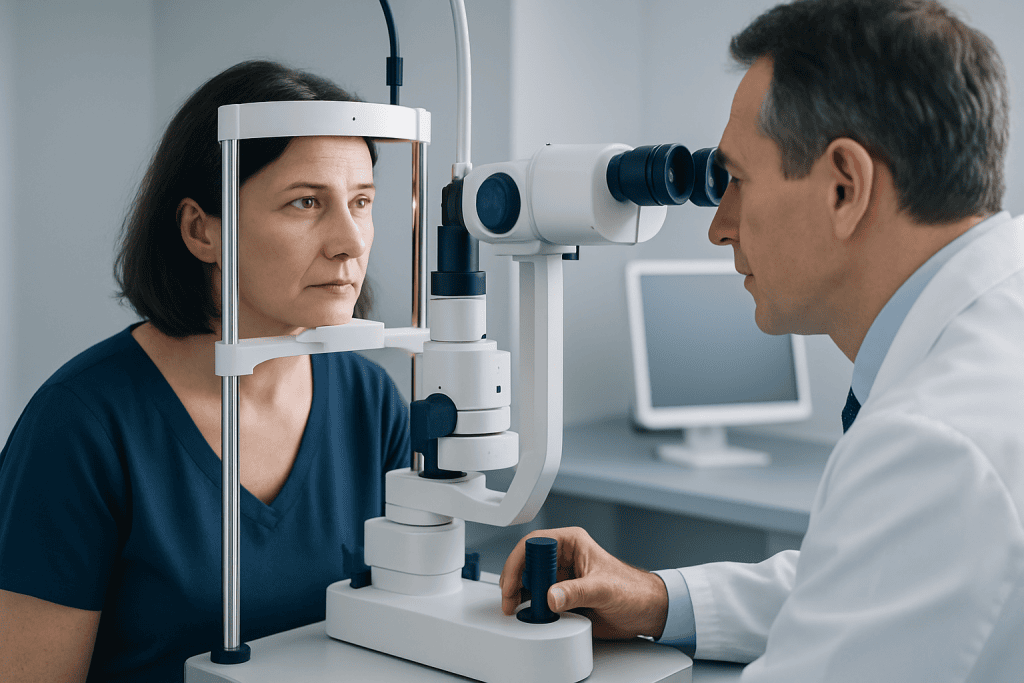
The examination usually includes visual acuity, pupil testing, eyelid position, eye alignment, and eye movement testing. A neurological exam may assess balance, coordination, facial strength, sensation, and limb function. These steps help determine whether the problem is likely to be in the eye itself, the cranial nerves, the muscles, or the brain.
Further tests depend on the suspected cause. Blood tests may be used to look for diabetes, inflammation, thyroid disease, or antibodies linked to myasthenia gravis. Imaging such as MRI or CT may be recommended when symptoms are sudden, painful, progressive, or accompanied by other neurological findings. Detailed eye movement assessment and imaging are often coordinated through specialists in neuro-ophthalmology and neuroradiology.
Sometimes doctors use additional studies such as nerve conduction tests, lumbar puncture, or vascular imaging. The goal is not simply to confirm diplopia, but to identify the reason for it and to rule out serious conditions that may need timely treatment.
Treatment options and what recovery may involve
Treatment for double vision depends entirely on the cause. Some cases improve as the underlying condition is treated, while others need symptom relief as well. Temporary measures can include covering one eye with a patch or using special prism lenses to reduce the perception of two images. These approaches can make daily activities safer and more comfortable while investigations or treatment are underway.
If a nerve palsy is related to small blood vessel disease, doctors may focus on controlling risk factors such as blood sugar, blood pressure, and cholesterol while monitoring recovery. If myasthenia gravis is diagnosed, treatment may include medications that improve nerve-muscle signaling or reduce immune activity. If the cause is inflammatory, infectious, or vascular, treatment is directed at that specific disorder.
When double vision is linked to stroke, urgent treatment and secondary prevention are important. Depending on the situation, evaluation may involve teams with expertise in stroke medicine or vascular neurology. If a structural lesion such as a tumor or aneurysm is found, treatment may involve neurosurgery, endovascular care, or other targeted therapies.
Recovery time varies widely. Some people improve within weeks or months, especially when the cause is temporary or treatable. Others may need longer-term vision correction, rehabilitation, or follow-up with neurology and ophthalmology specialists. Near the end of the care pathway, international patients may also seek evaluation at centers such as Acibadem International, where multidisciplinary specialists in JCI-accredited hospitals diagnose and treat neurological and neuro-ophthalmic conditions.
Self-care, safety, and when to seek urgent help
Until the cause is known, practical safety steps can help reduce strain and prevent accidents. If double vision affects walking, driving, stairs, or reading, it is wise to avoid risky activities and ask for support. Good lighting, regular rest breaks, and temporary eye patching may reduce symptoms, but they do not replace medical assessment.
There is no single way to prevent all cases of double vision, because the symptom has many possible causes. Still, managing vascular risk factors, attending routine eye exams, wearing protective gear to prevent head injury, and seeking prompt care for new neurological symptoms can lower risk or support earlier treatment.
Urgent medical attention is needed if double vision starts suddenly or appears with weakness, trouble speaking, a new severe headache, loss of coordination, confusion, facial drooping, or significant eye pain. It should also be assessed promptly if there is recent trauma, a droopy eyelid with a large pupil, or rapidly worsening symptoms. These signs can point to conditions that should be treated without delay.
If symptoms are mild but persistent, a scheduled evaluation is still important. Even when the cause turns out to be less serious, early diagnosis often makes treatment more effective and reassuring.
Frequently asked questions
Is double vision always caused by a neurological problem?
No. Double vision can come from eye-related causes such as cataract, corneal problems, or refractive issues, especially if it continues when one eye is covered. Neurological causes are more likely when double vision happens only with both eyes open or comes with other nerve-related symptoms.
What is the difference between monocular and binocular double vision?
Monocular double vision remains even when the unaffected eye is closed, so it is usually linked to a problem within the affected eye. Binocular double vision disappears when either eye is closed and usually reflects misalignment between the eyes, which can be due to neurological or muscle-related causes.
Can fatigue make double vision worse?
Yes. In some conditions, especially myasthenia gravis, symptoms may worsen with tiredness or after prolonged visual activity. Fatigue can also make an existing eye alignment problem more noticeable.
Should someone with sudden double vision go to the emergency department?
Yes, especially if the symptom starts suddenly or is accompanied by weakness, trouble speaking, severe headache, imbalance, facial drooping, or eye pain. These features can signal a time-sensitive neurological condition and should be assessed urgently.
How is neurological double vision treated?
Treatment depends on the underlying cause. Doctors may treat vascular risk factors, autoimmune disease, infection, migraine, or stroke, and may also recommend temporary measures such as an eye patch or prism glasses to reduce symptoms.
Can double vision go away on its own?
Sometimes it can, particularly if it is caused by a temporary nerve palsy or another reversible condition. However, it should still be evaluated, because the symptom can also be the first sign of a disorder that needs treatment or monitoring.
References
- National Eye Institute
- American Academy of Ophthalmology
- National Institute of Neurological Disorders and Stroke
- Mayo Clinic
- Merck Manual Consumer Version
This article is for general information only and is not a substitute for professional medical advice. Please consult a qualified doctor about your individual situation.
Explore treatments in Turkey — costs, top hospitals & a free quote
JCI-accredited · board-certified surgeons · reply within 24h
Add us as a Preferred Source to see more of our trusted health content across Google Search, AI Overviews and Discover.
Check your numbers in seconds
BMI, calories, due date, blood pressure and 30+ more clinical calculators — free, instant, doctor-reviewed ranges.

Neurology
Diagnosis and treatment of disorders of the brain, spinal cord, nerves and muscles.
51 specialists in this unit