Lazy Eye Treatment in Adults: Can Amblyopia Still Improve?
Amblyopia is reduced vision in one eye caused by abnormal visual development, not simply an eye that looks misaligned. Although treatment works best in childhood, adults can still benefit from evaluation and treatment.
Key Takeaways
- Amblyopia is reduced vision in one eye caused by abnormal visual development, not simply an eye that looks misaligned.
- Although treatment works best in childhood, adults can still benefit from evaluation and treatment.
- Treatment may include updated glasses or contact lenses, treatment of eye disease, patching or atropine in selected cases, and vision therapy.
- Results vary from person to person and often depend on the cause, severity, and consistency with treatment.
- A full eye examination is important to rule out other causes of reduced vision in adults.
Lazy eye treatment in adults can still help, even though treatment is usually most effective in childhood. Many adults with amblyopia may improve vision, eye coordination, or daily visual function with a careful diagnosis and an individualized treatment plan.
Overview: What Is Amblyopia in Adults?
Amblyopia, often called lazy eye, is a condition in which one eye does not develop normal vision, even though the eye itself may appear healthy. The brain begins to favor one eye and pays less attention to the other, leading to reduced visual sharpness, weaker depth perception, or difficulty using both eyes together. This usually starts in early childhood, but many people are not diagnosed until later or continue to have the condition as adults.
In adults, amblyopia is not a sudden new disease. It is most often a long-standing visual development problem that was never fully treated, was treated only partly, or returned over time. Common reasons include a noticeable difference in refractive error between the two eyes, eye misalignment, or a childhood blockage to clear vision such as a cataract.
For many years, it was widely believed that amblyopia could not improve after childhood. Research now shows that the adult brain still has some ability to adapt. Improvement may be possible with targeted treatment, although the degree of change can vary. Some adults gain better visual acuity, some improve eye teaming and depth perception, and some mainly benefit from better comfort and day-to-day function.
Symptoms and How Adult Lazy Eye May Affect Daily Life
The main symptom of amblyopia is reduced vision in one eye that cannot be fully corrected just by putting the right lens in front of it. Some adults notice this only when they cover the stronger eye during an eye test. Others may have had the issue since childhood and simply adapted to it over time.
Symptoms can be subtle because the stronger eye compensates well. Adults may notice poor depth perception, difficulty with tasks that require precise hand-eye coordination, trouble judging distance while driving or playing sports, or eyestrain when reading or using screens for long periods. Some people also have a visible eye turn, although not everyone with amblyopia does.
Possible signs include:
- Blurred vision in one eye
- Reduced contrast sensitivity
- Difficulty with depth perception
- Eye fatigue or discomfort during close work
- A history of strabismus or strong glasses in childhood
- Vision that seems weaker in one eye despite wearing prescription lenses
If vision in one eye suddenly becomes worse in adulthood, amblyopia should not be assumed. Sudden or recent visual loss needs prompt medical assessment because it may be caused by another eye or neurological condition.
Causes and Risk Factors

Amblyopia develops when the brain receives an unclear or unbalanced image from one eye during the years when vision is maturing. The most common causes are strabismus, in which the eyes are misaligned, and anisometropia, in which one eye has a much different prescription than the other. Less often, a physical blockage such as a congenital cataract, drooping eyelid, or corneal problem interferes with normal visual development.
Adults living with amblyopia often have had one of these causes since childhood. Some were never treated because symptoms were mild or screening was missed. Others had treatment as children but still have residual reduced vision. Amblyopia can also coexist with other eye conditions that affect adult vision and need separate care.
Risk factors include a family history of strabismus or amblyopia, premature birth, developmental differences, childhood eye disease, and high refractive error. In adults, a full evaluation is especially important because reduced vision may have more than one cause. For example, amblyopia may be present together with cataract, retinal disease, or corneal problems, each of which may need specific treatment.
How Amblyopia Is Diagnosed in Adults
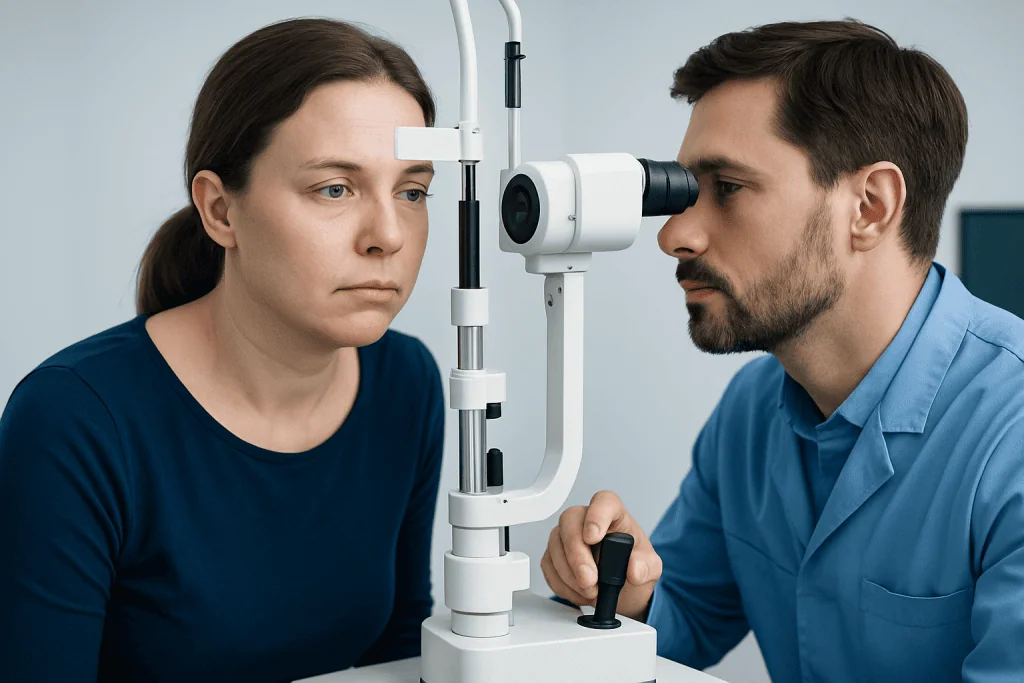
Diagnosis begins with a detailed eye examination. The eye specialist checks visual acuity in each eye separately, measures the glasses prescription, evaluates eye alignment and eye movements, and looks closely at the front and back of the eye. This helps confirm whether reduced vision is due to amblyopia, another eye disease, or a combination of both.
Testing often includes refraction to find the best possible prescription, binocular vision assessment, and a dilated retinal examination. A comprehensive eye examination is important because adults with reduced vision in one eye may also have conditions such as cataract, retinal disorders, or corneal disease that can mimic or worsen amblyopia.
In some situations, further assessment by a neuro-ophthalmology specialist may be needed, especially if symptoms do not fit the usual pattern or if there are neurological concerns. The goal is not only to label the problem correctly but also to identify every treatable factor affecting vision.
Diagnosis is often more nuanced in adults than in children. The doctor may compare current vision with childhood history, old prescriptions, past eye alignment issues, and previous treatment. This broader approach helps build a realistic treatment plan and sets appropriate expectations for improvement.
Treatment Options for Lazy Eye Treatment in Adults
Treatment in adults is individualized. The first step is often optimizing vision in both eyes with the best prescription. Updated glasses or contact lenses may improve the image reaching the weaker eye and can sometimes uncover more vision than expected. If another eye problem is present, treating that condition may also improve overall visual function.
Traditional amblyopia treatment methods, such as patching the stronger eye or using atropine drops in selected cases, may still be considered for some adults under specialist guidance. These approaches aim to encourage the brain to use the weaker eye more. They are not suitable for everyone, and the expected benefit is usually more modest than in younger children, but they may still help.
Vision therapy or perceptual training may be recommended to improve binocular function, focusing ability, eye teaming, and visual processing. Depending on the clinic and the patient’s needs, this may include office-based therapy, home exercises, or digital training programs. The strongest evidence tends to support a combined approach rather than relying on a single method alone.
When amblyopia is linked with another correctable problem, treatment may target that cause. For example, a cloudy lens may require cataract surgery, while a refractive issue may need lens correction. Some adults also benefit from learning practical visual strategies for work, reading, or driving. Progress is usually gradual and is monitored over time with repeat visual testing.
What Results Can Adults Expect?
Adults often want to know whether amblyopia can truly improve. The answer is yes, in some cases, but improvement is not the same for everyone. Factors that influence results include the cause of amblyopia, how severe it is, whether the weaker eye has any additional disease, and how consistently treatment is followed.
Some adults gain measurable improvement in visual acuity. Others notice better contrast sensitivity, reduced visual strain, improved depth perception, or better ability to use both eyes together. Even when reading the smallest letters does not change dramatically, these functional gains can still make daily life easier.
It is also important to keep expectations realistic. Amblyopia that has been present for many years may not fully normalize. Treatment is usually aimed at improvement rather than perfection. An eye specialist can explain what may be possible in an individual case and how progress will be assessed safely.
Because the stronger eye often carries most of the visual workload, protecting the health of both eyes is essential. Regular follow-up, the correct prescription, and prompt care for any new vision problem are an important part of long-term management.
Self-care, Prevention, and Long-Term Eye Health
Adults cannot prevent the childhood onset of amblyopia after the fact, but they can support the best possible visual function through good eye care habits. Wearing the prescribed glasses or lenses consistently, attending follow-up visits, and completing any recommended therapy program are the most practical steps. Treatment tends to work best when it is structured and sustained.
General eye health also matters. This includes protecting the eyes from injury, managing chronic conditions such as diabetes, taking breaks during prolonged screen use, and seeking care if vision changes. If one eye has always been weaker, it is especially important to protect the stronger eye with appropriate safety eyewear during sports or hazardous work.
Adults who have children should know that early childhood vision screening remains the best form of prevention for the next generation. Detecting refractive errors, eye turns, or visual obstruction early gives children the best chance of normal visual development. For adults who were diagnosed late, ongoing care can still be worthwhile and should not be dismissed.
Near the end of the care journey, some patients may seek evaluation in experienced centers. Acibadem International’s multidisciplinary eye specialists in JCI-accredited hospitals evaluate and treat conditions including amblyopia for international patients when specialist assessment is needed.
When to See a Doctor
An adult should arrange an eye examination if one eye has always seemed weaker, if a childhood diagnosis of amblyopia was never fully evaluated, or if vision remains uneven despite wearing glasses. Even long-standing symptoms deserve assessment because some causes of reduced vision can still be treated or improved.
Prompt medical attention is especially important if vision changes suddenly, if there is double vision, eye pain, flashes of light, new floaters, a curtain-like shadow, or headaches with neurological symptoms. These features are not typical of stable amblyopia and may signal another problem that needs urgent care.
Adults with a history of strabismus, childhood cataract, significant prescription differences between the eyes, or previous eye surgery may benefit from periodic follow-up even when symptoms seem stable. A specialist can help distinguish amblyopia from other causes of reduced vision and recommend the most appropriate next steps.
Frequently asked questions
Can lazy eye be treated in adults?
Yes, lazy eye can still be treated in some adults. While treatment is generally more effective in childhood, adults may still improve vision, binocular function, or visual comfort with a personalized plan.
Is it ever too late to improve amblyopia?
It is not always too late, but results vary. Adults usually have a lower degree of visual plasticity than children, so improvement may be slower and more limited, yet meaningful gains are still possible.
What is the best treatment for adult amblyopia?
The best treatment depends on the cause. It may include updated glasses or contact lenses, treatment of any underlying eye disease, patching or drops in selected cases, and vision therapy to support use of the weaker eye.
Can glasses alone fix lazy eye in adults?
Glasses alone may help some adults, especially if the prescription has not been fully optimized before. However, many people need additional treatment because amblyopia involves how the brain processes visual input, not just a focusing problem.
Does eye patching work for adults?
Patching may help selected adults, particularly as part of a broader treatment plan supervised by an eye specialist. It is usually less effective than in children, but some adults still experience improvement.
How long does treatment take?
Treatment length varies depending on the cause, severity, and the type of therapy used. Some adults notice changes within weeks to months, while others need longer follow-up and ongoing adjustment of the plan.
This article is for general information only and is not a substitute for professional medical advice. Please consult a qualified doctor about your individual situation.
Explore treatments in Turkey — costs, top hospitals & a free quote
JCI-accredited · board-certified surgeons · reply within 24h
Add us as a Preferred Source to see more of our trusted health content across Google Search, AI Overviews and Discover.

Ophthalmology
Comprehensive eye care from laser vision correction to retina, cornea and cataract surgery.
75 specialists in this unitRelated Treatments
More from the Health Library

How Much Is LASIK? What Patients Should Expect to Pay

What Is an OD in Eye Care? How Eye Doctors and Optometrists Differ

Femto LASIK Recovery: When Vision Clears and When You Can Travel

Cataract Surgery Candidacy: When Is It Time to Remove a Cataract?
Dry Eye Syndrome: Symptoms, Causes, and Relief Options