Photodermatitis: When Sunlight and a Trigger Inflame the Skin

Photodermatitis is a rash caused by sunlight reacting with the skin or with a medicine, plant, or product on the skin. It can look like intense sunburn or an itchy, eczema-like rash. See a doctor if reactions are severe, recur, or follow starting a new medication or product.
Key Takeaways
- Photodermatitis is a broad term for skin reactions caused or worsened by sunlight.
- Some reactions are phototoxic and resemble an exaggerated sunburn, while photoallergic reactions are delayed and often itchy.
- Medicines, fragrances, sunscreen ingredients, plants, and certain medical conditions can contribute to photosensitivity.
- A clinician can help identify the cause by reviewing symptoms, sun exposure, medicines, and skin products.
- Careful UV protection and avoiding a confirmed trigger are central to prevention.
You spent an hour outside — nothing unusual — and by evening your forearms are red, hot and itching. Or a rash shows up two days after a beach walk, in the exact shape of where your sleeves ended. When sunlight, especially ultraviolet (UV) radiation, reacts with your skin or with a medicine, chemical, plant or personal-care product, the result can be photodermatitis.
It may cause redness, burning, itching, blisters, or a rash that looks like eczema. Treatment comes down to two things: working out what the trigger is, and keeping the affected skin away from further light.
Photodermatitis: what it means
Photodermatitis is inflammation of the skin caused by an abnormal reaction to light. In everyday use, the term usually refers to a rash that occurs after exposure to sunlight, particularly ultraviolet A (UVA) and ultraviolet B (UVB) rays. The reaction may happen because sunlight directly damages sensitized skin or because light activates a substance on or in the body.
It isn’t one single disease. Photodermatitis covers a group of photosensitivity reactions, each with its own cause, look and timeline. Some people react after using a particular skin product or taking a medicine; others have an underlying skin or autoimmune condition that becomes more noticeable in sunlight.
Once you know the source, the condition is usually manageable. But a rash after sun doesn’t automatically mean photodermatitis. Ordinary sunburn, heat rash, hives, eczema, infections, and conditions such as polymorphous light eruption can look similar, so a clinical assessment can be useful when reactions recur or are severe.
How photodermatitis can look and feel
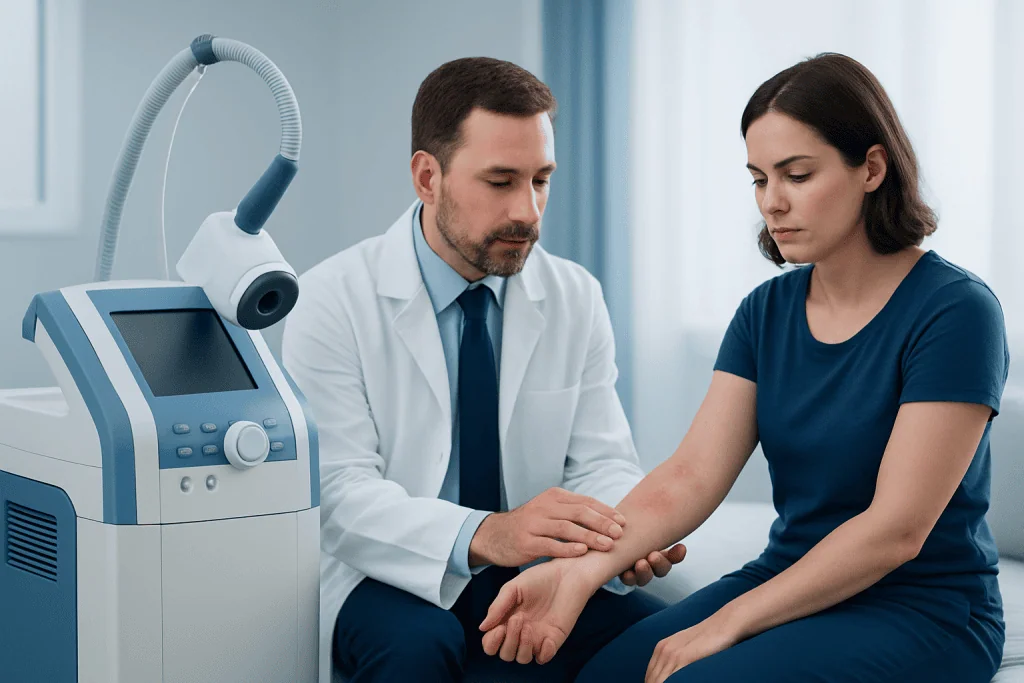
Symptoms usually affect areas exposed to light, such as the face, neck, upper chest, forearms, backs of the hands, and lower legs. Covered areas may be spared, although thin clothing and exposure through windows can still allow UVA light to reach the skin. The pattern of the rash can offer useful clues about its cause.
A phototoxic reaction often begins within minutes to hours of exposure. It can resemble intense sunburn, causing warmth, redness, pain, tenderness, swelling, and sometimes blisters. As it heals, the skin may peel or develop darker patches of pigmentation that can last for weeks or longer, particularly in people with darker skin tones.
A photoallergic reaction tends to appear later, commonly one to three days after exposure. It is more likely to be itchy and eczema-like, with small bumps, scaling, redness, or weeping areas. Unlike a phototoxic reaction, it can spread beyond the directly sun-exposed skin after the immune system has become sensitized.
- Red, tender, or burning skin after a relatively small amount of sun exposure
- Itching, raised bumps, scaling, or patches resembling eczema
- Swelling or small fluid-filled blisters in more pronounced reactions
- Skin darkening after the inflammation settles
- A rash that returns in the same circumstances, such as after using a product and going outdoors
Why sunlight causes a reaction

Photodermatitis occurs when UV or visible light interacts with a light-sensitive substance, called a photosensitizer. This substance may be applied to the skin, absorbed from a plant, or taken internally as a medicine. The resulting reaction can injure skin cells directly or activate the immune system.
Phototoxicity is a non-allergic reaction. A medication or chemical absorbs light energy and triggers damage in the skin, much like an amplified sunburn. The chance of a reaction may rise with higher doses of the triggering substance and greater light exposure. Anyone can potentially develop phototoxicity under the right circumstances.
Photoallergy is an immune-mediated reaction. Light changes a chemical into a form that the immune system identifies as foreign, and the skin becomes sensitized over time. It is less common than phototoxicity and may occur even with relatively limited exposure once sensitization has developed.
Some plant-related reactions are called phytophotodermatitis. Juice or sap from plants containing furocoumarins, followed by sun exposure, can cause streaks, drips, or handprint-shaped redness and later dark marks. Citrus fruits, celery, parsley, parsnip, figs, and giant hogweed are examples of potential sources. This is a reaction to plant chemicals and light, not a contagious skin condition.
Common triggers and risk factors
It helps to go through everything that touches your skin or that you swallow. Potential triggers include certain antibiotics, anti-inflammatory medicines, diuretics, acne treatments, antifungal medicines, heart medicines, and other prescription or over-the-counter products. Don’t stop a prescribed medicine on your own — talk to the doctor who prescribed it first. That medicine may be essential, and an alternative may or may not be appropriate.
What you put on your skin matters too: fragrances, essential oils, aftershave products, cosmetics, antiseptics, topical anti-inflammatory medicines and some sunscreen ingredients. A reaction is not necessarily caused by the product most recently used; photoallergic reactions, in particular, can emerge after repeated contact over time.
People who work outdoors, spend long periods near reflective surfaces such as water or snow, or use tanning beds may receive greater UV exposure. UVA can pass through ordinary window glass, so a reaction can occasionally occur while driving or sitting near a sunny window. Cloud cover does not fully block UV radiation.
Less commonly, marked photosensitivity can be associated with medical conditions, including lupus, porphyria, chronic actinic dermatitis, and certain metabolic disorders. These possibilities are not the usual explanation for a single mild rash, but they may need consideration when symptoms are persistent, widespread, accompanied by other health changes, or occur without an obvious trigger.
How clinicians diagnose photodermatitis
Diagnosis starts with a detailed history. A dermatologist or other qualified clinician may ask when the rash appeared, how quickly it developed after light exposure, which body areas were involved, whether it itched or burned, and how long it lasted. Information about travel, outdoor work, new medicines, supplements, skin products, and contact with plants can be especially helpful.
The skin examination considers the distribution and type of eruption. Clear borders matching exposed areas, unusual streaks, or sparing beneath watchbands and clothing can support a light-related cause. Photographs taken when the rash is active may assist assessment, particularly if the skin has improved before the appointment.
When the cause remains uncertain, a dermatologist may recommend patch testing or photopatch testing. These tests help identify delayed allergy to substances that only trigger a reaction after UV exposure. In selected cases, controlled light testing, blood tests, urine tests, or a skin biopsy may be used to investigate other causes of photosensitivity.
Bring a full list of your medicines and supplements, including the painkillers you take now and then and any herbal products. Bringing the packaging or ingredient lists for recently used cosmetics, fragrances, and sunscreens can also help. Accurate diagnosis focuses on identifying a manageable cause rather than assuming all rashes after sun are the same.
Treatment and recovery
The first step is to limit further exposure to the suspected trigger and protect the affected skin from sunlight. Cool compresses, loose clothing, gentle fragrance-free moisturizers, and avoiding scratching can ease discomfort. For a mild sunburn-like reaction, supportive care and time are often sufficient, although the skin should be watched for worsening symptoms.
A clinician may recommend a topical corticosteroid for an inflammatory or itchy rash, or an oral antihistamine to reduce itch in some cases. More severe inflammation may require prescription treatment tailored to the individual. Blisters should generally be left intact where possible, because the skin roof helps protect against infection; a healthcare professional can advise on wound care if blisters are extensive or break open.
If you suspect a medicine, call the doctor who prescribed it soon. They can judge whether the reaction is likely medication-related and whether a change is safe. Stopping, restarting or swapping a medicine on your own creates risks you don’t need to take.
Most acute reactions improve over days to a few weeks once the trigger and additional UV exposure are avoided. Darker marks after phytophotodermatitis or a phototoxic reaction may fade slowly. Persistent pigment change, recurring eruptions, or uncertainty about the trigger are good reasons to arrange dermatology review.
Daily protection and when to seek medical care
Steady, consistent sun protection is your main defence against photodermatitis coming back. This includes seeking shade when UV levels are stronger, wearing a wide-brimmed hat, long sleeves, and UV-protective sunglasses, and choosing tightly woven clothing or clothing with an ultraviolet protection factor when practical. Broad-spectrum sunscreen protects against both UVA and UVB; it should be selected and used according to its label, with reapplication during prolonged outdoor time.
For people with a confirmed trigger, prevention also means avoiding that specific medicine, product, or plant only under appropriate medical guidance. Reading product labels, washing plant juice from the skin before going outdoors, and testing a new topical product cautiously when advised by a clinician may reduce risk. Tanning beds should be avoided because they deliver concentrated UV exposure and can provoke photosensitivity.
Medical advice should be sought promptly for a severe or rapidly spreading rash, extensive blistering, facial or eye swelling, fever, significant pain, signs of skin infection, or a reaction after a new medicine. Emergency care is appropriate for trouble breathing, faintness, swelling of the lips or tongue, or other signs of a serious allergic reaction.
A non-urgent medical appointment is appropriate when the rash repeatedly returns after sun exposure, does not begin improving with careful protection, leaves substantial pigment changes, or occurs alongside joint pain, unusual fatigue, mouth sores, or other new symptoms. Acibadem International’s multidisciplinary specialists and JCI-accredited hospitals can assess photosensitive skin conditions and coordinate care for international patients when needed.
Frequently asked questions
Is photodermatitis the same as a sun allergy?
Sun allergy is a common, non-medical term that may describe several rashes caused by sunlight. Photodermatitis is a broader clinical term for light-related skin inflammation, including reactions caused by medicines, skin products, and plants. A clinician can help distinguish these from other sun-triggered conditions.
How long does photodermatitis last?
A mild reaction may improve over several days once further sun exposure and the suspected trigger are avoided. More intense reactions can take a few weeks to settle, and darker marks left after inflammation may fade more slowly. Ongoing or recurrent symptoms should be assessed by a healthcare professional.
Can photodermatitis occur through a window?
Yes. Standard window glass blocks most UVB radiation but allows a meaningful amount of UVA radiation to pass through. Because UVA can trigger some photosensitivity reactions, symptoms may occur during driving or near a sunny window.
Should a person stop a medicine that seems to cause photosensitivity?
A person should contact the clinician who prescribed the medicine before stopping it, unless urgent medical advice has been given to do so. Many medicines are important for ongoing health, and the clinician can assess the likely cause and discuss safe options. Meanwhile, careful sun protection is sensible.
Can sunscreen cause photodermatitis?
It is uncommon, but some people can develop contact allergy or photoallergy to an ingredient in sunscreen or another topical product. This can cause an itchy, eczema-like rash in sun-exposed areas. A dermatologist may use patch or photopatch testing to identify a specific ingredient.
Is photodermatitis contagious?
No. Photodermatitis is an inflammatory reaction of the individual's skin and cannot spread from person to person. However, a rash that appears to be photodermatitis may occasionally have another cause, so professional assessment is helpful if there is uncertainty.
This article is for general information only and is not a substitute for professional medical advice. Please consult a qualified doctor about your individual situation.
Explore treatments in Turkey — costs, top hospitals & a free quote
7 JCI-accredited hospitals · board-certified surgeons · reply within 24h
Add us as a Preferred Source to see more of our trusted health content across Google Search, AI Overviews and Discover.

Medically reviewed by the Acıbadem International Medical Board — August 24, 2026
See our medical review board →
Update history
- PublishedAugust 20, 2026
- Medical review approvedAugust 24, 2026
- Last content updateAugust 24, 2026
References2
- Sun Exposure and Skin Health — medlineplus.gov
- Sunburn — nhs.uk
Dermatology Specialists at Acibadem





Related Treatments
Related Conditions
More from the Health Library

Ingrown Hairs Near the Penis Are Common and Usually Mild

Facial Warts Are Caused by HPV and Often Clear on Their Own

Fair Skin Is a Normal Trait That Needs Extra Sun Protection

Benzoyl Peroxide Wash for Acne and How to Use It Safely

Scar Tissue Is Normal Healing That Sometimes Needs Treatment