Prostate Cancer Treatment
Prostate cancer treatment may include surgery, radiation therapy, hormone therapy, chemotherapy, immunotherapy, or targeted therapy, selected according to cancer stage, risk group, and patient health.
Quick answer
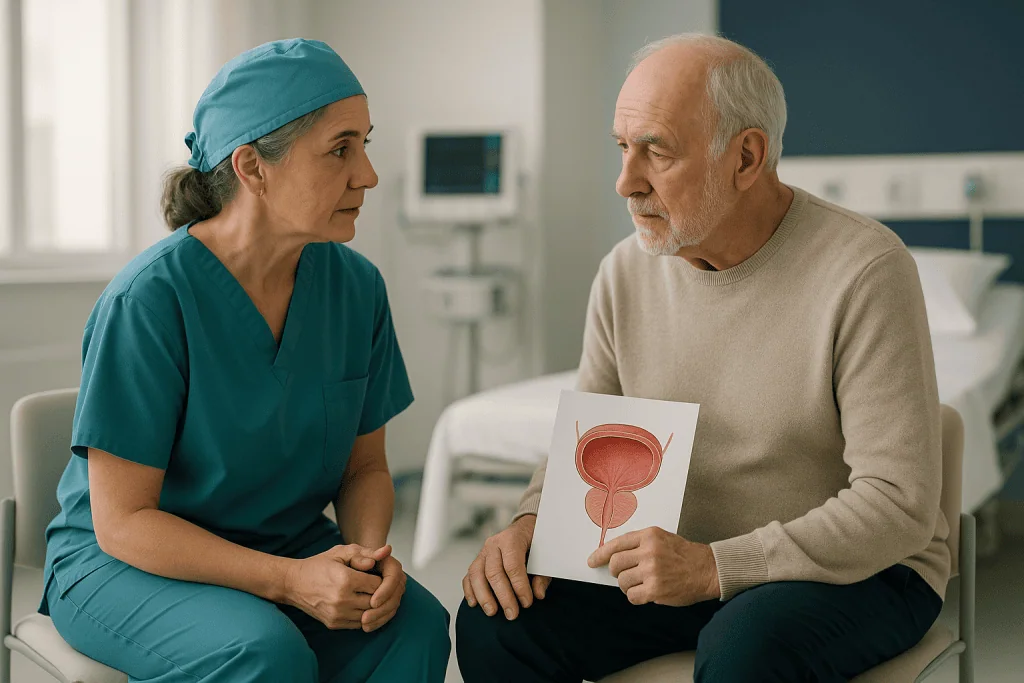
Prostate cancer is a cancer that begins in the prostate gland, which sits below the bladder in men. Treatment depends on stage and risk: some low-risk cancers are safely monitored through active surveillance, while others are treated with surgery, radiation therapy, hormone therapy, chemotherapy or targeted drugs. Diagnosis involves PSA blood testing, MRI and a biopsy, which together show how aggressive the cancer is.
Prostate Cancer: What It Is and Why Treatment Decisions Differ
Prostate cancer is a cancer that begins in the prostate gland, the small gland below the bladder in men. It is one of the most common cancers in men, and treatment ranges from structured monitoring with no immediate intervention through to surgery, radiation therapy and drug-based treatment for advanced disease. Which of those paths is right depends on how the cancer behaves, how far it has spread, and what matters most to you.
A diagnosis of prostate cancer raises immediate and deeply personal questions. Is the cancer slow-growing or aggressive? Does treatment need to begin right away? How might treatment affect urinary control or sexual function? Is a second opinion worth seeking before deciding? These questions are reasonable, and the honest answer to each begins with the same point: prostate cancer is not one single disease. Some prostate cancers remain confined to the prostate and grow slowly over many years, sometimes never causing harm within a man’s lifetime. Others behave more aggressively, spread beyond the prostate, or return after initial treatment. Because the biology and stage vary so widely, the best treatment plan is highly individual.
The goal of modern prostate cancer care is not only to control the cancer effectively but also to preserve quality of life as far as possible. That means basing decisions on accurate staging, careful risk assessment, your age and general health, your current urinary and sexual function, your own preferences, and the realistic likelihood of cancer control with each option. In many cases the most useful step is review by a multidisciplinary team, urologists, radiation oncologists, medical oncologists, radiologists, nuclear medicine specialists, pathologists and supportive care professionals looking at the same case together.
What is prostate cancer?
Prostate cancer is the uncontrolled growth of abnormal cells within the prostate gland. Most prostate cancers are adenocarcinomas, meaning they arise from the gland cells that produce prostate fluid. The cells usually retain a key feature of normal prostate tissue: they depend on male hormones, particularly testosterone, to grow. This dependence explains why hormone-lowering treatment plays such a central role in managing the disease, especially when it has spread. Prostate cancer also tends to be graded on how abnormal its cells look under the microscope, and that grade, expressed as a Gleason score or Grade Group, is one of the strongest indicators of how the cancer is likely to behave. A low-grade cancer confined to the gland is a very different clinical problem from a high-grade cancer that has reached the bones, even though both carry the same name.
What is a prostate?
The prostate is a small gland, roughly the size of a walnut in younger men, located below the bladder and in front of the rectum. Its job is to produce part of the fluid that carries sperm. The prostate surrounds the urethra, the tube that carries urine from the bladder out of the body, and it sits close to the nerves involved in erections and to the rectal wall. This anatomy matters for two reasons. First, it explains why prostate problems, cancerous or benign, often show up as urinary changes. Second, it explains why prostate cancer treatment can affect urinary function, sexual function and, in some cases, bowel function: the structures that control those functions sit millimetres from the gland itself. The prostate also tends to enlarge with age for entirely benign reasons, which is why urinary symptoms alone never confirm cancer.
Can women get prostate cancer?
No. Women do not have a prostate gland, so they cannot develop prostate cancer in the usual sense. Women do have small glands near the urethra, sometimes called Skene’s glands, which share some tissue features with the prostate, and cancers arising there have been described, but they are extremely rare and are managed as a separate condition. When the question comes up in families, it usually reflects a genuine concern: some of the inherited gene changes linked to prostate cancer in men, such as BRCA mutations, are also linked to breast cancer and ovarian cancer in women. A strong family history of these cancers can therefore be relevant information for both men and women, and it is worth mentioning during any cancer assessment.
Prostate Cancer Symptoms
Prostate cancer symptoms are often absent in the early stages of the disease. Many men diagnosed today have no symptoms at all; the cancer is found after a prostate-specific antigen (PSA) blood test comes back elevated, or after a doctor feels something abnormal during a digital rectal examination. This is an important and often misunderstood point: feeling well does not rule out prostate cancer, and having urinary symptoms does not confirm it.
What are the symptoms of prostate cancer?
The symptoms of prostate cancer, when they occur, usually relate to the gland’s position around the urethra. They may include frequent urination, waking often at night to urinate, a weak or interrupted urine stream, difficulty starting or stopping urination, or a feeling that the bladder does not empty fully. These symptoms are far more often caused by benign prostate enlargement, a common, non-cancerous condition of ageing, but they overlap with prostate cancer symptoms and cannot be told apart without assessment. Blood in the urine or semen can also occur; blood in the urine has several possible causes, including bladder cancer and kidney cancer, which is one more reason this finding is always investigated rather than assumed to be prostate-related.
What are 5 warning signs of prostate cancer?
Five warning signs of prostate cancer that most often lead men to seek assessment are:
- A change in urination: a weaker stream, more frequent urination, or difficulty starting and stopping.
- Waking repeatedly at night to urinate, when this is new or worsening.
- Blood in the urine or semen.
- New, persistent pain in the lower back, hips or pelvis, which can indicate involvement of nearby bone in more advanced disease.
- Unexplained weight loss or persistent fatigue, which can accompany advanced cancer of many types.
Two honest caveats belong next to any such list. First, every one of these signs is more commonly caused by something other than prostate cancer. Second, early prostate cancer frequently produces none of them, which is why PSA-based assessment, rather than waiting for symptoms, is how most cancers confined to the gland are found.
More advanced prostate cancer may cause bone pain, swelling in the legs, or neurological symptoms such as numbness or weakness if the cancer affects the spine. That said, most men diagnosed today are found to have earlier-stage disease, before any of these develop.
What Causes Prostate Cancer?
What causes prostate cancer is not fully understood, and no single cause has been identified. What is well established is a set of factors that raise the likelihood of developing the disease. Age is the strongest: prostate cancer is uncommon in younger men and becomes progressively more common with advancing age. Family history matters too, having a father or brother diagnosed with prostate cancer increases risk, and the increase is larger when relatives were diagnosed young or when several relatives are affected.
Inherited gene changes account for a portion of cases. Alterations in DNA-repair genes such as BRCA1 and BRCA2, the same genes associated with breast and ovarian cancer in women, are linked to prostate cancer that can behave more aggressively. Ancestry also plays a role: men of African ancestry develop prostate cancer more often and at younger ages, on average, than men of other backgrounds, for reasons that are still being studied.
Hormones are part of the picture because prostate cancer cells typically depend on testosterone to grow; this dependence is exploited in treatment rather than being a cause a man can control. Diet, body weight and lifestyle have been studied extensively, and while no food or habit has been proven to cause or prevent prostate cancer on its own, general patterns associated with cardiovascular health appear sensible for prostate health as well. It is worth stating plainly: developing prostate cancer is not the result of something you did wrong, and none of the known risk factors, alone or together, make the disease certain or impossible.
How Prostate Cancer Is Diagnosed and Staged
Diagnosis typically begins with a PSA blood test, a physical examination, and a review of your medical and family history. PSA is a protein produced by prostate tissue, and its level can rise for reasons other than cancer: benign prostate enlargement, inflammation, infection, recent procedures on the prostate or bladder, and even recent ejaculation can all push the number up. An elevated PSA therefore does not automatically mean cancer, but it does require thoughtful evaluation rather than either alarm or dismissal.
Because PSA can fluctuate, a single elevated reading is rarely acted on in isolation. Doctors often repeat the test after an interval, sometimes alongside a urine check to rule out infection, and interpret the value against your age, prostate size and previous results. The pattern over time, whether PSA is stable, rising slowly or rising quickly, frequently tells more than any single number. Additional refinements, such as the ratio of free to total PSA or PSA density, can help distinguish benign enlargement from changes more suspicious for cancer and guide the decision about whether MRI and biopsy are needed.
If cancer is suspected, imaging usually comes next. Multiparametric prostate MRI can identify suspicious areas within the gland and helps decide whether a biopsy is needed and where it should be directed. A prostate biopsy, removal of small tissue samples, increasingly guided by the MRI findings, is required to confirm the diagnosis. No blood test or scan can replace it.
The biopsy tissue is examined by a pathologist, who assigns a Gleason score or Grade Group. This grading describes how abnormal the cancer cells appear and how aggressively the cancer is likely to behave. Grade is central to every subsequent decision: a low-grade cancer may be suitable for monitoring, while a high-grade cancer usually calls for definitive treatment.
After diagnosis, staging tests determine whether the cancer is confined to the prostate or has spread. Depending on the risk level, staging may include MRI, computed tomography, a bone scan, or modern molecular imaging such as prostate-specific membrane antigen (PSMA) imaging where clinically indicated and available. PSMA-based scans can detect small deposits of prostate cancer that conventional scans miss, which is particularly useful in higher-risk disease and in men whose PSA rises after previous treatment.
All of this information, PSA level, biopsy grade, tumour extent, imaging findings, is combined to place the cancer in a risk group: broadly low, intermediate or high risk for localized disease, with separate categories for locally advanced and metastatic disease. Risk grouping is what turns a diagnosis into a treatment plan. In addition, genetic and molecular evaluation is increasingly part of the workup, especially for men with high-risk, recurrent, metastatic or family-associated disease. In selected patients, testing can identify inherited or tumour-specific changes that open the door to particular drug treatments, and may also provide important information for relatives.
What Prostate Cancer Treatment Involves
Prostate cancer treatment refers to the medical and surgical approaches used to remove, control or slow cancer that begins in the prostate gland. It may include active surveillance, surgery, radiation therapy, hormone therapy, chemotherapy, immunotherapy, targeted therapy, radiopharmaceutical treatment, or a combination of these. The right choice depends on the cancer’s stage, grade and risk group, whether it has spread, any previous treatments, and your overall health.
For early-stage, localized prostate cancer, treatment usually aims at cure. The common definitive options are radical prostatectomy, which removes the prostate gland and nearby tissues, and radiation therapy, which treats the prostate with precisely planned radiation. For selected low-risk cancers, active surveillance may be recommended instead of immediate treatment, regular monitoring, with treatment reserved for any sign of progression.
In selected men with localized disease, focal treatment approaches, which target the tumour-bearing part of the gland rather than the whole prostate, are offered in some centres, usually within strict selection criteria and with structured follow-up, because the long-term evidence base is still maturing compared with surgery and radiation. Whether such an approach is appropriate depends on the tumour’s location, grade and visibility on imaging.
For locally advanced cancer, disease that extends beyond the prostate capsule, involves the seminal vesicles, or affects nearby lymph nodes, treatment often combines methods, most commonly radiation therapy with hormone therapy, or surgery in carefully selected patients followed by additional treatment if the final pathology calls for it.
For metastatic prostate cancer, when the disease has spread to bones, lymph nodes or other organs, the aim shifts to controlling the disease, relieving symptoms, prolonging life and maintaining daily function. Treatment may include hormone therapy, newer androgen receptor pathway medications, chemotherapy, radiopharmaceutical therapy, immunotherapy in selected cases, targeted therapy for tumours with specific genetic features, or clinical trial options where appropriate.
Two further situations deserve their own mention. Recurrent prostate cancer means the disease has returned after prior treatment, usually signalled by a rising PSA, sometimes confirmed on imaging. Management depends on where the recurrence sits, how quickly the PSA is rising, what has already been tried, and your health; options may include salvage radiation, salvage surgery in selected cases, hormone therapy, focal treatment for limited recurrence, or systemic therapy. Castration-resistant prostate cancer means the disease progresses despite testosterone-lowering treatment. This does not mean options are exhausted: androgen receptor pathway inhibitors, chemotherapy, targeted therapy for specific gene alterations, radiopharmaceutical treatment for appropriate patterns of spread, and supportive treatments to reduce bone complications or pain may all still be considered.
One principle underlies all of these situations: more treatment is not always better. Some men need active treatment promptly. Others can safely avoid or delay treatment under structured monitoring, sparing themselves side effects for as long as the cancer allows. The most appropriate plan is the one that matches the cancer’s actual behaviour and your own priorities, not the most aggressive option available.
How Prostate Cancer Treatment Is Performed
Preparation and treatment planning
Effective treatment begins with confirming the diagnosis and pinning down the cancer’s exact risk profile. The medical team reviews the PSA history, biopsy findings, prostate MRI, staging scans, urinary and sexual function, current medications, other health conditions, and any previous operations or treatments. Where a patient has been investigated elsewhere, pathology slides, imaging files, blood results and operative reports are reviewed rather than repeated wherever the quality allows.
Many prostate cancer cases benefit from discussion in a multidisciplinary board, where specialists compare surgery, radiation, systemic therapy, surveillance and combined approaches for the same case. Your values sit at the centre of that discussion. One man with low-risk disease may prioritise avoiding overtreatment; another may prefer active treatment because of the cancer’s features, his family history, or simply how he weighs uncertainty. A good plan explains not only what is recommended but why the alternatives were judged less suitable, and where two options are genuinely close, it says so.
Before treatment, you may undergo blood and urine tests, heart and anaesthesia evaluation, imaging review, and a structured assessment of urinary symptoms. Patients heading for radiation therapy may need planning scans, bladder and bowel preparation instructions, and, in selected cases, placement of markers or spacing material to improve treatment accuracy or reduce radiation exposure to nearby tissues. Any adjustment of existing medicines before surgery or biopsy is decided by the treating doctors, based on your individual situation.
Active surveillance
Active surveillance is not the same as doing nothing. It is a structured monitoring strategy for selected men with low-risk or otherwise favourable prostate cancer, and it has a defined protocol: regular PSA tests, physical examinations, repeat MRI when appropriate, and repeat biopsy at set intervals or if anything changes. Treatment begins only if there are signs that the cancer is becoming more aggressive or more extensive.
The point of surveillance is to let some men avoid or postpone the side effects of surgery or radiation while keeping close medical oversight in place. It is most appropriate when the cancer’s features suggest slow growth and when the patient is comfortable with disciplined follow-up. It asks something of you, attendance, repeat testing, tolerance of some uncertainty, and it is fair to weigh that honestly against the side effects of immediate treatment. The distinction that matters is between surveillance, which is a plan, and drift, which is not.
Surgery: radical prostatectomy
Radical prostatectomy removes the entire prostate gland, the seminal vesicles and, when indicated, nearby lymph nodes. The operation may be performed with minimally invasive techniques, robotic-assisted or laparoscopic, or through open surgery, depending on your anatomy, the cancer’s features and the surgeon’s recommendation. The aim is to remove the cancer while preserving urinary control and erectile function as far as is safely possible.
When the cancer’s location and risk allow, nerve-sparing techniques can protect the nerve bundles involved in erections, which run along the sides of the prostate. Cancer control remains the priority, however, and nerve preservation may not be appropriate if the tumour lies close to or involves those structures. This trade-off should be discussed openly before the operation, not discovered afterwards.
Imaging and preoperative planning guide the surgery, but the final pathology report provides the most detailed information: tumour grade, surgical margins, stage, lymph node involvement and other features that determine whether additional therapy is recommended. Surgery usually requires a short hospital stay. A urinary catheter is left in place temporarily while the new connection between the bladder and urethra heals, and is removed once healing is confirmed.
Radiation therapy
Radiation therapy uses carefully planned radiation beams or implanted sources to destroy cancer cells. External beam radiation therapy is delivered from outside the body over multiple sessions. Planning involves imaging scans that map the prostate, the nearby organs and the treatment targets; modern planning techniques then shape the radiation dose to the prostate and any at-risk areas while reducing exposure to the bladder, rectum and surrounding tissues.
Some patients are candidates for brachytherapy, in which radiation sources are placed inside or immediately next to the prostate. Brachytherapy may be used on its own in selected cases or combined with external beam radiation for higher-risk disease. Suitability depends on prostate size, existing urinary symptoms, the cancer’s risk group, any prior treatments and the treating physician’s assessment.
For intermediate- and high-risk prostate cancer, radiation is often combined with hormone therapy, because lowering testosterone makes prostate cancer cells more sensitive to radiation and reduces the risk of spread. How long the hormone component continues varies with the risk level and the intent of treatment.
Hormone therapy
Hormone therapy, also called androgen deprivation therapy, lowers testosterone or blocks its effect on prostate cancer cells. It may be used alongside radiation for localized or locally advanced disease, as a foundation of treatment for metastatic cancer, before or after other treatments, or when the cancer recurs. It works because most prostate cancers depend on male hormones to grow; removing the fuel slows the fire.
Treatment may involve injections, implants, tablets or combinations of medicines. Side effects can include hot flushes, fatigue, mood changes, reduced sexual desire, erectile dysfunction, weight gain, muscle loss, bone thinning and metabolic changes. These effects are real and deserve active management rather than quiet endurance: structured guidance on exercise, bone health, cardiovascular risk, nutrition and symptom control makes a measurable difference to how men live during long-term hormone treatment.
Long-term hormone therapy also deserves a specific plan for bone and heart health. Bone density can be measured before and during treatment, and weight-bearing exercise, adequate calcium and vitamin D intake as advised by the treating team, and bone-protecting medication in selected patients all help reduce the risk of fractures. Cardiovascular and metabolic monitoring, blood pressure, blood sugar and lipid checks, belongs in the same schedule, because hormone treatment can shift these measures gradually over months of therapy.
Chemotherapy, immunotherapy, targeted therapy and radiopharmaceutical treatment
Chemotherapy may be used for metastatic prostate cancer, especially when the disease is aggressive, widespread, symptomatic or no longer responding to hormone-based treatment. It attacks rapidly dividing cells and is given in cycles, with recovery periods between treatments. Supportive medications help manage nausea, infection risk, fatigue and other side effects during the course.
Immunotherapy is appropriate for a smaller group of patients whose cancers carry specific biological features, such as certain DNA-repair or mismatch-repair abnormalities. Targeted therapies may be considered when genetic or molecular testing shows alterations that make the cancer more likely to respond to a particular drug class. Neither is a default option in prostate cancer; both are selected on the basis of testing, prior treatment history and overall condition, which is exactly why the molecular workup described earlier matters.
Radiopharmaceutical therapies may be considered in selected metastatic cases, particularly when the cancer has spread to bone or expresses specific molecular targets visible on imaging. These treatments deliver radiation through the bloodstream directly to cancer sites while aiming to limit exposure to healthy tissue. Patient selection requires careful imaging and laboratory evaluation beforehand, and monitoring afterwards.
Technology used in diagnosis and treatment
Modern prostate cancer care depends on precise imaging, accurate pathology and carefully planned treatment delivery. Multiparametric MRI helps identify significant tumours, guide biopsy and support surgical or radiation planning. Image-guided biopsy techniques improve sampling of suspicious areas. Advanced pathology evaluation underpins grading and risk assessment. For staging and recurrence, molecular imaging can reveal deposits invisible to conventional scans in selected patients. In radiation therapy, computer-based planning, image guidance and dose-shaping techniques concentrate treatment on the intended target. In surgery, minimally invasive platforms offer enhanced visualisation and fine instrument control for precise dissection in appropriate patients.
A note of honesty about technology: the value lies not in the device but in how experienced teams use it within a coordinated pathway. A sophisticated scanner interpreted casually helps no one. Imaging, laboratory findings, pathology and clinical judgement have to be integrated into one coherent plan: that integration, more than any single machine, is what separates good centres from average ones.
How long does prostate cancer treatment take?
Duration varies widely by approach. Surgery is usually completed within several hours, followed by a short hospital stay and a period of recovery before normal activity resumes. External beam radiation therapy is delivered in repeated sessions over days or weeks, depending on the protocol chosen. Brachytherapy may require a shorter procedural visit, sometimes with additional radiation sessions depending on the plan. Hormone therapy, chemotherapy and targeted treatments may continue for months or longer, guided by response and disease stage. Active surveillance, by definition, continues indefinitely unless treatment becomes necessary. None of these timeframes is fixed in advance; each is set, and revised, according to how your disease and your body respond.
Is Prostate Cancer Curable?
Many prostate cancers can be treated with the aim of cure, particularly when the disease is still confined to the prostate or has extended only locally. Surgery and radiation therapy are both established curative-intent treatments for localized disease, and some very low-risk cancers never require treatment at all. When prostate cancer has spread to distant sites, the honest framing changes: metastatic disease is generally managed as a long-term condition, controlled, often for extended periods, rather than eliminated, using the systemic treatments described above.
Can prostate cancer be completely cured?
No treatment for any cancer can remove all uncertainty, and anyone who promises otherwise is not being straight with you. What can be said honestly is this: for localized prostate cancer treated with curative intent, a large proportion of men live out their lives without the cancer returning, and PSA monitoring after treatment provides an early and sensitive way to detect recurrence if it does occur. That monitoring is precisely why follow-up continues for years after apparently successful treatment, not because failure is expected, but because early detection of recurrence keeps more options open.
What is the life expectancy for a person with prostate cancer?
Life expectancy with prostate cancer depends on the stage and grade at diagnosis, the treatment chosen, how the cancer responds, and your overall health, so no single figure applies to everyone, and quoting one here would mislead more than it would inform. What can be said in general terms: men whose cancer is confined to the prostate and treated appropriately very often live for many years, and many die of unrelated causes; men with metastatic disease increasingly live meaningfully longer than in the past as treatments have multiplied. Your own outlook is a conversation for your treating team, who can weigh your stage, grade, PSA behaviour and health together: the only way the question can be answered responsibly.
Why Acting Early Matters
Prostate cancer often develops slowly, but waiting without a plan is risky. The distinction that matters is between thoughtful observation and unmonitored delay. Active surveillance is a medical strategy with scheduled testing and defined triggers for action. Delay is uncertainty without adequate assessment, and the two are not the same thing, however similar they feel from day to day.
Early evaluation determines whether a cancer is low risk and safe to monitor, or carries features that call for treatment. If an aggressive cancer is left untreated, it may grow beyond the prostate, involve lymph nodes, spread to bone, or simply become harder to control. A cancer that might have been managed with one focused approach can later require combined or long-term systemic treatment instead.
Prompt assessment matters equally after previous treatment. A small PSA rise after surgery or radiation may be the first sign of recurrence, long before anything shows on a scan or is felt as a symptom. Identifying recurrence earlier can widen the options, salvage radiation, or targeted treatment of limited disease sites, that narrow as the disease advances.
Acting early does not mean rushing into aggressive treatment. It means obtaining the right information, understanding the actual risk, and choosing a medically appropriate path before the disease limits the choices for you.
Benefits of Prostate Cancer Treatment
The potential benefits depend on the stage and the approach chosen, but the central goals are consistent: cancer control, symptom prevention, and preservation of quality of life.
| Benefit | What It Means for You |
|---|---|
| Cancer control | Treatment may remove, destroy or slow prostate cancer, depending on whether the disease is localized, locally advanced, recurrent or metastatic. |
| Personalised treatment choice | Your plan is matched to cancer stage, risk group, age, health status, urinary and sexual function, and your own priorities. |
| Possibility of avoiding overtreatment | For selected low-risk cancers, active surveillance allows careful monitoring without immediate surgery or radiation. |
| Symptom relief | For advanced disease, treatment can reduce pain, urinary problems, or complications related to cancer spread. |
| Structured long-term follow-up | PSA monitoring, imaging when needed, and specialist review help detect recurrence or treatment effects early. |
Recovery Timeline After Prostate Cancer Treatment
Recovery differs for every patient and every treatment, but the following gives a general view of what many men can expect after the common approaches.
| Time Period | What Patients Can Expect |
|---|---|
| Day 1 | After surgery, monitoring covers pain control, walking, urine drainage and early healing. After radiation or systemic therapy, most patients return home or to accommodation the same day unless additional monitoring is needed. |
| First week | Surgical patients manage catheter care and gradually increase movement. Radiation patients may notice mild urinary or bowel changes. Systemic therapy patients are monitored for early side effects and blood test changes. |
| First month | Many surgical patients have the catheter removed and begin pelvic floor recovery. Radiation-related fatigue or urinary symptoms may fluctuate. Medication-based treatments continue with regular assessment. |
| Three to six months | Urinary control often improves after surgery, though timing varies. PSA results help assess early treatment response. Sexual function recovery may take longer and may need rehabilitation support. |
| Longer term | Follow-up focuses on PSA monitoring, imaging if needed, management of late side effects, bone and metabolic health during hormone therapy, and overall wellness. |
Some detail behind the table, because this is where expectations most often go wrong. After surgery, some urinary leakage is common early on and usually improves over time with pelvic floor rehabilitation, but the pace varies from man to man, and honest teams say so before the operation rather than after. Erectile function typically takes longer to return than urinary control, and depends on age, baseline function, whether nerve-sparing was possible, and general vascular health; rehabilitation approaches exist and work best when started as part of a plan rather than as an afterthought.
After radiation therapy, many patients continue normal daily activities throughout treatment, but fatigue, urinary frequency, burning with urination, bowel changes or skin sensitivity may occur. These effects are often temporary, though some late effects can develop months or years afterwards, which is one reason follow-up continues. Systemic therapies each carry their own recovery pattern and require ongoing monitoring with blood tests, symptom checks and imaging when indicated.
Life During and After Treatment
Prostate cancer treatment does not end when the last session or operation finishes. Long-term follow-up: PSA testing on a schedule, attention to late side effects, and general health maintenance, is part of the treatment itself. The rhythm of follow-up is usually most intensive in the first years after treatment, when PSA is checked at regular intervals, and then gradually spaces out if results remain reassuring. After surgery, PSA is expected to fall to an undetectable level; after radiation, it declines more gradually and is interpreted against its lowest point rather than against zero. Understanding which pattern applies to your treatment prevents unnecessary alarm at follow-up results. Beyond the numbers, two practical questions come up in almost every consultation.
What foods should I avoid if I have prostate cancer?
No single food has been proven to cause prostate cancer progression, and no single food has been proven to stop it, claims to the contrary, wherever you read them, run ahead of the evidence. The sensible, honest guidance is broader: a balanced diet built around vegetables, fruit, whole grains and lean protein; moderation with processed meat, heavily charred meat and excess saturated fat; limited alcohol; and attention to body weight. During hormone therapy, bone and metabolic health deserve particular attention, and questions about calcium, vitamin D or any supplement belong with your treating team, who can weigh them against your medications and test results. Beware of restrictive diets marketed specifically to cancer patients; losing weight and muscle you cannot spare helps no one, least of all during treatment.
Does exercise help during prostate cancer treatment?
Yes, within your capacity and your team’s guidance. Regular physical activity, a combination of aerobic exercise and resistance work, helps counter the fatigue, muscle loss and metabolic changes associated with hormone therapy, supports cardiovascular health, and appears to improve how men tolerate treatment generally. Pelvic floor exercises, ideally taught properly rather than guessed at, are the cornerstone of urinary recovery after surgery. The goal is not athletic performance; it is preserving the strength and function that make recovery easier and life during treatment better.
Factors That Influence Outcomes and What a Good Result Looks Like
Outcomes in prostate cancer depend on both cancer-related and patient-related factors. Stage is among the most important: disease confined to the prostate is generally more treatable with curative intent than disease that has spread to distant organs. Tumour grade matters just as much, higher Grade Group cancers tend to behave more aggressively and may need more intensive treatment. PSA level, PSA doubling time, MRI findings, lymph node status, margin status after surgery, and the response to initial therapy all shape prognosis and future decisions. In recurrent or metastatic disease, the location and extent of spread, symptoms, prior treatments, genetic features and general fitness guide the choice of therapy.
Patient factors carry equal weight. Age alone should never determine treatment, but overall health, heart and metabolic conditions, existing urinary symptoms, baseline erectile function, prostate size, previous pelvic surgery, and the ability to tolerate anaesthesia or particular medicines all influence which option makes sense. A man with significant urinary obstruction weighs the options differently from a man with excellent urinary function. A patient with existing cardiovascular disease needs careful planning before hormone therapy begins.
A good result is not defined only by a PSA number. It includes cancer control, safe recovery, preservation of daily function, decisions you understood and agreed to, and side effects that were anticipated and managed rather than endured in silence. For some men, the best result is curative-intent treatment with surgery or radiation. For others, it is long-term control of advanced disease with good symptom management. For men with genuinely low-risk cancer, a good result may be years of careful surveillance without treatment they never needed.
Communication itself affects outcomes. Patients who understand the purpose of their treatment, the expected side effects, the warning signs worth reporting, the follow-up schedule and the lifestyle recommendations participate more effectively in their own care, and that matters most for patients whose follow-up will continue with a different physician or team after treatment.
How Acibadem Organises Prostate Cancer Care
At Acibadem, prostate cancer care sits within a broader oncology and cancer treatment programme and is organised around three things: careful diagnosis, evidence-based treatment planning, and coordinated long-term follow-up.
The diagnostic pathway can include advanced imaging, laboratory testing, pathology review, biopsy planning and staging evaluation, with existing records and slides reviewed rather than repeated wherever quality allows. When appropriate, cases are discussed in multidisciplinary boards so that urologists, radiation oncologists, medical oncologists, nuclear medicine specialists, radiologists and pathologists contribute to the recommendation together. This structure matters particularly in prostate cancer, where surgery, radiation, surveillance and systemic therapy can all be reasonable in different situations, and where the honest comparison of trade-offs is more valuable than any single specialist’s default preference.
Treatment plans follow evidence-based protocols, adapted to each patient’s stage, risk group, health status and preferences. For localized disease that may mean a genuine comparison of surgery, radiation and surveillance; for advanced disease it may mean integrating hormone therapy, chemotherapy, targeted treatment, radiopharmaceutical options or symptom-directed care. Diagnostic and treatment technology: MRI-guided biopsy pathways, radiation planning systems, minimally invasive surgical platforms, molecular testing, is used within that coordinated framework rather than as an end in itself.
Continuity after treatment is built into the process. Many prostate cancer patients need long-term PSA monitoring or ongoing therapy, so patients receive medical reports, treatment summaries, medication instructions, follow-up recommendations and guidance on which findings should prompt medical attention. These documents are prepared so that any physician who takes over follow-up can do so with a complete picture rather than fragments.
What a Second Opinion Involves
Prostate cancer decisions are rarely simple, but they become manageable with accurate information and a team that looks at the full picture. A second opinion is particularly valuable when the reasonable options are close in expected cancer control but differ meaningfully in side effects and recovery: the exact situation many men with localized prostate cancer face when weighing surgery against radiation against surveillance.
A thorough second-opinion review typically draws on the complete PSA history rather than a single value, the original biopsy report and ideally the pathology slides themselves, the prostate MRI and any staging scans, records of any previous treatment, and a current medication list. Reviewing the actual slides and images, not just the written reports, sometimes changes the grade or stage assessment, and with it the recommendation. A good review ends with a clear account of which approaches are medically appropriate, what each would realistically involve, and why: reasoning you can examine, not just a conclusion you are asked to accept.
Whatever path you take, the standard to hold any centre to is the same. Prostate cancer care should be both medically rigorous and personally thoughtful, treating the disease in a way that reflects its actual risk, your health, and your life beyond the treatment itself.
Preparation
- Evaluation usually includes PSA testing, prostate imaging, biopsy review, staging scans, and assessment by urology and oncology specialists. Patients may need blood tests, anesthesia evaluation if surgery is planned, and guidance on medications such as blood thinners. A personalized plan is created according to cancer stage, grade, symptoms, and overall health.
Aftercare
- Follow-up includes PSA monitoring, imaging when needed, and management of urinary, sexual, bowel, or hormonal side effects. Patients should attend scheduled oncology and urology visits and report fever, urinary blockage, severe pain, or bleeding promptly. Rehabilitation, nutrition support, and psychological care may be recommended.
Frequently Asked Questions
What affects the cost of prostate cancer treatment?
The main factors are cancer stage and risk group, the treatment plan, diagnostics such as imaging and pathology review, hospital stay, medication needs, specialist fees, and follow-up. A personalised quote is prepared after medical reports are reviewed by the relevant specialists.
How can I get a personalised quote from Acibadem?
You can request a free consultation by sharing available medical records, biopsy and pathology reports, PSA history, imaging results, current medications, and any previous treatment details. The international patient team can guide you on which documents are useful for specialist review.
Does the quote include travel and accommodation?
Medical quotations usually focus on hospital and treatment-related services, while travel and accommodation support may be coordinated separately. The international patient team can clarify what is included in your proposed package before you travel.
Why can prostate cancer quotes differ between patients with the same diagnosis?
Even when the diagnosis is similar, costs can differ because tumour location, risk category, imaging findings, surgical complexity, radiotherapy planning, medication choices, and general health needs may not be the same.
Are surgery, radiotherapy, and medication costs quoted together?
They may be quoted together or separately depending on the recommended pathway. Some patients need a single main treatment, while others require combined care involving urology, radiation oncology, and medical oncology.
Is the lowest-cost option always the best choice?
Not necessarily. The appropriate option depends on clinical suitability, expected benefits, risks, recovery, quality of life, and long-term follow-up needs. This information is general and is not medical or financial advice; a specialist consultation is needed for an individual recommendation.
Medically reviewed by the Acıbadem International Medical Board August 30, 2026
See our medical review board →
Update history
- PublishedJune 5, 2026
- Medical review approvedAugust 30, 2026
- Last content updateSeptember 8, 2026
References3
- Prostate Cancer Treatment (PDQ) – Patient Version cancer.gov
- Prostate cancer nhs.uk
- Prostate Cancer medlineplus.gov
Trusted care for international patients
From the Acibadem Blog
What PSA Monitoring After Prostate Cancer Treatment Can and Cannot Tell You
After prostate cancer treatment, PSA tracks whether prostate cells are still active, but the expected level depends on the treatment: close to zero after…
Living After Prostate Cancer Treatment: Urinary Control, Intimacy and Follow-Up Visits
Life after prostate cancer treatment usually settles into a new routine: regular PSA blood tests, gradual return of bladder control over weeks to months,…
How Many Radiation Treatments for Prostate Cancer: What It Means, What to Expect and When to See a Specialist
Most external beam radiation for prostate cancer involves 20 to 39 sessions, given five days a week over roughly four to eight weeks, while…
Best Treatment for Prostate Cancer in Early Stages: What It Means, What to Expect and When to See a Specialist
There is no single best treatment for early-stage prostate cancer. Guidelines support three evidence-based paths: active surveillance with regular monitoring, surgical removal of the…