Ablation Procedures
Ablation procedures use focused energy to destroy small areas of abnormal tissue, most often to treat heart rhythm problems. They are minimally invasive and guided by advanced imaging and monitoring.
Quick answer
An ablation procedure uses focused energy, heat or freezing, to destroy or isolate a small area of abnormal tissue. In heart care, catheter ablation treats rhythm disorders such as atrial fibrillation, atrial flutter and supraventricular tachycardia. Thin catheters are guided to the heart through a blood vessel, the faulty electrical signal is mapped, and the tissue responsible is treated. Many patients go home the same day or after one night.
What Is an Ablation Procedure?
An ablation procedure is a minimally invasive treatment that uses focused energy to destroy or isolate a small area of abnormal tissue. In cardiology, ablation treats heart rhythm disorders, arrhythmias, by acting directly on the tissue that generates or sustains a faulty electrical signal. It is usually considered when rhythm episodes keep returning, when medication is not effective or not tolerated, or when long-term drug therapy is not the strategy you and your doctor prefer.
To understand why ablation works, it helps to know how the heart keeps time. Your heart has an internal electrical system that controls when and how its chambers contract. Signals normally start in one place, travel along defined routes and arrive in a predictable order. If an abnormal pathway or a cluster of misfiring cells sends signals too quickly, too irregularly or at the wrong moment, the heart may beat too fast, too slowly or in an uncoordinated way. Ablation interrupts that abnormal circuit, or isolates the source of the irregular signals, while preserving normal heart function around it.
Ablation procedures are not a single technique applied identically to every patient. Ablation for supraventricular tachycardia may target one small extra pathway. Ablation for atrial fibrillation usually involves isolating the pulmonary veins, which are common sources of abnormal electrical triggers. Ablation for ventricular tachycardia may require far more extensive mapping, particularly in patients with previous heart damage or an implanted cardiac device. The type of arrhythmia, the structure of your heart and your medical history all shape how the procedure is planned.
Ablation meaning: what does the word actually cover?
The ablation meaning in medicine is straightforward: to ablate is to deliberately remove or destroy a small, targeted amount of tissue, usually with focused energy delivered through a catheter or probe. The energy may heat the tissue, freeze it or use other controlled methods to create a precise lesion. Because the word describes the method rather than one disease, ablation appears across medicine: it is also used to destroy selected tumour tissue and to treat abnormal tissue in other organs, which our ablation therapy page covers in more detail. This page concentrates on catheter-based treatment of the heart, because rhythm disorders are the most common reason international patients ask about ablation.
What is a heart ablation procedure?
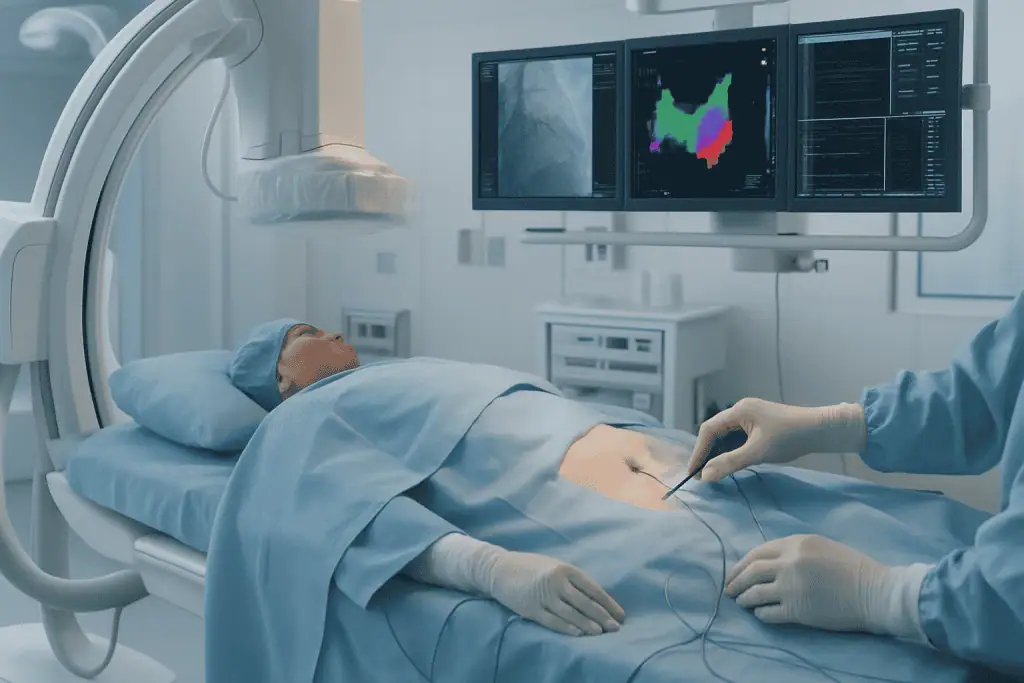
A heart ablation is a catheter-based procedure performed by an electrophysiologist: a cardiologist who specialises in the heart’s electrical system. Thin, flexible tubes called catheters are passed through a blood vessel, usually in the groin, and advanced to the heart. The catheters can record electrical signals from inside the chambers, build a detailed map of how the rhythm problem behaves and then deliver energy precisely to the tissue responsible. The aim is targeted: interrupt the abnormal circuit or isolate the trigger, and leave the rest of the heart untouched. Because access is through a puncture rather than an incision, cardiac ablation is generally far less invasive than open heart operations, and recovery is usually measured in days rather than weeks.
 Dr. Tarek ArafatMDBoard Commentary
From a clinical perspective, successful catheter ablation depends not only on the energy source used, but also on precise electrophysiological mapping, appropriate patient selection, and the experience of the treating team. An Acıbadem University-affiliated publication has demonstrated successful mapping and ablation of a complex ventricular arrhythmia originating from an uncommon cardiac location, illustrating the importance of advanced mapping techniques in challenging cases.
When an Abnormal Rhythm Interrupts Daily Life
Living with an irregular heartbeat is unsettling, particularly when episodes arrive without warning. Palpitations, a racing heart, dizziness, breathlessness, chest discomfort or unexplained fatigue can affect work, travel, sleep and your confidence in ordinary activities. For many people the concern goes beyond how the rhythm feels: they want to know what it means for long-term heart health, for stroke risk and for their ability to stay independent and active.
Ablation is often raised when an abnormal electrical signal keeps causing rhythm episodes, or when medication is ineffective, poorly tolerated or simply not the long-term answer you want. The decision deserves proper weight. Reasonable questions include whether the procedure is safe in your particular case, whether it is likely to reduce your symptoms, how long recovery takes and whether you will still need medication afterwards. If you are considering treatment abroad, you will also be thinking about travel logistics, language support, medical records, follow-up arrangements and whether your case will be reviewed with the detail you would expect at a major medical centre.
At Acibadem, ablation is evaluated and performed within a structured cardiovascular care pathway. The starting point is always the same: understand the exact rhythm problem, assess your overall heart health, and choose an approach that fits the specific arrhythmia, your age, your other medical conditions and your personal goals. For many patients, ablation can reduce rhythm episodes, improve quality of life and, in selected conditions, reduce the need for ongoing antiarrhythmic medication. The best results come from accurate diagnosis, careful planning and experienced procedural care, not from speed.
Who May Need an Ablation Procedure?
Ablation may be recommended if you have a symptomatic arrhythmia, recurrent rhythm episodes, troublesome medication side effects, or a rhythm disorder that carries specific health risks. The first step is always diagnosis. Some patients arrive after months or years of intermittent symptoms; others are diagnosed after an emergency visit, a routine electrocardiogram (ECG) or an evaluation for stroke risk. Because arrhythmias come and go, documenting the rhythm while symptoms are actually happening is often the essential piece of evidence.
Symptoms that commonly lead to an evaluation include a rapid or fluttering heartbeat, skipped beats, pounding in the chest, dizziness, near-fainting, shortness of breath, reduced exercise tolerance, fatigue, anxiety during episodes and chest pressure. Some people have no obvious symptoms at all and are diagnosed when an irregular pulse is noticed during an unrelated medical visit. In atrial fibrillation, you may feel only tired or vaguely “not quite right”, yet the rhythm still has real implications for stroke prevention and heart function.
How is the rhythm problem diagnosed?
Diagnosis usually begins with a medical history, physical examination and ECG. Depending on what these show, testing may extend to ambulatory rhythm monitoring worn over days or weeks, exercise testing, echocardiography, blood tests and, in selected cases, further cardiac imaging. When episodes are infrequent, longer-term monitors can be used to catch the rhythm in the act. If you have known heart disease, previous heart surgery, heart failure, or an implanted pacemaker or defibrillator, the diagnostic pathway is adapted to account for it.
What is an electrophysiology study?
An electrophysiology study is an invasive test performed with catheters inside the heart to work out the rhythm mechanism in detail. The team stimulates the heart in controlled ways, records how signals travel and identifies the circuit or focus responsible. In many cases, particularly for supraventricular tachycardia and atrial flutter, if the abnormal rhythm is confirmed during the study, ablation can be carried out in the same session. For more complex conditions, especially persistent atrial fibrillation or ventricular tachycardia, the ablation is usually planned separately after imaging and multidisciplinary discussion.
Patients typically consider ablation when medication does not control episodes well enough, when drug side effects interfere with daily life, when episodes keep recurring despite treatment, or when the rhythm disorder risks weakening the heart over time. For some arrhythmias, ablation may be discussed as an early treatment option because it can be highly effective in appropriately selected patients. The decision is individual, and it should always include a frank discussion of expected benefits, realistic limitations, procedural risks and what follow-up will involve.
Conditions Treated With Ablation
Cardiac ablation can address several distinct rhythm disorders. Whether it suits you depends on the exact diagnosis, the anatomy of your heart and your overall medical condition. The most common indications are supraventricular tachycardia, atrial flutter, atrial fibrillation, certain frequent premature beats and selected ventricular arrhythmias.
Supraventricular tachycardia (SVT)
Supraventricular tachycardia is a fast rhythm that begins above the heart’s lower chambers, usually because of an extra electrical pathway or a small re-entry circuit. Episodes often start and stop abruptly and may cause a pounding heartbeat, dizziness or breathlessness. Because the mechanism is often a single, well-defined pathway, ablation can frequently target the exact tissue responsible for the episodes.
Atrial flutter
Atrial flutter is an organised, rapid rhythm that usually runs around a circuit in the right atrium. Ablation typically places a line of treatment across a specific part of that circuit so the rhythm cannot keep circulating. Some patients with atrial flutter also have, or later develop, atrial fibrillation, so a sensible treatment plan accounts for both possibilities from the start.
Ablation for AFib (atrial fibrillation)
Ablation for AFib targets atrial fibrillation, a common arrhythmia in which the upper chambers of the heart beat irregularly and inefficiently. It may occur in episodes or become persistent. The procedure commonly focuses on electrically isolating the pulmonary veins, where the triggers of atrial fibrillation frequently originate, and in selected cases on treating additional abnormal areas. Ablation is only one part of good atrial fibrillation care: stroke prevention, blood pressure control, sleep apnoea treatment, weight management and attention to alcohol intake all influence how well the rhythm behaves afterwards.
Premature atrial and ventricular beats
Premature beats are extra beats that most people experience occasionally and harmlessly. When they become very frequent, cause persistent symptoms or are associated with reduced pumping function, ablation may be considered, provided the source can be mapped precisely and treated safely.
Ventricular tachycardia (VT)
Ventricular tachycardia is a fast rhythm arising from the heart’s lower chambers. It can be more serious than the rhythms above, particularly in patients with a previous heart attack, cardiomyopathy or scarring in the heart muscle. Ablation may reduce recurrent episodes, decrease shocks from an implanted defibrillator, or form one part of a broader strategy that also includes medication and device therapy. Underlying muscle disease matters here: conditions such as cardiac amyloidosis and other cardiomyopathies change both the risks and the goals of treatment.
Ablation is not the right choice for every arrhythmia. Some rhythm problems are best managed with observation, lifestyle changes, medication, cardioversion, device therapy or treatment of an underlying condition, and a small number of patients are better served by a surgical approach discussed with a cardiovascular surgery team. A clear diagnosis and an honest, individualised risk assessment come first.
How Cardiac Ablation Is Performed: From Preparation to Recovery
Cardiac ablation begins well before the procedure day. A detailed pre-procedure evaluation lets the team confirm the diagnosis, understand your risks and plan the safest route. You will be asked about symptoms, previous episodes, medications, allergies, bleeding history, kidney function, prior procedures and any implanted devices. Earlier records: ECGs, Holter monitor reports, echocardiograms, imaging results, discharge summaries and medication lists, are genuinely valuable at this stage, because they let the electrophysiologist see the rhythm’s history rather than a single snapshot.
Preparation may include blood tests, ECG, echocardiography and rhythm monitoring. In selected patients, cardiac imaging is used to evaluate heart anatomy, chamber size, scarring or the presence of blood clots. For atrial fibrillation, anticoagulation management is particularly important around the procedure. Some medications may be continued, adjusted or temporarily paused, always according to the electrophysiologist’s specific instructions, never on your own initiative. You will usually be asked not to eat or drink for a set period beforehand, with tailored guidance covering diabetes medications, blood thinners and other regular treatments.
What happens during an ablation?
During an ablation, catheters are guided to your heart, the abnormal rhythm is mapped, and energy is delivered to the tissue responsible. A typical procedure follows this sequence:
- Admission and checks. You are admitted to a monitored area, an intravenous line is placed, and the team reviews the plan, your consent and the safety checklist.
- Anaesthesia. The procedure is performed under local anaesthesia with sedation or under general anaesthesia, depending on the rhythm disorder, the expected complexity, your comfort and clinical judgement. Heart rhythm, blood pressure and oxygen levels are monitored continuously throughout.
- Vascular access. The skin over the access site, usually the groin, is cleaned and numbed, and catheters are inserted into the blood vessel and advanced to the heart under imaging guidance.
- Mapping. Electrical mapping systems build a detailed picture of how signals travel through your heart, identifying the origin of abnormal signals or the pathway sustaining the rhythm. The team may deliberately try to trigger the arrhythmia using programmed electrical stimulation or medication; under lighter sedation you may feel temporary palpitations, which the team watches closely.
- Energy delivery. Once the target is identified, controlled energy is delivered through the catheter tip. Radiofrequency energy creates heat-based lesions; cryoablation freezes the tissue; other energy platforms may be selected for particular conditions. The choice depends on the arrhythmia, your anatomy and the physician’s assessment.
- Testing the result. The physician checks whether the abnormal rhythm can still be triggered and confirms that the intended electrical effect, a blocked pathway, an isolated vein, an interrupted circuit, has actually been achieved.
- Closure. The catheters are removed and pressure is applied to the access sites to reduce bleeding.
- Recovery. You are monitored in a recovery area, usually lying flat for several hours when the groin was used, while nurses check the puncture sites, rhythm, blood pressure and how you feel.
The detail varies by condition. For atrial fibrillation, the treatment usually builds a protective electrical boundary around the pulmonary veins so triggers cannot enter the left atrium; this often requires crossing the wall between the right and left atrium, with anticoagulation managed carefully throughout to reduce clotting risk. For atrial flutter, a line is placed across a known segment of the circuit. For supraventricular tachycardia, a small, precise target may be all that is needed. For ventricular tachycardia, mapping is often more extensive and may involve tracing scar-related circuits through damaged muscle.
How long does an ablation procedure take?
The duration varies widely with the arrhythmia and the anatomy: simpler ablations can be relatively short, while atrial fibrillation and ventricular tachycardia procedures can take several hours. Whether the rhythm can be induced and mapped efficiently, whether you have had ablations before, how much scarring is present and how complex the circuits prove all influence the clock. It is worth asking your electrophysiologist for the expected range in your specific case rather than relying on averages, because the honest answer depends on findings that only emerge once mapping begins.
Is ablation a serious surgery?
Ablation surgery is the phrase many people search for, but catheter ablation is not open surgery: there is no chest incision, no heart-lung machine and no surgical wound to heal, access is through small punctures in a blood vessel. That said, it is a serious medical procedure performed inside the heart, and it carries real risks, including bleeding or bruising at the access site, blood vessel injury and, rarely, more significant complications involving the heart or nearby structures. Part of a responsible evaluation is walking through those risks as they apply to you specifically, weighed against the risks of leaving the arrhythmia undertreated.
How painful is an ablation?
Most patients do not experience the procedure itself as painful, because it is performed under sedation or general anaesthesia; what people more commonly report is pressure at the groin during access, occasional brief warmth or chest discomfort during energy delivery under lighter sedation, and soreness or bruising at the puncture site afterwards. Temporary fatigue and short-lived palpitations can also occur in the days that follow, depending on the type of ablation. Discomfort after catheter procedures is generally milder and shorter-lived than after open operations, and it is actively managed rather than simply endured: our guide to how pain is controlled after surgery and invasive procedures at Acibadem explains the approach in detail.
After the procedure, some patients go home the same day; others stay overnight, particularly after more complex ablations or where additional monitoring is sensible. Before discharge you receive clear instructions about activity restrictions, wound care, medications and warning signs to watch for during the healing period.
Recovery After an Ablation Procedure
How long does it take to recover from an ablation?
Most people return to normal routines gradually over the first days to weeks, considerably faster than after open surgery, because ablation is performed through small puncture sites rather than a chest incision. Mild groin soreness or bruising is common in the first week, and heavy lifting and strenuous activity are usually restricted while the access site heals. Rhythm improvement can be immediate for some arrhythmias; for atrial fibrillation, the first months are often treated as a healing or observation phase during which temporary episodes can occur without meaning the procedure has failed. The typical pattern looks like this:
| Time Period | What You Can Expect |
|---|---|
| Day 1 | Monitoring after the procedure, with attention to heart rhythm, access-site bleeding and comfort. Some patients go home the same day; others stay overnight. |
| First week | Mild groin soreness, bruising or fatigue may occur. Heavy lifting and strenuous activity are usually avoided while the access site heals. |
| First month | Normal routines resume gradually. Brief palpitations can occur, especially after atrial fibrillation ablation, and do not automatically mean the treatment has failed. |
| First three months | Follow-up visits, rhythm monitoring and medication review are typically scheduled. For atrial fibrillation, this period is often considered a healing or observation phase. |
| Longer term | The team evaluates symptom control, rhythm stability and the need for continued medication, including blood thinners where stroke risk factors remain. |
If you are travelling for treatment, build the early recovery period into your plans and ask your treating team when flying is sensible in your case. Although written for a different operation, our guide on flying after open-heart surgery explains the general principles cardiologists and airlines consider, many of which are relevant, in gentler form, after catheter procedures.
Why Acting Early Can Matter
Many arrhythmias are not immediately life-threatening, but recurrent or untreated rhythm problems can still damage health over time. Frequent rapid rhythms can weaken the heart muscle in some patients, a condition called tachycardia-induced cardiomyopathy. Atrial fibrillation can raise stroke risk in patients with certain risk factors and may contribute to worsening heart failure, persistent fatigue and reduced exercise capacity. Ventricular arrhythmias can be genuinely dangerous, particularly alongside structural heart disease.
Early evaluation does not mean immediate ablation. It means identifying the rhythm accurately, estimating your risk and choosing the right treatment before the condition becomes harder to manage. Some patients do best with medication, lifestyle intervention or simple monitoring. Others have an arrhythmia where ablation offers a clear chance of fewer recurrent episodes. Delay tends to bring more frequent symptoms, emergency visits, escalating medication, anxiety around travel and activity, and in some cases progression of the rhythm disorder itself.
Timing matters most in two situations. In atrial fibrillation, longer-standing persistent rhythms can be more complex to treat than earlier disease in selected patients, and stroke prevention should never be delayed when it is indicated, regardless of what is decided about ablation. In ventricular tachycardia, repeated episodes or repeated defibrillator shocks are physically and emotionally punishing and usually signal that the treatment strategy needs reassessment. In both cases, a structured review with an electrophysiologist clarifies whether ablation belongs in the plan now, later, or not at all.
Benefits of Ablation Procedures
The potential benefits depend on the rhythm disorder and your individual health profile, but the table below summarises what treatment realistically aims to achieve.
| Benefit | What It Means for You |
|---|---|
| Targeted treatment of abnormal electrical tissue | Ablation aims to treat the source or pathway of the arrhythmia itself, rather than only suppressing symptoms with medication. |
| Reduction in rhythm episodes | Many appropriately selected patients experience fewer or less severe episodes, although results vary by arrhythmia type and clinical factors. |
| Improved daily function | Less frequent palpitations, dizziness or rapid heartbeat episodes may improve exercise tolerance, sleep and confidence in normal activities. |
| Minimally invasive approach | The procedure is performed through small vascular access sites, usually allowing a shorter recovery than open surgical approaches. |
| Potential reduction in long-term medication burden | Some patients may be able to reduce or stop certain rhythm medications after successful treatment, depending on their condition and their physician’s guidance. |
| Support for broader heart health management | Ablation can sit within a plan that also addresses stroke prevention, heart failure, blood pressure, sleep apnoea and lifestyle-related triggers. |
What Influences a Good Result?
The outcome of an ablation depends on several factors, and the type of arrhythmia is the most important. Some rhythm disorders have a clearly defined electrical pathway that can often be treated with high effectiveness in a single session. Others, persistent atrial fibrillation, scar-related ventricular tachycardia, are inherently more complex and may require ongoing management, a repeat procedure or additional therapies. Anyone who tells you all ablations behave the same is simplifying past the point of usefulness.
How long the arrhythmia has been present also matters. Long-standing rhythm disorders can be associated with structural and electrical remodelling of the heart, which makes them harder to treat. Chamber size, valve disease, a previous heart attack, cardiomyopathy, sleep apnoea, obesity, thyroid disease, alcohol use and uncontrolled blood pressure can all raise the risk of recurrence. Treating these contributing factors is not an optional extra: it is part of responsible arrhythmia care, and it often determines whether the ablation’s benefit lasts.
Accurate mapping is central to procedural success. Modern electrophysiology systems show the timing, direction and location of abnormal electrical activity; imaging guidance supports catheter navigation and safety; continuous monitoring lets the team respond immediately to rhythm or blood pressure changes. The technology is valuable not because it replaces expertise, but because it gives an experienced physician more precise information at the moments when decisions are hardest.
Your own preparation influences results too. Taking medications exactly as instructed, following the plan your team sets for blood thinners, keeping diabetes and blood pressure controlled, avoiding known triggers and sharing complete medical records all make the procedure safer. Afterwards, follow-up is essential: report recurrent symptoms, keep to the anticoagulation plan when one is prescribed, and attend rhythm monitoring appointments. In atrial fibrillation, blood thinners may still be needed even when rhythm symptoms improve, because stroke risk is judged separately from symptoms, and every decision about continuing or stopping medication belongs with your treating physician.
Finally, keep expectations realistic. Ablation is an effective treatment for many arrhythmias, but it is not the same experience for every patient. Some people get rapid, lasting relief. Others need time for the heart to heal, an adjustment to medication, or a second procedure. A careful pre-treatment conversation about your specific condition is worth far more than general statements about ablation as a category.
How Ablation Care Is Organised at Acibadem
Ablation at Acibadem sits within a wider cardiovascular programme rather than functioning as a standalone service. Patients are evaluated by cardiology and electrophysiology teams working to evidence-based diagnostic and treatment protocols, and complex cases are discussed across disciplines, cardiologists, electrophysiologists, cardiac imaging specialists, anaesthesiology teams and, where needed, cardiovascular surgery and intensive care. That multidisciplinary structure matters most for patients with structural heart disease, previous procedures, implanted devices, heart failure or several medical conditions at once.
The diagnostic pathway is individualised. Some patients need only confirmation of a known rhythm diagnosis before proceeding; others need additional rhythm monitoring, echocardiography, advanced cardiac imaging or laboratory work to clarify the safest plan. The aim is never to perform a procedure quickly for its own sake, but to match the treatment to the rhythm mechanism and the overall risk profile, including, sometimes, concluding that ablation is not the right step yet.
Procedural technology may include high-resolution electrical mapping, fluoroscopic and non-fluoroscopic guidance, intracardiac or external imaging support, advanced monitoring systems and specialised catheter-based energy delivery. These tools help the physician locate abnormal pathways, navigate inside the heart, reduce unnecessary exposure where possible and monitor you throughout. Which tools are used depends on the arrhythmia and the clinical plan, not on a fixed menu.
For international patients, practical coordination runs alongside the medical work: review of existing records, appointment scheduling, hospital admission, interpretation in multiple languages and communication with the care teams before, during and after treatment. Continuity is built in at the other end too, discharge instructions, medication plans, procedural reports and rhythm monitoring results are prepared so they can be shared with your own physicians at home, supporting ongoing care after return travel. Two patients with the same diagnosis may still need different strategies: a younger patient with episodic supraventricular tachycardia weighing ablation against lifelong medication, an older patient with atrial fibrillation needing integrated stroke prevention and sleep apnoea evaluation, or a patient with ventricular tachycardia requiring coordination between ablation, device programming and heart failure treatment. The approach is the same in each case, define the specific problem first, then build the plan around your anatomy, risks and goals.
Questions Worth Asking Before You Decide
If you are living with recurrent palpitations, atrial fibrillation, atrial flutter, supraventricular tachycardia or another rhythm disorder, the most useful question is not whether ablation exists, it clearly does, but whether it is the right treatment for your specific rhythm, your heart structure and your health priorities. A good evaluation reviews your history, rhythm recordings, imaging and current medications before recommending anything, and it should leave you with clear answers rather than generalities.
Questions that tend to sharpen the discussion with any electrophysiologist include:
- What type of arrhythmia do I actually have, and how confident is the diagnosis?
- What are the realistic goals of ablation in my case, fewer episodes, milder episodes, or freedom from episodes?
- What are the specific risks for me, given my anatomy and other conditions?
- Which energy type and mapping approach would be used, and why?
- What is the likelihood that I would need a repeat procedure?
- Which medications would continue afterwards, and for how long, particularly blood thinners?
- If I am travelling for treatment, how long should I stay before flying home, and what follow-up will I need once I am back with my own doctor?
Clear answers to these questions make the decision about ablation feel less like a leap and more like a plan. That is exactly how a decision about your heart should feel.
Preparation
- Before an ablation procedure, patients usually have ECG, blood tests, cardiac imaging, and medication review. Blood thinners or rhythm medicines may need adjustment as instructed by the cardiology team. Fasting is typically required for several hours before the procedure.
Aftercare
- After the procedure, patients are monitored for heart rhythm, bleeding, and puncture-site healing. Strenuous activity is usually avoided for several days, while prescribed medications should be continued as directed. Follow-up visits and rhythm checks help assess treatment response.
Frequently Asked Questions
What affects the cost of an ablation procedure?
The final cost depends on the type of arrhythmia, the ablation method, the need for advanced mapping or imaging, catheter and disposable equipment, anesthesia, hospital stay, specialist fees, and what is included in the care package.
How can I get a personalised quote from Acibadem?
You can request a free consultation and share your medical reports, rhythm recordings, previous test results, medication list, and any prior procedure notes. The cardiology team can review the information and prepare a personalised treatment and cost estimate.
Does the quoted package usually include travel services?
International patient packages may include care coordination, translation support, airport transfer guidance, and appointment planning, but inclusions vary. It is important to confirm exactly what is included before travel.
Why might the cost change after evaluation?
The plan may change if additional tests are needed, if the rhythm problem is more complex than expected, or if a different mapping system, catheter type, anesthesia approach, or hospital stay is required.
Is ablation always suitable for heart rhythm problems?
No. Suitability depends on the type of rhythm disorder, symptoms, heart structure, medical history, and previous treatments. A specialist assessment is needed to decide whether ablation or another treatment option is most appropriate.
Medically reviewed by the Acıbadem International Medical Board September 13, 2026
See our medical review board →
Update history
- PublishedJune 8, 2026
- Medical review approvedSeptember 13, 2026
- Board commentary addedAugust 25, 2026
- Last content updateSeptember 12, 2026
Trusted care for international patients
From the Acibadem Blog

How Advanced Mapping and Imaging Guide the Catheter During an Ablation Procedure
During cardiac ablation, a 3D mapping system tracks the catheter tip using weak magnetic fields or small electrical signals sensed through patches on the…

Cardiac Ablation Recovery: The Overnight Stay and the First Two Weeks of Lighter Activity
Cardiac ablation recovery time is short for most people: home the same day or after one overnight stay, several hours lying flat while the…