Cataract Surgery
Cataract surgery removes the cloudy natural lens and replaces it with a clear artificial intraocular lens to improve vision. It is commonly performed as a short outpatient eye procedure.
Quick answer
Cataract surgery removes the eye's cloudy natural lens and replaces it with a clear artificial intraocular lens (IOL). The surgeon works through a very small incision, usually under local anaesthetic with eye drops, and most patients go home the same day. The operation itself typically takes well under an hour, and vision usually improves over the following days and weeks as the eye heals.
What Is Cataract Surgery?
Cataract surgery is a short operation that removes the cloudy natural lens of the eye and replaces it with a clear artificial lens. It is performed for people whose natural lens has clouded enough to blur vision, dull colours, cause glare or make everyday tasks harder. For most adults it is a day-case procedure carried out under local anaesthetic, and it is one of the most commonly performed operations in modern medicine.
Cataracts often develop so gradually that people adapt without realising how much their vision has changed. Reading starts to need brighter light. Night driving becomes uncomfortable because oncoming headlights scatter into glare. Colours look washed out, faces seem less distinct, and activities that once felt effortless begin to demand concentration. For many people, the concern is not only the blurring itself. It is the uncertainty about whether vision will keep declining and when treatment should be considered.
The purpose of cataract surgery is not simply to improve a score on an eye chart. The goal is functional: to help you read, drive, work, move around safely and return to ordinary activities with less visual strain. The natural lens sits behind the coloured part of the eye, the iris, and focuses light onto the retina. When the lens clouds, light cannot pass through cleanly, and no pair of glasses can fully compensate, because the problem lies inside the eye rather than in front of it. Replacing the cloudy lens with a clear artificial one addresses the problem at its source.
Cataract definition and related terms
The plain cataract definition is a clouding of the eye’s natural lens that scatters or blocks light before it reaches the retina. A cataract is not a growth or a film over the eye, and it cannot be removed with drops, laser polishing or exercises; the only established treatment is surgical removal of the clouded lens. When both eyes are affected, doctors speak of cataracts in the plural, and each eye is assessed and treated on its own merits. You may also see the procedure described in different ways online: in some languages it is known as a katarata operation, and in English searches it sometimes appears written as surgery cataract removal, cataract removal surgery or lens replacement surgery. All of these describe the same operation: removing the cloudy lens and implanting a clear artificial one.
Cataract Symptoms and How the Condition Progresses
Cataract symptoms usually develop slowly, over months or years, which is exactly why they are easy to underestimate. Typical complaints include cloudy or blurred vision, faded or yellowed colours, glare or halos around lights, difficulty seeing at night, frequent changes in eyeglass prescription, double vision in one eye, and a growing sense that glasses no longer help. Some patients describe their vision as looking through a foggy or frosted window. Others mainly notice that they need more light to read, or that bright sunlight feels uncomfortable in a way it never used to.
The pattern of symptoms depends partly on where the cataract sits within the lens. Clouding at the centre of the lens tends to blur distance vision and mute colours. Clouding at the back surface of the lens often causes disproportionate trouble with glare and reading, even when vision seems acceptable in ordinary room lighting. Clouding in the outer layer may cause spoke-like changes that affect contrast. This is one reason two people with “the same diagnosis” can have very different experiences, and why an examination matters more than a label. You can read more about the condition itself, separate from the operation, on our cataracts page.
It is worth stating a limit plainly: not every visual complaint in later life is a cataract. Glaucoma, macular degeneration, diabetic eye disease and corneal problems can produce overlapping symptoms, and they sometimes coexist with a cataract in the same eye. A careful examination separates the cataract-related portion of the problem from anything else, which in turn shapes realistic expectations for what surgery can achieve.
Who May Need Cataract Surgery
Cataracts are very common with ageing, but they do not affect everyone at the same pace. Some people live with mild cataracts for years without needing surgery. Others find that cataracts begin to interfere with reading, work, driving or independence within a shorter time. Surgery is generally considered when the cataract reduces vision enough to affect daily activities, or when the clouded lens prevents proper examination and treatment of other eye conditions behind it.
There is no fixed level of vision at which surgery becomes mandatory. The decision rests on how much the cataract limits the things that matter to you. A professional driver, a keen reader and a person who mainly potters at home may reach the point of needing surgery at quite different stages of the same disease. Equally, early evaluation does not always mean immediate surgery; it means understanding the cause of your symptoms, monitoring progression and choosing the right moment for treatment together with your ophthalmologist.
How is a cataract diagnosed?
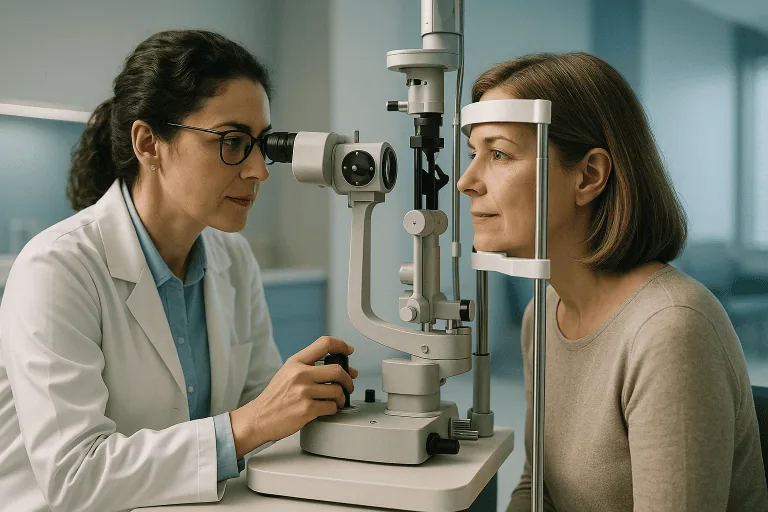
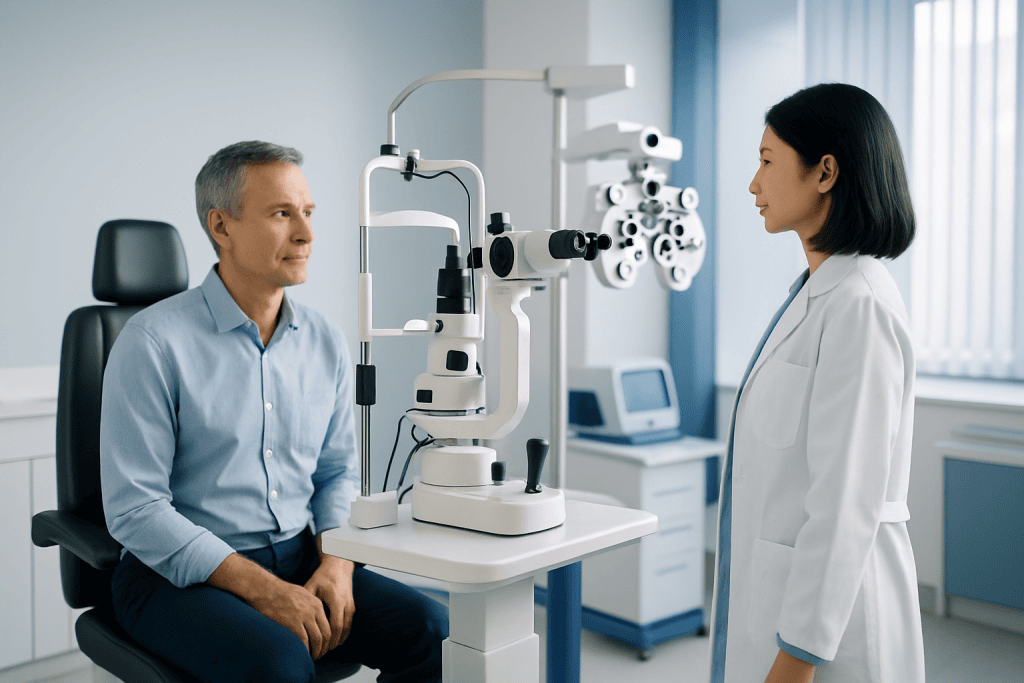
A cataract is diagnosed through a complete eye examination, not from symptoms alone. Your ophthalmologist checks visual acuity, measures eye pressure, examines the front and back of the eye, and evaluates the lens using a slit-lamp microscope. The retina and optic nerve are also assessed, because their condition influences both lens selection and the visual improvement you can realistically expect. If surgery is being planned, additional measurements are taken to calculate the power of the intraocular lens: corneal curvature mapping, optical measurement of the eye’s length, assessment of astigmatism, and retinal imaging where the back of the eye needs closer evaluation.
Several factors increase the likelihood of cataract development or earlier progression:
- Age, the single most common factor
- Diabetes
- Long-term corticosteroid use
- Previous eye injury or eye inflammation
- High myopia (severe short-sightedness)
- Smoking
- Significant ultraviolet light exposure
- Previous eye surgery
Cataracts can also be congenital, meaning present from birth. The surgical approach and timing for children are quite different from adult cataract care and require specialised paediatric ophthalmic evaluation; nothing on this page should be read as guidance for childhood cataract.
Conditions and Indications Cataract Surgery Addresses
Cataract surgery is performed when clouding of the natural lens reduces vision or quality of life. The most common indication is age-related cataract, which develops gradually over time. Surgery may also be recommended for cataracts related to diabetes, eye trauma, previous inflammation, medication exposure or earlier eye procedures. In some cases, removing a cataract is necessary for a different reason: the cloudy lens blocks the doctor’s view of the retina, delaying the diagnosis or treatment of conditions such as diabetic retinal disease, macular degeneration or retinal tears. Clearing the lens restores that view.
Here the honest limits matter. Cataract surgery corrects vision problems caused by the cloudy lens itself. It does not treat diseases of the retina, optic nerve or brain. If vision loss is partly due to glaucoma, macular degeneration or diabetic retinopathy, surgery may improve the cataract-related portion of the problem, but the final result depends on the underlying health of the eye. This is precisely why detailed preoperative evaluation is essential, and why a responsible surgeon will sometimes temper expectations before operating rather than after.
For some patients, cataract surgery also offers an opportunity to reduce dependence on glasses through careful intraocular lens selection. This is not the same as cosmetic refractive surgery, and the priority remains safe removal of the cataract and stable visual function. When the eye is otherwise suitable, however, advanced lens options can address astigmatism, distance vision, intermediate vision or reading needs. That decision belongs at the end of a balanced discussion of benefits, limitations and possible visual effects such as halos or reduced contrast in certain lighting.
How Cataract Surgery Is Performed
Cataract surgery begins well before the day of the operation. A thorough preoperative assessment confirms the diagnosis, identifies any other eye conditions, calculates the lens implant and shapes the safest surgical plan. You will be asked about medications, allergies, previous eye surgery, general health and the visual tasks that matter most to you. If you wear contact lenses, you may need to leave them out for a period before measurements so the corneal surface can stabilise; lenses subtly mould the cornea, and measuring a moulded cornea can throw off the lens calculation.
Accuracy at the measurement stage matters because it determines how well the eye focuses afterwards. Dry eye, corneal scarring or irregular astigmatism can distort readings, and treating surface inflammation or repeating measurements is sometimes necessary before the final lens is chosen. Slower here usually means better later.
Decisions about medicines around surgery, including blood thinners and diabetes treatments, are made by your treating doctors based on your medical history and the anaesthesia plan. These decisions are individual, and they are never something to work out on your own from a web page.
On the day of surgery, the eye is cleaned and sterile drapes are placed around the surgical area. The eye is numbed with anaesthetic drops or a small local injection. Light sedation may be offered when appropriate, particularly for patients who feel anxious; general anaesthesia is rarely needed for adults. During the operation many patients notice pressure, light and movement, but the anaesthetic is intended to prevent sharp pain, and you can tell the team at any point if something feels wrong.
The operation itself follows a well-defined sequence:
- The surgeon creates a very small incision at the edge of the cornea.
- Through this opening, a circular opening is made in the front of the lens capsule: the thin natural membrane that holds the lens.
- The cloudy lens is softened and broken into tiny fragments, most often with ultrasound energy in a technique called phacoemulsification, and the fragments are gently removed.
- The lens capsule is preserved wherever possible, because it provides a stable pocket for the new lens.
- The folded intraocular lens (IOL) is inserted through the same small incision and unfolds into position inside the capsule.
- The incision is usually self-sealing and often needs no stitches.
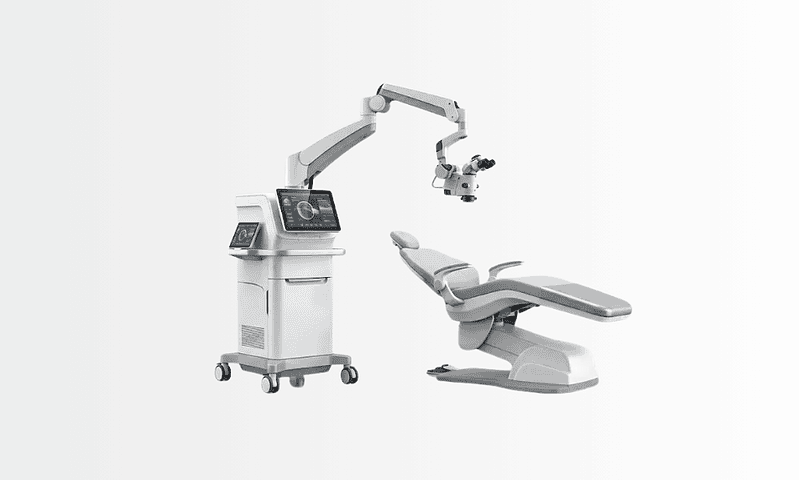
Modern cataract surgery depends on precise visualisation: high-quality operating microscopes, delicate microsurgical instruments, accurate lens calculation systems and preoperative imaging that maps the eye in detail. In selected patients, laser-assisted steps may be used for parts of the procedure, such as creating corneal incisions, opening the capsule or pre-softening the cataract. These technologies do not replace the surgeon’s judgment; they support planning and precision where clinically appropriate, and they are not automatically better for every eye.
How long does cataract surgery take?
The operation itself usually takes well under an hour, and in straightforward cases the time in theatre is often around twenty to thirty minutes. Your total time at the hospital or clinic is considerably longer, typically a few hours, because of preparation, dilating drops, anaesthesia and postoperative observation. Dense cataracts, small pupils or previous eye surgery can lengthen the procedure, which is one more reason the preoperative assessment matters: the surgeon plans for complexity rather than discovering it mid-operation.
How long between cataract surgery on each eye?
When both eyes need surgery, most surgeons operate on one eye first and treat the second after the first has begun to heal, commonly an interval of several days to a few weeks, individualised to the patient. The gap allows the team to check the visual result of the first eye and refine the lens calculation for the second if needed. When healing runs smoothly in the first eye, the second operation can often be scheduled promptly; when questions remain, about pressure, inflammation or the refractive result, a longer gap gives clearer answers. In carefully selected situations, some centres perform both eyes within a shorter window. There is no single correct interval; the surgeon’s recommendation and your recovery set the pace.
Choosing an Intraocular Lens
The intraocular lens stays in your eye permanently, so its selection deserves as much attention as the operation itself. There are several broad categories. A monofocal lens provides clear focus at one main distance, most often set for distance vision, with glasses used for reading or close work. Toric lenses add correction for astigmatism, the irregular corneal curvature that blurs vision at every distance. Multifocal, trifocal and extended-depth-of-focus lenses aim to reduce dependence on glasses across more than one distance in carefully selected patients.
No lens type suits everyone, and the trade-offs are real. Multifocal designs split incoming light between focal points, which can produce halos around lights at night or a subtle drop in contrast that some people notice and others never do. A monofocal lens gives excellent clarity at its chosen distance but leaves you reliant on glasses for other ranges. Dry eye disease, irregular astigmatism, glaucoma and retinal disease can all make certain lens types unsuitable, and previous laser vision correction complicates the calculation itself.
The best lens choice therefore depends on the shape and length of your eye, the presence and pattern of astigmatism, the condition of your retina and optic nerve, your lifestyle and expectations, and your tolerance for visual side effects. A patient who drives long distances at night has different priorities from someone who spends hours reading or at a computer. A good surgeon will tell you not only what a lens can do, but what it cannot, and will sometimes recommend the simpler option over the more expensive-sounding one because it fits your eye better.
Why Timing Matters and the Risks of Delay
Cataracts do not usually require urgent surgery, but waiting too long carries its own costs. As a cataract progresses, vision may decline to the point where driving, reading medication labels, navigating stairs or recognising faces becomes genuinely difficult. Reduced contrast and depth perception increase the risk of falls, particularly in older adults, and falls in this age group are not a small matter.
Delay also affects independence and mood in quieter ways. Many patients gradually stop driving at night, avoid social occasions or feel less confident in unfamiliar places. Because cataracts progress slowly, these limitations can be absorbed as “normal ageing” even when treatment could restore useful function.
From a surgical perspective, very dense cataracts require more ultrasound energy and more time to remove. That places extra stress on the eye’s internal tissues, particularly the cornea, and can lengthen recovery. Advanced cataracts can also block the surgeon’s view of the retina, delaying the diagnosis of other eye disease behind them. In certain cataract types, swelling of the lens can contribute to pressure problems or inflammation inside the eye, although this is less common. None of this means surgery should be rushed; it means the decision should be made deliberately rather than postponed indefinitely.
Benefits of Cataract Surgery
The benefits of cataract surgery are best understood in terms of daily function, safety and visual clarity rather than test results alone.
| Benefit | What It Means for You |
|---|---|
| Clearer vision | Removing the cloudy lens allows light to reach the retina more clearly, often improving reading, distance vision and recognition of details. |
| Reduced glare and better contrast | Many patients find bright lights, sunlight and night driving less visually disturbing after healing, depending on the eye’s overall health. |
| Improved daily independence | Better functional vision can make activities such as cooking, walking outdoors, using digital devices and reading labels easier and safer. |
| Opportunity for personalised lens correction | The intraocular lens can be selected to match your eye measurements and lifestyle, with options that may address distance vision, astigmatism or multiple focal ranges in suitable candidates. |
| Improved monitoring of other eye conditions | After a dense cataract is removed, the retina and optic nerve can often be examined more clearly, helping ongoing care for conditions such as diabetes-related eye disease or glaucoma. |
Recovery After Cataract Surgery
Recovery is usually straightforward, but healing varies with the density of the cataract, the condition of the eye and the type of lens implanted. The timeline below reflects a typical, uncomplicated course; your own surgeon’s instructions always take precedence over any general schedule.
| Time Period | What Patients Can Expect |
|---|---|
| Day 1 | The eye may feel mildly scratchy, watery or sensitive to light. Vision may be blurry or seem brighter than before. A postoperative check may be performed to assess pressure and early healing. |
| First week | Vision often improves noticeably, although day-to-day fluctuation is common. Prescription drops are used as directed. Rubbing the eye, swimming and heavy exertion should be avoided. |
| First month | Inflammation continues to settle and vision becomes more stable. Many patients resume most normal activities with their surgeon’s approval. Glasses may be updated once healing is sufficient. |
| Longer term | The intraocular lens remains in place permanently. Some patients later develop clouding of the lens capsule, which can be treated with a brief laser procedure if it affects vision. |
What to do immediately after cataract surgery?
Immediately after cataract surgery, the essentials are rest, drops and protection. A clear shield is usually placed over the eye, and you will be asked to wear it as instructed, often at night for the first days, to prevent accidental rubbing during sleep. You go home the same day, accompanied by a family member, friend or coordinator, because you cannot drive yourself. Prescribed anti-inflammatory and anti-infection drops start according to the schedule you are given, and using them correctly is one of the most useful things you can do for your own result. Keep water, soap, dust and cosmetics away from the eye in the early days, and avoid rubbing it entirely. Light walking and quiet indoor activity are usually fine from the first day; strenuous effort is not.
How long after cataract surgery can you bend over?
Most surgeons advise avoiding bending deeply at the waist, head below heart level, for roughly the first few days to a week after surgery, because it briefly raises pressure inside the eye while the small incision is still sealing. Everyday movements such as sitting down, tying shoes carefully or picking something up by bending the knees are generally acceptable much sooner. The exact restriction varies with the individual eye and the surgeon’s technique, so treat the guidance you are given at discharge as the final word rather than any general rule.
How long does it take for vision to stabilize after cataract surgery?
Vision usually begins to stabilize within the first days and settles progressively over several weeks after cataract surgery. Many patients notice meaningful improvement within a day or two, but fluctuation in the first week or two is normal as inflammation resolves and the eye adjusts to the new lens. A final glasses prescription is typically issued once the surgeon judges the eye stable, often around four to six weeks after surgery, and later if healing runs slowly. If the second eye is being operated on, some visual imbalance between the eyes in the interim is common and expected.
When can you fly after cataract surgery?
Many patients are able to fly within days of uncomplicated cataract surgery, but the decision belongs to the operating surgeon, who knows how the eye is healing and whether any pressure or inflammation issues need watching first. Cabin pressure itself is rarely the main concern after standard cataract surgery; the practical questions are access to follow-up, drop schedules across time zones and protecting the eye during travel. We cover the details, including how cataract surgery differs from other eye procedures in this respect, in two dedicated guides: Flying After Cataract Surgery: When Is It Safe to Fly? and Flying After Eye Surgery: LASIK, Retinal Laser and Cataract Compared.
Risks and Possible Complications
Cataract surgery is a well-established procedure with a strong safety record, but it is still surgery on the eye, and honest information includes what can go wrong. Serious complications are uncommon; minor and temporary effects are not. Before discharge, the surgical team walks through what the normal course of healing looks like and how the follow-up schedule is structured, so that anything outside that course can be recognised and managed early.
What are the most common problems after cataract surgery?
The most common problems after cataract surgery are minor and temporary: a gritty or scratchy sensation, watering, light sensitivity, mild redness and fluctuating vision during the first days. Dry eye symptoms can flare for a period, and some patients notice glare, halos or unexpected reflections while the eye and brain adapt to the new lens, more often with multifocal designs. The most common later issue is posterior capsule opacification, a clouding of the natural membrane behind the implant that can develop months or years after surgery; if it blurs vision, it is treated with a brief outpatient laser procedure. Less common but more serious complications include infection inside the eye, significant inflammation, raised eye pressure, swelling of the retina’s central area, retinal detachment and problems with lens position. Your surgeon will discuss how these risks apply to your particular eye, because they are not the same for everyone.
What is the downside of getting cataract surgery?
The main downsides of cataract surgery are that it carries the risks of any intraocular operation, that the visual result depends on the health of the rest of the eye, and that lens choice involves trade-offs rather than perfection. Surgery removes the cataract permanently, a cataract cannot grow back, but it cannot repair a damaged retina or optic nerve, and it cannot promise freedom from glasses unless the eye, the measurements and the lens design all cooperate. Some patients still need glasses for reading or fine tasks; some notice night-time halos with certain lens types; a small number need further treatment for complications or residual refractive error. Weighing these downsides against steadily worsening vision is exactly the conversation to have with your ophthalmologist before choosing a date.
Factors That Influence a Good Result
Cataract surgery has a strong record of improving vision for appropriately selected patients, but the final result depends on several medical and personal factors, and it is worth understanding them before surgery rather than after.
The health of the retina and optic nerve comes first. If the cataract is the only significant problem, the potential for improvement is generally higher. If there is glaucoma, macular degeneration, diabetic retinopathy, corneal disease or a history of retinal surgery, the outcome may be more limited or may require additional treatment alongside the cataract operation.
Measurement accuracy comes second. Dry eye, recent contact lens wear, corneal scarring and irregular astigmatism can all distort the readings used to calculate the intraocular lens. Treating the ocular surface or repeating measurements before final lens selection reduces the risk of an unexpected refractive result: a focus outcome different from the one planned.
Surgical complexity is a third factor. Dense cataracts, small pupils, weak support structures around the lens, previous eye trauma, high myopia and certain medications can make the operation more demanding. Experienced surgeons plan for these variables in advance and may use additional techniques or devices to protect the eye. This is why full disclosure matters: tell the team about all your medical history, eye history and medications, even details that seem unrelated.
Postoperative care completes the picture. Using drops correctly, attending follow-up visits and reporting symptoms promptly allow the team to detect and manage issues early. General health also plays a role: diabetes, immune system disorders and uncontrolled inflammation can affect healing, and good communication between the ophthalmology team and your other physicians is particularly important if your medical situation is complex. Follow-up visits check eye pressure, incision healing, inflammation and lens position, brief appointments that carry real weight in the overall result.
Cost and Insurance Questions
Cost is one of the most searched questions about this operation, and the honest answer is that there is no single number that applies to everyone. What can be explained clearly is what drives the price and how insurance systems typically treat it.
How much does cataract surgery cost?
The cost of cataract surgery depends on a set of identifiable factors rather than a fixed tariff. The largest variables are the type of intraocular lens (standard monofocal lenses sit at one end, toric and multifocal or extended-depth designs at the other), whether one eye or both eyes are treated, the surgical technique and any laser-assisted steps, the depth of the preoperative diagnostic work-up, the hospital or clinic setting, the surgeon’s experience, anaesthesia arrangements, and the extent of postoperative medication and follow-up included. The country and even the city where you are treated also matter. Because these variables interact, a meaningful figure only exists after an examination and a lens decision, any number quoted before that is a guess dressed up as a price. When comparing quotes from any provider, ask precisely what is included: the lens type by name, both eyes or one, all follow-up visits, drops and the management of any early complications.
Does health insurance cover cataract surgery?
Most national health systems and private insurers cover cataract surgery when it is medically necessary, that is, when the cataract genuinely impairs vision, including the standard monofocal lens implant. Whether your plan pays in your specific case depends on documentation of medical necessity and the plan’s rules, and premium lens options such as toric or multifocal implants, along with certain elective laser-assisted steps, are typically paid out of pocket as upgrades. Domestic public schemes generally do not cover planned, elective treatment received abroad, and the sensible step is always to confirm coverage in writing with the payer before committing to any surgery, anywhere.
Cataract Surgery at Acibadem
At Acibadem, cataract care is built around careful diagnostic evaluation before any surgical date is discussed. Detailed eye measurements support intraocular lens calculation; corneal mapping assesses astigmatism and the regularity of the eye’s surface; retinal imaging looks for conditions that could limit vision after surgery. Operations are performed by experienced ophthalmologists using modern microsurgical systems, with laser-assisted techniques and advanced lens options considered where they are clinically appropriate for the individual eye, not as a default.
Multidisciplinary cooperation is available when a patient’s wider health requires it. People with diabetes, cardiovascular disease or neurological conditions can be assessed with the relevant specialists before surgery, and complex eye findings can be reviewed with subspecialists in retina, cornea or glaucoma. Previous eye reports, current glasses prescriptions, contact lens history and medication lists all feed into the plan, which is why the evaluation stage is treated as unhurried rather than a formality.
Follow-up is treated as part of the operation rather than an afterthought. The early postoperative checks, the timing of surgery on each eye and the point at which normal activities can resume are mapped out before the first procedure, so patients know what the weeks after surgery will look like. Eye pressure, incision healing, inflammation and lens position are reviewed at each visit, and any adjustment to the drop schedule is made on the basis of what the examination shows rather than a fixed template.
Seeing Clearly Again
Cataracts make the world dimmer, softer and less predictable, usually so gradually that the loss goes unnoticed until it is measured. For many people, cataract surgery offers a reliable path back to useful, comfortable vision once glasses can no longer compensate. The best results start long before the operating theatre: with an accurate diagnosis, precise measurements, a lens chosen for your eye and your life rather than a catalogue, and an honest conversation about what surgery can achieve and where its limits lie. Armed with that understanding, the decision about whether and when to proceed becomes far less daunting: a considered choice rather than a leap.
Preparation
- Before cataract surgery, an ophthalmologist performs a detailed eye examination and lens measurements to select the appropriate intraocular lens. Patients may be asked to stop certain medications, use prescribed eye drops, and avoid eating or drinking for a short period if sedation is planned. Arrange transportation home after the procedure.
Aftercare
- After surgery, patients use prescribed eye drops and may wear an eye shield to protect the operated eye. Avoid rubbing the eye, heavy lifting, swimming, and dusty environments until cleared by the doctor. Follow-up visits are important to monitor healing and vision improvement.
Frequently Asked Questions
What affects the cost of cataract surgery?
The main factors are the type of intraocular lens, the complexity of the cataract, diagnostic testing, hospital and surgeon fees, anaesthesia needs, medications and follow-up arrangements. Travel, accommodation and interpreter support may also affect the overall budget for international patients.
How can I get a personalised quote from Acibadem?
You can request a free consultation and share your eye reports, current vision prescription, previous surgery history and any relevant medical information. An ophthalmology team can then advise what examinations are needed and prepare a personalised treatment plan and quote.
Is a premium lens always the best choice?
No. Premium lenses can be helpful for selected patients, but suitability depends on eye measurements, lifestyle, astigmatism, retinal health, corneal condition and expectations. The ophthalmologist will recommend an option after a detailed assessment.
What is usually included in a cataract surgery package?
Package contents vary, but may include the ophthalmology consultation, preoperative eye measurements, the procedure, selected medications guidance and planned follow-up. It is important to ask whether lens upgrades, extra tests, additional consultations and travel services are included.
Will I need to stay in Turkey after cataract surgery?
Cataract surgery is commonly performed as an outpatient procedure, but follow-up timing depends on your eye condition and the surgeon’s plan. International patient coordinators can help organise appointments and explain travel timing after the specialist assessment.
Medically reviewed by the Acıbadem International Medical Board September 13, 2026
See our medical review board →
Update history
- PublishedJune 8, 2026
- Medical review approvedSeptember 13, 2026
- Last content updateSeptember 12, 2026
References1
- Cataract surgery nhs.uk
Planning tools for this treatment
Indicative figures for orientation only: your written plan and quote follow a free medical review.
Trusted care for international patients
Compare options, costs and recovery
Cataract surgery costsledger-based guide ranges, or browse the full Turkey Medical Price Index.
From the Acibadem Blog
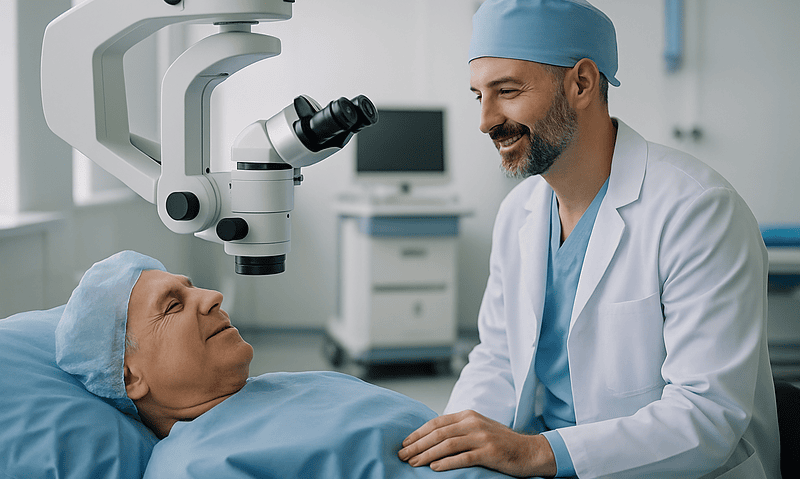
What Happens in the Operating Room During Cataract Surgery, Minute by Minute
During cataract surgery, a surgeon numbs the eye with drops or a small injection, makes an incision of a few millimeters at the edge…

Cloudy Vision Months After Cataract Surgery: Why It Happens and How It Is Treated
Cloudy vision that returns months after cataract surgery is most often posterior capsule opacification, a haze that forms on the thin membrane holding the…

Laser-Assisted vs Conventional Cataract Surgery: Where the Differences Actually Lie
Laser-assisted and conventional cataract surgery remove the cloudy lens and replace it with an artificial one; the laser automates the opening incisions and softens…

Is Cataract Surgery Painful? Numbing Drops, Sedation and What You Actually Feel
Cataract surgery is not usually painful. The eye is numbed with anesthetic drops or gel, sometimes with a small injection around the eye, and…