Invisalign
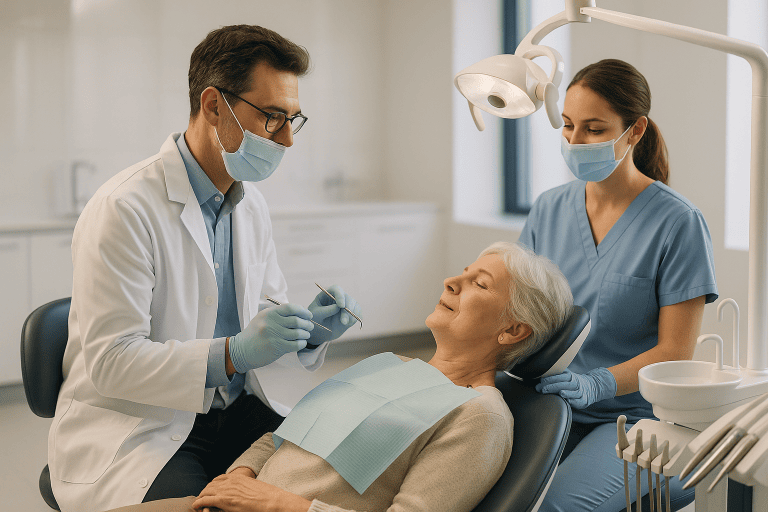
Invisalign uses custom clear aligners to gradually straighten teeth without fixed metal braces. It is a removable, discreet orthodontic option planned with digital dental assessment.
Quick answer
Invisalign is an orthodontic treatment that straightens teeth using a planned series of custom-made clear plastic aligners. Each aligner applies gentle, controlled pressure to move specific teeth in stages, following a digital treatment plan. The trays are removable for eating and cleaning and are worn for most of the day. Treatment length depends on case complexity, and retainers are needed afterwards to hold the result.
Invisalign: a clear, removable route to straighter teeth
Invisalign is an orthodontic treatment that straightens teeth using a planned series of custom-made, transparent plastic aligners. Each aligner applies gentle, controlled pressure to specific teeth according to a digital treatment plan, moving them in small, deliberate stages. It suits adults and teenagers with many mild to moderate alignment problems, and some more complex cases, when carefully planned, who want an alternative to fixed metal braces.
The appeal is practical as much as cosmetic. Because the aligners are removable, you eat normally and brush and floss without working around wires or brackets. Because they are clear, they are far less noticeable than conventional braces in most everyday situations, in meetings, on camera, in photographs. For adults in public-facing work and for teenagers who would rather not announce their treatment, that discretion matters. It is one of the main reasons Invisalign has become the most searched-for name in adult orthodontic treatment.
Alignment is not only about appearance. Crowded, rotated, spaced or poorly fitting teeth can be harder to clean, create areas where plaque accumulates, contribute to uneven tooth wear and, in some cases, affect the bite, jaw comfort and the long-term stability of the teeth. Straightening teeth at the right time can protect oral health as well as improve the look of the smile.
If you are weighing up Invisalign in Turkey against treatment at home, the decision has an extra layer: aligner treatment runs over months, not days, so follow-up and monitoring have to be planned before you commit, not improvised afterwards. This page explains what Invisalign is, how it works, who it suits, what shapes the cost, and what an international care pathway realistically involves, including its limits.
What is Invisalign?
Invisalign is an orthodontic system that moves teeth gradually using a sequence of clear plastic trays, each one slightly different from the last. The aligners are designed for each patient after a digital dental assessment. They fit over the teeth like thin, transparent shells and are worn for most of the day and night, removed only for meals, for drinking anything other than water, and for brushing and flossing. As treatment progresses, you change to the next aligner in the sequence on the schedule your orthodontist sets. Invisalign is best understood as professional orthodontic treatment, not a cosmetic accessory: the quality of the result depends on accurate diagnosis, sound planning, consistent wear and regular monitoring, not on the plastic alone.
What are clear aligners?
Clear aligners are thin, transparent orthodontic trays that move teeth without fixed brackets or wires; Invisalign is the best-known brand of clear aligner system, made by Align Technology. All aligner systems work on the same principle, staged, incremental tooth movement guided by a digital plan, but they differ in materials, planning software, the range of movements they can control and, most importantly, the experience of the clinician directing them. An aligner can only move teeth safely and predictably when the gums, bone support, bite relationship and any existing dental work have been properly evaluated first. That evaluation is the part no brand can supply.
How does Invisalign work?
Invisalign works by applying light, continuous pressure to selected teeth through a series of trays, each shaped slightly ahead of the teeth’s current position. The pressure stimulates the bone around the tooth root to remodel, bone is gradually removed on one side of the root and rebuilt on the other, which is how any orthodontic appliance moves teeth. Each tray nudges specific teeth a fraction of a millimetre so that, stage by stage, they align with the planned final position.
The staging is designed digitally. A three-dimensional model of your teeth lets the clinician map every movement in sequence: which teeth move first, which serve as anchors, where space must be created and how the upper and lower arches should coordinate. The software proposes a plan; the treating clinician reviews and adjusts it against biological limits, bite function and facial aesthetics. This review is where clinical judgement earns its keep: an unedited software plan is not a treatment plan.
In many cases, small tooth-coloured attachments are bonded temporarily to selected teeth. These give the aligners grip for movements a smooth tray cannot manage alone, such as rotating a canine or controlling the tipping of a root. They are removed at the end of treatment. Some patients also need interproximal reduction, the careful, conservative slimming of contact points between teeth, to create space when crowding is present. In selected cases, small elastics are added to help correct the bite. Each of these decisions is made against your specific anatomy, not applied by default.
Two things follow from this mechanism. First, teeth move through living bone and gum tissue, so safe treatment respects biological pace; be cautious of anyone promising dramatically shortened timelines without explaining how. Second, the trays only work while they are on your teeth, which is why wear time, covered below, is the single factor most within your control.
Who is Invisalign for?
Invisalign is considered by people with a wide range of concerns, from cosmetic to functional. Some feel self-conscious about crowded front teeth or gaps that show when they smile. Others notice their bite has changed over time, that lower front teeth are becoming progressively more crowded, or that teeth straightened years ago with braces have drifted back. Some have no symptoms at all but want alignment corrected before restorative work, veneers, crowns, implants or composite bondingso that later treatment can be more conservative.
Typical signs that lead people to seek assessment include:
- Overlapping, rotated or crowded teeth
- Visible gaps or spacing between teeth
- An uneven smile line or protruding front teeth
- A bite that does not feel balanced, or uneven wear on tooth edges
- Difficulty flossing certain contact points
- Relapse after previous orthodontic treatment
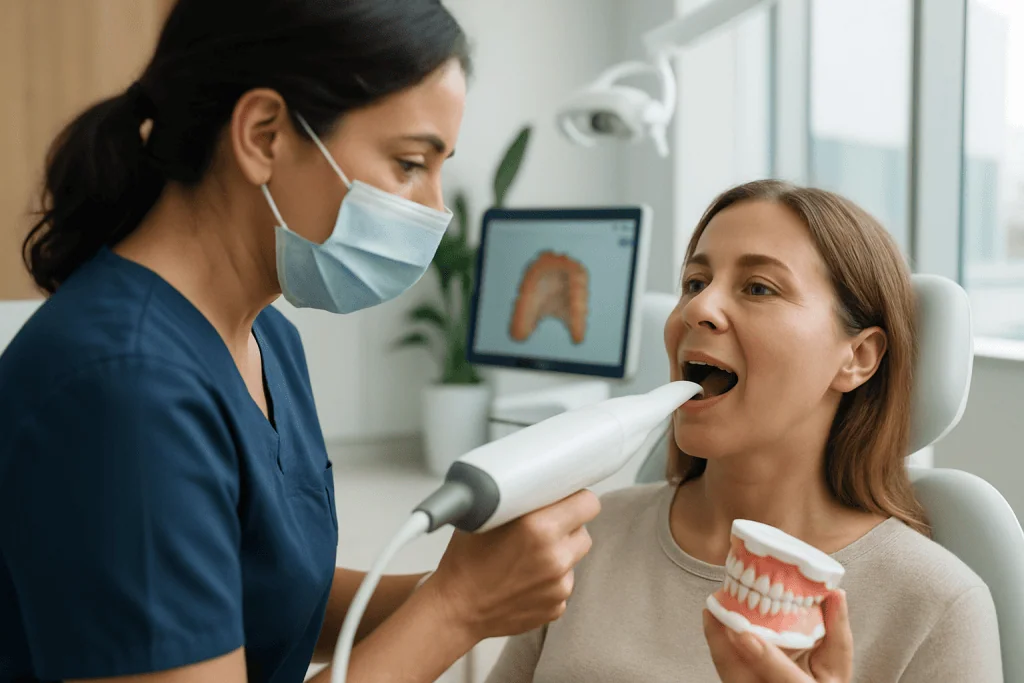
Diagnosis begins with a comprehensive dental and orthodontic examination. The clinician evaluates tooth position, jaw relationship, bite function, gum health, tooth wear, previous dental work and any signs of jaw-joint concerns. Digital scans or impressions capture the shape and position of the teeth. X-rays may be needed to assess roots, bone levels, impacted or missing teeth and other structural issues invisible to a visual exam. Photographs are usually taken to analyse the smile and facial balance from several angles.
Not everyone is a good candidate, and it is better to hear that at the assessment than a year into treatment. Clear aligners handle many mild to moderate problems well, and some complex cases when expertly staged. But severe skeletal jaw discrepancies, major bite correction, certain impacted teeth, significant rotations and complex vertical movements may be treated more predictably with fixed braces, combined approaches or surgical orthodontic planning. The right treatment is determined by diagnosis, not preference.
Commitment matters as much as anatomy. Because the trays are removable, they only work when worn as prescribed. Patients who frequently leave aligners out, forget them or drift from the schedule get slower progress and less predictable results. For teenagers, this means reliable cooperation is part of the candidacy assessment. For international patients, it also means travel timing and follow-up availability belong in the treatment plan from day one.
Conditions Invisalign can address
Invisalign is used across much of the standard scope of orthodontics: crowding, spacing, relapse after earlier treatment, and selected bite irregularities such as overbite, underbite, crossbite and open bite. Whether aligners are suitable depends on the type and size of movement required and whether the teeth and supporting tissues can respond safely.
Crowding occurs when the dental arch lacks space for teeth to sit in line, so they overlap, twist or erupt outside the natural curve of the smile. Crowded areas are harder to clean, which raises the risk of plaque build-up and gum inflammation. Invisalign can often resolve crowding through a combination of planned arch development, staged tooth movement and selective space management.
Spacing means visible gaps between teeth. Some spacing relates to tooth size, missing teeth, gum conditions, habits or jaw proportions. Closing spaces can improve aesthetics and reduce food trapping, but the cause matters. If gum disease, a tooth-size mismatch or missing teeth are involved, orthodontic movement needs coordinating with periodontal, restorative or implant dentistry rather than treated in isolation.
Bite problems concern how the upper and lower teeth meet. An overbite is excessive vertical overlap of the front teeth. An underbite means the lower teeth sit ahead of the upper teeth. A crossbite means some upper teeth bite inside the lower teeth rather than outside them. An open bite is present when upper and lower teeth fail to contact properly, often at the front. Invisalign can help selected bite issues, but complex bite correction demands careful diagnosis and honest expectation-setting; some bites need more than aligners.
Invisalign also plays a role in interdisciplinary care. Teeth may be aligned before implant placement so there is adequate space for the replacement tooth. Alignment before cosmetic dentistry can spare healthy enamel that would otherwise be cut away to disguise a crooked position. In patients with uneven wear, improving the bite can distribute chewing forces more evenly. At Acibadem, these plans can draw on orthodontists, restorative dentists, periodontists and oral surgeons when a case genuinely needs more than one specialty.
The Invisalign process, step by step
Treatment follows a defined sequence. The details vary by case, but the structure does not:
- 1. Consultation and records. The clinician reviews your concerns and medical and dental history, then examines teeth, gums, bite, jaw function and smile characteristics. If aligners look appropriate, diagnostic records are taken: digital intraoral scans, photographs, panoramic or cephalometric X-rays and bite registration.
- 2. Digital planning. A three-dimensional model is used to stage every movement. The clinician edits the software’s proposal against your biology and goals, then approves a final plan showing how the teeth are expected to shift over time.
- 3. Fitting. Your aligners are manufactured to the approved plan. At the fitting visit, the clinician checks how the first trays seat, bonds any planned attachments and shows you how to insert, remove, clean and store the aligners.
- 4. Daily wear. You wear each aligner for the prescribed hours per day, removing it for meals, staining drinks and oral hygiene, and change to the next tray on schedule.
- 5. Monitoring. Follow-up visits confirm the trays fit properly, the teeth are tracking as planned and attachments remain secure. If a tooth is not moving as expected, the plan is refined rather than left to drift.
- 6. Refinement. At the end of the initial series, the result is evaluated. Many cases need refinement aligners: an additional short series to fine-tune positions. This is normal, not a failure.
- 7. Retention. Once goals are achieved, attachments are removed and retainers are prescribed. Teeth naturally tend to shift throughout life, so a long-term retainer plan is what protects the result you paid for.
How long does Invisalign take?
Treatment length depends on the complexity of the movements, not on the brand of tray: minor corrections may take a matter of months, while comprehensive cases commonly run a year or more. Refinement aligners, if needed, extend the timeline further, and inconsistent wear extends it more than anything else. Be wary of quotes that name a finish date before anyone has examined your teeth: an honest estimate follows diagnosis, comes with a stated range, and explains what could lengthen it. Teeth move through living bone, and that biology sets the floor on speed regardless of what marketing suggests.
Does Invisalign hurt?
Expect pressure and mild soreness, particularly for the first day or two of each new aligner: this is the feeling of teeth actively moving, and it typically settles as the tray takes effect. Speech may feel slightly different at first; most people adapt within days as the tongue gets used to the trays. Because there are no metal brackets, irritation to cheeks and lips is generally less frequent than with fixed braces, though an aligner edge occasionally needs smoothing by the clinic. What you should not expect is severe or worsening pain; that is something to raise with your treating clinician rather than push through.
Why acting early matters
Orthodontic problems are rarely urgent, but they are rarely static either. Crowding tends to worsen with age, especially in the lower front teeth. Hard-to-clean areas quietly contribute to gum inflammation and decay. An unbalanced bite can produce uneven wear, chipping, sensitivity and stress on existing restorations. Shifting teeth can complicate future crowns, bridges, veneers or implants.
Early assessment does not mean immediate treatment: it means knowing what is happening and choosing the timing deliberately. For teenagers, evaluation clarifies whether growth, eruption patterns or a developing bite problem should simply be monitored. For adults, it can surface gum health concerns, bone support limits or restorative needs that must be addressed before any tooth moves. This matters most for patients with previous periodontal disease, missing teeth or extensive dental work.
Delay can also narrow your options. Active gum disease must be controlled before aligner therapy, because moving teeth through infected tissues adds risk. Severe wear or bite collapse, left long enough, can require broader rehabilitation than orthodontics alone. Assessed earlier, the same problem is often simpler, more conservative and cheaper to treat well.
Benefits of Invisalign treatment
The benefits are both aesthetic and practical, but every one of them is conditional on correct diagnosis, a sound plan and your own consistency in wearing the trays.
| Benefit | What It Means for You |
|---|---|
| Discreet appearance | Clear aligners are less visible than metal braces, which may be important for work, school, travel, or social settings. |
| Removable design | You can remove aligners for meals and oral hygiene, making it easier to maintain normal eating habits and clean your teeth thoroughly. |
| Digital treatment planning | A three-dimensional plan helps your clinician map tooth movement, anticipate challenges, and discuss expected changes before treatment begins. |
| Improved alignment | Straighter teeth may be easier to clean, may reduce plaque-retentive areas, and can improve the overall appearance of the smile. |
| Potential bite improvement | In suitable cases, Invisalign can help improve how the teeth meet, which may reduce uneven wear or functional strain. |
| Comfort in daily life | Because there are no fixed brackets or wires, many patients find clear aligners easier to adapt to, although temporary pressure is expected. |
Adjustment and treatment timeline
Invisalign involves no surgical recovery, but there is a genuine adjustment period as the teeth begin to move and your daily routine changes around the trays.
| Time Period | What Patients Can Expect |
|---|---|
| Day 1 | The first aligners are fitted and checked. You may feel pressure on the teeth, and speech may feel slightly different at first. |
| First Week | Most patients adapt to inserting, removing, and wearing the aligners. Mild soreness can occur, especially after changing to a new aligner. |
| First Month | Daily wear becomes more routine. Follow-up may confirm that the aligners are tracking properly and that attachments remain secure. |
| During Treatment | You change aligners as instructed, maintain careful oral hygiene, and attend monitoring visits. Refinements may be recommended if teeth need further adjustment. |
| Longer Term | After active treatment, retainers are used to maintain the result. Long-term retention is essential because teeth can shift over time. |
Invisalign cost: what actually shapes the price
Invisalign cost is one of the first things people research, and it is also where generic answers mislead most. No responsible clinic can price your treatment before examining your teeth, because the cost reflects the case, not the product name on the box. What follows explains what drives the price and what a complete quote should contain, so you can compare offers on substance rather than headline numbers.
How much does Invisalign cost?
There is no single price for Invisalign, because the cost depends on the complexity of your case and everything that surrounds the trays. The main drivers are: the number of aligners your plan requires, whether refinement aligners are likely, the diagnostic records needed (scans, X-rays, photographs), attachments and any interproximal reduction, the number of monitoring visits, the clinician’s experience, and the retainers you will need afterwards. Preliminary dental work, treating gum disease or decay before teeth can move, is a separate cost that a smile-focused quote may not mention. A quote worth trusting itemises all of this; a single round figure with no breakdown is a starting point for questions, not a price.
How much is Invisalign with insurance?
Whether insurance contributes depends entirely on your policy, so the honest answer starts with reading its orthodontic terms. Many dental plans treat adult orthodontics as elective and exclude it; others contribute up to a lifetime orthodontic limit; some cover treatment for teenagers but not adults. Policies also differ on whether treatment abroad is eligible at all. Before committing anywhere, it is worth obtaining your policy’s written orthodontic terms and asking the clinic for itemised documentation of diagnosis and planned treatment, since insurers generally require both to assess a claim.
How much does Invisalign cost in Turkey?
Invisalign pricing in Turkey works the same way as anywhere else: it is quoted per case after examination, and it varies between clinics and cities with the same drivers described above. What matters more than the headline number is what the quote includes. Ask specifically whether refinement aligners, retainers, attachments, all monitoring visits and any preliminary dental work are inside the quoted figure or billed separately: these are exactly the items that quietly change a total later. Two of our patient guides walk through this in detail: how to ask for a clear cost breakdown before treatment in Turkey, and how Acibadem explains possible additional costs if your treatment plan changes. A clinic that answers these questions in writing before you travel is telling you something useful about how it will behave afterwards.
Invisalign in Turkey for international patients
Most people start by looking for a provider close to home, and for good reason: aligner treatment is a months-long relationship with a clinician, not a single procedure. Travelling for it can still make sense, but only if the follow-up is designed before the first tray is fitted. Here is what a realistic international pathway looks like.
Is Invisalign available in Turkey?
Yes: Invisalign is widely available in Turkey, and Acibadem’s dental units provide it within the wider hospital group, alongside the periodontal, restorative and surgical specialties that complex cases sometimes need. Availability, however, is the easy part. The questions that actually decide whether treatment abroad works for you are about structure: how many in-person visits your case needs, and how monitoring happens between them.
A typical pathway for an international patient runs like this. On a first visit, you have the full examination and diagnostic records, digital scans, X-rays, photographs, bite analysis, and discuss the treatment plan, its expected length and its limits. Aligner manufacture takes time, so the fitting, attachment placement and wear instructions happen on a return visit or an extended first stay, depending on scheduling. During the wear phase, progress between trips can be monitored remotely in suitable cases, often in coordination with a dentist near your home; Acibadem describes how this works in how we arrange remote follow-up with your local doctor. Key milestones, checking tracking, placing or adjusting attachments, starting refinements, removing attachments and fitting retainers, still need in-person appointments, and your travel plan should be built around them from the start.
Bring complete records if you have them: previous orthodontic history, recent X-rays, and details of gum treatment or restorations all shorten the diagnostic phase and improve the plan. Budget for the whole journey, not just the clinical fee, flights across multiple visits, accommodation and companion expenses add up over a treatment measured in months. Our guide to hidden costs patients often miss in a medical travel budget for Turkey covers the items people forget.
Two honest cautions. First, any offer to complete comprehensive orthodontic treatment in a single short trip, without a monitoring plan for the months that follow, deserves scepticism: the biology of tooth movement does not compress to fit a holiday. Second, if your case turns out to be one that aligners cannot treat predictably, a good clinic will say so at the assessment stage, even though that is not what a travelling patient hopes to hear.
Factors that influence a good Invisalign result
A successful outcome starts with the right diagnosis. Aligners are highly effective for well-selected cases, but the clinician must judge whether the desired movements are biologically and mechanically realistic for you. Root position, bone support, gum condition, bite relationship, tooth shape, missing teeth and previous dental work all set the boundaries of what can be achieved.
Compliance is the factor most within your control. Trays must be worn consistently for the prescribed hours. Left out for long stretches, teeth stop tracking, aligners stop fitting, and the timeline stretches. Frequent travellers should plan aligner changes, storage and cleaning into their routine deliberately rather than hoping habit carries them.
Oral hygiene carries real weight. Because the trays cover the teeth, anything trapped beneath them stays against the enamel, so brushing and flossing before reinserting matters, and frequent snacking or sugary and acidic drinks consumed with trays in place raise the risk of decay and enamel changes. Regular cleanings and periodontal monitoring are often recommended during treatment, particularly for adults with a history of gum disease.
Case complexity shapes predictability. Simple spacing and mild crowding respond more directly than deep bite correction, open bite closure, large rotations or major root movement. Attachments, elastics, interproximal reduction and refinement series exist precisely to improve control in harder cases, and in some, aligners are best combined with other orthodontic or restorative approaches rather than used alone.
Biology varies. Teeth move at different rates in different people, and while age alone does not rule out Invisalign, adult bone and gum conditions may demand more cautious staging. Active gum disease, untreated decay, poor hygiene or unstable restorations need addressing before aligners start, not during.
Finally, retention decides how long the result lasts. After active movement comes a stabilisation phase in which bone and soft tissue adapt to the new positions. Without retainers, relapse is the norm, not the exception. A personalised retainer plan, periodic checks and timely replacement of worn retainers are what keep the alignment you worked for.
Invisalign care at Acibadem
At Acibadem, Invisalign planning sits inside a broader dental and medical environment rather than a standalone aligner shop, and that changes what is possible when a case is not straightforward. Straightforward cases are managed primarily by the orthodontic team. When gum disease, missing teeth, jaw-joint symptoms, implants, complex restorations or facial aesthetic goals are part of the picture, planning can draw on periodontology, prosthodontics, oral and maxillofacial surgery and radiology as the case requires. Moving teeth without addressing inflammation, decay, bite instability or failing restorations compromises the result, coordination is how that is avoided.
The diagnostic pathway is digital where it helps and clinical where it counts. Intraoral scanning can capture precise three-dimensional records without traditional impression material in many cases; radiography evaluates roots, bone levels, impacted teeth and jaw relationships; photographs and bite analysis show the smile in motion, not just the teeth in isolation. None of this replaces clinical judgement: the technology supplies the aligners, but the clinician decides whether the plan is appropriate, how movement is staged, when refinements are needed and how the bite is finished.
For international patients, Acibadem International coordinates appointments, interpretation support and the practical scheduling that a months-long treatment across borders requires, so that in-person milestones and remote monitoring fit around your travel rather than the other way round.
Personalisation is the point of all of it, because two patients with similar-looking teeth can need entirely different plans. One patient’s spacing stems from small tooth size and needs restorative planning after alignment; another’s crowding relates to arch form and needs space management; a patient with previous gum disease needs periodontal stabilisation first; a patient heading towards veneers may benefit from alignment beforehand so tooth preparation can be more conservative. The best plan reflects the full clinical picture, and you are entitled to have that picture explained to you, including its uncertainties.
Before you decide: questions worth asking
Wherever you are treated, the quality of your Invisalign outcome is decided at the assessment stage, so it pays to interrogate the plan before you accept it. Align Technology maintains an official provider locator, the page many people find by searching for the Invisalign doctor site, which lists trained providers by location and is a reasonable starting point for verifying that a clinic genuinely offers the system.
Useful questions for any clinician proposing Invisalign for you:
- What exactly is my diagnosis, and which movements does the plan involve?
- Would fixed braces or a combined approach treat my case more predictably?
- How long is the estimated treatment, what is the realistic range, and what could extend it?
- Will I need attachments, elastics or interproximal reduction, and why?
- How likely are refinement aligners, and are they included in the quoted fee?
- What does the retainer plan look like, and for how long?
- If I live abroad, how will progress be monitored between visits, and which milestones require me in person?
- What preliminary dental work, if any, must be completed before aligners start?
A clinician who answers these directly, including the answers you would rather not hear, is showing you the same honesty that will govern your treatment. Clear aligners can be an excellent option for many adults and teenagers who want a discreet, removable way to straighten their teeth. Whether they are the right option for you is a matter of diagnosis, planning and follow-through, and a careful assessment is where that answer begins.
Preparation
- A dentist evaluates tooth alignment, bite, gum health, and overall oral condition before treatment. Digital scans, photographs, and X-rays may be taken to design the aligner plan. Cavities, gum disease, or other dental issues should be treated before starting Invisalign.
Aftercare
- Aligners are usually worn 20 to 22 hours per day and removed only for eating, drinking anything other than water, and oral hygiene. Teeth and aligners should be cleaned regularly, and scheduled follow-up visits help monitor progress. After treatment, retainers are typically needed to maintain the new tooth position.
Frequently Asked Questions
What affects the cost of Invisalign treatment?
Cost depends on case complexity, the treatment plan, provider expertise, clinic setting, whether refinements are needed and whether retainers and follow-up visits are included. A personalised quote can only be prepared after dental assessment and digital planning.
How can I get a personalised Invisalign quote from Acibadem?
You can request a free consultation and share your dental photos, existing scans or previous orthodontic records if available. The dental team can then advise whether an in-person assessment or additional imaging is needed before confirming a treatment plan.
Is Invisalign usually offered as a package for international patients?
Packages may include consultation, digital scanning, treatment planning, aligners and scheduled reviews, but inclusions vary by case. It is important to confirm whether refinements, retainers, emergency appointments, translations and travel support are part of the proposal.
Can I start Invisalign in Turkey and continue follow-up from my home country?
This may be possible for selected patients if the specialist considers remote monitoring appropriate and if review visits are clearly planned. Some cases still require in-person checks, attachments, refinements or additional dental procedures.
Why does the quote differ between clinics or countries?
Quotes may differ because of provider experience, clinic infrastructure, diagnostic methods, brand policies, follow-up schedules, what is included in the package and local private healthcare costs. Comparing inclusions is as important as comparing the headline fee.
Medically reviewed by the Acıbadem International Medical Board September 13, 2026
See our medical review board →
Update history
- PublishedJune 8, 2026
- Medical review approvedSeptember 13, 2026
- Last content updateSeptember 12, 2026
Planning this treatment in Turkey
Our English guides for international patients: costs, timelines, safety and travel.
Trusted care for international patients
Braces & Invisalign costsledger-based guide ranges, or browse the full Turkey Medical Price Index.
From the Acibadem Blog

How Clear Aligner Treatment Unfolds: From Scan to Attachments to Your First Trays
Clear aligner treatment usually unfolds in stages: an orthodontic examination and digital scan of the teeth, a computer-planned sequence of movements the clinician reviews…
Who Is a Candidate for Clear Aligners? Bite Types, Gum Health and Wear Commitment
Most people with mild to moderate crowding, spacing or bite problems, healthy gums and a full set of adult teeth can be considered for…

Who Is a Candidate for Clear Aligners? Bite Types, Gum Health and Wear Commitment
Clear aligners candidates are usually adults and teenagers with healthy gums, no untreated tooth decay, and mild to moderate problems such as crowding, gaps…
Before Clear Aligners Start: Digital Scans, Cavities to Treat and the Aligner Plan
Before starting clear aligners, an orthodontist or dentist usually completes a full dental exam, X-rays, photographs and a digital scan of both jaws. Any…

Invisalign Cost: What Aligner Pricing Includes and How Cases Are Tiered
A full clear-aligner (Invisalign) case falls between EUR 2,350 and 5,200 in our guide range for international patients, versus roughly GBP 3,000-5,500 in the…

Do Clear Aligners Hurt? Pressure After New Trays and How Discomfort Settles
Clear aligners usually cause pressure and tenderness rather than sharp pain. Most people notice it in the first day or two after switching to…