Pancreatic Cancer Treatment
Pancreatic cancer care combines accurate staging with personalized treatment such as surgery, chemotherapy, radiation therapy, targeted therapy or supportive care, depending on tumor stage and overall health.
Quick answer
Pancreatic cancer is a malignant tumour that starts in the pancreas, most often in the ducts that carry digestive enzymes. Treatment depends on stage and may combine surgery, chemotherapy, radiation therapy, targeted drugs and supportive care. The sequence is planned individually, based on imaging, biopsy results, tumour location and the patient's overall fitness.
Pancreatic Cancer: Understanding the Disease Before Choosing Treatment
Pancreatic cancer is a malignant tumour that begins in the pancreas, the gland that produces digestive enzymes and blood-sugar-regulating hormones such as insulin. Treating it means far more than a single operation or a single drug: it is a planned sequence of staging, surgery, chemotherapy, radiation therapy, targeted treatment, endoscopic procedures and supportive care, chosen and ordered for each individual patient. The right sequence depends on where the tumour sits, whether it touches major blood vessels, whether it has spread, and how fit you are for each step.
The pancreas lies deep in the upper abdomen, behind the stomach and close to major arteries and veins, the bile duct, the liver and the intestines. This position explains much of what makes pancreatic cancer difficult. Tumours can grow for months without producing clear complaints, and by the time they do, they may already involve structures that complicate surgery. Many patients begin looking for specialist care after weeks of vague digestive discomfort, unexpected weight loss, jaundice, abdominal or back pain, or after an abnormal scan performed for an entirely different reason.
A diagnosis raises questions quickly. You may be comparing opinions from different hospitals, trying to understand whether surgery is possible at all, whether chemotherapy should come first, or what the phrase “borderline resectable” actually means for you, all while trying to keep family informed and everyday life running. This page sets out what pancreatic cancer is, how it presents, how it is staged and treated, and what honestly influences the outcome, so that the conversations you have with any treating team start from an informed position.
One principle underpins everything that follows: pancreatic cancer treatment should rest on accurate staging and a carefully individualised plan. In modern practice the question is rarely “which single treatment is best?” It is “which combination and sequence of treatments is best for this person, at this stage, with this tumour biology?” At Acibadem, that question is answered by coordinated teams spanning gastroenterology, hepatopancreatobiliary surgery, medical oncology, radiation oncology, radiology, nuclear medicine, pathology, interventional radiology, nutrition, pain medicine and supportive care: a multidisciplinary model that matters more in pancreatic cancer than in almost any other tumour type.
What is pancreatic cancer?
Pancreatic cancer is uncontrolled growth of abnormal cells within the pancreas. Most cases arise from the ducts that carry digestive enzymes towards the intestine; these tumours are called pancreatic ductal adenocarcinomas, and they account for the great majority of diagnoses. Less commonly, tumours develop from the hormone-producing cells of the gland; these are pancreatic neuroendocrine tumours, and they tend to grow and respond to treatment quite differently. There are also cystic lesions of the pancreas with malignant potential that need careful assessment rather than immediate alarm. Because these tumour types behave so differently, confirming exactly what kind of tumour you have is one of the first and most consequential steps in planning treatment.
Why is pancreatic cancer so deadly?
Pancreatic cancer is dangerous mainly because it is usually found late and sits in a difficult location. The gland lies deep in the abdomen, so small tumours rarely cause noticeable complaints, and there is no routine screening test for people at average risk. By the time symptoms appear, the tumour may already involve major blood vessels or have spread to the liver or peritoneum. The biology of the most common type, ductal adenocarcinoma, adds to the problem: it tends to invade surrounding tissue early and can be relatively resistant to drug treatment. None of this means treatment is pointless, options exist at every stage, but it explains why speed, accurate staging and experienced decision-making carry so much weight in this disease.
Is pancreatic cancer the worst cancer to have?
No single cancer is “the worst” for every patient, and ranking diseases is rarely useful when you are facing one of them. Pancreatic cancer is among the more challenging cancers to treat, for the anatomical and biological reasons described above, and it is right to take a diagnosis seriously. It is equally right to know that the course of the disease varies enormously between individuals. Stage at diagnosis, tumour type, response to chemotherapy, fitness for surgery and the quality of supportive care all shape what happens next. Some patients undergo complete surgical removal followed by systemic therapy; others live with controlled disease through ongoing treatment. What your diagnosis means for you can only be answered by proper staging and specialist review of your own scans and pathology.
Pancreatic Cancer Symptoms
Pancreatic cancer symptoms are often vague at first, which is one of the central difficulties of this disease. The pancreas sits deep behind the stomach, so early tumours can grow without producing anything a patient or doctor would immediately connect to cancer. Complaints such as indigestion, bloating, mild upper abdominal discomfort or a gradual loss of appetite are common in everyday life and usually have harmless explanations. In pancreatic cancer they tend to persist, accumulate and progress. Where the tumour sits within the gland also shapes the picture: tumours in the head of the pancreas often announce themselves earlier because they can block the bile duct, while tumours in the body or tail may grow silently for longer before causing pain, weight loss or evidence of spread.
What are the symptoms of pancreatic cancer?
The symptoms of pancreatic cancer most frequently reported at diagnosis include jaundice, abdominal or back pain, unexplained weight loss and digestive changes. In more detail, doctors look for:
- Yellowing of the skin or eyes (jaundice)
- Dark urine, pale stools or persistent itching related to bile duct obstruction
- Upper abdominal pain, or pain that radiates through to the back
- Unexplained weight loss or loss of appetite
- Nausea, bloating, indigestion or changes in stool quality, including greasy, difficult-to-flush stools
- New-onset diabetes, or sudden worsening of previously stable diabetes
- Fatigue or a general decline in strength
- Blood clots that appear without an obvious cause
None of these findings is specific to pancreatic cancer on its own; most people with indigestion or back pain do not have a pancreatic tumour. What raises clinical suspicion is persistence, combination and progression, for example, weight loss together with new diabetes, or abdominal discomfort that steadily migrates to the back. When suspicion arises, the pathway moves quickly to imaging, because no combination of symptoms can confirm or exclude the diagnosis by itself.
What is the main symptom of pancreatic cancer?
There is no single main symptom that appears in every patient, but painless jaundice is the most recognisable presentation of tumours in the head of the pancreas. When a growing tumour compresses the bile duct, bile backs up into the bloodstream: the skin and eyes turn yellow, urine darkens, stools become pale and the skin may itch intensely. For tumours in the body or tail of the gland, the more typical picture is gnawing upper abdominal or back pain combined with weight loss and loss of appetite. New or suddenly worsening diabetes in an adult with no obvious reason is another pattern doctors increasingly treat as a possible early clue, because the tumour can interfere with the gland’s insulin-producing function.
Signs of pancreatic cancer that develop as the disease advances
Signs of pancreatic cancer often become more distinct as the tumour grows or spreads. Weight loss accelerates, partly because the tumour consumes energy and partly because reduced pancreatic enzyme output impairs the digestion of fat, producing bloating and greasy stools. Some patients develop unexplained blood clots in the legs or lungs, a known association with pancreatic tumours. A tumour that presses on the outlet of the stomach can cause vomiting and difficulty keeping food down. Fluid may accumulate in the abdomen if the disease reaches the peritoneum, and spread to the liver can cause its own set of findings on examination and blood tests. Recognising these developments matters because each has a treatment, stents, drainage, enzyme replacement, anticoagulation, nutritional support, that can restore comfort and keep cancer-directed therapy on track.
Ca of pancreas symptoms and other terms you may encounter
Ca of pancreas symptoms: the phrase uses the old medical shorthand “ca” for carcinoma, describe exactly the same clinical picture set out above; you may see the abbreviation in referral letters, discharge summaries or older medical records. Similarly, if you or your family have been reading in Spanish, terms such as páncrea or cáncer de páncreas refer to the same organ and the same disease discussed on this page. The vocabulary shifts between countries, languages and decades of medical writing, but the underlying condition, its warning features and its treatment principles do not.
Causes and Risk Factors of Pancreatic Cancer
Like most cancers, pancreatic cancer develops when cells in the gland acquire genetic damage that lets them multiply without the normal controls. In most patients no single cause can be identified; instead, a combination of inherited susceptibility, environmental exposures and chance accumulates over decades. Understanding the known risk factors is still worthwhile, partly because some are modifiable, and partly because family history can change how relatives are advised and monitored.
What causes pancreatic cancer?
Pancreatic cancer is caused by mutations in the DNA of pancreatic cells, most of which are acquired during life rather than inherited. Several factors are known to increase the likelihood of that damage occurring:
- Smoking: the most clearly established modifiable risk factor for pancreatic cancer
- Chronic pancreatitis: long-standing inflammation of the gland, from any cause
- Long-standing diabetes: both a risk factor and, when it appears suddenly in later life, sometimes an early consequence of the tumour itself
- Obesity and physical inactivity
- Increasing age: most patients are diagnosed later in adult life
- Heavy alcohol use: largely through its role in causing chronic pancreatitis
- Family history and inherited gene changes (discussed below)
Having one or several of these factors does not mean you will develop the disease, and many patients diagnosed with pancreatic cancer have none of them. Risk factors describe populations; they do not predict individuals.
Is pancreatic cancer hereditary?
Most pancreatic cancer is not inherited, but a meaningful minority of cases occur in families with a recognisable genetic predisposition. Inherited changes in the BRCA1 and BRCA2 genes, better known for their role in breast cancer, ovarian cancer and prostate canceralso raise the risk of pancreatic tumours. Lynch syndrome, the inherited condition most associated with colon cancer, and rarer syndromes such as Peutz-Jeghers and familial atypical multiple mole melanoma are further examples, as is hereditary pancreatitis. This is why doctors ask carefully about cancers in your family, and why germline genetic testing is often recommended for patients with pancreatic cancer, particularly when there is a family history of pancreatic, breast, ovarian or prostate disease. The results can matter twice over: they may open specific treatment options for the patient, and they may lead to structured surveillance advice for close relatives.
How Pancreatic Cancer Is Diagnosed and Staged
Diagnosis usually begins with high-quality cross-sectional imaging. A pancreas-protocol CT scan, a CT performed with timing and technique specifically designed for this gland, or an MRI defines the tumour’s size, its exact position within the pancreas, its relationship to the major arteries and veins, and whether there are signs of spread to the liver, lymph nodes or peritoneum. This imaging is not a formality: the surgical and radiation decisions that follow depend directly on its quality, and scans performed elsewhere sometimes need to be repeated if they lack the detail required for planning.
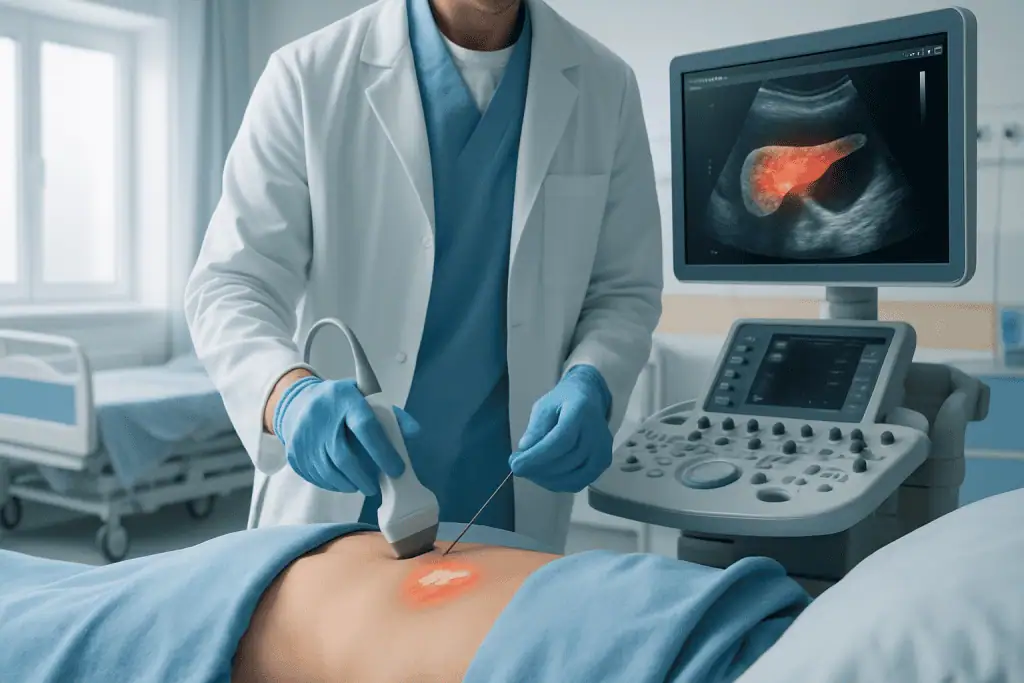
Endoscopic ultrasound often comes next. A thin, flexible scope carrying an ultrasound probe is passed through the mouth into the stomach and small intestine, allowing the tumour to be examined from millimetres away and sampled with a fine needle. This is frequently the most reliable way to obtain tissue from a pancreatic lesion. Pathology confirmation matters, especially before chemotherapy or radiation therapy begins. In some patients whose imaging clearly shows a removable tumour, surgery may proceed on the basis of imaging and clinical judgement, but most treatment plans require a confirmed biopsy first.
Blood tests contribute supporting information: liver function tests reflect bile duct obstruction, blood sugar evaluation captures the gland’s hormonal function, and the tumour marker CA 19-9 can help track the disease over time. CA 19-9 deserves an honest caveat: it can be raised in conditions other than cancer and normal in genuine pancreatic tumours, so it is useful for monitoring but never sufficient on its own to make or exclude the diagnosis. PET imaging is added in selected situations where it changes decision-making.
Molecular testing increasingly shapes treatment. Analysis of the tumour tissue itself can reveal features, such as defects in DNA repair or microsatellite instability, that make specific targeted drugs or immunotherapy worth considering. Germline testing of the patient’s inherited DNA runs in parallel when family history or clinical features suggest it. Neither test helps every patient, but performing them means that relevant opportunities are not missed.
A typical diagnostic and staging pathway runs in this order:
- 1. Review of history, symptoms, existing scans and blood results
- 2. Pancreas-protocol CT or MRI to define the tumour and check for spread
- 3. Endoscopic ultrasound with needle biopsy where tissue confirmation is needed
- 4. Relief of bile duct obstruction by endoscopic stenting, if jaundice is present
- 5. Molecular and, where indicated, germline genetic testing
- 6. Multidisciplinary board review to classify the tumour and agree the treatment sequence
Second opinions have a particular place in this disease. Because so much hangs on the interpretation of imaging, whether a vessel is merely touched or truly encased, whether a liver lesion is a metastasis or an innocent finding, patients told in one setting that surgery is impossible sometimes receive a different assessment elsewhere, and vice versa. A structured multidisciplinary review does not remove uncertainty, but it does ensure the decision reflects the full clinical picture.
Stages, Types and Situations Pancreatic Cancer Treatment Addresses
Rather than staging alone, pancreatic cancer specialists most often classify the disease by whether it can be surgically removed, because this single question drives the treatment sequence:
- Resectable pancreatic cancer: the tumour appears removable, with no distant spread and no critical involvement of major blood vessels. Surgery is usually planned, combined with systemic therapy before or after.
- Borderline resectable pancreatic cancer: the tumour touches or partly involves nearby vessels. Surgery is not ruled out, but chemotherapy, sometimes with radiation, is often given first, both to treat microscopic disease and to test whether an operation later becomes feasible.
- Locally advanced pancreatic cancer: the tumour significantly involves nearby vessels or structures and cannot be safely removed at diagnosis. Treatment aims to control the disease, and in a minority of patients a good response can change the surgical conversation.
- Metastatic pancreatic cancer: the disease has reached distant organs, most often the liver, peritoneum or lungs. Systemic therapy and symptom control become the focus. Spread to the liver is managed differently from cancers that begin there, such as primary liver cancer.
- Recurrent pancreatic cancer: disease that returns after earlier treatment, requiring fresh assessment of its location, prior therapies, the patient’s condition and the options that remain.
Treatment planning also addresses the complications the tumour causes: bile duct obstruction, digestive enzyme deficiency, severe pain, nausea, blockage of the stomach outlet, poor nutrition, unstable blood sugar, fluid accumulation and blood clots. Managing these problems is not a side issue: it is central to keeping patients strong enough to receive and tolerate cancer-directed treatment.
Pancreatic cysts and neuroendocrine tumours: not every finding is adenocarcinoma
Not everything found in the pancreas is ductal adenocarcinoma, and the distinction changes everything about the plan. Cystic lesions such as intraductal papillary mucinous neoplasms (IPMN) and mucinous cystic neoplasms carry a spectrum of risk: some warrant surgical removal, while many can be safely followed with scheduled MRI or endoscopic ultrasound, sparing the patient an operation they may never need. Pancreatic neuroendocrine tumours, which arise from the gland’s hormone-producing cells, often grow more slowly than adenocarcinoma and are staged and treated by their own criteria, surgery plays a larger role across stages, and specific drug classes and nuclear medicine approaches exist for them that have no place in adenocarcinoma care. Confirming tumour type before committing to a treatment path is therefore not bureaucratic caution; it is the difference between the right plan and the wrong one.
How Pancreatic Cancer Is Treated
Treatment combines several tools, sequenced according to stage, anatomy and fitness. What follows describes each in turn, and then how they fit together.
Preparation and treatment planning
The first practical step is a detailed review of everything already known: imaging studies, pathology reports, laboratory results, prior treatments and the wider medical history. Where earlier scans lack the detail needed for surgical or radiation planning, imaging is repeated to pancreas-protocol standard. If jaundice is present, an endoscopically placed bile duct stent may be needed before chemotherapy or surgery can safely begin, because a congested liver tolerates neither well.
Alongside the tumour, the team evaluates the patient: heart and lung function, kidney and liver values, diabetes status, clotting risk, nutritional state and overall capacity to withstand major surgery or intensive drug treatment. Many patients arrive having lost weight and appetite, sometimes with impaired fat digestion from reduced enzyme output, so nutritional assessment is built in from the start. A multidisciplinary board then classifies the disease, resectable, borderline resectable, locally advanced or metastatic, and recommends a sequence based on international evidence-based protocols.
Surgery for pancreatic cancer
When surgery is appropriate, the operation depends on where the tumour sits. Tumours in the head of the pancreas usually require a pancreaticoduodenectomy, widely known as the Whipple procedure: removal of the head of the pancreas together with part of the small intestine, the gallbladder, the bile duct and sometimes part of the stomach, followed by careful reconstruction so digestion can continue. Tumours in the body or tail are treated with distal pancreatectomy, removing the left side of the gland and often the spleen. In selected cases the entire pancreas must be removed, total pancreatectomy, which commits the patient to lifelong insulin and enzyme replacement and is therefore reserved for situations where nothing less will achieve complete removal.
Pancreatic surgery is among the most technically demanding operations in abdominal cancer care. The gland is soft, it produces digestive enzymes that can leak and damage surrounding tissue after surgery, and it lies against the body’s largest blood vessels. In suitable patients, minimally invasive or robotic-assisted approaches may be considered, but open surgery remains important for complex tumours, vascular involvement or intricate reconstruction. The choice of approach is made on safety and completeness of tumour removal, not on the appeal of a smaller incision. Operations can last several hours, particularly when a vein must be repaired or reconstructed.
After surgery, patients are monitored closely for bleeding, infection, delayed stomach emptying, pancreatic leakage, blood sugar changes and nutritional needs. Hospital stay varies with the operation performed and the pace of recovery, and some patients need a period of additional support before they are fit to resume normal activity. Being candid about this is part of responsible planning: major pancreatic surgery carries meaningful risks even in experienced hands, which is precisely why patient selection and perioperative care matter so much.
Chemotherapy and systemic treatment
Chemotherapy is a cornerstone of pancreatic cancer treatment at every stage. Given before surgery, it treats microscopic disease early, reveals how the tumour behaves under treatment, and can convert a borderline situation into an operable one. Given after surgery, it reduces the likelihood of recurrence. In metastatic disease it is usually the main cancer-directed treatment, selected according to overall health, organ function, prior therapy and, importantly, the patient’s own goals.
Modern regimens range from multi-drug combinations for patients strong enough to tolerate them to gentler schedules for those who need a less intensive approach. Treatment runs in cycles, with rest periods for recovery, and the team monitors blood counts, liver and kidney function, nerve symptoms, nausea, appetite and fatigue throughout. Dose adjustments and supportive medication are routine parts of the process, not signs that treatment is failing.
How well chemotherapy is working is judged from several directions at once: scans repeated at planned intervals, the trend of the CA 19-9 tumour marker where it is informative, changes in pain, appetite and weight, and the patient’s day-to-day capacity. No single measure decides the question, and plans are adjusted at defined review points rather than reactively after every result. Patients often find it helpful to know these checkpoints in advance: it turns the anxious space between scans into a defined interval with a purpose.
Radiation therapy
Radiation therapy is used in selected patients with borderline resectable or locally advanced pancreatic cancer, typically after chemotherapy has demonstrated disease control, and sometimes to relieve pain or local symptoms in advanced disease. Planning uses detailed imaging to map the tumour and the vulnerable organs around it, stomach, bowel, liver, kidneys and spinal cord, so that the dose concentrates on the cancer while sparing healthy tissue. Depending on tumour location, prior treatment and proximity of the bowel, radiation may be delivered over a number of sessions or, in carefully chosen cases, on a shorter, highly focused schedule. Fatigue, nausea, appetite changes and temporary digestive symptoms are the common side effects, and they are managed proactively rather than endured.
Targeted therapy and immunotherapy
Targeted therapy uses drugs directed at specific genetic or molecular features of the tumour, and it becomes relevant when testing identifies an appropriate target, for example, inherited or acquired defects in DNA repair. Immunotherapy, which helps the immune system recognise cancer cells, benefits a small subset of pancreatic cancers with particular molecular characteristics such as microsatellite instability. Neither option applies to every patient, and it would be misleading to suggest otherwise; the honest position is that molecular testing is worth doing because it occasionally opens doors that would otherwise stay shut.
Endoscopic, interventional and supportive procedures
Many of the procedures that matter most in pancreatic cancer are not designed to remove the tumour at all. Endoscopic stenting of a blocked bile duct relieves jaundice, restores liver function and allows chemotherapy to proceed. When the stomach outlet is obstructed, endoscopic or surgical bypass can restore the ability to eat. Interventional radiology assists with biopsies, drainage of fluid collections and selected pain procedures, and pain specialists can offer nerve block techniques, such as blocks of the coeliac plexus, for severe cancer-related pain that medication alone does not control.
Nutrition runs through everything. Many patients are prescribed pancreatic enzyme capsules taken with meals to improve digestion and slow weight loss, bloating and greasy stools. Diabetes care often needs adjustment under the treating team’s guidance, because the pancreas is central to blood sugar regulation. Physical conditioning, infection prevention, psychological support and systematic symptom control are not extras appended to “real” treatment; they measurably influence how well patients tolerate everything else.
Is Pancreatic Cancer Curable?
No doctor can responsibly promise a pancreatic cancer cure, and you should be cautious of anyone who does. What can honestly be said is this: for patients whose disease is localised and completely removable, surgery combined with systemic therapy offers the strongest opportunity for long-term disease control, and some patients treated this way remain free of detectable cancer for many years. For borderline and locally advanced disease, modern sequencing of chemotherapy, radiation and surgery has expanded what is possible compared with a decade ago. For metastatic disease, the realistic goals shift to controlling growth, extending life and protecting its quality.
The word “curable” therefore has no single answer in pancreatic cancer: it depends on stage, tumour biology, response to treatment and fitness for surgery, and even then medicine speaks of remission and long-term control rather than certainty. What patients and families can reasonably demand is a plan built on accurate staging, honest discussion of what each treatment can and cannot achieve, and a team willing to revisit the plan as the disease responds or changes.
Recovery Timeline After Pancreatic Cancer Treatment
Recovery differs with the treatment received and the person receiving it, but the following gives a general picture of what many patients experience after surgery or during a planned treatment programme.
| Time Period | What Patients Can Expect |
|---|---|
| Day 1 | After surgery, close monitoring focuses on pain control, fluids, breathing exercises and early movement when safe. For chemotherapy or radiation, patients usually return to their accommodation the same day unless additional care is needed. |
| First week | Surgical patients gradually increase walking and begin careful nutrition while the team monitors digestion, blood sugar, any drains and signs of complications. Patients on systemic treatment may notice fatigue, appetite changes or nausea, managed with medication and supportive care. |
| First month | Strength and appetite usually improve step by step after surgery, though fatigue is common. Some patients begin or resume chemotherapy once recovery allows. Nutrition, enzyme replacement and diabetes control may be adjusted. |
| Three to six months | Many patients are completing chemotherapy, radiation therapy or entering active surveillance, depending on the plan. Imaging and blood tests evaluate response and watch for recurrence. |
| Longer term | Ongoing follow-up monitors cancer status, digestion, blood sugar, weight, pain and emotional wellbeing. Some patients need long-term enzyme replacement, continued diabetes management or further cancer therapy. |
After major pancreatic surgery, most patients need several weeks to regain strength, appetite and mobility, with longer recovery after the most complex procedures. Recovery from chemotherapy and radiation is more cyclical, with symptoms rising and falling around treatment sessions. Follow-up combines physical examination, blood tests including tumour markers, imaging at defined intervals, medication adjustment and vigilance for both recurrence and treatment side effects.
Life after major pancreatic surgery involves adjustment as well as healing. Removing part of the gland can reduce both enzyme output and insulin production, so some patients need long-term enzyme capsules with meals, and a proportion develop diabetes or find existing diabetes behaves differently. Eating patterns often shift towards smaller, more frequent meals while the reconstructed digestive tract adapts, and weight typically stabilises before it recovers. Most patients describe a gradual return of energy over weeks to months rather than a single moment of feeling well again: a realistic expectation that makes the slower days easier to interpret.
Follow-up planning should begin before a treatment phase ends, not after. A detailed medical summary, medication documentation, imaging recommendations and a clear handover to every physician who shares ongoing care allow chemotherapy cycles, surveillance scans and supportive care to continue without gaps. Pancreatic cancer care commonly runs for months, and continuity between everyone involved is part of doing it safely.
Why Acting Early Matters
Pancreatic cancer can progress quickly, and delay narrows options. A tumour that is close to removable at first assessment may grow into major blood vessels or spread to distant organs while decisions stall. Untreated bile duct obstruction leads to worsening jaundice, infection risk, liver dysfunction and postponed chemotherapy. Ongoing weight loss erodes the very strength a patient needs to tolerate treatment at all.
Acting early does not always mean rushing to surgery. Often the most valuable early actions are accurate staging, biopsy confirmation, relief of obstruction where needed and prompt initiation of chemotherapy. For some patients, deliberate preparation before an operation is safer than an immediate one. The point is not speed for its own sake, but that every step should be timely, deliberate and grounded in expert review rather than left to drift.
Early involvement of a specialised team also protects against fragmented care, because in this disease the decisions are chained together: the quality of the imaging shapes the surgical plan; the pathology shapes the drug choices; nutrition shapes treatment tolerance; and the response to chemotherapy may determine whether surgery becomes possible at all. When one link is weak: a scan without pancreas protocol, a biopsy that was never sent for molecular testing, every downstream decision inherits the gap.
Potential Benefits of Treatment
The benefits of pancreatic cancer treatment depend on stage and overall health, but the goals are consistent: treat the cancer as effectively as the situation allows while protecting strength and quality of life.
| Benefit | What It Means for You |
|---|---|
| Accurate staging | A clear answer to whether the cancer is resectable, borderline resectable, locally advanced or metastatic, so treatment can be planned appropriately rather than guessed. |
| Personalised treatment sequence | Surgery, chemotherapy, radiation therapy and supportive care timed according to tumour behaviour, anatomy and your general health. |
| Potential for surgical removal | For selected patients with localised disease, surgery combined with appropriate systemic therapy offers the strongest opportunity for long-term disease control. |
| Control of cancer growth | Systemic therapy can slow progression, reduce symptoms and manage disease that cannot be removed surgically. |
| Relief of obstruction and pain | Endoscopic, interventional and medication-based treatments improve jaundice, digestion, pain and nutrition. |
| Better treatment tolerance | Nutrition support, diabetes care, pain management and rehabilitation help you stay strong enough to complete therapy. |
Factors That Influence Outcomes
Outcomes in pancreatic cancer depend on many interacting factors, and no single feature tells the whole story. Stage at diagnosis is one of the most important: patients whose disease is localised and completely removable generally have more options than those with metastatic disease. Yet tumour biology matters just as much, some cancers behave aggressively despite appearing localised, while others respond meaningfully to systemic therapy for extended periods.
The relationship between the tumour and nearby blood vessels strongly shapes surgical possibility. A tumour that encases major arteries or veins may not be safely removable at diagnosis; in borderline cases, chemotherapy given first treats microscopic disease and buys time to see whether an operation later becomes realistic. Response is judged through imaging, tumour markers, symptoms and the patient’s overall condition together, never through any one measure alone.
Where surgery happens, its completeness counts. The aim is removal with clear margins and proper lymph node assessment while keeping the patient safe: a balance that depends on experienced surgical judgement as much as technique. General health has a major role throughout: age alone does not decide eligibility, but heart, lung, kidney and liver function, nutritional status, diabetes control, infection risk and day-to-day performance all affect what treatment a person can tolerate. Patients losing weight rapidly or carrying uncontrolled jaundice may need stabilising before chemotherapy or surgery can begin.
Pathology and molecular findings guide the later chapters of the plan. Tumour grade, lymph node involvement, margin status and the response seen in tissue after preoperative therapy inform postoperative decisions. Germline genetic testing can identify inherited risk, relevant both to the patient’s treatment options and to screening advice for family members, while tumour testing can reveal features that open selected targeted pathways.
Finally, coordination itself is an outcome factor. Pancreatic cancer decisions must be made in sequence, and a well-integrated team avoids unnecessary delays, duplicated procedures and contradictory recommendations. Structured communication between every physician involved in a patient’s care is part of the treatment, not an administrative afterthought.
What are the survival rates for pancreatic cancer?
Published survival rates for pancreatic cancer come from national cancer registries and vary considerably by stage at diagnosis, tumour type and the treatments received, which is why this page deliberately quotes no single figure. A registry average blends together patients with small, removable tumours and patients diagnosed with widespread disease; applied to any individual, such a number is more likely to mislead than to inform. The honest approach is to discuss prognosis with the treating team once your own staging, pathology and treatment response are known: that conversation can be specific in a way no statistic on a website can.
How Acibadem Approaches Pancreatic Cancer Care
Pancreatic cancer rarely allows simple decisions, so Acibadem organises care around multidisciplinary review rather than single-specialist opinion, within its wider oncology and cancer treatment programme. Radiologists experienced in abdominal and oncologic imaging assess whether the tumour involves major vessels and whether there are signs of spread. Gastroenterology and endoscopy teams handle diagnosis, biopsy and bile duct stenting. Hepatopancreatobiliary surgeons judge whether an operation is technically possible and medically wise. Medical oncologists plan systemic therapy according to international evidence-based protocols, radiation oncologists assess whether focused radiation would help, and pathologists confirm tumour type and support molecular testing where indicated.
Tumour board discussion is where these perspectives meet. A patient may be told in one setting that surgery is possible while another team recommends chemotherapy first; a board brings the imaging, pathology, laboratory values, symptoms, performance status and the patient’s own preferences into a single conversation. This does not eliminate uncertainty, nothing in pancreatic cancer does, but it ensures decisions are made with the full clinical context in view rather than from one angle.
The supporting technology serves the same purpose. High-resolution cross-sectional imaging clarifies tumour anatomy; endoscopic ultrasound reaches lesions that are otherwise difficult to sample; image-guided radiation planning protects nearby organs; minimally invasive and robotic-assisted surgical techniques are available for cases where they are genuinely appropriate; and interventional radiology and advanced endoscopy manage complications such as obstruction, fluid collections and pain. None of this is complexity for its own sake: the value is clearer information, safer procedures and better-fitted decisions. Structured quality and patient safety processes run across the hospital pathway, from infection prevention and medication safety to anaesthesia care, intensive care availability and continuity of documentation, details that matter when one treatment journey may include major surgery, systemic therapy and endoscopic procedures in succession.
Just as important is what responsible care refuses to do. In pancreatic cancer, the most responsible plan is not automatically the most aggressive one; it is the plan that fits the cancer stage, the patient’s condition and the patient’s own goals, discussed with realistic expectations about both possibilities and limits.
Preparing for a Specialist Review
Whether you seek a first opinion or a second one, the quality of a pancreatic cancer review depends heavily on the material available to the reviewing team. The documents that matter most are:
- Imaging files themselves (CT, MRI, PET), not only the written reports
- Radiology reports, including the dates and technique of each scan
- Blood test results, including liver function, blood sugar and tumour markers such as CA 19-9
- Pathology results from any biopsy, with molecular testing reports if performed
- Endoscopy reports, including any stent placement
- Operative notes from any previous surgery
- A summary of current symptoms, weight change, medications and other medical conditions
With this information assembled, a specialist team can assess whether further diagnostic tests are needed, whether treatment should begin with surgery or systemic therapy, whether obstruction or nutrition problems need attention first, and whether multidisciplinary review would refine the plan. For many patients and families, understanding the reasoning behind each recommendation, why chemotherapy before surgery, why a stent before chemotherapy, why waiting is sometimes wiser than operating, reduces uncertainty and makes the decisions ahead feel less like a leap and more like a considered step.
Preparation
- Preparation begins with imaging, blood tests, pathology review and staging to define the most appropriate treatment plan. Patients may be asked to stop certain medications, optimize nutrition and manage jaundice or diabetes before treatment. A multidisciplinary oncology team reviews surgery, chemotherapy, radiation therapy and supportive care options.
Aftercare
- Follow-up includes regular imaging, blood tests and oncology visits to monitor response and detect recurrence. Nutrition support, pain control, enzyme replacement and diabetes management may be needed. Patients should report fever, worsening jaundice, uncontrolled pain, weight loss or treatment side effects promptly.
Frequently Asked Questions
What affects the cost of pancreatic cancer treatment?
The final cost depends on staging tests, specialist consultations, pathology review, whether surgery is possible, the type and duration of oncology treatment, hospital stay, intensive care needs and supportive procedures. International patient services and travel related support may also affect the overall package.
How can I get a personalised quote from Acibadem?
You can request a free consultation by sharing medical reports, imaging files, pathology results and a summary of previous treatment. A specialist team can review the information and prepare a personalised plan and quote. This is general information, not medical or financial advice.
Why can the quote change after arrival?
A quote may change if new imaging, biopsy review or clinical evaluation shows that the cancer stage, treatment suitability or hospital needs are different from the initial records. Changes may also occur if additional procedures, intensive monitoring or a different oncology plan becomes necessary.
Is surgery always included in the cost plan?
No. Surgery is only considered when staging suggests that the tumor can be removed safely and the patient is fit for a major operation. Some patients may need chemotherapy first, while others may be better served by non surgical or supportive treatment.
What is usually included in an international patient package?
A package may include specialist assessment, diagnostic tests, hospital services, treatment sessions, surgery when appropriate, inpatient care and coordination support. The exact inclusions should be confirmed in writing because pancreatic cancer care is highly individualized.
Medically reviewed by the Acıbadem International Medical Board August 30, 2026
See our medical review board →
Update history
- PublishedJune 8, 2026
- Medical review approvedAugust 30, 2026
- Last content updateSeptember 8, 2026
References3
- Pancreatic Cancer Treatment (PDQ) – Patient Version cancer.gov
- Pancreatic cancer nhs.uk
- Pancreatic Cancer medlineplus.gov
Trusted care for international patients
From the Acibadem Blog

Eating After Pancreatic Cancer Surgery: Enzyme Replacement, Blood Sugar and Small Meals
After pancreatic cancer surgery, many people need enzyme replacement because the remaining pancreas cannot release enough digestive enzymes; the capsules are taken with food…
The Whipple Procedure for Pancreatic Cancer: What Is Removed and How the Body Adapts
The Whipple procedure, or pancreaticoduodenectomy, removes the head of the pancreas, the first part of the small intestine, the gallbladder, part of the bile…
How Pancreatic Cancer Treatment Is Planned: Resectable, Borderline and Advanced Disease
Pancreatic cancer treatment by stage is decided less by the stage number than by whether a surgeon can remove the tumor completely. Resectable tumors…