Parkinson Disease Treatment
Parkinson disease care focuses on controlling tremor, stiffness and movement symptoms through expert neurology evaluation, medications, rehabilitation and, for selected patients, deep brain stimulation.
Quick answer
Parkinson's disease is a progressive neurological condition caused by the gradual loss of dopamine-producing nerve cells in the brain, leading to tremor, slowness, stiffness and balance changes. There is no cure, but treatment, carefully timed medication, physiotherapy, speech and occupational therapy, and deep brain stimulation for selected patients, can reduce symptoms and help people stay active and independent for years.
What Is Parkinson’s Disease?
Parkinson’s disease is a progressive neurological condition in which the nerve cells that produce dopamine, a chemical messenger the brain uses to coordinate smooth, automatic movement, gradually stop working. As dopamine signalling falls, movement becomes slower, stiffer and more effortful, and a tremor often appears, typically in one hand at rest. The condition also reaches beyond movement: mood, sleep, digestion, memory and energy can all be affected. It is most common in later life, although younger people develop it too.
You will see the name written as Parkinson disease in much of the medical literature and typed as parkinsons in everyday shorthand; the condition is the same. What matters more than the spelling is understanding what the diagnosis means for you. Parkinson’s disease usually progresses slowly, over years rather than months. With well-planned medical care, many people continue working, travelling, exercising and taking a full part in family life long after diagnosis. The aim of treatment is to control symptoms, preserve independence, reduce complications and adjust the plan as the condition changes.
It is also worth being clear about what a diagnosis does not mean. Parkinson’s disease is not the same for everyone. One person’s main problem may be tremor during social or professional situations; another’s may be stiffness, slow walking, disturbed sleep or a medication response that has become unpredictable. Because the condition varies so widely, care is never a single prescription or a one-time procedure. It is an ongoing strategy built around your symptoms, your daily life and your goals.
What is the main cause of Parkinson’s?
The main cause of Parkinson’s is the loss of dopamine-producing nerve cells in a small region of the midbrain called the substantia nigra. In affected cells, a protein called alpha-synuclein clumps into deposits known as Lewy bodies, and the cells gradually lose function and die. As dopamine levels drop, the brain circuits that make movement smooth and automatic begin to misfire, which is why walking, writing and other well-practised actions become slower and harder.
What triggers this process in the first place is still not fully understood. Current evidence points to a combination of factors rather than one single cause: genetic susceptibility in some people, the effects of ageing on nerve cells, and possible environmental exposures over a lifetime. In most patients no specific trigger can be identified, and this form, idiopathic Parkinson disease, is by far the most common.
Is Parkinson’s disease hereditary or genetic?
In most cases, no: Parkinson’s disease is not directly inherited, and most people who develop it have no affected close relative. A minority of cases are linked to specific gene changes, and these genetic forms are seen more often when the condition begins at a young age or when several family members are affected. Having a parent or sibling with Parkinson’s raises your own risk modestly, but the majority of relatives never develop the condition.
Genetic testing is not a routine part of diagnosis. It may be discussed in selected situations, such as young-onset disease or a strong family history, where the result could inform counselling or, in some settings, eligibility for research. For most patients, the more useful questions are clinical: whether the diagnosis is accurate, which symptoms matter most, and how treatment should be structured.
Parkinson’s Disease Symptoms
Parkinson’s disease symptoms fall into two broad groups: motor symptoms, which affect movement, and non-motor symptoms, which affect sleep, mood, digestion, thinking, bladder function and energy. Both groups matter. Non-motor symptoms are easy to overlook, yet they often influence quality of life as much as tremor or stiffness do.
The core motor symptoms are tremor, bradykinesia, rigidity and postural instability. Bradykinesia means slowness of movement and is one of the defining features of the condition. It can make buttoning clothes, turning over in bed, rising from a chair or walking through narrow spaces noticeably harder. Rigidity causes stiffness, discomfort or a reduced range of motion, often first in a shoulder or leg. Tremor is usually most visible when the hand is resting and tends to settle during purposeful movement. Postural instability, problems with balance and an increased tendency to fall, typically appears later in the course of the disease.
Early motor changes are often subtle. Handwriting may become smaller and more cramped, a pattern called micrographia. One arm may swing less while walking. The voice may soften, facial expression may become less animated, and steps may shorten. Some people later experience freezing of gait: a sudden, temporary feeling that the feet are stuck to the floor, often in doorways, when turning, or in crowded spaces.
Non-motor symptoms include constipation, a reduced sense of smell, sleep disturbance and vivid dreams, depression, anxiety, urinary symptoms, fatigue, pain, dizziness on standing, changes in speech, and changes in memory or thinking. Some of these, particularly loss of smell, constipation and acting out dreams during sleep, can appear years before any movement problem. Digestion often slows, and swallowing may change over time; slower movement through the digestive tract can also aggravate existing problems such as reflux disease. Because every one of these symptoms can have other causes, a careful neurological assessment matters more than any single sign.
What are five signs that someone might be developing Parkinson’s disease?
The five early signs most often noticed by patients and families are these:
- A resting tremor in one handa rhythmic shake that appears when the hand is relaxed and eases during deliberate movement.
- Smaller, more cramped handwritingwords that shrink across the page compared with older samples of the same person’s writing.
- Reduced arm swing or slight dragging on one sideoften first spotted by a spouse or friend rather than the person themselves.
- A weakened sense of smelldifficulty detecting familiar odours such as coffee or perfume, sometimes years before other signs.
- Acting out dreams during sleepshouting, kicking or moving vigorously while dreaming, which a bed partner usually notices first.
None of these signs is proof of Parkinson’s disease on its own. Each has other, often harmless, explanations. What raises concern is a combination of signs, a gradual worsening over time, or a clear asymmetry, symptoms that begin on one side of the body. A neurologist can weigh the overall pattern far more reliably than any checklist.
Are there really 40 symptoms of Parkinson’s disease?
Lists of “40 symptoms of Parkinson’s disease” circulate widely, and they reflect something true: because dopamine circuits influence many body systems, the condition can produce a very long catalogue of possible effects, from tremor and stiffness to constipation, sweating changes, quiet speech, low mood and disturbed sleep. The number itself is not an official medical classification, and no patient experiences anything close to the full list.
Parkinson’s symptoms vary enormously from person to person, in both type and severity. The practical value of these long lists is simply awareness, knowing that a problem such as fatigue, dizziness on standing or urinary urgency may be part of the same condition and therefore worth mentioning to the treating neurologist, rather than assuming it is unrelated.
How Parkinson’s Disease Is Diagnosed
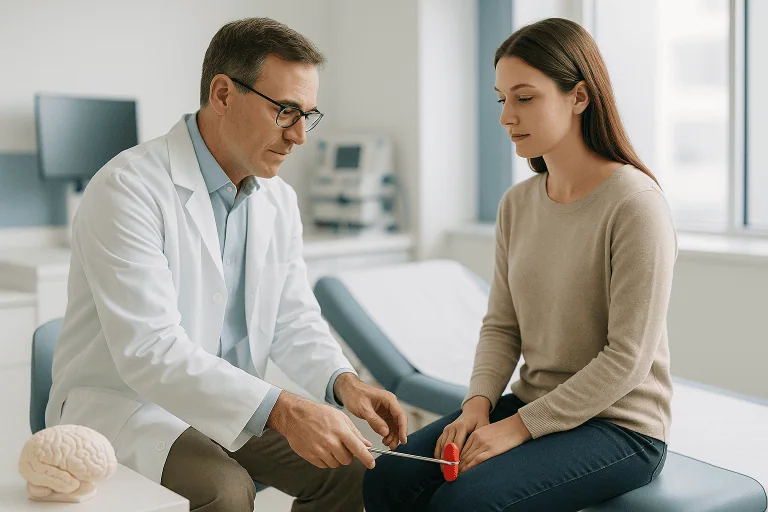
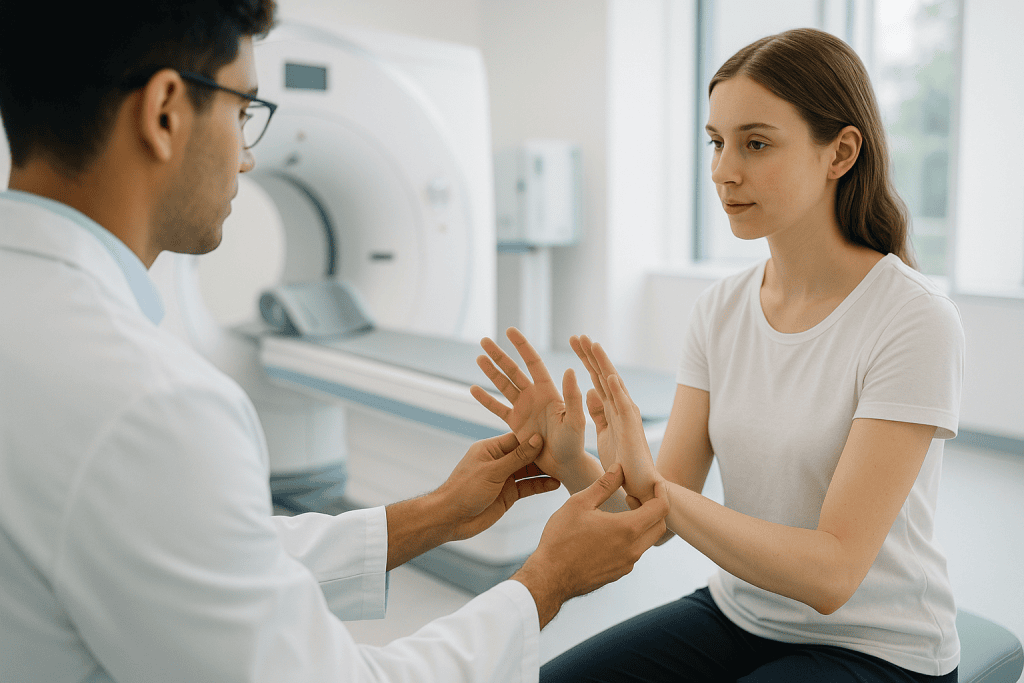
Diagnosis of Parkinson’s disease is primarily clinical, which means it rests on a detailed medical history and a neurological examination by an experienced physician rather than on a single definitive test. The doctor evaluates movement speed, muscle tone, tremor pattern, walking, balance, reflexes, coordination and other neurological findings, and asks about the timeline of symptoms, sleep, mood, digestion and daily function. A clear improvement in response to Parkinson medications can also support the diagnosis.
Imaging and laboratory tests are used selectively. Brain MRI can look for structural changes, vascular disease or other conditions that mimic Parkinson’s disease. Blood tests help assess general health and medication safety. In selected patients, specialised brain imaging that evaluates dopamine transporter function can help distinguish Parkinsonian syndromes from other causes of tremor, although it is not necessary for every patient. Neuropsychological testing may be recommended when memory or thinking changes are present, or before advanced therapies are considered.
Getting the diagnosis right matters because several conditions resemble Parkinson’s disease, especially early on, and they respond differently to treatment. Essential tremor causes shaking that is usually most obvious during action rather than at rest. Certain medications can produce drug-induced Parkinsonism. Vascular Parkinsonism follows small strokes affecting movement circuits. Atypical Parkinsonian syndromes share some features but follow a different course and respond less well to standard medication. Tremor can also come from thyroid disease, including an overactive thyroid such as Graves disease, and in rare younger patients from Wilson disease, an inherited disorder that affects the liver and the brain. A thorough evaluation is designed to separate these possibilities before treatment decisions are made.
A specialist second opinion is particularly valuable when symptoms are unusual, when progression seems faster than expected, when medications cause side effects or lose effect, or when there is genuine uncertainty between Parkinson’s disease and one of its mimics. For some patients, the most useful outcome of a second opinion is not a new treatment at all, but a clearer, more practical plan built on a confirmed diagnosis.
What Are the Five Stages of Parkinson’s Disease?
The five stages of Parkinson’s disease usually refer to the Hoehn and Yahr scale, a long-established way of describing how far movement symptoms have progressed:
- Stage 1: Symptoms affect one side of the body only. Tremor, stiffness or slowness may be mild and daily life is largely unaffected.
- Stage 2: Symptoms affect both sides of the body. Posture and walking may change, but balance remains intact.
- Stage 3: Balance becomes impaired and falls become a real risk. Movement slows further, though the person can still live independently.
- Stage 4: Symptoms are severe and limiting. The person can usually still stand and walk short distances but needs help with many daily activities.
- Stage 5: The most advanced stage, in which the person may be confined to a wheelchair or bed and requires full-time care.
These stages describe motor function only; they say nothing about non-motor symptoms, and they are not a timetable. Progression varies widely from one person to another. Many people remain in the early stages for years, and treatment, rehabilitation and regular exercise are all directed at preserving function for as long as possible at every stage.
Clinicians often use more detailed rating scales alongside these stages, because a single number cannot capture how a person actually functions at work, at home or during travel. The stage is a shorthand for discussion, not a verdict.
How Parkinson’s Disease Treatment Works
Parkinson disease treatment is medical and rehabilitative care designed to manage the effects of reduced dopamine signalling in the brain. It does not reverse the underlying neurodegenerative process, but it can substantially reduce symptoms, improve daily function and support a better quality of life. Because the condition changes gradually and medication response evolves, the treatment plan is reviewed and adjusted over time rather than fixed once.
Is there a cure for Parkinson’s disease?
No. There is currently no cure for Parkinson’s disease, and no treatment has yet been proven to stop or reverse the loss of dopamine-producing cells. Research into disease-modifying therapies is active worldwide, but the honest position today is that treatment manages symptoms rather than eliminating the disease. That management can still be highly effective: well-adjusted medication, structured rehabilitation and, for selected patients, deep brain stimulation allow many people to live active, independent lives for years.
Medication
For most patients, the first phase of treatment centres on medication. Options include levodopa-based therapy, which the brain converts into dopamine; dopamine agonists, which stimulate dopamine receptors directly; and enzyme inhibitors that help the body’s dopamine last longer. The choice depends on the patient’s symptoms, age, other conditions and side-effect risks, and combinations are common.
Timing is often as important as the medicine itself. As the condition advances, some patients notice “on” periods, when medication is working well, and “off” periods, when symptoms return before the next dose or when a dose is slow to take effect. Refining doses, combinations and schedules is skilled work: the aim is steadier symptom control with fewer fluctuations and fewer side effects. Possible side effects, daytime sleepiness, dizziness, hallucinations, involuntary movements called dyskinesia, or impulse-control behaviours, need prompt review when they appear. Any change to a dose or schedule belongs with the treating neurologist, who can weigh the whole picture. A clear, written medication schedule is especially important for patients crossing time zones, because timing changes can noticeably affect symptom control.
Rehabilitation
Rehabilitation is an essential part of Parkinson’s care, not an optional extra, and it can help at any stage. Physical therapy focuses on gait training, balance, flexibility, strengthening and fall prevention; amplitude-based movement training and external cueing techniques can specifically help with small, shuffling steps and freezing of gait. Patients learn practical strategies for turning safely, rising from chairs and moving through crowded or unfamiliar spaces.
Occupational therapy helps adapt daily activities, dressing, writing, eating, bathing, work tasks, and addresses home safety so that independence lasts longer. Speech and swallowing therapy is recommended when voice volume drops, articulation becomes unclear or swallowing safety is in question; addressing these early protects communication and nutrition.
Exercise deserves its own mention. It does not replace medication, but regular, structured movement supports mobility, balance, flexibility, mood and cardiovascular health, and patients who continue exercising at home tend to maintain the gains made in therapy. Early rehabilitation also helps establish these habits before problems become entrenched.
Deep Brain Stimulation for Parkinson’s Disease
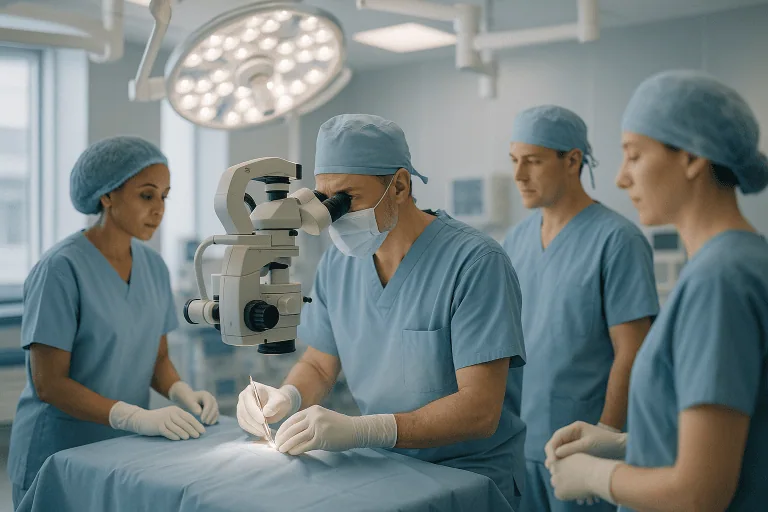
Deep brain stimulation, usually shortened to DBS, is a surgical treatment in which thin electrodes are placed in precisely selected areas of the brain involved in movement control. The electrodes connect to a small implanted pulse generator, similar in concept to a pacemaker, placed under the skin, often near the chest, which delivers controlled electrical signals to help regulate abnormal movement circuits. DBS does not cure Parkinson’s disease and does not suit everyone, but in carefully selected patients it can reduce motor fluctuations, tremor and medication-related involuntary movements.
DBS is generally considered when Parkinson’s disease is clearly diagnosed, symptoms respond to levodopa, and the benefit of medication has become inconsistent or complicated by dyskinesia. It may also be considered for medication-resistant tremor in selected patients. Careful evaluation of cognitive function, mood, brain imaging, medical fitness for surgery and realistic goals is essential, because symptoms that do not improve with levodopa are unlikely to improve with stimulation.
The DBS pathway typically follows these steps:
- Candidate evaluation. The team confirms the diagnosis, reviews medication response, and assesses cognitive and emotional health, surgical risk and the patient’s goals.
- Levodopa challenge test. Symptoms are measured with and without medication to estimate which problems stimulation is likely to help.
- Imaging and planning. High-resolution MRI and computer-assisted planning systems map the brain and define the target, which depends on the patient’s symptom profile.
- Electrode placement. A neurosurgical team experienced in functional neurosurgery places the electrodes, often with neurophysiological monitoring to refine positioning during the operation.
- Pulse generator implantation. The stimulator is implanted under the skin and connected to the electrodes.
- Healing period. The patient recovers before stimulation is activated or fully adjusted.
- Programming and medication adjustment. Over weeks to months, staged programming sessions balance symptom control against side effects, and medication doses are refined as stimulation takes effect.
Neurologists remain closely involved after surgery, because long-term programming and medication balance are as important to the result as the operation itself. Technology, imaging, monitoring, programmable devices, supports clinical judgement; it does not replace careful patient selection and follow-up.
Who May Need Specialist Parkinson’s Care
People seek specialist Parkinson’s care in several situations: when movement symptoms first appear and need explanation, when an existing diagnosis needs confirmation, when medication no longer provides steady control, or when advanced options such as DBS are on the table. In early disease the signs can be subtle: a resting tremor in one hand, shrinking handwriting, reduced arm swing, stiffness in a shoulder or leg, or simply the sense that movement takes more effort than it used to.
Specialist review is also valuable when symptoms are unusual, progression is faster than expected, medications cause troubling side effects, or tremor stays difficult to control. Because Parkinson’s disease can be confused with essential tremor, drug-induced Parkinsonism, vascular Parkinsonism and atypical syndromes, and because these conditions differ in treatment response, disease course and suitability for surgery, accurate diagnosis is the foundation on which everything else rests.
Why Acting Early Matters
Parkinson’s disease usually progresses slowly, but early, expert care makes a meaningful difference to daily function. Acting early does not mean rushing into complex treatment. It means obtaining an accurate diagnosis, understanding where you are in the course of the condition, identifying the symptoms that can be treated now, and building a plan before preventable complications develop.
Delay carries quiet costs. Stiffness, reduced mobility and balance problems can become more limiting; people who find movement difficult often move less, which leads to deconditioning, weakness, joint discomfort and a higher risk of falls. Speech and swallowing problems are easily overlooked until they interfere with communication, nutrition or safety. Medication timing problems also accumulate when treatment is not reviewed regularly: doses spaced too far apart produce avoidable “off” periods, while side effects such as sleepiness, dizziness, hallucinations or impulse-control behaviours need a specialist to distinguish disease progression from medication effects and adjust the plan accordingly.
Early assessment matters for advanced planning too. DBS works best when it is considered while symptoms still respond to medication but are no longer well controlled through the day. Waiting until significant cognitive decline, severe balance impairment or medical frailty has developed can narrow or close the surgical option. A timely referral lets a patient learn whether DBS is realistic before that window narrows.
Benefits of Parkinson’s Disease Treatment
What treatment can achieve depends on the stage of the condition, the symptom pattern and the plan itself, but the consistent aim is better control, safety and quality of daily life.
| Benefit | What It Means for You |
|---|---|
| Improved movement control | Medication, rehabilitation and selected advanced therapies may reduce tremor, stiffness and slowness, making daily activities easier. |
| More predictable daily function | Careful medication scheduling can reduce fluctuations between “on” and “off” periods and support more consistent routines. |
| Better balance and mobility strategies | Physical therapy helps you walk more safely, reduce fall risk and manage freezing or turning difficulties. |
| Support for voice, swallowing and independence | Speech, swallowing and occupational therapy address communication, nutrition, self-care and practical daily tasks. |
| Access to advanced options when appropriate | For selected patients, DBS evaluation offers a path when medication response becomes unpredictable or tremor stays hard to manage. |
Recovery and Follow-Up Timeline
Recovery in Parkinson’s disease care is best understood as an ongoing process of adjustment, rehabilitation and monitoring rather than a single healing period. The shape of that process depends on the pathway: a diagnostic consultation and medication optimisation may take several days; rehabilitation may be short and intensive or continue over weeks; DBS involves pre-operative assessment, surgery, healing and staged programming over a longer timeline.
| Time Period | What Patients Can Expect |
|---|---|
| Day 1 | Initial evaluation: neurological examination, medication review and planning of diagnostic tests or therapy assessments. If surgery is performed, monitoring focuses on comfort, neurological status and early recovery. |
| First Week | Medication changes may begin, rehabilitation recommendations are introduced, and patients learn to track their symptoms. After DBS surgery, wound care and early post-operative monitoring take priority. |
| First Month | Treatment adjustments continue. Improvements from medication optimisation or rehabilitation may become noticeable. DBS patients begin or continue programming sessions according to the clinical plan. |
| Longer Term | Regular follow-up refines medication, therapy goals and stimulation settings where DBS is used. Exercise, symptom monitoring and communication with the care team remain central. |
Medication adjustments can show benefit quickly, though fine-tuning takes time. Rehabilitation gains build gradually through repetition and continued exercise at home. After DBS, a healing period comes before stimulation is activated or fully adjusted, and programming continues over weeks or months as medication doses are rebalanced alongside stimulation.
Factors That Influence Outcomes
Outcomes in Parkinson’s disease care depend on the accuracy of the diagnosis, the stage of the condition, the patient’s dominant symptoms, medication responsiveness, overall health and the consistency of follow-up. A good result is not defined only by less tremor. It may mean walking more safely, sleeping better, needing less help with daily tasks, experiencing fewer medication fluctuations, or simply feeling more in control of the condition.
Diagnostic accuracy comes first. Parkinson’s disease can resemble other movement disorders, especially early on, and some of those conditions respond differently to standard medication and do not benefit from DBS. A detailed neurological evaluation aligns treatment with the correct diagnosis before anything else is decided.
Medication responsiveness strongly shapes long-term planning. Patients whose symptoms improve clearly with levodopa generally have more management options. The pattern of response matters too: wearing off, delayed onset, dyskinesia and side effects each call for a different strategy. A simple diary recording medication times, symptom changes, sleep and side effects gives the neurologist far better material to work with than memory alone.
Participation in rehabilitation, and general health, both count. Parkinson’s disease responds well to regular, structured movement, and gains last longer when exercises continue at home. Conditions such as diabetes, heart disease, blood pressure instability, depression, anxiety, sleep disorders and cognitive impairment can influence treatment choices and recovery, so addressing them is part of good Parkinson’s care rather than a separate task. For DBS specifically, the best candidates have a clear diagnosis, a meaningful levodopa response, disabling fluctuations, dyskinesia or tremor, and no major untreated psychiatric or cognitive contraindication; the quality of surgical planning, electrode placement, device programming and long-term follow-up then all contribute to the result.
Family and caregiver support makes a measurable practical difference. Parkinson’s disease reshapes routines, medication timing, transport, exercise, emotional wellbeing, and education helps family members recognise symptoms and side effects, and support independence without taking over unnecessarily.
What is the life expectancy with Parkinson’s?
For most people, Parkinson’s disease is not directly fatal, and many live for decades after diagnosis. Life expectancy depends on the age at which the condition begins, the subtype and pace of progression, and general health, so no single figure applies to everyone. In advanced disease, the risks that matter most are complications, falls, swallowing difficulties and chest infections, rather than the disease process itself.
This is one reason consistent care matters: fall prevention, swallowing assessment, medication review and regular exercise are all aimed at reducing exactly these complications. A realistic long-term plan focuses less on a number and more on protecting function, safety and independence year by year.
How Acibadem Approaches Parkinson’s Disease Care
Complex neurological care benefits from experienced teams, careful evaluation and coordination. At Acibadem, Parkinson’s disease patients are evaluated by neurologists with experience in movement disorders, and when advanced treatment is considered, neurosurgeons, neuroradiologists, rehabilitation specialists, psychiatrists, neuropsychologists and anaesthesiologists may be involved. Multidisciplinary review matters most for DBS, where patient selection and long-term programming are as important as the operation itself.
Evaluation often begins with a careful review of medical records, medication lists, prior imaging, symptom videos where available, and reports from treating physicians. This preliminary work helps the team understand the history and plan the most relevant appointments and tests. Second-opinion reviews follow the same logic: prior diagnoses, medication history, imaging and treatment response are examined to establish whether symptoms are consistent with Parkinson’s disease, whether medications are being used optimally, and whether further tests or therapies deserve consideration.
Diagnostic pathways and treatment protocols follow international neurological practice, and technology, imaging, laboratory testing, rehabilitation assessment, surgical planning and programmable stimulation devices, is used where it adds clinical value. Treatment planning is personal because the condition is personal: a patient still working may need a medication schedule that supports professional performance; an older patient living alone may need fall prevention and home-safety strategies; a person with severe tremor needs a different plan from someone whose main issue is freezing of gait or dyskinesia.
Follow-up planning is treated as part of the treatment itself. Because Parkinson’s disease needs long-term management, patients leave with a clear picture of what should be monitored at home, medication schedules, side effects, exercise plans, wound care after DBS, and device programming needs, and care plans are designed to be shared with the patient’s own physician so treatment continues safely between visits.
Preparing for a Specialist Evaluation
Good preparation makes any neurological consultation more productive. The most useful items to gather are a list of current medications with exact doses and times; a short written summary of symptoms and when they began; prior imaging and test results; and notes on when symptoms improve or worsen through the day, particularly in relation to medication doses. If tremor, walking changes or involuntary movements vary, short videos recorded at home can show the physician what happens outside the clinic, often the single most informative piece of material a patient can bring.
It also helps to think in advance about goals. Whether the priority is steadier working days, safer walking, better sleep, clearer speech or an honest assessment of whether deep brain stimulation is realistic, naming the goal shapes the plan. Parkinson’s disease has no simple solution, but a clear diagnosis, a treatment strategy matched to your daily life, and a follow-up plan you understand are all achievable, and they are what turn a diagnosis from a source of uncertainty into a condition you can manage.
Preparation
- Preparation begins with a detailed neurological examination, medication review and assessment of movement symptoms. Brain imaging and neuropsychological evaluation may be requested, especially if deep brain stimulation is considered. Patients should bring previous test results and a current list of medications.
Aftercare
- Aftercare includes regular neurology follow-up to adjust medications and monitor symptom control. Physical therapy, speech therapy and occupational therapy may support mobility and daily function. If deep brain stimulation is performed, device programming and wound checks are scheduled after surgery.
Frequently Asked Questions
What affects the cost of Parkinson disease care?
The cost depends on the level of specialist assessment, diagnostic tests, medication review, rehabilitation needs and whether advanced treatments such as deep brain stimulation are considered. Hospital stay, device-related services and follow-up planning can also affect the quote.
How can I get a personalised quote for Parkinson disease treatment in Turkey?
You can request a free consultation and share medical reports, medication lists, imaging results and a summary of current symptoms. The medical team can review your case and provide a personalised care plan and quote based on clinical suitability.
Is deep brain stimulation included in every Parkinson disease treatment plan?
No. Deep brain stimulation is only suitable for selected patients after detailed evaluation by neurology and neurosurgery specialists. Many patients are managed with medication optimisation, rehabilitation and ongoing follow-up.
What is usually included in an international patient package?
Packages vary, but may include specialist consultation, coordination of tests, hospital services, interpreter support, treatment planning and discharge guidance. It is important to confirm what is included and what may be billed separately.
Will I need to stay in Turkey after treatment?
The recommended stay depends on the treatment plan. Medication review may require shorter coordination, while surgery or intensive rehabilitation may require a longer follow-up period before travel. Your specialist will advise what is safe for your situation.
Medically reviewed by the Acıbadem International Medical Board August 31, 2026
See our medical review board →
Update history
- PublishedJune 8, 2026
- Medical review approvedAugust 31, 2026
- Last content updateSeptember 8, 2026
References3
- Parkinson's Disease medlineplus.gov
- Parkinson's disease nhs.uk
- Parkinson's Disease my.clevelandclinic.org
Trusted care for international patients
From the Acibadem Blog

The Early Signs of Parkinson’s, Including Two Newly Recognised Ones
The two newly recognized early signs are hearing loss and epilepsy, identified in a 2022 analysis of UK primary care records as appearing more…

DBS vs Medication Adjustments in Parkinson’s Disease: How Neurologists Weigh the Options
Deep brain stimulation and medication adjustments are not rivals; DBS is usually considered only after levodopa-based medicines still help but have become unpredictable, with…

Caring for a Partner With Parkinson’s Disease: Medication Timing, Fall Safety and Mealtimes
Caring for someone with Parkinson's works best when three routines are protected: medicines taken at the times the prescriber set, because effects fade predictably…

Driving with Parkinson’s: Safety, Licensing Rules and When to Stop
Many people with Parkinson's can keep driving safely, especially in the early years, because a diagnosis alone does not determine ability behind the wheel.…