PRK
PRK is a surface laser eye surgery that reshapes the cornea to correct nearsightedness, farsightedness, and astigmatism, often for patients unsuitable for LASIK.

Quick answer
PRK (photorefractive keratectomy) is a laser eye surgery that corrects nearsightedness, farsightedness and astigmatism by reshaping the surface of the cornea. Unlike LASIK, no corneal flap is created; the outer epithelial layer is removed and regrows within days. The laser treatment itself is brief, but vision recovers gradually over weeks. PRK is often chosen when thin corneas or lifestyle factors make LASIK less suitable.
What Is PRK (Photorefractive Keratectomy)?
PRK, or photorefractive keratectomy, is a type of excimer laser eye surgery that corrects refractive errors, nearsightedness, farsightedness and astigmatism, by reshaping the front surface of the cornea. Its purpose is to reduce your dependence on glasses and contact lenses. It is usually considered by adults whose prescription has been stable and whose eyes are otherwise healthy, and it is often the procedure discussed when LASIK is not the preferred option.
A refractive error occurs when the eye does not focus light precisely on the retina, the light-sensitive tissue at the back of the eye. When light comes to a focus in front of the retina, behind it, or unevenly across it, vision becomes blurred at certain distances. Glasses and contact lenses compensate for this by bending light before it enters the eye. PRK takes a different approach: it changes the shape of the eye’s own focusing surface so that light lands more accurately on the retina without external correction.
During PRK, an ophthalmic surgeon uses a highly controlled laser to remove microscopic amounts of tissue from the cornea, the clear, dome-shaped front window of the eye. The cornea provides most of the eye’s focusing power, so even very small, precisely placed changes in its curvature have a meaningful effect on where light focuses. The amount and pattern of tissue removed are calculated from your prescription and your corneal measurements, which is why the diagnostic work before surgery matters as much as the procedure itself.
What is surface ablation?
Surface ablation means the laser treatment is applied directly to the surface of the cornea rather than beneath a corneal flap, and PRK is the longest-established procedure in this group. Before the laser is applied, the surgeon removes the epithelium, the thin protective layer that covers the cornea. This layer has a useful property: it regenerates naturally. Over the days following surgery, new epithelial cells grow across the treated area and restore the surface. While this happens, a soft bandage contact lens is usually placed on the eye. It acts like a protective dressing, shielding the healing surface and improving comfort during the early recovery period. Once the surface has closed sufficiently, your surgeon removes the lens at a follow-up examination.
PRK vs LASIK: What Is the Difference?
The key difference between PRK and LASIK is the corneal flap. In LASIK, the surgeon creates a thin flap in the cornea, lifts it, applies the laser to the tissue underneath, and repositions the flap. In PRK, there is no flap: the outer epithelial layer is removed, the laser reshapes the exposed surface, and the epithelium then grows back on its own. Both procedures use the same excimer laser principles and aim at the same result, light focused accurately on the retina, but the route to that result, and the recovery that follows, are different.
The flap is what makes LASIK recovery fast. Because most of the surface is preserved and simply repositioned, vision typically clears within a day or two and discomfort is brief. PRK asks more patience of you. The epithelium needs several days to regrow, and during that time burning, tearing, light sensitivity and fluctuating blur are common. Functional vision returns over the first week or so, and the finer refinement of vision continues over the following weeks and months. Neither timeline is a flaw; they are simply the healing patterns of two different surgical approaches.
Is PRK better than LASIK?
Neither procedure is better in every case; the right choice depends on your corneal anatomy, eye health and lifestyle. For a patient with a thick, regular cornea, a healthy tear film and a demanding schedule, LASIK’s faster recovery may be the deciding factor. For a patient with a thinner cornea, certain corneal shape characteristics, a tendency to dry eye, or a job or sport that carries a real risk of direct impact to the eye, avoiding a flap altogether can be the safer strategy. A careful refractive assessment measures these factors rather than assuming them. It is entirely normal for a patient to arrive asking about one procedure and leave with a recommendation for the other, or for neither.
Why would a surgeon recommend PRK over LASIK?
Surgeons usually recommend PRK over LASIK when preserving corneal tissue or avoiding a flap matters for that particular eye. Creating a LASIK flap uses part of the cornea’s thickness before any corrective reshaping begins; in a thinner cornea, that can leave less margin than the surgeon considers safe. PRK works on the surface, so more of the underlying structure is left untouched. A flap can also, in rare circumstances, be displaced by significant trauma, which is why some patients in contact sports, security roles or physically demanding occupations are steered towards a surface procedure. Finally, some corneal surface or shape findings simply suit surface ablation better. These are individual judgements made from your measurements, not general rules.
Who Is a Good Candidate for PRK?
A good candidate for PRK is an adult with a stable glasses or contact lens prescription, a refractive error within treatable limits, adequate corneal thickness and shape, a healthy ocular surface, and realistic expectations about recovery. Stability matters because PRK corrects the prescription you have on the day of surgery; if your eyes are still changing, the correction can drift out of accuracy over time. This is why ophthalmologists review past prescriptions and may advise waiting if there is evidence of recent change.
People arrive at a PRK evaluation from many directions. Some have worn glasses since childhood and want a practical alternative. Others struggle with contact lens dryness, irritation, allergies or the daily inconvenience of lens care. Many are motivated by sport, professional duties, travel or simple daily comfort. A significant group comes to PRK after being told they are not good LASIK candidates, often because of corneal thickness or shape, and wants to know whether a surface procedure remains possible. It frequently is, but only detailed testing can confirm it.
The visual symptoms that typically lead patients to an assessment include blurry distance vision, difficulty reading signs, eye strain, squinting, night-driving problems related to refractive blur, headaches associated with uncorrected vision, or a general dependence on glasses for everyday tasks. Patients with astigmatism may also notice distorted or shadowed images, particularly in low light. None of these symptoms confirms candidacy on its own; they are the reason to be examined, not the basis for a decision.
Who should not have PRK?
PRK is not advisable when the examination finds conditions that make laser correction unsafe or unreliable. These include an unstable prescription, keratoconus or other corneal ectatic disorders in which the cornea is structurally weak, significant dry eye disease, uncontrolled autoimmune disease, active eye infection, a cataract that is affecting vision, certain retinal conditions, and pregnancy-related vision changes, which are usually temporary. Some of these findings rule out laser surgery altogether; others simply need to be treated or allowed to settle first. A responsible refractive surgery programme is willing to say no when surgery is not in your best interest, and to explain why, so you understand what alternatives exist.
What tests are done before PRK?
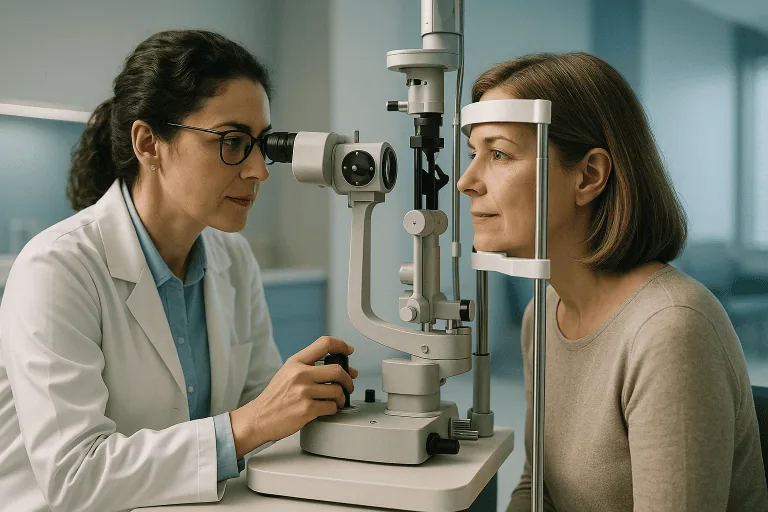
Before PRK, you have a comprehensive eye examination that goes well beyond a glasses check. The clinical team measures your refractive error and evaluates how consistently it can be corrected. The cornea is studied in detail: corneal topography and tomography map its curvature and structure, and pachymetry measures its thickness. Tear film testing assesses the health of the ocular surface, because dry eye affects comfort, healing and quality of vision after surgery. Pupil size is measured, eye pressure is checked, the retina is examined, and higher-order visual imperfections may be analysed when appropriate. Together, these tests answer the questions that decide candidacy: is the cornea regular and thick enough, is the surface healthy, is the prescription stable, and is the rest of the eye sound?
If you are considering treatment away from home, some groundwork can be done before you travel. Final eligibility always requires in-person testing, but earlier prescriptions, contact lens history, ophthalmology reports, corneal maps and medication lists give an assessing team a useful starting picture. Reviewing this history in advance helps establish whether PRK is a reasonable possibility before travel plans are made: it does not replace the examination, but it reduces the chance of travelling for a procedure that was never going to be suitable.
What Conditions Does PRK Treat?
PRK treats the common refractive errors: nearsightedness, farsightedness and astigmatism. In selected cases it may also form part of therapeutic corneal treatment planning, depending on the nature of a corneal surface problem and the overall health of the eye. Each refractive error involves light focusing in the wrong place, and each is addressed by a different laser reshaping pattern.
Nearsightedness (myopia)
Nearsightedness, or myopia, also called short-sightedness, means distant objects appear blurry while near objects may remain clear. In a myopic eye, light focuses in front of the retina, usually because the eye is slightly too long for its focusing power or the cornea is too steep. PRK flattens the central cornea in a controlled pattern, reducing its focusing power so that light comes to a focus further back, closer to the retinal surface. This is the most common correction performed with PRK.
Farsightedness (hyperopia)
Farsightedness, or hyperopia, also called long-sightedness, means near vision may be blurred, and distance vision can also be affected depending on severity and age. In a hyperopic eye, light tends to focus behind the retina. PRK addresses this by steepening the effective focusing power of the central cornea, reshaping tissue in a carefully planned pattern so light converges sooner. Hyperopic treatments have their own planning considerations, which your surgeon weighs against your measurements.
Can PRK correct astigmatism?
Yes: PRK can correct astigmatism within safe treatment parameters, and correcting it is a routine part of treatment planning. Astigmatism occurs when the cornea or lens has uneven curvature, so light focuses at multiple points rather than one sharp point. The result can be blur, distortion, halos or shadowed images, especially in low light. PRK reshapes the cornea to make its curvature more uniform, so focusing becomes more consistent across the eye. Whether your particular degree and pattern of astigmatism can be treated depends on your corneal maps, which is one more reason the diagnostic stage carries so much weight. Irregular astigmatism caused by conditions such as keratoconus is a different matter and is generally not treated with standard PRK.
PRK may be especially relevant in situations such as:
- Thin corneas, where preserving corneal tissue is important.
- Occupations or sports with potential eye impact, where avoiding a corneal flap may be preferred.
- Contact lens intolerance due to discomfort, dryness or allergies.
- Stable mild to moderate refractive errors that fit within safe treatment parameters.
- Patients who are not ideal LASIK candidates after corneal mapping and thickness testing.
- Selected cases where the ophthalmologist recommends a surface laser approach based on anatomy and risk profile.
Suitability is always individual. A prescription that is treatable in one person may not be appropriate in another whose cornea is too thin, whose corneal shape is irregular, or whose ocular surface is unhealthy. The best indication for PRK is not simply having blurry vision: it is having a refractive error that can be corrected while preserving corneal strength and overall eye health.
How Is PRK Eye Surgery Performed?
Before the procedure: evaluation and planning
PRK begins well before the day of surgery, and the preoperative assessment is the most important step in the whole process. If you wear contact lenses, you will usually be asked to stop wearing them for a period before testing, because lenses can temporarily change the shape of the cornea and distort the measurements the treatment plan depends on. The exact interval depends on the type of lenses you wear and your ophthalmologist’s instructions, rigid lenses generally need a longer break than soft ones.
During the evaluation, the team confirms your prescription and checks that it has been stable. The cornea is mapped to measure its curvature and surface regularity, and its thickness is measured because PRK removes a small amount of tissue and the remaining cornea must stay strong after reshaping. Tear film testing identifies dry eye before it can complicate healing. Your ophthalmologist also discusses your goals and lifestyle in concrete terms: a patient who drives frequently at night has different priorities from one whose main concern is sport, and the treatment discussion should reflect that.
Age deserves an honest conversation of its own. Patients in their 40s and beyond may have presbyopia, the normal age-related loss of near focusing ability. PRK can correct distance refractive error, but it does not stop presbyopia and does not remove the future possibility of reading glasses. Some patients are evaluated for monovision or blended vision strategies, in which one eye is adjusted more for distance and the other for near tasks. This can work well, but it requires careful testing, often a trial with contact lenses, and a clear understanding of the compromise involved before anyone commits to it surgically.
Preparation also covers your medical history, medications, allergies and any previous eye surgery or trauma. You receive practical instructions about eye drops, makeup, skin products and transport. Because your vision will be blurry immediately after PRK, you must not drive yourself home; arrange for someone to accompany you or for transport to be organised.
What happens on the day of PRK?
On the day of surgery, PRK is performed as an outpatient procedure while you are awake, with anaesthetic eye drops numbing the eye. The laser portion itself takes only a short time for each eye, many patients are surprised by how brief it is, though the full visit is longer because of preparation, verification and postoperative instructions. The sequence typically runs as follows:
- The surgical team confirms your identity, treatment plan, eye measurements and intended correction.
- Anaesthetic drops are applied, the eye area is cleaned, and a small device gently holds the eyelids open so you do not need to worry about blinking.
- The surgeon removes the corneal epithelium using a controlled technique: a gentle instrument, a diluted alcohol solution, or another method the surgeon selects.
- The excimer laser is applied according to your personalised treatment profile. You are asked to look at a fixation light while the laser removes microscopic layers of tissue in a precise pattern.
- You may hear clicking sounds and notice a mild odour during the laser application; both are expected parts of the process.
- The surgeon may apply medication to reduce inflammation and support healing, then places a soft bandage contact lens on the eye.
- You receive antibiotic and anti-inflammatory eye drops, lubricating drops, and detailed instructions for using them.
Modern laser systems use eye-tracking technology that follows small eye movements throughout the treatment, keeping the ablation pattern centred even if your eye drifts slightly. You do not need to hold your eye perfectly still; the system is designed around the fact that no one can.
Does PRK hurt?
The procedure itself is not usually painful because anaesthetic drops numb the eye, but the first few days of recovery are genuinely uncomfortable for many patients. You may feel pressure or notice sensations during surgery, and once the drops wear off, burning, tearing, grittiness and light sensitivity are common while the epithelium regrows. This discomfort is expected, temporary and manageable: prescribed drops, lubricants, oral pain relief when appropriate, cold compresses if your surgeon recommends them, and rest all help. It is worth planning for a few quiet days rather than being caught out by them. Being straightforward about this stage is part of preparing well, patients who expect the early days to be rough usually cope with them better than patients who were told everything would be easy.
What technology is used in PRK?
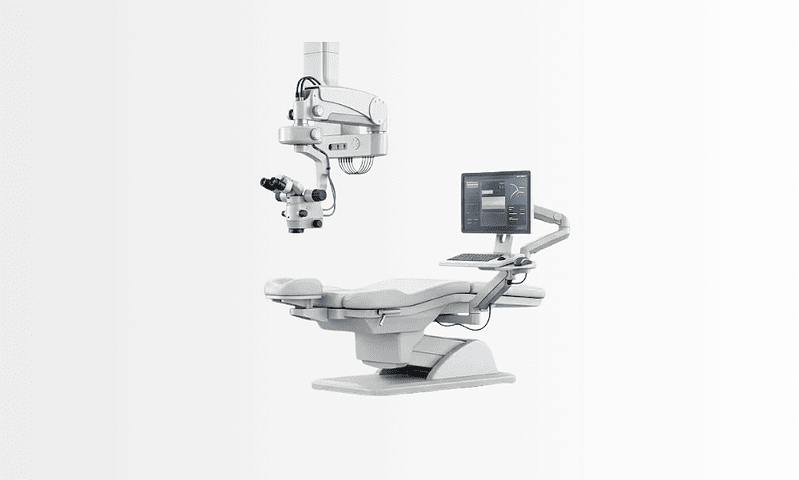
The technology behind PRK falls into two groups: diagnostic systems that decide whether and how to treat, and the laser system that carries the treatment out. On the diagnostic side, corneal topography and tomography evaluate the shape and internal structure of the cornea; pachymetry measures its thickness; wavefront or optical quality analysis is used in selected cases; and pupil measurement and dry eye testing complete the picture. On the treatment side, excimer laser platforms with eye-tracking capability deliver the reshaping pattern with high precision.
These tools help the ophthalmologist answer the questions that determine safety. Is the cornea regular enough for laser correction? Is there enough tissue for the planned treatment? Are there early signs of corneal weakness? Is the tear film healthy enough for a comfortable recovery? Is the prescription stable and consistent between measurements? The point of all this technology is to match the procedure to your anatomy rather than applying a standard treatment to every eye. It supports the surgeon’s judgement; it does not replace it. Good outcomes come from combining accurate data with an experienced ophthalmologist’s interpretation and an honest discussion of what you can expect.
How long does PRK take?
PRK is completed in a single short outpatient visit, with the laser treatment itself lasting only a brief period for each eye. Plan for extra time at the clinic for preparation, examination and postoperative guidance. Some patients have both eyes treated on the same day; others may be advised to stage treatment, one eye at a time, depending on clinical factors and personal circumstances such as work demands or the practicalities of managing recovery.
PRK Recovery: What to Expect
Recovery after PRK is gradual, and vision improves in stages rather than overnight. The pattern is well understood, which makes it easier to plan around. The timeline below describes a typical course; your own healing may run slightly faster or slower, and your follow-up examinations are what confirm where you are.
| Time Period | What Patients Can Expect |
|---|---|
| Day 1 | Vision is usually blurry. Tearing, burning, light sensitivity and foreign body sensation are common. Rest, prescribed drops and avoiding eye rubbing are important. |
| First Week | The corneal surface heals and the bandage contact lens is removed when appropriate. Comfort improves, but vision may continue to fluctuate. Many patients resume limited work depending on visual demands. |
| First Month | Vision becomes more functional for most daily activities, though dryness, glare, halos or fluctuations can persist. Follow-up visits and eye drops remain important. |
| Three to Six Months | Vision generally becomes more stable as the cornea completes deeper healing. Some patients notice continued refinement during this period. |
| Longer Term | Results are typically stable when the preoperative prescription was stable, but natural eye changes, presbyopia or cataract development later in life can affect vision over time. |
How long does PRK recovery take?
Functional recovery after PRK takes days to a couple of weeks; visual refinement continues for several months. The epithelium usually closes within the first several days, at which point the bandage contact lens is removed at your surgeon’s examination. Comfort improves noticeably once the surface has healed. Vision, however, keeps sharpening more slowly, and it is normal for clarity to fluctuate, better one day, hazier the next, during the first weeks. Anti-inflammatory drops are often continued for a period after surgery to guide healing and reduce the risk of corneal haze, and follow-up visits let your surgeon monitor epithelial healing, corneal clarity, refractive stability, and eye pressure while steroid drops are in use. This slower course is the trade-off for avoiding a flap, and most patients who chose PRK for good reasons find it acceptable once they know what to expect.
When can you drive after PRK?
You can drive after PRK once your ophthalmologist confirms your vision meets the legal safety requirement and you feel genuinely comfortable behind the wheel. Because vision fluctuates during the early weeks, this is assessed at your follow-up examinations rather than assumed from a fixed number of days. You should not drive yourself home on the day of surgery, and night driving may take longer to feel natural than daytime driving because glare and halos are more noticeable in low light while the cornea heals.
When can you return to work after PRK?
Many patients return to desk work several days to a week after PRK, depending on comfort, visual demands and healing speed. Screen-heavy work is possible once the surface has settled, though dryness may make long screen sessions tiring at first; lubricating drops and regular breaks help. Physically demanding jobs, dusty environments and roles with impact risk need a longer pause, and the return date is a decision to make with your surgeon rather than your calendar. If your work is visually critical, precision tasks, fine detail, professional driving, build extra margin into your plans, because functional vision arrives before fully refined vision.
What should you avoid during PRK recovery?
The main things to avoid during PRK recovery are eye rubbing, swimming too early, dusty or smoky environments, and unprotected ultraviolet exposure. Rubbing can disturb the healing surface; pools and open water carry infection risk while the epithelium is regenerating; dust and smoke irritate an already sensitive surface; and UV exposure is thought to influence the healing response, which is why sunglasses are routinely recommended during recovery, especially for patients travelling between climates. Use your drops exactly as prescribed and keep every follow-up appointment: the schedule exists because the healing course genuinely needs monitoring, not as a formality.
Why Acting Early Matters
PRK is elective for most patients, so acting early does not mean rushing into surgery. It means seeking an evaluation before years of contact lens irritation, dry eye symptoms or plain uncertainty make the decision harder than it needs to be. An early assessment establishes whether you are a good candidate, whether a different vision correction option would be safer, or whether an underlying eye condition needs attention first, and each of those answers is useful.
Some people delay because they were told years ago that they had thin corneas or high astigmatism and assume nothing has changed. Refractive surgery diagnostics have improved considerably, and candidacy often deserves a fresh assessment with current imaging. Others delay because they are worried about discomfort or recovery time; in practice, a planned PRK schedule can usually be coordinated around work, travel and follow-up needs, which is far easier when you start the conversation early rather than under time pressure.
There are also situations where delay carries medical weight. Contact lens overuse can contribute to chronic irritation, corneal inflammation, infections, or blood vessel growth onto the cornea. Unrecognised dry eye disease erodes both comfort and quality of vision. Progressive corneal conditions such as keratoconus must be identified early, because laser vision correction is generally not appropriate for them and different treatments may be needed to protect vision. Finding these problems sooner rather than later changes what can be done about them.
Finally, a refractive surgery evaluation is a thorough eye examination in its own right. It can bring forward the diagnosis of cataract, glaucoma, retinal disease or other conditions that would affect any treatment choice. Even if PRK is never performed, the evaluation leaves you with a detailed picture of your eye health and a sounder basis for long-term decisions.
Benefits of PRK
For appropriately selected patients, PRK offers several practical and medical advantages, particularly when a surface-based approach is the safer fit for the eye in question.
| Benefit | What It Means for You |
|---|---|
| No corneal flap | Because PRK treats the surface of the cornea, it avoids flap-related concerns and may be suitable for certain patients with thinner corneas or higher risk of eye impact. |
| Reduced dependence on glasses or contacts | Many patients achieve clearer daily vision without relying as heavily on corrective lenses, although reading glasses may still be needed with age. |
| Useful alternative when LASIK is not ideal | Patients who are not good LASIK candidates may still be considered for PRK after detailed corneal and ocular surface evaluation. |
| Long-established laser technique | PRK has been used for decades, and its healing pattern, risks and follow-up needs are well understood by refractive surgeons. |
| Personalised treatment planning | Modern diagnostic testing allows the surgeon to plan correction based on your prescription, corneal shape, thickness and visual priorities. |
Risks and Side Effects of PRK
Is PRK safe?
PRK is a long-established procedure with a healing pattern and risk profile that refractive surgeons understand well, but no eye surgery is without risk. Serious complications are uncommon, and careful screening exists precisely to keep them that way: most avoidable problems come from operating on eyes that should not have been operated on, which is why a thorough evaluation, and a programme willing to decline surgery, matters more than any single piece of technology. A proper consent process should walk you through both the expected benefits and the limitations of treatment for your specific eyes, in plain terms, before you decide.
Potential risks and side effects of PRK include infection, delayed epithelial healing, dry eye symptoms, glare, halos, undercorrection, overcorrection, regression of the treatment effect, corneal haze, reduced contrast sensitivity, and in selected cases the need for an enhancement procedure. Some of these, dryness, glare, halos, fluctuation, are common as temporary parts of normal healing and fade as the cornea settles. Others are genuine complications that follow-up examinations are designed to catch early. The distinction between an expected healing symptom and a problem is one of the things your postoperative visits exist to make.
What is corneal haze after PRK?
Corneal haze is a healing response in which the treated corneal surface temporarily loses some of its clarity as new tissue forms. It is specific to surface procedures like PRK because the healing happens at the corneal surface rather than under a flap. Anti-inflammatory drops used in the weeks after surgery are one of the main tools for guiding this healing and reducing haze risk, which is why using them exactly as prescribed matters. Patients with higher corrections carry a greater risk of haze and of regression than those with lower corrections: a consideration your surgeon weighs when planning treatment and one worth discussing openly if your prescription is at the stronger end of the treatable range.
What Influences the Outcome of PRK?
A good PRK result depends on patient selection, surgical planning, your individual healing behaviour and disciplined follow-up. The single most important factor is whether PRK was the right procedure for your eye in the first place. A patient with a healthy cornea, a stable prescription and realistic expectations is far better placed than one whose anatomy or ocular surface health created avoidable risk from the start.
Prescription stability matters because PRK reshapes the cornea according to your current refractive error. If your prescription is still changing, the correction becomes less accurate as your eyes continue to drift. Ophthalmologists review past prescriptions for this reason and may recommend waiting if there is evidence of recent change: a frustrating answer in the short term, but the right one.
Corneal thickness and shape are central to safety. Because PRK removes tissue, surgeons calculate how much cornea will remain after treatment and whether that remainder is structurally sound. Topography and tomography detect irregular patterns and early signs of corneal weakness that a standard eye test would miss. If these findings are concerning, laser vision correction may not be appropriate at all, and identifying that before surgery is precisely what the imaging is for.
Ocular surface health affects both comfort and clarity. Dry eye, blepharitis, allergies and contact lens-related inflammation can all interfere with healing and with the quality of your vision afterwards. These issues may need treatment before surgery is considered. In some cases, improving the tear film actually changes the measured prescription, another reason careful preparation is not a box-ticking exercise but part of getting the correction right.
Healing response varies from person to person in ways that cannot be fully predicted. Some patients heal quickly with minimal haze or fluctuation; others need a longer course of drops and closer monitoring. Higher corrections carry more healing-related risk than lower ones. Your surgeon will frame these considerations around your specific treatment plan rather than around averages.
Age and near vision expectations should be settled before surgery, not discovered after it. PRK improves distance focus, but it does not prevent presbyopia. A patient in the early 30s may enjoy many years of good unaided distance vision before reading glasses become necessary; a patient in the late 40s may already need a near-vision plan. Understanding this distinction in advance is the difference between a satisfied patient and a disappointed one with a technically excellent result.
Adherence to postoperative care is the part you control. Drops used as prescribed, follow-up appointments kept, eye rubbing avoided, swimming postponed, dusty environments minimised, sunglasses worn. None of it is complicated; all of it matters.
How long does PRK last?
The corneal reshaping performed in PRK is permanent, and results are typically stable when the preoperative prescription was stable. What PRK does not do is freeze your eyes in time. Presbyopia will still arrive with age and may bring a need for reading glasses. Natural refractive changes can occur over the years, and cataract development later in life affects vision regardless of any earlier laser surgery. In selected cases where the refractive effect regresses or the initial correction falls short, an enhancement procedure may be considered: a possibility your surgeon should discuss with you as part of consent rather than as an afterthought. Thinking of PRK as a durable correction of today’s prescription, rather than a lifetime exemption from optics, is the honest frame.
How Acibadem Approaches PRK
PRK at Acibadem is planned as a diagnostic pathway first and a laser procedure second. Evaluation is carried out by ophthalmologists experienced in refractive surgery and anterior segment care, and it is individualised rather than limited to a prescription measurement. Corneal imaging, thickness analysis, ocular surface assessment and a general eye examination together determine whether PRK, LASIK, another refractive procedure, or no surgery at all is the safest recommendation. When findings are complex, subspecialists may be brought into the decision-making.
That last option, no surgery, is treated as a legitimate outcome, not a failure of the consultation. Not every patient who wants PRK should have PRK. Patients are walked through the reasoning: whether the cornea is suitable, whether dry eye needs treatment first, whether presbyopia changes what surgery can realistically deliver, and whether the likely benefit outweighs the risk for that particular pair of eyes. A clear explanation of why a procedure is not recommended is as valuable as the procedure itself.
Hospital-based care is relevant to PRK because laser vision correction involves more than the laser. Accurate testing, infection prevention, medication protocols, informed consent and structured follow-up all sit around the procedure, and some patients bring wider medical context with them, autoimmune disease, diabetes, prior eye inflammation, retinal concerns or medication histories that need careful review before any refractive surgery. Acibadem’s multidisciplinary structure means that broader medical expertise is available when refractive surgery intersects with general health, rather than the eye being assessed in isolation.
The diagnostic and laser technologies used support this approach: corneal mapping systems to identify subtle irregularities, thickness measurement to preserve safety margins, tear film evaluation to catch dry eye before it complicates healing, and laser platforms with tracking functions for controlled tissue reshaping. The specific tools are chosen according to what each patient’s eyes require, not applied as a fixed package.
For patients travelling from abroad, international patient services coordinate the practical side of care, appointment scheduling, medical record transfer, interpreter support and communication with clinical departments, so that the visit is organised around a realistic timeline for examination, procedure, early recovery and follow-up. That timeline deserves honesty: PRK is not a fly-in, fly-out procedure. The first few days are uncomfortable, vision may be too blurry for demanding work or immediate travel, and early postoperative checks require you to remain nearby for a period your surgeon defines. For later follow-up, coordination with an ophthalmologist in your home country may be recommended, so that the months of visual refinement are monitored without repeated long-distance travel.
Making an Informed Decision About PRK
PRK is a well-understood, flap-free laser vision correction option that suits a specific and substantial group of patients: those with stable prescriptions, healthy eyes, and anatomy or lifestyles that favour a surface procedure. It asks more patience during recovery than LASIK, and the first days are genuinely uncomfortable, but for the right candidate, it offers durable correction while preserving corneal tissue and avoiding a flap altogether.
The decision rests on measurement, not marketing. Your corneas must be mapped and measured, your prescription reviewed for stability, your tear film assessed, and your age, medical history and expectations weighed alongside the numbers. If treatment involves international travel, the same rigour applies to planning: understand not only whether PRK is technically possible for your eyes, but what the recovery will feel like, how long you should remain near the clinic for early checks, and how follow-up will be handled once you return home. Patients who go into PRK with that full picture tend to come out of it with the result they expected, which, in refractive surgery, is the definition of success.
Preparation
- A detailed eye examination, corneal mapping, and refraction tests are performed to confirm suitability for PRK. Contact lenses may need to be stopped before evaluation and surgery. Patients should inform the ophthalmologist about eye dryness, infections, medications, or previous eye surgery.
Aftercare
- Mild discomfort, light sensitivity, and blurred vision are common during the first few days while the corneal surface heals. Prescribed antibiotic, anti-inflammatory, and lubricating eye drops should be used as directed. Follow-up visits are important to monitor healing and visual recovery, and rubbing the eyes should be avoided.
Frequently Asked Questions
What affects the cost of PRK?
The cost is influenced by the preoperative tests, prescription complexity, corneal findings, laser technology, surgeon and hospital factors, medications, follow-up plan and whether travel or language support is included. A personalised quote is possible only after a specialist reviews your eye measurements.
How can I get a personalised PRK quote?
You can request a free consultation and share your eye prescription, previous eye test results and any history of dry eye, contact lens use or eye surgery. The team can then explain the likely pathway, required tests and what is included in the proposed package.
Is PRK cheaper than LASIK?
Not always. PRK and LASIK use different surgical approaches, but the final fee depends on diagnostics, technology, aftercare, surgeon factors and clinic policy. The right option should be chosen for medical suitability rather than price alone.
What is usually included in an international PRK package in Turkey?
Packages may include ophthalmic examinations, corneal imaging, the PRK procedure, prescribed eye drops, scheduled follow-up visits, interpreter assistance and selected travel logistics. Inclusions vary, so the written quote should be checked carefully.
Will I need to stay in Turkey after PRK?
Most patients need planned follow-up after surface laser surgery because the corneal surface must heal. The required stay depends on healing, the surgeon’s advice and your travel plans. Your care team can recommend a safe schedule during consultation.
Medically reviewed by the Acıbadem International Medical Board September 1, 2026
See our medical review board →
Update history
- PublishedJune 8, 2026
- Medical review approvedSeptember 1, 2026
- Last content updateSeptember 1, 2026
References2
- Laser Eye Surgery medlineplus.gov
- Laser eye surgery and lens surgery nhs.uk
Trusted care for international patients
Laser eye surgery costsledger-based guide ranges, or browse the full Turkey Medical Price Index.
From the Acibadem Blog

How PRK Surgery Is Done: Removing the Surface Layer, Reshaping and the Bandage Lens
PRK surgery is done in three steps. After numbing drops, the surgeon removes the cornea's thin outer skin, the epithelium, using a soft brush,…

What PRK Results Usually Look Like Once Healing Finishes and How Long They Hold
PRK reshapes the cornea after its surface layer is removed, so vision is blurry for the first several days and sharpens gradually rather than…
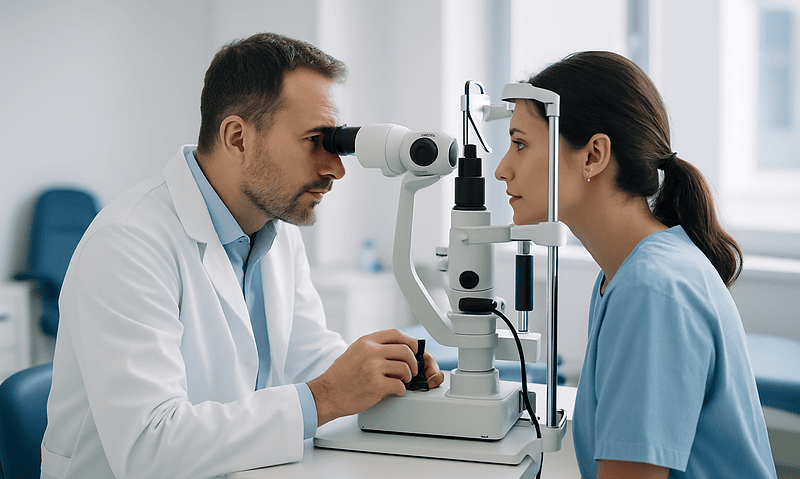
Why PRK Is Offered When LASIK Is Not: Thin Corneas, Dry Eyes and Active Lifestyles
PRK is often offered instead of LASIK when the cornea is thinner than average, because PRK removes only the surface layer and reshapes the…

PRK Recovery Timeline: Hazy Days, Bandage Lens Removal and the Slow Climb to Clear Vision
A typical PRK recovery timeline runs in stages: the outer corneal layer regrows over roughly three to five days, during which the bandage contact…