Septoplasty
Septoplasty is a surgical procedure to straighten a deviated nasal septum and improve airflow through the nose. It is commonly performed to relieve chronic nasal obstruction and related breathing problems.
Quick answer
Septoplasty is an operation that straightens the nasal septum, the wall of cartilage and bone dividing the nose into two passages, when a deviation blocks airflow. Working through the nostrils, the surgeon reshapes or removes the bent sections while preserving the nose's support. It is usually a day-case procedure under general anaesthesia, performed to improve breathing rather than to change the nose's appearance.
Septoplasty: when a blocked nose starts to shape daily life
Septoplasty is an operation that straightens the nasal septum: the internal wall of cartilage and bone that divides the nose into a right and a left passage. It is performed when that wall is bent or displaced enough to obstruct airflow, and it is intended for people whose blocked breathing has not improved with medical treatment. The goal is functional: a nose that lets air through properly, not a nose that looks different from the outside.
Many people live for years with the feeling that they can never fully breathe through their nose. They assume it is “just allergies”, the legacy of an old injury, or simply the way their nose has always been. But when nasal blockage is persistent, it affects far more than comfort. Disturbed sleep, snoring, a dry mouth in the morning, reduced tolerance for exercise, frequent sinus infections, facial pressure and a constant need to breathe through the mouth gradually wear down energy and quality of life. Because the change is slow, people often adapt without realising how much they have adapted.
For some, the concern is practical: one side of the nose always feels closed, especially at night or during activity. For others, the problem becomes emotional as well as physical. Difficulty breathing creates frustration, poor sleep affects concentration and mood, and the idea of nasal surgery brings understandable anxiety. The questions people ask before septoplasty are remarkably consistent: will it hurt, will it change how my nose looks, how long will recovery take, and will the improvement last. This page answers those questions as directly as the evidence allows.
Careful evaluation matters, because nasal obstruction can have more than one cause. The best results come from understanding the full picture: the structure of the septum, the size of the turbinates, the presence of sinus disease or allergies, prior trauma, sleep symptoms and your own goals for treatment. Septoplasty corrects a structural problem. It does not treat allergy, and it does not replace medical management where inflammation is the main driver of symptoms. Distinguishing between these causes is the first task of any honest assessment.
The decision to go ahead with septoplasty is usually not about treating a minor inconvenience. It is about restoring function. Because the nose plays a central role in breathing, sleep, exercise and the warming, filtering and humidifying of air before it reaches the lungs, correcting a significant obstruction can have benefits that extend well beyond the nose itself.
What is septoplasty?
Septoplasty is surgery to straighten the nasal septum, the internal partition of cartilage and bone that separates the two sides of the nose. In an ideal nose, the septum sits close to the midline and allows balanced airflow through both passages. In a large proportion of people, however, it is bent, buckled or displaced to one side. This is called a deviated septum, and when the deviation narrows the airway enough to cause symptoms, septoplasty is the operation designed to correct it.
A deviated septum may be present from early life, may develop gradually as the face grows, or may follow an injury, sometimes an injury the person barely remembers. Some deviations are mild and cause no meaningful symptoms at all. Others narrow one or both nasal passages enough to interfere with breathing, contribute to recurring sinus problems, or make other nasal conditions harder to manage. The presence of a deviation on examination is not, by itself, a reason to operate; the deviation has to be causing the problem.
The purpose of septoplasty is to improve nasal function by reshaping, repositioning or removing the portions of cartilage and bone that obstruct airflow. The operation is usually performed entirely through the nostrils, so there is typically no external incision and no visible scar. Septoplasty is considered a functional procedure rather than a cosmetic one: its main goal is not to change how the nose looks, but to help the nose work.
Deviated septum surgery: what the operation actually corrects
Deviated septum surgery, the everyday name for septoplasty, corrects the fixed, structural component of nasal blockage. Medication can shrink swollen lining and calm inflammation, but no spray, tablet or rinse can straighten bent cartilage or bone. That is the dividing line that determines who benefits from surgery: if the obstruction persists once inflammation is controlled, the cause is likely to be structural, and structure is what surgery addresses.
Not every crooked septum looks the same. Some have a simple C-shaped bend. Others have sharp spurs of bone pressing into the side wall of the nose, thickened areas where cartilage meets bone, or complex S-shaped distortions after trauma. The surgical plan is tailored to the specific pattern, which is why a careful examination before surgery matters more than the label on the operation.
Is a septoplasty a major surgery?
No, septoplasty is generally regarded as a routine, moderate ENT procedure rather than major surgery. It is usually performed as a day case, involves no external incision, and does not open any body cavity. That said, it is still real surgery: it is most often done under general anaesthesia, it requires a period of internal healing, and it deserves the same preparation and respect as any operation. The sensible way to think of it is as a focused procedure with a manageable recovery, not a trivial one.
What is stentoplasty?
Stentoplasty is not a standard name for a nasal operation. The word appears online mainly as a variation or misspelling of septoplasty, and in other areas of medicine it can loosely refer to procedures involving a stent. If you have come across the term while researching a blocked nose or a deviated septum, the operation being described is almost always septoplasty: the straightening of the nasal septum described on this page.
Who may need septoplasty
Septoplasty is generally considered when someone has symptoms consistent with structural nasal obstruction and those symptoms have not improved enough with appropriate medical treatment. Most patients first try nasal steroid sprays, antihistamines, saline irrigation or treatment for allergies under their doctor’s guidance. If meaningful blockage continues despite these measures, an ear, nose and throat specialist can assess whether a deviated septum is a significant part of the problem, or whether something else explains it.
Typical symptoms of structural nasal obstruction
- Persistent difficulty breathing through one or both sides of the nose
- A feeling of chronic nasal congestion without a major cold or infection
- Mouth breathing, especially at night
- Snoring or disrupted sleep related to nasal blockage
- Frequent nosebleeds caused by turbulent airflow or dryness
- Repeated sinus infections or ongoing sinus pressure
- Headaches or facial discomfort associated with poor nasal drainage
- Difficulty exercising comfortably because of impaired airflow
Symptoms vary considerably from person to person. Some people notice obvious blockage every day. Others mainly struggle when lying down, during allergy season, in dry air-conditioned environments, or during physical exertion. A septal deviation can also amplify other nasal conditions, making otherwise manageable allergy or inflammation feel far more disruptive than it would in a straight nose.
How is nasal septum deviation diagnosed?
Nasal septum deviation is diagnosed through a detailed history and a focused examination of the inside of the nose: there is no blood test for it, and imaging is not always required. The specialist will usually ask when symptoms started, whether one side is worse than the other, whether there was previous trauma, which treatments have already been tried, and whether symptoms include sinus infections, allergies, snoring or changes in the sense of smell.
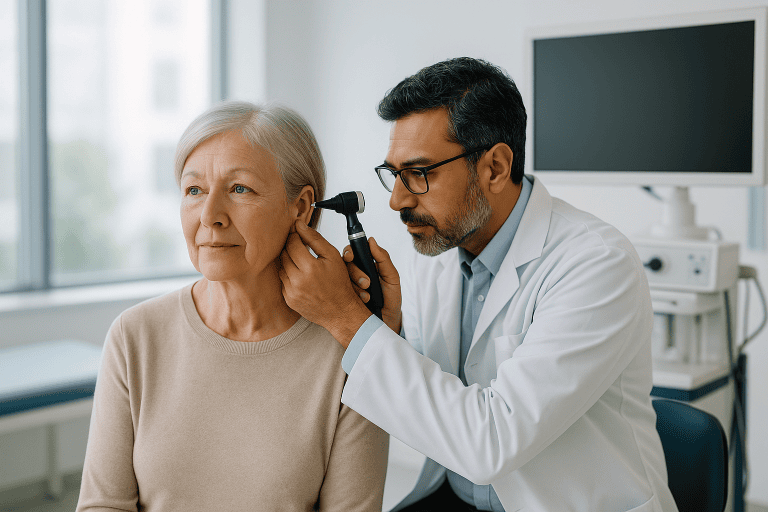
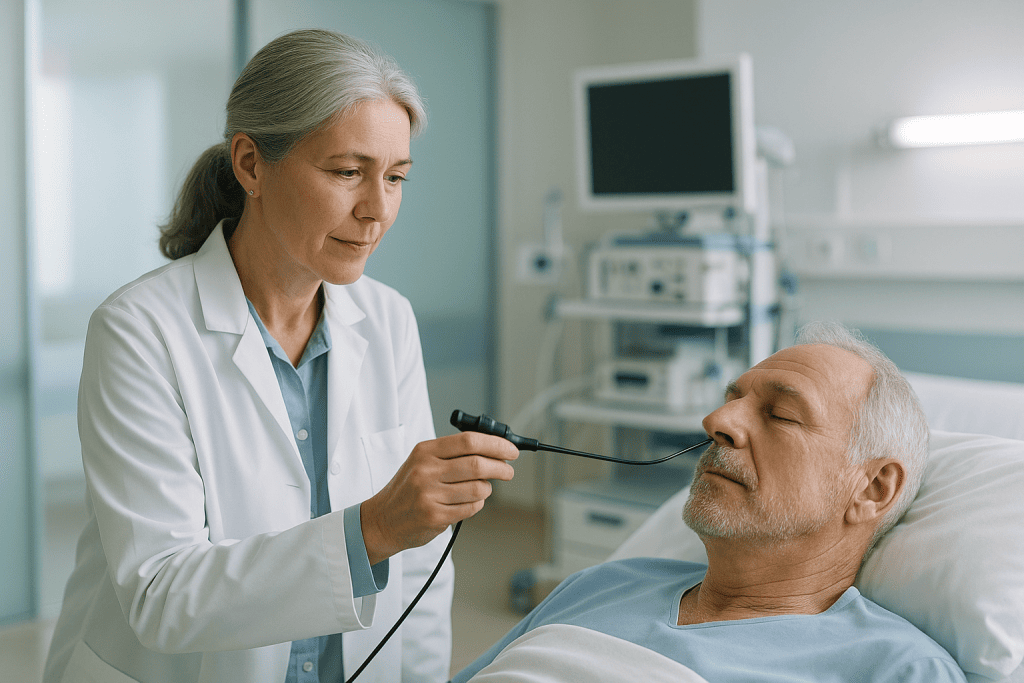
The examination typically includes looking inside the nose with a lighted instrument and, in many cases, a small endoscope. Nasal endoscopy lets the physician assess the septum, the turbinates, the drainage pathways and the deeper anatomy in detail. This is important, because it distinguishes septal deviation from other causes of obstruction that need different treatment: turbinate enlargement, polyps, inflammation, infection, or collapse of the nasal valve area near the nostrils.
A CT scan may be recommended when chronic sinus disease, prior surgery, significant trauma or more complex anatomy is suspected, but it is not routine for a straightforward deviation. The purpose of the whole assessment is not simply to confirm that the septum is crooked, most septa are, to some degree, but to establish whether it is genuinely the main reason you cannot breathe well. That distinction is what separates a good surgical result from a disappointing one.
Situations that often lead people to treatment
Septoplasty is often considered by people who have lived with long-standing blockage and are tired of planning sleep, exercise, travel and daily comfort around a nose that does not work. Others seek evaluation after a sports injury or accident that shifted the septum. Some arrive because recurring sinus infections have become genuinely disruptive to work and family life. Parents may bring adolescents or young adults after years of mouth breathing and restless sleep, although in younger patients other causes such as enlarged adenoids need to be considered first, sometimes leading to adenoid surgery (adenoidectomy) rather than septal surgery. Adults with demanding jobs or frequent travel often decide to address the issue once they recognise how much chronic obstruction is costing them in sleep quality, concentration and stamina.
The conditions and indications septoplasty addresses
The primary indication for septoplasty is a symptomatic deviated septum causing functional problems. The procedure may help in several related situations, provided a structural blockage has been clearly identified:
- Chronic nasal obstruction: the most common reason for surgery. Patients typically describe one side as constantly blocked, or both sides as never fully open.
- Impaired airflow affecting sleep: septal deviation can contribute to snoring, mouth breathing, poor sleep quality and waking with a dry mouth.
- Recurrent or persistent sinus problems: a deviated septum may narrow sinus drainage pathways and make inflammation harder to control.
- Frequent nosebleeds: abnormal, turbulent airflow dries and irritates the nasal lining in some people, leading to repeated bleeding episodes.
- Headaches or facial pressure from intranasal contact points: in selected patients, correcting the septum may reduce these symptoms: this indication requires careful assessment, as headaches usually have other causes.
- Facilitation of other nasal or sinus procedures: straightening the septum can improve surgical access for sinus surgery or help other functional treatments work better.
- Post-traumatic nasal blockage: injury may shift the septum enough to create persistent breathing difficulty long after the visible swelling has resolved.
It is worth repeating that not every person with a deviated septum needs surgery. Septal deviation is common, and many people with visibly crooked septa have no symptoms whatsoever. Septoplasty is most appropriate when symptoms are significant, the anatomical cause is clear, and more conservative treatment has not provided adequate relief. A specialist who tells you that your deviation does not need an operation is giving you useful information, not withholding treatment.
How septoplasty surgery is performed
Septoplasty surgery is a common ENT operation, but it remains a carefully planned procedure that depends on precise assessment and technique. The aim throughout is to improve airflow while preserving the structural support of the nose, removing too much tissue can weaken the nose, while removing too little leaves the blockage in place.
Before surgery
Preparation begins with a specialist consultation and nasal examination. The surgeon reviews your symptoms, medical history, current medications, allergies, prior nasal trauma or surgery, and whether there are associated issues such as sinus disease, enlarged turbinates or sleep-related breathing concerns. Where appropriate, additional tests or imaging are arranged so that the operation addresses everything relevant in a single, coherent plan.
Your surgeon and anaesthesia team will go through your medication list and give you specific instructions for each item before the operation; any adjustments belong to them, not to guesswork. Smoking cessation is strongly encouraged, since smoking impairs healing and irritates the nasal lining. If allergies or active inflammation are present, the team may treat these medically before surgery so the nose is in the best possible condition on the day.
Septoplasty is typically performed under general anaesthesia, although the anaesthesia plan depends on the individual case and overall health. Before the procedure, the care team confirms the plan, explains what to expect from splints or internal dressings, and reviews how discomfort will be managed and when normal activities can resume. Knowing the sequence in advance removes most of the anxiety on the day itself.
During the procedure
In most cases the surgeon works entirely through the nostrils, with no cut on the external skin. The operation follows a logical sequence:
- The lining (mucosa) covering the septum is gently lifted away from the underlying cartilage and bone, keeping it intact so it can be laid back at the end.
- The bent sections of cartilage and bone are identified: a simple curve, a sharp spur, or a more complex distortion.
- The obstructing portions are reshaped, repositioned or selectively removed, while enough of the framework is preserved to keep the nose stable and supported.
- The lining is returned to its normal position over the straightened septum.
- Soft internal splints or supportive material may be placed inside the nose to stabilise the septum and limit swelling or bleeding during early healing. Not every patient needs the same support, and modern approaches aim to keep the postoperative period as comfortable as the healing process allows.
The exact technique depends on the pattern and severity of the deviation. Simple bends are more straightforward; post-traumatic distortions, thick bony spurs and revision cases after previous surgery demand more intricate work. Precision matters at every step: the objective is not to remove as much tissue as possible, but to create a straighter, functional airway while respecting the architecture of the nose.
Turbinate reduction and combined procedures
Turbinate reduction is frequently performed at the same time as septoplasty when enlarged turbinates: the shelf-like structures on the side walls of the nose that warm and humidify air, are also contributing to the blockage. In many noses, the turbinate on the wider side has enlarged over the years to fill the extra space, so straightening the septum alone would leave part of the obstruction untouched. Reducing turbinate bulk while preserving its function is a routine addition that can meaningfully improve the overall result.
Patients with chronic sinus disease may have sinus surgery combined with septoplasty when the evaluation shows both problems should be addressed together. And for people who have both a functional blockage and concerns about the external shape of the nose, septoplasty can be combined with rhinoplasty as a coordinated procedure, planned together with the plastic, reconstructive and aesthetic surgery team so that function and appearance are considered as one plan rather than two separate operations.
The role of technology
Modern septoplasty benefits from improved visualisation and refined instruments. Endoscopic assistance can provide a detailed, magnified view inside the nose, which is particularly useful in complex anatomy, deviations sitting far back in the nasal cavity, or operations combined with sinus surgery. High-quality imaging helps in selected patients, especially those with chronic sinus symptoms, previous trauma or prior surgery.
Technology does not replace surgical judgement, and a straightforward deviation does not become a better operation by adding equipment to it. What good visualisation genuinely offers is accuracy: it helps the surgeon see the anatomy clearly, work precisely, and use tissue-preserving techniques that protect the nose’s support while opening the airway.
How long does septoplasty take?
Septoplasty is usually completed within a relatively short operative period, commonly under an hour or so for an isolated procedure, although the exact duration depends on the complexity of the deviation and whether turbinate reduction, sinus surgery or other procedures are performed at the same time. Most patients go home the same day unless there is a specific medical reason for overnight observation.
Recovery after septoplasty
Recovery is where expectations matter most. The nose heals from the inside, which means the improvement arrives gradually rather than the moment you wake up. Here is what the process usually looks like, and honest answers to the questions people ask most.
What recovery is usually like
After surgery, it is common to experience congestion, mild bleeding or drainage, and a sense of pressure rather than sharp pain. Many patients say the early days feel more like a heavy cold, a very blocked nose, than like the aftermath of an operation. Discomfort is generally managed with the medication your team prescribes or recommends, along with saline care and rest.
If internal splints are used, nasal breathing stays limited until they are removed at a follow-up visit. Swelling inside the nose improves progressively over the following days and weeks. During early healing you will usually be advised to avoid nose blowing, heavy lifting, strenuous exercise, hot environments and anything else that raises pressure in the head and could provoke bleeding.
A few practical habits make the early weeks noticeably easier. Regular saline rinses, once your team approves them, keep the healing lining moist and help clear crusting gently instead of by force. Sneezing with the mouth open reduces pressure inside the nose. A humidifier at night counteracts the dryness that many patients notice while the lining regenerates, and avoiding smoky, dusty or heavily air-conditioned environments protects tissue that is still fragile. Questions about returning to work, resuming sport or taking a flight are best answered by your own surgeon, because the right timing depends on how your nose is healing and on what was done during the operation.
Follow-up visits are a genuine part of the treatment, not an administrative formality. The surgeon checks healing, removes splints and crusting where needed, and confirms that the airway is opening as expected. Your team will also explain in advance which signs during healing warrant a prompt review, so you know what is normal and what is not before you go home.
Is septoplasty very painful?
For most patients, no, septoplasty is usually described as uncomfortable rather than very painful. The dominant sensations in the first days are blockage, pressure and congestion, particularly while splints are in place, rather than severe pain. Discomfort typically eases over the first week as swelling settles. Individual experiences vary, and the care team plans pain management with you before the operation so that the early days are as manageable as possible. It would be dishonest to promise a comfortable week; it is accurate to say that severe pain is not the typical experience.
How long after septoplasty can you sleep on your side?
Most surgeons advise sleeping on your back with the head elevated for the first several nights, because elevation reduces swelling and drainage while the septum is at its most delicate. Many patients can comfortably return to side sleeping within the first one to two weeks, often once splints have been removed and congestion has begun to settle. The exact timing depends on how you are healing and on whether other procedures were combined with the septoplasty, so follow the specific guidance your surgeon gives you rather than a fixed calendar date. Unlike rhinoplasty, septoplasty involves no external reshaping, so sleeping position is mainly about comfort and swelling rather than protecting a new nasal shape.
Typical recovery timeline
| Time Period | What Patients Can Expect |
|---|---|
| Day 1 | Congestion, mild drainage and a sense of pressure are common. Most patients go home the same day and begin rest, hydration and nasal care as instructed. |
| First Week | Nasal blockage usually continues while swelling is at its peak. If splints are used, they are typically removed at a follow-up visit. Light daily activity is often possible, but strenuous exertion should be avoided. |
| First Month | Breathing often starts to feel more clearly improved as internal swelling settles. Most patients are back to normal routines, though the nose is still healing internally. |
| Longer Term | Healing continues over the following weeks to months. The final functional result becomes easier to judge once the tissues have matured and inflammation has resolved. |
Two practical points are worth knowing in advance. First, the nose can feel worse before it feels better: the first week is usually the most congested of the entire process. Second, improvement is cumulative: patients often notice the difference most clearly weeks after surgery, during exercise or a night of unbroken nasal breathing, rather than at any single dramatic moment.
Septoplasty and the shape of the nose
Does septoplasty change nose shape?
In the vast majority of cases, no, septoplasty does not change the external shape of the nose. The operation works on the internal partition, through the nostrils, and deliberately preserves the structures that support the nose’s outward appearance. Family and colleagues will generally see no difference at all; what changes is how the nose works, not how it looks.
Will my nose look different after septoplasty?
Your nose should look the same after an isolated septoplasty, once early swelling has settled. There are two honest caveats. If a severe deviation involves the part of the septum that supports the tip or bridge, correcting it can occasionally produce a subtle change in profile: your surgeon will tell you beforehand if your anatomy makes this relevant. And if you choose to combine septoplasty with rhinoplasty because you also want the external shape altered, the appearance will of course change, but that change is planned and discussed in advance, never a surprise. If maintaining your current appearance matters to you, say so explicitly during the consultation so the plan reflects it.
Why acting early matters and the risks of delay
A deviated septum is not a medical emergency, and there is rarely a reason to rush a decision. But delaying evaluation usually means living longer with symptoms that quietly erode sleep, concentration, exercise capacity and general daily functioning. People adapt so gradually to chronic obstruction that many only recognise its full weight after breathing improves: the problem is measured in years of compromised sleep rather than any single bad day.
Early assessment also matters because not all nasal blockage is caused by a deviated septum. Persistent symptoms deserve proper evaluation, especially when they are worsening or accompanied by recurrent infections, repeated nosebleeds, significant snoring, facial pain or poor sleep. A timely review identifies whether the issue is structural, inflammatory, sinus-related, allergy-related, or, as is often the case, a combination that needs a combined plan.
Leaving a significant obstruction untreated allows its secondary effects to continue. Ongoing mouth breathing contributes to dry mouth and disturbed sleep. Repeated sinus infections can mean more courses of antibiotics and more missed work. Persistent blockage makes exercise harder and reduces comfort during travel, particularly on long flights and in dry cabin air.
In some patients, especially those with post-traumatic changes or several coexisting nasal problems, earlier treatment simplifies the overall management and shortens the period spent on therapies that were never going to straighten a bent septum. The point is not to hurry into an operation. It is to reach a clear diagnosis early, so that whatever you decide, you decide it with accurate information rather than by default.
Potential benefits of septoplasty
When septoplasty is recommended for the right reasons and performed after careful evaluation, the benefits often extend beyond simply “opening the nose”. The table below summarises what a good functional result can mean in practice.
| Benefit | What It Means for You |
|---|---|
| Improved nasal airflow | Breathing through the nose may feel easier during daily activity, exercise and sleep. |
| Less chronic congestion | You may rely less on temporary remedies for a nose that always feels blocked. |
| Better sleep comfort | Reduced mouth breathing and night-time blockage can support more restful sleep. |
| Fewer sinus-related problems | In some patients, improved anatomy supports drainage and helps reduce recurrent symptoms. |
| Reduced nosebleeds from dryness or turbulence | More balanced airflow can lessen irritation of the nasal lining in selected patients. |
| Support for other nasal treatments | If turbinate enlargement, sinus disease or other issues are present, septoplasty can be part of a more effective overall plan. |
Note the careful wording: “may”, “can”, “in selected patients”. These are not hedges for their own sake. The degree of benefit depends on how much of your problem the septum was actually causing, which is exactly why the diagnostic stage deserves as much attention as the operation itself.
What influences outcomes and a good result
Septoplasty is generally effective for properly selected patients, but outcomes depend on several identifiable factors. The most important is whether the symptoms are truly being driven by the septal deviation. If you also have significant allergies, turbinate enlargement, nasal valve collapse, chronic sinus disease or sleep-related breathing issues, those factors may need to be treated alongside the septum for the breathing improvement to be felt in daily life.
The nature of the deviation matters too. Simple bends are usually more straightforward to correct than complex post-traumatic distortions or revision cases after previous nasal surgery. Good surgical planning accounts for the exact anatomy, the need to preserve structural support, and whether combined procedures, most commonly turbinate reduction, would improve the overall result.
Expectations are the third pillar of a good outcome. Septoplasty is designed to improve breathing, not to make every nasal sensation disappear or to guarantee two perfectly equal passages at every moment of the day. The normal nose alternates airflow between its two sides in a natural cycle, and that cycle continues after surgery. Patients with seasonal allergies will usually still need medical management of the allergy even after a well-executed operation. What surgery does is remove the fixed structural obstruction that no medication can straighten.
Healing and aftercare complete the picture. Following the team’s instructions on activity, saline rinses, follow-up visits and avoidance of nasal trauma and smoking gives the tissues the best conditions to recover. As with any operation, there are risks, bleeding, infection, a hole in the septum (perforation), altered sensation, or residual or recurrent deviation, and a candid surgeon will discuss these with you before you consent, alongside the likelihood that they apply to your specific anatomy.
In experienced hands, and with thorough assessment before surgery, septoplasty provides durable functional improvement for many patients. The measure of success is practical: a nose that works better in real life, during sleep, exercise, work, travel and ordinary quiet breathing.
Insurance and coverage for septoplasty
Is septoplasty covered by insurance?
Often, yes, in many health systems and private policies, septoplasty is classed as a functional, medically necessary procedure rather than a cosmetic one, and it is therefore often eligible for cover when the clinical criteria are met. Insurers typically want documented evidence: a confirmed septal deviation on examination, symptoms that significantly affect breathing or sleep, and a record showing that appropriate medical treatment was tried first without adequate relief.
Two caveats apply. Every policy defines its own requirements, so the specific terms, pre-authorisation steps and documentation rules of your insurer are what actually decide the question, check them before scheduling anything. And when septoplasty is combined with cosmetic rhinoplasty, insurers generally distinguish between the two: the functional septal work may be covered while the cosmetic portion is not. Clarifying this split in writing before surgery avoids unwelcome surprises afterwards.
Septoplasty care at Acibadem
Septoplasty may be a focused ENT procedure, but the quality of the result still rests on accurate diagnosis, careful surgical planning, safe anaesthesia and organised follow-up. At Acibadem, patients are evaluated within a multidisciplinary environment: ENT specialists assess whether a deviated septum is the main issue or one part of a broader nasal problem involving allergy, sinus disease, sleep-related symptoms or post-traumatic changes, and coordinate with other specialists when the full clinical picture calls for it.
Diagnostic pathways are matched to the individual case, endoscopic nasal examination as standard, imaging when the anatomy or history justifies it, and preoperative anaesthesia assessment with a careful review of previous treatments and scans. Technology is used practically: to clarify anatomy and support precise, tissue-preserving surgery, not to complicate a straightforward problem. Because no two septal deviations are alike, treatment plans are individual. Some patients need only an isolated septoplasty; others benefit from combined turbinate or sinus work, or a broader review of airway function. The same ENT teams manage the full range of ear, nose and throat surgery, from nasal and sinus procedures to ear operations such as stapedectomy surgery and mastoid surgery, which supports consistent standards across related procedures.
Making an informed decision
If persistent nasal blockage, breathing-related poor sleep or recurrent sinus problems have not improved with medical treatment, a specialist assessment is the logical next stage of understanding the problem. A deviated septum is common; when it causes significant obstruction, it is also correctable. What separates good outcomes from disappointing ones is not the operation’s name but the quality of the diagnosis behind it: an evaluation that maps your anatomy, weighs every contributing cause, and matches the plan to your actual symptoms and goals.
For some people, that evaluation confirms that a long-standing problem had a clear structural cause all along, and septoplasty follows naturally. For others, its value lies in the opposite conclusion: that surgery is not the right answer, and a different approach will serve them better. Both outcomes are successes of the same process. Understanding what septoplasty can realistically deliver, better airflow, easier sleep, a nose that stops dictating your day, and what it cannot, curing allergy, perfecting symmetry, changing appearance, is the foundation on which a sound decision rests.
Preparation
- Patients usually have an ENT evaluation and may need nasal examination or imaging depending on symptoms. Blood-thinning medications may need to be paused if advised by the doctor. Fasting is typically required before surgery when general anesthesia is planned.
Aftercare
- Mild swelling, congestion, and light nasal bleeding can occur for a few days after septoplasty. Patients should avoid nose blowing, heavy exercise, and trauma to the nose during early healing. Follow-up visits help monitor recovery and remove any splints or packing if used.
Frequently Asked Questions
What is septoplasty and why might I need it?
Septoplasty is an operation to straighten the nasal septum, the wall between the two nasal passages. When the septum is significantly bent, it can block airflow and cause symptoms such as chronic nasal congestion, trouble breathing through the nose, snoring, recurrent sinus infections, nosebleeds, or headaches. Many international patients seek septoplasty when medicines no longer provide enough relief. At Acibadem, ENT specialists evaluate your symptoms, nasal anatomy, and overall health to decide whether septoplasty is the most suitable treatment.
How do I know if my blocked nose is caused by a deviated septum?
A blocked nose can have several causes, including allergies, enlarged turbinates, sinusitis, polyps, or a deviated septum. A proper ENT examination is important because symptoms often overlap. Your doctor may use nasal endoscopy and, in some cases, imaging studies to understand the source of obstruction. If a deviated septum is the main problem, septoplasty may improve airflow and breathing. Acibadem specialists provide a personalized assessment to identify the cause and recommend the most appropriate treatment plan.
Is septoplasty painful and what kind of anesthesia is used?
Septoplasty is usually performed under general anesthesia, so you are asleep during the procedure and do not feel pain. In selected cases, other anesthesia options may be considered depending on your condition and the surgical plan. After surgery, most patients describe discomfort, pressure, or congestion rather than severe pain. Symptoms are typically managed with prescribed medication and simple aftercare. Your Acibadem care team will explain the anesthesia approach, pain control options, and recovery expectations before your procedure.
How long does septoplasty surgery take and will I need to stay in the hospital?
Septoplasty often takes about 30 to 90 minutes, depending on how complex the deviation is and whether any additional procedures are performed at the same time. Many patients can go home the same day after a period of observation, while some may stay overnight if medically needed. The exact plan depends on your health status, surgical details, and travel arrangements. At Acibadem, your ENT surgeon and international patient team will advise you on expected timing and discharge planning.
What is the recovery time after septoplasty and when can I fly home?
Most people need several days of rest after septoplasty and begin to feel more comfortable within one to two weeks. Nasal swelling and congestion can continue for a while, and full healing takes longer. Travel timing depends on your recovery, whether packing or splints are used, and your surgeon’s advice after follow-up checks. International patients are usually advised to remain in Turkey for a short period after surgery. Acibadem specialists provide personalized guidance based on your healing progress.
Will septoplasty change the shape of my nose?
Septoplasty is primarily designed to improve breathing by correcting the internal septum, not to reshape the outside of the nose. In many cases, there is little or no visible change in appearance. However, if you also want cosmetic changes or if your nasal structure requires both functional and external correction, your surgeon may discuss combining septoplasty with rhinoplasty. During your consultation at Acibadem, the surgeon will explain what to expect based on your anatomy and treatment goals.
Can septoplasty be combined with sinus surgery or turbinate reduction?
Yes, septoplasty is often combined with other ENT procedures when needed. Common combinations include turbinate reduction to improve airflow, functional endoscopic sinus surgery for chronic sinus problems, or treatment for nasal polyps. Combining procedures may reduce the need for separate operations and can address several causes of nasal obstruction at once. The right approach depends on your symptoms, examination findings, and imaging results. Acibadem ENT specialists create a personalized surgical plan to match your specific needs.
What are the risks and possible complications of septoplasty?
Septoplasty is a commonly performed procedure, but like any surgery it carries some risks. Possible complications include bleeding, infection, ongoing congestion, changes in nasal shape, temporary numbness, septal perforation, or the need for revision surgery in some cases. Many risks are uncommon, and careful evaluation, surgical technique, and follow-up help reduce them. Your surgeon will review your medical history, medications, and nasal condition in detail. At Acibadem, patients receive individualized counseling so they understand both benefits and potential risks.
How successful is septoplasty for improving breathing?
Many patients experience meaningful improvement in nasal airflow and day-to-day comfort after septoplasty, especially when a deviated septum is the main cause of obstruction. Results can vary because breathing problems may also be linked to allergies, sinus disease, turbinate enlargement, or sleep-related conditions. A thorough diagnosis is important to set realistic expectations. Acibadem specialists assess all contributing factors and explain whether septoplasty alone is likely to help or whether combined treatment may be more effective for you.
How much does septoplasty cost in Turkey and what is included for international patients?
The cost of septoplasty in Turkey depends on several factors, including the complexity of the surgery, anesthesia, hospital stay, preoperative tests, and whether additional procedures are needed. International patients often also ask about services such as airport transfer, interpreter support, accommodation assistance, and follow-up care. Because each case is different, the most accurate approach is a personalized treatment plan and quotation after medical review. Acibadem’s international patient services can guide you through what is included before you travel.
Medically reviewed by the Acıbadem International Medical Board September 1, 2026
See our medical review board →
Update history
- PublishedJuly 20, 2026
- Medical review approvedSeptember 1, 2026
- Last content updateSeptember 1, 2026
Compare options, costs and recovery
From the Acibadem Blog

How Painful Is Septoplasty? What the First Days Feel Like and How Discomfort Is Managed
Septoplasty is usually described as uncomfortable rather than severely painful. Mainstream surgical guidance rates typical post-operative pain as mild to moderate, dominated by nasal…

Deviated Septum Surgery Cost: Septoplasty Pricing in the UK, the US and Türkiye
Deviated septum surgery cost depends on where you have it, who pays and whether cosmetic reshaping is added. In the US, medically necessary septoplasty…