Smart Lens
Smart Lens is an intraocular lens procedure used to improve near, intermediate, and distance vision, often for cataract or presbyopia patients seeking reduced dependence on glasses.
Quick answer
Smart Lens treatment is the surgical replacement of the eye's natural lens with an advanced intraocular lens, multifocal, trifocal, extended-depth-of-focus or toric, to treat cataract, presbyopia or both. Performed through a small incision under local anaesthetic, it aims to improve vision at near, intermediate and distance ranges and reduce dependence on glasses. It is unrelated to smart glasses, the electronic wearable.
Smart Lens Treatment for Clearer Vision at More Than One Distance
Smart Lens treatment replaces the eye’s natural lens with an advanced intraocular lens designed to support focus at near, intermediate and distance ranges. It is used to treat cataract, presbyopia or both, and it suits adults who want to depend less on spectacles for reading, screen work and driving. Despite the similar name, it has nothing to do with smart glasses: the camera-equipped wearable frames sold by technology companies. Smart Lens is eye surgery. The implant contains no electronics, no battery and no display.
The name causes genuine confusion. Far more people search for smart glasses than for lens replacement surgery, and the two subjects regularly collide on the same results page. If you arrived here while researching wearable technology, the section below settles the difference in plain terms. If you are researching the eye operation, because reading has become harder, night driving less comfortable, or a doctor has mentioned the word cataract: the rest of this page explains who the procedure suits, how it is performed, what recovery looks like and where its honest limits lie.
Difficulty reading a phone, seeing a computer screen, driving at night or recognising faces across a room affects far more than visual comfort. It changes how confidently you work, travel, read and move through daily life. For many adults these changes come from presbyopia, the age-related loss of near focusing ability. For others, cloudy vision, glare, fading colours or frequent changes in spectacle prescription point towards cataract.
Smart Lens treatment is considered when you want clearer vision at more than one distance with reduced dependence on glasses. It may be discussed during cataract surgery planning, or as a lens replacement option for selected patients who do not yet have a significant cataract but are affected by presbyopia and no longer wish to rely on reading glasses or progressive lenses for every task.
Patients researching this procedure usually carry practical and emotional questions in equal measure. Will I be able to read without glasses? How long does recovery take? What happens if I have astigmatism? Are halos at night common? How do I know whether I am a good candidate? These questions deserve careful, individual answers rather than a one-size-fits-all recommendation, and each of them is addressed below.
At Acibadem, Smart Lens planning begins with a detailed eye assessment. The goal is not simply to replace the natural lens, but to choose the intraocular lens design that best matches your eye structure, lifestyle, visual expectations and general health. When properly indicated, Smart Lens treatment can provide a broader range of functional vision and may significantly reduce the need for glasses in everyday life. When it is not properly indicated, a different lens or a different plan will serve you better, and a responsible assessment says so plainly.
Smart Lens or Smart Glasses? Two Different Things With Similar Names
Smart Lens is a surgical procedure performed inside the eye. Smart glasses are consumer electronics worn on the face. The overlap in wording is an accident of naming, and it sends a great many people to the wrong pages. The short answers below clear up the most common points of confusion before the clinical detail begins.
What do smart glasses actually do?
Smart glasses are electronic spectacle frames that add computing features to eyewear, typically a camera, speakers, microphones and a voice assistant, and in some models a small display projected into your field of view. They can take photos, play audio, translate speech, show navigation prompts and answer questions. What they do not do is change how your eye focuses. Many models accept prescription lenses, but the electronics sit in the frame, not in the optics of your eye. Camera glasses, in other words, are wearable computers, useful for some people, but not a treatment for any eye condition.
Can I watch Netflix on smart glasses?
On some display-equipped models, yes, frames with built-in screens can stream video, while audio-only frames cannot. That capability has no connection to Smart Lens surgery. An implanted intraocular lens is a passive optical device with no screen, no software and nothing to charge. It does one job: it focuses light onto your retina, permanently, the way the natural lens once did.
Can you tell if someone is wearing AI glasses?
Often not at a glance, modern ai glasses increasingly resemble ordinary frames, although many camera-equipped models include a small indicator light that activates while recording. A Smart Lens, by contrast, is invisible from the outside. It sits inside the eye, behind the pupil, in the position the natural lens occupied. Nobody can see it, and you cannot feel it once the eye has healed.
Do smart vision glasses actually work?
Smart vision glasses generally do what their specification sheet promises: a smart spectacle with a display will show you notifications, and a camera model will record video. What no wearable frame can do is reverse a cataract or restore the flexibility of an ageing lens. Only optical correction, spectacle lenses, contact lenses or surgery, changes what the eye itself can resolve. If your underlying problem is presbyopia or cataract, electronics on the frame will not fix it.
Is Smart Lens a type of glasses or contact lens?
No. Smart Lens is a surgical procedure in which the eye’s natural lens is replaced with an artificial intraocular lens; it is unrelated to spectacles, contact lenses or eyewear products that use similar names. If you are researching the surgical procedure, eyewear products are irrelevant to your decision.
What is a smart contact lens?
A smart contact lens is an experimental wearable lens with embedded microelectronics or sensors, studied for purposes such as health monitoring or miniature displays. Most remain research projects rather than routine clinical products, and they sit on the surface of the eye like conventional contact lenses rather than inside it. A Smart Lens intraocular implant is different in every way that matters: it is a fixed, purely optical medical device placed surgically inside the eye, with no electronics at all. From this point on, this page deals only with that surgical procedure.
What Is Smart Lens Treatment?
Smart Lens treatment refers to the surgical replacement of the eye’s natural lens with an advanced intraocular lens, often called an IOL. Unlike a standard monofocal lens, which is usually designed to focus mainly at one distance, Smart Lens options are designed to support vision at multiple distances. Depending on your needs, the lens may be multifocal, trifocal, extended-depth-of-focus, or toric if astigmatism correction is also required.
The procedure follows the same principle as modern cataract surgery. The natural lens inside the eye is removed through a small incision, and the selected intraocular lens is placed in the same anatomical position. If the natural lens has become cloudy, the operation treats the cataract and corrects vision at the same time. If the lens is still clear but presbyopia is the main problem, the procedure may be described as refractive lens exchange or clear lens extraction. The surgical steps are essentially the same; the indication differs.
Smart Lens does not treat the retina, optic nerve or cornea directly. This distinction matters, because vision after surgery depends on the health of the entire eye. A patient with macular degeneration, advanced glaucoma, significant corneal disease, uncontrolled diabetes affecting the retina, or severe dry eye may not receive the same benefit as a patient with otherwise healthy eyes. This is why detailed preoperative testing is not a formality: it is the foundation of an honest recommendation.
It is also worth knowing that “Smart Lens” is a term patients use rather than a single product. In clinical practice it describes the family of premium intraocular lens technologies, and the important decision is which design best matches your visual priorities. Some lenses give stronger near vision but carry a higher likelihood of halos or glare in low light. Others provide smoother distance and intermediate vision with fewer visual disturbances, but may still leave you reaching for reading glasses with very small print. There is no single best lens, only the best lens for a particular pair of eyes and a particular life. That choice is made in an unhurried discussion between you and your ophthalmologist, after the measurements are in.
Who May Need Smart Lens Treatment?
Smart Lens treatment may be appropriate for adults whose natural lens no longer provides clear focusing, whether because of cataract, presbyopia or both. It is most often considered by people in middle age or later who want a long-term vision correction solution and who understand both the benefits and the limitations of intraocular lens surgery.
Typical symptoms that lead patients to ask about Smart Lens treatment include:
- Blurred distance vision or difficulty reading without glasses
- Trouble using a computer comfortably at intermediate distance
- Glare from headlights and reduced comfort driving at night
- Reduced contrast and faded or yellowed colours
- Frequent changes in spectacle prescription
- Frustration with progressive lenses or bifocals
- Needing multiple pairs of glasses for different tasks, driving, reading, cooking, laptop work, shopping
For cataract patients, the decision usually arises when the clouding lens begins to interfere with daily activities. Cataracts develop gradually, so many people do not realise how much their vision has declined until they are examined. For presbyopia patients without a major cataract, the decision is more elective and more lifestyle-driven. These patients may be good candidates if they are no longer suitable for laser vision correction, have high hyperopia, or want a lens-based solution that also prevents future cataract formation in the treated eye.
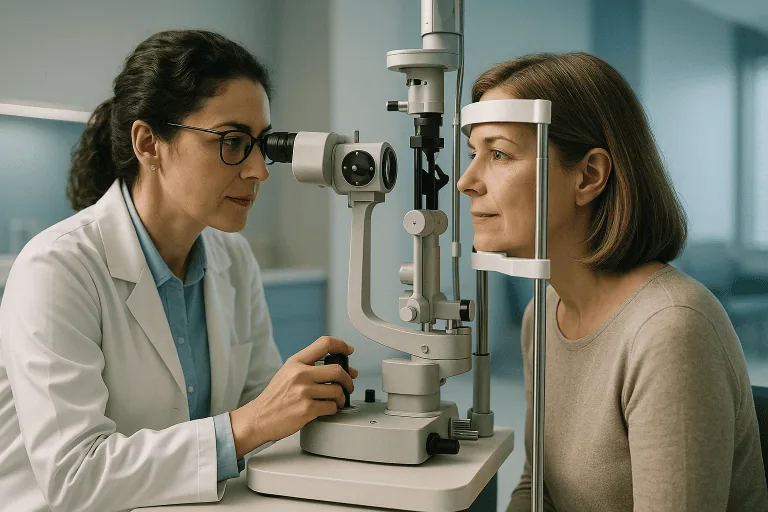
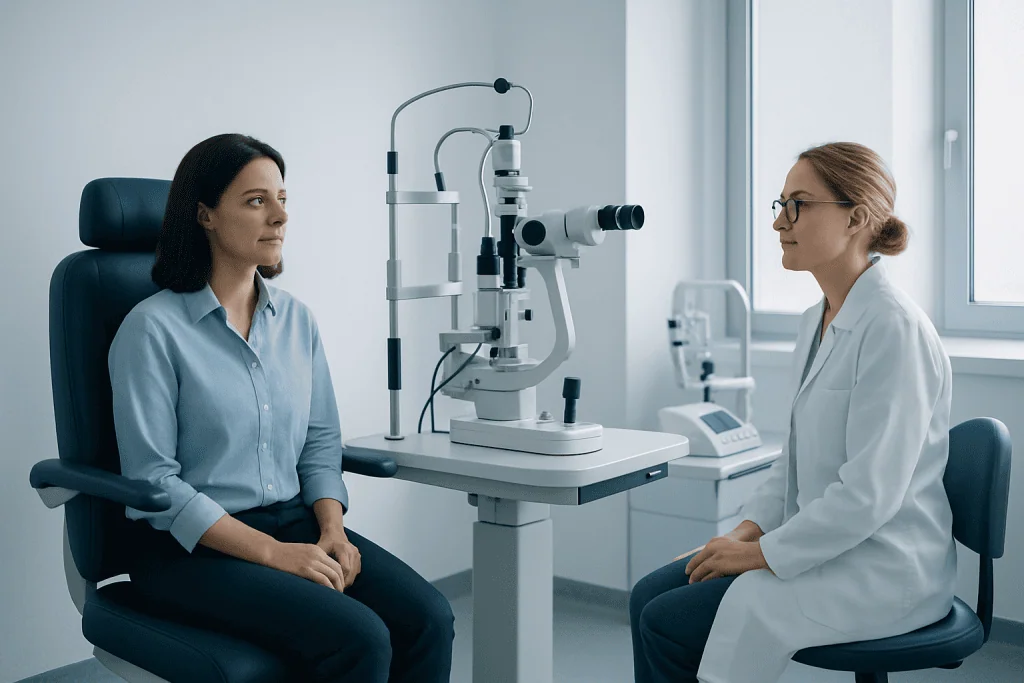
Diagnosis begins with a comprehensive ophthalmologic examination. This typically includes visual acuity testing, refraction, eye pressure measurement, slit-lamp examination, pupil assessment and retinal evaluation. Additional tests may include corneal topography or tomography, optical biometry to calculate lens power, macular imaging, tear film assessment and detailed measurement of astigmatism. Together these results determine whether Smart Lens treatment is safe for your eyes and whether a multifocal, trifocal, extended-depth-of-focus or toric lens is the right fit.
Not everyone who wants independence from glasses is an ideal candidate, and it is better to hear that before surgery than after. Patients who do a great deal of night driving, hold unrealistic expectations, or have eye conditions that reduce contrast sensitivity may need a different strategy. In some cases a monofocal lens, a monovision approach, a toric monofocal lens or a staged treatment plan will produce a more satisfying result than the most advanced-sounding option.
Conditions Smart Lens Treatment Addresses
Smart Lens treatment is used in several related clinical situations. The most common indication is cataract combined with a wish for functional vision at more than one distance. In this setting, surgery removes the cloudy lens and implants an advanced intraocular lens selected to reduce dependence on spectacles, two problems addressed in one operation.
The second major indication is presbyopia, the age-related decline in near focusing that usually becomes noticeable after the age of 40. Presbyopia happens because the natural lens gradually loses flexibility. Reading glasses, bifocals, progressive lenses, contact lenses and laser procedures help many people, but lens replacement may be considered for selected individuals who prefer a permanent intraocular solution rather than a lifetime of workarounds.
Smart Lens may also suit patients with hyperopia, farsightedness, particularly when presbyopia is present as well. Some farsighted patients struggle with both distance and near tasks as they age. If the eye anatomy is suitable, lens replacement can address both the refractive need and future cataract risk in a single step.
Patients with astigmatism may be candidates for a toric Smart Lens design. Astigmatism occurs when the cornea or lens has an uneven curvature, causing blurred or distorted vision at every distance. If astigmatism is significant, it must be built into the surgical plan; otherwise you may still need glasses for clear distance vision after surgery, which defeats much of the purpose.
What Smart Lens treatment does not do is fix every cause of poor vision. Retinal disorders, optic nerve disease, uncontrolled inflammation, corneal scarring and severe ocular surface disease can all limit the result, however well the surgery goes. This is why an accurate diagnosis is one of the most important parts of the whole process. The aim is to recommend the procedure only when the expected visual benefit is realistic and aligned with what you actually want from your eyes.
How Smart Lens Surgery Is Performed
The Smart Lens journey begins well before the operating room. During the consultation, the ophthalmologist reviews your visual complaints, lifestyle, medical history, prior eye surgery, current medications and expectations. Previous eye reports, spectacle prescriptions, imaging results and any history of retinal, corneal or glaucoma problems all feed into the assessment, because lens selection depends on the complete picture of the eye.
Preoperative testing is detailed for a reason: the lens that will be implanted is chosen and calculated from these measurements. Optical biometry calculates the power of the intraocular lens. Corneal mapping evaluates the shape of the cornea and helps detect irregular astigmatism or conditions such as keratoconus. Macular imaging can reveal subtle retinal disease that a basic examination might miss. Tear film evaluation matters because dry eye can distort measurements and blur visual quality after surgery, sometimes the ocular surface needs treatment first, before any measurement is trusted.
If both eyes need treatment, surgery is commonly planned one eye at a time. The interval between eyes depends on the surgeon’s recommendation, your recovery and, for visiting patients, travel logistics. In some cases the second eye is treated only after the first has stabilised enough to confirm that healing and visual adaptation are proceeding as expected: a useful checkpoint, not a delay.
On the day itself, the sequence is straightforward:
- Step 1: Preparation. The eye is numbed with anaesthetic drops or local anaesthesia. Most patients remain awake; sedation may be added when appropriate, depending on your medical condition and the anaesthetic plan. The area around the eye is cleaned and a sterile drape is placed. Practical questions about what to wear and what to leave off that morning are covered in the guide to contact lenses, glasses, hearing aids and dentures on procedure day.
- Step 2: Access. The surgeon makes a very small incision in the cornea. In many cases this incision is self-sealing and needs no stitches, although the exact approach depends on the surgical situation.
- Step 3: Lens removal. The natural lens is gently broken into tiny fragments using ultrasound energy and removed: a technique called phacoemulsification. The lens capsule, the thin natural membrane that held the original lens, is preserved wherever possible because it will support the new implant.
- Step 4: Implantation. The selected Smart Lens is folded, inserted through the same small incision and positioned inside the capsule. If a toric lens is used, it is rotated to the precise axis calculated for your astigmatism.
- Step 5: Recovery and instructions. You receive protective eye covering, prescribed drops and clear aftercare guidance before going home the same day in most cases.
How long does Smart Lens surgery take?
The operation itself is usually brief, often completed within a short surgical session for each eye. Plan for considerably longer at the hospital, though: preparation, monitoring after the procedure and postoperative instructions all take time, and none of them should be rushed.
Is Smart Lens surgery painful?
Most patients describe pressure or mild discomfort rather than pain, because the eye is numbed throughout with anaesthetic drops or local anaesthesia. Afterwards, mild scratchiness, watering and light sensitivity are common for a short period while the small incision heals.
Modern ophthalmic technology supports accuracy at every stage. Diagnostic imaging maps the cornea and retina. Biometry platforms assist lens power calculation. Surgical microscopes provide magnified visualisation, and ultrasound-based removal allows the ageing lens to leave the eye through a small incision. In selected cases, digital planning tools help align toric lenses for astigmatism correction. None of this replaces surgical judgement: it sharpens it.
After surgery, you will use prescribed eye drops, which may include antibiotics, anti-inflammatory medication and lubricants, exactly as your surgeon directs. You will be advised not to rub the eye, to avoid dusty environments, and to follow specific instructions about bathing, exercise, swimming, make-up and travel. Vision may improve quickly, but it is normal for clarity to fluctuate during the first days as the eye settles. The brain also needs time to adapt to the new lens optics, especially with multifocal and trifocal designs, a process called neuroadaptation. Some patients notice halos around lights at night early on; for many, these become less intrusive over time, although a degree of night glare can persist in some individuals. That is a limitation worth understanding before surgery, not discovering after it.
Why Acting Early Matters
Vision changes tend to progress gradually, and most people adapt without noticing how much daily function has been lost. Reading becomes more tiring. Night driving becomes something to avoid. Work takes longer. When a cataract is present, delaying assessment allows the lens to grow denser, which can make surgery more complex and recovery less predictable.
Early evaluation does not mean immediate surgery. It means understanding the cause of the visual problem and choosing the right moment to act. For some patients, updated glasses, dry eye treatment or simple monitoring is enough for now. For others, particularly those whose cataracts interfere with normal activities, timely surgery restores visual function and reduces the everyday risks that come with poor vision: falls, driving difficulty, loss of independence.
Delaying care can also let other eye conditions go undiagnosed. Retinal disease, glaucoma, corneal irregularities and diabetic eye changes may all develop silently. A comprehensive examination identifies these issues early and shapes the safest plan. In Smart Lens planning specifically, early diagnosis carries extra value, because the health of the retina, cornea and optic nerve directly determines whether a premium intraocular lens is the right recommendation at all.
Benefits of Smart Lens Treatment
The benefits you can realistically expect depend on eye health, lens selection and individual healing. What the procedure is designed to deliver is broader functional vision across the activities that fill an ordinary day, and, where the anatomy allows it, a lasting reduction in how often you reach for glasses.
Will I still need reading glasses after Smart Lens surgery?
Possibly, for some tasks. Many patients use glasses far less often after surgery, but very small print, prolonged reading in dim light or particular professional tasks may still call for them, depending on the lens design chosen. Trifocal and multifocal lenses give the widest near range; extended-depth-of-focus designs favour smoother distance and intermediate vision with fewer night-time disturbances but less power for fine print. Your surgeon should tell you before the operation which trade-off your chosen lens makes, if that conversation has not happened, ask for it.
| Benefit | What It Means for You |
|---|---|
| Clearer vision after cataract removal | The cloudy natural lens is replaced with a clear intraocular lens, which may improve brightness, contrast and overall visual clarity. |
| Improved range of focus | Depending on the lens type, you may see more comfortably at distance, intermediate and near ranges. |
| Reduced dependence on glasses | Many patients use glasses less often for routine activities, although glasses may still be needed for fine print, prolonged reading or specific tasks. |
| Correction of refractive error | The lens power is calculated for your existing vision needs, and toric options can correct astigmatism where appropriate. |
| No future cataract in the treated eye | Because the natural lens is removed, a cataract cannot develop later in that eye, although other age-related eye conditions can still occur. |
| Personalised visual planning | The treatment is tailored to lifestyle priorities such as reading, computer work, driving, travel and professional demands. |
Recovery Timeline After Smart Lens Surgery
Recovery varies from person to person, but most patients follow a broadly similar pattern of healing and visual adaptation after Smart Lens implantation. Use the timeline below as orientation, not a schedule: your own follow-up appointments are what confirm healing is on track.
| Time Period | What Patients Can Expect |
|---|---|
| Day 1 | Vision may be brighter but still blurred or hazy. Mild irritation, watering and light sensitivity are common. A postoperative check is usually performed. |
| First Week | Many patients notice meaningful improvement. Eye drops continue as prescribed. Rubbing the eye, swimming, heavy exertion and dusty environments are usually avoided. |
| First Month | Vision continues to stabilise. The brain adapts to the new lens design. Halos or glare may be noticed, especially at night, and often become less distracting over time. |
| After Both Eyes Are Treated | Depth perception and overall visual balance usually improve once both eyes have healed, particularly when the plan was designed for binocular vision. |
| Longer Term | Most patients return to regular activities with reduced reliance on glasses. Routine eye examinations remain important to monitor retinal, corneal and optic nerve health. |
Are halos around lights normal after Smart Lens surgery?
Yes, halos or glare around lights at night are a recognised feature of the early weeks, particularly with multifocal and trifocal designs, because these lenses split incoming light between focal points. For many patients the brain learns to filter these effects through neuroadaptation and they fade into the background. In some people a degree of night glare persists. If night driving dominates your life, say so during planning: it may steer the choice towards a lens design with fewer night-time compromises.
What Influences the Final Result
A good outcome after Smart Lens treatment depends on far more than the lens itself. The most important factor is choosing the right procedure for the right patient, which means accurate diagnostics, careful surgical planning, realistic expectations and healthy eye structures.
The retina matters most of all. The macula, the central part of the retina responsible for detailed vision, must be healthy enough to support high-quality sight. Even mild macular disease can reduce contrast or reading ability regardless of the lens implanted. Similarly, glaucoma or optic nerve damage may limit visual improvement even when the lens surgery itself is technically flawless.
Corneal health matters too. Irregular astigmatism, corneal scars, keratoconus, prior refractive surgery or severe dry eye can all affect measurements and visual quality. If you have had previous laser eye surgery you may still be a candidate, but lens power calculation becomes more complex, and additional testing and franker counselling are needed before a decision.
Dry eye disease deserves its own mention, because it is a common reason for fluctuating vision both before and after lens surgery. An unstable tear film makes measurements less reliable and postoperative vision feel inconsistent. Treating dry eye before surgery improves both comfort and measurement accuracy: a small delay that often pays for itself.
Lifestyle expectations should be discussed without varnish. A patient who drives frequently at night may prioritise low glare and crisp distance vision. A patient who spends long hours at a computer may value intermediate range above all. Someone who reads small print for extended periods may still need occasional reading glasses even after implantation. Matching the lens design to these priorities, rather than to the most impressive brochure, is what separates satisfied patients from disappointed ones.
Surgical accuracy and follow-up complete the picture. The intraocular lens must be positioned precisely, especially when astigmatism correction is planned. In some patients a minor residual refractive error remains and may call for glasses, contact lenses, laser enhancement or another individualised solution. A common later change called posterior capsule opacification can cloud vision months or years after surgery; when clinically indicated, it is usually treated with a brief laser procedure.
As with any eye surgery, Smart Lens treatment carries risks. These may include infection, inflammation, increased eye pressure, swelling of the cornea or retina, retinal detachment, lens rotation or decentration, persistent glare or halos, dry eye symptoms and the need for additional treatment. Serious complications are uncommon, but they belong in the conversation before surgery, not after. Informed consent is not paperwork: it is the point at which you understand what you are agreeing to.
How Smart Lens Care Is Planned at Acibadem
Choosing lens surgery involves more than a surgical appointment. It calls for clarity, coordination and confidence that recommendations rest on medical judgement rather than sales logic. Acibadem’s approach to Smart Lens treatment is built around detailed diagnosis, individualised lens selection and continuity of care before and after surgery.
Experienced ophthalmologists evaluate whether Smart Lens treatment is appropriate at all, and which lens strategy fits your eyes and your life. Where additional conditions are present, care may involve related specialties, retina, glaucoma, cornea, endocrinology or internal medicine. This multidisciplinary perspective matters most for patients with diabetes, previous eye surgery, complex cataracts, high refractive errors or suspected retinal findings, where a lens decision made in isolation can go wrong.
Diagnostic pathways may include advanced corneal imaging, optical biometry, macular assessment, intraocular pressure measurement and detailed examination of the front and back of the eye. These tools exist to reduce uncertainty before surgery, and, just as importantly, to avoid recommending a premium lens when another option would be safer or more appropriate for a particular eye.
Treatment plans are personal, not templated. Some patients are advised to have Smart Lens implantation in both eyes, staged over an appropriate interval. Others are better served by a different intraocular lens design, astigmatism correction, treatment of dry eye before surgery or further retinal evaluation first. Responsible lens surgery is not about offering the most advanced-sounding option to everyone; it is about selecting the approach most likely to meet your functional needs safely.
Follow-up planning deserves the same attention as the surgery itself. The schedule of postoperative checks, the interval before the second eye is considered and the longer-term monitoring of retinal, corneal and optic nerve health are all discussed in advance. A brief operation still deserves an unhurried aftercare plan.
Living Well After Smart Lens Surgery
Smart Lens treatment can be an effective option for selected patients who want clearer vision at multiple distances and reduced dependence on glasses, particularly where cataract or presbyopia is eroding daily life. The decisive step is not the operation: it is the detailed eye examination and the honest conversation that precede it, covering your visual goals, eye health, work demands, night driving habits and expectations for the years after surgery.
Clear vision is closely tied to independence, safety and quality of life. With careful diagnostics, a lens design matched to your priorities rather than to a catalogue, and a realistic understanding of both benefits and trade-offs, Smart Lens surgery helps many patients return to reading, working, travelling and driving with greater visual comfort and noticeably less reliance on corrective eyewear. And unlike any pair of smart glasses, the result does not sit in a charger overnight: it simply becomes the way you see.
Preparation
- Before Smart Lens surgery, a detailed eye examination and measurements are performed to select the most suitable intraocular lens. Patients should inform the ophthalmologist about medications, eye diseases, and previous surgeries. Contact lenses may need to be stopped before measurements, and eye drops may be prescribed before the procedure.
Aftercare
- After the procedure, patients usually use prescribed antibiotic and anti-inflammatory eye drops. Rubbing the eye, swimming, and dusty environments should be avoided during early healing. Follow-up visits are important to monitor vision, eye pressure, and lens position.
Frequently Asked Questions
What affects the cost of Smart Lens treatment?
The final cost depends on the type of intraocular lens, the diagnostic tests required, the surgeon and hospital, whether astigmatism correction is needed, the medical condition of each eye, and what is included in the care package.
How can I get a personalised quote?
A personalised quote usually requires an ophthalmology review, recent eye measurements if available, medical history, and details of your vision goals. You can request a free consultation so the team can advise on suitability and package details.
Is Smart Lens treatment usually included in a package for international patients?
Many international patient packages may include consultation, eye diagnostics, surgery planning, lens implantation, medications, follow-up guidance, interpretation, and coordination services. Exact inclusions should be confirmed before travel.
Does the lens type change the total cost?
Yes. Premium lens technologies such as multifocal, trifocal, extended depth of focus, and toric lenses can affect the overall cost because they involve different designs, planning requirements, and clinical indications.
Can I choose the lens I want based only on budget?
Budget is important, but lens choice should be based on eye health, corneal measurements, lifestyle, visual expectations, and the specialist’s assessment. The safest and most suitable option is decided after a detailed examination.
Medically reviewed by the Acıbadem International Medical Board September 13, 2026
See our medical review board →
Update history
- PublishedJune 8, 2026
- Medical review approvedSeptember 13, 2026
- Last content updateSeptember 12, 2026