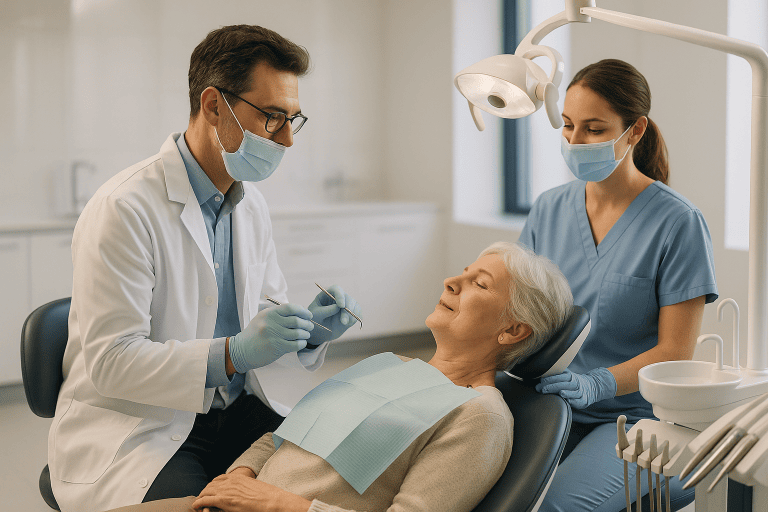
Smile Makeover
A smile makeover is a personalized cosmetic dental plan that can combine whitening, veneers, bonding, crowns, gum contouring, or orthodontic options to improve tooth color, shape, and harmony.
Quick answer
A smile makeover is a personalised plan that combines two or more dental procedures, such as whitening, veneers, composite bonding, crowns, gum contouring or aligners, to improve the colour, shape and balance of the smile. A dentist designs it around your teeth, gums, bite and facial features, treating any underlying problems first. Treatment length depends on which procedures are combined.
Smile Makeover: What It Is and How a Cosmetic Dentist Plans It
A smile makeover is a personalised treatment plan that combines two or more dental procedures, whitening, veneers, composite bonding, crowns, gum contouring or orthodontic aligners, to improve the colour, shape, proportion and balance of your smile. A cosmetic dentist designs the plan around your teeth, gums, bite and facial features rather than applying a standard formula. It suits people whose teeth are stained, chipped, worn, crowded, spaced or out of proportion with the gums and face, provided the mouth underneath is healthy enough to treat.
For most people, the decision starts with something specific. Teeth that have darkened over the years. An edge that chipped and was never quite right again. Old crowns that no longer match the teeth beside them. A gum line that sits unevenly. For others, it is a longer-standing wish: to feel comfortable smiling in photographs, speaking in public or meeting people without thinking about their teeth first. Both starting points are legitimate, and both deserve the same careful diagnosis.
It is natural to arrive with questions. Will the result look natural, or too white and too uniform? How much natural tooth structure has to be changed? How long does treatment take? Can several concerns be corrected at once? If you are considering a smile makeover in Turkey, you will also want to understand how planning, appointments, recovery and follow-up are coordinated when care takes place abroad. This page works through each of those questions in turn.
The answers matter because cosmetic concerns are often connected to underlying dental issues. Worn edges may reflect grinding. Uneven colour may come from old restorations, enamel changes or previous trauma. Short or irregular teeth may be shaped by bite forces. Gum asymmetry affects both appearance and hygiene. A well-planned smile makeover begins by understanding why your smile looks the way it does, then chooses the least invasive combination of treatments that genuinely addresses it. In experienced hands, that usually means measured changes, not simply a brighter or more “perfect” set of teeth.
One honest point before anything else: the most appropriate plan is not necessarily the most extensive one, and a responsible dentist will sometimes recommend less treatment than you expected. That principle runs through everything that follows.
What Is a Smile Makeover?
A smile makeover is a customised cosmetic dentistry plan that may combine several treatments to improve the appearance, proportion and balance of the smile. Depending on what your teeth need, it may include professional whitening, porcelain veneers, composite bonding, ceramic crowns, replacement of old fillings or restorations, gum contouring, orthodontic aligners, or other restorative and periodontal procedures. It is a plan, not a product, two patients asking for “the same result” may need entirely different routes to reach it.
The plan is built around both aesthetics and oral function. A smile that looks good but bites unevenly, traps plaque or stresses weakened teeth is not a good outcome. So the dentist assesses tooth position, tooth shape, enamel condition, gum health, jaw relationship, facial proportions and the way your upper and lower teeth meet. Where the case calls for it, cosmetic dentists work alongside restorative dentists, orthodontists, periodontists, oral surgeons or prosthodontic specialists, and restorative dentistry may carry as much of the plan as the cosmetic work does.
Modern planning relies on digital photography, intraoral scanning, digital smile design principles, shade analysis and diagnostic models. These tools let the team study your smile from different angles and plan changes with precision. In many cases you can preview the proposed tooth shapes through a digital simulation or a trial mock-up placed over your own teeth before anything definitive is done. For international patients, that preview is particularly useful: it shows the direction of treatment before you commit to procedures that cannot be reversed.
Scale varies enormously. For one person, whitening and minor bonding are enough. Another needs orthodontic alignment first, so that veneers can later be placed conservatively. A patient with worn, cracked or heavily restored teeth may need crowns or a full bite rehabilitation. The plan follows the condition of the teeth and your goals, not a template applied to every smile.
How does cosmetic dentistry differ from general dentistry?
Cosmetic dentistry focuses on how the teeth and gums look, their colour, shape, proportion and symmetry, while general dentistry focuses on keeping them healthy and functional. In practice, the two cannot be separated. Every cosmetic restoration sits on a biological foundation: enamel, dentine, gum and bone. If that foundation is inflamed, decayed or unstable, cosmetic work fails early. This is why a smile makeover always starts with an ordinary, thorough dental examination, and why the field is sometimes described more broadly as aesthetic dentistry: a discipline that treats appearance as one outcome of good dental health, not a substitute for it.
How do you achieve a natural-looking smile makeover?
A natural-looking result comes from restraint and detail, not from maximum brightness. A skilled cosmetic dentist plans tooth length and width against your lips, gum line and facial proportions; chooses a shade that suits your complexion and age rather than the whitest ceramic available; and builds in the subtle translucency, surface texture and small variations that real enamel has. Perfectly uniform, opaque, identical teeth are what people mean when they say a smile looks “done”. Mock-ups and digital previews help here: you see the proposed shapes in your own mouth or on your own photographs and can ask for adjustments before the final restorations are made. If a plan offers no preview stage and no discussion of shade nuance, ask why.
Who May Need a Smile Makeover?
People usually seek a smile makeover when the colour, shape, size, alignment or symmetry of their teeth no longer reflects how they want to look. Some concerns are purely cosmetic. Others are linked to wear, previous dental work, gum changes or bite problems. Careful diagnosis separates surface-level improvements from issues that need structural treatment, and most cosmetic dental procedures depend on getting that distinction right before anything else happens.
Common reasons for considering a smile makeover include:
- Teeth that appear stained, yellow, dark or uneven in colour
- Chipped, cracked, worn or irregular tooth edges
- Small, short, narrow or misshapen teeth
- Gaps between teeth or mild crowding
- Old fillings, crowns or veneers that no longer match the smile
- Excessive gum display, an uneven gum line, or teeth that look too short
- Asymmetry between the right and left sides of the smile
- Teeth that appear tilted, rotated or out of proportion with the face
- A smile that has changed with age, grinding, trauma or previous dental treatment
Diagnosis begins with a detailed examination. The dentist evaluates oral hygiene, gum condition, cavities, tooth fractures, bite relationship, jaw movement and any signs of clenching or grinding. X-rays may be needed to assess roots, bone support, old restorations and hidden decay. Intraoral scans or impressions produce models of the teeth. Photographs record the smile at rest, during speech and in a full smile, three views that often tell quite different stories.
If you have active gum disease, untreated cavities, unstable bite problems or a tooth infection, these are treated first. That does not rule out a smile makeover; it simply means the foundation must be healthy before aesthetic changes are made. A stable mouth helps restorations last longer and lowers the risk of complications later.
For international patients, a preliminary review of recent dental X-rays, photographs and treatment history before travelling is standard practice. It allows the care team to give an initial assessment, estimate the number of visits, and identify whether treatment should be staged, for example, whether periodontal therapy, orthodontics or implant planning needs to come before the cosmetic phase.
Conditions a Smile Makeover Can Address
A smile makeover can address a wide range of cosmetic and restorative concerns, provided the teeth and supporting tissues are suitable. The plan may target one visible issue or combine several procedures for a more balanced result.
Tooth discolouration is one of the most common reasons for treatment. External stains from coffee, tea, tobacco or simple ageing often respond well to professional whitening. Deeper discolouration, enamel defects, old bonding, colour change after trauma or root canal treatment, usually needs veneers, crowns or other restorations to achieve a uniform appearance, because whitening cannot reach it.
Shape and size concerns can be improved with bonding, veneers or crowns. Teeth that are naturally small, uneven, pointed or worn down can be visually reshaped. The dentist judges whether adding material is enough, or whether the bite itself needs adjusting so the same wear does not simply happen again to the new restorations.
Minor spacing or crowding can sometimes be masked with veneers or bonding, but orthodontic treatment is often the better recommendation when tooth position affects the bite, gum health or symmetry. Clear aligners or other orthodontic options can straighten the teeth first, which allows far more conservative preparation when restorations follow.
Gum line irregularities are addressed with gum contouring or periodontal procedures when teeth look too short, the gum line runs unevenly, or excess gum shows when you smile. The right approach depends on gum thickness, tooth eruption, bone position and overall periodontal health, soft tissue reshaping is enough in some mouths, while others need a more involved periodontal procedure.
Old or mismatched dental work is another frequent trigger. Older crowns, fillings or veneers can look opaque, dark at the margins, bulky or simply inconsistent with the surrounding teeth. Replacing them can improve both appearance and fit, particularly where leakage, decay or wear has developed underneath.
Worn or fractured teeth demand the most careful assessment, because the visible damage is often a symptom, of grinding, acid erosion, bite imbalance or weakened enamel. Here a smile makeover may include protective restorations and, where appropriate, a night guard or a bite management plan, so the result is stable rather than merely new.
How a Smile Makeover Is Performed
A smile makeover proceeds in stages, beginning with diagnosis and planning. The exact sequence depends on which procedures are chosen, the condition of your teeth, and whether treatment fits into a single visit window or needs several appointments. For international patients, the timeline is set out in advance so travel and follow-up can be planned realistically rather than optimistically.
1. Consultation and smile analysis
Treatment starts with a conversation, not a drill. The dentist asks about your concerns, priorities, medical history, dental history and expectations. This matters because “a better smile” means different things to different people: some want a brighter, more polished result, while others want changes so subtle that nobody can name what changed. Saying clearly what you want, and what you want to avoid, shapes everything that follows.
Clinical photographs, intraoral scans, X-rays and shade measurements are then taken. The dentist evaluates facial proportions, lip movement, tooth display, gum levels, the midline, tooth length and width, and the bite. Existing restorations, enamel thickness and gum health are assessed. If there are signs of grinding, jaw discomfort or a complex bite problem, further evaluation comes before any cosmetic work, not after it.
2. Treatment planning and design
From the diagnostic records, the team builds a personalised plan. It may involve one procedure or several. Digital planning tools analyse tooth proportions and simulate possible changes, and in selected cases a temporary mock-up is placed over your teeth so you can see an approximate preview of shape and length before final restorations are made. This is the stage at which to raise doubts, not later.
A proper plan tells you which teeth will be treated, which materials are recommended, how much natural tooth structure will be altered, how many visits are expected, and what maintenance will follow. For patients travelling from abroad, it also covers whether laboratory work fits within the travel window, whether temporary restorations are needed between visits, and how follow-up will be handled once you are home.
3. Preparing the mouth for cosmetic treatment
Before aesthetic procedures begin, the mouth must be healthy. Professional cleaning removes plaque, tartar and surface stains. Cavities, leaking fillings, gum inflammation or infection are treated first. If orthodontic movement is needed, it usually happens before veneers or crowns are finalised. If gum contouring is part of the plan, healing time may be needed before the final restorations are made, one of the common reasons treatment is staged across more than one visit.
Preparation varies by procedure. Whitening needs little beyond a dental check to confirm the teeth and gums are suitable. Bonding needs minimal surface conditioning. Veneers may require conservative enamel preparation, with the amount depending on tooth position, the colour change wanted and the material thickness. Crowns involve more preparation because they cover more of the tooth; they are chosen when a tooth needs structural support, not just a new surface. Approaches drawn from minimally invasive dentistry aim to keep tooth reduction to the minimum the case genuinely requires.
4. Which cosmetic dentistry procedures can a smile makeover include?
The cosmetic dentistry procedures included in a smile makeover depend on what your teeth actually need, and most plans combine several of the following.
Professional whitening lightens natural teeth and may be used alone or before restorations, so that the final ceramic shade can be matched to a brighter smile. Whitening changes natural enamel only, it does not lighten crowns, veneers or composite fillings, which is why the sequence of treatments matters so much.
Composite bonding uses tooth-coloured resin to repair chips, close small gaps or reshape edges. It is more conservative than porcelain work and can usually be completed quickly. The trade-off: composite can stain and wear over time and typically needs polishing or replacement sooner than ceramic.
Porcelain veneers are thin ceramic restorations bonded to the front surface of teeth. They can change colour, shape, size and minor alignment concerns at once. Veneers demand careful planning to look natural and to sit comfortably in the bite, and the amount of enamel removed varies case by case: a question always worth asking before you agree.
Ceramic crowns cover the tooth more completely. They suit teeth that are heavily filled, cracked, weakened, severely discoloured or structurally compromised. Modern crowns can be highly aesthetic, but they are more invasive than veneers, so they should be chosen for structural reasons, not convenience.
Gum contouring reshapes the gum line when gum levels are uneven or teeth appear short. Depending on the anatomy, this ranges from minor soft tissue reshaping to a more advanced periodontal procedure. The aim is better tooth proportion with healthy gum support intact.
Orthodontic options, including clear aligners in suitable cases, correct crowding, spacing or tilted teeth before restorations are made. Aligning teeth first reduces the need for aggressive reshaping later and can improve the long-term stability of the bite, often the difference between a conservative plan and an invasive one.
5. Technology used in planning and treatment
Much of modern smile makeover care runs on digital dentistry. Intraoral scanners create three-dimensional records of the teeth, often replacing traditional impressions. Digital photography analyses the smile from multiple angles. X-rays and three-dimensional imaging come in when roots, bone, implants or complex anatomy need evaluating.
Computer-aided design and manufacturing support the design and production of crowns and veneers. Dental laboratories use shade mapping, ceramic layering and digital workflows to build restorations that match your facial features and neighbouring teeth rather than a generic ideal. At the chair, magnification, adhesive bonding techniques and precise finishing instruments let the dentist prepare and place restorations with fine control. None of this replaces judgement, but it makes good judgement visible and checkable before treatment is final.
6. How long treatment takes and what recovery involves
Duration follows complexity. Whitening or bonding can be completed in a small number of visits. Veneers and crowns need diagnostic planning, tooth preparation, temporary restorations, laboratory production and final bonding or cementation. Orthodontic treatment or gum procedures extend the overall timeline, sometimes across separate trips.
Recovery is usually manageable, though the experience depends on what was done. Whitening can cause temporary sensitivity. Bonding involves little downtime. Veneers and crowns may bring mild sensitivity or gum tenderness for a short period, particularly while temporaries are in place. Gum contouring needs a healing period and careful hygiene. You will typically be advised to avoid very hard foods at first and to follow the cleaning instructions you are given. For anxious patients, sedation options can be discussed for suitable procedures.
Recovery Timeline After a Smile Makeover
Recovery varies with the procedures included, but the timeline below describes what many patients can generally expect after common cosmetic treatments.
| Time Period | What Patients Can Expect |
|---|---|
| Day 1 | Mild sensitivity, gum tenderness or awareness of new tooth shapes, especially after veneers, crowns, bonding or whitening. Most patients return to normal daily activities the same day. |
| First week | The bite and speech begin to feel natural. Temporary restorations, if used, require careful eating and cleaning. Sensitivity usually settles during this period. |
| First month | Final restorations settle into function, gums adapt, and the new smile stops feeling new. Small bite adjustments are made if anything feels uneven. |
| Longer term | Regular check-ups, professional cleanings, night guard use when recommended, and consistent home care preserve the result. Bonding needs maintenance sooner than ceramic restorations. |
Why Acting Early Matters
Cosmetic dental concerns rarely need urgent treatment, but delay lets certain problems compound. A small chip enlarges. Worn enamel exposes dentine and sensitivity increases. Old restorations leak, stain or hide decay underneath. Gum inflammation progresses where crowded teeth or poorly fitting dental work make cleaning difficult.
Early evaluation matters most when the smile has changed because of grinding, acid erosion, trauma or bite problems. If the underlying cause is not addressed, new restorations go straight under the same damaging forces, raising the risk of chipping, debonding, fractures and discomfort. Identifying these forces before treatment lets the dentist design restorations built for how your mouth actually functions.
Acting early also keeps treatment conservative. Mild discolouration may respond to whitening before deeper restorative work becomes necessary. Small chips can be repaired with bonding before structural damage spreads. Minor tooth movement is easier to correct before crowding contributes to gum recession or uneven wear. The earlier the diagnosis, the more options remain open.
For international patients, early assessment also means better travel planning. Some smile makeovers fit within a single defined visit; others are safer and more predictable when staged. Reviewing records well in advance lets the team explain the likely pathway and reduces the chance of unexpected findings during a short stay abroad.
Benefits of a Smile Makeover
What you gain depends on your starting point and the procedures chosen, but the most meaningful improvements combine appearance, comfort and long-term dental planning.
| Benefit | What It Means for You |
|---|---|
| More harmonious smile aesthetics | Tooth colour, shape, size and proportion are planned together, so the smile sits in balance with your lips, gums and facial features. |
| Personalised treatment choices | Your plan may include whitening, bonding, veneers, crowns, gum contouring, orthodontics or a combination, based on your dental condition and goals. |
| Improved confidence in daily life | Many patients feel more comfortable smiling, speaking and being photographed once visible concerns are addressed in a natural-looking way. |
| Opportunity to replace ageing dental work | Old fillings, crowns or veneers that are stained, worn or mismatched are reassessed and replaced when clinically appropriate. |
| Better function when bite issues are considered | A careful plan addresses the wear, spacing or alignment factors that affect comfort and how long restorations last. |
| Conservative options in suitable cases | Some concerns can be improved with whitening, bonding or orthodontic alignment before more extensive restorative treatment is considered at all. |
How Much Does a Smile Makeover Cost?
The cost of cosmetic dental treatment varies so widely that a single figure would mislead you: a smile makeover is a plan, not a product with a price tag. What determines the cost is the content of your particular plan, how many teeth are treated, which procedures are combined, which materials are used, how much laboratory work is involved, whether orthodontics or gum treatment comes first, and whether care is completed in one visit window or staged across several. Two patients who both call their treatment “a smile makeover” can have plans of entirely different scope.
The practical consequence: any quote given before an examination, X-rays and records is provisional at best. A meaningful figure only exists once a dentist has seen your mouth and defined exactly what will be done, to which teeth, with which materials. Be cautious of fixed package prices that commit to a specific treatment, a set number of crowns or veneers, for instance, before any diagnosis has taken place, because the right plan for you may turn out to be more conservative than the package assumes.
How much is a full smile makeover in Turkey?
There is no single honest answer, because “full” means something different in every mouth. A full smile makeover involving many teeth, laboratory-made ceramics and preparatory gum or orthodontic work is a larger undertaking than whitening plus bonding, and its cost reflects that scope. The variables are the same wherever you are treated: the number of teeth, the procedures chosen, the materials, the laboratory work and the staging. What you should expect from any provider, in Turkey or anywhere else, is an itemised plan after examination, stating what is included, what is excluded, what temporaries and follow-up visits involve, and what maintenance will cost you in time and attention afterwards. A plan you can read line by line is worth more than a headline number.
What Shapes the Quality and Longevity of Results
A successful smile makeover rests on more than the appearance of the final restorations. The best outcomes are built on accurate diagnosis, healthy gums, stable teeth, appropriate materials, careful bite planning and realistic expectations. Every patient brings a different combination of tooth structure, enamel quality, facial proportions, gum levels, habits and previous dental treatment, which is why longevity cannot be promised, only planned for.
Oral health comes first. Active cavities, gum disease or untreated infections compromise cosmetic work. Healthy gums frame the teeth and make restorations look natural; inflamed or unstable gums make margins harder to control and maintenance harder to sustain.
Bite forces matter just as much. If you grind or clench, you place heavy stress on veneers, bonding, crowns and natural enamel alike. Worn edges, jaw muscle tenderness, cracked teeth or flattened biting surfaces should be evaluated before treatment. A protective night guard, orthodontic correction or adjustments to restoration design may be recommended, and following that advice is part of what makes the result last.
Material selection affects appearance, durability and maintenance. Composite bonding is conservative and repairable, but stains and wears faster than ceramic. Porcelain veneers give excellent colour stability and shape control in the right cases, but need precise bonding and careful case selection. Crowns are the better choice for structurally weakened teeth, at the price of more tooth reduction. The right material follows the tooth’s condition, not just the look you want.
Shade planning requires the right sequence. If whitening is part of the plan, it usually happens before restorations are made, because ceramics and composites do not whiten like natural enamel. The final shade should suit your complexion, age and preference, and a natural result comes from subtle translucency, texture and variation, not a single flat colour.
Habits and maintenance carry the long term. Smoking, frequent staining drinks, acidic diets, nail biting, chewing hard objects and inconsistent hygiene all shorten the life of cosmetic work. Regular dental visits let the dentist polish restorations, monitor gum health, check the bite and catch problems while they are still small.
Expectations and communication round it out. Say what you like and dislike about your smile. Bring reference images if they help. Ask about limitations, because not every desired change is advisable for every mouth. A responsible cosmetic dentist balances your aesthetic goals against biology, function and long-term tooth preservation, and tells you plainly when those pull in different directions.
How long do Turkish veneers last?
The country where a veneer is made does not determine how long it lasts. Longevity depends on the material chosen, the quality of the bonding, the forces in your bite, the health of your gums and how consistently you maintain the result: the same factors everywhere in the world. Ceramic veneers generally hold their colour and shape longer than composite alternatives; grinding without a night guard shortens the life of either; and skipped check-ups let small problems become replacements. What matters when veneers are placed abroad is that the plan anticipates this: sound case selection, careful bonding, a bite that has been checked and adjusted, written records you can take home, and a maintenance routine your local dentist can continue.
Coming to Turkey for a Smile Makeover
Turkey is an established destination for dental care, and a smile makeover abroad can work well, provided it is planned as clinical treatment first and travel second. The pathway usually begins before you fly: recent X-rays, photographs and a summary of your dental history are reviewed remotely, so the team can outline likely options, flag anything that needs treating first, and estimate how many days or visits the plan realistically needs.
A typical care pathway on arrival covers, in order: a full clinical examination and imaging to confirm or revise the preliminary plan; any foundation treatment such as cleaning, fillings or gum therapy; the design phase, with scans, photographs and, where appropriate, a mock-up you can see and comment on; tooth preparation and temporary restorations where ceramics are involved; the laboratory phase while your final restorations are made; fitting and bonding; and a review appointment to check the bite, comfort and hygiene access before you travel home.
Build honest margins into your travel plans. Laboratory work takes time, gums need days to settle after contouring, and a review before departure is not a formality: it is when small bite adjustments are made. Some plans genuinely fit one stay; others are safer staged across two or more trips, particularly where orthodontics, implants or gum healing is involved. A team that tells you a plan needs two visits is being straight with you, not inconvenient.
Follow-up continues after you land at home. You should leave with written records: what was done to which teeth, which materials and shades were used, and what maintenance is recommended. That documentation lets a dentist in your own country continue routine care, and it gives your treating team in Turkey the context to advise remotely if anything needs attention later. Long-term success is shared between the team that placed the work and the routine care that follows it for years.
Who is the best doctor for a smile makeover in Turkey?
There is no meaningful single “best”: a smile makeover is planned care, and the right clinician is the one whose diagnosis fits your mouth. Rather than searching for a name, judge any cosmetic dentist by how they work: a comprehensive examination and imaging before any firm quote; a willingness to recommend less treatment when less is appropriate; a preview stage before irreversible steps; a clear answer to how much enamel will be removed and why; access to orthodontic, periodontal and restorative colleagues when your case crosses specialities; and a written plan with a maintenance pathway. A dentist who asks detailed questions about your bite and your habits before discussing veneer shades is usually the safer choice than one who leads with a result photo.
Why International Patients Choose Acibadem for a Smile Makeover
Choosing where to have dental care abroad involves more than choosing a procedure. It requires confidence in the diagnostic process, communication, treatment planning and follow-up. At Acibadem, smile makeover care sits within a broader dental and oral health environment, with attention paid to both aesthetic goals and the clinical details that support long-term oral health. A hospital-based setting can be particularly valuable for patients with medical conditions, complex dental histories or combined treatment needs, where imaging, medical history review and multidisciplinary consultation matter.
Planning may involve collaboration among dentists and relevant specialists, restorative dentists, orthodontists, periodontists, oral surgeons and prosthodontically focused clinicians. When a patient has gum disease, missing teeth, severe wear, bite instability or ageing dental work, this team approach helps ensure cosmetic decisions are not made in isolation. The aim is a smile that is attractive, functional and appropriate for the actual condition of your mouth.
Diagnosis and planning follow structured, evidence-based protocols: comprehensive examination, appropriate imaging, periodontal assessment, evaluation of bite forces and a genuine discussion of material options. You are told about conservative pathways as well as comprehensive ones, and about the limits of each, transparency that matters most precisely when the same result can be reached by different routes.
Technology supports the work throughout: digital scans, photography, radiographic imaging, digital design workflows and close laboratory communication help the team plan proportions, margins, shade and fit with precision, and help you understand the proposed changes clearly before treatment begins. For patients travelling from abroad, international patient services assist with appointment coordination, medical record transfer, interpretation in multiple languages and practical travel guidance, useful when treatment spans several appointments or staged care.
Second opinions have a legitimate place in this process. An independent assessment can clarify whether veneers are truly needed, whether orthodontics should come first, whether crowns are more appropriate than bonding, or whether gum treatment must precede cosmetic work. It also lets you compare treatment philosophies and weigh the trade-offs between speed, invasiveness, aesthetics and longevity before committing to anything irreversible.
Deciding Whether a Smile Makeover Is Right for You
A smile makeover is a personal decision with a clinical backbone. It can be as light as brightening and refining your natural teeth, or as comprehensive as rebuilding shape, colour, alignment and gum harmony together. The one indispensable step is a careful evaluation that identifies what can be improved, what should be protected, and which options genuinely suit your mouth rather than someone else’s photographs.
Whoever treats you, a good plan answers these questions before you commit:
- Which teeth will be treated, and why those teeth specifically?
- How much natural enamel will be removed, and is a more conservative route possible?
- Which materials are proposed, and what maintenance will each need?
- Will there be a mock-up or digital preview before anything irreversible is done?
- Does anything, gum health, bite, alignment, need treating first?
- How many visits are expected, and what happens if an adjustment is needed later?
If the answers are specific, the plan is probably sound. If they are vague, keep asking. A smile makeover done well is quieter than its reputation: measured changes, healthy foundations, and a result that looks like you, on a good day, every day.
Preparation
- Your dentist evaluates oral health, bite, tooth color, gum line, and facial proportions before planning treatment. X-rays, photographs, and digital impressions may be taken to design the new smile. Any active decay, gum disease, or infection should be treated before cosmetic procedures begin.
Aftercare
- Follow your dentist’s instructions on oral hygiene, temporary restorations, and food restrictions after each step. Avoid very hard or staining foods during the early period, especially after veneers, bonding, or whitening. Regular dental check-ups and professional cleaning help maintain long-term results.
Frequently Asked Questions
What affects the cost of a smile makeover?
The main factors are the treatments included, the number of teeth involved, material choice, dental laboratory work, gum or bite issues, and whether additional procedures are needed before cosmetic treatment. A specialist assessment is required for an accurate plan.
How can I get a personalised quote?
You can request a free consultation by sharing dental photos, previous records if available, and your cosmetic goals. The dental team may recommend imaging or an in-person examination before confirming the final treatment plan and quote.
Are smile makeover packages in Turkey all-inclusive?
Some packages may include consultation, digital planning, selected dental procedures, temporary restorations and international patient support. Inclusions vary, so patients should ask what is covered and what may be billed separately.
Why can the cost change after the consultation?
The plan may change if examination or imaging shows decay, gum disease, bite problems, root issues or failing old restorations. These findings can affect the safest and most durable treatment approach.
Is a smile makeover completed in one visit?
Some treatments can be completed quickly, while veneers, crowns, orthodontics, gum contouring or complex restorative work may require staged visits. The timeline depends on clinical suitability, laboratory work and healing needs.
Medically reviewed by the Acıbadem International Medical Board September 13, 2026
See our medical review board →
Update history
- PublishedJune 8, 2026
- Medical review approvedSeptember 13, 2026
- Last content updateSeptember 13, 2026
Planning this treatment in Turkey
Our English guides for international patients: costs, timelines, safety and travel.
Planning tools for this treatment
Indicative figures for orientation only: your written plan and quote follow a free medical review.
Trusted care for international patients
From the Acibadem Blog

How a Smile Makeover Is Planned: Photographs, Digital Impressions and Smile Design
A smile makeover is planned in stages: a dental health examination first, then a set of standardized photographs, a digital scan of the teeth,…
How to Read a Smile Makeover Plan: Questions About Each Step and Temporary Teeth
A smile makeover treatment plan is a written, sequenced document that lists each proposed procedure, the order it will happen in, what temporary teeth…

Hollywood Smile Cost: What a Full Smile Makeover Really Includes
A full Hollywood smile - usually 20 to 24 porcelain veneers or crowns across the teeth that show when you smile - sits at…