Carotid Artery Stenosis
Carotid artery stenosis is narrowing of the neck arteries that supply the brain. Learn symptoms, diagnosis, stroke risk and treatment options.

Quick answer
Carotid artery stenosis is a narrowing of the carotid arteries, usually caused by plaque buildup, that can reduce blood flow to the brain and increase the risk of stroke. Treatment depends on the severity and may include lifestyle measures, medication, and procedures such as carotid endarterectomy or carotid stenting, guided by vascular and cardiovascular specialists at Acibadem in Turkey.
Carotid artery stenosis is a narrowing of one or both carotid arteries in the neck, usually caused by atherosclerotic plaque, which can reduce blood flow to the brain or lead to stroke. Many people have no symptoms, so diagnosis often depends on vascular imaging and specialist assessment.
Overview
Carotid artery stenosis is the narrowing of one or both carotid arteries, the major blood vessels on each side of the neck that supply blood to the brain, face and scalp. The narrowing usually develops slowly when fatty deposits, cholesterol, calcium and inflammatory material form plaque inside the artery wall. This process is called atherosclerosis.
The main concern with carotid artery stenosis is stroke risk. A stroke can occur if a piece of plaque or a blood clot breaks away and travels to smaller blood vessels in the brain, or if severe narrowing significantly reduces blood flow. Not every person with carotid narrowing will have a stroke, and many cases are detected before complications develop.
Carotid artery stenosis may be described as mild, moderate or severe depending on how much of the artery is narrowed. The significance of the narrowing also depends on whether the person has symptoms, the appearance of the plaque, age, other medical conditions and overall vascular health. For this reason, evaluation by a vascular, neurology or neurosurgery specialist is important.
Symptoms
Carotid artery stenosis often causes no symptoms, especially in the early stages. It may be found during a routine examination when a doctor hears a whooshing sound over the neck artery, called a bruit, or during imaging performed for another reason. The absence of symptoms does not always mean the condition is unimportant, because plaque can still increase stroke risk in some people.
When symptoms occur, they are often related to a transient ischemic attack, also called a TIA or mini-stroke, or to a stroke. A TIA causes temporary neurological symptoms that usually improve, but it is an important warning sign that needs urgent medical assessment.
Possible symptoms include:
- Sudden weakness or numbness of the face, arm or leg, especially on one side of the body
- Sudden difficulty speaking, understanding speech or finding words
- Sudden loss of vision in one eye or blurred vision
- Sudden dizziness, imbalance or trouble walking
- Sudden confusion or severe coordination problems
These symptoms should never be ignored, even if they resolve quickly. Prompt evaluation can help identify the cause and reduce the chance of a future stroke.
Causes & Risk Factors
The most common cause of carotid artery stenosis is atherosclerosis. Over time, plaque can build up in the inner lining of the artery. This plaque may gradually narrow the vessel, become unstable, or encourage clot formation on its surface.
Several risk factors increase the chance of developing atherosclerosis in the carotid arteries. Some are related to lifestyle and can be improved, while others such as age and family history cannot be changed. A person may have more than one risk factor, and the combined effect can be significant.
Important risk factors include:
- High blood pressure
- High cholesterol or abnormal blood fats
- Smoking or past tobacco use
- Diabetes or insulin resistance
- Obesity and physical inactivity
- Older age
- Family history of stroke or cardiovascular disease
- Coronary artery disease or peripheral artery disease
- Sleep apnea and chronic kidney disease in some patients
Carotid artery stenosis is part of a broader vascular health picture. People with narrowing in the carotid arteries may also have atherosclerosis in other arteries, including those that supply the heart and legs. A complete cardiovascular risk assessment can help guide prevention and treatment.
Diagnosis
Diagnosis begins with a medical history and physical examination. The doctor asks about stroke-like symptoms, previous TIA or stroke, cardiovascular risk factors, medicines and family history. During the examination, the doctor may listen over the neck with a stethoscope for a bruit, although a bruit alone cannot confirm the diagnosis or determine severity.
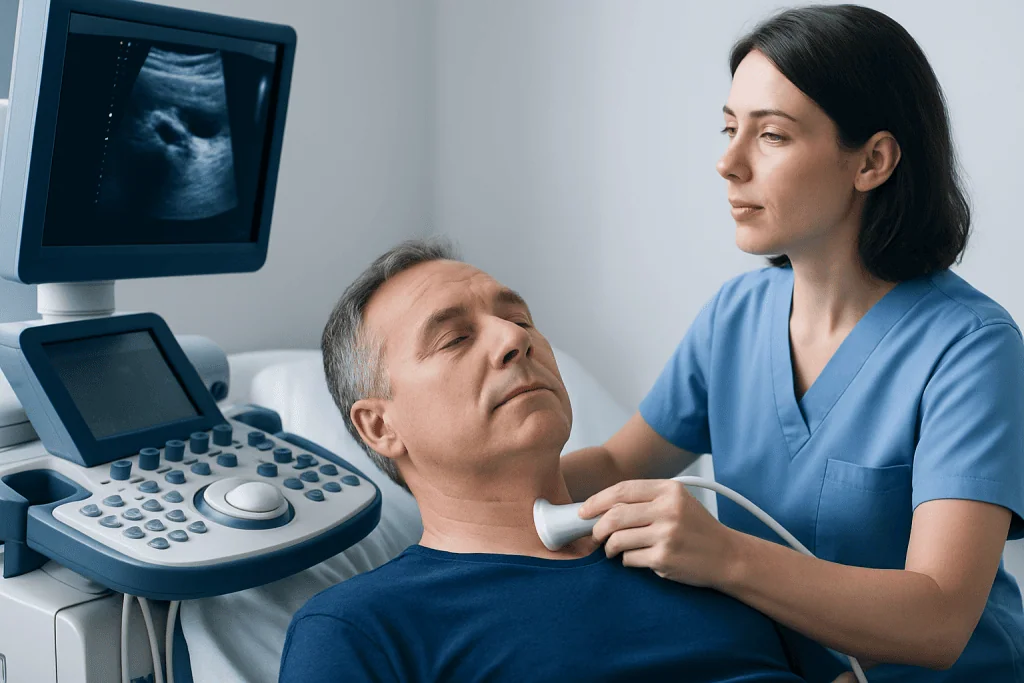
The most common first imaging test is carotid duplex ultrasound. This non-invasive test uses sound waves to show blood flow and estimate how much the artery is narrowed. It does not use radiation and is often used for both initial diagnosis and follow-up monitoring.
Additional imaging may be recommended when more detail is needed. CT angiography can show the arteries with high-resolution images, while MR angiography can provide vascular information without standard X-ray radiation. In selected cases, catheter angiography may be used, especially if a procedure is being considered, but it is more invasive and is not needed for every patient.
Diagnosis is not based only on a percentage of narrowing. Specialists consider whether symptoms have occurred, the degree and location of stenosis, plaque features, general health, brain imaging findings and the patient’s ability to safely undergo treatment. This individualized approach helps balance benefit and risk.
Treatment Options
Treatment for carotid artery stenosis aims to reduce the risk of stroke and protect long-term vascular health. The right approach is decided by a specialist after careful assessment, including the severity of narrowing, whether the patient has had symptoms, age, other medical conditions and imaging results. There is no single treatment plan that is right for everyone.
Medical management is important for many patients, including those with mild or moderate narrowing and some patients with severe narrowing. It generally includes control of blood pressure, cholesterol, diabetes and other vascular risk factors. Doctors may recommend medicines that reduce clotting tendency or help stabilize atherosclerotic plaque, along with smoking cessation, healthy eating, regular physical activity and weight management when appropriate.
Some patients benefit from a procedure to improve blood flow or reduce the risk of plaque-related emboli. Carotid endarterectomy is a surgical operation in which plaque is removed from the narrowed artery. Carotid artery stenting is a minimally invasive procedure in which a small mesh tube is placed to help keep the artery open. The choice between these options depends on anatomy, degree of stenosis, symptoms, surgical risk and specialist expertise.
Follow-up is a key part of treatment. Patients may need repeat ultrasound scans, adjustment of medicines and ongoing management of cardiovascular risk factors. Treatment decisions should always be made with a qualified healthcare team experienced in stroke prevention and carotid artery disease.
Living With / Prognosis
Many people live well with carotid artery stenosis, especially when the condition is detected early and vascular risk factors are actively managed. Prognosis depends on the severity of narrowing, whether symptoms have occurred, how stable the plaque appears and how effectively other health conditions are controlled.
Lifestyle measures can play an important supportive role. Stopping smoking is one of the most valuable steps for vascular health. A balanced diet, regular doctor-approved exercise, healthy weight management, good sleep and adherence to prescribed medicines can help reduce overall cardiovascular risk.
People with carotid artery stenosis should understand the warning signs of TIA and stroke and share this information with family members. Keeping regular follow-up appointments is important, even if no symptoms are present, because the degree of narrowing and treatment needs may change over time.
For international patients seeking evaluation, Acibadem International’s multidisciplinary specialists and JCI-accredited hospitals diagnose and treat carotid artery stenosis using coordinated neurology, neurosurgery, radiology and vascular care. As with any medical condition, recommendations are based on individual assessment rather than a standard package of treatment.
When to See a Doctor
A person should seek urgent emergency care if they develop sudden weakness or numbness on one side of the body, sudden speech difficulty, sudden vision loss, new confusion, severe dizziness or problems with balance. These may be signs of a TIA or stroke. Symptoms that improve quickly still require urgent evaluation.
A medical appointment is also appropriate if a doctor has heard a bruit in the neck, if carotid narrowing has been seen on an imaging test, or if the person has strong vascular risk factors such as high blood pressure, diabetes, smoking history or known coronary artery disease. Early assessment can clarify the level of risk and whether monitoring, medication or a procedure should be considered.
People already diagnosed with carotid artery stenosis should contact their doctor if they notice any new neurological symptoms, have difficulty tolerating medicines, or miss follow-up imaging. Continuing care helps ensure that treatment remains appropriate as health status changes.
Frequently asked questions
What is carotid artery stenosis?
Carotid artery stenosis is narrowing of the carotid arteries in the neck, usually due to atherosclerotic plaque. These arteries supply blood to the brain, so narrowing can increase the risk of transient ischemic attack or stroke.
Can carotid artery stenosis cause symptoms?
Many people have no symptoms, especially in the early stages. When symptoms occur, they may include temporary weakness, numbness, speech difficulty or vision loss, which can be signs of a TIA or stroke.
How is carotid artery stenosis diagnosed?
Diagnosis usually starts with medical history, physical examination and carotid duplex ultrasound. CT angiography or MR angiography may be used when more detailed imaging is needed or when a procedure is being considered.
Is carotid artery stenosis the same as a stroke?
No. Carotid artery stenosis is a narrowing of an artery that may increase stroke risk, but it is not itself a stroke. A stroke occurs when blood flow to part of the brain is blocked or a blood vessel in the brain bleeds.
What treatments are available for carotid artery stenosis?
Treatment may include lifestyle changes, medicines to reduce vascular risk, regular monitoring, surgery or carotid stenting. The best option depends on symptoms, severity of narrowing, anatomy and overall health, and should be decided by a specialist.
Can lifestyle changes help carotid artery stenosis?
Yes, lifestyle changes can support treatment and reduce overall cardiovascular risk. Stopping smoking, controlling blood pressure and diabetes, eating a heart-healthy diet and staying physically active with medical guidance are commonly recommended.
When is carotid artery stenosis an emergency?
It is an emergency if a person develops sudden weakness, speech problems, vision loss, confusion, severe dizziness or balance problems. These symptoms may indicate a TIA or stroke and require immediate medical care, even if they disappear.
References
- American Heart Association
- American Stroke Association
- European Society for Vascular Surgery
- National Institute for Health and Care Excellence
- Society for Vascular Surgery
This article is for general information only and is not a substitute for professional medical advice. Please consult a qualified doctor about your individual situation.
Treatments for This Condition
Doctors Who Treat This Condition

Prof. Dr. Aytekin Akyüz
Neurology
Prof. Dr. Ayşe Sağduyu Kocaman
Neurology
Prof. Dr. Dilaver Kaya
Neurology
Prof. Dr. Elif Ilgaz Aydınlar
Neurology
Prof. Dr. Hatem Hakan Selçuk
Interventional Neuroradiology
Prof. Dr. Kayihan Uluç
Neurology
Prof. Dr. Murat Aksu
Neurology
Prof. Dr. Muzaffer Olcay Çizmeli
Interventional Neuroradiology
Prof. Dr. Nergiz Hüseyinoğlu
Neurology
Prof. Dr. Neşe Tuncer
Neurology
Prof. Dr. Nur Aydinli
Pediatric Neurology
Assoc. Prof. Dr. Mehmet Barburoğlu
Interventional NeuroradiologyRelated Articles

Nerve Compression Symptoms: When Peripheral Nerve Treatment May Help

Unexplained Fainting: When Heart Rhythm and Neurology Tests Are Both Needed

Swallowing Problems in Neurological Disease: When Dysphagia Needs Specialist Care

When Dizziness Is Neurological: Signs You May Need a Neuro-Otology Assessment

Motor Neuron Disease: When Speech or Swallowing Problems Are the First Clues

Tourette Syndrome in Children and Adults: Symptoms and Treatment Options

Swallowing Problems in Motor Neuron Disease: Early Warning Signs and Supportive Care

Narcolepsy Testing: How to Prepare for an MSLT and Sleep Lab Evaluation

What Is a Neuro-Ophthalmology Exam? Step by Step for Patients With Vision and Nerve Symptoms

Pediatric Epilepsy Surgery: Who May Be a Candidate and How Evaluation Works

Cerebral Angiography vs MR Angiography: Which Brain Vessel Test Is Right?