Stereotactic Body Radiation Therapy (SBRT)
Stereotactic body radiation therapy (SBRT) is a precise form of external radiation that treats small, well-defined tumors with a few high-dose sessions rather than many weeks of treatment. It is used for…
Quick answer
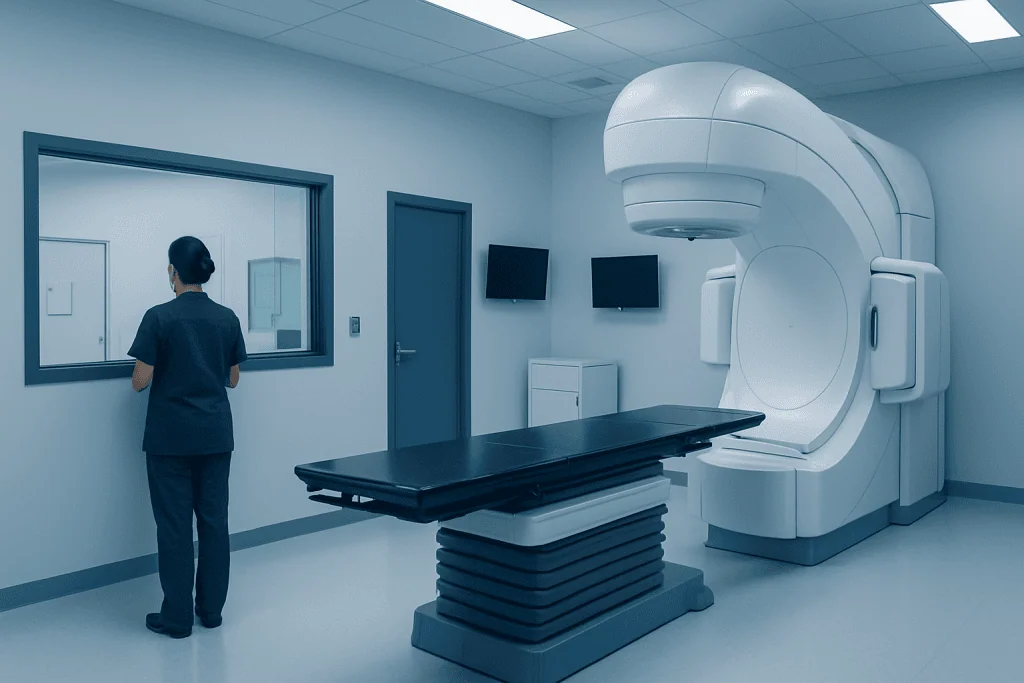
Stereotactic body radiation therapy (SBRT) is a non-invasive cancer treatment that delivers high doses of precisely targeted radiation to small tumors in one to five outpatient sessions. It is commonly used for early-stage lung cancer, liver, spine, prostate and limited metastatic tumors, often when surgery is not possible, with generally milder side effects than long-course radiation.
What is Stereotactic Body Radiation Therapy (SBRT)?
Stereotactic body radiation therapy, usually shortened to SBRT, is a form of external beam radiation treatment that delivers a high dose of radiation to a small, precisely defined target in the body over a small number of sessions. The word stereotactic refers to the use of three-dimensional imaging and coordinates to locate a target very accurately. In some countries the same approach is called stereotactic radiotherapy or stereotactic ablative radiotherapy (SABR). When the target is in the brain, the technique is usually called stereotactic radiosurgery (SRS) rather than SBRT.
Conventional radiation therapy often spreads a moderate dose over many weeks, sometimes 20 to 35 sessions. SBRT radiation instead uses a few sessions, commonly between one and five, each delivering a much larger dose. This is possible because the beams are shaped and aimed so that the high dose falls steeply at the edge of the tumor, sparing much of the surrounding healthy tissue. The treatment is non-invasive: no cuts are made, and no anesthesia is usually required.
SBRT is most often used for tumors that are relatively small and clearly visible on imaging. Common uses include:
- Early-stage lung cancer when surgery is not possible or not preferred (SBRT for lung cancer is one of the best-established uses).
- Liver tumors, both primary liver cancer and cancer that has spread to the liver.
- Pancreatic cancer in selected situations.
- Prostate cancer in selected patients.
- Spine and bone tumors, including some that cause pain.
- Oligometastatic disease, meaning a limited number of cancer deposits (metastases) that have spread from the original site.
- Kidney and adrenal tumors in patients who cannot have surgery.
In many hospitals, including Acibadem, this treatment is planned and delivered by the Radiation Oncology department, working together with medical oncologists, surgeons, radiologists and medical physicists.
Who is a candidate for SBRT
Whether stereotactic body radiation therapy is appropriate depends on the type, size, number and location of tumors, as well as a person’s general health. A radiation oncologist, a doctor who specializes in treating cancer with radiation, makes this assessment after reviewing scans, biopsy results and the overall treatment plan.
SBRT may be considered when:
- A tumor is small, often described as a few centimeters across, and has clear borders on imaging.
- There is one tumor or only a limited number of tumors.
- Surgery is not possible because of the tumor’s position, or because heart, lung or other medical problems make an operation too risky.
- A patient prefers a non-surgical option and the tumor is suitable.
- Cancer has returned in a limited area after previous treatment.
- A tumor in the spine or bone is causing pain and needs a focused, high-dose treatment.
SBRT is usually not suitable when:
- The tumor is large or has irregular borders that cannot be defined reliably.
- There are many tumors spread widely through the body, where whole-body or systemic treatments such as chemotherapy or immunotherapy are more appropriate.
- The tumor sits directly against a very sensitive structure, such as the central airways, the bowel or the spinal cord, in a way that makes a safe high dose impossible. In these cases a longer, lower-dose schedule may be chosen instead.
- A patient cannot lie still in one position for the length of a session, for example because of severe pain or breathing difficulty, unless this can be managed.
- The same area has already received radiation at doses close to the safe limit for the surrounding tissue.
Because each case is different, the decision is often made in a multidisciplinary tumor board, a meeting where several specialists review a patient’s situation together.
How the procedure works
SBRT involves several stages, and much of the effort happens before the first treatment session.
Before treatment: consultation and simulation. After the radiation oncologist confirms that SBRT is appropriate, you attend a planning session called a simulation. You lie on a flat table in the position you will hold during treatment. A custom immobilization device, such as a molded cushion or body frame, is often made so that you can rest in exactly the same position each time. A CT scan (a detailed X-ray that produces cross-sectional images) is taken in this position. For tumors that move with breathing, such as those in the lung or liver, a special four-dimensional CT may be used to record how the tumor moves as you breathe. Small skin marks or tattoos may be placed to help line you up later.
Fiducial markers. For some tumors, particularly in the liver, pancreas or prostate, tiny metal markers called fiducials may be placed near the tumor beforehand using a needle guided by ultrasound or CT. These markers show up clearly on imaging and help the treatment machine track the target. Not everyone needs them.
Planning. Over several days, the radiation oncologist outlines the tumor and nearby organs on the planning scan. Medical physicists and dosimetrists, specialists in calculating radiation doses, design the beams so that the tumor receives the prescribed dose while organs such as the lungs, heart, spinal cord, kidneys and bowel stay within accepted safety limits. This planning step typically takes one to two weeks.
During treatment. Each session usually lasts between 30 and 60 minutes, although the actual time the beam is on is only a portion of this. Most of the time is spent positioning you precisely. Staff use imaging on the treatment machine, such as cone-beam CT or X-rays, to compare your position with the plan and make fine adjustments. If your tumor moves with breathing, the team may use breath-hold techniques, gentle abdominal compression, or a system that switches the beam on only during certain phases of breathing (called gating). The treatment itself is painless; you will not feel or see the radiation. You need to lie still and breathe as instructed.
Number of sessions. Most SBRT courses involve one to five sessions, often given every other day or over one to two weeks. The exact number depends on the tumor site and the dose your doctor prescribes.
After treatment. You can normally go home immediately after each session and do not become radioactive. Follow-up imaging is usually arranged some weeks or months later to assess the response.
Preparation for stereotactic body radiation therapy
Preparation focuses on making sure the tumor can be targeted accurately and that you are as comfortable as possible during treatment. Your care team will give you specific instructions, which may include:
- Medication review. Tell your team about all medicines and supplements, including blood thinners, especially if fiducial markers are planned.
- Eating and drinking. For tumors in the abdomen, you may be asked to fast for a few hours before simulation and each session, or to have a similar stomach content each time, so the position of nearby organs is consistent. For prostate treatment, instructions about bladder filling and bowel emptying are common.
- Breathing practice. If breath-hold or gating will be used, you may practice the technique during simulation.
- Clothing. Wear loose, comfortable clothing without metal in the treatment area. You may be asked to change into a gown.
- Skin marks. If skin marks are used, avoid scrubbing them off before treatment is complete.
- Transport. Most patients can travel home on their own, but bringing someone can be helpful, particularly for the first session.
- Other treatments. Some medicines, including certain chemotherapy or targeted drugs, may need to be paused around the time of SBRT. Your oncologist will coordinate this.
Recovery and aftercare after SBRT
Because SBRT is non-invasive and involves few sessions, the recovery period is typically shorter and less disruptive than after surgery or a long course of radiation. Many patients continue their usual daily activities during treatment, and most are able to return to normal routines within days of the final session.
Fatigue is common and often builds over the course of treatment, peaking in the first one to two weeks after the last session and then gradually improving over several weeks. Site-specific effects, such as mild cough after lung treatment or nausea after abdominal treatment, typically appear during or shortly after treatment and settle over a few weeks.
Aftercare usually includes:
- Resting when tired but staying gently active, which can help with fatigue.
- Keeping treated skin clean, using mild soap, and avoiding harsh products or strong sun on the area.
- Taking any medicines your team prescribes, such as anti-nausea tablets or short courses of steroids to reduce swelling.
- Drinking enough fluids and eating small, regular meals if appetite is affected.
- Attending follow-up appointments and imaging scans as scheduled.
It is worth knowing that tumors treated with SBRT often shrink slowly over months rather than disappearing immediately, and that scans can show inflammation or scarring in the treated area for a long time. Your doctor will interpret follow-up scans with this in mind.
Risks and side effects
SBRT side effects are usually milder than those of surgery and are often more limited than those of long-course radiation because less healthy tissue receives a high dose. However, no treatment is free of risk, and the possible side effects depend heavily on where the tumor is located.
Common, usually short-term effects may include:
- Fatigue.
- Mild skin redness or tenderness over the treated area.
- Cough, shortness of breath or chest discomfort after lung treatment.
- Nausea, reduced appetite or abdominal discomfort after treatment of the liver, pancreas or adrenal gland.
- Temporary increase in pain, called a pain flare, in the first days after spine or bone treatment.
- Urinary frequency, urgency or burning, and bowel changes, after prostate treatment.
Less common or longer-term effects may include:
- Radiation pneumonitis, an inflammation of lung tissue that can cause cough and breathlessness weeks to months after lung SBRT, and which may need steroid treatment.
- Rib pain or, rarely, a rib fracture when a lung tumor lies close to the chest wall.
- Damage to the airway or esophagus (the food pipe) for tumors near the center of the chest.
- Liver function changes after liver treatment, particularly in people with existing liver disease.
- Ulcers or bleeding in the stomach or bowel for tumors close to these organs.
- Vertebral compression fracture (collapse of a spinal bone) after spine SBRT.
- Nerve or spinal cord injury, which is rare because of strict dose limits but can be serious.
- A small long-term risk of a new cancer caused by radiation, as with any radiation treatment.
Your radiation oncologist will explain the risks that apply to your particular tumor site and how the plan has been designed to reduce them. It is also important to understand that SBRT treats only the targeted area; it does not treat cancer that may be elsewhere in the body.
Results and outlook
The evidence for stereotactic body radiation therapy is strongest for early-stage non-small cell lung cancer in patients who cannot have surgery. In this setting, studies have generally shown high rates of control of the treated tumor and outcomes that compare reasonably with surgical results in similar patient groups, although the two approaches have not been fully compared in large randomized trials of surgically fit patients.
For liver, spine, prostate and oligometastatic disease, SBRT has been widely adopted and is supported by clinical trials and treatment guidelines, with good local control reported in appropriately selected patients. For pain from spine metastases, SBRT can provide durable relief in many cases, although a temporary pain flare may occur first.
Several points help set realistic expectations:
- Local control means the treated tumor stops growing or shrinks. It does not mean the cancer is cured, since cancer may exist or later appear elsewhere.
- Response is usually judged on scans taken several months after treatment, because changes take time.
- Outcomes vary with tumor type, size, location and overall health.
- SBRT is often one part of a broader plan that may include surgery, systemic drug therapy or observation.
Your doctor can explain what the evidence suggests for your specific situation and what realistic goals of treatment are, whether that is cure, long-term control or symptom relief.
Cost considerations
The cost of SBRT varies between hospitals and health systems and is shaped by several factors rather than a single fee. Elements that typically influence the overall cost include:
- Planning work. The simulation scan, four-dimensional imaging if needed, and the detailed physics planning required to deliver a safe high dose.
- Fiducial marker placement, which is a separate procedure when it is required.
- Number of sessions and the type of machine and image-guidance technology used.
- Hospital stay. SBRT is almost always an outpatient treatment, which generally keeps this component low compared with surgery.
- Additional diagnostic tests such as PET-CT or MRI scans before treatment.
- Follow-up imaging and consultations over the months after treatment.
- Management of side effects, if medicines or additional visits are needed.
Insurance coverage differs by country and plan. Asking the hospital’s patient services or your insurer for an itemized estimate before starting can help you understand what is included.
Frequently asked questions
What is the difference between stereotactic body radiation therapy and regular radiation?
Regular, or conventional, radiation therapy usually delivers a smaller dose in each session over many weeks. Stereotactic body radiation therapy delivers a much higher dose per session in only one to five sessions, using advanced imaging and precise targeting so that the high dose is confined to the tumor. Because of this precision, it is generally reserved for small, well-defined tumors.
Is stereotactic radiotherapy the same as SBRT?
Stereotactic radiotherapy is a broad term for radiation delivered with three-dimensional targeting. When it is applied to tumors in the body outside the brain, it is called SBRT or SABR. When it is used in the brain, it is more often called stereotactic radiosurgery. The underlying principle of precise, high-dose, short-course treatment is the same.
How effective is SBRT for lung cancer?
SBRT for lung cancer is best established for early-stage tumors in patients who are not candidates for surgery, where studies have generally reported high rates of control of the treated tumor. It is also used for limited lung metastases. Effectiveness for an individual depends on tumor size, location and overall health, and your oncologist can discuss what the evidence suggests for your case.
What are the most common SBRT side effects?
The most common SBRT side effects are fatigue and mild, temporary effects at the treated site, such as cough after lung treatment, nausea after abdominal treatment, or a brief pain flare after spine treatment. Serious complications are less common but possible and depend on nearby organs. Your team will describe the specific risks relevant to your treatment area.
Does SBRT radiation hurt, and will I be radioactive afterward?
The treatment itself is painless; you lie still while the machine moves around you. Some people find holding one position for 30 to 60 minutes uncomfortable, and the team can help with cushioning or pain relief. External beam radiation does not make you radioactive, so it is safe to be around family members, including children and pregnant women, after each session.
How many SBRT sessions will I need?
Most courses involve between one and five sessions, often given over one to two weeks. The number depends on the tumor’s site, size and closeness to sensitive organs. Your radiation oncologist will explain the schedule chosen for you and the reasons behind it.
Can SBRT be repeated if the cancer comes back?
In some situations SBRT can be used again, either for a new tumor in a different area or, more cautiously, near a previously treated area. Whether repeat treatment is safe depends on how much radiation nearby healthy tissue has already received. This is assessed carefully by the radiation oncology team on a case-by-case basis.
When to see a doctor
You should be assessed by a specialist if you have been diagnosed with a small tumor and want to understand whether stereotactic body radiation therapy is an option, particularly if surgery has been advised against, if cancer has returned in a limited area, or if a bone or spine tumor is causing pain. A radiation oncologist can review your imaging and explain whether SBRT is suitable and how it fits into your overall plan.
After SBRT, contact your care team promptly if you notice:
- Worsening cough, breathlessness or chest pain in the weeks to months after lung treatment.
- Fever, chills or signs of infection.
- Persistent nausea or vomiting that stops you eating or drinking.
- Severe or worsening pain that is not controlled by your prescribed medicines.
- Skin that becomes blistered, broken or very painful.
Seek urgent medical care if you experience:
- Coughing up significant amounts of blood.
- Vomiting blood or passing black or bloody stools.
- Sudden severe breathlessness or chest pain.
- New weakness, numbness or difficulty walking, or loss of bladder or bowel control after spine treatment, which could indicate pressure on the spinal cord.
- Yellowing of the skin or eyes, confusion, or severe abdominal swelling after liver treatment.
These symptoms do not necessarily mean a serious complication has occurred, but they need prompt evaluation so that any problem can be identified and treated early.
Preparation
- Attend a simulation scan where an immobilization device and skin marks may be made; some tumors need small fiducial markers placed beforehand. Tell your team about all medicines, especially blood thinners. Follow any fasting, bladder-filling or breathing instructions given for your tumor site, and wear loose clothing without metal on treatment days.
Aftercare
- Most patients go home right after each session and can continue normal activities, resting when fatigue builds. Keep treated skin clean and protected from sun, take prescribed medicines for nausea or inflammation, and stay hydrated. Attend follow-up scans, remembering that tumor shrinkage and scan changes evolve over months.
Medically reviewed by the Acıbadem International Medical Board — September 8, 2026
See our medical review board →
Update history
- PublishedSeptember 8, 2026
- Medical review approvedSeptember 8, 2026
- Last content updateSeptember 8, 2026
References2
Doctors Performing This Treatment

Prof. Işık Aslay, MD
Radiation Oncology
Prof. Meriç Şengöz, MD
Radiation Oncology
Prof. Nuran Beşe, MD
Radiation Oncology
Prof. Enis Özyar, MD
Radiation Oncology
Prof. Handan Onur Topuzlu, MD
Medical Oncology
Prof. İsmet Aydoğdu, MD
Hematology
Prof. Ahmet Öztürk, MD
Hematology
Prof. Ayşen Timurağaoğlu, MD
Hematology
Prof. Aziz Yazar, MD
Medical Oncology
Prof. Ali Arıcan, MD
Medical Oncology
Prof. Gamze Uğurluer Sümer, MD
Radiation Oncology
Prof. Gülsan Sucak, MD
Hematology
Prof. Siret Ratip, MD
Hematology
Prof. Mustafa Çetiner, MD
Hematology
Prof. Gökhan Demir, MD
Medical Oncology
Prof. Evrim Kadriye Tezcanlı, MD
Radiation Oncology
Prof. S. Sami Kartı, MD
Hematology
Prof. Bülent Karabulut, MD
Medical Oncology
Prof. Fulya Ağaoğlu, MD
Radiation Oncology
Prof. Mehmet Ufuk Abacıoğlu, MD
Radiation Oncology
Prof. Gül Başaran, MD
Medical Oncology
Prof. Hüseyin Engin, MD
Medical Oncology
Prof. Özlem Er, MD
Medical Oncology
Prof. Başak Oyan Uluç, MD
Medical OncologyMedical Units
Available at These Hospitals