

Hair Cloning and Regeneration: What Is Real Today?

Hair cloning is still largely in the research and early-development stage rather than standard clinical practice. Hair regeneration is a broad term that may refer to medical, biologic, or procedural approaches that support existing hair growth.
Key Takeaways
- Hair cloning is still largely in the research and early-development stage rather than standard clinical practice.
- Hair regeneration is a broad term that may refer to medical, biologic, or procedural approaches that support existing hair growth.
- The most reliable current treatments depend on the cause of hair loss and may include medications, scalp care, and hair transplant techniques.
- A dermatologist or hair restoration specialist should first identify whether hair loss is genetic, inflammatory, autoimmune, hormonal, or scarring.
- Not every patient is a candidate for advanced procedures, and realistic expectations are essential.
Hair cloning and regeneration are promising ideas in hair restoration, but they are not yet routine, widely available standard treatments. Today, most people benefit from an accurate diagnosis, medical hair loss care, and selected restorative procedures with established safety and results.
Overview: what hair cloning and regeneration mean today
Hair cloning and regeneration are often discussed together, but they do not mean exactly the same thing. In simple terms, hair cloning usually refers to laboratory-based methods designed to multiply or expand hair-forming cells and then use them to create new hair follicles or restore hair growth. Hair regeneration is a broader term and may include techniques that stimulate existing follicles, improve scalp conditions, or support new hair growth through medical or procedural care.
At present, hair cloning remains mostly experimental. Researchers have made progress in understanding hair follicle stem cells, dermal papilla cells, and the signaling pathways involved in hair cycling, but a fully standardized, widely available hair cloning treatment is not yet part of routine medical care. This is important because online information can sometimes make early-stage science sound more established than it is.
For patients seeking practical help now, the most evidence-based approach is to first identify the reason for hair loss. Treatment may involve lifestyle changes, medications, scalp disease treatment, and procedural options such as non-surgical hair restoration or FUE hair transplant when appropriate. In other words, real progress in hair restoration today usually comes from matching the right treatment to the right diagnosis.
How hair growth works and why regeneration is challenging
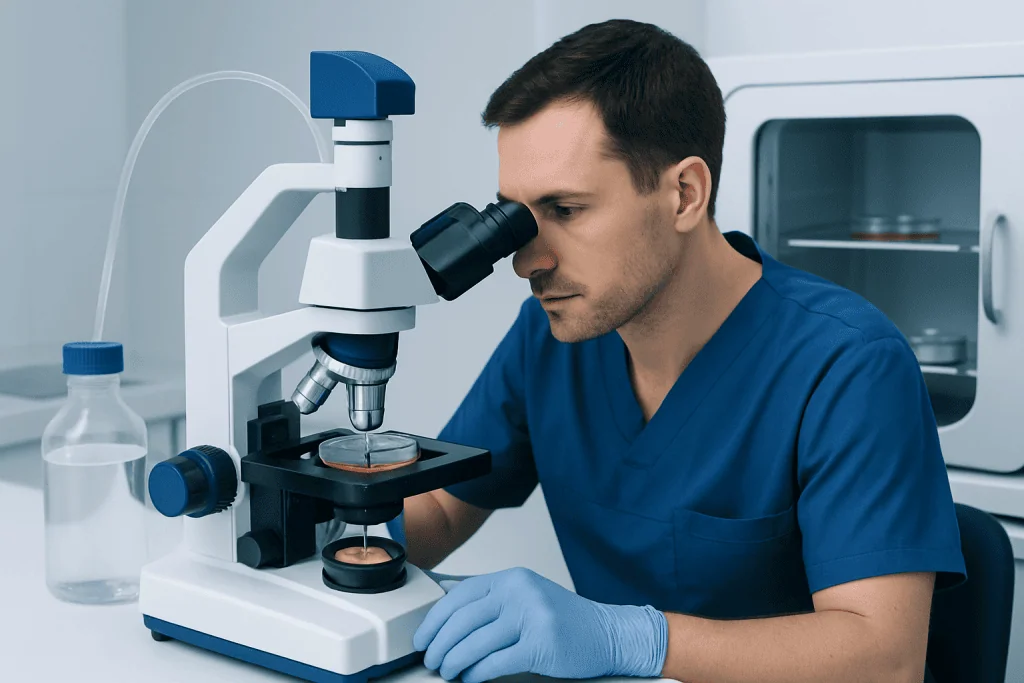
Each hair follicle is a small but complex mini-organ. It goes through repeated cycles of growth, transition, rest, and shedding. Healthy hair growth depends on many factors working together, including stem cells in the follicle, blood supply, hormones, immune balance, and signaling between different cell types in the skin.
This complexity is one reason true hair cloning is difficult. Creating a new hair follicle is not as simple as growing one type of cell in a laboratory. The follicle has a specialized structure and must integrate correctly into the scalp, connect with surrounding tissue, and produce a natural hair shaft with the right direction, texture, and growth cycle.
Hair loss is also not one single condition. Some people have androgenetic alopecia, often called pattern hair loss. Others may lose hair because of stress, nutritional issues, hormonal changes, inflammatory scalp disease, autoimmune conditions such as alopecia areata, or scarring disorders. Because the causes differ, the best treatment strategy also differs.
In addition, even when a therapy appears biologically promising, doctors still need strong evidence on safety, durability, consistency, and cosmetic outcomes. A treatment that grows a few fine hairs in a research setting is not the same as a predictable, natural-looking clinical solution.
What is real today in hair regeneration

When people hear “hair regeneration,” they may imagine a future treatment that creates unlimited new follicles. In current practice, however, hair regeneration more often means supporting existing follicles, slowing further loss, and improving the overall environment of the scalp. This may include medical therapy, treatment of scalp inflammation, and carefully selected in-office procedures.
Doctors may use medications or supportive treatments to help maintain or thicken hair in patients with pattern hair loss or temporary shedding. Some people may also be candidates for adjunctive approaches such as laser hair therapy, which is intended to support hair density in selected cases. Results vary, and these methods generally work best as part of a broader treatment plan rather than as a stand-alone cure.
It is also important to manage underlying scalp conditions. Inflammation, scaling, itching, and irritation can worsen shedding or make the scalp less healthy for hair growth. Conditions such as seborrheic dermatitis or discoid lupus erythematosus may need targeted dermatologic treatment before cosmetic restoration is considered.
For many patients, the most realistic current goal is not “cloning” entirely new follicles, but preserving the hair they still have, improving visible density, and choosing proven procedures when needed. This approach is often more effective and more reliable than waiting for emerging technologies to become routine.
Who may benefit from evaluation for hair loss
Anyone with noticeable thinning, widening of the part, receding hairline, patchy bald spots, increased shedding, or scalp symptoms should consider a professional evaluation. Hair loss can affect men and women and may begin gradually or appear more suddenly. Early assessment matters because some causes are easier to treat before significant follicle damage occurs.
A consultation is especially useful if hair loss is accompanied by redness, pain, burning, scaling, or scarring; if there is a family history of baldness; or if hair shedding began after illness, childbirth, major stress, weight change, or a new medication. Nail changes, body hair changes, or signs of hormonal imbalance may also offer clues about the cause.
Women often benefit from a tailored approach because female-pattern thinning can look different from male-pattern hair loss, and hormonal or nutritional factors may play a larger role in some cases. When restoration is suitable, patients may discuss options such as hair transplant for women as part of a broader management plan.
Not all hair loss needs a procedure. Some forms are temporary, some respond well to medical treatment, and some require treatment of the underlying skin or systemic condition first. A realistic and individualized evaluation is the best starting point.
How doctors diagnose the cause of hair loss
Diagnosis begins with a medical history and scalp examination. The doctor will ask when the hair loss started, whether it is diffuse or patchy, how much shedding is occurring, and whether there are associated symptoms such as itching or tenderness. Family history, diet, stress, recent illness, medications, and hormonal changes may all be relevant.
The scalp and hair shafts are then examined closely. A dermatologist may use dermoscopy or trichoscopy, a magnified view that helps assess follicle patterns, miniaturization, inflammation, scaling, and scarring. This can help distinguish common pattern hair loss from autoimmune, infectious, or inflammatory disorders.
Some patients may need blood tests to check for contributors such as iron deficiency, thyroid problems, or other systemic issues. In selected cases, especially when scarring alopecia is suspected, a scalp biopsy may be recommended. This can clarify the diagnosis and guide treatment before any restorative procedure is planned.
Good diagnosis protects patients from ineffective or unnecessary treatments. It also helps set realistic expectations about whether the goal is regrowth, stabilization, camouflage, or transplantation.
Current treatment options: from medical care to transplantation
Treatment depends on the diagnosis. Medical management may aim to reduce shedding, slow miniaturization, calm inflammation, treat scalp disease, or correct contributing health issues. For some patients, this alone leads to visible improvement. For others, it helps preserve existing hair and improve the scalp before a restorative procedure.
Hair transplantation remains one of the most established procedural options for selected patients with stable pattern hair loss and adequate donor hair. Rather than creating new follicles from cloned cells, transplantation redistributes existing healthy follicles from one area of the scalp to another. Techniques continue to evolve, and some patients may consider options such as DHI hair transplant depending on their anatomy, goals, and specialist advice.
Non-surgical cosmetic support can also play a role. These options may improve the appearance of fullness while medical treatment is ongoing or when a person is not a candidate for surgery. The best plan is often combined and staged over time.
Near the end of the care pathway, some patients may explore specialized centers with dermatology and hair restoration expertise. Acibadem International’s multidisciplinary specialists and JCI-accredited hospitals evaluate and treat hair loss for international patients, with plans tailored to the underlying cause and the patient’s goals.
Limits, expectations, and questions to ask about new therapies
Because hair cloning is still developing, patients should approach bold claims with caution. Terms such as “stem cell hair cure,” “follicle multiplication,” or “guaranteed permanent regrowth” may sound impressive, but the key questions are whether the treatment is standardized, peer-reviewed, medically supervised, and supported by consistent clinical evidence.
Even promising regenerative technologies may have limits. They may not work equally well for all types of hair loss, may require repeat sessions, or may produce partial improvement rather than dense coverage. Patients with scarring alopecia, advanced baldness, active autoimmune disease, or poor donor supply may face additional challenges.
Useful questions to ask include:
- What exact diagnosis is being treated?
- Is the treatment considered standard care or experimental?
- What outcomes are realistic for density, maintenance, and timing?
- What are the risks, side effects, and recovery expectations?
- Will ongoing medical treatment still be needed?
Informed decision-making is especially important in aesthetic medicine, where hope can easily outpace evidence. A trustworthy clinician will explain what is proven today, what is still under study, and what results can reasonably be expected.
Prevention, self-care, and when to see a doctor
Not all hair loss can be prevented, especially when genetics is a major factor, but good scalp and general health can support better outcomes. Gentle hair care, avoiding harsh traction or tight hairstyles, managing heat and chemical damage, treating dandruff or dermatitis early, and maintaining a balanced diet can all help protect hair quality and reduce avoidable shedding.
People should avoid self-prescribing unproven products based only on marketing claims. Many over-the-counter products are harmless but disappointing; others may irritate the scalp or delay proper diagnosis. If shedding is persistent, patchy, or associated with scalp symptoms, medical advice is more useful than repeated trial and error.
A doctor should be seen if hair loss is sudden, rapidly worsening, patchy, painful, or accompanied by scalp redness, scaling, scarring, or changes in overall health. Prompt evaluation is also important when hair loss causes significant emotional distress, because support and effective treatment options are often available.
Overall, what is real today is encouraging but measured: doctors can often slow hair loss, improve density, and restore hair in selected cases, while true hair cloning remains a promising area of ongoing research rather than a routine everyday treatment.
Frequently asked questions
Is hair cloning available now as a routine treatment?
Not yet in the way many people imagine. Hair cloning is still mainly in the research or early-development stage, and it is not a standard, widely available treatment in everyday clinical practice.
What is the difference between hair cloning and hair transplant?
Hair cloning aims to create or multiply hair-forming cells to generate new follicles. A hair transplant uses the patient’s existing follicles, usually taken from a donor area, and moves them to areas of thinning or baldness.
Can hair regeneration bring back hair without surgery?
Sometimes, depending on the cause of hair loss. Non-surgical treatments may help slow shedding, improve hair thickness, and support existing follicles, but they do not always fully restore lost density.
Who is a good candidate for current hair restoration treatments?
This depends on the diagnosis, the pattern and stability of hair loss, scalp health, and donor hair availability. Patients with pattern hair loss often have more procedural options than those with active inflammatory or scarring scalp disease.
Are results from current hair restoration treatments permanent?
Some results can be long-lasting, especially with successful transplantation, but hair loss may continue in untreated areas. Many people need ongoing medical care or maintenance to preserve the best outcome over time.
Should someone try trendy regenerative treatments advertised online?
It is best to be cautious. A person should ask whether the treatment is evidence-based, medically supervised, and appropriate for their specific diagnosis before spending time or money on it.
References
- American Academy of Dermatology
- National Institutes of Health
- British Association of Dermatologists
- International Society of Hair Restoration Surgery
- Mayo Clinic
This article is for general information only and is not a substitute for professional medical advice. Please consult a qualified doctor about your individual situation.
Hair Cloning And Regeneration in Turkey — costs, top hospitals & a free quote
JCI-accredited · board-certified surgeons · reply within 24h
Add us as a Preferred Source to see more of our trusted health content across Google Search, AI Overviews and Discover.

Hair Transplant
Modern FUE and DHI hair restoration with natural, lasting results.
Related Treatments
Related Conditions
More from the Health Library



Related Specialists

Prof. Dr. Sedef Şahin
Dermatology
Prof. Dr. Şükrü Yazar
Aesthetic Plastic & Reconstructive Surgery
Prof. Dr. Emel Öztürk Durmaz
Dermatology
Prof. Dr. Özlem Dicle
Dermatology