FUE Hair Transplant Turkey: Cost, Safety, and Results

FUE removes individual hair follicles from a donor area and places them into thinning or bald areas. Cost depends on graft number, clinic standards, surgeon expertise, and what is included in the treatment plan.
Key Takeaways
- FUE removes individual hair follicles from a donor area and places them into thinning or bald areas.
- Cost depends on graft number, clinic standards, surgeon expertise, and what is included in the treatment plan.
- Safety is closely linked to proper patient selection, sterile technique, realistic planning, and experienced specialists.
- Results develop gradually over several months, with final density usually assessed after about 12 months.
- Not everyone with hair loss is a suitable candidate; the cause of hair loss should be evaluated first.
FUE hair transplant Turkey is a popular option for people seeking hair restoration with minimal scarring and a relatively short recovery. Understanding how FUE works, what affects cost, and how to judge safety can help patients make a well-informed decision.
Overview of FUE Hair Transplant in Turkey
Follicular Unit Extraction, usually called FUE, is a hair restoration technique that moves individual hair follicles from a donor area, most often the back or sides of the scalp, to areas affected by thinning or baldness. Because follicles are removed one by one rather than as a strip of scalp, FUE usually leaves tiny dot-like marks instead of a long linear scar. This makes it a widely chosen option for people who prefer shorter hairstyles or want a less invasive approach.
Turkey has become a well-known destination for hair restoration, including FUE hair transplant procedures. Many patients travel for treatment because specialized centers offer experienced teams, modern techniques, and coordinated care for international visitors. Even so, location alone does not determine quality. The most important factors are the qualifications of the medical team, patient assessment, hygiene standards, and careful treatment planning.
FUE is not a cure for every type of hair loss. It generally works best for people with stable pattern hair loss and a healthy donor area. Before surgery, a doctor should evaluate whether shedding is due to androgenetic alopecia, temporary shedding, scarring conditions, or medical disorders such as alopecia areata, where transplantation may not be appropriate until the condition is understood and controlled.
Who Is a Good Candidate and What Results to Expect
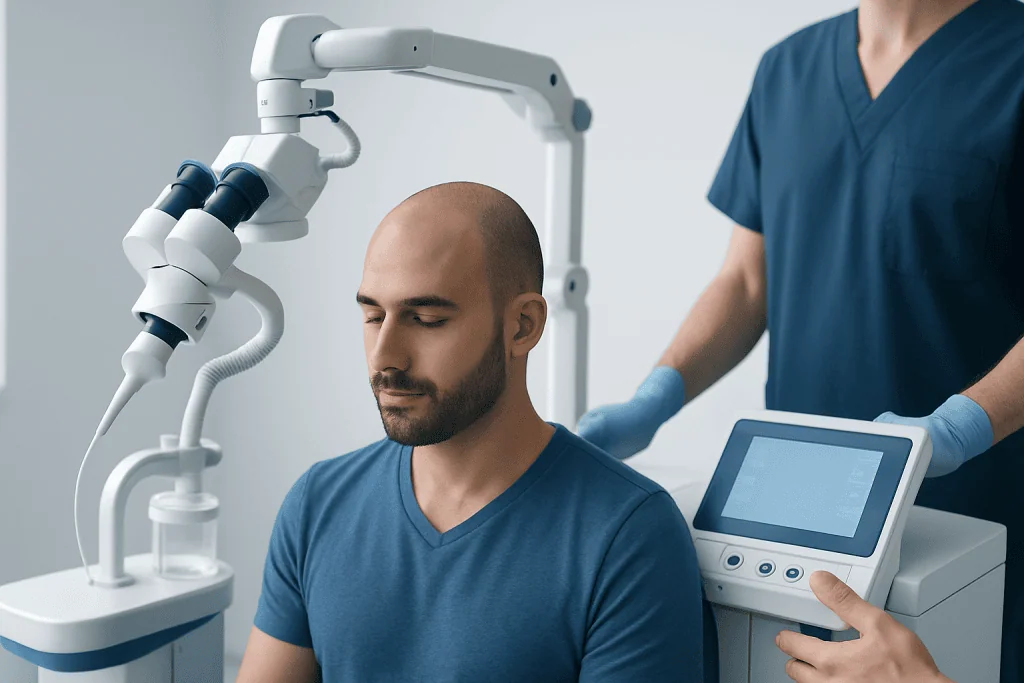
Good candidates for FUE hair transplant Turkey usually have pattern hair loss, enough donor hair, and realistic expectations about density and coverage. Candidates should also be in good general health and willing to follow aftercare instructions. Hair color, hair texture, scalp contrast, and the size of the treatment area all influence how full the final result appears.
Results from FUE do not appear immediately. Newly transplanted hairs often shed in the first few weeks, which is a normal part of the cycle. New growth typically begins after several months, with visible improvement continuing gradually. Many patients assess early changes at around 6 months, while fuller results are more commonly judged at 9 to 12 months.
The goal is usually natural-looking improvement rather than unlimited density. A skilled team plans the hairline carefully and uses donor hair conservatively so that the result looks balanced over time. In some cases, patients may also discuss alternatives or complementary options such as DHI hair transplant or non-surgical hair restoration depending on the pattern of loss and the desired style.
Cost: What Influences the Price

When people search for FUE hair transplant Turkey, cost is often one of the first questions. There is no single fixed price because the final cost depends on several medical and practical factors. The number of grafts needed is often the main driver, but it is not the only one. A larger or more complex treatment area generally requires more time, planning, and team involvement.
Other cost factors can include the surgeon’s expertise, the clinic’s accreditation and safety standards, the technology used, and whether the package includes consultation, blood tests, medications, follow-up visits, airport transfers, or accommodation. Patients should ask for a clear breakdown of what is included rather than comparing clinics only by headline price.
Very low prices should be approached with caution. Lower cost may reflect fewer services, limited physician involvement, rushed procedures, or reduced attention to sterilization and aftercare. A hair transplant is a medical procedure, not only a cosmetic purchase, so value should be judged by safety, professionalism, communication, and the likelihood of a natural long-term result.
- Ask whether pricing is based on graft number, session size, or a package model.
- Confirm who performs each part of the procedure.
- Check whether aftercare, medications, and follow-up are included.
- Request realistic information about what density can be achieved in one session.
Safety and Possible Risks
FUE is generally considered safe when performed by trained professionals in an appropriate medical setting. As with any procedure, however, there are possible risks. These can include bleeding, swelling, discomfort, infection, temporary numbness, folliculitis, shock loss of existing hairs, or an unnatural appearance if planning is poor. Most side effects are mild and temporary when the procedure is done correctly and aftercare instructions are followed.
Safety begins well before the day of surgery. A proper consultation should review the patient’s medical history, medications, allergies, smoking status, scalp condition, and cause of hair loss. Scalp diseases or inflammation, including conditions such as seborrheic dermatitis or scarring disorders, may need treatment before surgery. This step helps reduce complications and improves the chance of a healthy graft take.
Patients can improve safety by choosing an accredited hospital or clinic, confirming the credentials of the physician, and making sure sterile technique is used throughout the procedure. It is also important to know who will design the hairline, administer anesthesia, extract grafts, and create recipient sites. Clear answers to these questions are a good sign of transparent and responsible care.
How the Procedure Is Performed
FUE is usually done under local anesthesia. After the donor and recipient areas are assessed and marked, individual follicular units are extracted using a small punch tool. These grafts are then prepared and implanted into tiny channels or openings in the thinning area. The exact method can vary depending on the clinic’s approach and the patient’s hair characteristics.
The design phase is especially important. The front hairline should suit the person’s age, facial features, and likely future hair loss pattern. Overly aggressive placement may look unnatural later or use too much donor hair too early. Experienced specialists aim for a balanced plan that preserves the donor area while improving appearance in a natural way.
Some patients may be candidates for variations of the technique, such as sapphire transplant, or for tailored options like hair transplant without shaving in selected cases. The best approach depends on scalp characteristics, hairstyle preferences, the number of grafts needed, and the medical team’s judgment.
Recovery, Aftercare, and Timeline
Recovery after FUE is usually manageable, but careful aftercare is essential. In the first few days, the scalp may feel tender and look red or slightly swollen. Tiny crusts can form around the transplanted follicles. Patients are usually advised to sleep with the head elevated for a short period, avoid rubbing the scalp, and wash the area only as instructed by the clinic.
Most people can return to non-strenuous daily activities fairly soon, although timing varies. Strenuous exercise, swimming, direct sun exposure, and anything that could traumatize the grafts are generally limited for a period recommended by the treating team. Smoking may reduce healing quality, so patients are often advised to stop or cut down before and after surgery.
Patience is important during the first months. Temporary shedding of transplanted hair is common and usually expected. New hairs begin to emerge gradually, often appearing thin at first before thickening over time. Because growth is slow and uneven early on, it is normal for the final result to take many months to mature.
How to Choose a Clinic and When to Seek Medical Advice
Choosing where to have FUE hair transplant Turkey should involve more than comparing photos online. Patients should look for a center that offers a medical evaluation, realistic expectations, informed consent, and clear follow-up care. Before-and-after images can be useful, but they should never replace a direct discussion about candidacy, donor capacity, and expected density for an individual case.
Questions worth asking include whether the facility is accredited, how often the team performs FUE, what role the surgeon has during the procedure, and how complications are handled. It is also sensible to ask about revision options if the result is incomplete or if previous surgery elsewhere needs correction through hair transplant repair. Near the end of the care pathway, some international patients choose centers such as Acibadem International, where multidisciplinary specialists and JCI-accredited hospitals evaluate and treat hair loss conditions with individualized planning.
Medical advice should be sought if hair loss is sudden, patchy, painful, associated with scaling or inflammation, or accompanied by symptoms elsewhere in the body. A doctor should also be contacted after a transplant if there is increasing redness, pus, fever, severe pain, heavy bleeding, or concern that the grafts have been damaged. Early assessment can help protect both scalp health and the final result.
Frequently asked questions
Is FUE hair transplant in Turkey safe?
FUE can be safe in Turkey when it is performed in a properly regulated medical setting by qualified professionals using sterile technique. Safety depends more on the clinic's standards, the experience of the team, and careful patient selection than on the country alone.
How long does it take to see FUE hair transplant results?
Visible growth usually starts gradually after a few months. Many patients notice meaningful improvement by around 6 months, while fuller and more mature results are often assessed at 9 to 12 months.
Does FUE leave scars?
FUE usually leaves very small dot-like marks in the donor area rather than a long linear scar. These marks are often difficult to notice once the hair grows, but all surgical procedures can leave some degree of scarring.
Why do FUE hair transplant prices vary so much?
Prices can vary because of graft number, surgeon experience, clinic accreditation, included services, and the complexity of the case. A lower price does not always mean better value, especially if physician oversight or aftercare is limited.
Can women have FUE hair transplant?
Yes, some women are suitable candidates for FUE, especially when hair loss has a stable pattern and the donor area is adequate. A full evaluation is important because diffuse thinning, hormonal causes, or active scalp disease may need a different approach first.
Will transplanted hair fall out again?
The transplanted follicles are usually taken from areas that are more resistant to pattern hair loss, so they often continue to grow long term. However, existing non-transplanted hair may still thin over time, which is why some patients later need medical treatment or another procedure.
References
- American Academy of Dermatology
- International Society of Hair Restoration Surgery
- National Health Service
- Mayo Clinic
- British Association of Dermatologists
This article is for general information only and is not a substitute for professional medical advice. Please consult a qualified doctor about your individual situation.
FUE Hair Transplant in Turkey — costs, top hospitals & a free quote
JCI-accredited · board-certified surgeons · reply within 24h
Add us as a Preferred Source to see more of our trusted health content across Google Search, AI Overviews and Discover.

Hair Transplant
Modern FUE and DHI hair restoration with natural, lasting results.
Related Treatments
Related Conditions
More from the Health Library



Related Specialists

Prof. Dr. Sedef Şahin
Dermatology
Prof. Dr. Özlem Dicle
Dermatology
Prof. Dr. Emel Öztürk Durmaz
Dermatology
Assoc. Prof. Dr. Yasemin Koyuncu
Dermatology