

Alopecia Treatment: How Different Types Are Managed

Alopecia is a broad term for hair loss, and treatment varies by the specific type. A careful diagnosis is important because autoimmune, genetic, hormonal, inflammatory, and stress-related causes are managed differently.
Key Takeaways
- Alopecia is a broad term for hair loss, and treatment varies by the specific type.
- A careful diagnosis is important because autoimmune, genetic, hormonal, inflammatory, and stress-related causes are managed differently.
- Some hair loss is temporary and reversible, while other forms are chronic and need long-term management.
- Treatment may include medications, scalp care, treatment of underlying conditions, and selected hair restoration procedures.
- Early assessment can help protect existing hair follicles and improve results.
Alopecia treatment is guided by the type of hair loss, its cause, and how active it is. Many forms can be improved with medical care, lifestyle support, and in selected cases, hair restoration procedures.
Overview: what alopecia treatment means
Alopecia is the medical term for hair loss. It can affect the scalp, eyebrows, eyelashes, beard area, or body hair, and it may appear gradually or quite suddenly. Because hair growth follows a cycle, disruption at different stages can lead to different patterns of shedding or thinning.
Alopecia treatment is not one single therapy. Instead, it is a personalized plan based on the type of hair loss, the person’s age, medical history, scalp health, and treatment goals. Some people need treatment for an underlying condition, while others may benefit from therapies that stimulate growth, reduce inflammation, or restore hair coverage.
In many cases, hair loss is manageable. Early evaluation is helpful because some forms of alopecia can become more difficult to reverse if follicles remain inactive or scarred for a long time. A dermatologist or hair specialist can help determine whether the goal is to stop ongoing loss, encourage regrowth, improve hair density, or consider restoration options.
Types of alopecia and how they differ
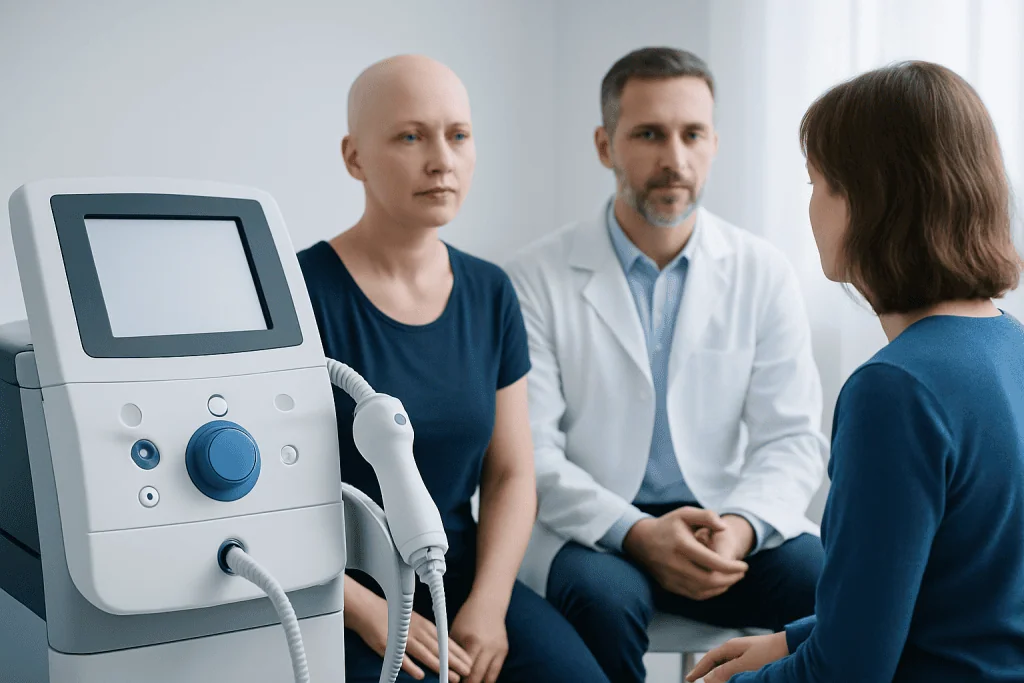
The most common type is androgenetic alopecia, often called male-pattern or female-pattern hair loss. It usually develops gradually and is linked to genetic sensitivity of hair follicles to hormones. Hair tends to become finer over time, with thinning at the crown, temples, or along the central parting.
Another important type is alopecia areata, an autoimmune condition in which the immune system targets hair follicles. This often causes smooth, round patches of hair loss, though it can sometimes affect the entire scalp or body hair. Because it is driven by immune activity, its treatment differs from pattern hair loss.
Other forms include telogen effluvium, which causes diffuse shedding after physical or emotional stress; traction alopecia, caused by prolonged tension from hairstyles; and scarring alopecias, in which inflammation damages follicles permanently. Scalp diseases such as seborrheic dermatitis or inflammatory conditions such as discoid lupus erythematosus can also contribute to hair loss, especially when the scalp is irritated or scarred.
- Androgenetic alopecia: gradual thinning, often chronic
- Alopecia areata: patchy, autoimmune, sometimes unpredictable
- Telogen effluvium: diffuse shedding, often temporary
- Traction alopecia: related to tight hairstyles or repeated pulling
- Scarring alopecia: inflammatory damage with possible permanent loss
Symptoms and signs that guide treatment

The pattern of hair loss gives important clues. Patchy loss may suggest alopecia areata, while widening of the part or recession at the hairline can point to androgenetic alopecia. Diffuse shedding from all over the scalp often occurs in telogen effluvium, especially after illness, childbirth, major weight loss, surgery, or emotional stress.
Symptoms on the scalp also matter. Itching, burning, tenderness, scaling, redness, or visible bumps may indicate inflammation or infection that needs treatment first. When the scalp looks smooth and shiny in affected areas, doctors may consider scarring alopecia, which usually requires prompt specialist care.
Some people notice changes beyond the scalp, such as thinning eyebrows, eyelashes, or beard hair. Nail changes can occur in alopecia areata. These details help clinicians build the right treatment plan and decide whether simple monitoring, laboratory tests, or a biopsy may be needed.
Causes and risk factors
Hair loss can result from several overlapping factors. Genetics are central in androgenetic alopecia, while immune dysregulation is the main driver of alopecia areata. Hormonal changes, iron deficiency, thyroid disorders, nutritional imbalance, rapid weight changes, certain medications, and chronic stress can also disturb the hair cycle.
Mechanical and chemical damage can play a role as well. Frequent use of very tight braids, ponytails, extensions, or head coverings that pull on the hair may lead to traction alopecia. Harsh styling methods, repeated bleaching, and heat may increase breakage, which can look like hair loss even when the follicles are still active.
Inflammatory scalp disease is another important factor. Dandruff-related inflammation, fungal infection, and autoimmune skin disorders can interfere with hair growth. In these cases, treatment focuses not only on the hair itself but also on calming scalp inflammation and protecting follicle health.
How alopecia is diagnosed
Diagnosis begins with a medical history and scalp examination. A doctor will usually ask when the hair loss began, whether it is sudden or gradual, if there has been illness or stress, and whether family members have similar hair loss. Questions about hairstyles, diet, menstrual history, medications, and skin symptoms are also useful.
During the examination, the clinician may assess the hairline, density, shedding pattern, and scalp condition. Dermoscopy, a close-up magnified look at the scalp, can help identify specific signs of inflammation, miniaturized hairs, broken hairs, or scarring. A hair pull test may be used to estimate active shedding.
When needed, blood tests may check for iron deficiency, thyroid disease, vitamin or nutrient issues, and hormonal causes. In uncertain or inflammatory cases, a scalp biopsy may be recommended to confirm the diagnosis. This step is especially important if scarring alopecia is suspected, because early treatment can help preserve remaining follicles.
Treatment options for different types of alopecia
Treatment depends on the diagnosis. For androgenetic alopecia, doctors may recommend topical or oral treatments to slow follicle miniaturization and support regrowth. Because this type is usually chronic, treatment often needs to continue long term to maintain benefit. Improvement tends to be gradual rather than immediate, so realistic expectations are important.
For alopecia areata, treatment is aimed at reducing the immune attack on hair follicles and encouraging regrowth. Depending on severity, this may involve topical therapies, injections into affected patches, or other systemic options under specialist guidance. If there is extensive or rapidly progressive hair loss, ongoing dermatology follow-up is especially helpful.
Telogen effluvium is often managed by identifying and correcting the trigger. This may include recovering from illness, addressing iron deficiency or thyroid problems, improving nutrition, reducing physical stressors, or reviewing medications with a doctor. Hair often begins to recover over several months once the underlying cause is managed.
When medical treatment has stabilized hair loss or when follicles are no longer able to regrow hair in selected areas, restoration procedures may be considered. Depending on the person’s pattern and donor hair, options may include FUE hair transplant, DHI hair transplant, or supportive approaches such as laser hair therapy and non-surgical hair restoration. These options are not suitable for every type of alopecia, especially active scarring disease, so proper selection is essential.
Prevention, scalp care, and self-care
Not all alopecia can be prevented, especially when genetic or autoimmune factors are involved. Still, healthy scalp care and early attention to symptoms can reduce avoidable hair stress. Gentle washing, avoiding excessive heat, limiting harsh chemical processing, and reducing tension from tight hairstyles can all help protect the hair shaft and scalp.
General health also matters. A balanced diet with adequate protein, iron, and other nutrients supports the hair cycle. Good sleep, stress management, and treatment of medical conditions such as thyroid disease can make a difference, particularly in people with diffuse shedding. It is best to avoid starting supplements or over-the-counter remedies without medical advice, since not all are helpful and some may interfere with other conditions.
People should be cautious with internet claims about “miracle” cures. Hair growth takes time, and evidence-based treatment is usually more effective than frequent product switching. Taking regular photographs under similar lighting can help track progress more accurately than day-to-day observation.
When to see a doctor
Medical advice is recommended if hair loss is sudden, patchy, rapidly worsening, or associated with scalp redness, pain, scaling, or pustules. Evaluation is also important when eyebrows or eyelashes are involved, or when there are symptoms such as fatigue, weight change, menstrual irregularity, or signs of nutritional deficiency that could point to an underlying health issue.
People who have been shedding for several months or who notice visible thinning should also seek assessment rather than waiting too long. Early diagnosis may help preserve follicles and broaden treatment choices. This is especially true for inflammatory or scarring forms of alopecia, where timely treatment can limit permanent loss.
Specialist care can also help when a person is considering procedural treatment. In selected patients, Acibadem International’s multidisciplinary specialists in JCI-accredited hospitals evaluate the cause of hair loss and offer medical and restorative options for international patients. The right plan begins with a clear diagnosis and an honest discussion of expected results.
Frequently asked questions
Can alopecia be cured?
Some forms of alopecia are temporary and may fully recover once the cause is addressed, such as telogen effluvium after stress or illness. Other forms, including androgenetic alopecia, are usually long-term conditions that can often be managed rather than permanently cured. The best outlook depends on the type of alopecia and how early treatment begins.
How long does alopecia treatment take to work?
Hair responds slowly, so improvement usually takes several months rather than weeks. Many treatments are judged over three to six months, and sometimes longer, because hair grows in cycles. A doctor can explain what timeline is realistic for a specific diagnosis.
Is hair transplant suitable for all types of alopecia?
No. Hair transplant is generally considered only in carefully selected cases, most often after pattern hair loss has stabilized. It is usually not appropriate for active inflammatory or scarring alopecia until the disease is fully assessed and controlled.
Does stress cause alopecia?
Stress can contribute to certain forms of hair loss, especially telogen effluvium, which causes increased shedding a few months after a physical or emotional stressor. Stress may also worsen the experience of hair loss and sometimes aggravate existing conditions. However, not all alopecia is caused by stress, so proper diagnosis remains important.
What is the difference between alopecia areata and pattern hair loss?
Alopecia areata is an autoimmune condition that often causes sudden, smooth patches of hair loss. Pattern hair loss is usually gradual and related to genetic and hormonal influences that make follicles shrink over time. Because the causes differ, the treatments are also different.
Should supplements be taken for hair loss?
Supplements may help only when there is a true deficiency, such as low iron or certain nutritional problems. Taking them without testing is not always useful and can sometimes be harmful or misleading. A doctor may recommend blood tests before suggesting any supplement plan.
References
- American Academy of Dermatology
- National Institute of Arthritis and Musculoskeletal and Skin Diseases
- National Health Service
- Mayo Clinic
- British Association of Dermatologists
This article is for general information only and is not a substitute for professional medical advice. Please consult a qualified doctor about your individual situation.
Hair transplant in Turkey — costs, graft counts & a free assessment
JCI-accredited · board-certified surgeons · reply within 24h
Add us as a Preferred Source to see more of our trusted health content across Google Search, AI Overviews and Discover.

Related Treatments
Related Conditions
More from the Health Library



Related Specialists
Prof. Dr. Sedef Şahin
Dermatology
Prof. Dr. Şükrü Yazar
Aesthetic Plastic & Reconstructive Surgery
Prof. Dr. Emel Öztürk Durmaz
Dermatology
Prof. Dr. Özlem Dicle
Dermatology