

Hair Loss Treatment Options: Medicines, PRP, and Transplants

Hair loss has many causes, so treatment should begin with an accurate diagnosis. Medicines may help slow shedding and support regrowth, especially in early stages.
Key Takeaways
- Hair loss has many causes, so treatment should begin with an accurate diagnosis.
- Medicines may help slow shedding and support regrowth, especially in early stages.
- PRP is a non-surgical option that may improve hair density in selected patients.
- Hair transplantation can restore hair in areas where follicles no longer grow reliably.
- Scalp conditions, nutrition, stress, and hormones may all affect treatment success.
Hair loss treatment options range from medicines and scalp therapies to platelet-rich plasma (PRP) and hair transplantation. The best choice depends on why hair is thinning, how advanced it is, and whether the hair follicles are still active.
Overview of Hair Loss Treatment Options
Hair loss is a common concern in both men and women. It may appear as gradual thinning, a widening part, receding hairline, patchy bald spots, or increased shedding during washing or brushing. Because hair growth changes naturally over time, some shedding is expected, but persistent or noticeable loss often has an underlying cause that can be evaluated.
Hair loss treatment options generally include medicines, office-based therapies such as platelet-rich plasma (PRP), supportive non-surgical approaches, and hair transplantation. A doctor chooses among these options by looking at the pattern of loss, the health of the scalp, family history, and whether the follicles are miniaturizing or permanently inactive. Some treatments aim to slow ongoing thinning, while others are designed to restore hair to areas with more advanced loss.
For many people, improvement takes time. Hair grows slowly, so even effective treatment may need several months before changes become visible. A realistic plan often combines more than one approach, such as medication plus supportive scalp care, or PRP together with a surgical restoration option like FUE hair transplant when suitable.
Common Types and Symptoms of Hair Loss
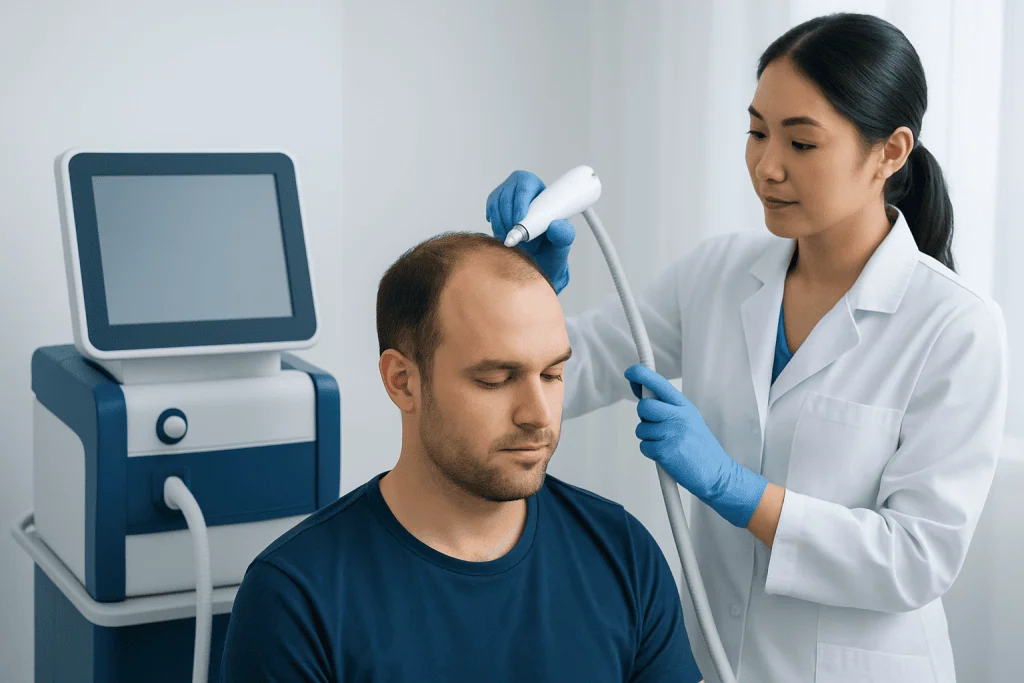
Hair loss is a symptom rather than a single disease. The most common type is androgenetic alopecia, often called male-pattern or female-pattern hair loss. It usually develops gradually. Men may notice recession at the temples or thinning at the crown, while women more often see overall thinning on the top of the scalp or a broader part line.
Other patterns can suggest different causes. Sudden patchy hair loss may be seen with alopecia areata, an autoimmune condition. Diffuse shedding from all over the scalp can happen after major stress, illness, childbirth, surgery, or rapid weight loss; this is often called telogen effluvium. Hair breakage rather than true shedding may point to heat styling, chemical damage, or traction from tight hairstyles.
Symptoms that deserve attention include scalp itching, burning, redness, scaling, pain, and visible rash. Conditions such as seborrheic dermatitis or scarring disorders can affect the scalp and influence treatment choices. A person may also notice thinning eyebrows, beard changes, or loss of body hair, which can provide clues about the cause.
- Gradual thinning on the scalp top or crown
- Receding hairline or widening part
- Increased hair on the pillow, shower drain, or brush
- Patchy bald areas
- Scalp scaling, inflammation, or tenderness
Causes and Risk Factors

Hair follicles cycle through growth, transition, and resting phases. Hair loss happens when this cycle is disrupted or when follicles progressively shrink. Genetics is a major factor in pattern hair loss, but hormones, aging, and inflammation also play a role. Men and women can both be affected, and the emotional impact may be significant even when the condition is medically benign.
Other possible causes include thyroid disease, iron deficiency, low protein intake, certain medications, autoimmune disorders, scalp infections, and physical or emotional stress. Tight braids, extensions, and repeated chemical or heat exposure may lead to traction or breakage. In women, hormonal shifts related to pregnancy, menopause, or conditions that affect androgen levels may contribute to thinning.
Scalp disease can be important because healthy follicles depend on a healthy scalp environment. Inflammatory skin disorders such as discoid lupus erythematosus may lead to scarring hair loss, where early treatment is especially important to protect remaining follicles. Because of these many possibilities, it is helpful not to assume that all hair loss should be treated the same way.
How Hair Loss Is Diagnosed
Diagnosis starts with a careful medical history and scalp examination. A dermatologist or hair restoration specialist will ask when the hair loss began, whether it is shedding or thinning, whether there is family history, and whether there have been recent illnesses, medications, stressors, or changes in diet. The scalp is checked for inflammation, scaling, scarring, and the pattern of follicle loss.
Simple office tests may help. A hair pull test can show active shedding. Dermoscopy or trichoscopy allows the doctor to look more closely at the scalp and hair shafts. In some cases, blood tests are recommended to check for iron deficiency, thyroid problems, nutritional issues, or hormonal factors. A scalp biopsy may be used when scarring alopecia or an inflammatory condition is suspected.
An accurate diagnosis matters because treatment response depends on the cause. For example, pattern hair loss may respond to medicines or procedures that support miniaturized follicles, while scarring conditions require treatment to control inflammation first. A transplant is usually considered only after the doctor confirms that the donor area is strong enough and that the underlying condition is suitable for surgery.
Medicines and Non-Surgical Treatments
Medicines are often the first step for common forms of hair loss, especially androgenetic alopecia. Depending on the person and the diagnosis, a doctor may recommend topical treatment, oral medication, or both. These therapies are generally used to slow further thinning and encourage thicker growth from weakened follicles. They usually work best when started early and continued consistently under medical guidance.
Supportive non-surgical care can also help. This may include treatment of dandruff or scalp inflammation, correction of nutritional deficiencies, and reducing traction or harsh styling practices. Some people may benefit from office-based options included under non-surgical hair restoration, which can complement medical therapy rather than replace it.
Low-level light or laser-based approaches are sometimes offered for selected patients with pattern hair loss. These methods aim to support follicle activity in a non-invasive way and may be considered as part of a broader plan, such as laser hair therapy. Results vary, and they are generally most useful when follicles are still present. A doctor can explain whether a non-surgical option is appropriate based on scalp findings and expectations.
PRP for Hair Loss: What to Expect
Platelet-rich plasma, or PRP, is a treatment made from a small sample of the patient’s own blood. The blood is processed so that the platelet-rich portion can be injected into areas of thinning hair. Platelets contain growth factors, and PRP is used with the aim of supporting follicle function and improving hair density in selected patients.
PRP is most often considered for early to moderate pattern hair loss, and sometimes as an add-on after transplant surgery or alongside medication. It is not a cure for every type of alopecia, and it may be less effective when follicles are no longer active. Several treatment sessions are usually needed, followed by maintenance sessions in some cases. Temporary scalp tenderness or mild swelling can occur after treatment.
The main advantage of PRP is that it is a non-surgical, office-based procedure with little downtime for many people. The main limitation is that outcomes can vary, and the evidence is stronger for some hair loss types than for others. A specialist can help decide whether PRP is likely to be useful or whether another approach would be more effective.
Hair Transplant Surgery and Other Restoration Procedures
Hair transplantation is usually considered when hair loss is stable enough and the person has adequate donor hair, typically from the back or sides of the scalp. In this procedure, healthy follicles are moved to thinning or bald areas. Because the transplanted follicles keep many of their original characteristics, they can continue to grow in their new location.
Modern techniques focus on natural-looking placement and careful planning of the hairline, density, and direction of growth. Common approaches include follicular unit extraction and implantation-based methods such as DHI hair transplant. The right technique depends on the pattern of loss, donor area quality, hairstyle preferences, and whether the person wants to minimize shaving or visible signs during recovery.
A transplant does not stop future thinning in non-transplanted hair, so medicines or other supportive treatments may still be recommended. Recovery varies, but temporary shedding of transplanted hairs can happen before new growth begins. In experienced hands, surgery can be an effective option for long-term restoration. Near the end of the care pathway, some international patients choose centers such as Acibadem International, where multidisciplinary specialists in JCI-accredited hospitals evaluate and treat hair loss, including tailored hair operations for suitable candidates.
Self-Care, Prevention, and When to See a Doctor
Not all hair loss can be prevented, especially when genetics is the main driver, but healthy habits may support overall scalp and hair health. Gentle hair care, avoiding tight hairstyles, limiting excessive heat or chemical processing, and addressing dandruff or scalp irritation can help reduce avoidable damage. Balanced nutrition with adequate protein, iron, and other key nutrients also matters for normal hair cycling.
It is a good idea to see a doctor if hair loss is sudden, patchy, painful, or associated with scaling, redness, or scarring. Medical advice is also important when shedding lasts for several months, when eyebrows or other body hair are involved, or when there are symptoms such as fatigue, weight change, or menstrual irregularities that might suggest an internal cause. Early assessment may improve the chances of preserving existing hair.
People considering medicines, PRP, or transplant surgery should seek evaluation from a qualified dermatologist or hair restoration specialist rather than relying only on online advice. The most successful plans are individualized, realistic, and monitored over time. With the right diagnosis and a structured treatment approach, many people can slow hair loss, improve density, or restore areas of thinning in a way that looks natural.
Frequently asked questions
What is the best treatment for hair loss?
The best treatment depends on the cause of the hair loss. Pattern hair loss may respond to medicines, PRP, or transplantation, while patchy or inflammatory hair loss may need different treatment. A proper diagnosis is the most important first step.
Does PRP really work for hair loss?
PRP may help some people with early to moderate pattern hair loss by supporting weakened follicles. It is usually not a stand-alone cure, and results vary from person to person. Doctors often use it as part of a broader treatment plan.
When should someone consider a hair transplant?
A hair transplant is usually considered when hair loss is more established and the donor area has enough healthy follicles. It is most suitable when the cause of hair loss has been evaluated and any active scalp disease is under control. A specialist can assess whether surgery is likely to give a natural result.
Can hair loss medicines regrow all lost hair?
Medicines may slow further loss and improve thickness, especially when treatment starts early. However, they do not always restore every lost hair, particularly in areas where follicles are no longer active. Ongoing use may be needed to maintain benefits.
How long does it take to see results from hair loss treatment?
Hair grows slowly, so visible improvement often takes several months. Some shedding may continue early in treatment before stabilization occurs. Regular follow-up helps track progress and adjust the plan if needed.
Is sudden hair shedding always permanent?
No, sudden shedding is often temporary, especially after illness, stress, childbirth, or major physical changes. In many cases, hair begins to recover once the trigger is addressed. Still, persistent or severe shedding should be assessed by a doctor.
References
- American Academy of Dermatology
- National Institute of Arthritis and Musculoskeletal and Skin Diseases
- British Association of Dermatologists
- Mayo Clinic
- American Hair Research Society
This article is for general information only and is not a substitute for professional medical advice. Please consult a qualified doctor about your individual situation.
Hair transplant in Turkey — costs, graft counts & a free assessment
JCI-accredited · board-certified surgeons · reply within 24h
Add us as a Preferred Source to see more of our trusted health content across Google Search, AI Overviews and Discover.
Check your numbers in seconds
BMI, calories, due date, blood pressure and 30+ more clinical calculators — free, instant, doctor-reviewed ranges.

Related Treatments
Related Conditions
More from the Health Library



Related Specialists

Prof. Dr. Sedef Şahin
Dermatology
Prof. Dr. Şükrü Yazar
Aesthetic Plastic & Reconstructive Surgery
Prof. Dr. Emel Öztürk Durmaz
Dermatology
Prof. Dr. Özlem Dicle
Dermatology