

How Is Female Baldness Treated? Options for Women

Female hair loss has several possible causes, so diagnosis guides the best treatment. Female pattern hair loss is common and often responds to long-term medical treatment.
Key Takeaways
- Female hair loss has several possible causes, so diagnosis guides the best treatment.
- Female pattern hair loss is common and often responds to long-term medical treatment.
- Scalp conditions, stress, hormonal changes, iron deficiency, and autoimmune disease can also contribute to shedding.
- Treatment may include topical or oral medicines, low-level laser therapy, and hair restoration procedures in selected cases.
- Early evaluation can improve the chance of slowing hair loss and preserving existing hair.
Female baldness can often be treated or managed, especially when the cause is identified early. Treatment may include medical therapy, correcting nutritional or hormonal issues, supportive scalp care, and selected procedural options.
Overview: What Female Baldness Means
Female baldness is a general term people often use to describe noticeable hair thinning or hair loss in women. In medical practice, the most common cause is female pattern hair loss, a gradual thinning that usually affects the top and crown of the scalp while preserving the frontal hairline. Some women notice widening of the part, reduced hair volume, or a ponytail that feels thinner over time rather than completely bald patches.
Not all hair loss in women is the same. Some forms are temporary and related to stress, illness, childbirth, medication changes, or nutritional deficiencies. Others are linked to scalp inflammation, hormonal changes, autoimmune conditions, or genetic sensitivity of the hair follicles. Because the causes differ, treatment should be based on a clear diagnosis rather than a one-size-fits-all approach.
Many women feel worried or self-conscious when hair begins to thin, but help is available. In many cases, treatment can slow shedding, support regrowth, or improve hair density and appearance. The earlier persistent hair loss is assessed, the more options there may be to protect existing hair.
Symptoms and Patterns of Hair Loss in Women
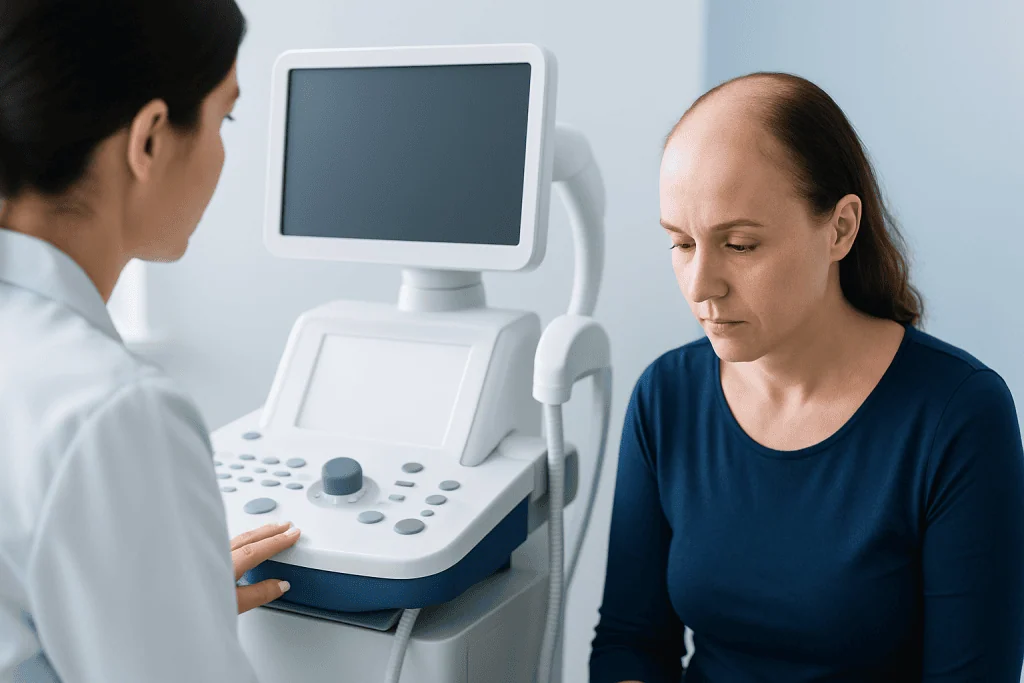
Female baldness may appear gradually or more suddenly, depending on the cause. The most common pattern is diffuse thinning over the top of the scalp, especially around the center part. Some women see increased hair on the pillow, in the shower drain, or in the hairbrush, while others mainly notice reduced fullness and more visible scalp.
Certain symptoms can suggest specific types of hair loss. Patchy round areas of hair loss may point toward alopecia areata, an autoimmune condition. Hair breakage, scaling, itching, redness, or tenderness can suggest scalp disease rather than true shedding from the root. Persistent dandruff-like flaking may be linked to seborrheic dermatitis, which can worsen scalp discomfort and make hair concerns more noticeable.
Women should also pay attention to timing. Shedding that starts two to three months after a major stress, fever, surgery, or childbirth can be consistent with telogen effluvium, a common temporary hair-shedding condition. Hair loss accompanied by acne, unwanted facial hair, irregular periods, or weight changes may suggest a hormonal issue that deserves medical review.
- Widening part line
- Reduced hair density at the crown
- Increased daily shedding
- Patchy bald areas
- Scalp itching, scaling, or inflammation
- Hair becoming finer or shorter over time
Causes and Risk Factors

The most common cause of ongoing hair thinning in women is female pattern hair loss, also called androgenetic alopecia. This condition is influenced by genetics and hormonal sensitivity in the hair follicles. It tends to become more noticeable with age, particularly around or after menopause, although it can begin earlier.
Other causes include nutritional deficiencies such as low iron, low protein intake, or inadequate levels of certain vitamins and minerals. Thyroid disease can also affect the hair growth cycle. Sudden diffuse shedding may follow physical or emotional stress, rapid weight loss, severe infection, or major surgery. Some medications may contribute as well, including certain treatments for blood pressure, mood disorders, acne, or cancer.
Scalp and skin conditions are another important group of causes. Inflammation from eczema, fungal infection, discoid lupus, or scarring alopecia can damage hair follicles if not treated. Contact reactions from hair dyes or cosmetic products may also irritate the scalp; in some cases this may be associated with contact dermatitis. Because different causes can look similar at first, careful assessment is essential before choosing treatment.
How Doctors Diagnose Female Baldness
Diagnosis usually begins with a detailed medical history and scalp examination. A doctor will ask when the hair loss started, whether it is sudden or gradual, and whether there are associated symptoms such as itching, pain, flaking, menstrual changes, recent illness, weight change, or family history. Hair care practices, hairstyles that pull on the scalp, and recent medications are also relevant.
During the examination, the doctor looks at the distribution of hair thinning, the condition of the scalp, and whether hairs seem miniaturized, broken, or absent. A gentle hair-pull test may be performed to assess active shedding. In some cases, dermoscopy or trichoscopy, which use magnification to examine the scalp and hair shafts, can help distinguish female pattern hair loss from inflammatory or scarring disorders.
Blood tests may be recommended when the history suggests an underlying issue, such as iron deficiency, thyroid disease, or hormonal imbalance. Occasionally, a scalp biopsy is needed if scarring alopecia or autoimmune disease is suspected. A precise diagnosis helps determine whether treatment should focus on stimulating regrowth, reducing inflammation, correcting a deficiency, or considering procedural restoration.
Treatment Options for Female Baldness
Treatment depends on the cause, the degree of hair loss, and the woman’s overall health and preferences. For female pattern hair loss, doctors often recommend medical treatment aimed at slowing follicle miniaturization and supporting regrowth. Results typically take time, and hair treatments usually need consistent use for several months before improvement can be judged.
Topical minoxidil is one of the most widely used evidence-based treatments for female pattern hair loss. Some women may also be offered oral medications by a specialist, particularly when hormone-related hair loss is suspected, but these are not suitable for everyone and require medical supervision. If blood tests show low iron, thyroid dysfunction, or another underlying problem, treating that issue is an important part of the plan.
Non-surgical options may also help selected patients. Low-level light or laser hair therapy is sometimes used as a supportive treatment for pattern hair thinning. Other approaches may fall under non-surgical hair restoration, which can complement medical treatment but should be chosen with realistic expectations and professional guidance.
For women with stable hair loss and sufficient donor hair, hair transplantation can be considered. Depending on the pattern of loss and cosmetic goals, a specialist may discuss hair transplant for women or techniques such as FUE hair transplant. These procedures are usually most suitable after the cause has been clarified and active shedding or scalp inflammation has been addressed.
Prevention, Scalp Care, and Self-care
Not every type of female baldness can be prevented, especially when genetics play a major role, but healthy habits can support the scalp and hair growth cycle. A balanced diet with enough protein, iron, and other essential nutrients is important. Crash dieting and rapid weight loss can increase shedding, so gradual, medically guided weight changes are generally safer for hair health.
Gentle hair care also matters. Frequent tight hairstyles, excessive heat styling, harsh chemical processing, or vigorous brushing can worsen breakage and traction-related loss. Women with scalp irritation should avoid fragranced or irritating products until the cause is clear. If there is persistent flaking, redness, or itching, treatment for the scalp condition itself may improve comfort and reduce further stress on the hair.
Stress management, adequate sleep, and treatment of underlying medical conditions can also help support recovery in temporary shedding disorders. It is important to remember that supplements are not always helpful unless there is a proven deficiency. Self-treating with multiple products at once can make it harder to judge what is working, so a structured plan from a qualified doctor is usually the best approach.
When to See a Doctor
Women should consider medical evaluation if hair loss is persistent, worsening, or causing distress. An appointment is especially important when shedding is sudden, patchy, painful, or accompanied by scalp redness, scaling, or sores. Hair loss associated with fatigue, menstrual changes, weight fluctuation, acne, or increased facial hair may also point to an underlying condition that needs attention.
Early assessment can be helpful because some causes are reversible, while others respond better when treated before significant follicle shrinkage occurs. A dermatologist or hair specialist can identify whether the problem is female pattern hair loss, telogen effluvium, autoimmune hair loss, traction-related loss, or an inflammatory scalp disorder.
For women considering procedural solutions, specialist consultation is important to confirm candidacy and set realistic goals. Near the end of the treatment journey, some patients may explore appearance-improving options such as transplantation or scalp camouflage techniques. Acibadem International’s multidisciplinary specialists and JCI-accredited hospitals diagnose and treat hair loss conditions for international patients when advanced evaluation or treatment planning is needed.
Frequently asked questions
Can female baldness be reversed?
Some forms of female hair loss can improve significantly, especially when caused by stress, nutritional deficiency, thyroid problems, or certain medications. Female pattern hair loss is usually managed rather than permanently cured, but treatment can often slow progression and improve density.
What is the best treatment for female pattern hair loss?
The best treatment depends on the individual, but topical minoxidil is one of the most commonly recommended evidence-based options. Some women may also benefit from specialist-prescribed oral treatment, scalp therapies, or hair restoration procedures after proper evaluation.
How long does it take to see results from hair loss treatment?
Hair grows slowly, so visible improvement usually takes several months. Many treatments need regular use for at least three to six months before changes can be fairly assessed, and continued treatment is often needed to maintain benefits.
Can stress cause baldness in women?
Stress can trigger a common type of temporary hair shedding called telogen effluvium. This often begins a few months after a major physical or emotional stress and may improve over time once the trigger is addressed.
Are hair transplants suitable for women?
Hair transplants can be suitable for selected women, especially when hair loss is stable and there is enough healthy donor hair. They are not ideal for every type of hair loss, so careful diagnosis is needed before considering a procedure.
Should women take supplements for hair loss?
Supplements may help if a true deficiency is present, such as low iron, but they are not a universal solution. Taking unnecessary supplements can be unhelpful or sometimes unsafe, so it is better to base treatment on medical assessment and testing when appropriate.
References
- American Academy of Dermatology
- National Institute of Arthritis and Musculoskeletal and Skin Diseases
- British Association of Dermatologists
- Mayo Clinic
- National Health Service
This article is for general information only and is not a substitute for professional medical advice. Please consult a qualified doctor about your individual situation.
Hair transplant in Turkey — costs, graft counts & a free assessment
JCI-accredited · board-certified surgeons · reply within 24h
Add us as a Preferred Source to see more of our trusted health content across Google Search, AI Overviews and Discover.
Check your numbers in seconds
BMI, calories, due date, blood pressure and 30+ more clinical calculators — free, instant, doctor-reviewed ranges.

Related Treatments
Related Conditions
More from the Health Library



Related Specialists

Prof. Dr. Sedef Şahin
Dermatology
Prof. Dr. Şükrü Yazar
Aesthetic Plastic & Reconstructive Surgery
Prof. Dr. Emel Öztürk Durmaz
Dermatology
Prof. Dr. Özlem Dicle
Dermatology