Clubfoot Treatment
Clubfoot treatment corrects a newborn’s inward-turned foot using gentle manipulation, serial casting, bracing, and sometimes a minor tendon procedure to improve alignment and walking function.
Quick answer
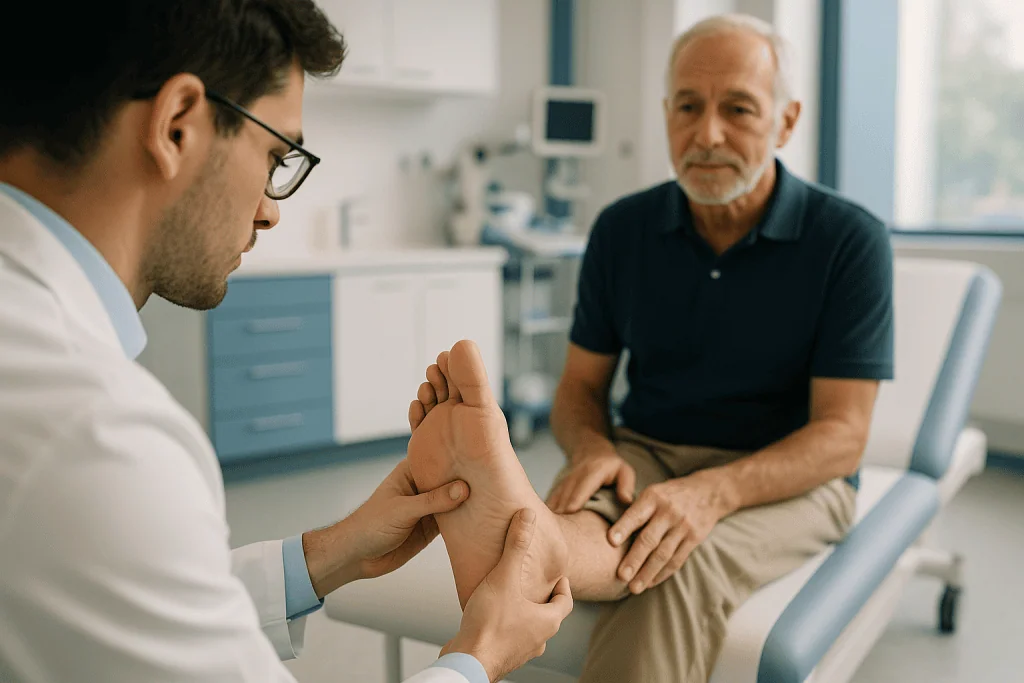
Clubfoot is a congenital condition in which a baby's foot turns inward and downward because the tendons and ligaments are shorter and tighter than usual. Treatment usually follows the Ponseti method: gentle weekly manipulation and casting over several weeks, often a minor Achilles tendon release, then a boots-and-bar brace worn during sleep for several years while the child grows.
What Is Clubfoot?
Clubfoot is a congenital condition in which a baby’s foot turns inward and downward because the tendons and ligaments on the inner side of the foot and at the back of the ankle are shorter and tighter than usual. The medical name is congenital talipes equinovarus. It develops before birth, can affect one foot or both, and is present the moment your baby is born. Clubfoot is one of the more common congenital foot conditions, and it is highly treatable when managed early by an experienced paediatric orthopaedic team using structured, staged techniques.
You will see the condition written in several ways. Club foot, as two words, describes exactly the same diagnosis. Medical letters may record it as congenital equinovarus, talipes, or CTEV. Parents searching online late at night sometimes type “footbaby” or “baby foot turned in”. All of these roads lead to the same condition, the same examination and the same treatment pathway. The words matter less than the structure of the foot itself, which is what your child’s doctor will assess.
Learning that your newborn has clubfoot can be an emotional moment, and it helps to know what you are looking at. The front of the foot turns inward, the heel points down, and the sole can appear to face sideways or even upward. To a parent, the position can look dramatic. It is natural to worry about whether your child will walk normally, whether treatment will hurt, and whether surgery will be needed. Most of these worries have reassuring, specific answers, and this page works through them one by one.
Two facts are worth holding onto from the start. First, in most babies clubfoot is not caused by anything the parents did or did not do during pregnancy. Second, the goal of treatment is not simply a straighter-looking foot. It is a supple, plantigrade foot, one whose sole rests flat on the ground, that fits into regular shoes and can support standing, walking, running and childhood play. Modern clubfoot care is gentle and staged. It asks for commitment from the family, particularly during the bracing years, but the process itself is well established and predictable in its structure.
Can a clubfoot be corrected?
Yes. Clubfoot responds well to structured treatment, particularly when treatment begins in the first weeks of life. The standard approach, gentle manipulation, serial casting, a minor Achilles tendon release when needed, and long-term bracing, reshapes the foot gradually rather than forcing it. Correction is functional, not cosmetic: the aim is a foot your child can stand on, walk on and grow with. Children who present later, or whose feet have relapsed after earlier treatment, can also be helped, although the pathway may be longer and may involve additional procedures. What correction requires, above everything, is a team that treats clubfoot regularly and a family that follows the bracing plan through the years of growth.
What Causes Clubfoot?
The main causes of clubfoot are not fully understood, and honesty about this matters. Research points to a combination of genetic and environmental influences acting on the developing foot. Most cases are idiopathic, meaning the baby is otherwise healthy and no underlying syndrome is found. Clubfoot is more common in boys, and a family history of the condition makes it somewhat more likely, which supports the genetic contribution. In a smaller group of children, clubfoot appears alongside a broader congenital disease or neuromuscular condition, such as arthrogryposis or spina bifida: these syndromic cases behave differently and are treated with that wider picture in mind.
It is equally useful to say what clubfoot is not. True structural clubfoot is not simply the result of the foot being squashed in the womb. A cramped intrauterine position can produce a positional foot deformity, which looks superficially similar but is flexible and often improves with gentle handling or simple stretching. Structural clubfoot involves genuinely shortened tendons and ligaments and altered joint alignment; it cannot be corrected by hand, and it needs a formal treatment programme.
What causes clubfoot in pregnancy?
Clubfoot develops during pregnancy as the foot is forming, usually in the early months when the bones, joints, tendons and ligaments take shape. In most pregnancies there is no identifiable trigger. Researchers have studied several associations, including family history, maternal smoking during pregnancy and reduced amniotic fluid, but these are associations, not certainties, and many babies with clubfoot have none of them. What the evidence does not support is the idea that a mother’s diet, activity, lifting, sleeping position or stress caused the condition. Clubfoot is sometimes suspected on a routine prenatal ultrasound, which gives families time to learn about the condition and arrange an orthopaedic consultation soon after birth. The definitive diagnosis, however, is always made by examining the baby, because ultrasound cannot fully distinguish structural clubfoot from a flexible positional foot.
Is club foot linked to autism?
There is no established causal link between club foot and autism. Clubfoot is a structural difference in the tendons, ligaments, bones and joints of the foot; autism is a neurodevelopmental condition. They arise through different mechanisms. Very occasionally, both may appear in the same child as part of a wider genetic syndrome, which is one reason a thorough newborn examination looks beyond the foot. But typical, isolated clubfoot is not a sign of autism, does not indicate a problem with the brain, and does not affect a child’s intelligence or development. A baby with idiopathic clubfoot is, in every other respect, an ordinary healthy baby with a foot that needs correcting.
Recognising Congenital Clubfoot
Congenital clubfoot is usually visible immediately at birth, and in many cases it is suspected earlier on prenatal ultrasound. The foot has a characteristic set of features: the forefoot turns inward, the arch may look unusually high, the heel points downward and inward, and the whole foot may appear smaller than expected. The foot is not merely being held in an odd position: it has a structural tightness that resists correction by hand.
Parents may notice that:
- The baby’s foot turns inward and downward rather than pointing forward.
- The sole of the foot faces inward, sideways or upward.
- The ankle does not easily move upward toward a neutral position.
- One foot appears smaller than the other, especially in one-sided clubfoot.
- The calf on the affected side looks slightly slimmer.
- The foot position does not correct fully when gently moved.
The distinction that matters most at this stage is between structural clubfoot and the more flexible positional deformities. Positional feet, moulded by pressure in the womb, can usually be brought to a normal position with gentle handling and often improve with observation or stretching alone. Structural clubfoot cannot. An experienced examiner makes this distinction by feel, testing flexibility, heel position and ankle movement, and by looking at skin creases, which form differently in a truly rigid foot. Clubfoot also sits within a wider family of foot deformities, and part of the first examination is confirming exactly which condition is present, because the treatments differ.
Diagnosis is clinical, meaning it rests on careful physical examination by a trained physician rather than on scans. The specialist assesses the foot’s flexibility, skin folds, heel position and ankle movement, and confirms whether one or both feet are involved. The examination deliberately extends beyond the feet: the baby’s hips, spine, hands and neurological function are checked, because a minority of clubfoot cases occur alongside other musculoskeletal or neurological conditions, and identifying these early changes the plan.
Imaging is not routinely needed for a newborn with typical clubfoot. X-rays are genuinely difficult to interpret in young infants because many of the foot bones have not yet ossified, much of the anatomy is still cartilage and simply does not show. Ultrasound, X-ray or other imaging may be used in selected situations: late presentation, previous incomplete treatment elsewhere, unusual stiffness, suspected bone abnormalities, or planning before surgery. The decision is individual, and a good team avoids tests that will not change management.
When clubfoot is suspected before birth, families can use the remaining weeks of pregnancy to prepare. Nothing needs to be done to the foot before delivery, and nothing can be. What helps is arranging for a paediatric orthopaedic assessment in the first days or weeks after birth, so the treatment pathway is ready when the baby is.
What Clubfoot Treatment Involves
Clubfoot treatment is a structured correction programme that guides the foot into a better position gradually, respecting the anatomy rather than forcing it. For most babies it has four elements: gentle manipulation, serial casting, a minor Achilles tendon procedure when needed, and long-term bracing. Each element has a distinct job, and skipping or shortening any of them raises the risk that the foot drifts back.
The Ponseti Method
The most widely used approach worldwide is the Ponseti method, and if you have encountered the phrase talipes ponseti in your reading, it simply pairs the medical name for clubfoot with the name of this technique. The method uses gentle weekly manipulation of the foot followed by a carefully moulded plaster cast that runs from the toes to the upper thigh, with the knee bent. Each cast holds the correction achieved in that session and prepares the tissues for the next stage.
The correction follows a specific anatomical sequence. The physician does not simply push the foot outward; the components of the deformity are addressed in a deliberate order, one element at a time, because the bones and joints of the foot move in relation to each other in a particular way. This precision is the reason the method should be delivered by clinicians who treat clubfoot regularly. Incorrect manipulation or a poorly moulded cast can produce incomplete correction, stiffness, pressure sores or relapse, problems that are harder to fix than the original condition.
Achilles Tenotomy
Many babies also need a small procedure called an Achilles tenotomy. In clubfoot, the Achilles tendon at the back of the ankle is often tight, holding the heel up and preventing the foot from resting flat even after the inward turning has been corrected. A tenotomy releases this tightness through a tiny incision. Depending on the baby’s age, health and the clinical setting, it may be performed under local anaesthesia or brief sedation. A final cast is then applied and worn for several weeks while the tendon heals in a lengthened position.
For many parents, the idea of any procedure on a newborn is difficult, and that reaction deserves a proper answer rather than dismissal. The treating physician should explain why the tenotomy is recommended for your child specifically, what the alternatives are, how the baby will be kept comfortable, and what to expect once the final cast is on. In appropriately selected babies, tenotomy is a routine, brief part of clubfoot correction, and it is often the step that allows the heel to come down so the foot can rest flat.
Bracing to Hold the Correction
When the final cast comes off, the foot usually looks much straighter, and treatment is nowhere near finished. Casting corrects the foot; bracing keeps it corrected while the child grows. The standard brace is a pair of small shoes or boots connected by a bar, often called a foot abduction brace or simply “boots and bar”. It holds the feet turned outward, counteracting the pull that created the deformity in the first place.
The bracing schedule is prescribed by the physician and tapers over time. In general, babies wear the brace for most of the day at first, then transition to nights and naps for a much longer maintenance period spanning the early years of growth. The exact schedule depends on the child’s age, the quality of the correction, the flexibility of the foot and the estimated relapse risk. This phase is where families do the real work of clubfoot treatment, and it is where outcomes are most often won or lost: consistent brace wear is one of the strongest protections against the foot turning back in.
When Is Surgery Needed?
Surgery beyond tenotomy is reserved for specific situations rather than offered routinely. Children who start treatment late, have stiff or complex feet, have a syndromic clubfoot, or relapse despite casting and bracing may be considered for additional procedures. These can include a tendon transfer, moving the attachment of a tendon so it pulls the foot in a more balanced direction, or, in selected cases, a more extensive soft-tissue release. Decisions of this kind belong to foot surgery specialists who weigh the child’s age, walking pattern and foot structure. For many infants with typical idiopathic clubfoot, however, treatment is completed with manipulation, serial casting, bracing and possibly tenotomy alone.
Who May Need Clubfoot Treatment
Clubfoot treatment is needed by babies and children whose foot or feet turn inward and downward because of congenital structural changes. Within that broad definition sit several distinct situations, each with its own considerations.
The most common is idiopathic clubfootclubfoot in an otherwise healthy baby with no identifiable underlying syndrome. It may involve one foot or both, and it is typically treated with the Ponseti method from the first weeks of life. This is the situation most parents reading this page are in, and it is also the situation with the most straightforward pathway.
Some children have atypical or complex clubfoot. These feet can be shorter, wider, deeper-creased or more rigid, and they are harder to correct. Complex clubfoot may be present from birth or may develop after improper casting elsewhere. It demands careful, modified handling, because applying the standard steps mechanically can make matters worse rather than better.
Syndromic clubfoot occurs alongside conditions such as arthrogryposis, spina bifida or other neuromuscular disorders. The foot tends to be stiffer, the relapse risk higher, and the treatment plan must account for the child’s muscle strength, sensation, mobility goals and associated medical needs. Management usually involves coordination across paediatric specialties, orthopaedics, rehabilitation, and where appropriate neurology or neurosurgery, rather than a foot-only view.
Relapsed clubfoot is a foot that was corrected and has begun to drift back. Relapse most often follows inconsistent brace wear, but it can also occur with severe deformity or unfavourable growth patterns. Signs include the foot turning in again, difficulty getting the heel down, walking on the outer border of the foot, or renewed tightness at the back of the ankle. Caught early, relapse can often be managed with renewed casting and bracing as part of a planned congenital correction pathway; caught late, it may require surgery. This is the practical argument for regular follow-up through childhood.
Finally, older infants, toddlers and children who were never treated present with neglected clubfoot. Treatment remains possible, this deserves emphasis, but it is more complex, because the child has been bearing weight on a foot in an abnormal position and the joints have adapted to that pattern. The plan may combine casting, bracing, physical therapy and, in selected cases, surgery. The goal is the same as in infancy: functional alignment, comfort in ordinary shoes and better walking.
How Clubfoot Treatment Is Performed, Step by Step
Initial Evaluation and Treatment Planning
Care begins with a detailed assessment by a paediatric orthopaedic physician. The specialist confirms the diagnosis, grades how flexible or rigid the foot is, evaluates the severity of each component of the deformity, and looks for associated findings elsewhere in the body. Parents are asked about the pregnancy, birth history, family history, prenatal ultrasound findings and any previous treatment attempts.
This first consultation is also a planning session, and it should leave you with concrete answers: roughly how many casts are likely, whether an Achilles tenotomy is expected, how long the initial correction phase will take, and how the bracing years will be organised. Families who travel for treatment need one further layer of planning, how long to stay near the treating hospital during the casting phase, when the brace will be fitted, and how follow-up will be coordinated with a physician at home. If the baby has other medical conditions, paediatricians and relevant specialists are brought in so timing is safe.
Before the first cast, the baby’s skin is checked carefully, and the team walks parents through feeding, sleep, nappy changes, bathing restrictions and how to handle a baby in a long leg cast. Successful clubfoot care depends on confident daily care at home, so no practical question is too small to ask at this stage.
Gentle Manipulation and Serial Casting
The first active stage is manipulation followed by casting, repeated at regular intervals, most often weekly. Each visit follows a consistent sequence:
- The previous cast, if any, is removed and the skin is inspected.
- The physician gently manipulates the foot, moving it a measured step closer to the corrected position.
- Soft padding is applied over the skin from the toes to the upper thigh.
- Plaster or a similar material is moulded precisely around the foot and leg, with the knee bent to hold the correction and stop the cast slipping.
- The toes are left visible so circulation can be checked at home.
- Parents review cast care and the plan for the next visit before leaving.
The cast is not a simple immobiliser. It is a precisely shaped therapeutic tool: each one holds the foot in its newly improved position while the ligaments, tendons and soft tissues adapt, so that the next manipulation can go further. The number of casts varies with severity, flexibility, the child’s age at the start and whether the clubfoot is typical or complex.
Between visits, parents monitor the toes for changes in colour or temperature, watch for swelling, unusual odour, persistent crying, cast slipping or skin irritation, and keep the cast clean and dry. The treating team gives families a clear checklist of the signs that warrant an earlier review rather than waiting for the next scheduled appointment, and a well-organised clinic makes that early review easy to arrange.
Achilles Tenotomy When Needed
Once the inward turning of the foot has been corrected through casting, the heel is reassessed. If it still cannot come down adequately because of Achilles tightness, the tenotomy described earlier is scheduled. The procedure itself is short. Pain control and monitoring are adapted to the baby’s age and health, some infants have local anaesthesia, others a different approach depending on clinical judgement and hospital protocols. Afterwards, the final cast protects the healing tendon for several weeks and holds the foot in its fully corrected position. Discomfort after tenotomy is typically limited and is managed according to the treating physician’s recommendations.
Fitting and Living with the Brace
When the final cast is removed, the foot abduction brace is fitted the same day or very soon after, because even a short unbraced gap allows the tissues to pull back toward the old position. The team checks the fit, teaches parents how to secure the boots so the heel sits fully down, and explains how to inspect the skin at each removal. A well-fitted brace maintains correction without causing sores; persistent redness, a brace that seems too tight or too loose, or a baby who genuinely cannot settle in it are all fit problems to be solved, not signs to abandon bracing. Most babies adapt within days to weeks, particularly when the brace is treated as a normal part of the bedtime routine from the start.
Monitoring, Technology and Supportive Care
Clubfoot treatment is hands-on and skill-dependent, but modern clinical pathways use technology where it genuinely helps. Digital imaging supports decision-making when the anatomy is unclear or a child presents late. Electronic records track cast changes, brace schedules, clinical photographs, operative notes where applicable and follow-up plans, which matters over a treatment course measured in years. For families who travel for care, structured treatment summaries and secure sharing of reports and images help physicians at home continue monitoring between visits.
In selected cases, older children, recurrent deformity, neurological conditions or complex surgical planning, gait assessment, physiotherapy evaluation or advanced imaging add useful information about how the child bears weight and moves. For early infant treatment, though, the most important “technology” remains the combination of expert clinical assessment, precise casting technique, reliable follow-up and thorough parent education.
Typical Duration and Recovery
The initial casting phase usually takes several weeks. If a tenotomy is performed, the final casting period adds several more. Bracing then begins immediately and continues, with a tapering schedule, through the early years of growth, full-time at first, then during sleep. The visible correction happens early; the maintenance is what takes years, because relapse risk persists while the child grows.
Day to day, most families find the treatment manageable. Babies in casts feed, sleep and are held normally, although clothing, nappy changes and bathing need adjustment. Once bracing starts, the main task is helping the baby become comfortable in the brace and building it into the daily routine.
Children treated for clubfoot are encouraged to meet developmental milestones naturally. They roll, crawl, pull to stand and walk on their own timetable. Some walk slightly later than average, but many develop within the expected range. Physiotherapy is not routinely required for typical infant clubfoot, though it may be recommended for older children, complex cases, relapse or associated neuromuscular conditions.
Why Acting Early Matters
Early evaluation matters because clubfoot is easier to correct when the baby’s tissues are soft and adaptable. In the first weeks and months of life, the bones are still largely cartilage, and the ligaments and tendons respond well to gentle, progressive repositioning. Starting early can reduce stiffness and may lower the likelihood that more extensive surgery is needed later.
Delay allows the deformity to become more rigid. Once a child begins to stand and walk on an uncorrected foot, weight lands on the side or top of the foot rather than the sole, which can lead to calluses, pain, skin breakdown, difficulty wearing shoes and an abnormal walking pattern. Over time, an untreated clubfoot affects mobility, participation in play and broader musculoskeletal development. Delay also makes treatment harder on the family: older infants and toddlers tolerate casting less easily, correction may require more casts or additional procedures, and joints that have adapted to an abnormal walking pattern take longer to redirect.
Acting early does not mean rushing without understanding. Parents should receive a clear explanation of the diagnosis and the plan before the first cast goes on. The right timing balances the baby’s medical readiness, a newborn who is stable and feeding well, with the advantage of starting while the foot is most responsive. Where clubfoot is diagnosed prenatally, families can arrange the orthopaedic consultation for soon after birth, so nothing is lost to waiting.
How soon does clubfoot need to be corrected?
Treatment ideally begins within the first weeks of life, once the baby is medically stable and feeding well. There is no benefit in starting on day one at the expense of the baby’s general condition, and there is no single absolute deadline after which correction becomes impossible. What changes with time is the ease and completeness of correction: newborn tissues remould readily, while an older, walking child’s foot has stiffened and adapted. The practical rule is simple, arrange a paediatric orthopaedic evaluation early, and let the specialist set the start date. Children who missed early treatment still benefit from expert assessment; the plan is adjusted for age, stiffness, prior casting and walking status rather than abandoned.
Benefits of Clubfoot Treatment
When clubfoot is treated in a timely and consistent way, the benefits extend well beyond the shape of the foot to everyday childhood function.
| Benefit | What It Means for Your Child |
|---|---|
| Improved foot alignment | The foot is gradually guided toward a position in which the sole faces downward and supports normal weight-bearing. |
| Better walking function | A well-corrected foot helps the child stand, walk, run and play with greater comfort and efficiency. |
| Reduced need for extensive surgery | Early Ponseti-based care often corrects clubfoot with casting, bracing and a minor tendon procedure when needed, rather than larger operations. |
| Ability to wear regular shoes | Functional correction helps the child fit into standard footwear as they grow, reducing long-term shoe and skin problems. |
| Lower risk of pain and skin pressure | Correcting abnormal weight-bearing reduces the calluses, irritation and discomfort that come from walking on the side of the foot. |
| Support for long-term mobility | Maintained correction supports participation in age-appropriate activities and helps avoid the limitations of untreated deformity. |
Recovery Timeline After Clubfoot Treatment
The experience varies with age, severity and whether a tenotomy is performed, but the following timeline reflects the stages most families encounter.
| Time Period | What Families Can Expect |
|---|---|
| Day 1 | The baby receives the first cast after gentle manipulation. Parents learn how to monitor the toes, protect the cast and recognise warning signs. |
| First Week | The baby adjusts to the cast. Feeding and sleep usually continue normally, although clothing, nappy changes and bathing routines need adapting. |
| Casting Phase | Casts are changed at regular intervals, often weekly, with the foot position improving step by step. The total number of casts depends on the individual foot. |
| After Tenotomy, if Needed | A final cast is worn while the Achilles tendon heals in a lengthened position. The baby is monitored for comfort, circulation and cast fit. |
| First Month After Casting | The brace phase begins. Parents focus on correct brace use, skin checks and helping the baby adapt to the prescribed schedule. |
| Longer Term | Brace use continues during sleep for an extended period. Follow-up visits monitor growth, flexibility, walking development and any early signs of relapse. |
Factors That Influence Outcomes
Several factors shape the result of clubfoot treatment, and it is worth understanding them before treatment starts rather than discovering them along the way. The first is the type and severity of the clubfoot itself. A flexible idiopathic foot treated shortly after birth generally responds more predictably than a very stiff, complex, syndromic or previously treated foot. Bilateral clubfoot can still respond well, but both feet must be corrected and monitored with equal care.
Age at the start of treatment matters. Newborns and young infants have softer, more adaptable tissues, which makes gradual correction easier. Older children can still achieve meaningful improvement, but they may need a longer course, modified casting, physiotherapy or surgery depending on how the foot has developed and how the child walks on it.
The quality of casting technique is central and cannot be delegated to enthusiasm. The Ponseti method depends on understanding the sequence of correction and on moulding each cast precisely. A cast that is poorly shaped or that slips can stall progress, create pressure on the skin or push the foot toward a complex pattern. Clubfoot should be managed by clinicians who treat the condition regularly and who recognise both typical and atypical variants.
Brace adherence is the other major determinant of the long-term result. Many relapses occur not because the initial correction failed but because the brace was not worn as prescribed or no longer fitted properly. Families need practical support here, not blame: babies grow quickly, braces need adjusting and replacing, and parents may need help solving sleep or skin problems. A responsive care team makes adherence realistic rather than aspirational.
Associated medical conditions change the calculus. A child with a neuromuscular disease may have muscle imbalance, altered sensation or stiffness that shifts both the goals of treatment and the risk of recurrence. In these situations, clubfoot correction is integrated into a broader paediatric care plan covering development, neurology, rehabilitation and, where needed, surgery.
Follow-up is not optional. Even a foot that looks entirely normal after correction can develop recurrent tightness or inward drift during growth. Periodic examination catches this early, when the fix may be as simple as renewed stretching, a brace adjustment or a short course of casting. Waiting until the child has an obvious walking problem makes relapse harder to correct.
Finally, family understanding shapes the whole experience. Parents who know what each stage is for care for casts more confidently, use the brace correctly, attend follow-up reliably and notice problems early. For families managing care across countries, written treatment summaries, clear brace instructions and coordination with a local physician preserve continuity after travel.
Long-Term Outlook for a Child Treated for Clubfoot
A child whose clubfoot is corrected in infancy and maintained through the bracing years can generally expect to walk, run, climb and take part in sport and play alongside their peers. Some differences commonly persist and are worth knowing about in advance: the affected foot may remain slightly shorter and the calf slightly slimmer than on the other side, and in one-sided clubfoot the two feet may take different shoe sizes. These differences are typically cosmetic rather than functional. What treatment aims to deliver, and in most consistently treated children does deliver, is a foot that bears weight on its sole, moves through a useful range and fits ordinary footwear.
Is having a clubfoot a disability?
Treated clubfoot is not usually a disability. A child who completes correction and bracing typically attends school, plays sport and lives without meaningful restriction, and clubfoot on its own does not affect learning or general health. The picture is different when clubfoot goes untreated: walking on the side or top of the foot causes pain, skin problems and progressive limitation, and in that situation the condition genuinely restricts mobility. Clubfoot that occurs as part of a wider syndrome takes its outlook from the underlying condition rather than from the foot alone. In short, the deformity itself is highly correctable; disability is far more a consequence of absent or abandoned treatment than of the diagnosis.
Developmentally, children treated for clubfoot are encouraged to progress at their own pace. Rolling, crawling, standing and walking arrive on the child’s own schedule, occasionally a little later than average, and the brace is designed to accommodate normal infant movement and sleep.
Clubfoot Care at Acibadem
Families dealing with clubfoot need more than a casting appointment. They need an accurate diagnosis, a realistic staged plan, safe care for a very young child and continuity that survives the years of bracing and follow-up. Acibadem’s approach to clubfoot is organised around those needs.
Paediatric orthopaedic physicians evaluate each child individually rather than applying one pathway to every foot. A newborn with typical idiopathic clubfoot follows a standard Ponseti-based plan. A toddler with an untreated foot, a child with relapse after treatment elsewhere, or a baby with a neuromuscular condition needs a broader assessment, and care is discussed where appropriate with other paediatric specialists, anaesthesiology teams and rehabilitation professionals so the foot plan fits the whole child.
Diagnostic work is kept proportionate. Most newborn cases are diagnosed by examination alone; imaging and functional assessments are used selectively for older children, recurrent deformity, prior treatment or suspected associated conditions, enough information for safe planning, without unnecessary tests on an infant.
Where an Achilles tenotomy or another procedure is needed, paediatric anaesthesia and perioperative teams plan around the baby’s age, weight and medical history, and parents receive clear information about preparation, feeding before the procedure, comfort measures and monitoring afterwards. For families who travel for treatment, planning also covers the practical layer: how long the initial correction phase requires, when the brace is fitted, what the follow-up schedule looks like, and how records, imaging and treatment summaries are prepared so that a physician at home can continue monitoring between visits.
Finally, the emotional side of treating a newborn is treated as part of the work, not an afterthought. Clubfoot is treatable, but the months of casts and the years of bracing can feel demanding. Clear explanations, careful cast checks and practical, judgement-free help with brace routines make the process more manageable, and most parents find their confidence grows as they watch the foot improve week by week and understand what each stage is for.
Moving Forward
A clubfoot diagnosis is unsettling at first sight, but it describes one of the most correctable congenital conditions in paediatric orthopaedics. The pathway is well mapped: accurate diagnosis, gentle staged correction, secure casting, an Achilles tenotomy when the heel needs it, consistent bracing and follow-up through growth. Each stage has a clear purpose, and families who understand those purposes navigate the process far more easily.
What determines the long-term result, more than any single appointment, is the combination of an experienced treating team and a family that carries the bracing plan through. With both in place, a baby born with clubfoot has every prospect of a stable, functional foundation for walking, playing and everything that follows.
Preparation
- A pediatric orthopedic evaluation confirms the type and severity of clubfoot and checks hip, spine, and neuromuscular development. Parents should bring pregnancy, birth, and prior treatment records if available. Treatment usually starts soon after birth, and the baby should be comfortable and fed before casting visits.
Aftercare
- Casts must be kept clean and dry, and parents should check toes for swelling, color change, or excessive crying. After correction, a foot abduction brace is worn as prescribed to prevent recurrence. Regular follow-up is essential to monitor growth, brace fit, and foot position.
Frequently Asked Questions
What affects the cost of clubfoot treatment?
Cost is influenced by the child’s age, clubfoot severity, whether the case is new or relapsed, the casting plan, brace needs, and whether a tendon procedure or more complex surgery is required. Hospital setting, surgeon experience, anaesthesia, follow-up, and international travel support can also affect the quote.
How can I get a personalised quote for my child?
A personalised quote usually requires medical photos, previous reports if available, the child’s age, treatment history, and a specialist review. Acibadem International can arrange a free consultation to assess the case and explain what is included in the proposed package.
Does a clubfoot package include the brace?
Package content varies by hospital and treatment plan. Some packages may include consultation, casting, procedure coordination, and brace guidance, while the brace itself or replacements may be listed separately. Families should confirm inclusions before travel.
Will my child need surgery?
Many newborn clubfoot cases are treated with manipulation, serial casting, and bracing, but some children need a minor Achilles tendon procedure. More extensive surgery is usually considered for rigid, complex, neglected, or relapsed cases. A paediatric orthopaedic specialist decides suitability after examination.
Can international families complete treatment in Turkey and follow up at home?
This may be possible when the treatment plan, brace use, and follow-up instructions are clearly documented. Families should discuss travel timing, cast changes, brace fitting, and local follow-up arrangements with the specialist before making plans.
Medically reviewed by the Acıbadem International Medical Board September 13, 2026
See our medical review board →
Update history
- PublishedJune 8, 2026
- Medical review approvedSeptember 13, 2026
- Last content updateSeptember 12, 2026
References1
- Club foot nhs.uk
Trusted care for international patients
From the Acibadem Blog
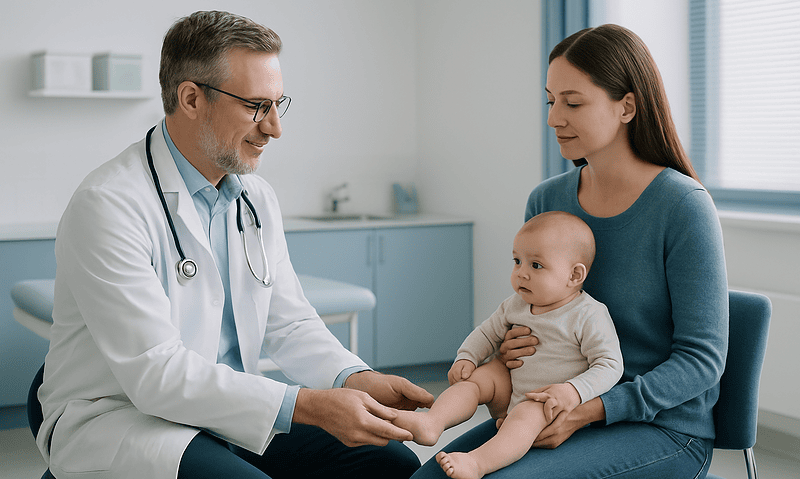
Your Baby’s First Clubfoot Appointment: What the Orthopedic Exam Checks and What to Bring
A baby's first clubfoot appointment is mainly a hands-on orthopedic examination. The clinician checks whether the foot is a flexible positional foot or a…