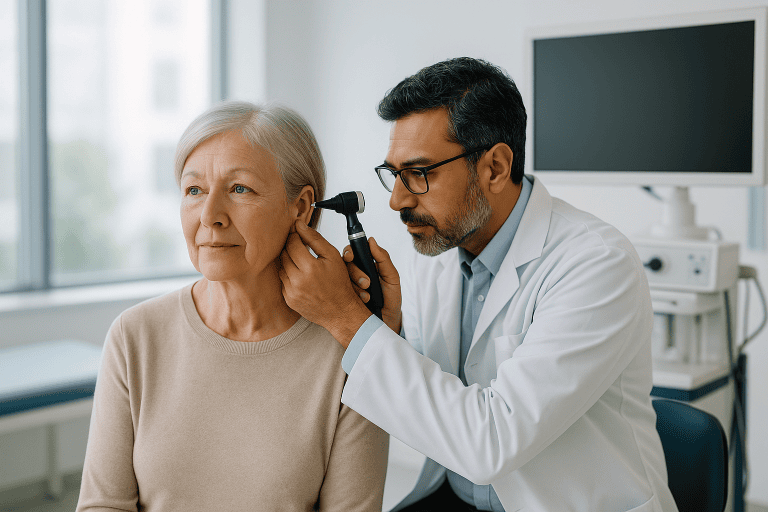
Deafblindness Treatment
Deafblindness care combines hearing, vision and rehabilitation assessments to improve communication, mobility and daily independence. Management may include hearing devices, vision support and therapy.
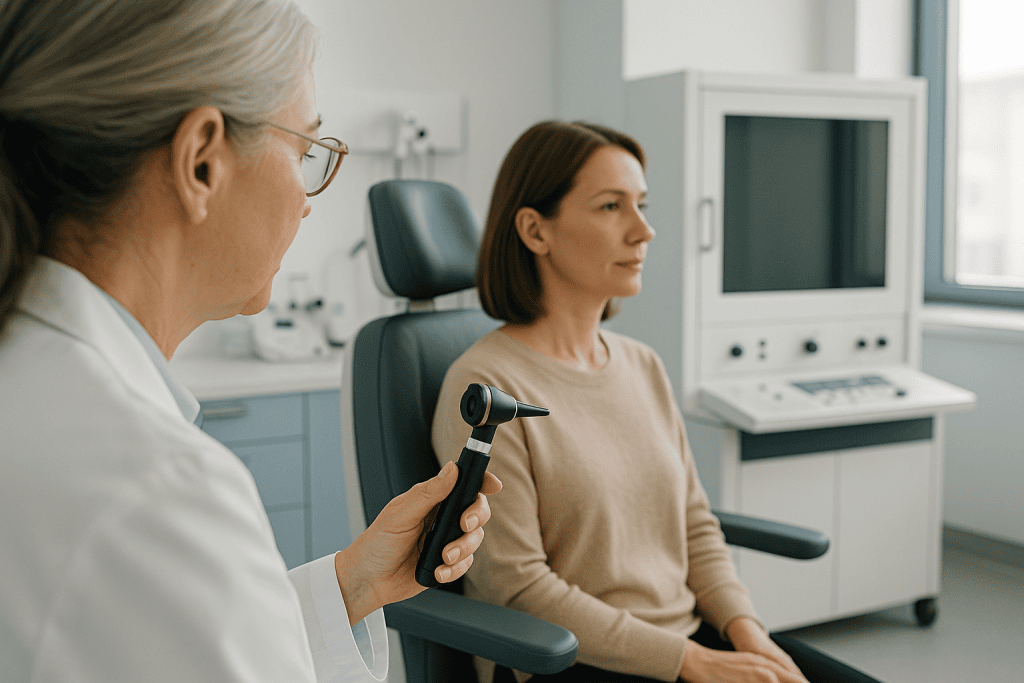
Quick answer
Deafblindness is a combined impairment of hearing and vision. Most deafblind people retain some usable hearing or sight, but the two losses together make communication and orientation far harder than either alone. Care involves coordinated hearing, vision and functional assessment, treatment of any reversible causes, hearing and low-vision technology, and rehabilitation covering communication, mobility and daily living skills.
Deafblindness: A Combined Loss That Is More Than Two Impairments
Deafblindness is a combined impairment of hearing and vision. It rarely means total silence and total darkness: most people with deafblindness keep some usable hearing, some usable sight, or both. What defines the condition is the interaction between the two losses. When both distance senses are reduced, neither can compensate for the other, and communication, orientation and access to information become far more difficult than either impairment alone would suggest. For that reason, deafblindness is treated internationally as a distinct disability, not as deafness plus blindness.
Deafblindness may be present from birth, appear gradually with age, or develop after illness, injury or a genetic condition. For many patients and families, the hardest part is not only the sensory loss itself but the uncertainty around it: will communication improve, can independence be preserved, which specialist should be seen first, and is there a device, therapy or rehabilitation plan that can genuinely help. These are reasonable questions, and honest answers depend on the cause, the degree of remaining hearing and vision, and how early a coordinated assessment happens.
Hearing and vision are closely tied to language, orientation, safety and social confidence. When both are affected, even mildly, ordinary tasks become tiring. A conversation in a noisy room, reading a medication label, crossing a street, recognising a face, using a phone or following instructions in a hospital corridor can all demand far more effort. Children may show delays in speech, learning or motor development. Adults may withdraw from work or social life because communication exhausts them. Older adults face higher risks of falls, medication errors and isolation. Deafblindness care exists to reduce these burdens in practical, measurable ways.
What does deafblind mean?
Deafblind means having a significant impairment of both hearing and vision at the same time. The term covers a wide spectrum. At one end is a person born blind and deaf who has never had access to sound or sight. At the other is an older adult whose hearing and vision have each declined moderately with age, but whose combined loss now makes everyday communication unreliable. Between those extremes are people who were born deaf and are losing vision, people who were born blind and are losing hearing, and people who acquired both losses through illness or injury.
The practical test is functional, not numerical. If your hearing loss prevents you from compensating for your sight loss, and your sight loss prevents you from compensating for your hearing loss: you cannot lip-read because you cannot see the speaker’s face clearly, and you cannot rely on audio because you cannot hear it well, then you meet the working definition of deafblindness that most clinical and support services use, whatever the individual test scores say.
Is it deafblindness or deaf blindness?
Both spellings appear in the literature, but the single word, deafblindness, is now the preferred form in most clinical and advocacy contexts. The two-word version, deaf blindness, tends to appear in older documents and implies two separate impairments that happen to coexist. The single word was adopted deliberately: it signals that the condition is one distinct disability with its own consequences for communication, learning and mobility. Some organisations, particularly in North America, use the hyphenated form deaf-blind or the capitalised DeafBlind, which reflects cultural identity within the deafblind community. On this page, deafblindness is used throughout, but all these forms refer to the same condition.
How many deafblind people are there?
There is no single reliable global figure, and any precise number should be treated with caution. Estimates vary widely because countries define deafblindness differently, because many registries only count people with severe or total loss in both senses, and because the largest group, older adults who acquire hearing and vision loss gradually, is systematically undercounted. Many older people who are functionally deaf and blind in daily life have never been assessed for the combined condition; their hearing loss sits in one medical file and their eye disease in another. What can be said honestly is that deafblindness occurs in every age group and every population, that acquired deafblindness in later life is far more common than congenital deafblindness, and that prevalence rises steeply with age as hearing and vision decline together.
What Deafblindness Care Involves
Deafblindness care is a multidisciplinary pathway for people with combined hearing and vision impairment. It is not a single operation or a single appointment. It evaluates hearing, vision, communication, mobility and daily function together, identifies causes that can be treated medically or surgically, prescribes appropriate hearing and vision support, and builds practical skills for communication and independence. The combined effect of dual sensory loss is always greater than either impairment alone: a person with limited vision leans heavily on hearing, a person with hearing loss leans on lip reading and visual cues, and when both are reduced, those compensations collapse.
Effective care begins with a detailed sensory profile. Audiologists and ear, nose and throat specialists assess the type and degree of hearing loss. Ophthalmologists and vision specialists evaluate the eyes, the visual pathways and how vision actually functions in daily tasks. Rehabilitation professionals assess communication, mobility, balance, daily activities, school or work needs and the home environment. In children, developmental and educational evaluation is essential. In adults, assessment may extend to cognition, emotional health, fall risk and medication management.
Management may then include medical treatment for eye or ear conditions, hearing technology, visual aids, communication training and rehabilitation. Hearing technology may mean conventional hearing aids, bone-conduction options or evaluation for cochlear implantation in selected patients. Vision support may mean glasses, magnifiers, high-contrast tools, lighting strategies, electronic reading aids, mobility canes or accessibility software. Therapy may focus on speech and language, tactile communication, sign language adapted to vision loss, auditory training, occupational therapy, orientation and mobility, and psychological adjustment.
The right plan is individual. A young child with congenital deafblindness needs early developmental intervention and family coaching. A teenager with progressive inherited hearing and retinal loss may need educational accommodations, mobility training and hearing support planned around expected change. An older adult with macular degeneration and age-related hearing loss may benefit most from low-vision rehabilitation, hearing devices, home safety adjustments and deliberate strategies against social isolation. Across every age, the purpose is the same: better access to communication, greater safety and the highest achievable level of independence.
What is the most common cause of deafblindness?
Across all ages, the most common route into deafblindness is the combination of ordinary age-related conditions: presbycusis (age-related hearing loss) occurring alongside cataract, glaucoma, diabetic eye disease or macular degeneration. Each condition is common on its own; together they produce a complex disability that often goes unrecognised precisely because each part seems routine. Among people who are deafblind from birth or early life, the most frequently identified genetic cause is Usher syndrome, which combines congenital or early hearing loss with progressive vision loss from retinitis pigmentosa. Other causes include prenatal infections, complications of prematurity, meningitis, trauma, tumours, stroke and certain neurological and autoimmune conditions. Identifying the cause matters because some are treatable, some are progressive and need forward planning, and some carry implications for other family members.
Who May Need a Deafblindness Assessment
You may need a deafblindness assessment when hearing and vision difficulties occur together and begin to interfere with daily life. Sometimes the change is obvious: a person stops responding to spoken instructions and also bumps into furniture or struggles to read. Often it is subtle, and easily mistaken for inattention, cognitive decline, learning problems or emotional withdrawal. Because deafblindness usually develops gradually, families tend to adapt around it without realising how much function has quietly been lost.
Common signs include difficulty following conversation, especially against background noise; increased reliance on touch or very close visual contact; trouble seeing in dim light; frequent falls or collisions; difficulty recognising faces; needing very loud sound or repeated instructions; delayed speech or language in children; falling school performance; discomfort using a phone or computer; and avoidance of unfamiliar places. Patients also report fatigue, headaches, anxiety in crowds, reduced confidence walking outside and frustration during medical appointments. None of these signs alone proves dual sensory loss, but a cluster of them justifies a combined assessment rather than two separate ones.
What are some signs that I might be going deaf?
The earliest signs of hearing loss are usually situational rather than absolute. You hear people speak but cannot make out the words, particularly in restaurants, meetings or group conversations. You ask for repetition more often, turn the television louder than others prefer, struggle with phone calls, and find that high-pitched voices, often women’s and children’s, are hardest to follow. Persistent ringing or buzzing in the ears (tinnitus) frequently accompanies early hearing loss, and one-sided symptoms deserve particular attention because they can point to a specific, sometimes treatable, cause. Many people also notice listening fatigue: the effort of decoding half-heard speech leaves you drained after social events. For someone who already has reduced vision, these signs matter doubly, because vision loss removes the lip-reading and facial cues that normally mask early hearing decline. That is exactly why hearing changes in a person with an eye condition, or vision changes in a person with hearing loss, warrant assessment sooner, not later.
How is deafblindness diagnosed?
Diagnosis combines audiological testing, ophthalmological testing and functional assessment. Hearing evaluation may include pure-tone audiometry, speech testing, tympanometry, otoacoustic emissions, auditory brainstem response testing for infants or patients who cannot complete standard tests, and imaging when a structural cause is suspected. Vision evaluation may include visual acuity testing, refraction, slit-lamp examination, retinal examination, visual field testing, imaging of the retina and optic nerve, electrophysiology in selected inherited retinal disorders, and observation of how vision is used in real tasks.
The functional assessment is not an optional extra. Test results that look moderate on paper can produce severe difficulty in real life because the two losses interact. Rehabilitation specialists therefore evaluate how you communicate, navigate, read, write, use technology, prepare food, manage medication and participate in school, work or family life. In some cases, genetic testing, neurological evaluation or paediatric developmental assessment is recommended to clarify the cause and inform family counselling.
Patients often seek assessment after a specific trigger: a child misses developmental milestones, an adult receives a diagnosis such as retinitis pigmentosa, an older person starts falling, or a family realises that hearing aids alone are not solving the communication problem. Others come for a second opinion because previous evaluations sat in separate specialist silos and no one drew the findings into a single plan. A coordinated deafblindness assessment exists to close that gap.
Conditions Deafblindness Care Addresses
Deafblindness care covers congenital, acquired and progressive conditions. Some patients are born with combined sensory impairment through genetic syndromes, prenatal infections such as rubella or cytomegalovirus, complications of prematurity, or developmental conditions affecting the eyes and ears together. Early diagnosis in these children matters enormously, because language and brain development depend on timely sensory input and responsive interaction during the first years of life.
Inherited conditions form another major group. Usher syndrome is the best known, combining hearing loss with progressive retinal degeneration, but many other genetic conditions affect the retina, optic nerve, inner ear or neurological system in combination. These patients and families typically need genetic counselling, long-term monitoring, educational planning, hearing support and vision rehabilitation that evolves as the condition does. Knowing that vision will decline over years, rather than discovering it crisis by crisis, allows skills like tactile communication or braille to be learned while sight remains, which is far easier than learning them afterwards.
Acquired deafblindness may follow infection, meningitis, trauma, tumours, stroke, medication-related toxicity, autoimmune disease or neurological conditions. Some of these causes are treatable or partially reversible if identified early; others require rehabilitation and assistive technology to make the most of remaining function. Older adults, as noted above, most often develop dual sensory loss through the accumulation of common age-related conditions, presbycusis, cataract, glaucoma, diabetic eye disease, macular degeneration, and the combined disability deserves integrated care even when each component looks routine.
Deafblindness care is also relevant if you already use a hearing aid, cochlear implant, glasses or a low-vision aid and continue to struggle. Devices alone are frequently not enough. You may need updated programming, additional visual support, communication training, home modifications, orientation and mobility instruction, or simply a revised plan because the underlying condition has progressed. The aim is to match treatment and rehabilitation to your actual life, not only to your test results.
Communication and Learning in Deafblindness
Communication is the central question in deafblindness, and it deserves its own honest discussion, because most of the fears families bring to clinic concentrate here. The realistic answer is encouraging: virtually every deafblind person can communicate, and most can do so richly, but the method depends on when each loss began, how much hearing and vision remain, and what training and support are available.
How do deafblind people communicate?
Deafblind people communicate through a wide range of methods, usually several in combination. Someone with residual hearing may use speech supported by hearing aids or a cochlear implant, asking others to speak clearly in quiet surroundings. Someone with residual vision may use sign language adapted to their visual field, signed close up, within a narrowed field, or against high contrast. People with little or no usable vision may use tactile sign language, in which they follow the signer’s hands with their own; the deafblind manual alphabet, where words are spelled letter by letter onto the hand; or block letters traced on the palm. Braille supports reading and, through refreshable braille displays, gives access to text messages, email and the internet. Speech-to-text applications, screen readers, magnification software and vibration-based alerting systems all extend communication further. Which combination suits a particular person who is blind and deaf is exactly what a functional communication assessment determines.
Can deafblind people speak?
Yes, many deafblind people speak, and some speak as their primary means of expression. Whether speech develops or is retained depends chiefly on hearing history. A person who acquired deafblindness after learning spoken language, the most common situation, usually keeps clear speech, even if severe hearing loss later makes monitoring their own voice harder. A child born with profound hearing loss may develop speech with early hearing technology and therapy, or may communicate primarily through sign or tactile methods. The old label “blind and deaf and mute” is outdated and inaccurate: deafblindness does not affect the voice, and being unable to hear is not the same as being unable to speak. Even people who do not use speech expressively often understand spoken language through tactile methods, interpreters or technology.
How do you communicate with a deafblind person?
You communicate with a deafblind person by first finding out how they prefer to communicate: the single most useful step, because methods vary enormously. Some general principles help in almost every case. Announce your presence with a gentle, consistent touch on the arm or shoulder rather than by speaking from across the room. Identify yourself each time, because a blind and deaf person cannot recognise you by face or voice alone. If they use residual hearing, face them, speak clearly at a natural pace without shouting, reduce background noise and improve lighting. If they use residual vision, position yourself where they can see you best and keep visual clutter down. Allow extra time, confirm understanding rather than assuming it, and tell them when you are leaving, being left mid-conversation without knowing it is a common and distressing experience. If an interpreter or communication guide is present, speak to the person, not to the interpreter.
How do deafblind people learn?
Deafblind people learn primarily through touch, movement and structured, repeated experience, supported by whatever residual hearing and vision remain. For a child who is deaf and blind from birth, learning cannot rely on incidental observation: the way sighted, hearing children absorb language and behaviour simply by watching and overhearing. Everything must be brought to the child deliberately: hand-under-hand exploration, in which the adult’s hands guide without forcing; consistent tactile cues that signal routines; object symbols that stand for activities; and, over time, tactile sign language or braille. Many education systems provide a trained one-to-one professional, often called an intervener, who mediates the environment for the child. Adults who acquire deafblindness learn differently: they carry existing language and knowledge, and rehabilitation focuses on transferring skills to new channels, from print to braille or audio, from spoken conversation to tactile or technology-supported methods. In both cases, learning is entirely possible; it simply requires the information to arrive through accessible routes.
How Deafblindness Assessment and Care Proceed, Step by Step
The pathway usually begins before the first in-person appointment. Previous hearing tests, eye examinations, imaging reports, genetic results, medication lists, surgical records and details of current devices are reviewed in advance, so that the clinical team can plan the most relevant appointments and avoid repeating tests unnecessarily. For children, short videos showing communication or mobility in familiar settings often add information no clinic test can capture. For international patients, this remote review also clarifies which parts of the assessment genuinely require attendance: a question covered in more detail in the guide on when an in-person evaluation is needed before treatment.
- Step 1: Detailed history. Specialists establish when hearing and vision changes began, whether symptoms are stable or progressive, which situations cause most difficulty, what devices have been tried and how you currently communicate. For children, pregnancy, birth history, milestones, school performance and family history are reviewed. For adults, the discussion extends to work, driving, falls, social participation, mental health, medications and other medical conditions.
- Step 2: Hearing assessment. Depending on age and ability, this includes behavioural hearing tests, speech understanding tests, middle-ear evaluation and objective tests of the ear and auditory pathway. If hearing loss is confirmed, the team determines whether it is conductive, sensorineural or mixed: a distinction that decides whether treatment leans towards medication, ear surgery, hearing aids, implantable solutions or rehabilitation.
- Step 3: Vision assessment. In parallel, the ophthalmology team evaluates visual acuity, eye pressure, the front and back of the eye, visual fields and retinal and optic nerve health, with detailed imaging where needed. When inherited retinal disease is suspected, specialised testing clarifies retinal function and likely progression. If a treatable condition such as cataract, uncontrolled glaucoma or diabetic eye disease is found, medical or surgical options are discussed openly, including their limits.
- Step 4: Functional assessment. This is where test results are translated into real life. Specialists observe how you identify people, follow conversation, read, write, use a phone, move along a corridor, respond to alarms and manage personal care. Balance, orientation, use of residual vision, listening strategies, tactile awareness and preferred communication style are all assessed. For children, play-based observation reveals attention, interaction and early communication.
- Step 5: Technology selection. Devices are chosen to match hearing, vision, hand skills, cognition, language and lifestyle. Hearing support may mean digital hearing aids programmed to your audiogram, assistive listening systems for noisy environments, or cochlear implant assessment where hearing aids give insufficient benefit and the auditory pathway is suitable. Vision support may mean updated prescription correction, magnification, contrast enhancement, task lighting, electronic readers, screen-accessibility tools, large-print or tactile materials and mobility aids.
- Step 6: Intervention. Hearing aid fitting involves ear impressions, programming, comfort adjustments and follow-up visits. Cochlear implant care, where appropriate, includes imaging, counselling and surgical planning, followed by activation and auditory rehabilitation, which is essential to the result. Eye treatment may involve medication, laser procedures, injections or surgery depending on the diagnosis. Low-vision rehabilitation and orientation and mobility training, cane techniques, route planning, safe street crossing, strategies for unfamiliar environments, can begin immediately after assessment.
- Step 7: Ongoing adaptation. Progress is reviewed, device settings refined and the plan adjusted as skills develop or the condition changes.
How long all this takes depends on complexity. A focused assessment may be completed within a few days; a fuller programme involving several specialties, device fitting, imaging and rehabilitation planning may need a longer stay or staged visits. Surgical procedures follow their own timelines. Many international patients complete the diagnostic phase abroad and continue rehabilitation at home with a clear written plan, coordinated with local clinicians. It is also normal for findings on site to refine the plan made from records alone; the guide on what happens if your in-person evaluation changes the initial plan explains how such adjustments are handled.
Recovery, in deafblindness care, should be understood broadly. It usually means learning to use new sensory information, building confidence with devices, establishing communication routines and reducing everyday risk, not the restoration of normal hearing and sight. Some patients notice immediate benefit from better lighting, updated glasses or a hearing aid adjustment. Others need weeks or months of training before new skills feel natural. Children often need long-term developmental support; adults with progressive conditions need periodic reassessment as their needs change.
Why Acting Early Matters
Early assessment matters because dual sensory loss damages daily life before anyone names it. In children, delayed identification limits language exposure, social interaction, motor development and learning readiness. The earlier a child receives appropriate hearing, vision and communication support, the better the opportunity to build skills during the sensitive periods of brain development: a window that cannot be reopened later at the same cost.
In adults, waiting invites avoidable complications. Untreated hearing loss feeds communication breakdown, fatigue, reduced work performance and social withdrawal. Untreated vision problems raise fall risk, medication errors and dependence on others for basic tasks. When both are present, the risks multiply rather than add: a person who cannot hear a warning and cannot see the obstacle it refers to becomes unsafe in entirely routine environments.
Some underlying causes also carry their own clocks. Cataract, glaucoma, retinal disease, diabetic eye disease, chronic ear disease, tumours, inflammatory conditions and certain neurological disorders can progress while treatment is postponed. Even where sensory loss cannot be reversed, early rehabilitation preserves function, teaches compensatory strategies while learning capacity and remaining senses are at their best, and delays the drift towards isolation and dependence.
Acting early does not mean rushing into a device or an operation. It means obtaining a careful, combined evaluation, understanding the diagnosis and making informed choices with time to spare. A well-timed plan helps you use remaining hearing and vision more effectively, prepare for expected changes and bring family members into the picture before daily routines become overwhelming.
Benefits of Deafblindness Treatment and Rehabilitation
The benefits of care depend on the cause and severity of deafblindness, but the goals are consistently practical: better communication, safer mobility and more independence in daily life.
| Benefit | What It Means for You |
|---|---|
| Clearer diagnosis | Understanding the hearing and vision conditions together helps guide the right medical treatment, devices and rehabilitation plan. |
| Improved communication | Hearing support, visual strategies, tactile methods and therapy can make conversations more accessible and reduce frustration. |
| Safer mobility | Orientation training, mobility aids and environmental adjustments can reduce falls and improve confidence in familiar and unfamiliar places. |
| Better use of remaining senses | Patients learn how to make the most of residual hearing, vision and touch through training, device optimisation and practical routines. |
| Greater daily independence | Support for reading, technology use, medication management, personal care and home organisation can help patients participate more fully in life. |
| Family and caregiver guidance | Relatives learn communication techniques, safety strategies and ways to support independence without taking over every task. |
Recovery and Adaptation Timeline
Because deafblindness care combines medical treatment, device fitting and rehabilitation, progress is gradual and individual. The outline below describes a typical rhythm, not a promise.
| Time Period | What Patients Can Expect |
|---|---|
| Day 1 | Initial consultations may include review of medical history, hearing and vision concerns, communication needs and prior test results. Some diagnostic tests may begin the same day. |
| First Week | Many patients complete key hearing, vision and functional assessments. Initial recommendations may include device adjustments, low-vision strategies, therapy referrals or additional testing. |
| First Month | Patients may begin adapting to hearing devices, visual aids, communication routines or mobility strategies. Follow-up helps refine settings and address practical challenges. |
| First Three to Six Months | Rehabilitation becomes more meaningful as skills are practised in daily life. Children may show progress in interaction and communication; adults may gain confidence with routines and mobility. |
| Longer Term | Periodic reassessment is important, especially for progressive conditions. Treatment plans may be updated as hearing, vision, education, work or home needs change. |
Factors That Influence Outcomes
Outcomes vary because deafblindness has many causes and affects each person differently. A good result does not usually mean normal hearing or normal vision. It means you can communicate more effectively, move more safely, take part in family, school or working life, and use your remaining senses and your technology with confidence. It is worth being precise about what shapes that result.
The first factor is the cause. Some conditions are treatable, cataract, certain middle-ear problems, some inflammatory disease. Others are progressive and call for long-term adaptation rather than reversal. The second is timing. Early intervention in infants and young children supports language, brain development and social engagement; in adults, timely care reduces falls, isolation and loss of independence. Neither can be recovered fully once the window has passed, which is why an early combined assessment is worth more than a late perfect one.
The degree of residual hearing and vision matters more than many patients expect. Even small amounts of usable sense are valuable when identified and supported correctly. A patient who can detect contrast, light, movement or particular sound frequencies may benefit from very specific environmental adjustments or device settings. Functional testing exists precisely to find these possibilities, which raw clinic numbers often hide.
Device selection and follow-up carry real weight. Hearing aids and visual aids must be fitted, adjusted and practised with. Cochlear implants, where appropriate, need careful candidacy evaluation and sustained rehabilitation after activation. Low-vision devices help only when you learn how and when to use them. A device left in a drawer provides nothing; training and motivation determine much of its value, which is why rehabilitation is planned alongside prescription rather than after it.
The communication environment is the factor most within a family’s control. Relatives, teachers, employers and caregivers may need to change how they interact: speaking clearly, cutting background noise, improving lighting, using touch cues appropriately, allowing extra time and confirming understanding. For some patients, tactile signing, adapted sign language, braille, large print or speech-to-text tools become part of the household’s shared repertoire, not just the patient’s.
General health shapes what is achievable. Balance problems, cognitive change, depression, diabetes, neurological disease and limited mobility make rehabilitation more complex, and addressing them alongside sensory care makes the plan more likely to hold in real life. Emotional adjustment deserves the same seriousness: dual sensory loss can be lonely and frightening, and accepting new tools or new communication methods takes time. Finally, continuity matters. Needs change when a child starts school, an adult changes jobs, vision progresses or hearing declines further; periodic reassessment keeps the plan aligned with the life it is meant to serve.
How Deafblindness Care Is Organised at Acibadem
Patients considering deafblindness care abroad usually need more than a series of individual specialist appointments. They need a coordinated opinion, reliable diagnostics, practical rehabilitation guidance and support navigating care in an unfamiliar health system. At Acibadem, deafblindness care is built around the fact that dual sensory impairment crosses departmental boundaries: otolaryngology, audiology, ophthalmology, neurology, paediatrics, genetics, rehabilitation, speech and language therapy, psychology and physiotherapy may all be involved, and where appropriate, cases are discussed across specialties so findings are weighed together rather than in isolation.
The diagnostic pathway can include modern hearing tests, advanced eye imaging, functional vision assessment, vestibular and balance evaluation, neurological investigation and genetic testing where clinically relevant. Technology is used to sharpen the diagnosis and guide decisions, but the emphasis stays on what the results mean for daily life: a precise scan is worth most when it leads to a plan you can actually use at home.
Treatment plans are personalised to age, diagnosis, communication style, residual hearing and vision, family support and goals. For one patient, the central question is whether cochlear implantation is appropriate. For another, it is preserving reading through low-vision strategies. For a child, the plan may centre on early communication and developmental support; for an older adult, on preventing falls and simplifying daily routines. There is no standard deafblindness package, and a clinic that offers one should raise questions rather than confidence.
Acibadem International supports patients before, during and after travel, with appointment coordination, review of medical records, language assistance in more than 20 languages, help with hospital logistics and communication between patient, family and clinical team. This support carries particular weight in deafblindness, where accessible communication, caregiver involvement and careful scheduling to limit fatigue are part of safe care rather than a courtesy. Families often designate a relative to handle communication with the hospital; the guide on the authorised contact person for your treatment explains how that role works. Patients who rely on touch for orientation and communication sometimes have preferences about who assists with personal care; the guide on requesting same-gender staff for personal care covers what can be arranged.
Many patients arrive holding separate recommendations from hearing specialists and vision specialists that were never reconciled into one plan. A coordinated second-opinion review brings those findings together and clarifies priorities: what should be treated medically, what belongs to rehabilitation, which devices are realistic, and what can be continued at home afterwards. The measure of a useful visit is not how many tests were completed, but whether the patient leaves with a clear understanding of the condition and the next steps.
For families, the process often provides something quieter but equally valuable: explanation. Understanding why a child responds inconsistently, why an adult avoids conversation, or why an older parent becomes disoriented in low light changes how care is given at home. Better understanding almost always produces better support.
Living Forward with Deafblindness
Deafblindness can feel overwhelming because it touches communication, safety, independence and identity at once. Yet daily function genuinely improves for many people when hearing, vision and rehabilitation needs are evaluated together instead of separately. The right plan may combine medical treatment, hearing technology, vision support, communication therapy, mobility training, environmental changes and family education. Progress tends to arrive step by step rather than all at once: a conversation that no longer exhausts, a route walked confidently, a message read independently, and each of those steps makes the next one easier.
A comprehensive assessment answers the questions that matter most to anyone living with combined hearing and vision loss: what is causing the symptoms, what can be treated, which devices are realistic, how communication can be improved, and what support is needed at home, at school or at work. Those answers, gathered in one coordinated plan rather than scattered across specialties, are the foundation on which everything else in deafblindness care is built.
Preparation
- Patients may need hearing tests, eye examinations, neurological evaluation and a review of medical or genetic history. Bring previous audiology, ophthalmology and imaging reports if available. Children may require developmental assessment and family counseling.
Aftercare
- Aftercare focuses on regular hearing and vision follow-up, rehabilitation, communication training and assistive device adjustments. Families and caregivers receive guidance for safety, mobility and daily routines. Treatment plans are updated as hearing, vision or developmental needs change.
Frequently Asked Questions
What affects the cost of deafblindness care?
The final cost depends on the assessments needed, the cause and severity of hearing and vision loss, the devices recommended, rehabilitation frequency, interpreter needs and follow-up planning. A personalised quote is possible after medical records are reviewed.
How can an international patient get a quote from Acibadem?
You can request a free consultation by sharing medical reports, hearing and vision test results, current devices, previous treatments and the patient’s daily communication needs. The team can then suggest an appropriate evaluation pathway and provide a personalised estimate.
Are hearing devices or vision aids included in the package?
This depends on the package and the clinical recommendation. Some plans may include assessment and counselling only, while devices, fitting sessions, rehabilitation and follow-up may be quoted separately.
Why might costs differ between countries?
Costs vary because hospital billing systems, specialist fees, device pricing, insurance rules, rehabilitation access, waiting times and international patient support differ by country and provider.
Is deafblindness care a single treatment?
Usually, it is a coordinated care plan rather than a single treatment. Management may combine hearing support, vision support, communication therapy, mobility rehabilitation and assistive technology, depending on specialist assessment.
Medically reviewed by the Acıbadem International Medical Board September 13, 2026
See our medical review board →
Update history
- PublishedJune 8, 2026
- Medical review approvedSeptember 13, 2026
- Last content updateSeptember 12, 2026
References1
- Deafblindness nhs.uk
Trusted care for international patients
From the Acibadem Blog
Deafblindness Care Explained: How Hearing, Vision and Rehabilitation Teams Work Together
How deafblindness is treated depends on the cause and on how much hearing and vision remain. Care usually combines hearing interventions (hearing aids, cochlear…
Supporting a Deafblind Family Member: Communication Training, Mobility and Safety Routines
Supporting a deafblind family member means three things together: learning the communication method that fits their remaining sight and hearing, whether clear speech, tactile…