Febrile Seizures Treatment
Febrile seizures are convulsions triggered by fever in young children, usually brief and benign. Care focuses on safe seizure response, identifying fever causes, and pediatric neurology follow-up when needed.

Quick answer
A febrile seizure is a convulsion triggered by fever in a young child, typically between six months and five years of age. The child may stiffen, shake, roll the eyes and briefly stop responding. Most episodes end on their own within a few minutes and do not cause lasting harm, though every first seizure with fever needs medical assessment to confirm the diagnosis and identify the cause of the fever.
Understanding Febrile Seizures: A Seizure with Fever in a Young Child
A febrile seizure is a convulsion triggered by fever in a young child, most often between the ages of six months and five years. During the episode the child may suddenly stiffen, shake rhythmically, roll the eyes and stop responding. Febrile seizures are provoked by the fever itself, not by an infection of the brain such as meningitis or encephalitis, and in most children they stop on their own within a few minutes and do not cause lasting neurological harm.
That definition is easy to read on a page and very hard to hold onto in the moment. Watching a child have a seizure is one of the most frightening experiences a parent can face. Even a brief episode feels far longer than it actually is, and many parents immediately fear brain injury, epilepsy, serious infection, or that they somehow did something wrong. Those fears are rarely justified. Still, every seizure associated with fever deserves careful attention, especially the first time it happens, because a parent cannot reliably tell one cause of a convulsion from another at home.
Care for febrile seizures is best understood as a pathway rather than a single treatment. The pathway covers safe response during the seizure itself, urgent assessment when the picture is not typical, identification of the illness causing the fever, treatment of that illness where needed, clear education for the family and, in selected children, paediatric neurology follow-up with a rescue medication plan. No single element of that list matters more than the others; together they turn a frightening event into a managed situation.
At Acibadem, children who have had a febrile seizure are evaluated with a child-centred approach that brings together paediatric emergency medicine, general paediatrics, paediatric neurology and infectious diseases specialists when the case calls for them. The aim is careful diagnosis, proportionate testing, neither too little nor too much, and practical guidance so that families know what to do if a fever or seizure happens again.
What does a febrile seizure look like?
A febrile seizure typically begins with sudden loss of awareness: the child stops responding, the body stiffens, and rhythmic jerking of the arms and legs follows. Parents often describe eye rolling or eyes fixed to one side, drooling, noisy or irregular breathing, and sometimes a brief bluish tinge around the lips. The child cannot hear you or respond during the event, however distressing that is to watch.
Afterwards comes a recovery phase. Many children are sleepy, confused, irritable or clingy for a short period before gradually returning to their usual behaviour. This drowsy phase can itself be alarming, but a steady return to normal responsiveness over the following period is a reassuring sign. If it is safe to do so, a short video recorded by a caregiver can be genuinely useful for doctors later, although first aid always comes before filming.
Simple and complex febrile seizures
Doctors divide febrile seizures into two categories, and the distinction shapes everything that follows. A simple febrile seizure is generalised, it involves the whole body rather than one side or one limb, lasts only a few minutes, and does not repeat within the same illness. This is by far the more common pattern, and it carries the most reassuring outlook.
A complex febrile seizure lasts longer, recurs within the same fever episode, or has focal features such as twitching confined to one side of the body or one limb. Complex features do not automatically signal a serious underlying problem, but they do call for a more detailed medical assessment, because the follow-up and testing decisions may differ from those for a simple event.
A prolonged febrile seizure, described as febrile status epilepticus when it continues for an extended period, is a medical emergency in every healthcare system. It requires prompt medication to stop the seizure and a careful search for serious causes of the fever. Fortunately, most febrile seizures are not prolonged.
Febrile, Fit, Convulsion: What the Words Actually Mean
The vocabulary around this condition confuses many families, particularly those reading medical records in a second language. It is worth untangling the terms before going further, because they all describe the same event from slightly different angles.
What does febrile mean?
Febrile, spelled f e b r i l e, simply means “with fever” or “feverish”, from the Latin word febris, meaning fever. A febrile child is a child with a raised body temperature; a febrile seizure is a seizure that happens in that state. In records translated from French or written in older medical style you may also see the word order reversed, as convulsion febrile: it refers to exactly the same event. The word says nothing about severity; it only tells you that fever was present.
What do doctors mean by convulsions?
The convulsions meaning used in medicine is straightforward: a convulsion is an episode of involuntary, uncontrolled shaking of the body caused by a burst of abnormal electrical activity in the brain. “Seizure” is the broader term, some seizures involve staring or subtle changes rather than shaking, while “convulsion” usually describes the visibly shaking type. In everyday use, and on most hospital paperwork about young children with fever, the two words are used interchangeably.
Is a febrile fit the same as a febrile seizure?
Yes. A febrile fit is simply the everyday British name for a febrile seizure, “fit” is the informal word for a seizure. You may also encounter “fever fit”, “fever convulsion” or “febrile convulsion” in books, clinics and discharge letters. All of these describe the same event, defined the same way and managed the same way.
What Causes Febrile Seizures?
The cause of a febrile seizure is the interaction between a fever and a young, still-developing brain. In early childhood the brain’s threshold for seizure activity is lower than it will be later in life, and a rising body temperature can tip a susceptible child over that threshold. As the brain matures, the threshold rises, which is why febrile seizures belong so firmly to a specific age window and why children grow out of them.
Why do febrile seizures happen?
Febrile seizures happen because some young brains respond to fever, and particularly to a rapid rise in temperature, with a brief burst of abnormal electrical activity. The speed of the temperature rise may matter as much as the peak reading; many febrile seizures occur early in an illness, before parents even realise the child is significantly febrile. This is one reason prevention is so difficult: the seizure is often the first visible sign that a fever exists at all.
Individual susceptibility plays a clear role, and much of it is inherited. Children with a parent or sibling who had febrile seizures are more likely to have them too. This genetic tendency relates to how the developing brain handles fever; it does not mean the child has epilepsy or will develop it. Honest medicine also requires saying what is not known: researchers cannot yet fully explain why one febrile child seizes and another with the same illness and the same temperature does not.
Which illnesses trigger the fever?
The fever behind a febrile seizure most often comes from a common childhood infection. Viral respiratory illnesses and influenza-like infections are the most frequent triggers, followed by ear infections, throat infections such as tonsillitis, gastrointestinal infections and urinary tract infections. Less commonly, another medical condition is responsible, which is one of the reasons a first seizure with fever is always assessed rather than assumed.
Fever after vaccination can occasionally trigger a febrile seizure in susceptible children. It is the fever, not the vaccine itself, that provokes the event, and this does not usually change the child’s overall favourable outlook or the standard vaccination guidance: a question best discussed with the child’s own doctor.
Who Needs Evaluation After a Seizure with Fever?
Any child who has a seizure with fever should be assessed by a qualified medical professional, particularly after a first event. Appearance alone cannot distinguish a febrile seizure from a fainting episode, rigors (violent shivering with chills), a breath-holding spell, or a seizure with another cause entirely. Rigors are a particularly common mimic: a shivering, shaking child with fever who remains aware and responsive is not having a seizure, but a parent in the middle of the night cannot be expected to make that call with confidence. Medical evaluation defines what actually happened.
Age matters in the assessment. Febrile seizures usually occur between about six months and five years of age. They are uncommon in very young infants and in older children, and a seizure with fever outside the typical age window generally prompts a broader evaluation, because the standard reassurances attached to febrile seizures rest on the child fitting the standard pattern. Family history matters too: close relatives with febrile seizures make the diagnosis more likely, though never certain.
Doctors regard certain features as warning signs that shift a case out of the routine category and into urgent, in-depth assessment. These include a seizure lasting more than a few minutes; breathing difficulty during or after the event; failure to wake or respond as expected afterwards; movements confined to one side of the body; a second seizure within the same illness; and signs suggestive of meningitis, such as neck stiffness, persistent vomiting, severe lethargy, a bulging fontanelle in an infant, a purple rash that does not fade under pressure, or unusual sensitivity to light. A seizure in a child younger than six months, a child with a known neurological condition or weakened immune system, or a child who has recently travelled through regions with particular infectious risks is also assessed more broadly. None of these features means something serious is definitely present: they mean the question has to be asked properly.
How Doctors Diagnose a Febrile Seizure
Diagnosis begins with the history, and the history usually carries more weight than any test. The medical team will want to know how long the seizure lasted, what movements were seen and whether they involved the whole body or one side, whether the child was responsive, what the temperature was, what illness symptoms preceded the event, and whether there were recent medications, vaccinations, head injury or any possibility of toxin exposure. How the child behaved afterwards, drowsy then gradually normal, or persistently unresponsive, is one of the most informative details a parent can provide. This is where a caregiver’s video, if one exists, earns its value.
The physical examination focuses on the child’s neurological status, hydration, breathing, circulation and any sign pointing to the source of the fever: ears, throat, chest, abdomen, skin, and in infants the fontanelle. In a child with a typical simple febrile seizure who has returned to normal and has an identifiable, ordinary illness, extensive testing is often unnecessary, and restraint here is good medicine, not neglect.
When the cause of fever is unclear or warning features are present, testing is directed by the clinical picture rather than applied as a routine battery. Options include blood tests, urine analysis, throat or respiratory swabs, cultures and inflammatory markers. A lumbar puncture is considered when findings suggest meningitis, or when the child is very young and the picture is concerning, because infants can carry serious infection with subtle signs. Brain imaging and electroencephalography (EEG) are not routine after a typical simple febrile seizure; they are reserved for selected complex or atypical cases, focal features, prolonged events, abnormal neurological findings or diagnostic uncertainty. An EEG records the brain’s electrical activity and can help in recurrent or unusual presentations, but a normal or abnormal EEG after a single simple event rarely changes management, which is why careful clinicians do not order it reflexively.
What Febrile Seizure Care Addresses
Good care addresses two problems at once: the seizure that happened and the illness that caused the fever. The most common scenario is a developmentally normal young child with a viral infection. Here, care centres on observation, comfort measures for the fever, hydration advice and, crucially, parent education, because the family’s confidence and preparedness are part of the treatment.
Other children need targeted treatment for a specific infection. Ear infections, pneumonia, tonsillitis, influenza-like illnesses, gastroenteritis and urinary tract infections are all encountered in children who have had febrile seizures. Some bacterial infections call for antibiotics; many viral illnesses are best managed with supportive care. The decision follows the examination findings, test results and the child’s overall condition, and it belongs to the treating doctor rather than to a fixed protocol.
Care also addresses the question every parent asks next: will it happen again? Some children have a single febrile seizure and never another. Others have further episodes with future fevers, particularly children who were younger at the first event, had a lower temperature at the time of the seizure, or have a family history of febrile seizures. A recurrence does not mean the child has epilepsy. It does mean the family benefits from a written plan, and children with repeated, prolonged or complex events may be offered paediatric neurology follow-up and taught how to use a prescribed rescue medication if a seizure lasts longer than expected.
Children with developmental delay, previous neurological injury, an abnormal neurological examination, very prolonged seizures or focal features need a more individualised plan. In these cases the team weighs whether the event was truly fever-provoked or whether fever unmasked an underlying tendency to seizures: a distinction that changes monitoring, investigations and long-term management. Finally, care includes second opinions: families sometimes seek a fresh review after a frightening first episode, after repeated emergency visits, or when previous recommendations conflicted. Reviewing the history, earlier test results and the child’s development can settle whether anything further is genuinely needed.
What to Do If a Toddler Has a Febrile Seizure
The correct response to a febrile seizure is protective, not interventional: keep the child safe and let the seizure end. Paediatric teams around the world teach the same first-aid sequence, and knowing it in advance is the single most useful preparation a parent can make.
- Note the time. Timing the seizure matters more than anything else you can do, because a seizure that continues beyond a few minutes changes the medical picture.
- Place the child on a safe, flat surface, ideally on their side, so that saliva or vomit can drain away from the airway.
- Clear the area. Move hard, sharp or hot objects out of reach rather than moving the child unless they are somewhere dangerous.
- Loosen clothing around the neck so breathing is unobstructed.
- Do not restrain the child and do not try to stop the movements, holding a seizing child down can cause injury without shortening the seizure.
- Put nothing in the mouth. A child cannot swallow the tongue; objects in the mouth cause choking, broken teeth and bitten fingers.
- Stay with the child afterwards, keeping them on their side while they come round, and note how quickly awareness returns.
Standard practice everywhere treats certain situations as emergencies requiring immediate medical care: a seizure that continues beyond a few minutes, impaired breathing, injury during the event, movements confined to one side, or a child who does not begin recovering as expected. For a first seizure with fever, prompt medical assessment is the norm even when the seizure stops quickly and the child seems well, confirming the diagnosis and finding the fever source is not something that can be done from the sofa.
Hospital Treatment: From Arrival to Discharge
In the emergency department or clinic, the first priority is stabilisation. The team assesses airway, breathing, circulation, temperature, hydration and neurological responsiveness, with blood glucose checked where indicated. Most children arrive with the seizure already over; if a child is still seizing, medication is given to stop it. These fast-acting anti-seizure medicines can be administered by intravenous, buccal (inside the cheek), nasal or rectal routes, and the choice depends on the situation and on what access is available quickest.
Once the seizure has stopped, attention turns to the fever and its cause. Antipyretic medicines such as paracetamol (acetaminophen) or ibuprofen may be used for comfort, chosen according to the child’s age, weight and medical history and always under the direction of the treating clinicians. Families deserve the honest version of what these medicines do: fever-reducers help a miserable child feel better, but they do not reliably prevent febrile seizures. Hydration, rest and observation complete the supportive picture.
Modern paediatric units support this pathway with continuous monitoring of oxygen levels, heart rate and breathing where needed, laboratory systems that identify infection, dehydration and metabolic concerns, and imaging for the minority of children whose presentation suggests a diagnosis beyond a simple febrile seizure. The technology matters less than the judgement directing it: the skill in febrile seizure care lies largely in knowing which children need more and which children need less.
The length of stay varies with the child, not with the label. A child who has recovered completely after a short, simple febrile seizure is typically observed for a period and discharged with clear instructions. Children with complex seizures, persistent symptoms or an uncertain diagnosis stay longer for monitoring and further tests. Where an infection itself needs inpatient treatment, the stay reflects the severity of that infection rather than the seizure.
Discharge education is a genuine part of treatment, not an afterthought. Before leaving, parents should understand seizure first aid, how to measure temperature accurately, how any prescribed medicines are to be given, which changes in the child would warrant returning, and what follow-up is planned. If a rescue medication is prescribed for home use, usually reserved for children with prolonged or recurrent events, caregivers need hands-on teaching in when and how to give it, following the thresholds set by the treating physician. Paediatric neurology follow-up is arranged for complex, prolonged, recurrent or atypical cases, or when a family needs a more detailed risk assessment than an emergency visit allows.
How to Prevent Febrile Seizures: An Honest Answer
There is no reliable way to prevent febrile seizures, and any page that tells you otherwise is selling comfort rather than accuracy. Because the seizure often occurs early in the fever, sometimes before anyone knows a fever exists, the window for intervention is usually already closed by the time parents could act. Studies of scheduled fever-reducing medicine have not shown that it dependably stops seizures from occurring, which is why doctors describe antipyretics as comfort measures rather than seizure prevention.
Daily anti-seizure medication is not usually recommended for children with simple febrile seizures. The condition is benign and self-limiting in the great majority of children, and the side effects of continuous medication generally outweigh any benefit. Decisions of this kind, including any question of starting, adjusting or stopping a medicine, belong strictly to the child’s treating doctor, who can weigh the individual history.
For parents searching for how to avoid febrile seizures, the realistic strategy is preparation rather than prevention: treat fevers for comfort as advised, keep the child hydrated during illness, know the first-aid sequence before you need it, and keep any prescribed rescue medication accessible and in date. A prepared parent cannot stop a seizure from starting, but can make every seizure that does happen safer.
Why Early Assessment Matters
Most febrile seizures are benign, but early assessment matters because not every seizure with fever is a simple febrile seizure. Serious infections, metabolic problems, head injury, accidental ingestion of medicines or household substances, and underlying neurological conditions can occasionally present with fever and seizure-like activity. Prompt evaluation separates the common, self-limited event from the rare condition that needs urgent treatment: a distinction no parent should be asked to make alone.
Delay carries particular risk when a seizure is prolonged. The longer a convulsion continues, the harder it can be to stop and the greater the strain on the child’s breathing, oxygen levels, temperature control and circulation. Emergency treatment exists precisely to end the seizure quickly and protect the child while the underlying cause is identified.
Delayed evaluation can also postpone treatment of the illness behind the fever. A urinary tract infection, pneumonia, meningitis or bloodstream infection needs timely diagnosis, and in infants and toddlers who cannot describe their symptoms, fever may be the only visible sign. A careful paediatric examination picks up clues that are easy to miss at home. Finally, early education pays forward: parents who learn safe positioning, timing and, where prescribed, rescue medication use after the first event are demonstrably better prepared for any second one, which matters most for families who travel or live far from emergency services.
Benefits of Structured Febrile Seizure Care
A structured evaluation protects the child during the acute event and leaves the family with a clear, workable plan for future fevers. The table below summarises what that looks like in practice.
| Benefit | What It Means for You |
|---|---|
| Safe seizure management | Caregivers learn what to do during a seizure, what to avoid, and when emergency treatment is necessary. |
| Identification of the fever source | The medical team evaluates whether the fever is due to a common viral illness or a condition needing specific treatment. |
| Reduced unnecessary testing | Children with typical simple febrile seizures avoid investigations that are unlikely to help, while children with warning signs receive appropriate testing. |
| Individual recurrence planning | Families receive guidance based on the child’s age, seizure features, medical history and likelihood of future episodes. |
| Specialist follow-up when needed | Paediatric neurology input can clarify complex cases, review development and determine whether further monitoring is appropriate. |
Recovery Timeline After a Febrile Seizure
Recovery after a simple febrile seizure is usually rapid, often faster than the parents’ recovery from watching it. The realistic timeline depends on the seizure’s duration, the illness causing the fever and the child’s overall health.
| Time Period | What to Expect |
|---|---|
| Day 1 | The child may be sleepy, irritable or clingy for a short period after the seizure. Medical evaluation focuses on recovery, the fever source and warning signs. |
| First week | Most children return to their usual behaviour as the infection improves. Parents monitor fever, hydration, breathing, rash, alertness and any recurrent seizure activity. |
| First month | If recommended, follow-up with paediatrics or paediatric neurology reviews the event, test results and any need for a rescue medication plan. |
| Longer term | Many children have no further seizures. Some have another febrile seizure with a future illness, so families benefit from written instructions and ongoing paediatric care. |
Outlook: What Shapes a Good Result
The outlook after febrile seizures is generally very favourable, especially for children with simple febrile seizures and normal development. Most children go on to grow, learn and take part in daily life exactly as expected. A good result rests on four things: accurate diagnosis, recognition of the minority of cases that need more, appropriate treatment of the fever’s cause, and a family that leaves the hospital knowing what to do next time.
Several factors shape how doctors assess an individual child’s risk: the age at the first seizure, family history, the seizure’s duration, whether it was generalised or focal, whether it recurred within the same illness, and the child’s neurological development. A brief generalised seizure in a healthy toddler is approached differently from a prolonged focal seizure in an infant or in a child with developmental concerns, not because the second child is destined for trouble, but because the questions that need answering are different.
Are febrile seizures life threatening?
Febrile seizures are very rarely life threatening. A typical simple febrile seizure ends on its own, and children come through it without injury to the brain. The situations that carry real risk are the exceptions: a prolonged seizure that needs emergency medication to stop, a seizure caused by a serious underlying infection such as meningitis, or injury sustained during the event, which is exactly what correct first aid prevents. This is why the medical response combines calm about the typical case with genuine urgency about the atypical one.
At what age do febrile seizures stop?
Most children outgrow febrile seizures by around school age, as febrile seizures rarely occur after about five years. The tendency fades as the brain matures and its seizure threshold rises. Children who had their first seizure at a very young age may have a longer window of susceptibility, which is one of the factors doctors weigh when discussing recurrence with a family.
Do febrile seizures lead to epilepsy?
A febrile seizure does not mean a child has epilepsy, and the great majority of children who have febrile seizures never develop it. Epilepsy is defined by recurrent unprovoked seizures; febrile seizures are provoked by fever in a specific age group. Children with complex features, developmental concerns or a family history of epilepsy warrant closer follow-up, and paediatric neurology can put an individual child’s situation into honest perspective, which is usually more reassuring than the internet suggests. Families who want to understand how doctors distinguish the two conditions may find our overview of epilepsy diagnosis and treatment a useful starting point.
It also helps to clear up the persistent misconceptions. Febrile seizures are not usually caused by the height of the fever alone; the speed of the temperature rise and the child’s individual susceptibility play a role. Fever medicine improves comfort but does not dependably prevent seizures. A seizure during fever does not mean the parents failed to act quickly enough. Understanding these distinctions helps families respond calmly rather than with guilt.
Febrile Seizure Evaluation at Acibadem
After a frightening event such as a febrile seizure, parents typically want two things at once: rapid access to paediatric assessment and explanations they can actually follow when the adrenaline fades. Acibadem’s hospitals run structured paediatric pathways for children with seizures and fever, drawing on paediatric emergency physicians, general paediatricians from the paediatrics department, paediatric neurologists, infectious disease specialists, radiologists and laboratory teams according to what each child’s presentation requires. Complex cases are discussed across disciplines so that testing and treatment decisions stay aligned with evidence-based practice.
For a child with a straightforward simple febrile seizure, this coordinated approach helps avoid unnecessary interventions while still addressing the cause of the fever. For a child with complex features, prolonged events, developmental concerns or unclear prior assessments, access to paediatric neurology, monitoring, laboratory testing, imaging and selective EEG supports a more detailed plan. The stated aim is proportionality: understanding the individual child rather than applying an identical pathway to every family, and making sure parents leave each visit with a plan they can actually use during the next fever.
Moving Forward After a Febrile Seizure
A febrile seizure is deeply distressing to witness, but in most children it is a brief, self-limited response to fever in a developing brain, not the beginning of a neurological disease. The essentials are simple to state: keep the child safe during the seizure, have every first event medically assessed, identify and treat the cause of the fever, and leave the healthcare setting with instructions clear enough to act on at three in the morning.
For children whose events were prolonged, repeated, focal or otherwise unusual, paediatric assessment and neurology follow-up clarify the diagnosis and the plan; some families also seek a second opinion when earlier recommendations were inconsistent or when concerns about development remain. For everyone else, the most valuable outcome of good febrile seizure care is quieter than any test result: parents who understand what happened, why it happened, and exactly what they would do if it ever happened again.
Preparation
- Parents should note the seizure duration, symptoms, temperature, recent illness, medications, and any previous seizures. Bring vaccination records, medical history, and videos of the event if available. Emergency evaluation is needed for prolonged seizures, breathing difficulty, neck stiffness, repeated seizures, or a child under 6 months.
Aftercare
- After a febrile seizure, keep the child on their side, do not put anything in the mouth, and seek medical advice. Fever control, hydration, and treatment of the underlying infection may be recommended. Follow-up with pediatrics or pediatric neurology helps assess recurrence risk and decide whether further tests are needed.
Frequently Asked Questions
What affects the cost of febrile seizure care?
Cost is influenced by whether care is urgent or planned, the need for hospital observation, the suspected cause of fever, specialist involvement, and any tests such as laboratory work, EEG, imaging, or infection evaluation. Interpreter services and written international reports may also affect the total.
How can I get a personalised quote from Acibadem?
You can request a free consultation and share the child’s seizure description, fever history, previous medical records, test results, medications, and any videos of the event if available. The medical team can then advise which consultations or investigations may be needed and prepare a personalised estimate.
Is every child with a febrile seizure required to see a pediatric neurologist?
No. Many febrile seizures are brief and benign, and follow-up with a pediatrician may be enough. A pediatric neurology review may be recommended if the episode was atypical, prolonged, recurrent, focal, or associated with delayed recovery or developmental concerns.
Are tests always included in the package?
Packages vary. Some include pediatric consultation and basic assessment, while additional tests are added only if clinically indicated. The final plan is confirmed after specialist review and discussion with the family.
Can international families travel for febrile seizure evaluation?
Families may travel for planned follow-up, second opinion, or pediatric neurology assessment after the child is stable. A child with an active seizure, serious symptoms, or poor recovery should receive urgent care locally before considering travel.
Medically reviewed by the Acıbadem International Medical Board August 31, 2026
See our medical review board →
Update history
- PublishedJune 8, 2026
- Medical review approvedAugust 31, 2026
- Last content updateSeptember 8, 2026
References1
- Febrile seizure nhs.uk
Trusted care for international patients
From the Acibadem Blog
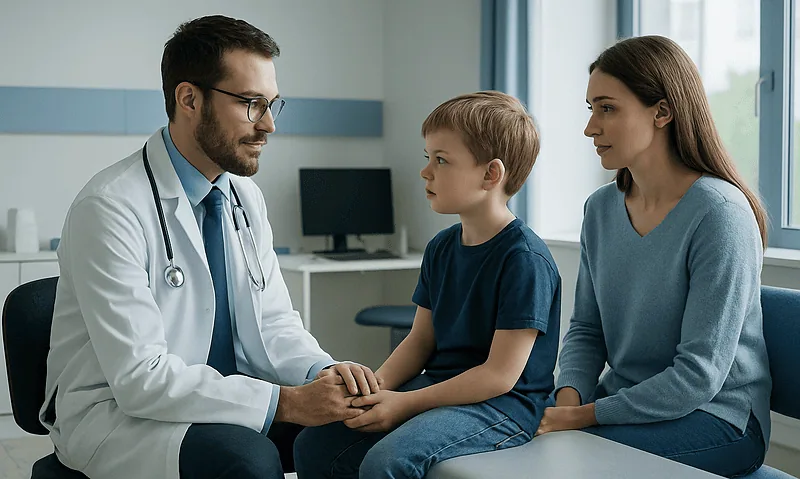
When Does a Febrile Seizure Lead to Pediatric Neurology Follow-Up? Simple vs Complex Events
A simple febrile seizure, meaning a brief generalized convulsion during fever in a child roughly 6 months to 5 years old that does not…

After a Child Has a Febrile Seizure: Notes, Videos and Records That Help the Pediatrician
Bring a written timeline of the seizure (when it started, how long it lasted, what your child's body did, and how quickly they recovered),…

Why Does Fever Trigger Febrile Seizures in Young Children and How Is Care Planned?
Febrile seizures happen when a fever, usually from a common childhood infection, temporarily lowers the seizure threshold of a young child's developing brain; inherited…
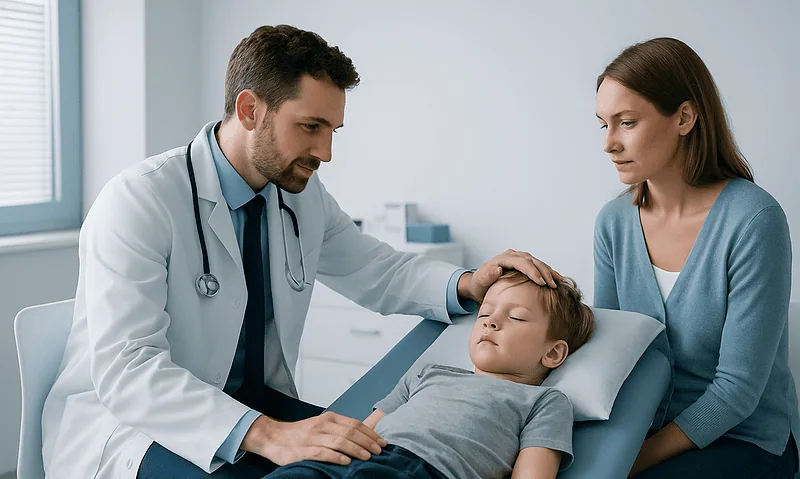
Febrile Seizures: What They Look Like and Whether They Can Be Prevented
Febrile seizures are brief convulsions triggered by fever in children roughly 6 months to 5 years old. They look frightening, stiffening, rhythmic jerking, unresponsiveness, but most…