Gastric Balloon
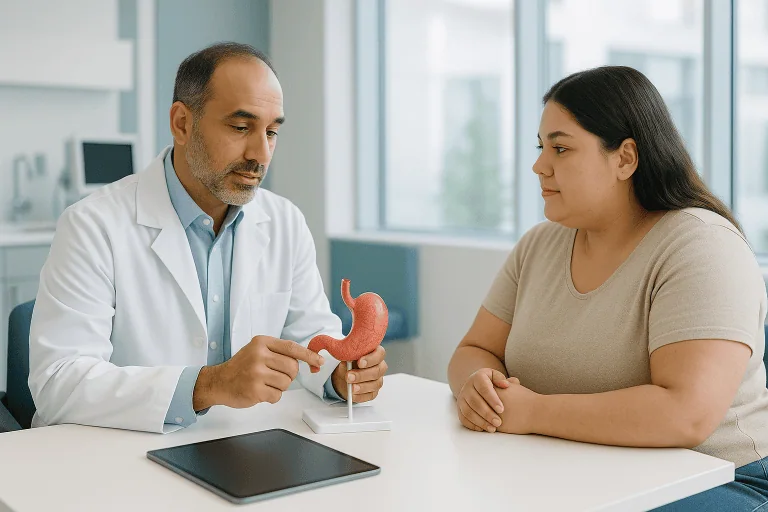
Gastric balloon is a non-surgical weight loss procedure that places a temporary balloon in the stomach to reduce food intake and support lifestyle changes.
Quick answer
A gastric balloon (intragastric balloon) is a temporary, non-surgical weight-loss device. A deflated silicone balloon is placed in the stomach, usually by endoscopy under sedation, then filled with sterile fluid or gas. It occupies space so smaller meals feel satisfying, stays in place for a planned period of several months, and is then removed. It suits adults who want a reversible alternative to bariatric surgery.
What Is a Gastric Balloon?
A gastric balloon is a temporary weight-loss device placed inside your stomach, usually during a short endoscopic procedure under sedation. Once filled with sterile fluid or gas, it occupies space so that smaller meals satisfy you sooner, giving you a defined period, commonly several months, in which to change how you eat, with clinical support alongside you. It is designed for adults who are overweight or living with obesity and who want a reversible, non-surgical option rather than an operation.
The same device goes by several names. Medical literature calls it an intragastric balloon. Spanish-language sources call it a balon gastrico. Patients often simply say stomach balloon. All of these describe the same thing: a soft balloon that sits inside the stomach for a planned period and is then taken out. It is not an implant in the surgical sense, and it does not change the anatomy of your stomach or intestines in any permanent way.
Many international patients look into having a gastric balloon in Turkey, where the procedure is offered within hospital-based weight-management programmes rather than as a standalone service. This page explains how the device works, who it genuinely suits, how it is placed and removed, what recovery involves, what shapes the cost, and how treatment is organised if you travel for it. A gastric balloon is not a shortcut, and it does not cure obesity. It is a medical tool that creates a window for structured change. Understanding that distinction before you commit is the single most useful thing you can do.
How does a gastric balloon work?
A gastric balloon works by reducing the space available for food, so you feel full after smaller portions. In some patients it also appears to slow stomach emptying, which can reduce appetite between meals. It does not alter digestive hormones the way some bariatric operations can, it does not block the absorption of calories, and it does not change what happens to food after it leaves the stomach. The effect is mechanical and temporary, which is both its appeal and its limit. While the balloon is in place, you experience what smaller portions feel like, and you have a defined period in which to practise new meal patterns with a dietitian’s guidance. What you keep after removal depends on what you built during that period.
Types of Intragastric Balloon
Several intragastric balloon systems exist, and they differ in how they are placed, what fills them and how long they stay. Most are positioned during an upper endoscopy and filled with sterile liquid; some systems use gas instead. Filling volumes vary by system and are selected according to your anatomy. The planned duration also varies, several months is typical, and the balloon must be removed at the agreed time unless the system is specifically designed to empty and pass naturally.
Some balloon systems are designed to be swallowed as a capsule attached to a thin catheter, which may avoid the need for a traditional endoscopy at placement. Imaging confirms the position before the balloon is filled, and the catheter is then withdrawn. Certain swallowable balloons deflate on schedule and pass through the digestive tract on their own; others still require planned endoscopic removal. Which system suits you depends on your anatomy, your medical history, local availability and your physician’s recommendation. The purpose is the same in every case: reduced food volume and a structured window for behavioural change.
How does a gastric balloon differ from bariatric surgery?
Unlike gastric sleeve surgery or gastric bypass, a gastric balloon removes no stomach tissue, reroutes nothing and involves no incisions. There is no permanent surgical change to reverse or live with. For many patients that is precisely the attraction: a less invasive step, taken without closing the door on other options later. The trade-off is durability. Surgical procedures change the stomach permanently; the balloon’s restriction ends the day it is removed.
The balloon also sits differently from other non-surgical approaches. Gastric botox, for example, works by temporarily affecting stomach muscle activity rather than occupying volume, and it suits a different patient profile. Because the balloon is temporary, the long-term result depends heavily on nutrition, physical activity, behaviour change and medical follow-up, far more than the device itself. A physician comparing these options with you should be frank about that, and wary of anyone who is not.
When Weight Loss Has Become More Than a Personal Struggle
Living with excess weight affects far more than clothing size or the number on a scale. It can influence energy, sleep, joint comfort, blood pressure, blood sugar, fertility, confidence and long-term health. Most people who consider a gastric balloon have already tried diets, exercise programmes, medication or structured weight-loss plans. Some lost weight and regained it. Others understand exactly what they should do, yet hunger, portion size, cravings, work schedules, stress or metabolic factors keep making lasting change difficult. If that describes you, the difficulty is not a character flaw. It is the ordinary experience of a chronic, relapsing condition.
It is also common to feel uncertain about the next step. Some patients are not ready for bariatric surgery, do not qualify for it, or simply prefer a reversible option. Others worry about anaesthesia, travel, recovery time, or whether weight loss will last after the balloon comes out. These are reasonable concerns, and they deserve straight answers rather than sales language. A gastric balloon creates a period of reduced stomach capacity, early fullness and structured behavioural change, supported by a clinical team. It does nothing more than that, and used well, that can be enough to change a trajectory.
For international patients, the decision carries extra questions. Is the procedure appropriate for your body mass index and medical history? How will your stomach be evaluated first? What happens if you have nausea after placement? How long do you need to remain in Turkey? What follow-up is possible once you return home? At Acibadem, gastric balloon treatment is approached as one part of a broader weight-management pathway, with careful assessment, endoscopic expertise, nutritional guidance and coordinated international patient support. The sections below work through each of those questions in turn.
Who Is a Candidate for a Gastric Balloon?
A gastric balloon may be considered for adults who are overweight or living with obesity and who have not achieved sufficient, sustained weight loss through lifestyle measures alone. It is often discussed with patients who want a non-surgical approach, who are not candidates for bariatric surgery, or who need to lose weight before another medical procedure. It may also suit patients with weight-related health concerns who would benefit from medically supervised weight reduction within a defined timeframe.
The evaluation begins with a detailed medical history. Your physician will ask about previous weight-loss attempts, eating patterns, reflux symptoms, medications, alcohol use, smoking, prior abdominal or stomach surgery, pregnancy plans, diabetes, hypertension, sleep apnoea, liver disease, heart disease and other relevant conditions. A body mass index assessment matters, but it is not the only factor. Body composition, waist circumference, metabolic health and your personal goals are all part of the picture, and an honest conversation about expectations belongs in this stage too.
The concerns that typically bring patients to this conversation are consistent: difficulty controlling portion size, feeling hungry soon after eating, repeated weight regain after dieting, reduced mobility, worsening blood sugar or blood pressure, snoring or suspected sleep apnoea, fatty liver disease, joint pain, and the wish to reduce risk before orthopaedic, fertility or other planned treatment. Some patients are prompted by a recent diagnosis that has made weight loss more urgent than it felt before.
Diagnosis and treatment planning may include blood tests, metabolic evaluation, nutritional assessment and, when appropriate, upper gastrointestinal endoscopy. Endoscopy is especially important when symptoms suggest reflux disease, gastritis, ulcers, hiatal hernia or another stomach condition, because the physician must confirm there is nothing that would make balloon placement unsafe or poorly tolerated.
Not everyone is a candidate, and a responsible clinic will say so plainly. A gastric balloon may not be appropriate for patients with certain large hiatal hernias, active stomach ulcers, severe oesophagitis, previous stomach surgery that changes anatomy, bleeding disorders, severe liver disease with varices, inflammatory bowel conditions involving the upper digestive tract, pregnancy, an active eating disorder, or an inability to commit to follow-up. Some medications, such as long-term blood thinners or anti-inflammatory drugs, need special review by the treating team before a decision is made. The final call is always individual, made after a physician has examined the whole picture rather than a single number.
Conditions and Indications a Gastric Balloon Can Address
The main indication for a gastric balloon is medically assisted weight loss in patients for whom a temporary, non-surgical device is appropriate. Combined with structured dietary and lifestyle support, it can help reduce weight and improve obesity-related health risks.
Patients arrive at this option from several directions. Some have mild to moderate obesity and prefer a reversible step before considering surgery. Some carry a higher surgical risk and need to lose weight before an operation such as joint replacement, hernia repair or fertility treatment. Others have metabolic conditions, prediabetes, type 2 diabetes, high blood pressure, abnormal cholesterol, fatty liver disease, where even moderate weight reduction can be clinically meaningful.
A gastric balloon can also form part of a staged strategy. A patient with significant obesity may need initial weight reduction to lower anaesthesia risk or improve mobility before a definitive bariatric procedure becomes safer. In other cases the balloon is simply the best-matched intervention: the patient’s goals, medical profile and expectations align with a temporary treatment, and nothing more invasive is warranted.
Be clear about what the balloon does not treat. It does not correct emotional eating by itself. It does not replace medical treatment for diabetes, hypertension or sleep apnoea. It does not remove the need for balanced nutrition and physical activity. Its value is strongest when it is used as a structured support tool: a period in which you experience smaller portions, learn new meal patterns and work with professionals while appetite and stomach capacity are reduced. Patients who treat it as a standalone fix tend to be the ones disappointed at removal.
How Gastric Balloon Treatment Is Performed
Treatment begins well before the day of placement. The preparation phase exists to confirm that the procedure is suitable, reduce avoidable risk and prepare you for what the first days will actually feel like. International patients are usually asked to share medical records, medication lists, previous endoscopy reports if available, and recent laboratory results, either before travel or during the initial hospital visit.
Initial Assessment and Planning
Your care team reviews your weight history, medical conditions, medications, allergies, previous procedures and lifestyle patterns. Blood tests may be requested to evaluate metabolic status, liver and kidney function, blood count and other factors. Depending on your symptoms and history, additional cardiac, pulmonary or endocrine evaluation may be recommended. Patients with reflux, abdominal pain, anaemia, vomiting or previous stomach disease need particular attention before proceeding, because these can change whether the balloon is safe or sensible at all.
A nutritional consultation is central to preparation, not an afterthought. The balloon changes how much you can eat, especially in the early weeks, and you will typically follow a staged diet that begins with liquids, advances to soft foods and then to small solid meals. Learning that plan before placement reduces anxiety, improves safety after the procedure and makes the first fortnight far more manageable.
Before the Procedure
You will usually be instructed not to eat or drink for a set period before balloon placement. Your physician provides specific guidance about diabetes medication, blood thinners, blood pressure medicines and other prescriptions, decisions about any of these belong with the treating doctor, never with a website. If sedation or anaesthesia is planned, an anaesthesia team assesses you first. Their goal is a comfortable procedure with continuous monitoring of breathing, blood pressure, heart rhythm and oxygen levels.
On arrival, the team confirms your identity, the procedure plan, your consent and any recent changes in your health. For many patients, gastric balloon placement is an outpatient procedure with no overnight stay. Some patients are observed longer, particularly where there is a nausea or dehydration risk, or another medical reason for closer watching.
How is a gastric balloon inserted?
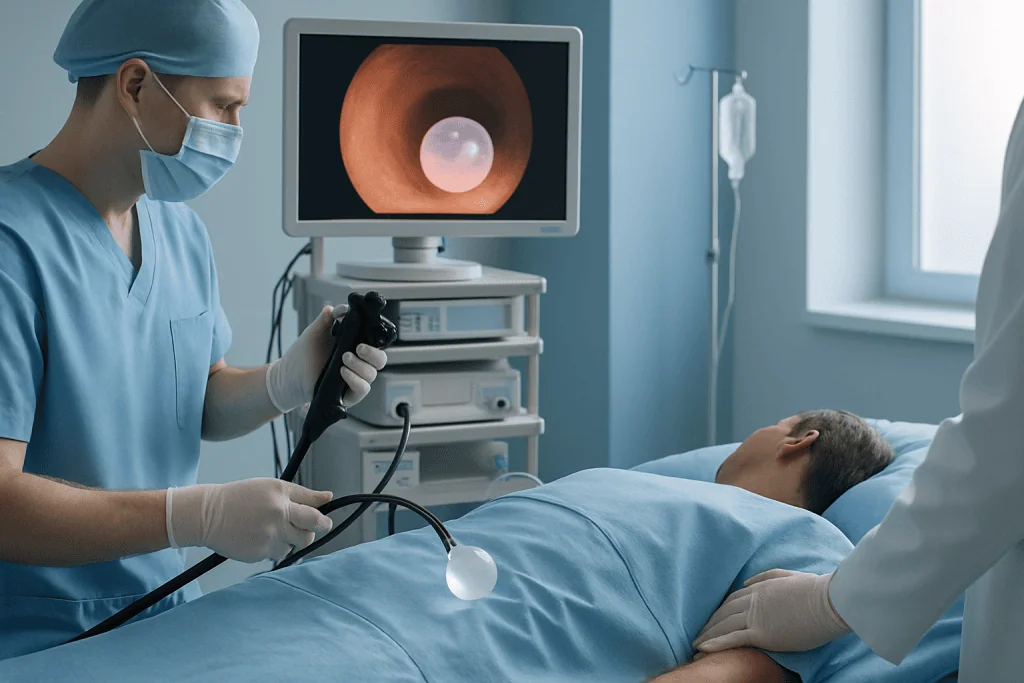
A gastric balloon is inserted through the mouth, without any incision, most commonly during an upper endoscopy under sedation. The physician first passes a thin, flexible tube with a camera through the mouth into the stomach and examines the oesophagus, the stomach and the first part of the small intestine. This inspection matters: it can reveal inflammation, ulcers, narrowing, masses or anatomical issues that would change or cancel the plan.
If the stomach is suitable, the deflated balloon is passed in and filled to the planned volume with sterile liquid or gas, chosen according to the balloon system and your anatomy. The procedure itself is usually brief, often completed in under an hour, although the full visit is longer because of preparation and recovery from sedation. Afterwards you are monitored while the sedation wears off. Nausea, cramping, bloating and a sense of pressure are common in the first days as the stomach adapts, and medication may be prescribed to reduce nausea, acid production and stomach spasm.
For selected swallowable systems, insertion means swallowing a capsule attached to a thin catheter. Imaging confirms the position before filling, then the catheter is removed. Some of these balloons pass naturally after a defined period; others still require planned endoscopic removal. Your physician will explain which approach applies to the system chosen for you.
Technology Used During Care
Gastric balloon treatment relies on modern diagnostic and procedural tools rather than surgery. High-resolution endoscopic imaging lets physicians evaluate the stomach lining and place or remove the balloon under direct visualisation. Anaesthesia monitoring supports comfort and safety during sedation. Laboratory testing identifies metabolic risks, anaemia, inflammation or organ-function concerns. Imaging is used with certain balloon types to confirm placement or investigate symptoms if they arise.
Follow-up may draw on body composition analysis, digital nutrition tracking, remote consultations and structured clinical monitoring. None of these tools replaces commitment. What they do is help the care team adjust nutrition, hydration, medication and activity recommendations to your actual progress rather than a generic plan.
Removal of the Balloon
The balloon is temporary and must be removed at the planned time, unless it is a system specifically designed to empty and pass naturally. For endoscopic removal, you are sedated, the physician inserts an endoscope, deflates the balloon and withdraws it through the mouth with specialised instruments. Removal is scheduled in advance because keeping a balloon in place longer than recommended increases risk.
The period after removal deserves as much attention as the placement. Some patients feel appetite return as stomach capacity does. Continued nutritional follow-up, physical activity and behavioural strategy are what preserve the progress made during treatment. The patients who do best generally used the balloon months to practise a sustainable routine, not to lean on the device alone.
How Risky Is a Gastric Balloon?
For well-selected candidates, a gastric balloon is generally considered a lower-risk intervention than bariatric surgery, because there are no incisions and no permanent anatomical change, but it carries real, if uncommon, risks, and honest information includes them. The most frequent problems are early and temporary: nausea, vomiting, cramping and reflux in the first days as the stomach adapts. Medication usually controls these, and they settle for most patients within the first week or two.
A minority of patients cannot tolerate the balloon despite medication and supportive care, and in those cases early removal is the correct decision rather than a failure. Rare complications include ulceration of the stomach lining, balloon deflation, migration of a deflated balloon and, very rarely, bowel obstruction, one reason removal dates are fixed in advance and never left open-ended. Dehydration in the early days is a practical risk if fluids are not managed carefully, which is why the staged liquid diet and hydration targets matter.
Risk is also managed before placement, not just after. The pre-procedure endoscopy screens for ulcers, severe reflux disease and significant hiatal hernia, conditions that would make the balloon unsafe or poorly tolerated. Before discharge, your team explains which symptoms need prompt medical review and how to stay in contact during the treatment period, which is especially relevant if you will be following up across time zones.
Recovery Timeline After Gastric Balloon Placement
Recovery varies from patient to patient, but most people follow a recognisable staged pattern as the stomach adapts and eating gradually advances. Use the timeline below as orientation, not a schedule: your own team’s instructions always take precedence over any general table.
| Time Period | What Patients Can Expect |
|---|---|
| Day 1 | You may feel nausea, cramping, bloating, pressure or fatigue after sedation. Clear liquids are usually started slowly, and medications may be used to control symptoms. |
| First Week | The stomach adapts to the balloon. Nausea and discomfort often improve over several days. The diet usually progresses from liquids to thicker fluids or soft foods under medical guidance. |
| First Month | Most patients are eating small, structured meals. Nutrition counselling focuses on protein intake, hydration, avoiding high-calorie liquids and recognising fullness cues. |
| During Balloon Therapy | Weight loss is monitored, activity is gradually increased and the care plan is adjusted. Follow-up helps address reflux, intolerance, constipation, food choices or plateaus. |
| After Removal | Appetite may increase, so maintenance planning becomes essential. Continued follow-up supports long-term habits and reduces the risk of weight regain. |
| Longer Term | Durable results depend on sustained nutrition, movement, sleep, stress management and medical care for obesity-related conditions. |
Two practical points sit behind this table. First, the early days are usually the hardest; patients who know that in advance cope with them far better than patients who expected nothing. Second, the calendar’s most important entry is the removal date, and the weeks that follow it, when the habits built during treatment are tested without the device’s help.
Benefits of Gastric Balloon Treatment
The benefits of a gastric balloon are greatest when the device is combined with medical supervision, nutrition planning and long-term behaviour change. On its own, it restricts volume for a period. Within a structured programme, it can do considerably more.
| Benefit | What It Means for You |
|---|---|
| Non-surgical approach | The balloon is placed without incisions and without permanently changing the stomach or intestines, which may be suitable for patients who want a less invasive option. |
| Earlier fullness with smaller meals | Because the balloon occupies space in the stomach, many patients feel satisfied with reduced portions, especially during the active treatment period. |
| Structured period for lifestyle change | The months with the balloon can help patients practise new meal timing, portion control, hydration habits and activity routines with professional guidance. |
| Potential improvement in weight-related risks | Weight reduction may support better blood sugar, blood pressure, cholesterol, fatty liver markers, sleep quality and mobility, depending on the individual patient. |
| Temporary and reversible treatment | The balloon is removed after the planned period, making it different from bariatric operations that permanently alter digestive anatomy. |
| May support readiness for other care | For selected patients, weight loss before another procedure may help reduce operative risk or improve eligibility for planned treatment. |
What Influences a Good Result?
The outcome of gastric balloon treatment depends on several factors, and the first is proper patient selection. A balloon works best when your body mass index, digestive anatomy, medical history, eating pattern and expectations align with what a temporary device can realistically provide. Patients who expect the balloon to do all the work tend to be disappointed. Patients who treat it as a structured tool for changing behaviour are better positioned for meaningful, lasting progress.
Nutrition is the single most important controllable factor. The balloon restricts volume, but it does not improve food quality on your behalf. High-calorie liquids, frequent snacking, sweets, alcohol and soft processed foods can undermine the benefit, because they pass the stomach more easily or add calories without triggering fullness. A successful plan emphasises adequate protein, vegetables as tolerated, fibre, measured portions, slow eating and consistent hydration, practised until they no longer require effort.
Physical activity matters too, but it must be realistic rather than aspirational. Many patients begin with walking and gradually add resistance training or supervised exercise as weight, stamina and joint comfort improve. Preserving muscle during weight loss is important. If you have knee, hip or back pain, a tailored activity plan is usually safer and more sustainable than a generic exercise programme copied from someone else’s circumstances.
Medical follow-up affects both safety and results. Early nausea, vomiting, reflux, dehydration or constipation should be addressed promptly rather than endured. Clear, ongoing communication with the clinical team matters most for patients who travel internationally and follow up across time zones, which is why the follow-up structure should be agreed before placement, not improvised afterwards.
Behavioural factors carry equal weight. Sleep deprivation, stress, emotional eating, shift work, depression, anxiety and social pressures can all interfere with weight-loss maintenance. Some patients benefit from psychological or behavioural support, particularly with a long history of weight cycling or eating in response to emotion. A gastric balloon reduces stomach capacity; it cannot remove the emotional and environmental drivers of eating. Naming those drivers during the treatment period is part of the work.
Finally, the removal phase should be planned from the beginning. The months after removal are when the habits built during treatment must stand on their own. Ongoing medical nutrition therapy, periodic weight monitoring and concrete strategies for travel, restaurants, holidays and stressful periods all help preserve results. For some patients, weight-management medication or another intervention may be considered afterwards if the treating physician judges regain risk to be high.
How much weight can you lose with a 6-month gastric balloon?
There is no single honest number, because results vary widely with starting weight, the balloon system used, and, above all, how closely the nutrition and activity plan is followed during and after treatment. Clinics that advertise a fixed figure or a promised result are describing their marketing, not your physiology. What can be said fairly: weight loss with a balloon is typically gradual, tends to be most pronounced in the earlier months while the restriction feels strongest, and is discussed in realistic, personalised terms during your assessment, once your physician knows your starting point, health profile and goals.
Do people keep weight off after a gastric balloon?
Some do and some regain, and the difference lies mostly in what happens after removal, not during treatment. Once the balloon is out, stomach capacity returns and appetite often rises with it. Patients who used the balloon period to embed new meal patterns, protein-forward eating, regular movement and honest self-monitoring hold their results far more often than patients who relied on the restriction alone. Continued follow-up, whether local or remote, is one of the strongest practical supports for maintenance, which is why a credible programme plans it before placement rather than mentioning it at discharge.
Why Acting Early Matters
Weight-related health issues tend to progress gradually. Blood pressure creeps up, blood sugar becomes harder to control, fatty liver disease advances, joint discomfort limits movement. As activity declines, weight gain becomes harder to reverse: a cycle that is easier to interrupt early than late.
For some patients, delay means more rounds of dieting, frustration and regain. For others, it affects eligibility for fertility treatment, orthopaedic surgery or other medical care. When excess weight is contributing to sleep apnoea, reflux, diabetes risk or cardiovascular strain, a supervised weight-loss plan has value well beyond appearance.
Acting early does not mean every patient should have a gastric balloon. It means understanding your options before the risks compound. A physician may recommend lifestyle therapy, medication, a balloon, bariatric surgery or a combination in sequence. The sensible time to seek advice is when weight is affecting your health, daily life or future medical plans, and self-directed efforts have not produced durable results.
There is also risk in choosing an intervention without proper evaluation. An undiagnosed ulcer, severe reflux, a significant hiatal hernia or an eating disorder can make balloon placement unsafe or ineffective. Early evaluation by a qualified team lets these issues be found and managed appropriately, rather than discovered the hard way.
Gastric Balloon Cost: What You Are Actually Paying For
Questions about gastric balloon cost are among the most common searches around this treatment, and they deserve a straight answer about structure even where a single price would be misleading. This page quotes no figure, deliberately: pricing depends on individual assessment, and any number printed here would be wrong for most readers.
How much does a gastric balloon cost?
The honest answer is that it varies, with the balloon system chosen, the planned duration, the depth of pre-procedure assessment, the sedation and endoscopy setting, and the length and intensity of follow-up. Much of the cost gastric balloon programmes quote reflects the care wrapped around the device rather than the device alone: endoscopic evaluation, anaesthesia, nutrition consultations across the treatment period, monitoring visits and the removal procedure itself.
When you compare stomach balloon cost quotes between providers, compare inclusions rather than headline numbers. Ask whether the quote covers the initial endoscopic assessment, the placement and the removal; whether dietitian follow-up is included and for how long; what happens financially if you cannot tolerate the balloon and it must come out early; and which tests or consultations would be billed separately. A cheap headline price with thin follow-up is usually the more expensive option in real terms. For a broader picture of expenses medical travellers overlook, see Medical Travel Budget for Turkey: Hidden Costs Patients Often Miss.
Plans can also change after assessment: an endoscopic finding, an additional test, a different balloon system than first discussed. It is reasonable to ask, before you commit, exactly how such changes would be communicated and priced. Acibadem’s approach to this is set out in how we explain possible additional costs if your treatment plan changes.
Is a gastric balloon covered by insurance?
Usually not, though it depends on your policy and your country. Questions about insurance gastric balloon coverage rarely return a simple answer, because many insurers classify the balloon as an elective procedure and exclude it, while some consider it only when specific medical criteria are documented. The only reliable route is to read your policy and put the question to your insurer in writing before you plan anything, ideally with a medical report describing the indication.
Travel insurance is a separate matter again: standard policies generally cover emergencies, not planned treatment abroad, and the distinction catches patients out. Before travelling, it is worth understanding what travel insurance covers and what it does not for treatment in Turkey, so there are no assumptions in your budget that a policy will not honour.
Having a Gastric Balloon in Turkey: How International Treatment Is Organised
If you are considering a gastric balloon in Turkey, the practical question is not only whether the procedure is available, it widely is, within hospital-based programmes, but how a short procedure fits into a treatment relationship that lasts months. A typical international pathway runs as follows:
- Remote review before travel. You share medical records, medication lists, previous endoscopy reports if you have them, and recent laboratory results, so physicians can assess suitability in principle before you book flights.
- Assessment on arrival. In-person evaluation, blood tests and, where indicated, upper endoscopy confirm that placement is safe and sensible. This step can change the plan: that is its purpose.
- Placement. Usually an outpatient endoscopic procedure under sedation, completed in under an hour, followed by monitored recovery.
- Early adaptation nearby. The first days bring the most nausea and the highest dehydration risk, so teams generally prefer you to remain in the area for a short period after placement rather than flying immediately. Your physician confirms when you are fit to travel.
- Follow-up from home. Nutrition guidance and monitoring continue remotely, with your progress reviewed across the treatment period.
- Return for removal. Endoscopic removal is scheduled in advance, and the maintenance plan for the months afterwards is agreed before you leave.
Plan the calendar around two trips for most balloon systems, placement and removal, plus a buffer of days after placement before flying. Ask in advance how remote follow-up will work in practice: who you will speak to, through which channel, in which language, and how quickly. A balloon placed abroad without a working follow-up arrangement is a device without a programme, and the programme is where the results come from.
Bring practical matters into the plan early: a companion for the procedure day if possible, accommodation within reasonable reach of the hospital for the adaptation days, and clarity about what your travel policy would and would not cover during the trip. Documentation matters too: a written medical summary, the balloon system details and the planned removal date are things your doctor at home will want on file, and they are far easier to collect before departure than afterwards.
Why International Patients Choose Acibadem for Gastric Balloon Treatment
For patients travelling from Europe, the Middle East, the United States or elsewhere, choosing where to have a gastric balloon involves more than confirming the procedure is on a hospital’s list. The experience depends on accurate assessment, safe endoscopic practice, clear communication, aftercare planning and the ability to coordinate medical travel responsibly.
At Acibadem, gastric balloon treatment takes place in hospital settings where patient safety, infection control, anaesthesia standards and clinical processes are formally organised, relevant for a procedure that looks simple but still requires careful evaluation, sedation planning, endoscopic skill and prompt management of side effects when they occur.
Care is coordinated by physicians experienced in gastroenterology, bariatric medicine, general surgery, endocrinology and nutrition, drawn in as each patient’s situation requires. Not everyone needs every specialist, but access to a multidisciplinary structure matters: if you have diabetes, reflux disease, fatty liver disease, sleep apnoea, prior surgery or complex medication needs, your plan can be reviewed from more than one clinical perspective, and multidisciplinary discussion is used where complex cases need broader input.
The diagnostic pathway supports careful selection rather than assuming it. Endoscopic evaluation can identify inflammation, ulcers or anatomical concerns that change the plan; laboratory and metabolic assessment clarifies risk and shapes nutrition advice; and when cardiology, pulmonology or endocrinology review is needed, it can usually be coordinated within the same hospital network rather than referred out.
International patient services carry the practical load. Acibadem International supports patients with appointment scheduling, medical record transfer, interpretation across many languages, airport and hospital coordination, accommodation guidance and communication with clinical departments, structure that makes an unfamiliar health system considerably easier to navigate.
Personalised planning matters more for a balloon than its simplicity suggests, because patients differ so much in eating habits, work demands, travel schedules and follow-up needs. A patient flying home soon after placement needs clear instructions on hydration, medication and how to reach the care team; a patient staying longer has more in-person follow-up; a patient with diabetes needs careful medication review by the treating physician as food intake changes. And where testing reveals reflux disease, insulin resistance, thyroid dysfunction or a liver concern, these are addressed rather than ignored. When a balloon is not the best choice, physicians say so and discuss alternatives, medical weight management or bariatric surgery where appropriate. A responsible recommendation rests on suitability, not on performing a procedure.
Making the Decision
A gastric balloon can be a valuable option for selected patients who need medically supported weight loss but are not ready for, or do not require, bariatric surgery. It offers a temporary reduction in stomach capacity and a structured opportunity to change eating patterns. The best results come from a clear sequence: careful evaluation before placement, skilled procedural care, nutrition support throughout treatment, and a maintenance strategy that begins before the balloon comes out.
If you are weighing this treatment abroad, the first step is not the procedure itself. It is a thoughtful medical review of your weight history, health risks, previous treatments, expectations and travel practicalities: the kind of review that can also conclude a balloon is not right for you, and say so. Judge any programme by whether it plans the months after removal as carefully as the day of placement. With realistic expectations and that structure in place, a gastric balloon can become part of a practical, medically guided path toward better weight control and better health.
Preparation
- Before gastric balloon placement, patients are evaluated by a bariatric team and may need blood tests, endoscopy assessment, and anesthesia review. Eating and drinking are usually restricted for several hours before the procedure. Current medications and medical conditions should be discussed with the doctor in advance.
Aftercare
- After placement, patients start with liquids and gradually progress to soft and then regular foods under dietitian guidance. Nausea, cramps, or reflux may occur during the first few days and are usually managed with medication. Regular follow-up is important to monitor weight loss, nutrition, and balloon removal timing.
Frequently Asked Questions
What affects the cost of a gastric balloon?
Cost is influenced by the balloon type, placement method, hospital or clinic setting, specialist fees, pre-procedure tests, sedation needs, dietitian support, follow-up visits, and whether removal is included. Travel and accommodation can also affect the overall budget for international patients.
How can I get a personalised quote from Acibadem?
You can request a free consultation by sharing your medical history, weight management goals, previous stomach or oesophageal conditions, current medications, and any relevant test results. The clinical team can then review suitability and provide a personalised care plan and quote.
Does a gastric balloon package include follow-up care?
Package contents vary by provider. A comprehensive package may include assessment, procedure coordination, early monitoring, nutrition guidance, and removal planning when required. It is important to confirm exactly what is included before booking.
Is the cheapest gastric balloon option always the best choice?
Not necessarily. Patients should consider specialist experience, safety standards, endoscopy facility quality, emergency support, follow-up access, dietitian involvement, and clear communication, not only the headline fee.
Will I need extra tests before the procedure?
A specialist may request blood tests, endoscopic evaluation, imaging, or other checks depending on your history and symptoms. These tests help confirm whether gastric balloon treatment is safe and suitable for you.
Is this information medical or financial advice?
No. This is general educational information. Final suitability, treatment planning, and costs should be confirmed after specialist assessment and a personalised consultation.
Medically reviewed by the Acıbadem International Medical Board September 13, 2026
See our medical review board →
Update history
- PublishedJune 8, 2026
- Medical review approvedSeptember 13, 2026
- Last content updateSeptember 12, 2026
References1
- Weight Loss Surgery medlineplus.gov
Trusted care for international patients
Gastric balloon costsledger-based guide ranges, or browse the full Turkey Medical Price Index.
From the Acibadem Blog

Gastric Balloon vs Gastric Sleeve: Temporary Device or Surgery, and How Doctors Compare Them
A gastric balloon is a temporary, saline-filled device placed in the stomach through the mouth and usually removed after about six months, while a…