Impetigo Treatment
Impetigo is a contagious bacterial skin infection treated with hygiene measures and topical or oral antibiotics. Dermatology assessment helps confirm diagnosis, prevent spread, and reduce complications.
Quick answer
Impetigo is a contagious bacterial infection of the skin's outermost layers, usually caused by Staphylococcus aureus or Streptococcus pyogenes. It produces sores that weep and dry into honey-coloured crusts, or larger fluid-filled blisters. Treatment combines gentle skin cleansing with prescription topical antibiotics, and oral antibiotics when the infection is widespread, recurrent or spreading quickly.
Impetigo: A Common, Contagious Skin Infection Explained
Impetigo is a contagious bacterial infection of the uppermost layers of the skin. It causes sores that break open, weep and dry into yellow-brown crusts, most often around the nose and mouth, and it spreads easily through direct skin contact and shared items such as towels or clothing. Children between preschool and early school age are affected most often, but adults develop impetigo too, particularly athletes, people with eczema, and anyone living or working in close-contact environments.
The infection can appear suddenly: a small red spot near a child’s nose, a blister on an arm, or a crusted patch that seems to travel from one area of skin to another within days. For many families, the worry is not only the rash itself. It is how contagious the infection is, whether it will leave marks, and how to stop it passing to siblings, classmates, teammates or other close contacts. Those are reasonable questions, and this page answers them as plainly as the evidence allows.
Although impetigo is usually a treatable infection, it deserves careful attention. It is uncomfortable, visible and socially awkward, especially for children and adolescents. It is also easy to confuse with other skin problems, eczema flare-ups, cold sores, fungal infections, allergic rashes, insect bites, or the early stages of deeper bacterial infection. A dermatology assessment confirms the diagnosis, matches the treatment to the extent of the infection, and reduces the chance of spread or recurrence. At Acibadem, impetigo care combines clinical evaluation, evidence-based antibiotic use, hygiene guidance and patient education, so that the visible lesions clear and the household understands how to avoid a second round.
One small practical note: the name is frequently misspelt onlineiptego is a common search variant, but the condition behind the spelling is the same, and so is the care it needs.
What is impetigo?
Impetigo is a superficial bacterial infection of the epidermis, the skin’s outermost layer. It is most often caused by Staphylococcus aureus or Streptococcus pyogenes, sometimes by both together. Doctors describe it as primary when the bacteria invade otherwise healthy skin through a minor break, and secondary when the infection develops on skin already damaged by another condition, such as eczema, scabies or an insect bite. There are two main clinical forms: non-bullous impetigo, the crusted type that accounts for the majority of cases, and bullous impetigo, which produces larger fluid-filled blisters. Because the infection sits in the top layers of the skin, it usually heals without deep scarring once treated, although temporary colour change at the site is common while the skin settles.
What causes impetigo?
Impetigo is caused by bacteria, usually Staphylococcus aureus or Streptococcus pyogenesentering the skin through tiny breaks. Those breaks can come from scratches, insect bites, shaving irritation, friction, minor cuts, or skin already inflamed by eczema or dermatitis. In some people, the same bacteria live harmlessly on the skin or in the nose most of the time; a scratch or a patch of broken skin gives them the opening they need. This kind of bacterial carriage helps explain why some individuals and households experience repeated episodes even after each infection appears to clear. Warm, humid weather, crowding and close physical contact all make transmission easier, which is why outbreaks cluster in nurseries, schools, sports teams and shared housing.
How do you get impetigo?
You get impetigo through contact, either directly with an infected person’s lesions, or indirectly through items they have touched. The main routes are:
- Direct skin-to-skin contact with sores or the fluid they release, common between siblings, playmates and contact-sport athletes.
- Auto-inoculation, where a person scratches an infected patch and then touches other parts of their own body, seeding new lesions on the arms, legs or trunk.
- Contaminated itemstowels, flannels, clothing, bedding, toys and sports equipment can carry bacteria from one person to another.
- Broken skin from any cause, which lowers the barrier the bacteria must cross. People with eczema are at particular risk because scratching creates repeated small entry points.
This is why treatment always pairs medication with practical infection-control steps: short nails, regular handwashing, separate towels, and covering draining lesions where advised.
Impetigo Symptoms: What to Look For
Impetigo symptoms depend on which form of the infection is present, but crusted sores, fragile blisters and itching are the common threads. Non-bullous impetigo, the classic type, begins as small red spots or thin-roofed blisters that break open quickly, weep, and then dry into a crust. The lesions often cluster around the nose and mouth but can appear on the cheeks, arms, legs or anywhere the skin has been scratched or broken. Itching is common, and scratching is precisely how the infection spreads to new sites, which is why a single spot can become several within days.
What does impetigo look like?
The impetigo rash typically starts as small red sores or blisters that rupture and develop a distinctive yellow-brown, honey-coloured crustthe single most recognisable feature of the infection. Around the crusts, the skin may look red or irritated. Lesions vary from a solitary patch a centimetre or two across to multiple scattered clusters. When crusts are lifted or soften in water, the skin beneath often looks raw, moist and shiny rather than deeply wounded, reflecting how superficial the infection is. In bullous impetigo the picture is different: intact blisters filled with clear or cloudy fluid, which later rupture and leave a thin rim of skin around a glazed surface.
Bullous impetigo
Bullous impetigo is the blistering form of the infection, caused by particular strains of Staphylococcus aureus that release toxins which loosen the bonds between skin cells, allowing fluid-filled blisters to form. These blisters tend to be larger and more fragile than the early lesions of non-bullous impetigo, and they appear more often on the trunk, in skin folds, in the nappy area and on the limbs. When they rupture, they leave a thin, shiny surface or a light crust rather than the thick honey-coloured crust of the classic form. Bullous impetigo is more common in infants and very young children, and in this age group medical review is especially important, because widespread blistering in a baby needs careful assessment to rule out more extensive toxin-mediated skin conditions.
| Feature | Non-bullous impetigo | Bullous impetigo |
|---|---|---|
| Typical appearance | Small sores that rupture and form honey-coloured crusts | Larger fluid-filled blisters that rupture, leaving a thin, shiny surface |
| Common locations | Around the nose and mouth, cheeks, arms, legs | Trunk, skin folds, nappy area, limbs |
| Usual bacteria | Staphylococcus aureus or Streptococcus pyogenes | Toxin-producing strains of Staphylococcus aureus |
| Typical age group | Preschool and early school age, but any age | More often infants and very young children |
What can be mistaken with impetigo?
Cold sores, eczema flares, fungal infections such as ringworm, allergic contact dermatitis, insect bites, chickenpox, scabies and early cellulitis can all be mistaken for impetigo, and impetigo can be mistaken for them. Cold sores around the mouth are the most frequent confusion in that location, because both crust as they heal; the difference matters because cold sores are viral and antibiotics will not help them. Eczema that has become infected can look almost identical to secondary impetigo, and in practice the two often coexist. A deeper form of streptococcal infection called ecthyma produces punched-out ulcers under thick crusts and needs a different level of treatment. The distinction is not academic: steroid creams, antifungal products or home remedies used on the wrong diagnosis do not treat the bacteria and can sometimes make the picture worse. This is why examination by a clinician, and, where the presentation is atypical or recurrent, a skin swab, is the reliable route to the right treatment rather than guesswork at the pharmacy shelf.
Is Impetigo Contagious?
Yes, impetigo is contagious, and readily so. The bacteria are present in the sores and in the fluid they release, so anything that touches a lesion can carry the infection: fingers, towels, pillowcases, clothing, toys and sports gear. Transmission is most efficient between people in close, repeated physical contact, which is why the infection circulates in families, nurseries, schools and contact-sport teams. A person remains contagious while lesions are active and uncovered; contagiousness falls once effective antibiotic treatment is under way and draining lesions are covered, though the exact timing for returning to shared settings should be confirmed with the treating physician and local school or club policy.
How contagious is impetigo?
Contagious enough that a single untreated case can seed a cluster in a classroom or household within days. The bacteria do not need a large wound to enter: a scratch, a graze, a patch of dry cracked skin or an insect bite is sufficient. Children are efficient spreaders for practical reasons: they touch their faces, scratch itchy lesions, share toys and sit close together. That said, impetigo is not spread through the air, and casual, brief contact with intact skin carries far less risk than direct contact with a lesion or a contaminated towel. Sensible hygiene, separate towels and flannels, regular handwashing, laundering bedding and clothing that has touched lesions, and keeping nails short, meaningfully limits spread while treatment takes effect.
Who May Need Impetigo Treatment?
Anyone with a rash suggestive of impetigo benefits from assessment, especially if the rash is spreading, painful, recurring, or affecting a child. Impetigo is most common in children between preschool and early school age, but adults develop it as well. Athletes in close-contact sports, people with eczema, individuals in shared living environments, and those in warm or humid climates carry higher risk. In adults, impetigo often follows shaving irritation, minor skin injury, cosmetic procedures or occupational skin damage.
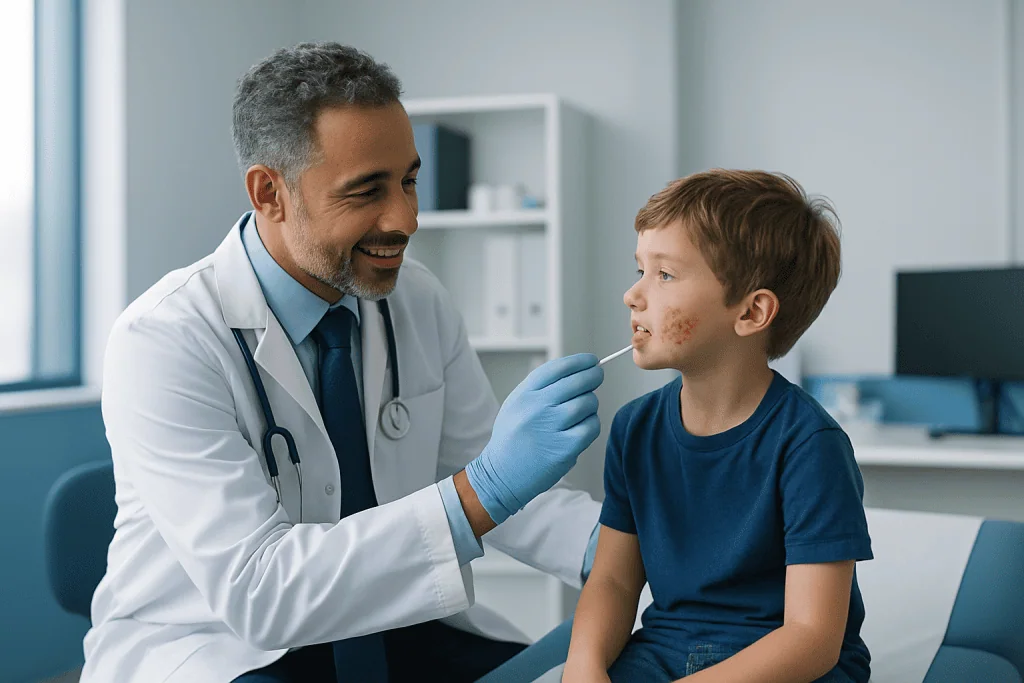
Diagnosis is usually clinical: an experienced dermatologist can often identify impetigo by examining the lesions and taking a focused history. The doctor will ask when the rash started, whether it is spreading, whether other household members have symptoms, and whether there has been recent eczema, insect bites, trauma, shaving, sports contact or previous skin infections. A skin swab or bacterial culture is not needed for every case, but it becomes valuable when the infection is recurrent, severe, not responding to treatment, or when antibiotic-resistant bacteria are a realistic concern.
Certain features change the clinical picture. Fever, increasing pain, rapidly expanding redness, swelling, pus, red streaks tracking from a lesion, involvement near the eyes, or infection in a newborn or an immunocompromised person all suggest something beyond simple superficial impetigo. Doctors assess and treat these presentations differently, because they can indicate deeper infection or a need for closer monitoring.
There is also a human dimension worth naming. Visible facial lesions are socially difficult, particularly for children and teenagers, and some distress while the skin heals is normal. That distress usually settles as the lesions clear, and it is one more reason families value clear timelines and honest expectations from the treating team.
Conditions and Situations Impetigo Treatment Addresses
Impetigo treatment addresses bacterial infection confined mainly to the upper layers of the skin. The plan is adapted to the type of impetigo, the extent of involvement and the patient’s general health. It may be used for a single localised patch, multiple lesions across several body areas, or repeated outbreaks that point to bacterial carriage or ongoing exposure.
Common scenarios include non-bullous impetigo with crusted sores around the face; bullous impetigo with larger blisters on the trunk or in skin folds; secondary impetigo developing over eczema or dermatitis; infection following insect bites or minor cuts; and impetigo circulating among siblings, classmates, athletes or other close contacts. In each case the medical goal is the same, clear the bacteria, but the practical advice differs, because a toddler in nursery, a rugby player and an adult with chronic eczema face different exposure patterns.
Treatment may also form part of a broader dermatology plan when impetigo complicates another skin condition. Children with atopic dermatitis scratch intensely, creating repeated small breaks that let bacteria in. Treating the infection alone leaves the door open; the underlying eczema also needs attention if future episodes are to be reduced.
In recurrent cases, the dermatologist considers whether bacteria are being carried in the nose or on the skin, whether household items are re-seeding the infection, or whether close contacts have untreated lesions. The plan may then include hygiene strategies for the whole household, environmental cleaning, and targeted testing when clinically appropriate.
Impetigo Treatment: How the Infection Is Cleared
Impetigo treatment is the medical care used to eliminate the bacterial infection from the superficial layers of the skin. It usually combines three elements: careful skin hygiene, a topical antibiotic applied directly to the affected area, and, when the infection is extensive, spreading quickly or recurrent, oral antibiotics taken by mouth. The right combination depends on the number and location of lesions, the patient’s age, the presence of fever or spreading redness, and whether others in the household or school have similar symptoms. Good treatment is both medical and preventive: the medication clears the bacteria, and the hygiene measures stop them travelling.
How do you get rid of impetigo?
You get rid of impetigo by treating the bacteria with the right antibiotic, used correctly and for the full prescribed course, while limiting spread with straightforward hygiene. The typical sequence looks like this:
- Confirm the diagnosis. A clinician examines the lesions and history; a swab is added if the case is recurrent, severe or atypical.
- Cleanse gently. Crusts may be softened with warm water or saline compresses and carefully removed if the clinician advises it, so the medicine can reach the affected skin. Harsh scrubbing is avoided: it irritates the skin and spreads bacteria.
- Apply topical antibiotic to limited lesions, exactly as prescribed, usually after gentle cleansing.
- Add oral antibiotics when lesions are widespread, numerous, recurrent, hard to reach with a cream, or part of an outbreak.
- Follow hygiene measuresseparate towels, laundered bedding, short nails, regular handwashing, covered lesions where appropriate.
- Review if there is no improvement, at which point culture results can guide a change of antibiotic.
The most common reason treatment fails is stopping early because the skin looks better. Bacteria can persist after the crusts fade, and incomplete treatment invites relapse.
Can you get rid of impetigo in 24 hours?
No, and any product promising to clear impetigo in a day is overpromising. What treatment genuinely changes quickly is the trajectory: once effective antibiotics are under way and lesions are covered, contagiousness drops and new lesions become less frequent, often within the first days. Visible healing simply takes longer, because the skin surface has to repair itself after the infection is controlled. Crusts lift, redness fades and the surface closes over gradually. Attempting shortcuts, leftover antibiotics from a previous illness, undiluted antiseptics, or vigorous scrubbing, does not speed this up and can irritate the skin, mask the clinical picture or contribute to antibiotic resistance.
How to treat impetigo?
Impetigo is treated with prescription antibiotics, topical for limited disease, oral for extensive or stubborn disease, supported by consistent skin hygiene. What the patient and family do at home matters as much as the prescription itself: apply or take the medication exactly as directed, keep the affected skin clean, resist picking at crusts, and separate personal items until the lesions have healed. Equally important is what not to do. Steroid creams, antifungal products and improvised home remedies do not treat the bacteria that cause impetigo and can worsen matters when used without medical guidance. Decisions about any medication, including changes to treatments the patient already takes, belong with the treating doctor, who can weigh allergies, age, other conditions and local antibiotic resistance patterns.
How Impetigo Treatment Is Performed: From Assessment to Recovery
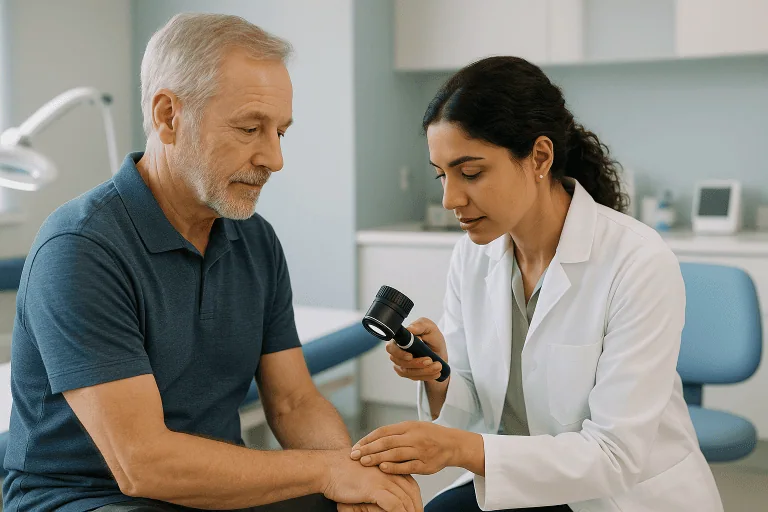
Care begins with a focused clinical assessment. The dermatologist examines the skin closely: the number, size, location and appearance of lesions, and the pattern of crusting, blistering, drainage and surrounding inflammation. This examination distinguishes impetigo from its look-alikes and establishes whether the infection is superficial or shows signs of deeper involvement, such as cellulitis.
Preparation is simple. Where possible, patients are asked not to apply cosmetic products, over-the-counter creams or antiseptics before the visit, because these alter the appearance of the rash. For children, parents are encouraged to bring a list of medications, allergy history, recent antibiotic use and information about school or daycare exposure. It also helps to mention recent travel, previous skin infections and any known antibiotic resistance concerns.
If the diagnosis is clear and the infection mild, treatment usually begins at the same visit. Gentle cleaning comes first: crusts may be softened with warm water or saline compresses and removed carefully if advised, helping topical medicine reach the affected skin. Topical antibiotic therapy then targets the bacteria at the surface while limiting unnecessary systemic medication. The exact product and duration depend on the patient’s age, allergies, local resistance patterns and clinical findings.
Oral antibiotics are recommended when impetigo is widespread, spreading rapidly, recurrent, associated with an outbreak, or impractical to treat topically, for instance, when lesions are numerous or awkwardly located. The choice of antibiotic reflects the likely bacteria, severity, allergy history and regional resistance considerations; where a culture has been taken, its results can refine the choice.
Technology in impetigo care is diagnostic and supportive rather than procedural. Magnified skin examination helps evaluate lesion morphology; clinical photography documents progress, which is particularly useful for tracking healing between visits; bacterial swabs and cultures identify the organism and its antibiotic sensitivities when needed. Electronic records and coordinated communication support continuity when more than one specialist is involved.
The visit itself is brief compared with surgical or hospital-based care, although more time may be needed for children, recurrent cases or patients with extensive skin disease. Nearly all impetigo is managed as outpatient care. Hospital admission is uncommon and reserved for signs of severe infection, systemic illness, very young age, immune compromise or complications requiring closer monitoring.
Recovery begins once effective treatment and hygiene measures are in place. Drainage, crusting and the appearance of new lesions typically reduce within the first few days, while visible healing follows more slowly: lesions dry, crusts lift, redness fades and the surface repairs. Picking at crusts delays this process and raises the chance of temporary discolouration or marks.
Return to school, daycare, sport or work depends on medical advice, local policy and whether lesions can be covered. In many settings, a person is considered much less contagious once appropriate antibiotic treatment has begun and draining lesions are covered, but the specific timing should be confirmed with the treating physician. Contact sports, swimming and shared equipment usually call for additional precautions until the lesions have healed or are no longer considered contagious.
Why Acting Early Matters
Early treatment shortens the period of discomfort, limits spread and lowers the risk of complications. Because impetigo travels via touch, towels, clothing, bedding, toys, sports gear and scratching, even a small lesion can become multiple areas of infection if left alone. Children spread it on themselves without realising, face to fingers, fingers to arms and legs.
Delay also puts other people at risk, which matters most in households with infants, elderly relatives, people with eczema or anyone with a weakened immune system. In daycare, school, camps and sports teams, one untreated case can seed a cluster.
Most impetigo stays superficial, but complications exist. The infection can extend deeper into the skin as cellulitis, which is typically more painful and involves warmth, swelling and spreading redness. Rarely, certain streptococcal infections are followed by kidney inflammation. These outcomes are uncommon, but they are part of the reason proper diagnosis and treatment are worth taking seriously rather than waiting to see whether the rash resolves on its own.
Finally, early assessment prevents wrong-turn treatment. Steroid creams, antifungal medications and home remedies do not address the bacteria causing impetigo and can sometimes aggravate the skin. A dermatologist can determine when impetigo is the primary problem and when another condition, eczema, allergic dermatitis, is the reason the skin broke down in the first place.
Benefits of Impetigo Treatment
Appropriate impetigo treatment offers both medical and practical benefits for patients and families.
| Benefit | What It Means for You |
|---|---|
| Clears the bacterial infection | Topical or oral antibiotics help eliminate the bacteria causing the lesions, allowing the skin to heal more predictably. |
| Reduces contagiousness | Effective treatment and hygiene measures lower the chance of spreading impetigo to family members, classmates, teammates or colleagues. |
| Relieves visible symptoms | Crusting, oozing, redness and irritation usually improve as the infection comes under control. |
| Helps prevent complications | Early care reduces the risk of deeper skin infection and helps identify warning signs that need further medical attention. |
| Addresses recurrence risks | Dermatology guidance can identify eczema, bacterial carriage, hygiene factors or close-contact exposure behind repeated episodes. |
| Supports safe return to daily life | Patients receive guidance on school, work, sport and contact precautions based on their condition and treatment plan. |
Recovery Timeline After Impetigo Treatment
Recovery varies with the extent of infection, the treatment used and any underlying skin conditions, but most patients improve steadily with appropriate care.
| Time Period | What Patients Can Expect |
|---|---|
| Day 1 | The dermatologist confirms the diagnosis, starts topical or oral treatment when indicated, and explains hygiene steps to reduce spread. |
| First Few Days | New lesions should become less frequent, drainage and crusting often begin to decrease, and itching or irritation may improve. |
| First Week | Many lesions dry and begin to heal. Medication continues as prescribed; scratching and picking at crusts are avoided. |
| First Month | The skin surface usually continues to normalise. Temporary redness or colour change may persist, especially in sensitive or darker skin types. |
| Longer Term | Prevention focuses on managing eczema or skin irritation, avoiding shared personal items, and addressing recurrent infection if it occurs. |
Factors That Influence Outcomes
A good outcome depends on accurate diagnosis, appropriate antibiotic selection, consistent medication use and careful hygiene. Most patients respond well when treatment targets the correct bacteria and starts before the infection becomes extensive. Several factors, however, affect how quickly and completely the skin recovers.
Extent of infection. A small patch around the mouth may respond quickly to topical therapy alone, while widespread lesions across several body areas usually need oral medication and closer follow-up. Bullous impetigo requires different clinical attention than a single crusted lesion, and surrounding cellulitis, fever or significant swelling changes the approach altogether.
Underlying skin health. People with eczema, dermatitis, scabies, insect bites or a habit of scratching carry more breaks in the skin barrier. Unless these triggers are managed, bacteria re-enter and the infection returns. Dermatologists therefore treat both the impetigo and the condition that let it develop.
Antibiotic resistance. If lesions do not improve as expected, a swab culture identifies the bacteria and shows which antibiotics are likely to work. Leftover antibiotics and non-prescribed creams are a poor substitute: they may be ineffective against the organism involved and contribute to resistance.
Adherence. Topical antibiotics must reach clean skin; oral antibiotics must follow the prescribed schedule even after symptoms improve. Handwashing, laundry, separate towels, trimmed nails and covered lesions sound trivial, but they are central to stopping spread, and they are the part of treatment entirely within the family’s control.
Age, immunity and environment. Infants, older adults and immunocompromised patients warrant more cautious assessment. Children in daycare, athletes in close-contact sports and people in shared housing may need additional prevention guidance, because their exposure does not end when the prescription does.
Preventing Impetigo From Coming Back
Prevention rests on protecting the skin barrier and interrupting the routes of transmission. Managing eczema and dry, cracked skin removes the entry points bacteria rely on. Keeping cuts, grazes and insect bites clean while they heal does the same. Within the household, separate towels and flannels, regular laundering of bedding and clothing that has touched lesions, and prompt attention to any new sores in family members all reduce the chance of the infection circling back. Where episodes keep recurring despite good hygiene, the dermatologist may investigate whether bacteria are being carried in the nose or on the skin of the patient or a close contact, and whether targeted measures for the household are worthwhile. Recurrent impetigo is rarely a mystery once the pattern of exposure is examined properly: it usually has an identifiable source that can be addressed.
Impetigo Care at Acibadem
Even a common skin infection feels more complicated when it appears at an awkward moment, before a planned procedure, during exam season, or in a household with a new baby or a vulnerable relative. Acibadem provides dermatology care within a hospital network whose clinical pathways are built around accurate diagnosis and clear communication.
When impetigo is straightforward, diagnosis is clinical and treatment begins promptly. When the presentation is atypical, recurrent, widespread or not responding as expected, laboratory testing identifies the responsible bacteria and guides antibiotic selection: an evidence-based approach that matters most for patients with recent antibiotic use, prior resistant infections or complex medical histories. For a contagious condition, infection-control awareness is part of the care itself: patients receive guidance not only on medication, but on limiting transmission at home, at school or work, and in other shared environments.
Although impetigo is usually managed by dermatology alone, collaboration is available when the case calls for it. Paediatricians are involved for infants and children; infectious diseases specialists advise on recurrent, resistant or complicated infections; other physicians contribute when diabetes, immune suppression, chronic wounds or another condition affects skin healing. This specialist-board culture supports careful decisions without adding complexity to simple cases.
Treatment planning is individual, because not every patient needs the same level of medication. A child with one small crusted patch, an athlete with multiple lesions, a patient with rapidly spreading infection and a patient with recurrent impetigo over eczema each need a different plan. Physicians weigh the clinical picture, allergies, age, household exposure and follow-up availability. Where a second opinion is sought, the review covers the history, lesion appearance, previous treatments and any existing culture results: the purpose being to clarify the diagnosis and refine the plan, not to repeat steps unnecessarily. Clear written instructions and coordinated follow-up help patients continue treatment correctly at home.
Moving Forward With Clear, Practical Care
Impetigo is common, contagious and often distressing because it sits on visible skin and moves fast. It is also, in the great majority of cases, a manageable infection: confirm the diagnosis, use antibiotics thoughtfully, protect the skin barrier, and follow the hygiene steps that stop transmission. With timely dermatology care, patients typically return to school, work, sport and everyday routines with sensible precautions, and with a realistic understanding of how to keep the infection from coming back.
Preparation
- Before the appointment, avoid applying unprescribed creams or antiseptics to the affected area unless advised. Keep lesions clean and covered, and note when symptoms began, fever history, and any recent contact with infected skin. Children should avoid school or close-contact activities until a doctor confirms when it is safe to return.
Aftercare
- Use prescribed topical or oral antibiotics exactly as directed and complete the full course. Wash hands often, keep sores covered, avoid scratching, and do not share towels, clothing, or bedding. Seek medical advice if redness spreads, fever develops, symptoms do not improve, or infections recur.
Frequently Asked Questions
What affects the cost of impetigo treatment?
The main factors are the dermatology consultation, whether laboratory testing is needed, the type of antibiotic prescribed, follow-up needs, and whether international patient services such as interpretation or appointment coordination are used.
Can I get a quote before travelling to Turkey?
Yes. You can request a free consultation by sharing photos of the affected area, symptom history, previous treatments, allergies, and any relevant medical information. A personalised quote can then be prepared based on the likely care pathway.
Is a laboratory test always required for impetigo?
Not always. Many typical cases are diagnosed clinically by a doctor. A swab or culture may be recommended if the infection is recurrent, severe, not improving, or if antibiotic resistance is a concern.
Does the cost change if oral antibiotics are needed?
It can. Oral antibiotics may add medication costs and may require closer follow-up, especially for widespread infection, recurrent cases, or patients with other health conditions.
What is usually included in an international dermatology visit for impetigo?
It may include dermatology assessment, diagnosis confirmation, treatment prescription, hygiene and contagion advice, pharmacy guidance, and follow-up recommendations. Exact inclusions vary by hospital and patient needs.
Is this information medical or financial advice?
No. This is general educational information. A dermatologist should confirm the diagnosis and treatment plan, and the hospital team can provide a personalised quote after reviewing your case.
Medically reviewed by the Acıbadem International Medical Board August 31, 2026
See our medical review board →
Update history
- PublishedJune 8, 2026
- Medical review approvedAugust 31, 2026
- Last content updateSeptember 8, 2026
Trusted care for international patients
From the Acibadem Blog

How Long Is Impetigo Contagious? When Children and Adults Can Return to School or Work
Impetigo is usually considered contagious until the sores have dried and crusted over, or until 24 to 48 hours after starting an effective antibiotic,…