Limb Lengthening
Limb lengthening is an orthopedic procedure that gradually increases bone length after a controlled bone cut. It may address limb-length discrepancy, deformity, or selected stature concerns.

Quick answer
Limb lengthening is an orthopaedic procedure that gradually increases the length of a bone. The surgeon cuts the bone, then slowly separates the segments with an external frame or an internal lengthening nail; new bone forms in the controlled gap. It treats limb-length differences, deformity and bone loss, and is used for elective height increase in selected adults. Treatment takes months, including structured rehabilitation.
Leg Lengthening Surgery: What It Is and What It Asks of You
Leg lengthening surgery is an orthopaedic procedure that increases the length of a bone gradually, using the body’s own ability to form new bone in a controlled gap. It is used to correct a limb-length difference, to rebuild bone lost to injury or infection, and, in carefully selected adults, to increase height. The lengthening itself happens over weeks or months, not in a single operation. The full treatment includes surgery, a daily lengthening schedule, a consolidation period while the new bone hardens, and months of structured physiotherapy.
This is not a small decision. The process affects how you walk, move, work, travel and sleep during recovery, and it asks more of your patience than almost any other elective orthopaedic treatment. The questions most patients start with are the right ones. Will I walk normally again? How painful is it? How long does treatment take? What can go wrong? And if you are researching limb lengthening in Turkey, how do you choose a hospital abroad where the plan is medically sound and the practicalities are manageable?
Limb lengthening is a highly specialised procedure. It requires precise planning, advanced imaging, careful surgical technique, structured rehabilitation and close follow-up over time. The surrounding muscles, nerves, blood vessels, joints and soft tissues must adapt safely as the bone lengthens, which is why successful treatment depends on the entire programme of care before, during and after surgery, not only on the operation itself. For some patients, lengthening improves alignment, gait, balance and function. For others, it reduces pain caused by unequal leg length, or corrects deformity after injury, infection, growth plate damage or congenital conditions.
At Acibadem, limb lengthening is approached as a complex orthopaedic pathway rather than a single procedure. Patients are evaluated by experienced orthopaedic specialists, with input from rehabilitation medicine, physiotherapy, radiology, anaesthesia, nursing and pain management when needed. For international patients, the medical plan is coordinated alongside travel, interpretation, documentation and follow-up planning; the practicalities of coming to Turkey for this treatment are covered in their own section further down this page.
What Is Limb Lengthening?
Limb lengthening is an orthopaedic treatment designed to increase the length of a bone gradually. It is most commonly performed in the legs, the femur, the tibia, or both, although the same biological principles apply in selected upper limb surgery cases. You may also see it described online as leg extending or height surgery. The clinical foundation is a process called distraction osteogenesis, which simply means growing new bone by slowly pulling two bone segments apart at a controlled rate.
How does leg lengthening surgery work?
Leg lengthening surgery works by cutting the bone in a carefully controlled way, an osteotomy, and then separating the two segments slowly, so that the body fills the widening gap with new bone tissue. The process has two main phases. The first is the distraction phase, when the bone is gradually lengthened through small daily adjustments, commonly around one millimetre a day divided into smaller steps, using either an external fixation frame or an internal lengthening nail. The second is the consolidation phase, when no further lengthening occurs and the newly formed bone hardens until it is strong enough to support normal activity. Both phases are monitored through clinical examination and imaging, because the rate matters: lengthen too fast and bone formation suffers while nerves and soft tissues are overstretched; lengthen too slowly and the bone may consolidate before the target length is reached.
Is limb lengthening surgery real?
Yes. Limb lengthening is an established orthopaedic technique with decades of clinical history, originally developed around external ring fixators and refined since with motorised internal nails. Specialist centres worldwide use it to treat limb-length differences, deformity, and bone loss after trauma or infection, and, more recently, for elective stature lengthening in adults. What is not real is the version sometimes implied by casual marketing: a quick operation followed by a short recovery. The biology cannot be hurried. Bone regenerates at its own pace, and the muscles, tendons and nerves around it need time and disciplined physiotherapy to adapt.
External fixator or internal lengthening nail?
Both methods are in current use, and neither is universally better. An external fixator is a frame outside the body, connected to the bone with pins or wires. It remains valuable in complex deformities, certain paediatric cases, infection-related problems, and situations where angulation, rotation or alignment must be corrected at the same time as length. An internal lengthening nail sits inside the bone canal and lengthens gradually through a controlled mechanism, avoiding the bulk and pin sites of an external frame. In some complex cases, a combined approach is used. The choice is not a matter of preference. It depends on skeletal maturity, bone quality, the amount of lengthening needed, the presence of deformity, prior surgeries, joint condition, soft-tissue flexibility, infection history, and your ability to participate in rehabilitation. The safest plan is the one that fits your anatomy and medical circumstances, not the one that photographs best.
Who May Need Leg Lengthening Surgery?
Leg lengthening surgery is considered when a bone is shorter than expected, when a limb-length difference causes symptoms, or when lengthening forms part of a broader deformity correction. In children and adolescents, a discrepancy may become more noticeable as growth continues. In adults, the problem may be longstanding, or may develop after trauma, joint replacement, tumour treatment, infection or previous surgery.
Symptoms vary. Some people notice that one trouser leg always seems longer, one hip sits higher, or walking takes extra effort. Others develop back pain, hip pain, knee discomfort, ankle strain or fatigue after standing. A visible limp, pelvic tilt, abnormal shoe wear or repeated joint irritation may also point to a clinically meaningful discrepancy. In athletes, even smaller differences can affect performance or contribute to overuse injuries, although not every difference needs surgery.
Diagnosis begins with a detailed history and physical examination. The orthopaedic team evaluates posture, gait, pelvic alignment, range of motion, joint stability, muscle strength, neurological function and the condition of the skin and soft tissues. The true limb-length difference is measured carefully, because apparent differences can also be produced by pelvic position, spinal curvature, joint contractures or foot deformities, and lengthening a bone will not fix a problem that lives elsewhere.
Imaging is central to planning. Standing full-length X-rays measure bone lengths and mechanical alignment from hip to ankle. CT, MRI or other imaging may clarify rotational deformity, joint condition, growth plate status, bone healing, previous implants or soft-tissue issues. In children, growth prediction helps determine whether operating now or later is wiser. And not every discrepancy warrants lengthening at all: small differences are often managed with observation, shoe lifts, physiotherapy or treatment of associated joint problems. Surgery is generally reserved for discrepancies that are functionally meaningful, expected to worsen, associated with deformity, or unlikely to respond to conservative measures. For stature lengthening, candidates are usually adults who have finished growing and are physically and psychologically prepared for a long treatment process.
Conditions Limb Lengthening Can Address
The most common indication is limb-length discrepancyone leg or arm shorter than the other. This may be congenital, developmental or acquired. Causes include growth plate injury, childhood infection, fractures that heal with shortening, bone tumours or tumour surgery, hip disorders, vascular malformations, and certain neuromuscular or skeletal conditions.
The second major indication is deformity correction. Bones can heal crookedly after fracture, grow at an angle after partial growth plate damage, or develop abnormal alignment from congenital conditions. Here, lengthening is combined with correction of angulation, rotation or translation. The objective is not simply a longer limb, but a more balanced mechanical axis, so that the hip, knee and ankle bear weight more evenly.
Limb reconstruction is also used after major trauma, particularly where bone has been lost to severe fracture, infection or previous operations. In selected cases, bone transport techniques based on the same distraction principles regenerate bone across a defect. These reconstructions are more complex, often prolonged, and demand careful infection control, sometimes with coordinated input from plastic and reconstructive surgery when soft-tissue coverage is needed.
In paediatric orthopaedics, lengthening may form part of treatment for congenital femoral deficiency, fibular hemimelia, hemihypertrophy, hemihypoplasia and other developmental differences. Planning in children is especially individualised, because remaining growth potential, joint stability, foot function and the family’s capacity for long follow-up all shape the best approach.
What is height surgery?
Height surgery is the informal name for elective stature lengthening, limb lengthening performed on structurally normal bones purely to increase standing height in adults who have completed growth. Medically, it is the same procedure as reconstructive lengthening, and it carries the same demands: an osteotomy, months of gradual distraction and consolidation, and sustained physiotherapy. Because it is elective and involves healthy bone, the threshold for proceeding should be higher, not lower. Ethical counselling, psychological readiness, realistic goals and a frank risk discussion are essential parts of the decision, and a responsible surgical team will sometimes conclude that the honest answer is not to operate.
How Limb Lengthening Surgery Is Performed
Treatment begins long before the day of surgery. The first stage is an in-depth evaluation: the surgeon reviews your medical history, prior imaging, previous operations, current symptoms and goals. For international patients, this often starts with remote review of medical records, X-rays, MRI or CT images, photographs, and, where appropriate, videos of walking, which allows a preliminary opinion before any travel is arranged.
At the in-person evaluation, measurements are confirmed. The team assesses gait, joint mobility, muscle flexibility, neurological status, skin condition and overall health. Laboratory tests, anaesthesia assessment and additional imaging are arranged as needed. In complex deformity, planning may include digital measurement of alignment and simulation of the correction. The surgeon discusses the intended amount of lengthening, the method, the treatment stages, weight-bearing limits, possible complications and the rehabilitation plan. Preparation may involve strengthening and stretching exercises, smoking cessation, nutritional optimisation, and clearing dental, skin or infection concerns before surgery. Practical arrangements matter too: mobility aids, wound care needs, physiotherapy access and follow-up imaging all need a home, or a hotel, that can accommodate them.
The operation itself takes place under anaesthesia in a theatre equipped for orthopaedic reconstructive surgery, and follows a defined sequence:
- Controlled incisions are made and the surrounding tissues protected.
- An osteotomy is performed at the planned site on the bone.
- For an internal method, a lengthening nail is inserted into the bone canal and fixed with screws. For an external method, pins or wires are placed through the bone and connected to a frame outside the limb.
- Where deformity correction is required, the bone segments are aligned according to the preoperative plan.
- Intraoperative imaging confirms bone position, implant placement and alignment before closure.
After surgery, you are monitored in hospital. Pain is managed with a structured plan, and the team watches for swelling, circulation changes, nerve symptoms, bleeding and early signs of infection. Physiotherapy usually begins early, safe transfers, walker or crutch use, joint motion, muscle activation and breathing exercises. Weight-bearing instructions depend on the fixation method, the bone involved and the surgeon’s assessment of stability.
Lengthening does not start immediately. A short waiting period lets early healing begin. Then the distraction phase opens: you or a caregiver may be taught to adjust an external fixator, or the internal nail is lengthened with a controlled external mechanism on a prescribed schedule. Frequent follow-up is the defining feature of safe lengthening. X-rays track the regenerate, the new bone forming in the gap, while the surgeon checks alignment, joint motion, nerve function, pain level, pin sites where a frame is used, and your progress in physiotherapy. The schedule, rehabilitation programme or weight-bearing status is adjusted as the picture evolves, and your team will ask you to report changes such as increasing pain, numbness, weakness, stiffness, fever, drainage or difficulty operating the device, because most problems are far easier to manage when caught early.
Once the target length is reached, consolidation begins. No further lengthening occurs, but the new bone must strengthen: a phase that often lasts longer than the distraction itself. Physiotherapy continues to preserve joint mobility, prevent contractures, maintain muscle strength and gradually rebuild gait. When healing is adequate, an external frame is removed; an internal nail may stay in place until removal is considered later. Timing rests on imaging, clinical stability and functional progress, not the calendar.
How long does limb lengthening surgery take?
The operation itself is usually completed in a few hours, though complex reconstructions take longer; the treatment as a whole is measured in months. The distraction phase lasts weeks to months depending on how much length is being gained, and the consolidation phase that follows is typically longer still. For a meaningful lengthening, most patients should plan for the better part of a year between the operation and a confident return to unrestricted daily activity, with physiotherapy running through most of it. Larger goals, both-leg procedures and staged corrections extend that horizon. Any timeline offered before your imaging has been reviewed is a guess.
Is Limb Lengthening Surgery Safe?
Limb lengthening is an established procedure with real, manageable risks, and the risks scale with ambition. Possible complications include pin-site irritation or infection with external frames, deeper infection, nerve stretch or irritation, muscle tightness, joint stiffness and contracture (particularly the knee and ankle during leg lengthening), delayed or poor bone formation in the gap, premature consolidation, device-related problems, blood clots, and fracture of the new bone after frame removal. Some patients need additional procedures or a longer rehabilitation than first planned. What keeps the process safe is not luck: it is careful patient selection, a realistic lengthening target, a controlled distraction rate, frequent imaging and examination, consistent physiotherapy, and a patient who reports problems early rather than pushing through them.
Is 2 inch limb lengthening safe?
A goal of around two inches within a single bone segment sits at the more conservative end of lengthening, and modest targets like this are generally the ones surgeons are most comfortable planning, because the soft tissues tolerate smaller stretches better. That does not make it trivial. Even a modest lengthening involves an osteotomy, months of distraction and consolidation, and committed rehabilitation, and no lengthening is without risk. Whether it is a sensible plan for you depends on your bone quality, joint condition, general health and capacity to complete physiotherapy, which is precisely what a specialist evaluation exists to determine.
Can you gain 7 inches from limb lengthening?
Not from a single procedure. Seven inches is roughly eighteen centimetres, far beyond what one bone segment can safely provide; a target of that scale would mean staged lengthening of both femurs and both tibias across separate operations spread over years. Each stage adds its own recovery, its own risks of contracture, nerve problems, joint overload and compromised bone quality, and the cumulative burden on muscles and tendons grows with every centimetre. Most specialists counsel far more modest goals, and anyone promising extreme gains casually deserves your scepticism. The honest question is not the maximum the technique can theoretically deliver, but the amount your body can gain while keeping the function you already have.
Why Acting Early Matters
Timing influences both the complexity of treatment and the quality of recovery. In children, a limb-length discrepancy may increase as growth continues. Early assessment allows the team to estimate the future difference and consider the full range of options, observation, growth modulation, epiphysiodesis, shoe lifts, deformity correction, lengthening, or staged treatment. Waiting too long can close off the less invasive options and allow secondary problems to take root.
In adults, a significant discrepancy or deformity places uneven stress on the spine, hips, knees, ankles and feet. Over time the body compensates, tilting the pelvis, bending the knee, adjusting the foot, altering the walking pattern, and those compensations bring pain, fatigue, muscle imbalance, joint overload and shrinking activity tolerance. Correcting the underlying structure earlier may help prevent some of these secondary effects from becoming entrenched. Timeliness matters most when deformity is progressing, when a child is still growing, when a joint is unstable, or when an old injury has healed with malalignment; in post-traumatic cases, untreated shortening can make later reconstruction harder, and where infection, nonunion or bone loss is present, early specialist evaluation guides staged treatment before things deteriorate further.
Acting early does not mean rushing into surgery. A thoughtful consultation can clarify whether surgery is necessary at all, whether alternatives fit better, and what timing suits your medical condition, family responsibilities, school or work schedule and travel logistics.
Potential Benefits of Limb Lengthening
What you stand to gain depends on why you are being treated, how much correction is needed, and how fully you take part in rehabilitation. For appropriate candidates, the realistic benefits look like this:
| Benefit | What It Means for You |
|---|---|
| Improved limb balance | A more equal limb length may reduce limping, pelvic tilt, and the need for large shoe lifts in selected patients. |
| Better alignment | When deformity correction is included, weight passes through the joints more evenly, which can improve mechanics during standing and walking. |
| Reduced compensatory strain | Correcting a meaningful discrepancy may lessen stress on the lower back, hips, knees, ankles and feet over time. |
| Functional improvement | Walking, standing, climbing stairs and daily activities may become easier after healing and rehabilitation. |
| Reconstruction after injury or disease | In complex cases, lengthening principles can restore bone length after trauma, infection, tumour surgery or previous bone loss. |
| Personalised stature goals in selected adults | For carefully evaluated adults seeking height increase, treatment may address a personal goal, provided expectations and risks are clearly understood. |
Recovery Timeline After Limb Lengthening
Recovery varies widely between patients and techniques, but it always follows the same staged logic: hospital care, gradual lengthening, consolidation of new bone, and rehabilitation running throughout.
| Time Period | What You Can Expect |
|---|---|
| Day 1 | Monitoring after anaesthesia, pain control, circulation and nerve checks, early movement, and first instruction on safe mobility with assistance. |
| First week | Hospital recovery or early outpatient transition, wound care, physiotherapy, mobility training, and preparation for the lengthening phase. |
| Lengthening phase | Gradual daily lengthening on the surgeon’s schedule, regular imaging, and close monitoring of bone formation, joint motion, pain and nerve function. |
| First month | Ongoing physiotherapy, stretching, strengthening, device management, follow-up appointments, and adjustments to the plan where needed. |
| Consolidation phase | The new bone hardens. Weight-bearing increases gradually according to imaging and clinical progress, while rehabilitation continues. |
| Longer term | A more normal walking pattern and daily routine return gradually. Frame or implant removal, where needed, is timed to healing and surgeon guidance. |
What Influences a Good Outcome?
The first factor is accurate diagnosis. The team must establish whether the problem is true bone shortening, joint contracture, pelvic obliquity, spinal alignment, rotational deformity, or a combination. Treating the wrong problem, or only part of it, leaves symptoms unresolved after a long and demanding treatment.
The second is the plan itself. The amount of lengthening must be realistic for the bone, soft tissues, joints and nerves involved. Very large goals increase the demands on the body and raise complication risk; in some patients, staged treatment is safer than attempting everything at once. Where both length and alignment are abnormal, the correction must give equal weight to mechanical axis, rotation, joint orientation and gait.
Surgical technique matters in quiet, technical ways. The osteotomy must preserve the biological environment the regenerate needs. Implants or frames must hold the bone stably while still permitting controlled movement at the lengthening site. Soft tissues must be handled carefully to limit swelling, stiffness, scarring and infection risk.
Your general health shapes healing. Smoking, uncontrolled diabetes, poor nutrition, certain medications, vascular disease, infection and low bone density can all affect bone regeneration and wound healing, and the team may recommend medical optimisation before surgery to remove avoidable risks. In children, growth potential and family support carry weight; in adults, work responsibilities, mobility needs and emotional resilience are genuine parts of candidacy, not soft extras.
Rehabilitation is one of the strongest determinants of success. As bone lengthens, muscles and tendons stretch with it. Without consistent physiotherapy, joints stiffen: the knee and ankle especially. Stretching, strengthening, gait training and honest adherence to weight-bearing instructions protect function while the bone heals. Patients who treat the daily exercises as part of the operation, rather than an optional extra, navigate the process more safely.
Communication counts for as much as compliance. Lengthening is physically and emotionally demanding: pain, disrupted sleep, device care, temporary dependence on others and restricted mobility all take a toll. Reporting concerns early makes complications more manageable, pin-site irritation, delayed bone formation, joint stiffness, nerve irritation, muscle tightness and device issues all respond better to prompt attention. And expectations should stay realistic: lengthening can improve length, alignment and function for the right candidates, but it is not an instant correction, and some patients will need additional procedures, longer rehabilitation or adjustments to the original plan.
Limb Lengthening Surgery Cost: What Shapes the Price
Limb lengthening surgery cost varies more than almost any other elective orthopaedic procedure, and this page deliberately quotes no figure, because an honest number depends on decisions that cannot be made before your imaging and examination. The main cost drivers are consistent, though: which bone or bones are treated, and whether one or both legs are involved; the technique, since motorised internal nails are typically more expensive devices than external frames; whether deformity correction is combined with lengthening; the length of the hospital stay; the imaging and follow-up schedule through distraction and consolidation; the duration and intensity of physiotherapy; and a later operation to remove the device where one is planned. If earlier surgery elsewhere needs to be undone or corrected, the picture changes againrevision treatment is priced differently from first-time treatment for reasons worth understanding before you compare anything.
How much does limb lengthening surgery cost?
There is no single honest answer, and any website offering one before seeing your X-rays is selling, not informing. What you can do is insist on an itemised quote: the device, the operation, hospital nights, anaesthesia, imaging, physiotherapy sessions, follow-up visits and eventual device removal should each be visible, because inclusions vary enormously between providers and the cheapest headline figure is often the least complete. A practical method for reading such quotes side by side is set out in our guide to comparing surgery package prices without missing hidden costs.
How much is a 3 inch height surgery?
Height surgery cost for a three-inch goal, roughly seven and a half centimetres, depends less on the number of inches than on how they are achieved: whether one segment or two, whether in a single procedure or staged, which device is used, and how many months of supervised physiotherapy and imaging follow. A larger target means a longer distraction phase, a longer consolidation, more physiotherapy and more follow-up, all of which sit inside the true cost even when they are missing from the headline price. Treat any quote that prices only the operation as incomplete by design.
Coming to Turkey for Limb Lengthening: How the Pathway Works
Many international patients consider limb lengthening in Turkey, and the pathway is well established, but because treatment stretches across months, the planning deserves more care than for a single-visit procedure. It usually starts remotely: recent full-length standing X-rays, prior operation reports, CT or MRI where available, photographs and, where appropriate, a walking video allow the orthopaedic team to form a preliminary opinion on whether lengthening is suitable before any travel is arranged. That opinion should also be able to conclude that surgery is not advisable; a pathway that only ever says yes is not an evaluation.
If the plan proceeds, the in-person stage in Turkey typically covers confirmation of measurements, laboratory tests, anaesthesia assessment and final planning; the operation and inpatient stay; early physiotherapy and training in device use; and interpreter support and documentation throughout. Acibadem International coordinates medical record review, appointment scheduling, hospital admission guidance, interpreter services and communication between you, your family and the medical team, coordination that matters here more than in most treatments, because lengthening involves repeated appointments, radiographic follow-up and a physiotherapy programme rather than one visit.
The central planning question is how much of the distraction and consolidation period you spend in Turkey and how much continues at home. The answer depends on the device, the complexity of your case and your surgeon’s judgement, and it shapes accommodation, time away from work and who travels with you. Before departure, you should hold written medical reports, imaging records, rehabilitation instructions, device care guidance and clear recommendations for follow-up with an orthopaedic specialist and physiotherapist at home; return visits for consolidation checks or device removal are scheduled in advance rather than improvised. Budget for the whole arc, not just the operation: our guide on surgery cost versus total trip cost covers the accommodation, companion and follow-up expenses that long treatments accumulate.
Which country is best for limb lengthening surgery?
No country is objectively best, and the question is better asked about teams than borders. What actually predicts a well-run treatment: a surgical team with genuine experience in your specific indication and device, hospital infrastructure equipped for orthopaedic reconstruction, structured physiotherapy capacity, a realistic plan for follow-up after you fly home, and counselling honest enough to tell you when not to operate. Turkey is among the countries where the procedure is widely performed and international pathways are mature, which is why it appears so often in patients’ research, but the same tests apply to any provider, anywhere, and a provider who fails them is not rescued by geography.
Preparing for a Specialist Evaluation
The most useful first step is a specialist evaluation, and it pays to know what a good one looks like. It should answer not only whether lengthening is possible, but whether it is advisable for you; which technique fits your anatomy; how long the process will realistically take; what the rehabilitation demands; and which risks apply to your particular situation. An orthopaedic team can give a far more informed opinion when recent full-length X-rays, previous operation reports, CT or MRI scans where available, and a clear description of your symptoms or goals are on the table, vague inputs produce vague plans.
Limb lengthening rewards patience, structure and collaboration between patient and medical team. With careful selection, precise planning, attentive follow-up and committed rehabilitation, it can address meaningful differences in limb length, alignment and function for the right candidates. The right plan for you depends on your diagnosis, age, bone and joint condition, medical history, current function and personal goals, and a treatment this demanding deserves a plan built on exactly those things, not on a template.
Preparation
- Preparation includes orthopedic evaluation, full-leg X-rays or advanced imaging, gait assessment, and discussion of realistic lengthening goals. Blood tests and anesthesia assessment are completed before surgery. Patients are advised to stop smoking, review medications, and plan for a long rehabilitation period.
Aftercare
- After surgery, the bone is lengthened gradually according to the surgeon’s schedule, with regular X-rays to monitor healing. Physical therapy is essential to maintain joint movement, muscle strength, and walking ability. Pin-site or incision care, pain control, and follow-up visits help reduce complications and support safe recovery.
Frequently Asked Questions
What affects the cost of limb lengthening most?
The main cost factors are the clinical indication, complexity of correction, chosen device or technique, hospital stay, surgeon and anaesthesia fees, imaging, rehabilitation, follow-up care, and travel-related services. A specialist assessment is needed before a reliable quote can be prepared.
How can I get a personalised quote for limb lengthening in Turkey?
You can request a free consultation by sharing medical history, recent imaging if available, limb measurements, previous treatment details, and your treatment goals. The orthopedic team reviews suitability first, then a personalised plan and quote can be prepared.
Does a limb lengthening package usually include rehabilitation?
Some packages may include initial physiotherapy or care coordination, while longer rehabilitation may be quoted separately. It is important to ask what is included, what is optional, and what follow-up can be arranged after you return home.
Are internal lengthening nails always more suitable than external fixators?
No. Internal nails and external fixators have different indications, advantages, and limitations. The best option depends on bone anatomy, deformity pattern, medical condition, treatment goals, and the specialist’s assessment.
Is international accreditation relevant when comparing hospitals?
Accreditation such as JCI can indicate that a hospital follows recognised quality and patient safety processes. It should be considered together with the surgeon’s limb reconstruction experience, imaging capabilities, rehabilitation support, and follow-up planning.
Is this information medical or financial advice?
No. This is general educational information only. Limb lengthening requires individual medical evaluation, and costs depend on the personalised treatment plan. A free consultation can help clarify suitability, expected care needs, and the quote.
Medically reviewed by the Acıbadem International Medical Board September 13, 2026
See our medical review board →
Update history
- PublishedJune 8, 2026
- Medical review approvedSeptember 13, 2026
- Last content updateSeptember 12, 2026
Planning this treatment in Turkey
Our English guides for international patients: costs, timelines, safety and travel.
Trusted care for international patients
From the Acibadem Blog
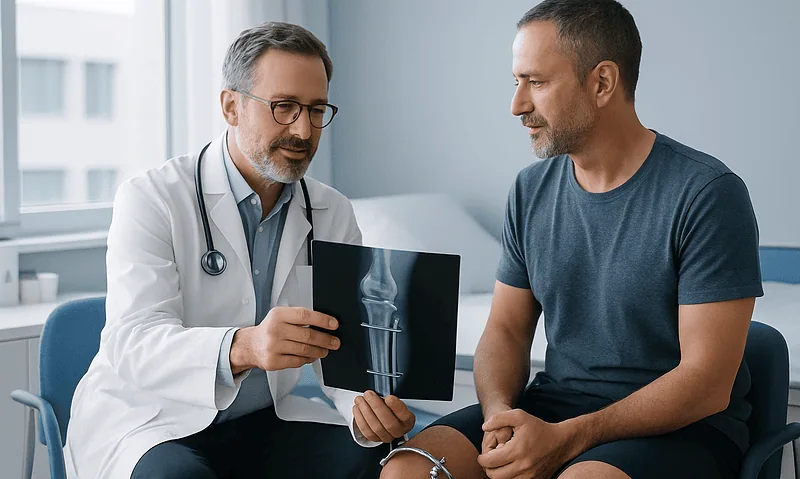
How Limb Lengthening Surgery Grows New Bone: The Cut, the Device and the Daily Adjustments
Limb lengthening surgery works by cutting a long bone, such as the femur or tibia, and fixing the two ends to a device, either…

Limb Lengthening Recovery Stages: Distraction, Consolidation and Walking Without Aids
Limb lengthening recovery time is measured in months. Bone is separated at roughly one millimeter a day, so five centimeters takes about seven weeks…

Limb Lengthening Surgery Cost: Height Surgery Pricing, Stage by Stage
There is no single limb lengthening surgery cost, and an honest surgeon will not quote one before assessing you. The total is built in…