Neuromodulation
Neuromodulation uses targeted electrical or magnetic stimulation to regulate nerve activity and help manage selected neurological, movement, pain, or functional disorders.
Quick answer
Neuromodulation uses targeted electrical or magnetic stimulation to regulate abnormal nerve activity in the brain, spinal cord or peripheral nerves. It includes implanted systems such as deep brain, spinal cord, vagus and sacral nerve stimulators, and non-invasive techniques such as transcranial magnetic stimulation. It is considered for selected patients with movement disorders, epilepsy, chronic pain, or bladder and bowel problems when standard treatment has not brought enough relief.
What is neuromodulation?
Neuromodulation is a group of therapies that use controlled electrical or magnetic stimulation to change the way nerves send and process signals. Rather than removing or destroying tissue, it regulates abnormal nerve activity in precise parts of the nervous system: the brain, the spinal cord, cranial nerves, peripheral nerves, or the nerves that control bladder, bowel and pelvic function. It is considered for carefully selected patients whose movement disorder, epilepsy, chronic pain, or bladder and bowel symptoms have not responded well enough to standard treatment.
If you are researching this treatment, you have probably already tried medication, rehabilitation, injections or a previous procedure without enough relief. Symptoms that interfere with walking, sleep, work, mood and family life are exhausting, and many patients reach the point where they are not simply looking for the next treatment: they want to know whether their condition is still controllable and whether a more advanced option could genuinely improve daily function.
Neuromodulation can be that option, but only for the right patient. It does not remove a disease, and it is not appropriate for everyone. When it works, it may reduce symptoms, improve quality of life, lower dependence on some medications, or make symptoms easier to manage within a broader treatment plan. When it is offered to the wrong patient, it adds procedural risk without meaningful benefit. That is why the decision belongs with experienced specialists who understand the condition, your treatment history, the realistic gains and the limits of the technique.
Because the same word covers procedures as different as brain surgery and an outpatient magnetic stimulation session, the useful question is rarely whether neuromodulation exists for your condition. It almost always does, in some form. The useful question is whether you are likely to benefit from a specific type of stimulation, at this stage of your condition, given everything you have already tried.
What is a neuromodulator?
A neuromodulator, in the sense used on this page, is a device or system that delivers stimulation to alter nerve activity, typically an implanted pulse generator connected to thin electrodes, or an external device applied in treatment sessions. The same word is also used in aesthetic medicine for botulinum toxin injections; that is an entirely different treatment and is not what neurologists and neurosurgeons mean when they discuss stimulation for pain, movement disorders or epilepsy.
What are neuromodulators?
Neuromodulators are also, in neuroscience, naturally occurring chemicals, dopamine, serotonin, acetylcholine, noradrenaline and others, that adjust how strongly neurons respond to incoming signals. Medical neuromodulation borrows the same principle with electricity or magnetism: it does not silence a nerve pathway permanently; it changes how that pathway behaves. This is what separates it from ablation therapy, which deliberately destroys targeted tissue. Because stimulation changes activity rather than anatomy, most implanted systems can be adjusted, turned down, switched off or, if medically necessary, removed. That flexibility is a large part of why neuromodulation has become an established option for complex neurological and pain conditions.
Types of neuromodulation therapy
Neuromodulation therapy falls into two broad families: implanted systems, which deliver stimulation continuously or on demand from inside the body, and non-invasive techniques, which apply stimulation from outside in repeated sessions. The right family, and the right therapy within it, depends entirely on the diagnosis and the nerve pathway involved.
Implanted neuromodulation
Implanted therapies include deep brain stimulation (DBS), spinal cord stimulation (SCS), vagus nerve stimulation (VNS), sacral nerve stimulation and selected peripheral nerve stimulation procedures. In each of them, a thin electrode or lead is placed in a precise location: a deep brain nucleus, the epidural space over the spinal cord, alongside the vagus nerve in the neck, near the sacral nerves in the pelvis, or next to a specific peripheral nerve. The lead connects to a small pulse generator, usually implanted under the skin of the chest, abdomen, flank or buttock depending on the therapy.
The implant is only the beginning. After surgery, the system is programmed and refined over weeks to months, searching for the settings that best balance symptom control against side effects. Two patients with the same device and the same diagnosis may end up with very different stimulation settings, and both may be right.
Non-invasive neuromodulation
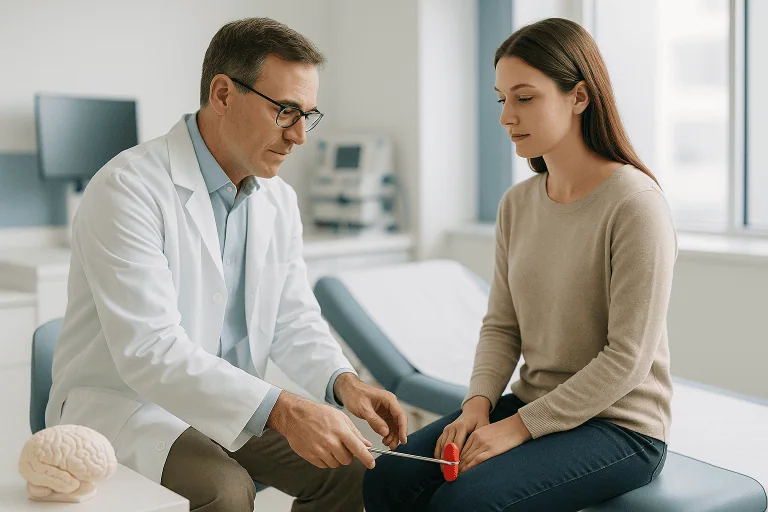
Non-invasive techniques influence nerve activity without surgery. The best established is transcranial magnetic stimulation (TMS), which uses magnetic pulses applied from outside the head to modulate activity in selected brain regions. You sit in a treatment chair, a coil is positioned over a specific part of your scalp, and the device delivers pulses according to a prescribed protocol. You stay awake throughout, no anaesthesia is needed, and you can usually return to normal activities immediately after the session. A full course typically involves repeated visits over several weeks, with response tracked through symptom scales and clinical review. Certain external nerve stimulation approaches may also be considered for specific conditions.
Where can you get Stanford accelerated intelligent neuromodulation therapy?
Stanford accelerated intelligent neuromodulation therapy, usually shortened to SAINT or SNT, is an accelerated, imaging-guided protocol of transcranial magnetic stimulation developed for depression, in which multiple short sessions are delivered each day over roughly a week instead of one session a day over several weeks. It is currently offered at a limited number of specialist psychiatric and academic centres, and availability varies considerably between countries. The practical point for anyone researching it is that SAINT is a protocol of TMS, not a separate technology: the questions that matter, candidacy, supervision, follow-up, are the same as for any form of therapeutic brain stimulation.
Neuromodulation devices: what is actually implanted
Neuromodulation devices have three main components: the lead, a thin insulated wire carrying electrodes to the target; the pulse generator, the sealed unit containing the battery and electronics that produce stimulation; and an external programmer that the clinical team, and, within set limits, you, use to adjust settings. Generators come in rechargeable and non-rechargeable versions. Rechargeable systems last longer between surgical replacements but require you to charge them regularly through the skin; non-rechargeable systems are simpler to live with but need replacement surgery when the battery depletes. Device choice also affects compatibility with future MRI scans, which should be discussed before implantation rather than discovered afterwards.
What is a neuro stimulator?
A neuro stimulator, usually written as one word, neurostimulator, is the implanted pulse generator itself: the small unit that produces the electrical pulses delivered through the leads. Patients often use the word loosely for the whole system, which is harmless. After implantation you receive a device identification card, and the neurostimulator’s settings, battery status and usage are reviewed at follow-up visits.
Which companies are leading in neuromodulation devices?
Most implanted systems in worldwide use come from a small group of large manufacturers: Medtronic, Abbott and Boston Scientific across deep brain, spinal cord and sacral stimulation, alongside companies such as LivaNova in vagus nerve stimulation and Nevro in spinal cord stimulation. For you as a patient, the manufacturer matters less than three practical questions: is the specific device approved and supported for your indication in the country where you are treated; can it be programmed and serviced where you live; and do its battery type and MRI status suit your long-term needs? Your implanting team should be able to answer all three before surgery.
Who may need neuromodulation?
Neuromodulation may be considered when symptoms are significant, persistent and not adequately controlled with standard treatment. Perhaps you have tried medication but had limited benefit, dose-limiting side effects, or a response that faded over time. Perhaps your symptoms fluctuate so much that ordinary planning has become difficult. Patients describe the burden in concrete terms: tremor that makes eating in public stressful, stiffness that slows every morning, seizures that take away driving and independence, neuropathic pain that dominates every decision, or bladder symptoms that dictate where you can go and for how long.
The route to neuromodulation always begins with diagnosis, not with the device. Depending on the suspected condition, the work-up may include a detailed history, neurological examination, review of previous treatments, imaging studies, electrophysiological testing through clinical neurophysiology, pain assessment, movement analysis, neuropsychological evaluation, psychiatric assessment, or bladder and pelvic function testing. For implanted therapies, imaging maps the anatomy and plans safe access to the target region. In many chronic pain cases, a temporary trial is performed before any permanent implantation, precisely so that a device is only implanted in someone who has already demonstrated meaningful benefit from stimulation.
Who is a good candidate for neuromodulation?
A good candidate is someone with a clearly established diagnosis, a specific symptom known to respond to stimulation, an adequate trial of standard treatments behind them, general health that supports the procedure, realistic expectations, and the ability to attend follow-up programming visits. Weaken any one of these, and the calculation changes.
The detail matters. Deep brain stimulation, for example, may suit a patient with Parkinson’s disease who still responds to levodopa but has disabling fluctuations, tremor or medication-related involuntary movements. It is usually a poor choice when the main difficulties are advanced memory problems, uncontrolled psychiatric illness, or symptoms, such as certain balance and speech problems, that stimulation is not expected to improve. Specialists weigh symptom type, disease stage, medication response, mental health, imaging findings and expectations together, which is why candidacy is a team decision rather than a checklist.
Not being a candidate today does not always mean never. Some patients are monitored and re-evaluated as their condition evolves; others are directed towards a different treatment that fits their situation better. A responsible programme says no as readily as it says yes.
Conditions neuromodulation may address
Neuromodulation is used across several areas of medicine, and the specific therapy always follows the diagnosis. The overview below describes where each approach is typically considered; whether any of them is right for you depends on the individual assessment described above.
Movement disorders
Deep brain stimulation may be considered for selected patients with Parkinson’s disease, essential tremor, dystonia and certain other movement disorders after careful specialist review, usually involving both neurology and functional neurosurgery. In appropriate patients it can reduce tremor, rigidity, slowness, medication fluctuations or involuntary movements, although the degree of benefit varies from person to person and from symptom to symptom.
Epilepsy
Vagus nerve stimulation and other neuromodulation approaches may be considered when seizures continue despite appropriate anti-seizure medication and when resective epilepsy surgery is either unsuitable or has not fully controlled seizures. These therapies aim to reduce seizure frequency or severity gradually over time; they are not an immediate fix, and honest counselling sets that expectation from the start. In children with drug-resistant epilepsy, the evaluation runs through specialist child neurology pathways, where the balance of risks and benefits is weighed differently at each age and stage of development.
Chronic pain
Spinal cord stimulation or peripheral nerve stimulation may be considered for selected patients with neuropathic pain, persistent pain after spinal surgery (often called failed back surgery syndrome), complex regional pain syndrome, or certain radicular pain syndromes, after a detailed pain evaluation. The goal is to reduce pain intensity and improve function, usually alongside rehabilitation, medication review and psychological support, because chronic pain rarely responds fully to any single intervention.
Bladder, bowel and pelvic disorders
Sacral nerve stimulation may be considered for selected bladder or bowel control problems, including certain forms of overactive bladder, urinary retention, faecal incontinence and pelvic floor dysfunction, when conservative treatment has not been effective. Stimulation here targets the nerves that coordinate pelvic organ function. Where symptoms stem from nerve damage affecting the body’s automatic functions, the assessment may overlap with the work-up for autonomic neuropathy.
Psychiatric and other neurological indications
Non-invasive brain stimulation, particularly transcranial magnetic stimulation, is used in selected psychiatric and neurological indications, most established in depression, depending on the diagnosis and local clinical protocols. It is delivered as a series of outpatient sessions without anaesthesia or implantation, which makes it an option for patients in whom surgery would never be considered.
How neuromodulation is performed
The process begins with a consultation that goes deeper than the diagnosis. Specialists review the symptom pattern, previous treatments, current medications, imaging and, importantly, your priorities. You will be asked what improvement would mean in practical terms: walking more steadily, writing legibly, reducing pain medication, sleeping through the night, cutting the seizure burden, or regaining confidence at work and in social settings. Clear goals shape the recommendation and give the team something concrete to measure progress against later.
Preparation depends on the therapy. Before surgical neuromodulation, expect blood tests, imaging, an anaesthesia evaluation and a structured medication review; any adjustment, particularly to blood thinners or other drugs that affect bleeding risk, is decided and supervised by your treating doctors. For deep brain stimulation, brain imaging identifies the intended target and the safest trajectory, and neuropsychological testing may be recommended to assess memory, attention, mood and cognitive function beforehand. For spinal cord or peripheral nerve stimulation, imaging and pain mapping identify the nerves or spinal levels most relevant to your symptoms.
The trial-first pathway in chronic pain
Many chronic pain programmes follow a deliberate sequence before committing to a permanent implant:
- Temporary lead placement. Thin trial leads are positioned using imaging guidance, often under local anaesthesia with sedation depending on the case.
- The trial period. You test the stimulation for several days in your normal environment, tracking pain, activity, sleep and medication use.
- Structured review. The team examines your trial record with you and asks a blunt question: did stimulation change your daily life enough to justify surgery?
- Decision. If the trial delivered meaningful benefit and you want to proceed, permanent implantation is scheduled. If it did not help, the temporary leads are removed and other options are discussed, with nothing implanted and little lost.
Permanent implantation
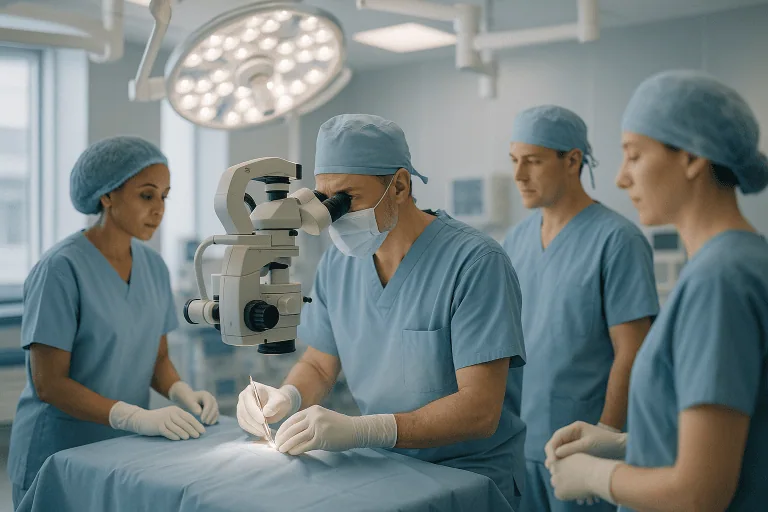
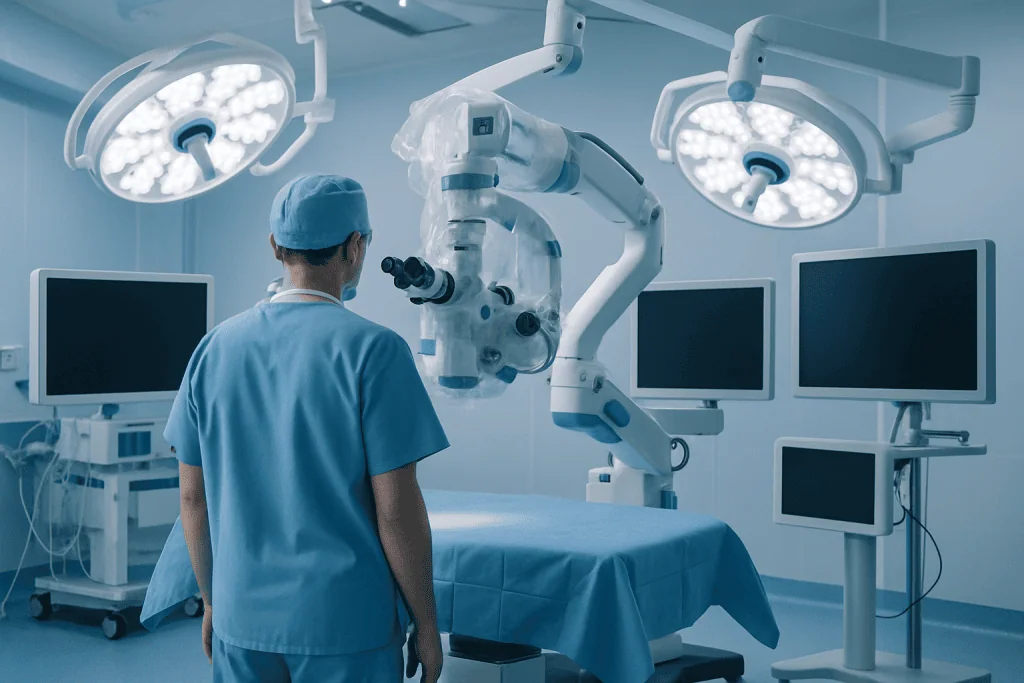
During permanent implantation, the surgical team places one or more leads at the target and connects them to a pulse generator positioned under the skin. The procedure takes place in an operating theatre under sterile conditions. Imaging guidance, navigation systems, neurophysiological monitoring or intraoperative testing may be used to confirm accurate placement and reduce risk. In deep brain stimulation, some operations are performed with you awake for part of the procedure so that your symptom response can be tested in real time; others are done entirely under general anaesthesia, depending on the target, your circumstances and the institution’s protocol.
Procedure length varies with the therapy, the anatomy and whether intraoperative testing is needed. Some non-invasive sessions finish in under an hour; implanted device procedures take longer and may be staged across more than one operation. Hospital stay varies too: some patients go home the same day after selected procedures, while others stay overnight or longer for monitoring, particularly after brain surgery or more complex spinal procedures.
Programming: the part patients underestimate
After implantation, the device is not simply switched on at a final setting. Programming is a treatment phase in its own right. The clinical team adjusts intensity, pulse width, frequency and the active contact points on the lead, hunting for the combination that maximises symptom control and minimises side effects. This usually takes several visits, concentrated in the first weeks and months. You will also receive practical instruction on wound care, activity restrictions, charging if your system is rechargeable, device precautions, and the situations in which you should seek advice from your treating team.
Early recovery
Expect some soreness, swelling or bruising around incision sites after implanted procedures. You may be asked to avoid heavy lifting, twisting, bending or sudden movements for a period while the leads settle: this matters most after spinal cord stimulation, where early strenuous activity raises the risk of lead movement. In deep brain stimulation and other complex therapies, any medication changes are made gradually by your doctors after stimulation is programmed, never abruptly and never on your own initiative.
Why acting early can matter
Neuromodulation is rarely the first treatment offered, but waiting too long can quietly narrow your options. Chronic symptoms breed secondary problems: deconditioning, poor sleep, anxiety, depression, medication side effects, reduced mobility, social withdrawal. In movement disorders, years of uncontrolled fluctuations or tremor erode independence and safety. In chronic pain, prolonged inactivity makes recovery harder even if the pain itself later improves. In epilepsy, ongoing seizures affect work, driving eligibility, injury risk, and cognitive and emotional wellbeing.
Early specialist evaluation does not mean early surgery. It means finding out whether your condition is being treated optimally, whether the diagnosis is actually correct, and whether neuromodulation should be considered now, kept in reserve for later, or ruled out altogether. Patients evaluated before severe disability develops have more time to weigh options, complete the appropriate tests and plan treatment calmly rather than under crisis-driven pressure.
Delay can also mean years of high medication doses or repeated procedures that deliver little. Some people live a long time assuming their symptoms are simply something to be tolerated, when a structured review might identify a more effective pathway. Equally, expert evaluation may show that neuromodulation is not appropriate for you and that another approach would be safer or more useful. Either answer, yes or no, is worth having early.
Benefits of neuromodulation
The potential benefits depend on the condition and the type of stimulation, but the table below summarises the common goals of treatment for suitable patients.
| Benefit | What It Means for You |
|---|---|
| Targeted symptom control | Stimulation is directed at the specific neural pathways involved in tremor, pain, seizures, pelvic function or other symptoms, rather than affecting the whole body in the way some medications can. |
| Adjustable therapy | Implanted systems can often be reprogrammed as symptoms change, allowing treatment to be refined over time according to benefit and side effects. |
| Potential reduction in medication burden | Some patients may be able to reduce certain medications under medical supervision, which may help limit medication-related side effects. This is not appropriate for every condition or every patient. |
| Improved daily function | When treatment works well, patients may find it easier to walk, use their hands, sleep, participate in rehabilitation, manage personal care or return to selected activities. |
| Reversible or modifiable approach | Many neuromodulation systems can be adjusted, paused or removed if needed, offering flexibility compared with procedures that permanently destroy nerve tissue. |
Recovery timeline after neuromodulation
Recovery differs by procedure, but the overview below gives a general sense of what many patients can expect after implanted neuromodulation.
| Time Period | What Patients Can Expect |
|---|---|
| Day 1 | You are monitored after the procedure. Mild pain, swelling or tightness near incision sites may occur. The care team reviews wound care, activity limits and warning signs before discharge or transfer to the inpatient room. |
| First Week | Most patients focus on rest, gentle movement and incision healing. Activity restrictions matter most after spinal cord and peripheral nerve stimulation, to reduce the risk of lead movement. |
| First Month | Initial programming or follow-up adjustments may begin, depending on the therapy. Symptoms may improve gradually as settings are refined. Some patients need several visits to reach an effective balance. |
| Longer Term | Periodic follow-up continues for programming, medication review, battery monitoring, rehabilitation planning and symptom assessment. Durable benefit usually depends on continued medical supervision and realistic goals. |
Does neuromodulation actually work?
For well-selected patients, yes, neuromodulation can deliver substantial and durable symptom improvement, which is why it is established practice across movement disorders, pain medicine, epilepsy and pelvic medicine. But “well-selected” is doing the heavy lifting in that sentence. The therapy succeeds or fails on selection, targeting, programming and follow-up, not on the technology alone, and the honest answer for any individual depends on their diagnosis, their symptoms and their expectations.
The symptom itself is the first factor. Stimulation helps symptoms that are known to respond to it. Deep brain stimulation may improve tremor or medication-related motor fluctuations in selected Parkinson’s disease patients, but it may not improve balance problems, speech difficulties or cognitive decline caused by advanced disease. A treatment that transforms one symptom while leaving another untouched can still be worthwhile, provided you knew that in advance.
The duration and severity of symptoms matter too. Patients with long-standing pain often need rehabilitation and behavioural support alongside stimulation, because body and brain adapt to chronic pain over years. In epilepsy, the seizure type, the seizure network, prior evaluations and medication history all shape whether neuromodulation is appropriate and what outcome is reasonable. In bladder and bowel disorders, pelvic floor function, previous surgery and any underlying nerve condition influence response.
Device placement is another decisive factor. Modern imaging, planning software, intraoperative imaging and neurophysiological monitoring help physicians place leads accurately and safely, but anatomy varies from patient to patient, and the work demands technical precision as much as clinical judgement. Programming after the procedure is equally important: small changes in stimulation settings can significantly alter symptom control or side effects, which is why follow-up visits should never be treated as optional.
General health shapes recovery and results as well. Diabetes, smoking, immune suppression, obesity, active infection, uncontrolled psychiatric illness and blood-thinning medications may increase procedural risk or affect healing. Living with an implanted device also carries long-term responsibilities: charging certain systems, attending follow-up appointments, reporting new symptoms, and discussing device compatibility before some medical tests and procedures.
Finally, outcomes are shaped by the partnership between patient and clinical team. Neuromodulation is not a single event; it is a treatment process. The patients who do best are usually those who are well informed, engaged with follow-up, and able to define meaningful goals beyond the simple wish for symptoms to disappear completely.
Does insurance cover neuromodulation?
Often, but coverage depends on your country, your insurer and the specific indication. Implanted therapies are typically covered only when the diagnosis is documented, conservative treatments have been tried and recorded, and, for spinal cord stimulation in particular, a trial has demonstrated benefit. Non-invasive therapies such as transcranial magnetic stimulation have separate coverage rules that vary widely between systems and insurers. Private and international policies differ again, and pre-authorisation is common for device procedures. If you are funding treatment yourself, establish precisely what a quoted package includes: the device itself, the implantation, the hospital stay, and, easily overlooked, the programming visits that follow. Because the device and its follow-up are inseparable parts of the same treatment, a package that covers one without the other is incomplete.
How Acibadem approaches neuromodulation
For complex neurological and pain conditions, treatment decisions at Acibadem are commonly made through multidisciplinary collaboration rather than by a single doctor. Movement disorder specialists, functional neurosurgeons, pain physicians, neuroradiologists, neurophysiologists, rehabilitation specialists, psychiatrists and anaesthesiologists contribute according to the case. The intention is straightforward: neuromodulation should be recommended only when it fits the diagnosis, the patient’s health and the patient’s own goals.
Technology supports each stage of that process. High-resolution imaging defines anatomy and excludes alternative causes of symptoms. Electrophysiological testing characterises nerve function, seizure activity or the features of a movement disorder. Surgical navigation, imaging guidance and intraoperative monitoring support precise lead placement. Programming systems allow stimulation to be refined long after implantation, which, as this page has argued throughout, is where much of the outcome is actually decided.
Structured follow-up matters more in neuromodulation than in most treatments, because staged care, device programming and ongoing communication between the implanting team and the doctors who continue routine care afterwards extend well beyond the operation itself.
A responsible neuromodulation programme is not measured by how many patients receive devices, but by how carefully the right therapy is matched to the right patient. A sound evaluation, at Acibadem or anywhere else, should leave you with clear answers to the questions that matter: Is the diagnosis complete? Have standard treatments been optimised? Is neuromodulation medically appropriate, and if so, which type? What risks apply in your specific case? How many visits will treatment and programming require? And what follow-up will be needed once treatment ends?
Living with a neuromodulation system
An implanted system brings ongoing, mostly small responsibilities. Rechargeable devices need regular charging through the skin. Follow-up appointments track programming, medication, battery status and symptoms. You carry a device identification card and mention the implant before medical procedures and scans, since MRI compatibility depends on the specific system and its settings. Airport security scanners become a routine, manageable event rather than a problem. New or changed symptoms are worth reporting to your treating team, because they sometimes signal that reprogramming is needed rather than that the therapy has failed.
A treatment process, not a single procedure
Neuromodulation can offer meaningful improvement for selected patients with neurological, movement, pain, seizure or pelvic disorders that have not responded adequately to conventional treatment. It is a sophisticated therapy that amounts to more than a device or an operation: it begins with the correct diagnosis, continues through careful planning and precise treatment, and depends on follow-up programming and long-term medical support. Understood that way, as a process you participate in rather than a procedure done to you, it becomes much easier to judge honestly whether it belongs in your treatment plan.
Preparation
- A specialist reviews your diagnosis, medical history, medications, imaging, and previous treatments to confirm whether neuromodulation is suitable. Some patients may need neurological testing or device planning before treatment. Blood thinners or certain medicines may be adjusted only under medical supervision.
Aftercare
- Most patients can return to daily activities soon after non-invasive sessions. If an implanted device is used, wound care, activity restrictions, and follow-up programming are required. Regular follow-up helps adjust stimulation settings and monitor symptom response.
Frequently Asked Questions
What affects the cost of neuromodulation treatment?
The final cost depends on the diagnosis, the type of neuromodulation, device selection, diagnostic tests, hospital stay, specialist team involvement, programming sessions, rehabilitation, and follow-up needs. Travel, accommodation, translation, and medical coordination may also affect the overall budget for international patients.
How can I get a personalised quote for neuromodulation in Turkey?
A personalised quote usually requires medical records, imaging, medication history, previous treatment details, and a specialist review. Acibadem International can help arrange a free consultation pathway to assess suitability and provide a tailored treatment plan and cost estimate.
Is the device included in a neuromodulation package?
Package contents vary by treatment plan and hospital policy. Some packages may include device-related services, while others may list the device, diagnostics, procedure, hospital stay, and programming separately. Patients should request a written explanation of what is included and what may be billed separately.
Will I need follow-up after neuromodulation?
Yes. Many neuromodulation treatments require programming, symptom review, wound assessment, medication adjustment, and long-term monitoring. Follow-up may be arranged in Turkey, coordinated with a local physician, or supported remotely when clinically appropriate.
Can I compare Turkey with the UK, Germany, or the USA using only price?
Price alone is not enough. It is also important to compare specialist experience, hospital accreditation, device availability, diagnostic planning, aftercare, language support, travel logistics, and how clearly the package is defined. This information is general and is not medical or financial advice.
Medically reviewed by the Acıbadem International Medical Board September 13, 2026
See our medical review board →
Update history
- PublishedJune 8, 2026
- Medical review approvedSeptember 13, 2026
- Last content updateSeptember 12, 2026
Trusted care for international patients
From the Acibadem Blog

Recovery After an Implanted Neuromodulation Device: Wound Care, Programming Visits and Activity
Recovery after a neuromodulation implant such as a spinal cord stimulator usually means keeping two small incisions clean and dry for the first one…