Soft Tissue Injuries Treatment
Soft tissue injuries include sprains, strains, tendon, ligament and muscle damage, often caused by trauma or sports activity. Care focuses on accurate diagnosis, pain control and guided rehabilitation.
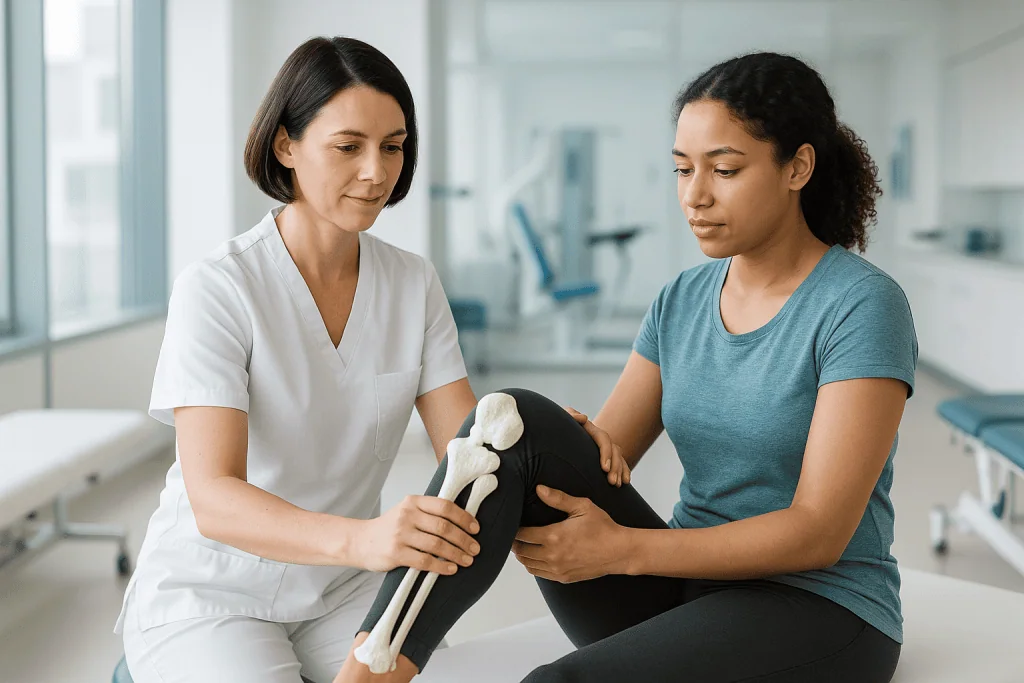
Quick answer
A soft tissue injury is damage to muscles, tendons, ligaments or other connective tissues, most often a sprain, strain, contusion or tendon injury. Treatment ranges from protection, compression and structured rehabilitation through to injections in selected cases, or surgical repair for complete tears. Mild injuries often settle within weeks; severe ligament and tendon injuries can take months of staged rehabilitation to rebuild strength and stability.
What Is a Soft Tissue Injury?
A soft tissue injury is damage to the tissues that connect, support and move the body, muscles, tendons, ligaments, fascia and joint capsules, rather than to bone. The term covers everything from a mildly overstretched calf muscle to a complete Achilles tendon rupture, and it describes some of the most common injuries in medicine. What unites these injuries is not their severity but the tissue involved: soft tissue heals differently from bone, and treating it well means matching the plan to the exact structure injured and the degree of damage.
A soft tissue injury can happen in a second. A twisted ankle on uneven ground. Sudden shoulder pain during tennis. A pulled hamstring while sprinting for a bus. A fall, a collision, a lifting accident at work. At first, many people hope the pain will settle with rest, and sometimes it does. But when swelling, bruising, weakness, instability or restricted movement continues past the first days, the injury may be more than a simple strain, and the sooner that is established, the more options remain open.
These injuries are often associated with sport, and athletes and active adults do account for many of them. They are just as common, though, after everyday accidents: a slip on a wet floor, a misstep on holiday, a fall from a bicycle, repetitive strain from manual work, or gradual tendon degeneration that comes with age and finally gives way under an ordinary load. A soft tissue injury does not require a dramatic accident. Some of the most disabling tendon ruptures happen during routine movements in tissue that had quietly weakened over years.
If you are weighing up treatment, particularly treatment away from home, your questions are usually practical as well as medical. Do you need imaging? Can surgery be avoided? How long will recovery take? When is it reasonable to fly, return to work, or get back to sport? And if you have already had medication, injections or physiotherapy elsewhere without lasting improvement, why is the pain persisting? This page works through those questions honestly: what these injuries are, how they are diagnosed, which treatments are used and when, and what realistic recovery looks like.
What are the four types of soft tissue injuries?
The four types of soft tissue injuries most commonly described are sprains, strains, contusions and overuse injuries such as tendinopathy and bursitis. Each involves a different structure and a different pattern of damage:
- Sprainsinjuries to ligaments, the bands that hold joints together. An ankle rolled inwards or a knee twisted under load are classic examples. A sprain can range from mild fibre stretching to a complete tear that leaves the joint unstable.
- Strainsinjuries to muscles or the tendons that anchor them, such as a hamstring, calf or groin strain. Strains typically occur when a muscle is forcefully stretched while contracting.
- Contusionsbruising of muscle or other soft tissue after a direct blow, causing bleeding within the tissue, swelling and stiffness.
- Overuse injuriesdamage that accumulates gradually, including tendinopathy (irritation or degeneration of a tendon, as in tennis elbow or Achilles tendinopathy) and bursitis (inflammation of the small fluid-filled sacs that cushion joints).
In practice the boundaries blur. A tendon weakened by chronic overuse may finally rupture during an acute event, and one accident can injure ligament, muscle and joint capsule together. The classification matters less than two questions your clinician will keep returning to: which structure is injured, and how badly.
Acute injuries and overuse: two roads to soft tissue damage
Acute injuries happen at a definable moment: you can usually name the step, the tackle or the lift that caused the pain. Overuse soft tissue damage is different: it builds gradually as repetitive load outpaces the tissue’s ability to repair itself, often with no single memorable event. The distinction shapes treatment. An acute tear needs early protection while the torn fibres begin to heal; a chronic tendinopathy usually needs the opposite: a carefully progressed loading programme, because degenerate tendon tissue tends to respond to graded exercise rather than to rest alone. Treating an overuse problem as if it were a fresh tear, or vice versa, is one of the common reasons recovery stalls.
What Soft Tissue Injury Treatment Means
Soft tissue injury treatment is a structured medical approach to diagnosing and managing damage to muscles, tendons, ligaments and related tissues. Depending on the injury, it may include emergency care, orthopaedic or sports medicine evaluation, imaging, bracing or immobilisation, medication, injection therapies in selected cases, guided rehabilitation, and sometimes surgery when a significant tear cannot heal well on its own.
The umbrella term covers many distinct conditions. A sprain usually refers to a ligament injury, such as an ankle sprain or a knee ligament tear. A strain usually refers to a muscle or tendon injury, such as a hamstring strain or a calf tear. Tendon injuries range from inflammation and degeneration to partial tearing or complete rupture. Ligament injuries may leave a joint unstable. Muscle injuries may cause pain, bruising, cramping, weakness or loss of power. Each of these behaves differently under load, heals on a different schedule, and responds to different treatment.
Treatment is therefore never one-size-fits-all. A mild ankle sprain may improve with protected weight bearing, compression, elevation and a short rehabilitation programme. A complete Achilles tendon rupture, a major rotator cuff tear or a high-grade knee ligament injury involves more complex decision-making. Some patients do very well with non-surgical care. Others benefit from repair or reconstruction to restore strength and stability, and the honest answer to which group you fall into depends on the specific injury, not on a general rule.
The guiding principle is to choose the least invasive approach that will actually work. That means identifying which tissues are damaged, how severe the injury is, whether the joint is stable, whether the torn tendon or muscle ends remain in contact, and whether your daily life or athletic goals require a higher level of function than conservative healing can deliver. A careful plan also covers pain control, safe movement, prevention of stiffness, and the timing of rehabilitation, because when you start loading healing tissue matters almost as much as whether you do.
How Do You Tell If You Have a Soft Tissue Injury?
The usual signs of a soft tissue injury are pain at the moment of injury or soon afterwards, swelling, bruising, tenderness, weakness, and difficulty using the injured part normally. Some injuries announce themselves clearly: a tendon rupture often produces a snapping sensation and sudden loss of power. Others are more subtle: they seem to improve, then leave ongoing instability, pain that returns with activity, or a joint you no longer quite trust.
Signs and symptoms that commonly point to a soft tissue injury include:
- Sudden pain during sport, exercise, lifting, twisting or a fall
- Swelling around a joint, muscle or tendon
- Bruising, tenderness, or a visible change in the shape of the area
- Weakness, cramping, or inability to push, pull, jump, grip or lift normally
- A popping, snapping, tearing or giving-way sensation at the moment of injury
- Joint instability, repeated sprains, or a sense that the joint may buckle
- Reduced range of motion or stiffness that persists after the first few days
- Pain that returns each time activity resumes
- Difficulty walking, climbing stairs, raising the arm or using the hand
Certain features tend to suggest a higher-grade injury: an audible pop, swelling that appears within minutes rather than hours, a joint that gives way, marked weakness, or an obvious change in the contour of a muscle or tendon. Clinicians treat these features as reasons to examine more carefully and to arrange imaging earlier, because high-grade injuries have a narrower window for some treatment options.
How is a soft tissue injury diagnosed?
Diagnosis begins with a detailed history and a hands-on physical examination, imaging comes second, not first. Your physician will ask how the injury occurred, where the pain sits, what makes it worse, and whether you felt a pop or noticed immediate swelling. The examination typically tests strength, joint stability, range of motion, sensation, circulation, and the function of specific tendons and ligaments. A skilled examination often narrows the diagnosis considerably before any scan is ordered.
Imaging is used when the diagnosis is uncertain, symptoms are severe, or a high-grade injury is suspected. X-rays evaluate fractures and joint alignment: they show bone rather than soft tissue, but excluding a fracture matters, particularly in older patients or anyone with concerns about their underlying bone health. Ultrasound can assess many tendon and muscle injuries dynamically, often while the area is moved. Magnetic resonance imaging shows ligaments, tendons, muscles, cartilage, swelling and bone bruising in detail, and is the usual choice for deeper or more complex injuries. In selected cases, computed tomography helps when bone injury or complex joint trauma is also in question. If your assessment involves travelling for scans and reports, it helps to understand the realistic timescales involved: the guide on waiting for test results and planning your stay explains how long different investigations typically take.
When is a second opinion useful?
A second opinion is most useful when recommendations conflict, when pain persists despite treatment that should have worked, or when you are unsure whether surgery is genuinely necessary. It tends to be particularly valuable for athletes, dancers, manual workers and active professionals, and for injuries affecting the shoulder, knee, ankle, hip, elbow, wrist or hand, joints where the difference between a stable and an unstable injury changes the whole treatment pathway. A good second opinion does not always change the plan. Sometimes its main value is confirming that the conservative route you are already on is the right one.
Sprains and Strains and the Other Conditions Treated
Sprains and strains are the most common soft tissue injuries, but treatment in this field also covers acute trauma, overuse problems, degenerative tendon disease and recurrent joint instability. The right approach depends on the structure involved and whether the injury is mild, moderate or severe.
Conditions commonly treated include:
- Ligament sprains and tears: ankle sprains, knee ligament injuries, elbow ligament injuries, wrist sprains, and shoulder instability injuries.
- Muscle strains and tears: hamstring, quadriceps, calf, groin, abdominal, back, shoulder and chest muscle injuries.
- Tendon injuries: Achilles tendon rupture, rotator cuff tears, biceps tendon injuries, patellar and quadriceps tendon injuries, tennis elbow, golfer’s elbow, and chronic tendinopathy.
- Sports-related trauma: injuries from football, basketball, tennis, running, skiing, gymnastics, martial arts and fitness training.
- Work and daily-activity injuries: lifting injuries, repetitive strain, slips, falls, and sudden twisting injuries.
- Joint capsule and other soft tissue injuries: shoulder capsule injuries, hip soft tissue injuries, and post-traumatic stiffness.
- Post-injury complications: chronic pain, persistent swelling, weakness, reduced flexibility, scar tissue, recurrent sprains, and recovery that has stalled.
One caution about falls and collisions: they rarely respect anatomical boundaries. A hard fall that sprains a wrist can also involve a head impact, and significant head injuries are assessed on an entirely separate pathway, see traumatic brain injury for how that evaluation works. Part of a thorough trauma assessment is making sure nothing beyond the obvious injury has been missed.
How are sprains and strains graded?
Clinicians grade sprains and strains on a three-level scale, and the grade drives the treatment plan. A grade I injury means fibres have been stretched or minimally torn: the structure still works, pain and swelling are modest, and structured self-managed rehabilitation is often enough. A grade II injury is a partial tear: there is measurable laxity in a ligament or weakness in a muscle-tendon unit, swelling and bruising are more pronounced, and recovery needs protection followed by progressive rehabilitation. A grade III injury is a complete tear: the ligament no longer stabilises the joint or the muscle-tendon unit no longer transmits force, and this is where surgical repair enters the discussion.
Grading is not always obvious from pain alone. Some complete tears hurt surprisingly little once the initial injury settles: a fully ruptured ligament cannot be strained further, so it may stop hurting while the joint quietly remains unstable. This is one reason examination and, where needed, imaging matter more than how the injury feels a week later. Not every soft tissue injury needs surgery; many improve with a well-designed non-surgical plan built on activity modification, protection and progressive loading. Surgery is considered when there is a complete rupture, persistent instability, significant loss of function, a displaced tendon or ligament injury, failure of properly conducted conservative care, or functional demands that make anatomical repair the more sensible route.
How Soft Tissue Injury Treatment Is Performed
Initial Assessment and Preparation
The first step is to understand the injury clearly. The care team reviews your medical history, previous imaging, current medications, allergies, past surgeries and activity goals. Where patients are travelling from another country, existing medical reports and image files are usually reviewed before arrival, so the in-person evaluation can be focused and efficient rather than starting from zero.
During the examination, the physician establishes whether the injury appears stable or unstable, acute or chronic, mild or severe. The evaluation also looks deliberately for associated problems: fracture, nerve irritation, cartilage injury, tendon retraction, joint stiffness, infection or vascular compromise. This matters because treating only the pain, without addressing the underlying structural problem, is how injuries end up half-healed.
In the early phase, care may include protection, relative rest, cold therapy, compression, elevation and appropriate pain control prescribed by the treating doctor. Crutches, braces, splints, walking boots, slings or taping may be used to protect injured tissue while still allowing safe movement. The aim is to reduce swelling and pain without immobilising the body for longer than necessary, prolonged stiffness is itself an obstacle to recovery, and modern protocols keep immobilisation as short as the injury allows.
Diagnostic Technology and Treatment Planning
Modern diagnostic pathways use imaging selectively and with a purpose. X-rays usually come first after trauma, to exclude fracture or joint displacement. Ultrasound suits superficial tendons, muscle tears, fluid collections and anything best assessed while moving. MRI is reserved for deeper or more complex injuries, ligament tears, rotator cuff damage, suspected meniscal or cartilage involvement, and muscle injuries where the location and extent of tearing change the plan.
Digital image review, musculoskeletal radiology input and specialist evaluation are then brought together, because imaging findings only mean something in context. Not every abnormality on a scan is the cause of your pain, degenerative changes are common in tendons that have never hurt, and some injuries that look modest on imaging cause major functional limitation. Treatment decisions are strongest when imaging, physical examination and your own goals all point in the same direction. When they do not, that disagreement itself is worth investigating before anyone operates.
What Is the Best Treatment for a Soft Tissue Injury?
For most soft tissue injuries, the best treatment is structured non-surgical care: protection in the early days, then progressive, guided loading until the tissue tolerates normal demands again. There is no single remedy that heals soft tissue faster than this sequence done properly: the skill lies in judging when to protect and when to progress.
Early management of most acute injuries follows a familiar sequence:
- Protect the injured area from further stress, with a brace, boot, sling, taping or crutches where needed.
- Rest relatively, avoiding aggravating activity without shutting down all movement.
- Apply cold and compression in the first days to limit swelling.
- Elevate the injured limb when resting.
- Reintroduce movement early, within comfort, under guidance, because controlled motion helps healing tissue organise itself, while total immobility promotes stiffness and weakness.
From there, rehabilitation is not simply a list of exercises; it is a progression that changes as healing advances. Early therapy focuses on reducing swelling and restoring gentle motion. Later phases build strength, balance, coordination, endurance, and finally sport- or work-specific capacity. For tendon and muscle injuries, loading must be timed carefully, too much stress too early aggravates the injury, while too little produces weakness and delays return to activity. For ligament injuries, rehabilitation includes proprioceptive training, which retrains the body’s ability to sense joint position and react quickly. That element is easy to skip and is precisely what prevents ankle and knee injuries from becoming recurrent.
In selected cases, image-guided injections form part of a broader plan, to reduce inflammation around certain tissues, or to make rehabilitation possible when pain is the limiting factor. Injection therapy is not appropriate for every injury and is usually considered only once the diagnosis is clear. The choice depends on the tissue involved, the timing of the injury, your individual factors, and the overall recovery strategy. An injection that relieves pain without a rehabilitation plan behind it rarely changes the long-term picture.
When Is Surgery Needed for a Soft Tissue Injury?
Surgery is recommended when the injured tissue is unlikely to heal adequately with conservative care, or when long-term function would be compromised without repair. Typical examples include certain complete tendon ruptures, major ligament tears with instability, complex shoulder injuries, high-demand knee ligament injuries, and injuries where a tendon has pulled away from bone. Even then, the decision weighs your age, activity demands, tissue quality and personal goals: the same tear may be treated differently in different people, for good reasons.
Surgical methods vary by injury. Some procedures repair torn tissue directly with sutures or anchors. Others reconstruct a ligament using graft tissue. Minimally invasive arthroscopic techniques are used for many joint-related injuries, allowing the surgeon to view and treat the inside of a joint through small incisions. Open surgery remains more appropriate for certain tendon ruptures, large muscle-tendon injuries and complex trauma. The technique is chosen to fit the injury, not the other way round.
Technology supports precision throughout. High-resolution imaging defines the injury before surgery. Arthroscopic camera systems provide detailed visualisation inside joints. Image guidance assists selected injections and procedures. Modern anaesthesia and pain management protocols help patients mobilise safely soon after treatment, and rehabilitation monitoring lets the team adjust the plan as strength and motion return.
Typical Duration and Hospital Stay
The duration of care depends on the injury and the treatment chosen. A diagnostic visit and a non-surgical plan can often be completed in a short outpatient pathway. Some injections and minor procedures are performed on an outpatient basis. Surgical repair or reconstruction may mean same-day discharge or a short hospital stay, depending on the procedure, the anaesthesia used, your medical history and any travel considerations.
Procedure time also varies: a smaller tendon or ligament procedure may be relatively brief, while complex reconstruction or combined injuries take longer. Before treatment, the care team explains the expected length of the procedure, the anaesthesia plan, any immobilisation required afterwards, and when you can begin movement or weight bearing. Ask for those details in writing: they anchor the whole recovery period.
Recovery and Rehabilitation
Recovery from a soft tissue injury is a biological process as much as a rehabilitation programme. Tissue needs time to heal, and the body must relearn strength, balance and movement patterns. Early improvement in pain does not mean the tissue is ready for full stress: this is the single most common misunderstanding, and it is why return to sport or heavy work should be based on functional milestones rather than the calendar.
Rehabilitation may include supervised physiotherapy, home exercises, gait training, range-of-motion work, strengthening, balance training, manual therapy, and a graded return to running, lifting or sport. If you are travelling for treatment, the discharge plan should include clear written instructions, a rehabilitation protocol where appropriate, medication guidance from your treating doctor, wound care instructions if surgery was performed, and recommendations for follow-up after you return home.
Travel itself deserves planning. After lower-limb surgery or a period of leg immobilisation, the timing of a long flight is a genuine medical question, prolonged sitting with a recently injured or immobilised leg is something your treating team will want to advise on before you book. Recovery timelines can also shift: a wound review, an unexpected swelling, or a rehabilitation milestone reached later than hoped can extend a stay by days. It is worth reading how to budget for extra nights if recovery takes longer before you travel, so a schedule change is an inconvenience rather than a crisis.
How Long Does a Soft Tissue Injury Take to Heal?
Mild soft tissue injuries often settle within days to a few weeks; moderate injuries typically need several weeks to a few months; severe ligament and tendon injuries, especially those treated surgically, can require many months of staged rehabilitation. Healing time depends on the diagnosis, the severity, the treatment chosen, your age and health, and how consistently rehabilitation is followed. Most patients, whatever the injury, move through recognisable phases:
| Time Period | What Patients Can Expect |
|---|---|
| Day 1 | Assessment focuses on pain, swelling, stability, and whether urgent imaging or protection is needed. Rest, compression, elevation, bracing, splinting or crutches may be recommended. |
| First Week | Swelling and bruising may become more visible before they improve: this is normal. The plan may include imaging, medication prescribed by the treating doctor, protected movement, and early rehabilitation guidance. |
| First Month | Many mild to moderate injuries show clear functional improvement. Therapy typically progresses from gentle motion to strengthening, balance work and controlled activity. |
| Three to Six Months | More serious ligament, tendon or muscle injuries are often still rebuilding strength and endurance. Surgical patients advance through staged rehabilitation under medical guidance. |
| Longer Term | Return to sport, heavy work or high-demand activity depends on strength, stability, range of motion and confidence. Some complex injuries need extended rehabilitation and periodic reassessment. |
How long does a strain take to heal?
How long a strain takes to heal depends almost entirely on its grade. A mild (grade I) muscle strain often improves within a few weeks. A partial tear (grade II) usually needs several weeks to a few months of protection and progressive strengthening before the muscle tolerates full load. A complete tear (grade III), particularly of a tendon, can take considerably longer, and if surgical repair is needed, the timeline is set by tissue healing and staged rehabilitation rather than by how the leg or arm feels day to day.
Two honest caveats. First, muscles with a history of strain, hamstrings are the classic example, are prone to re-injury if loading is rushed, which is why the final phase of rehabilitation matters as much as the first. Second, pain often disappears before strength returns. A strain that stops hurting at three weeks may still be measurably weak at six, and returning to sprinting or heavy lifting in that gap is how a short recovery becomes a long one.
Why Acting Early Matters
Early evaluation can change the course of recovery. Some injuries need only reassurance and structured rehabilitation. Others need timely protection or repair to avoid long-term problems. Delaying assessment allows swelling, stiffness, muscle inhibition, scar tissue, tendon retraction or joint instability to become established, and each of these is harder to treat late than early.
Concrete examples make the point. A complete tendon rupture becomes harder to repair if the tendon ends retract over time. A knee ligament injury raises the risk of additional meniscus or cartilage damage each time the knee gives way. An untreated ankle sprain can leave chronic instability, altered walking mechanics and persistent swelling. A shoulder injury can progress to marked stiffness if motion is avoided for too long out of caution.
Early care does not mean aggressive care. It means making the right decisions at the right time: when to protect, when to move, when to image, when to start rehabilitation, and when surgery should genuinely be on the table. Getting that sequencing right prevents avoidable setbacks and supports a safer return to normal activity.
Benefits of Soft Tissue Injury Treatment
When treatment is built on an accurate diagnosis and a structured recovery plan, patients can regain comfort, mobility and confidence in movement. The practical benefits break down like this:
| Benefit | What It Means for You |
|---|---|
| Accurate diagnosis | Identifies whether the injury is mild, moderate or severe, and helps avoid both unnecessary treatment and delayed care. |
| Better pain control | Uses medication, protection, therapy and selected interventions to reduce pain while healing progresses. |
| Improved function | Focuses on restoring motion, strength, stability, balance and confidence in daily movement. |
| Lower risk of repeat injury | Rehabilitation addresses the weakness, poor movement patterns and instability that otherwise lead to recurrence. |
| Personalised return to activity | Guides return to work, travel, exercise and sport based on functional progress rather than guesswork. |
| Timely surgical decision-making | Clarifies when non-surgical care is appropriate and when repair or reconstruction offers a better functional pathway. |
Factors That Influence Outcomes
A good result depends on more than the initial injury. The type of tissue injured, the severity of tearing, the timing of treatment and the quality of rehabilitation all shape recovery. Tendons, ligaments and muscles heal at different rates and through different biological processes, and each requires its own balance of protection and loading.
Your individual profile matters too: age, general fitness, smoking status, nutrition, diabetes or other metabolic conditions, previous injuries, current medications, and the physical demands of your work or sport. Patients who follow rehabilitation consistently tend to regain function more predictably than those who return to high-load activity too soon, or those who, out of fear, remain inactive for too long. Both errors cost time.
Location matters as well. A small muscle strain in an area with good blood supply can recover relatively quickly. A tendon injury with poor tissue quality or significant retraction is more complex. A ligament injury that destabilises a joint needs a longer pathway, because the joint must regain both mechanical support and neuromuscular control: the reflexes that protect it in real time.
Associated injuries are another major factor, and a frequent reason recovery stalls elsewhere. Knee ligament injuries often occur alongside meniscus or cartilage damage. Shoulder injuries can involve tendon, labrum, capsule and biceps structures together. Ankle sprains sometimes include cartilage injury or tendon irritation. If these companion problems are missed, pain persists even after the original injury appears healed, and the treatment being blamed was never the problem.
Finally, expectations are part of outcome planning. A recreational walker, a professional athlete and a manual labourer may all need different treatment goals for the same anatomical injury. A personalised plan defines what success means for you specifically: walking without pain, returning to tennis, lifting safely at work, travelling comfortably, or competing again at a high level. Defining that target early keeps every later decision honest.
How Acibadem Approaches Soft Tissue Injury Care
At Acibadem, soft tissue injuries are evaluated within a hospital environment that brings together orthopaedics and traumatology, sports medicine perspectives, radiology, rehabilitation, pain management and surgical expertise when needed. This multidisciplinary structure matters most for exactly the injuries where the choice between non-surgical and surgical care is not straightforward: the partial tears, the unstable-but-functional joints, the pain that has outlasted previous treatment.
Care follows evidence-based protocols adapted to the individual. A patient with a first-time ankle sprain needs a very different pathway from a competitive athlete with a recurrent ligament injury, or a traveller with an acute tendon rupture. Physicians review examination findings, imaging, activity goals and medical background before recommending treatment, and when surgery is on the table, the discussion covers expected benefits, limitations, recovery requirements and the alternatives, including the alternative of not operating.
Advanced diagnostic and procedural technology supports these decisions without replacing clinical judgment: high-quality imaging to define the injured tissue, arthroscopic and minimally invasive techniques for selected joint injuries, image guidance where it improves accuracy, and rehabilitation services that turn the diagnosis into a practical, staged recovery plan. For patients coming from abroad, international coordination teams handle the non-medical layer, appointment scheduling, medical record transfer, interpreter support, admission processes and follow-up communication, which matters when you are travelling with pain, limited mobility, or uncertainty about how long you will need to stay.
Second opinions are a routine part of this work. In soft tissue injuries, the right answer is often not immediate intervention. Sometimes the most valuable consultation confirms that non-surgical rehabilitation is the correct course. In other cases it identifies a significant tear or an instability pattern that explains months of persistent symptoms and calls for a more definitive plan. Either outcome has the same purpose: a clear diagnosis, realistic expectations, and a coordinated pathway, what the injury is, what treatment is recommended, how long recovery may take, what can be done after returning home, and when follow-up is needed.
Moving Forward After a Soft Tissue Injury
A soft tissue injury is frustrating because it interferes with how you move through ordinary life. Even a seemingly small injury can make walking, sleeping, working, exercising or travelling difficult, and uncertainty about the diagnosis makes every decision harder. The most important step is always the same: establish exactly what has been injured, then choose a plan that protects healing while systematically rebuilding function.
Most of these injuries do well. Sprains and strains, tendon problems and even complete tears have established treatment pathways with well-understood recovery phases. What separates a good outcome from a disappointing one is rarely a single dramatic intervention: it is an accurate diagnosis at the start, the right balance of protection and loading in the middle, and a return to activity paced by function rather than impatience at the end. With appropriate diagnosis, pain control, rehabilitation and surgical care where genuinely necessary, many patients return to the activities that matter to them.
Preparation
- A specialist evaluates the injury, symptoms and medical history, and may request imaging if a tear or deeper damage is suspected. Patients should bring previous scans or reports and avoid activities that worsen pain before assessment. Comfortable clothing may be recommended for physical examination and rehabilitation planning.
Aftercare
- Aftercare may include rest, compression, elevation, pain control, bracing and a structured physiotherapy program. Patients should return to activity gradually and follow medical guidance to avoid re-injury. Follow-up visits help monitor healing and adjust rehabilitation exercises.
Frequently Asked Questions
What affects the cost of soft tissue injury treatment?
The final cost depends on the diagnosis, imaging needs, whether treatment is non-surgical or surgical, hospital and specialist fees, rehabilitation requirements, bracing or equipment, and travel-related services for international patients.
How can I get a personalised quote?
A personalised quote usually requires a review of your symptoms, injury history, previous scans or reports, and the expected treatment pathway. You can request a free consultation so the medical team can assess your case and outline the likely package.
Is imaging always needed before treatment?
Not always. Some soft tissue injuries can be managed after a clinical examination, while others need ultrasound or magnetic resonance imaging to confirm the diagnosis, check severity or guide treatment planning.
Will rehabilitation be included in the treatment plan?
Rehabilitation is a core part of most soft tissue injury care. Depending on your diagnosis, the plan may include physiotherapy, home exercises, return-to-sport guidance and follow-up recommendations.
Can international patients receive coordinated care in Turkey?
International patient teams can often help coordinate appointments, imaging, hospital admission if needed, interpreter support, travel planning and follow-up communication. Availability and inclusions should be confirmed during your consultation.
Medically reviewed by the Acıbadem International Medical Board September 13, 2026
See our medical review board →
Update history
- PublishedJune 8, 2026
- Medical review approvedSeptember 13, 2026
- Last content updateSeptember 12, 2026
References1
- Soft Tissue Injury my.clevelandclinic.org
Trusted care for international patients
From the Acibadem Blog

Soft Tissue Injury Healing Stages: Why Sprains, Strains and Bruises Heal at Different Rates
Soft tissue injury healing time depends on what was damaged and how well it is supplied with blood. Bruises usually fade within about two…

Does a Sprain or Strain Need an MRI? When Imaging Adds to a Soft Tissue Injury Exam
Most sprains and strains do not need an MRI. Clinicians usually diagnose them by asking how the injury happened and examining the joint or…