Upper Limb Surgery
Upper limb surgery treats injuries, deformities, nerve problems and joint disorders affecting the shoulder, arm, elbow, wrist or hand. It aims to restore function, relieve pain and improve mobility.
Quick answer
Upper limb surgery treats disorders of the shoulder, arm, elbow, wrist and hand, fractures, tendon and ligament injuries, nerve compression, deformity and arthritis. Procedures range from keyhole (arthroscopic) surgery and nerve release to open fracture fixation, microsurgery and joint replacement, performed under general or regional anaesthesia. Recovery combines a period of protection with structured hand therapy or physiotherapy, and its length depends on the exact procedure performed.
What Is Upper Limb Surgery?
Upper limb surgery is the surgical treatment of problems affecting the shoulder, arm, elbow, forearm, wrist and hand. It covers a broad family of procedures, keyhole joint surgery, nerve decompression, tendon and ligament repair, fracture fixation, deformity correction and joint replacement, and it is considered when a condition cannot be managed well enough without an operation, or when an injury needs timely repair to protect function. The purpose is rarely just to correct an anatomical fault. It is to give you back meaningful use of the arm and hand: stable joints, useful grip, smoother movement, less pain and better control of the limb in daily life.
The upper limb works as a chain. The shoulder positions the arm in space, the elbow adjusts its length and rotation, and the wrist and hand carry out the fine work of gripping, pinching and feeling. Because that chain depends on small joints, delicate nerves, blood vessels, tendons and muscles working in precise coordination, the surgery may involve any of these structures. A procedure may repair a recent injury, reconstruct a damaged tendon or ligament, release pressure on a compressed nerve, correct a deformity, replace a severely arthritic joint or free up movement lost to stiffness and scarring.
Common examples include shoulder arthroscopy, rotator cuff repair, shoulder stabilisation, shoulder replacement, elbow fracture surgery, tennis elbow procedures, carpal tunnel release, cubital tunnel decompression, tendon repair, ligament reconstruction, wrist arthroscopy, fracture fixation, correction of hand deformities and microsurgical repair of nerves or blood vessels. In children, these operations may address congenital differences, trauma, growth-related deformity or neuromuscular conditions. In adults, the most frequent reasons are trauma, degenerative joint disease, repetitive strain, tendon disease and nerve compression.
Two points are worth stating plainly at the outset. First, the technique is chosen by the diagnosis, not by preference: some problems suit a minimally invasive approach through small incisions, while complex fractures, tendon transfers, nerve repairs and joint replacements need open surgery. Second, the operation is only half of the treatment. A technically sound repair must be followed by appropriate protection, controlled movement, hand therapy or physiotherapy and progressive strengthening. Upper limb care is therefore coordinated among orthopaedic surgeons, hand surgeons, plastic and reconstructive surgeons when needed, radiologists, anaesthesiologists, rehabilitation physicians and specialised therapists.
What is an upper extremity surgeon?
An upper extremity surgeon is a specialist who diagnoses and operates on conditions of the shoulder, arm, elbow, wrist and hand. Most come from an orthopaedic surgery or plastic and reconstructive surgery background and complete additional fellowship training focused on the upper limb. Some concentrate on the shoulder and elbow; others focus on the hand, wrist and microsurgery, where repairs are performed under magnification on structures only millimetres wide. In British and international usage, the same role is usually called an upper limb surgeon or hand surgeon: the terms describe the same specialisation.
The distinction matters because the upper limb rewards focused experience. A surgeon who regularly treats rotator cuff disease, distal radius fractures or nerve compression develops pattern recognition that shapes not only the operation, but the decision about whether to operate at all. For complex trauma, revision surgery, congenital differences or microsurgical reconstruction, that focused experience becomes more important still.
What is upper limb vascular surgery?
Upper limb vascular surgery, also written as upper extremity vascular surgery, is the term for operations on the arteries and veins of the arm and hand, rather than on bones, joints or tendons. It addresses problems such as arterial injury after trauma, blood clots that block circulation to the hand, compression of vessels and nerves at the thoracic outlet, aneurysms of arm arteries, and the creation of vascular access for dialysis. These procedures are performed by vascular specialists, often within a cardiovascular surgery department, sometimes working alongside orthopaedic and hand surgeons when an injury involves both bone and blood vessels.
If you have seen the phrase and wondered how it relates to this page: orthopaedic upper limb procedures and vascular procedures overlap mainly in trauma, where a fracture or deep wound can damage an artery at the same time, and in microsurgery, where blood vessels must be repaired to keep tissue alive. Symptoms that point towards a vascular rather than a musculoskeletal problem, such as persistently cold, pale or discoloured fingers, are assessed with circulation tests as well as the usual orthopaedic examination.
When Pain, Weakness or Loss of Hand and Arm Function Changes Daily Life
Using the shoulder, elbow, wrist and hand feels effortless until pain, stiffness, numbness or weakness begins to interfere with ordinary activities. Buttoning a shirt, lifting a child, reaching for a shelf, typing, driving, preparing food or sleeping comfortably can all become difficult. For some people, the problem begins suddenly after a fall, sports injury, workplace accident or traffic collision. For others, symptoms build slowly because of arthritis, tendon disease, nerve compression or a condition present since birth.
Patients weighing up an operation of this kind tend to arrive with the same understandable questions. Will I be able to use my hand normally again? How long will recovery take? Is surgery the only option? What happens if I wait? Honest answers depend on the exact diagnosis, which is why this page explains how the assessment works, what the main procedures involve and what recovery genuinely asks of you, rather than promising a single outcome for a field this varied.
It also helps to know what surgery cannot do. An operation can repair a torn tendon, but it cannot make the repaired tissue tolerate heavy load immediately. It can release a compressed nerve, but nerve tissue itself heals slowly and sensation may return over months. It can replace a worn joint, but an artificial joint has different limits from a healthy one. Understanding these boundaries at the start makes the recovery months easier to navigate.
Who May Need Upper Limb Surgery?
You may need upper limb surgery when symptoms are severe, persistent, progressive or linked to an injury that is unlikely to heal correctly without repair. Pain alone does not decide the question. Physicians also weigh function, stability, sensation, blood flow, strength, deformity, the risk of permanent damage and your ability to perform the tasks that matter in your life, professional work, sport, self-care, caregiving or independent living.
Typical symptoms that prompt evaluation include:
- Pain that does not settle with medication, rest or therapy, or pain that wakes you at night
- Weakness with lifting or gripping, dropping objects, or loss of fine motor control
- Visible deformity, or inability to raise the arm or straighten the fingers
- Clicking, locking, catching or recurrent dislocation of a joint
- Swelling and stiffness that limit motion over weeks or months
- Numbness, tingling, burning sensations or clumsiness in the hand, often worse at night
Certain injuries sit in a different category. Open fractures, deep wounds, injuries that cut off blood supply to the hand, severe infection, compartment syndrome, major nerve injury and some dislocations are treated as surgical emergencies, because delay in these situations increases the risk of permanent impairment.
How is an upper limb problem diagnosed?
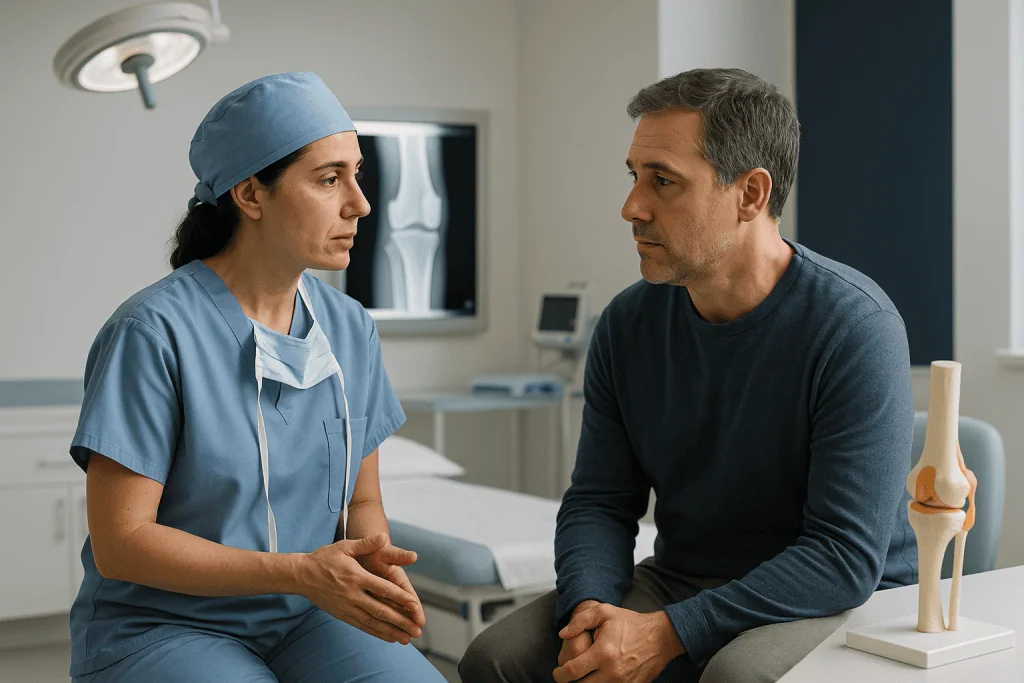
Diagnosis begins with a detailed medical history and physical examination, not with a scan. The physician assesses where the pain sits, how the joints move, how strong the muscles are, whether the joint is stable, whether tendons glide, how the nerves conduct sensation and how well blood reaches the fingers. The pattern of symptoms, which fingers go numb, which movements hurt, what time of day is worst, often points to the diagnosis before any imaging is ordered.
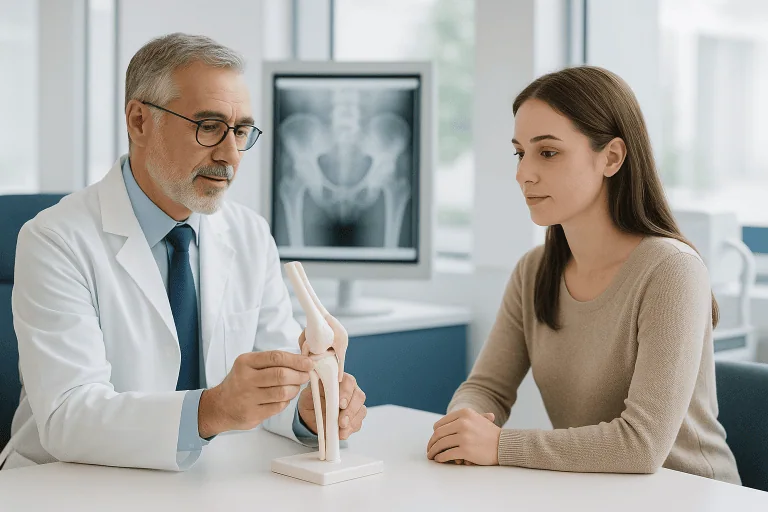
Imaging then confirms and refines the picture. X-rays show fractures, arthritis and alignment. Ultrasound evaluates tendons and soft tissue and can show structures moving in real time. Computed tomography maps complex bone injuries and deformities in three dimensions. Magnetic resonance imaging examines tendons, ligaments, cartilage, nerves and the tissues around them. For suspected nerve problems such as carpal tunnel or cubital tunnel syndrome, electrodiagnostic tests measure how well the nerve conducts signals and how the muscles respond, which helps grade the severity of compression.
When is surgery considered instead of non-surgical treatment?
Surgery is considered when conservative care has failed, is unlikely to work, or would allow damage to progress while you wait. Non-surgical treatment usually comes first where it is safe: rest, splinting, activity modification, anti-inflammatory medication, injections, physiotherapy, hand therapy or workplace adjustments. Many shoulder, elbow and wrist problems genuinely improve this way, and a good surgeon will say so.
The balance shifts towards an operation when there is a complete tendon tear, an unstable or displaced fracture, a displaced joint injury, severe or worsening nerve compression, progressive deformity, advanced arthritis, recurrent instability, or when appropriate conservative treatment has been tried and has not worked. The decision always weighs the risks of surgery against the risks of ongoing damage, pain or disability, and that calculation is different for every patient, which is why the same diagnosis can lead to different recommendations in different people.
Conditions Treated With Upper Limb Surgery
The range of conditions is wide, so it helps to think region by region. What follows covers the most common indications; rare tumours, infections and complex reconstructions follow the same logic of careful diagnosis first, procedure second.
Shoulder conditions
In the shoulder, common indications include rotator cuff tears, shoulder impingement, recurrent dislocation, labral tears, fractures, frozen shoulder that has not responded to treatment, and advanced arthritis requiring joint replacement. Shoulder problems typically limit overhead motion, cause night pain and make basic activities such as dressing and washing difficult.
Not every rotator cuff tear needs repair, and not every arthritic shoulder needs replacement. Small degenerative tears in older, less active patients may be managed with therapy; large or acute tears in active patients more often justify repair before the tendon retracts and the muscle deteriorates. This is a field where timing and honest patient selection matter as much as surgical skill.
Elbow conditions
In the elbow, surgery may be needed for fractures, dislocations, ligament injuries, tendon disorders such as tennis elbow that resists treatment, stiffness, nerve compression and arthritis. Athletes may need treatment for ligament instability or tendon injury, while other patients need surgery after trauma or for long-standing pain and restricted movement.
Cubital tunnel syndrome, pressure on the ulnar nerve at the inner elbow, deserves particular mention. It causes numbness in the ring and little fingers, and if it progresses it can weaken the hand and impair coordination. Because the muscle wasting it causes recovers poorly once established, worsening symptoms carry more weight in the surgical decision than pain alone.
Wrist and hand conditions
In the wrist and hand, indications include carpal tunnel syndrome, fractures, tendon injuries, ligament tears, trigger finger, Dupuytren’s contracture, arthritis at the base of the thumb, wrist arthritis, ganglion cysts, nerve injuries, fingertip injuries, deformities and soft-tissue reconstruction after trauma. Because the hand carries so much of what makes us independent, sensation, grip and fine movement, even a small injury can have an outsized effect on daily life.
Many wrist and hand procedures are short and performed as day surgery under regional anaesthesia, but that does not make them minor. A trigger finger release or carpal tunnel release still demands precise technique around tendons and nerves, and a distal radius fracture fixed a few degrees out of alignment can trouble the wrist for years. Small operations, done well, are the everyday core of this field.
What is the most common upper extremity disorder?
Carpal tunnel syndrome is widely regarded as the most common upper extremity disorder that leads people to a surgeon: it is the most frequent nerve compression problem of the arm and one of the most commonly performed hand operations worldwide. It develops when the median nerve is squeezed at the wrist, producing numbness and tingling in the thumb, index and middle fingers, often worst at night, and eventually weakness of the thumb muscles if compression persists.
Alongside it, tendon disorders such as tennis elbow and trigger finger, rotator cuff disease in the shoulder, and thumb-base arthritis are among the most frequently seen upper limb complaints. Most begin with non-surgical care; surgery enters the discussion when symptoms persist, the nerve or tendon is deteriorating, or function is measurably declining.
Congenital, neurological and complex reconstructive conditions
Surgery also plays a part in care for congenital hand and arm differences, cerebral palsy, brachial plexus injuries, tumours of bone or soft tissue, infection, burns and complex wounds. In these situations planning may involve several specialties and, at times, staged procedures spread over months. The goal may be pain relief, better alignment, improved appearance, easier hygiene, greater independence or simply more effective use of the limb, and defining that goal precisely, with the patient or the child’s family, is the first step.
Children with congenital differences are assessed within paediatric surgical pathways alongside upper limb specialists, because growth changes both the problem and the options. Nerve injuries such as brachial plexus damage may involve neurosurgery expertise, while burns, soft-tissue loss and complex wound reconstruction draw on plastic and reconstructive surgery. The point is not that every patient needs every specialist: it is that complex upper limb problems are rarely solved from a single perspective.
How Upper Limb Surgery Is Performed
Preparation and planning
Preparation begins with confirming the diagnosis and defining the goal of treatment in concrete terms, which movement, which strength, which activity. The surgeon reviews your medical history, previous treatments, imaging, medications, allergies and any conditions that affect surgery or healing, such as diabetes, smoking, blood-clotting disorders, heart disease or inflammatory arthritis. Prior operative reports and therapy notes are genuinely useful here, particularly for revision cases.
Before the operation you may have blood tests, an anaesthesia assessment, cardiac evaluation if needed and additional imaging. The team explains the planned procedure, the alternatives, the expected recovery, the possible risks and the rehabilitation it will require. Some patients have a splint, brace or sling prepared in advance. Your treating team gives you specific instructions about your medicines and about fasting before anaesthesia; those instructions are individual, and they belong to your doctor, not to a web page.
Planning in this field is exact by necessity. A fracture must be aligned so the joint surface heals smoothly. A tendon repair must be strong enough to heal without excessive tension. A nerve decompression must release pressure while protecting everything around it. A joint replacement must account for bone quality, soft-tissue balance and how you actually use the arm. In many upper limb procedures, millimetres matter, which is why digital planning tools and three-dimensional imaging are increasingly used for complex deformity correction and reconstruction.
Anaesthesia: general, regional or both
The operation may be performed under general anaesthesia, under regional anaesthesia that numbs the arm through a nerve block, or under a combination of the two. The choice depends on the procedure, your health, the expected duration and the anaesthesiologist’s assessment. Regional blocks have a practical advantage beyond the operation itself: they can keep the arm comfortable for hours afterwards, easing the early recovery period. Many hand and wrist procedures are done entirely under regional anaesthesia while you remain awake or lightly sedated.
Arthroscopic (keyhole) surgery
Arthroscopic surgery uses small incisions and a slender camera to see inside a joint, with specialised instruments introduced through additional small openings to repair or remove damaged tissue. It is commonly used in the shoulder, elbow and wrist for selected conditions, ligament injuries, cartilage problems, impingement and certain tendon repairs.
Its advantage is detailed visualisation of the joint with less soft-tissue disruption than some open approaches, which can mean less early discomfort and smaller scars. Its honest limit is that it is not appropriate for every diagnosis: complex fractures, joint replacement and most reconstructions cannot be done through a camera, and choosing keyhole surgery for the wrong problem serves nobody.
Open surgery and fracture fixation
Open surgery uses a larger incision to reach the injured or diseased area directly. It is required for complex fractures, joint replacement, tendon transfer, deformity correction, nerve repair, tumour surgery and severe scarring. In fracture surgery, plates, screws, pins or other fixation devices hold bone fragments in the correct position while healing occurs; intraoperative imaging is often used to confirm alignment and implant position before the wound is closed.
In tendon repair, sutures are placed in patterns engineered to support healing while allowing a structured rehabilitation programme to begin. In joint replacement, the worn surfaces are removed and replaced with implants sized and positioned to match your anatomy. Open surgery generally means a longer wound-healing period than keyhole surgery, but for the problems it treats, there is no shortcut around it.
Microsurgery for nerves, vessels and soft tissue
Microsurgery uses an operating microscope or high magnification, together with fine instruments and sutures, to repair structures too small for the naked eye, nerves, small blood vessels and delicate tendon systems. It is used after sharp injuries that divide a nerve, in reconstruction where tissue must be moved with its blood supply, and in reattachment surgery after severe hand trauma.
Expectations here need particular care. A well-executed nerve repair sets the conditions for recovery, but the nerve itself regrows slowly, and sensation or strength may return over many months rather than weeks. Some recovery is often incomplete, especially in adults and after high injuries near the shoulder. Stating this at the outset is fairer than discovering it in month four.
How long does upper limb surgery take, and will I stay in hospital?
Operating time varies from well under an hour to several hours. A straightforward nerve release or trigger finger procedure is a short operative session; complex fracture reconstruction, microsurgery or joint replacement takes considerably longer. Many procedures are performed as day surgery, allowing you to leave the hospital the same day. Others require one or more nights of inpatient care, typically when the surgery is complex, when you have medical risk factors, or when pain control and wound observation are needed overnight.
After the operation, the arm is usually placed in a dressing, splint, cast, brace or sling, and elevation is recommended to limit swelling. The team monitors circulation, sensation, finger movement, the wound and your comfort before discharge, and you receive written instructions covering wound care, activity restrictions, medication use and the warning signs that should prompt a review, increasing pain, fever, excessive swelling, wound drainage, colour changes in the fingers or worsening numbness.
Recovery After Upper Limb Surgery
Recovery differs significantly by diagnosis and procedure, but most patients move through the same staged pathway: protection first, then controlled movement, then strengthening, then a graded return to work and activity. The table below describes a typical shape of that pathway; your own timeline is set by your surgeon and therapist according to what was repaired.
| Time Period | What Patients Can Expect |
|---|---|
| Day 1 | The arm is protected in a dressing, splint, cast, brace or sling. Pain and swelling are managed, and the team checks circulation, sensation and finger movement. |
| First Week | Swelling and bruising are common. You receive wound care instructions and may begin gentle finger, hand or shoulder exercises if appropriate for the repair. |
| First Month | Follow-up visits assess healing. Stitches are removed when appropriate. Therapy may progress from protected motion to more active exercises, depending on the procedure. |
| Two to Three Months | Work continues on range of motion, scar mobility, coordination and gradual strengthening. Desk work often resumes earlier; manual work usually requires more time. |
| Longer Term | Strength, endurance and fine control continue to improve for several months. Nerve recovery, complex trauma and joint replacement rehabilitation can take longer still. |
The role of hand therapy and physiotherapy
Hand therapy and physiotherapy are not an optional extra after upper limb surgery: they are the second half of the treatment. Some repairs need weeks of protection before active movement begins; others need early controlled motion precisely to prevent stiffness and adhesions. Doing too much too soon can cause a repair to fail; doing too little can leave a technically successful operation buried under a stiff, guarded limb.
A typical rehabilitation sequence moves through defined stages:
- Protection and swelling controlsplinting, elevation, wound and scar care, and gentle movement of the joints that are safe to move.
- Restoring motionprogressive range-of-motion exercises, scar mobilisation and, where needed, adjustable splints to regain lost degrees.
- Rebuilding strengthgraded strengthening of grip, pinch and the larger muscles of the arm and shoulder once healing allows load.
- Retraining functioncoordination, dexterity and endurance work aimed at your specific tasks: typing, tools, instruments, sport or childcare.
- Return to full activitya staged return to work and sport, with timing agreed between surgeon, therapist and patient rather than guessed.
What is the hardest joint surgery to recover from?
There is no single honest answer, because “hardest” depends on what is measured, pain, time, or the discipline the rehabilitation demands. Within the upper limb, shoulder procedures are often cited as the most demanding: rotator cuff repair and shoulder replacement rely heavily on months of staged soft-tissue rehabilitation, and progress can feel slow in the early weeks. The elbow, for its part, is notorious for stiffness after trauma, and regaining its motion takes persistent, sometimes uncomfortable therapy.
What makes any joint surgery hard to recover from is less the incision than the biology behind it: tendons and cartilage heal slowly, nerves slower still, and no amount of motivation compresses those timelines. Patients who understand this before surgery generally cope better with the middle months, when the wound looks healed but the function has not yet caught up.
Benefits of Upper Limb Surgery
The potential benefits depend on the condition treated, the procedure performed and the rehabilitation that follows, but the goals centre consistently on pain relief, function and independence. None of these is automatic; each is a realistic aim when the diagnosis is right, the operation is well matched to it and the rehabilitation is followed through.
| Benefit | What It Means for You |
|---|---|
| Pain reduction | Treating the source of pain, a torn tendon, compressed nerve, unstable joint or arthritic surface, can make daily activities and sleep more comfortable. |
| Improved movement | Repairing damaged structures or releasing stiffness can help restore the shoulder, elbow, wrist or finger motion needed for self-care, work and recreation. |
| Better strength and grip | Tendon repair, fracture fixation, nerve treatment or joint reconstruction can improve the ability to lift, hold, pinch, grasp and perform fine hand tasks. |
| Greater joint stability | Procedures for ligament injuries or recurrent dislocation can reduce episodes of giving way and protect the joint from further damage. |
| Prevention of worsening damage | Timely treatment can reduce the risk of malunion, chronic nerve compression, tendon retraction, progressive deformity and long-term stiffness. |
| Improved independence | When pain and function improve, patients can return with more confidence to self-care, household activities, professional responsibilities and selected sports. |
Why Timing Matters
Not every upper limb problem requires immediate surgery, but timely assessment matters more here than in many other fields. The shoulder, elbow, wrist and hand are vulnerable to stiffness and loss of function when injuries go untreated or heal in the wrong position. A fracture that unites with poor alignment can cause pain, weakness, deformity and early arthritis. A ruptured tendon retracts over weeks and becomes harder to repair. A nerve compressed for too long recovers less completely even after a technically perfect release. Recurrent dislocations progressively damage cartilage, bone and the stabilising tissues around a joint.
Early specialist assessment also protects you from the opposite error: months of ineffective treatment for a problem that was never going to respond to it. A precise diagnosis early on lets you start the right pathway, whether that is structured rehabilitation, injection therapy, bracing or an operation, instead of cycling through generic remedies while the window for the best repair narrows.
Timing shapes the surgical options themselves. Fresh tendon injuries can often be repaired directly; late ones may need grafts or transfers. Recent fractures can be reduced and fixed; malunited ones need corrective osteotomy. Early nerve compression may need only decompression; long-standing compression with muscle wasting has a more guarded outlook however it is treated. In upper limb surgery, when you are treated is often as consequential as how.
Factors That Influence Outcomes
A good result after any of these procedures depends on several factors, and it is worth understanding them before deciding anything. The first is the underlying condition. A simple, recent injury has a different outlook from a long-standing deformity, advanced arthritis, multiple previous operations or a complex injury involving bone, tendon, nerve and soft tissue together. No surgical technique erases that difference; it can only make the most of the starting point.
Tissue and bone quality affect healing. Smoking, poorly controlled diabetes, vascular disease, inflammatory conditions, infection and certain medications can slow recovery or raise complication risk. Age alone does not determine the outcome, overall health, nutrition, bone quality and activity level matter more, but these factors are assessed honestly before surgery precisely because they change the calculation.
Surgical technique is the factor patients think of first, and it does matter. Upper limb operations demand detailed anatomical knowledge and careful soft-tissue handling; restoring joint alignment, balancing tissues, protecting nerves and choosing the right fixation or reconstruction method all influence comfort, motion and durability. The surgeon’s experience with the specific condition is therefore relevant, particularly for complex trauma, revision surgery, microsurgery, joint replacement and congenital or neuromuscular deformity.
Rehabilitation quality and your own participation weigh at least as heavily. After some tendon repairs, early controlled motion prevents adhesions but unrestricted use would rupture the repair. After fracture fixation, therapy begins once stability allows movement. After nerve surgery, improvement is gradual because nerves heal slowly. Patients who attend therapy, follow protection rules and resume load on schedule generally recover more smoothly than those who skip sessions or test the repair early.
Finally, outcomes are measured against goals, and goals differ. A musician, a surgeon, an athlete, an office professional, a parent and an older adult living independently define success differently. A strong treatment plan identifies what matters most to you and aligns the operation and the rehabilitation with those priorities, rather than chasing an abstract idea of a perfect result.
How Upper Limb Care Is Organised at Acibadem
Upper limb problems often need more than one pair of specialist eyes, and care at Acibadem is organised around that reality. Depending on the case, orthopaedic surgeons, hand and microsurgery specialists, plastic and reconstructive surgeons, neurologists, radiologists, anaesthesiologists, rehabilitation physicians and physiotherapists contribute to diagnosis and treatment planning. Complex injuries, tumours, infections and nerve conditions may be reviewed in multidisciplinary discussion, so that decisions reflect the full clinical picture rather than a single perspective.
The diagnostic pathway follows the sequence described on this page: history and examination first, then imaging: X-ray, ultrasound, computed tomography or magnetic resonance imaging as the question demands, and electrodiagnostic testing where a nerve disorder is suspected. The aim of that sequence is a precise answer to three questions: whether surgery is necessary at all, which procedure fits the problem, and what rehabilitation the repair will require afterwards.
Treatment planning is individual because the same diagnosis lands differently in different lives. A rotator cuff tear in a competitive swimmer, severe shoulder arthritis in a replacement candidate, a wrist fracture in a manual worker and carpal tunnel syndrome in someone who types all day each call for a different conversation. Occupation, health status, expectations and access to therapy after discharge all shape the plan.
Surgical technology, arthroscopic visualisation, surgical magnification, microsurgical instruments, intraoperative imaging and digital planning, supports this work, but it is used as part of a clinical strategy, not as a substitute for one. Its value to you is practical: a more informed diagnosis, a procedure matched to the actual problem and a clearer recovery plan. Continuity matters just as much after discharge: rehabilitation instructions are prepared so that the physiotherapist or hand therapist who continues your care can carry the programme forward without losing the thread of what was repaired and how it must be protected.
Making an Informed Decision
Deciding on an operation for the shoulder, arm or hand is a significant step, particularly when pain, injury or loss of function is already eroding your independence. The sound next step is always a careful evaluation: understanding the diagnosis precisely, knowing whether non-surgical care remains a genuine option, learning what the proposed operation involves and clarifying what recovery will ask of you and for how long. For complex reconstruction, joint replacement, revision surgery or treatment after a major injury, a second opinion is a reasonable and common part of that process.
Measure any recommendation you receive against the questions this page has raised. What exactly is the diagnosis, and how was it confirmed? What happens if the problem is left alone? What can the operation realistically achieve, and what can it not? What will rehabilitation involve, and who will deliver it? A decision built on those answers, your own goals and realistic expectations is the strongest foundation this surgery can have.
Preparation
- Before upper limb surgery, your surgeon reviews imaging, medical history, medications and any previous treatments. Blood tests, anesthesia evaluation and, when needed, nerve or vascular assessments may be requested. Patients are usually advised to stop smoking and adjust blood-thinning medicines under medical guidance.
Aftercare
- After surgery, the arm may be protected with a splint, sling or dressing, and swelling control is important. Pain medication, wound care and follow-up visits are planned according to the procedure. Physical therapy is often recommended to restore strength, flexibility and hand or arm function.
Frequently Asked Questions
What affects the cost of upper limb surgery most?
The main factors are the diagnosis, complexity of the procedure, surgeon and hospital fees, anaesthesia, implants or grafts, imaging, hospital stay, rehabilitation, splints and follow-up care. Travel and accommodation can also affect the total cost for international patients.
How can I get a personalised quote from Acibadem?
You can request a free consultation and share your medical reports, imaging, current diagnosis and symptoms. A specialist review helps determine the suitable treatment plan, after which the international patient team can prepare a personalised estimate.
Does a package usually include physiotherapy?
Some care plans may include initial physiotherapy or rehabilitation coordination, while longer rehabilitation may be arranged separately. This should be clarified in your personalised quote because hand, wrist, elbow and shoulder procedures often require structured therapy.
Why can two patients with the same upper limb problem receive different quotes?
Quotes can differ because the injury pattern, tissue quality, need for implants, surgical technique, hospital stay, rehabilitation plan and medical history may not be the same. The final plan is based on specialist assessment rather than the diagnosis name alone.
Is travelling abroad for upper limb surgery suitable for everyone?
Not always. Suitability depends on the urgency of the condition, medical fitness for travel, expected recovery, follow-up needs and rehabilitation requirements. This information is general and is not medical or financial advice; a specialist consultation is needed for individual guidance.
Medically reviewed by the Acıbadem International Medical Board August 31, 2026
See our medical review board →
Update history
- PublishedJune 8, 2026
- Medical review approvedAugust 31, 2026
- Last content updateAugust 31, 2026
Trusted care for international patients
From the Acibadem Blog

Driving, Typing and Lifting After Upper Limb Surgery: When Everyday Tasks Return
Driving after upper limb surgery is usually allowed only when you can steer, brake and react without a sling, without impairing pain medicine, and…