

Robotic-Assisted Knee Replacement
Robotic-Assisted Knee Replacement is an advanced surgical procedure that uses robotic technology to improve implant positioning and precision during knee joint replacement for severe pain and stiffness.
Quick answer
Robotic-Assisted Knee Replacement is an advanced surgical procedure that uses robotic technology to improve implant positioning and precision during knee joint replacement for severe pain and stiffness.
When knee pain starts to shape your life
People usually begin researching robotic-assisted knee replacement after months or years of trying to manage a knee that no longer feels reliable. At first, the changes may seem manageable: pain when climbing stairs, stiffness after sitting, swelling at the end of the day, or a growing reluctance to walk as far as you once did. Over time, the knee can become the center of every decision. Patients may stop traveling, exercising, sleeping comfortably, or participating in family life in the way they want to. For many, the hardest part is not only the pain itself, but the sense that daily life has narrowed around it.
Choosing knee replacement surgery is rarely a simple decision. Patients often worry about whether surgery is truly necessary, how much pain they will have afterward, how long recovery will take, and whether the new joint will feel natural. Those considering treatment abroad may have additional questions: How will the diagnosis be confirmed? Will the treatment plan reflect current evidence? Who will coordinate travel, testing, and follow-up?
Robotic-assisted knee replacement is designed to address some of these concerns by helping surgeons perform joint replacement with a high degree of precision. The goal is not to replace the surgeon, but to support surgical planning and execution with detailed data about the patient’s knee anatomy, alignment, and soft-tissue balance. For the right patient, this approach can contribute to more accurate implant placement and a recovery plan tailored to functional goals.
Treatment matters because advanced knee arthritis and related joint damage do not simply cause pain. They can lead to reduced mobility, worsening deformity, loss of muscle strength, disturbed sleep, dependence on pain medication, and a decline in overall health. When non-surgical treatment no longer provides meaningful relief, knee replacement may offer a way to restore movement, reduce pain, and return to everyday activities with greater confidence.
What robotic-assisted knee replacement is
Robotic-assisted knee replacement is a form of knee arthroplasty in which the surgeon uses robotic technology and computer-guided planning to replace damaged parts of the knee joint with artificial components. It may be used for a total knee replacement, where the main surfaces of the joint are replaced, or in selected cases for a partial knee replacement, where damage is limited to one part of the joint.
In a healthy knee, cartilage allows the joint surfaces to glide smoothly. In arthritis or other forms of advanced joint damage, that cartilage wears away. The result can be pain, inflammation, grinding, stiffness, and changes in leg alignment. Knee replacement surgery removes the damaged surfaces and reshapes the joint so that artificial components can be placed to recreate smoother movement and improve alignment.
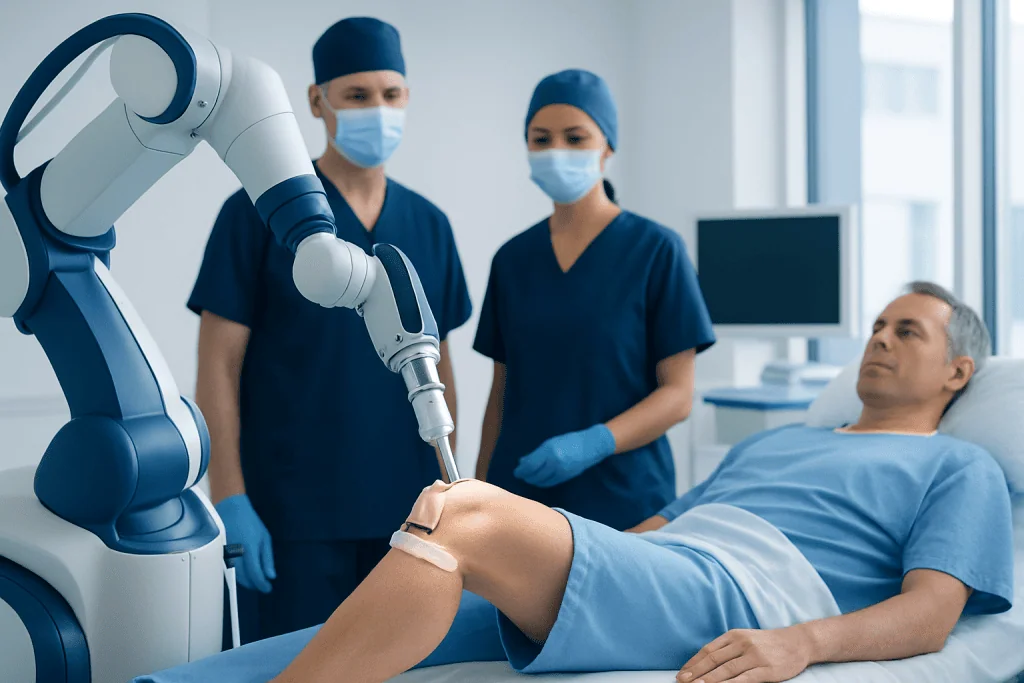
What makes the robotic-assisted approach different is the use of advanced imaging, digital mapping, and real-time surgical guidance. Before or during surgery, the system gathers information about the patient’s anatomy. This helps the surgeon create a personalized plan for bone preparation, implant size, component position, and joint balancing. During the operation, the technology helps guide bone cuts and implant placement according to that plan while allowing the surgeon to make adjustments based on what is seen in real time.
This is still a surgeon-led operation. The robotic platform does not make independent decisions or perform the procedure on its own. Instead, it acts as a sophisticated tool that may improve consistency and precision, particularly in areas such as implant alignment and protection of surrounding structures. For patients, the practical meaning is that surgery can be planned around the specific shape and mechanics of their knee rather than using a one-size-fits-all approach.
Who may need robotic-assisted knee replacement
Robotic-assisted knee replacement may be considered for patients with chronic knee pain and stiffness that significantly affect daily life and have not responded adequately to non-surgical treatment. Most often, these patients have already tried a combination of medication, physical therapy, activity modification, weight management, injections, bracing, or walking aids. Surgery becomes a more serious consideration when symptoms remain persistent and function continues to decline.
Typical symptoms include pain when walking, standing, or climbing stairs; stiffness after rest; swelling; a feeling of instability; reduced range of motion; and difficulty with routine tasks such as getting out of a chair, shopping, traveling, or sleeping through the night. Some patients notice that the knee has become bowed inward or outward, or that they can no longer fully straighten or bend it.
Diagnosis begins with an orthopedic evaluation. The surgeon will ask about symptoms, previous injuries, treatments already tried, and the ways the condition affects work, travel, exercise, and quality of life. A physical examination assesses alignment, swelling, tenderness, ligament stability, walking pattern, and range of motion. Imaging studies, typically weight-bearing X-rays, are central to evaluating the degree of joint damage. In selected cases, additional imaging may be used to better understand bone anatomy, deformity, or prior surgical changes.
Not every patient with knee pain is a candidate for knee replacement, and not every knee replacement needs a robotic-assisted approach. The decision depends on the cause and severity of symptoms, the extent of cartilage loss, the patient’s anatomy, overall health, goals, and whether a partial or total replacement is appropriate. A careful assessment helps determine whether robotic assistance is likely to add meaningful value in planning and execution.
Patients who often benefit from a more individualized, precision-based surgical approach include those with significant deformity, prior knee surgery, unusual anatomy, or high functional expectations. That said, technology is only one part of the equation. The experience of the orthopedic surgeon, the quality of preoperative planning, and the rehabilitation process remain essential to a good result.
The conditions and indications it addresses
The most common reason for robotic-assisted knee replacement is osteoarthritis of the knee. This is the age-related or wear-related degeneration of joint cartilage that gradually exposes the underlying bone. Osteoarthritis can affect one part of the knee or the entire joint, and it often leads to pain, stiffness, and progressive loss of function.
Other conditions that may lead to knee replacement include rheumatoid arthritis and other inflammatory arthritides, which can damage cartilage and surrounding tissues through ongoing inflammation. Post-traumatic arthritis is another important indication. This can occur years after a fracture, ligament injury, or meniscal injury has altered the mechanics of the joint. In some patients, avascular necrosis or other conditions affecting bone quality may also contribute to joint destruction.
Robotic-assisted techniques may also be considered in selected revision-related situations, although revision knee replacement is a separate and often more complex category of surgery. For primary knee replacement, the technology is particularly relevant when precise component positioning, limb alignment, and soft-tissue balancing are important to the surgical plan.
In general, surgery is considered when imaging confirms structural damage that matches the patient’s symptoms, and when conservative treatment no longer provides acceptable relief. The decision is not based on an X-ray alone. Some patients have severe radiographic arthritis but manage well without surgery, while others experience disabling symptoms that justify moving forward. The key question is whether the condition has progressed to the point that replacing the joint is likely to provide more meaningful benefit than continuing non-surgical care.
How robotic-assisted knee replacement is performed
The process begins before the day of surgery. Preoperative assessment may include blood tests, heart and lung evaluation when needed, imaging, medication review, and anesthesia consultation. Patients with diabetes, cardiovascular disease, excess weight, or previous clotting problems may need additional optimization before surgery. For international patients, this stage is especially important because it helps align travel timing, medical readiness, and postoperative planning.
Once surgery is scheduled, the orthopedic team develops a personalized plan. Depending on the system used, this may involve advanced imaging before surgery or intraoperative mapping of the knee. The purpose is to understand the patient’s anatomy in detail, including bone shape, areas of cartilage loss, existing deformity, and the relationship between the joint surfaces. This digital planning supports decisions about implant sizing, orientation, and alignment targets.
On the day of the procedure, the patient is admitted and prepared for surgery. Knee replacement is commonly performed under regional anesthesia, general anesthesia, or a combination of both, depending on the patient’s health status and the anesthesiologist’s assessment. Pain-management techniques may include nerve blocks and multimodal medication strategies to reduce discomfort after surgery and support earlier mobilization.
After the surgical area is cleaned and prepared, the surgeon makes an incision over the knee and carefully exposes the joint. Damaged cartilage and a small amount of underlying bone are removed from the femur, tibia, and, when indicated, the patella. In robotic-assisted surgery, tracking tools or sensors help the system understand the knee’s movement and position during the procedure. The surgeon uses this information to confirm or refine the surgical plan in real time.
The robotic platform assists the surgeon in preparing the bone according to the planned dimensions and boundaries. This may improve the accuracy of bone cuts and help avoid unnecessary removal of bone or unintended injury to nearby soft tissues. The surgeon then inserts trial components to test the knee’s range of motion, alignment, and soft-tissue tension. Adjustments can be made before the final implants are placed.
The permanent components are then fixed to the prepared bone surfaces, typically using bone cement or, in selected situations, other fixation methods depending on the implant design and the patient’s bone quality. A medical-grade spacer is inserted between the metal components to create a smooth gliding surface. The surgeon confirms stability, motion, and tracking of the joint before closing the incision.
Technology used in robotic-assisted knee replacement generally includes computer-based planning software, intraoperative navigation or mapping tools, real-time feedback systems, and precision-guidance mechanisms that help the surgeon perform the procedure according to the individual plan. For the patient, these tools are valuable because they support accurate alignment and implant positioning, both of which are important for function, comfort, and the long-term behavior of the artificial joint.
The procedure itself commonly takes a few hours, although duration varies based on whether the replacement is partial or total, whether one or both knees are treated, the complexity of deformity, prior surgery, body habitus, and intraoperative findings. Time in the hospital depends on the patient’s general health, pain control, mobility, and rehabilitation progress. Some patients may leave relatively quickly, while others benefit from a slightly longer stay for observation and therapy.
Recovery begins immediately. Many patients stand or walk with assistance on the day of surgery or the next day. Early movement helps reduce complications and supports circulation, muscle activation, and confidence. Physical therapy focuses on walking, gentle strengthening, range of motion, safe transfers, stair practice, and instruction for home exercises. Swelling, bruising, stiffness, and temporary fatigue are common in the early phase and usually improve over time with guided rehabilitation.
Before discharge, the team reviews wound care, medications, warning signs, blood clot prevention, and travel recommendations. Follow-up planning is particularly important for international patients, as it helps coordinate rehabilitation both during the stay in Turkey and after the patient returns home.
Why acting early can matter
Not every painful knee needs immediate surgery, but waiting too long can make treatment and recovery more difficult for some patients. As arthritis progresses, pain often leads to reduced activity, and reduced activity leads to weaker muscles, poorer endurance, weight gain, and reduced joint flexibility. This can create a cycle in which the patient becomes less prepared physically for surgery and rehabilitation.
Advanced joint damage may also be associated with worsening deformity, more difficult balancing of soft tissues, and increasing limitation in range of motion. In some cases, prolonged compensation can affect other parts of the body. Patients may develop hip pain, back pain, or problems in the opposite knee because they change the way they walk to avoid discomfort.
There is also the human cost of delay. People may withdraw from exercise, social activities, work responsibilities, or travel plans because they no longer trust the joint. Sleep disruption and chronic pain can affect mood, energy, and overall well-being. If a patient is relying heavily on anti-inflammatory medication or pain relievers, prolonged use may bring its own risks.
Acting at the right time does not mean rushing into surgery. It means seeking specialist assessment when symptoms are persistent, function is declining, and conservative measures are no longer enough. A timely evaluation helps clarify whether continued non-surgical care is appropriate or whether knee replacement should be considered before the condition imposes further limitations.
Potential benefits of treatment
When robotic-assisted knee replacement is appropriate, the benefits can extend beyond pain relief alone.
| Benefit | What It Means for You |
|---|---|
| Reduced joint pain | Many patients experience substantial relief from the persistent pain caused by advanced arthritis or joint damage. |
| Improved mobility | Walking, climbing stairs, standing from a chair, and other everyday movements often become easier with rehabilitation. |
| More precise implant planning and placement | Robotic guidance helps the surgeon tailor the procedure to your anatomy and may improve consistency in alignment and component positioning. |
| Better joint function | A well-planned and well-performed replacement can improve stability, range of motion, and confidence in the knee. |
| Protection of surrounding structures | Technology-assisted planning and execution may help limit unnecessary disruption to nearby bone and soft tissue. |
| Improved quality of life | Patients often seek surgery so they can return to travel, exercise, family activities, and sleep with less limitation. |
Typical recovery timeline
Recovery is individual, but the general pattern below helps patients understand what to expect after robotic-assisted knee replacement.
| Time Period | What Patients Can Expect |
|---|---|
| Day 1 | Monitoring after surgery, pain control, assisted standing or walking in many cases, and the start of gentle exercises and circulation measures. |
| First Week | Use of a walker or crutches, swelling and stiffness that are still noticeable, daily exercises, and increasing independence with walking and basic activities. |
| First Month | Gradual improvement in strength and range of motion, transition to a cane or independent walking for some patients, and continued physical therapy. |
| Weeks 6 to 12 | Many patients feel more comfortable with routine activities, although endurance, flexibility, and confidence continue to improve with ongoing rehabilitation. |
| Longer Term | Steady functional gains over several months, with continued improvement in walking, daily comfort, and return to low-impact activities as advised by the surgeon. |
What influences outcomes and a good result
Outcomes after robotic-assisted knee replacement depend on several interacting factors. The first is correct patient selection. Surgery is most likely to help when symptoms, imaging findings, and functional limitations clearly point to advanced joint disease that has not responded to appropriate non-surgical care. A carefully defined indication matters as much as surgical technique.
The experience of the orthopedic surgeon and the quality of the clinical team also play an important role. Robotic tools can support precision, but they do not replace surgical judgment. Successful treatment depends on accurate diagnosis, thoughtful preoperative planning, technical execution, anesthesia support, infection prevention, pain management, and structured rehabilitation.
Patient-related factors are equally important. General health, smoking status, diabetes control, body weight, muscle strength, nutrition, and commitment to postoperative therapy all influence healing and function. Patients who actively participate in rehabilitation usually recover mobility and confidence more effectively than those who remain inactive because of fear or discomfort.
Expectations also matter. Knee replacement is intended to reduce pain and improve function, but recovery takes effort, and the new joint may not feel exactly like a natural, healthy knee. Most patients can return to walking, traveling, and low-impact activities, but high-impact sports and certain repetitive stresses may not be advisable. A good result is usually defined by meaningful pain relief, improved movement, joint stability, and the ability to resume valued daily activities.
Finally, follow-up and continuity of care support better outcomes. Monitoring the incision, mobility, swelling, and rehabilitation progress helps the team identify concerns early and adjust the recovery plan as needed. For patients traveling internationally, coordinated communication with physicians and therapists at home can make this process smoother and more effective.
Why international patients choose Acibadem for this treatment
For international patients considering robotic-assisted knee replacement, the quality of the overall care pathway is as important as the operation itself. Treatment is not only about replacing a joint. It is about confirming the diagnosis carefully, selecting the right procedure, managing medical risks, supporting early rehabilitation, and planning follow-up in a way that works across borders.
At Acibadem, orthopedic care is delivered within JCI-accredited hospital settings where complex surgical decisions can be supported by multidisciplinary evaluation when needed. Patients with additional medical conditions may benefit from coordinated input from anesthesia, internal medicine, cardiology, radiology, pain management, and physical medicine and rehabilitation specialists. This is especially relevant for patients who are older, have chronic health conditions, or are seeking a second opinion after being told they need surgery elsewhere.
Modern diagnostic pathways help ensure that the treatment plan reflects the actual cause of symptoms and the extent of structural damage. Advanced imaging and preoperative assessment are used to understand alignment, joint wear, previous surgical changes, and general medical fitness. For robotic-assisted procedures, this preparation supports individualized planning rather than a standard template approach.
Experienced orthopedic surgeons work with technologies that assist with anatomical mapping, component planning, and intraoperative guidance. The value of these technologies lies in how they help the surgeon translate the preoperative plan into the operating room with greater precision and consistency. Just as important is the rehabilitation process, which begins early and is adapted to the patient’s baseline mobility, pain tolerance, and personal goals.
International patient services are also an important part of the experience. Many patients traveling from the United States, Europe, the Middle East, Africa, or Central Asia need practical coordination in addition to medical care. Dedicated support teams can assist with appointment scheduling, medical record review, language support in more than 20 languages, travel planning, and communication before and after treatment. This kind of structure can make a major difference for patients who want clarity and continuity rather than navigating a major procedure alone.
Patients often choose Acibadem when they are looking for a combination of evidence-based orthopedic care, experienced physicians, advanced surgical planning, and a hospital system accustomed to the expectations of international patients. The aim is not simply to perform the operation, but to build a treatment plan that fits the patient’s anatomy, medical needs, travel circumstances, and recovery goals.
Taking the next step
If knee pain has reached the point where it limits movement, sleep, travel, or independence, it may be time to ask whether a more definitive solution is appropriate. Robotic-assisted knee replacement is one option that can offer a more individualized and precision-guided approach for patients with advanced joint damage. For the right patient, it may help support accurate implant placement, meaningful pain relief, and a return to daily activities that have become difficult or impossible.
A thoughtful consultation can help answer the questions that matter most: whether surgery is truly indicated, whether a partial or total replacement is more appropriate, what recovery is likely to involve, and how treatment can be planned if you are traveling from abroad. Some patients are ready to move forward with surgery. Others simply want a clear second opinion based on imaging, symptoms, and current orthopedic standards.
If you would like to learn more, request an expert review of your case, or arrange a consultation, Acibadem’s teams can help guide the next step in a structured and medically grounded way.
This information is intended for general educational purposes and is not a substitute for professional medical advice, diagnosis, or treatment.
Preparation
- Before surgery, patients usually have an orthopedic evaluation, imaging tests, blood work, and anesthesia assessment. Your doctor may advise stopping certain medications, managing chronic conditions, and starting prehabilitation exercises. Fasting is typically required from the night before surgery.
Aftercare
- Early walking and physical therapy usually begin soon after surgery to restore movement and strength. Pain control, wound care, and blood clot prevention are important during the first weeks. Follow-up visits help monitor healing and implant alignment.
Doctors Performing This Treatment

Prof. Dr. Ahmet Alanay
Orthopedic Surgery & Traumatology
Prof. Dr. Alper Kaya
Orthopedic Surgery & Traumatology
Prof. Dr. Arel Gereli
Orthopedic Surgery & Traumatology
Prof. Dr. Ata Can Atalar
Orthopedic Surgery & Traumatology
Prof. Dr. Aziz Kaya Alturfan
Orthopedic Surgery & Traumatology
Prof. Dr. Barış Kocaoğlu
Orthopedic Surgery & Traumatology
Prof. Dr. Burak Akan
Orthopedic Surgery & Traumatology
Prof. Dr. Cihangir Tetik
Orthopedic Surgery & Traumatology
Prof. Dr. Emre Toğrul
Orthopedic Surgery & Traumatology
Prof. Dr. Erhan Serin
Orthopedic Surgery & Traumatology
Prof. Dr. Fatih Dikici
Orthopedic Surgery & Traumatology
Prof. Dr. Gökşel Dikmen
Orthopedic Surgery & Traumatology
Prof. Dr. Gündüz Tezeren
Orthopedic Surgery & Traumatology
Prof. Dr. Hakan Turan Çift
Orthopedic Surgery & Traumatology
Prof. Dr. Harzem Özger
Orthopedic Surgery & Traumatology
Prof. Dr. Hüseyin Bayram
Orthopedic Surgery & Traumatology
Prof. Dr. Kaan Erler
Orthopedic Surgery & Traumatology
Prof. Dr. Kahraman Öztürk
Orthopedic Surgery & Traumatology
Prof. Dr. Kerem Bilsel
Orthopedic Surgery & Traumatology
Prof. Dr. Kerim Sarıyılmaz
Orthopedic Surgery & Traumatology
Prof. Dr. Korhan Özkan
Orthopedic Surgery & Traumatology
Prof. Dr. Levent Eralp
Orthopedic Surgery & Traumatology
Prof. Dr. M. Nadir Şener
Orthopedic Surgery & Traumatology
Prof. Dr. Mahir Gülşen
Orthopedic Surgery & TraumatologyMedical Units
Available at These Hospitals












Diseases This Treats
Technologies Used
Frequently Asked Questions
What is robotic-assisted knee replacement and how is it different from traditional knee replacement?
Robotic-assisted knee replacement is a type of joint replacement surgery that uses advanced imaging, planning software, and a robotic arm to help the surgeon position the implant with high precision. The robot does not operate on its own; your orthopedic surgeon remains in full control throughout the procedure. Compared with traditional methods, robotic assistance can support more accurate bone preparation, better alignment, and a treatment plan tailored to your knee anatomy and movement.
Who is a good candidate for robotic-assisted knee replacement?
People with severe knee arthritis, ongoing pain, stiffness, or reduced mobility that no longer improves with medication, injections, physiotherapy, or lifestyle changes may be candidates. It can be considered for patients with osteoarthritis, rheumatoid arthritis, or certain post-traumatic joint problems. Suitability depends on your age, general health, bone quality, knee deformity, and previous surgeries. At Acibadem, orthopedic specialists provide a personalized assessment to determine whether robotic-assisted surgery is the right option for you.
Is robotic-assisted knee replacement safer or more accurate?
Robotic assistance is designed to improve surgical precision by helping the surgeon plan the procedure in detail and make real-time adjustments during surgery. This can support accurate implant positioning and balanced knee movement. Safety still depends on many factors, including the surgeon’s experience, your overall health, and proper rehabilitation after the operation. For many patients, robotic technology offers added confidence, but the best approach is always decided individually after a full orthopedic evaluation.
How long does robotic-assisted knee replacement surgery take?
The procedure usually takes a few hours, but the exact time depends on whether you need a partial or total knee replacement, your anatomy, and any previous knee surgery. Time in the hospital also includes anesthesia preparation and recovery monitoring. Many patients stay in the hospital for a short period, although this varies by medical condition and rehabilitation progress. Your care team at Acibadem will explain the expected timeline based on your personalized treatment plan.
What is the recovery time after robotic-assisted knee replacement?
Recovery is gradual and differs from person to person. Many patients begin standing and walking with support shortly after surgery, followed by structured physiotherapy. In the first weeks, the focus is on pain control, reducing swelling, and regaining movement. Returning to daily activities may take several weeks, while full recovery can take a few months. Your progress depends on age, fitness, motivation, and overall health. Acibadem specialists create personalized rehabilitation plans for international patients.
Will I have less pain after robotic-assisted knee replacement?
The main goal of knee replacement is to reduce arthritis-related pain and improve function. Many patients experience meaningful relief once healing progresses, although some discomfort is expected in the early recovery period. Robotic assistance may help optimize implant placement and soft tissue balance, which can contribute to better function and comfort. Pain management also includes medication, early mobilization, and physiotherapy. Your orthopedic team will explain realistic expectations based on your knee condition and health profile.
Can international patients travel to Turkey for robotic-assisted knee replacement?
Yes, many international patients travel to Turkey for robotic-assisted knee replacement, especially when they want advanced orthopedic care, experienced surgeons, and coordinated medical travel support. Before surgery, you may be asked to share imaging, medical records, and details about previous treatments. After the procedure, you should plan enough time in Turkey for hospital recovery, follow-up, and early rehabilitation before flying home. Acibadem teams can help organize the treatment pathway for overseas patients.
How long should I stay in Turkey after robotic-assisted knee replacement?
The recommended stay depends on your medical condition, the type of knee replacement, and how quickly you recover after surgery. In general, international patients should allow time for preoperative evaluation, the operation, hospital stay, and early follow-up appointments. You may also need a short period of supervised physiotherapy before long-distance travel. Your surgeon will advise when it is safe to fly based on mobility, wound healing, and blood clot prevention measures.
What tests are needed before robotic-assisted knee replacement?
Before surgery, you will usually need an orthopedic examination, blood tests, heart and anesthesia evaluation, and imaging such as X-rays or sometimes advanced scans for surgical planning. These tests help your team confirm the diagnosis, assess your fitness for surgery, and prepare the robotic plan according to your knee anatomy. If you have other medical conditions, additional consultations may be recommended. At Acibadem, preoperative assessment is personalized to support safety and the best possible outcome.
When can I walk, drive, and return to normal activities after robotic-assisted knee replacement?
Many patients begin walking with assistance soon after surgery, but the timeline for driving and returning to normal activities varies. Driving is usually considered only when you can safely control the vehicle, are no longer taking certain pain medicines, and your surgeon approves. Light daily activities often return first, while more demanding tasks take longer. Recovery depends on strength, balance, wound healing, and rehabilitation progress. Your Acibadem team will provide individualized guidance at each stage.