Tree Man Syndrome: Early Signs, Risk Factors, and How It Is Treated

Tree man syndrome is a common name for epidermodysplasia verruciformis, a rare inherited condition in which the skin cannot control certain HPV types, leading to persistent, widespread wart-like lesions. Because some lesions can become skin cancer, anyone with long-lasting or changing skin growths should see a dermatologist for assessment and ongoing monitoring.
Key Takeaways
- Tree man syndrome usually refers to epidermodysplasia verruciformis, a rare genetic skin condition linked to susceptibility to certain HPV types.
- Early lesions may look like flat warts, scaly patches, or light or dark spots and often begin in childhood or adolescence.
- Sun protection and regular skin examinations are central to reducing the risk of skin cancer, especially on sun-exposed areas.
- Treatment can reduce troublesome lesions, but recurrence is common and care is usually long term.
- A new, rapidly changing, bleeding, painful, or non-healing skin lesion should be assessed promptly by a dermatologist.
You’ve had a few flat, scaly patches for years. They never quite go away, and treatments that clear ordinary warts don’t seem to touch them. That pattern is worth showing to a dermatologist.
Tree man syndrome, known medically as epidermodysplasia verruciformis (EV), is a very rare condition in which the skin has unusual difficulty controlling specific types of human papillomavirus (HPV). It can cause widespread, persistent wart-like lesions, and it needs long-term dermatology follow-up because some lesions may develop into skin cancer over time.
What Is Tree Man Syndrome?
Tree man syndrome is a non-medical name commonly used for epidermodysplasia verruciformis (EV). It is an exceptionally rare inherited skin condition that changes how your body controls certain types of human papillomavirus (HPV). These HPV types can then remain in the skin and cause widespread, long-lasting lesions that resemble flat warts, scaly patches, or rough plaques.
The nickname comes from the unusual, bark-like appearance that can develop when wart-like growths become extensive and thick. Not everyone with EV develops that appearance, and it is rarely how the condition starts. Many people first notice subtle, persistent skin changes years before larger lesions develop.
EV is not the same as having common warts. Common warts are frequent, often temporary, and can affect anyone. In EV, the combination of an underlying inherited susceptibility and persistent HPV infection can make lesions more widespread, harder to clear, and more likely to return after treatment.
Early Signs and How the Skin Changes Over Time
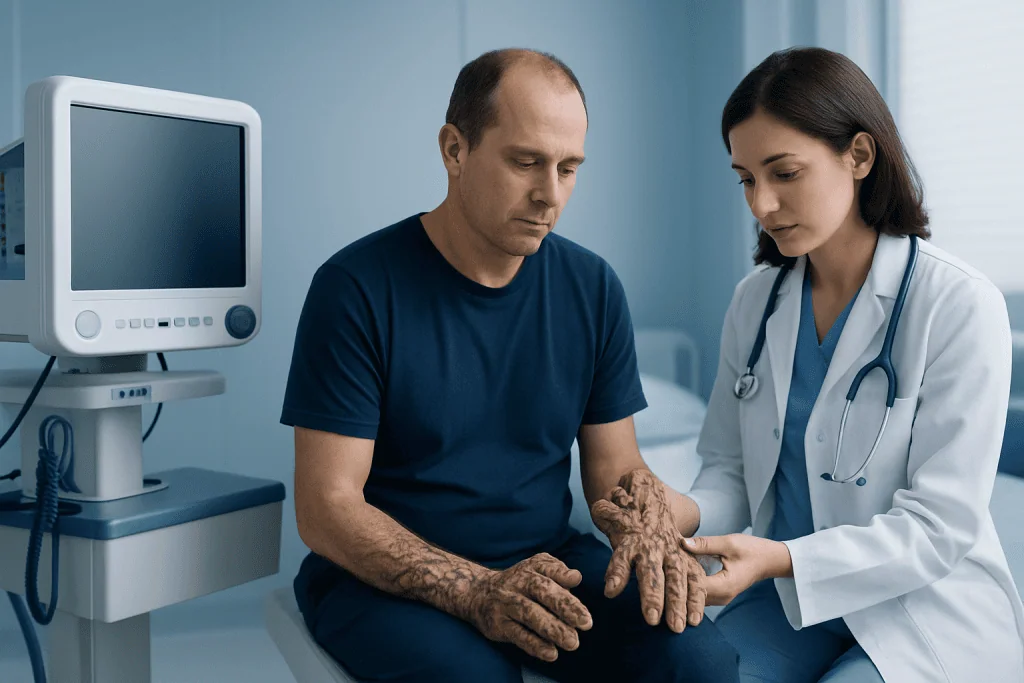
Early signs of tree man syndrome often appear in childhood, adolescence, or early adulthood. Lesions may be flat, smooth or slightly scaly spots that are pink, red-brown, pale, or darker than the surrounding skin. They may also resemble pityriasis versicolor, a common harmless condition that causes discolored, finely scaly patches.
Flat wart-like lesions commonly appear on the hands, feet, face, neck, arms, or legs. Over time, some lesions may join together or become thicker and rougher. In more advanced cases, especially on the hands and feet, growths can become large enough to interfere with movement, daily activities, footwear, or skin comfort.
Not every persistent wart or rough patch indicates EV. Eczema, psoriasis, fungal infections, ordinary warts, and several other skin conditions can cause similar-looking changes. A dermatologist can assess the pattern, location, duration, and behavior of lesions to identify the most likely cause.
If you have EV, keep a closer eye on skin that gets regular sun: face, ears, scalp, neck, forearms, and hands. A spot that changes noticeably in size, color, shape, texture, or symptoms deserves medical review.
Why It Happens: Genetics, HPV, and Risk Factors
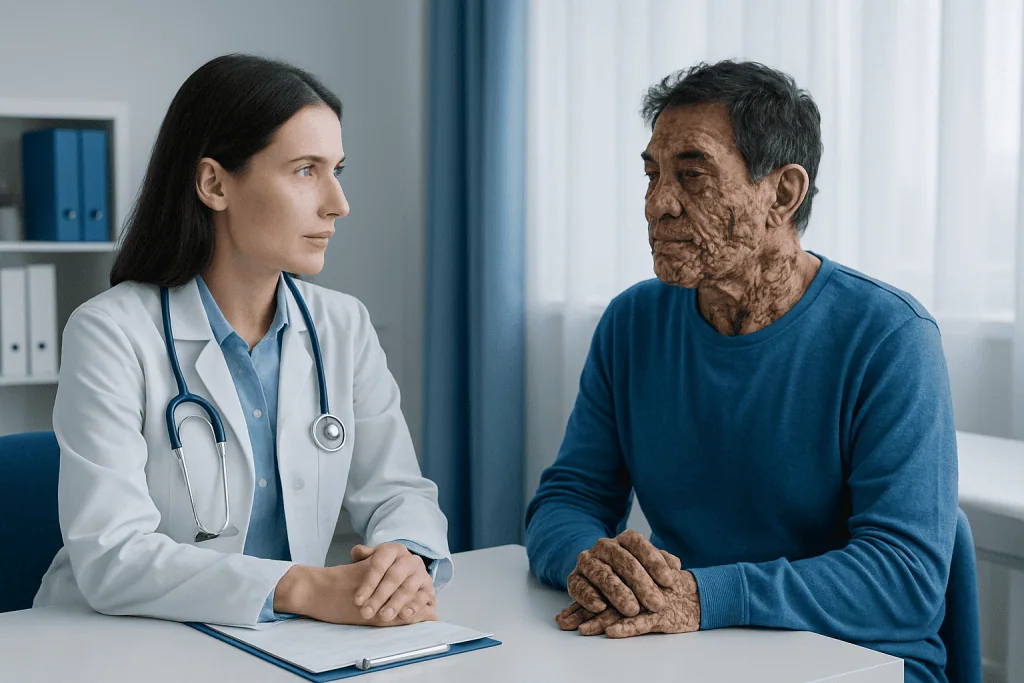
Most classic cases of epidermodysplasia verruciformis are inherited. Changes in genes involved in immune responses within the skin, including TMC6, TMC8, and sometimes CIB1, can reduce the skin’s ability to control particular HPV types. The condition is often inherited in an autosomal recessive pattern, meaning a person generally inherits a non-working gene copy from each parent.
HPV is a large family of viruses. The HPV types associated with EV are often called beta HPV types and differ from the types best known for causing genital warts or cervical cancer. HPV is common in the environment and on human skin, but most people’s immune systems control it without persistent or extensive lesions.
There is also an acquired form of EV-like disease. It may occur in people whose immune systems are weakened by certain medical conditions or immune-suppressing medicines, including some people after organ transplantation. This does not necessarily mean they have inherited classic EV, but it still requires careful dermatology assessment and monitoring.
Ultraviolet radiation from sunlight is an important additional risk factor because it can damage skin cells and weaken local immune defenses. For a person with EV, repeated sun exposure may increase the likelihood that persistent lesions develop concerning changes over time.
Why Monitoring Matters: Skin Cancer Risk and Outlook
Some people with EV have an increased risk of developing non-melanoma skin cancers, particularly squamous cell carcinoma. This risk is most closely associated with persistent HPV-related lesions on areas exposed to sunlight. It does not mean that every lesion will become cancerous, but it is the reason regular examinations are an essential part of care.
Skin cancer may develop slowly, often after years of persistent disease. Warning features can include a lesion that grows quickly, becomes firm or ulcerated, bleeds, forms a crust that does not heal, becomes painful, or changes from its usual appearance. These changes should be evaluated rather than treated only as a routine wart.
The outlook varies considerably. Some people have relatively limited lesions, while others develop more extensive skin involvement. With consistent sun protection, planned dermatology follow-up, timely treatment of suspicious lesions, and support for practical concerns such as hand function, many complications can be identified and managed early.
Visible skin disease can wear on your confidence, your social life, your work, and your mood, so psychological support may help too. Discussing these concerns with the care team can help ensure treatment addresses both physical symptoms and quality of life.
How Tree Man Syndrome Is Diagnosed
Diagnosis begins with a detailed medical and family history and a full skin examination. A dermatologist will ask when lesions began, whether they have spread or changed, whether relatives have similar skin findings, and whether there are factors that could affect immunity. They may examine the entire skin surface, not only the most visible growths.
A skin biopsy is often used to examine a small sample of a lesion under a microscope. This can help distinguish EV-related changes from other types of warts, inflammatory skin conditions, and skin cancer. If a lesion appears atypical or suspicious, biopsy is especially important.
Genetic testing may be considered when the clinical picture suggests inherited EV, particularly if symptoms began early in life or there is a relevant family history. HPV testing may sometimes be used in specialist settings, although diagnosis is usually based on the overall clinical pattern, pathology findings, and, when appropriate, genetic assessment.
People with extensive or unusual warts may also be assessed for conditions or medicines that affect immune function. There is no need to be alarmed by this. It simply helps your doctor see whether an acquired immune-related cause is contributing, and choose the right care plan.
Treatment Options and Ongoing Care
There is currently no single treatment that permanently removes the underlying susceptibility in inherited EV. Care focuses on reducing troublesome lesions, preserving function and comfort, detecting cancer early, and limiting factors that promote skin damage. Treatment is individualized according to the number, site, thickness, symptoms, and biopsy results of lesions.
For selected lesions, dermatologists may use topical therapies, freezing treatments, curettage, laser treatment, or surgical removal. Oral retinoid medicines may be considered for some people with extensive disease, under close specialist supervision. The benefit of antiviral or immune-modulating treatments can vary, and lesions may recur even after apparently successful treatment.
If testing shows a precancerous lesion or skin cancer, treatment is planned according to its type, size, depth, and location. This may include surgical excision or other dermatologic cancer treatments. Regular follow-up allows clinicians to compare lesions over time and act promptly if a concerning change develops.
Care may involve dermatology, pathology, genetics, plastic or reconstructive surgery, and other specialties when needed. Acibadem International’s multidisciplinary specialists and JCI-accredited hospitals diagnose and treat complex dermatologic conditions for international patients, with care plans guided by individual clinical findings.
Daily Skin Protection and When to Seek Medical Care
If you have tree man syndrome, daily sun protection is one of the most useful things you can do. This includes seeking shade when practical, wearing protective clothing and a broad-brimmed hat, and using a broad-spectrum sunscreen on exposed skin as advised by a clinician. Sun protection should be maintained throughout the year, not only during holidays or hot weather.
Please don’t pick, cut, or try to remove large lesions at home. This can cause bleeding, infection, scarring, and delayed diagnosis of a more serious skin change. Gentle skin care, keeping affected areas clean and dry, and using comfortable footwear or protective dressings when recommended can reduce irritation.
When to seek medical care: A person should arrange a dermatology appointment for persistent widespread wart-like lesions, especially if they began in childhood or occur with a family history of similar problems. Prompt medical assessment is important for a lesion that grows rapidly, bleeds, ulcerates, becomes painful, changes color, does not heal, or affects vision, walking, hand use, or daily functioning.
Keep your scheduled reviews even when nothing seems to be changing. A dermatologist can advise how often examinations are needed, based on the person’s skin findings, previous biopsy results, sun exposure, immune status, and treatment history.
Frequently asked questions
Is tree man syndrome contagious?
Epidermodysplasia verruciformis itself is not contagious because it is an inherited or immune-related susceptibility condition. HPV can spread through skin contact in some circumstances, but most people who encounter these viruses do not develop tree man syndrome.
Can tree man syndrome be cured?
There is no proven permanent cure for inherited epidermodysplasia verruciformis at present. However, dermatologic treatments can remove or reduce individual lesions, and regular monitoring can help manage long-term risks.
Does every person with tree man syndrome develop skin cancer?
No. The risk of certain skin cancers is increased in some people with EV, particularly in sun-exposed areas, but cancer does not develop in every person or every lesion. Sun protection and regular examinations are important ways to support early detection.
At what age does tree man syndrome begin?
Classic inherited EV often begins in childhood or adolescence, although the timing and severity differ between individuals. EV-like lesions can also appear later in life when immune function is suppressed.
Can an HPV vaccine prevent tree man syndrome?
HPV vaccination protects against several important HPV types, but it does not treat inherited EV or cover all beta HPV types associated with the condition. A doctor can explain whether HPV vaccination is appropriate based on a person’s age, medical history, and local recommendations.
What specialist treats tree man syndrome?
A dermatologist is usually the main specialist involved in diagnosis, skin examinations, biopsies, and treatment planning. Depending on the findings, care may also involve genetic specialists, surgeons, and oncology teams.
This article is for general information only and is not a substitute for professional medical advice. Please consult a qualified doctor about your individual situation.
Oncology care in Turkey — second opinion and treatment plan
7 JCI-accredited hospitals · board-certified surgeons · reply within 24h
Add us as a Preferred Source to see more of our trusted health content across Google Search, AI Overviews and Discover.

Medically reviewed by the Acıbadem International Medical Board — August 24, 2026
See our medical review board →
Update history
- PublishedAugust 19, 2026
- Medical review approvedAugust 24, 2026
- Last content updateAugust 24, 2026
References1
- HPV and Cancer — National Cancer Institute — cancer.gov
Dermatology Specialists at Acibadem





Related Treatments
Related Conditions
More from the Health Library

Why Ice Pick Scars Need More Than Skincare to Improve

Xanthoma: Diagnosis, Outlook, and Modern Treatment Approaches

Dark Nipples Are Usually Normal Pigmentation, Not Disease

A Nasal Crease Often Points to Allergy-Related Rubbing

Black Spots on Skin Usually Mean Extra Pigment, Not Disease