Can Transplanted Hair Grow Naturally After Surgery?

A hair transplant redistributes a person's own living hair follicles rather than creating new follicles. Early shedding after surgery is expected and does not usually mean the grafts have failed.
Key Takeaways
- A hair transplant redistributes a person's own living hair follicles rather than creating new follicles.
- Early shedding after surgery is expected and does not usually mean the grafts have failed.
- Noticeable new growth often begins after several months, while fuller results take longer to develop.
- Natural-looking outcomes depend on appropriate candidate selection, graft handling, hairline design, and realistic planning.
- Transplanted hair may be long-lasting, but existing non-transplanted hair can continue to thin over time.
Yes, transplanted hair can grow naturally when healthy follicles are carefully moved from a donor area to a thinning or bald area. The transplanted hairs usually shed first, then gradually regrow over several months and can continue to grow, be cut, and be styled like other hair.
Overview: Can Transplanted Hair Grow Naturally?
Yes. A hair transplant can produce hair that grows naturally because it involves moving living hair follicles from one area of the scalp to another. The follicles are usually taken from the back or sides of the head, known as the donor area, where hair is often less sensitive to the hormonal effects that contribute to common pattern hair loss.
Once transplanted follicles establish a blood supply in their new location and heal, they enter their normal hair-growth cycle. The new hair can be washed, cut, colored, and styled in much the same way as the person’s other hair. It is important to understand that natural growth is gradual: the immediate appearance after a procedure is not the final result.
A successful outcome is not only about whether grafts grow. It also involves creating a hairline and distribution of density that suit the person’s facial features, age, hair characteristics, and likely future pattern of hair loss. A qualified hair-restoration clinician can help set realistic expectations before treatment.
How a Hair Transplant Works
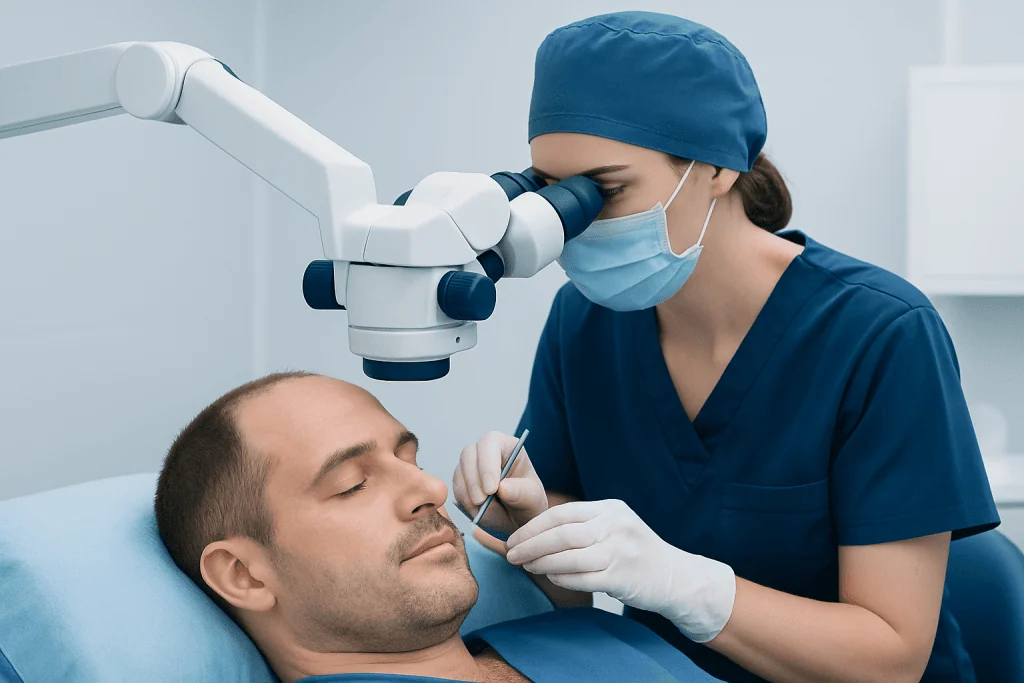
Hair transplant surgery uses grafts containing one or more follicular units. A follicular unit is a natural grouping of hairs that grows from the scalp. During the procedure, a clinician removes grafts from the donor area and places them into tiny recipient sites in areas affected by thinning or baldness.
Two commonly used approaches are follicular unit extraction (FUE), in which individual follicular units are removed, and follicular unit transplantation (FUT), in which a narrow strip of donor scalp is removed and divided into grafts. The most suitable approach depends on the person’s hair loss pattern, donor hair availability, scalp characteristics, hairstyle preferences, and medical history. FUE hair transplant is one option that may be discussed during an individual assessment.
The donor follicles retain many of their original biological characteristics after relocation. This is why hair from a stable donor area may continue growing when placed into a thinning frontal scalp or crown. However, not every person has enough stable donor hair for the degree of coverage they hope to achieve.
Hair Transplant Growth Timeline

Healing begins immediately after surgery. Small scabs and temporary redness can occur in the recipient and donor areas. These generally improve over the following days to weeks, although the exact recovery experience varies with the technique used, the extent of treatment, skin sensitivity, and adherence to aftercare instructions.
It is common for the visible shafts of transplanted hair to fall out within the first few weeks. This process is often called shock shedding and is a usual part of the transplant cycle. The follicles remain under the skin and prepare to produce new hairs. Seeing shedding can be concerning, but it is not usually a sign that the transplant has been lost.
New growth often becomes noticeable several months after surgery. At first, hairs may be fine, uneven, or slower growing than expected. Over time, they typically become thicker and blend more naturally with surrounding hair. Meaningful maturation often continues for about a year, and the crown area may take longer than the hairline to show its fullest result.
Hair grows in cycles, so transplanted hairs do not all emerge at the same time. Patience and follow-up appointments are important, particularly when a person has ongoing hair loss outside the transplanted area.
What Makes Results Look Natural?
Natural-looking hair transplantation depends on careful planning. The clinician considers the direction, angle, placement, and grouping of each graft. Hair at the front of the scalp usually grows at a different angle from hair at the temples or crown, so graft placement should follow the person’s natural pattern.
A conservative, age-appropriate hairline is often important for a believable result over the long term. Very low or overly dense hairlines may not remain appropriate if natural hair loss progresses. Single-hair grafts are commonly used at the leading edge of the hairline to create softness, while grafts with more hairs can help build density farther behind it.
Hair texture, curl pattern, color contrast between hair and scalp, and donor density also influence how full the result appears. People with curly or tightly coiled hair may need a technique adapted to their hair structure; Afro hair transplant planning can address these specific considerations. A surgical plan should also account for any scalp condition that could affect healing or hair growth.
Some people need more than one session to reach their preferred level of coverage, especially when hair loss is extensive. This is not necessarily a sign of a poor result; it may reflect the limits of donor supply and the need to protect it for future needs.
Who May Be a Good Candidate?
Hair transplantation is most often considered for people with stable or gradually progressing pattern hair loss who have adequate donor hair. It can also be appropriate in selected cases of hair loss caused by injury, burns, or certain surgical scars. The cause of hair loss should always be identified before surgery is planned.
Not all hair loss is suited to transplantation. Sudden diffuse shedding, active scalp inflammation, untreated infection, nutritional deficiencies, medication-related hair changes, and some autoimmune causes may require medical evaluation and treatment first. For example, alopecia areata can cause patchy hair loss and has a different course from pattern hair loss.
Women can be candidates, but assessment is particularly important because female-pattern thinning may be diffuse and can sometimes involve the donor area. A clinician may discuss female hair transplant options after examining scalp density, hair caliber, hormonal factors, and the pattern of loss.
A consultation commonly includes a health history, scalp examination, review of medicines and supplements, and discussion of family history. The clinician may recommend blood tests or a dermatology review when the reason for hair loss is unclear.
Treatment, Aftercare, and Protecting Existing Hair
Hair transplant surgery is usually performed under local anesthesia. Afterward, patients receive specific instructions for washing, sleeping, physical activity, and protecting the grafts during early healing. They should avoid rubbing, scratching, or picking at the treated areas, as well as any activities their clinician advises against while the scalp recovers.
Medication may be recommended for some individuals to help slow the progression of pattern hair loss in non-transplanted hairs. Options depend on the person’s sex, health history, pregnancy plans where relevant, potential side effects, and the cause of hair loss. Any treatment should be discussed with a qualified clinician rather than started independently.
Non-surgical approaches may be useful alone or alongside a transplant. These can include medical treatments, low-level light devices in appropriate cases, cosmetic camouflage, or scalp micropigmentation. Non-surgical hair restoration may be considered for people who are not ready for surgery, have early thinning, or need to preserve existing hair.
Regular follow-up helps the care team monitor healing and decide whether further treatment is appropriate. Photographs taken under consistent lighting can be more helpful than day-to-day mirror checks, because growth changes are gradual.
Risks, Limitations, and When to Seek Medical Advice
Hair transplantation is generally considered a minor surgical procedure, but it still has potential risks. These can include temporary swelling, discomfort, numbness, itching, bleeding, infection, visible scarring, inflammation around follicles, and uneven growth. Some people also experience temporary shedding of nearby existing hairs.
Results can be limited by donor hair quantity and quality, the extent of hair loss, healing response, and whether hair loss continues over time. A transplant does not stop the underlying process of pattern hair loss. For this reason, a long-term plan may include medical treatment, monitoring, or future procedures when suitable.
Patients should contact their treating team promptly if they develop increasing pain, spreading redness, warmth, drainage, fever, significant bleeding, or other symptoms that may suggest an infection or complication. They should also seek medical advice before considering a transplant if they have unexplained hair loss, scalp scaling, painful patches, or rapidly expanding bald areas.
Acibadem International’s multidisciplinary specialists and JCI-accredited hospitals assess and treat hair-loss concerns for international patients, including surgical and non-surgical options when appropriate.
Frequently asked questions
Does transplanted hair grow for life?
Transplanted follicles from a stable donor area are often long-lasting because they tend to retain their resistance to pattern hair loss after being moved. However, no outcome can be guaranteed, and the person’s existing non-transplanted hair may continue to thin. Long-term planning and, when appropriate, medical treatment can help maintain an even appearance.
Why does transplanted hair fall out after surgery?
The visible hair shafts commonly shed during the first weeks after a transplant as part of a normal temporary response to the procedure. In most cases, the follicles remain in place beneath the scalp. New hairs then gradually begin growing after a period of rest.
When will a hair transplant look natural?
Early growth may be visible after several months, but the result typically develops gradually. Many people see a more natural and fuller appearance as the hairs mature over the following months. The final timeline varies, and crown transplants can take longer to mature than frontal hairline work.
Can transplanted hair be cut and styled?
Yes. Once the scalp has healed and the transplanted hairs have grown in, they can generally be cut, washed, and styled like natural hair. The treating clinician should advise when it is safe to resume specific grooming practices, especially during the early healing period.
Will a hair transplant stop future hair loss?
No. A transplant moves follicles into thinning areas but does not stop pattern hair loss affecting other native hairs. A clinician may discuss medication or other treatments to help preserve existing hair, depending on the individual’s diagnosis and health history.
Can everyone with hair loss have a transplant?
No. A person needs a clear diagnosis, enough suitable donor hair, and a scalp condition that is appropriate for surgery. People with active inflammatory scalp disease, rapidly changing hair loss, or certain autoimmune conditions may need medical treatment and stabilization before transplantation is considered.
References
- American Academy of Dermatology Association
- International Society of Hair Restoration Surgery
- National Health Service
- Mayo Clinic
- Cleveland Clinic
This article is for general information only and is not a substitute for professional medical advice. Please consult a qualified doctor about your individual situation.
Hair transplant in Turkey — costs, graft counts & a free assessment
JCI-accredited · board-certified surgeons · reply within 24h
Add us as a Preferred Source to see more of our trusted health content across Google Search, AI Overviews and Discover.

Related Treatments
Related Conditions
More from the Health Library



Related Specialists

Prof. Dr. Sedef Şahin
Dermatology
Prof. Dr. Özlem Dicle
Dermatology
Prof. Dr. Emel Öztürk Durmaz
Dermatology
Assoc. Prof. Dr. Yasemin Koyuncu
Dermatology