Hair Transplant Turkey Before and After: A Realistic Guide

Visible improvement after a hair transplant happens in stages, often over 6 to 12 months. Good candidates usually have stable hair loss, sufficient donor hair, and realistic expectations.
Key Takeaways
- Visible improvement after a hair transplant happens in stages, often over 6 to 12 months.
- Good candidates usually have stable hair loss, sufficient donor hair, and realistic expectations.
- Technique, surgeon experience, hairline design, and aftercare all influence the final result.
- Temporary shedding after surgery is common and does not usually mean the transplant has failed.
- A medical scalp evaluation is important because some causes of hair loss are not best treated with transplantation.
Hair transplant Turkey before and after results can be meaningful and natural-looking, but they develop gradually rather than instantly. Understanding the timeline, realistic expectations, technique choices, and recovery process helps patients make informed decisions.
Overview: What “Before and After” Really Means
When people search for hair transplant Turkey before and after results, they are often looking for visual proof of change. While photographs can be helpful, they do not show the full story. A successful hair transplant is not only about density in a single image. It is also about natural hairline design, appropriate graft placement, healing, and whether the final appearance matches the person’s age, facial features, and future hair loss pattern.
“Before” includes more than baldness or thinning. It also includes the quality of the donor area, scalp health, hair texture, skin type, and the reason for hair loss. “After” is not immediate. In most cases, the scalp goes through a predictable process that includes redness, scab formation, temporary shedding, and then gradual regrowth over several months.
Turkey has become well known for hair restoration, but the same medical principles apply everywhere. The best results depend on proper assessment, careful planning, suitable technique, and realistic expectations. For many patients, options such as FUE hair transplant or DHI hair transplant may be discussed as part of a personalized treatment plan.
Who Is a Good Candidate for a Hair Transplant?

A hair transplant may be suitable for adults with pattern hair loss who have enough healthy donor hair, usually taken from the back or sides of the scalp. Men with male pattern baldness and women with selected forms of thinning may benefit when the hair loss pattern is relatively stable. The goal is to move hair follicles from a stronger donor area to an area with reduced density.
Not every type of hair loss should be treated with transplantation. Some conditions are inflammatory, scarring, or autoimmune and may need medical treatment first. For example, alopecia areata can cause patchy hair loss, but a transplant is not usually the first-line approach because the condition can be unpredictable. Scalp disorders such as seborrheic dermatitis may also need treatment before surgery to reduce irritation and support healing.
A careful consultation usually reviews medical history, medications, family history of hair loss, previous procedures, and lifestyle factors such as smoking. Doctors also examine donor density, hair caliber, scalp flexibility, and the extent of current and likely future hair loss. This helps determine whether a transplant is appropriate now, later, or not at all.
Hair Transplant Methods and Their Effect on Results
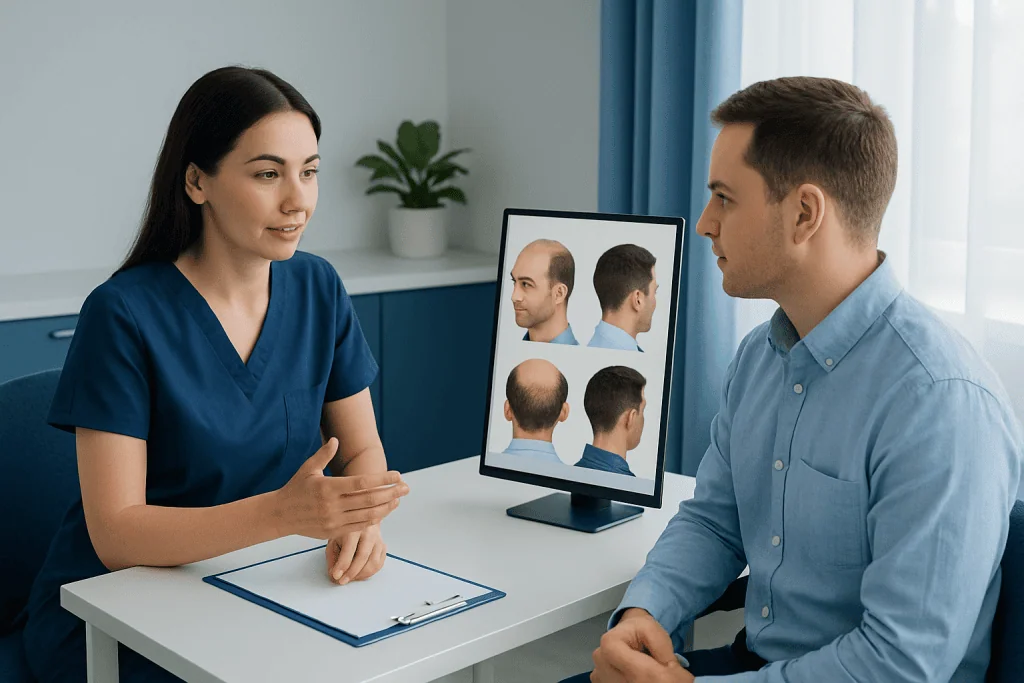
The two most discussed modern approaches are follicular unit extraction and direct hair implantation. In follicular unit extraction, individual follicular units are removed from the donor area and then implanted into tiny recipient sites. In direct hair implantation, extracted follicles are placed using a specialized implantation tool. Both approaches aim to create natural growth patterns when performed well.
The choice of technique depends on several factors, including the size of the treatment area, the desired hairline detail, donor hair characteristics, shaving preferences, and the clinic’s expertise. Some patients may also be suitable for options such as sapphire transplant or hair transplant without shaving, depending on their needs and the surgeon’s assessment.
No single method is automatically best for everyone. Final appearance is influenced not only by the technique itself but by planning and execution. Key details include preserving grafts, avoiding overharvesting in the donor area, placing hairs at natural angles, and matching single-hair grafts and multi-hair grafts to the right areas. This is why a personalized surgical plan matters more than marketing terms alone.
Before Surgery: Planning for Natural-Looking Results
A realistic before-and-after journey starts long before the procedure day. During planning, the doctor typically identifies the cause and pattern of hair loss, estimates the number of grafts needed, and designs a hairline that looks natural now and remains balanced if hair loss progresses. A hairline that is too low, too straight, or too dense in the wrong area can look unnatural over time.
Patients are usually advised about practical preparation steps. These may include reviewing medicines and supplements, avoiding smoking if possible, limiting alcohol around the procedure period, and following washing instructions. The clinic may also discuss whether current medical treatments for hair loss should be continued or adjusted.
Good planning also means discussing what the transplant cannot do. A transplant does not create unlimited density, and it does not stop future thinning in non-transplanted hair. Some patients benefit from combining surgery with medical or supportive approaches such as non-surgical hair restoration to help protect existing hair and improve overall cosmetic outcome.
After Surgery: Recovery Timeline and What to Expect
Immediately after surgery, the scalp may feel tender or tight, and small scabs usually form around the implanted grafts. Mild swelling or redness can occur for a short period. These early changes are expected and are part of the healing process. Patients are usually given instructions on sleeping position, washing, activity limits, and how to protect the grafts during the first days.
One of the most important things to understand is temporary shedding. In the weeks after the procedure, many transplanted hairs fall out before new growth begins. This is often called shock loss and is a normal phase. It can be discouraging if a person is not prepared for it, but it usually does not mean the follicles have been lost.
Noticeable new growth commonly starts after several months, often becoming clearer around months 4 to 6. Hair continues to thicken and mature over time, with many patients seeing fuller results between 9 and 12 months, and sometimes longer depending on the area treated. Crown areas may take more time than the front hairline. Patience is essential when judging before-and-after success.
What Affects Before and After Results?
Many factors shape the final appearance after a hair transplant. Hair characteristics matter: thick, wavy, or curly hair can create the impression of more fullness than fine, straight hair. Contrast between hair color and scalp color can also affect how dense the result appears. Donor hair quality is especially important because the donor area is the source of the transplanted follicles.
The surgical plan also plays a major role. Natural results depend on accurate graft distribution, a soft and age-appropriate hairline, and attention to direction and angle. Using too many grafts in one area may compromise blood supply, while taking too many from the donor area can leave visible thinning behind. A balanced approach is usually best.
Healing and long-term care influence outcomes as well. Smoking, poor aftercare, scalp picking, untreated skin conditions, and progression of underlying hair loss can affect satisfaction. In some cases, additional treatment sessions or future maintenance may be considered. People with scalp conditions such as psoriasis should discuss disease control with their doctor before planning surgery.
Risks, Limitations, and How to Choose Safely
Hair transplantation is generally considered a minor surgical procedure, but it still has risks and limitations. Possible issues include infection, bleeding, prolonged redness, uneven growth, unnatural hairline appearance, scarring, poor graft survival, or temporary numbness. Most side effects are mild and manageable, but patients should understand that no procedure can guarantee a perfect result.
It is also important to know that online before-and-after galleries may not represent average outcomes. Lighting, hair styling, wet versus dry hair, camera angles, and timing can all influence how dramatic a result looks. Asking for a clear explanation of expected graft numbers, likely density, recovery timeline, and long-term planning can help create more realistic expectations.
Choosing safely means prioritizing medical evaluation, surgeon experience, hygiene standards, and continuity of care rather than making a decision based only on price or speed. Toward the end of the care journey, some international patients choose centers such as Acibadem International, where multidisciplinary specialists in JCI-accredited hospitals diagnose and treat hair loss and related scalp concerns with individualized planning.
Long-Term Care, Maintenance, and When to Seek Medical Advice
A transplant moves hair follicles, but it does not stop the natural process of ongoing hair loss in untreated areas. For that reason, long-term planning often includes regular follow-up and discussion of maintenance strategies. Depending on the person, doctors may recommend medical treatment, supportive therapies, or observation to help preserve surrounding native hair.
Healthy scalp care also matters. Patients should follow washing guidance, avoid trauma to the scalp during healing, protect the scalp from strong sun exposure, and report unusual symptoms promptly. A healthy scalp environment supports both comfort and cosmetic outcome over time.
Medical advice should be sought if there is increasing pain, spreading redness, pus, fever, significant bleeding, or concerns that healing is not progressing normally. A person should also consult a qualified doctor before pursuing a transplant if hair loss is sudden, patchy, associated with itching or scaling, or follows illness or medication changes, because the underlying cause may need treatment first.
Frequently asked questions
How long does it take to see hair transplant before and after results?
Hair transplant results develop gradually. Many people notice early regrowth after several months, while fuller cosmetic improvement often appears between 9 and 12 months. Some areas, especially the crown, may take longer to mature.
Is shedding normal after a hair transplant?
Yes, temporary shedding is common after a hair transplant. The transplanted hairs may fall out in the first weeks before the follicles begin growing new hair. This stage is expected and usually does not mean the procedure has failed.
Will a hair transplant look completely natural?
A well-planned and well-performed transplant can look very natural. The result depends on hairline design, graft placement, hair characteristics, and the skill of the medical team. Realistic density and age-appropriate planning are important for a natural appearance.
Can anyone with hair loss have a hair transplant?
No, not everyone is an ideal candidate. A doctor needs to confirm the cause of hair loss, assess donor hair, and decide whether the condition is stable enough for surgery. Some forms of hair loss respond better to medical treatment than transplantation.
Do hair transplant results last forever?
Transplanted follicles are often long-lasting, but the surrounding non-transplanted hair can continue to thin over time. This is why some patients need maintenance treatment or future planning. Long-term results depend on both the transplant and the progression of underlying hair loss.
What should patients look for when comparing clinics?
Patients should look for proper medical evaluation, clear explanation of technique, realistic discussion of outcomes, and strong hygiene and follow-up standards. It is also helpful to ask who performs each step of the procedure and how complications are managed. Choosing based only on promotional photos or price can be misleading.
References
- American Academy of Dermatology
- British Association of Dermatologists
- International Society of Hair Restoration Surgery
- National Health Service
- Mayo Clinic
This article is for general information only and is not a substitute for professional medical advice. Please consult a qualified doctor about your individual situation.
Hair transplant in Turkey — costs, graft counts & a free assessment
JCI-accredited · board-certified surgeons · reply within 24h
Add us as a Preferred Source to see more of our trusted health content across Google Search, AI Overviews and Discover.

Related Treatments
Related Conditions
More from the Health Library



Related Specialists

Prof. Dr. Sedef Şahin
Dermatology
Prof. Dr. Özlem Dicle
Dermatology
Prof. Dr. Emel Öztürk Durmaz
Dermatology
Assoc. Prof. Dr. Yasemin Koyuncu
Dermatology