Non-Surgical Hair Restoration: Options for Early Thinning and Shedding

Early evaluation can improve the chances of slowing hair loss and preserving existing hair. Common non-surgical options include topical medicines, some oral medicines, low-level laser therapy, and treatment of scalp conditions.
Key Takeaways
- Early evaluation can improve the chances of slowing hair loss and preserving existing hair.
- Common non-surgical options include topical medicines, some oral medicines, low-level laser therapy, and treatment of scalp conditions.
- Hair shedding can have many causes, including genetics, stress, illness, hormonal changes, and nutritional deficiencies.
- Results usually take several months, and maintenance treatment is often needed.
- A dermatologist can help distinguish temporary shedding from progressive hair loss.
Non-surgical hair restoration refers to medical and supportive treatments that aim to slow hair loss, improve scalp health, and encourage stronger regrowth without an operation. It is often most helpful in the early stages of thinning or increased shedding, especially when the cause is identified promptly.
Overview
Non-surgical hair restoration includes treatments and scalp-focused care used to manage hair thinning and shedding without a transplant procedure. These options are often considered when hair loss is mild to moderate, when thinning has started recently, or when a person wants to delay or avoid surgery. The goal is usually to preserve existing hair, improve hair density where possible, and address any underlying medical cause.
Hair loss is not a single condition. It can happen because of inherited pattern hair loss, stress-related shedding, hormonal shifts, nutritional deficiencies, scalp inflammation, or autoimmune disease. Because treatment depends on the reason for the loss, an accurate diagnosis is important before starting any plan.
Many people seek help when they notice a wider part line, more hair in the shower drain, reduced ponytail thickness, or recession at the temples. At this stage, non-surgical care may be particularly useful. In some cases, doctors may combine medical treatment with options such as laser hair therapy or a broader non-surgical hair restoration program to support the scalp and hair cycle.
Symptoms and Early Signs
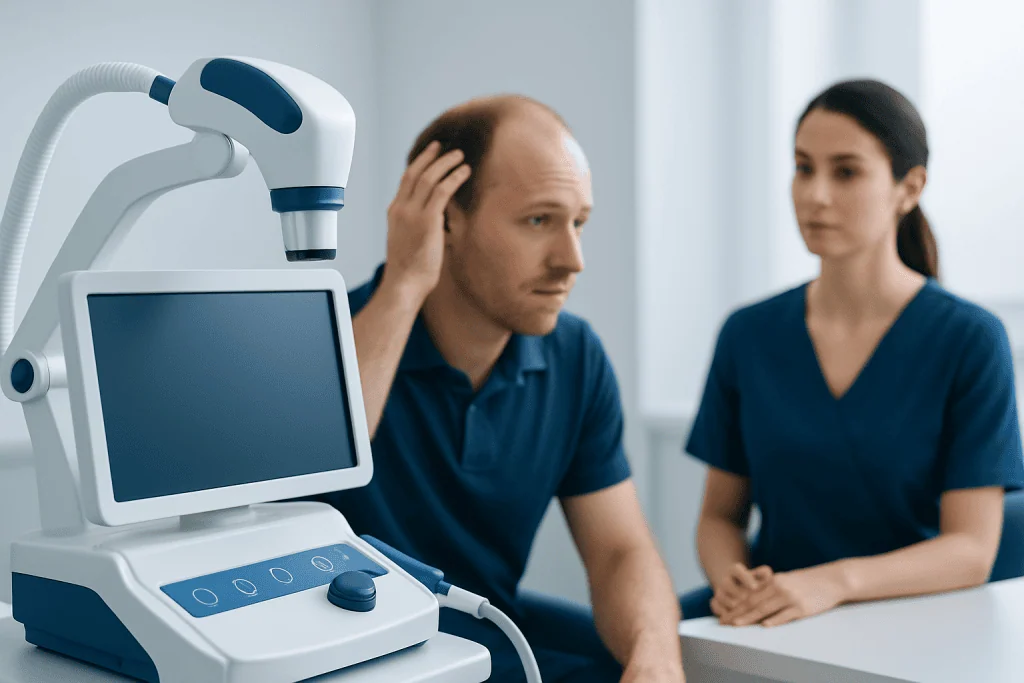
Early thinning and shedding do not always look the same. Some people notice gradual diffuse thinning across the top of the scalp, while others see a receding hairline or increased visibility of the scalp under bright light. Women may notice widening of the central part, and men may see thinning at the crown or temples.
Excess shedding usually means more hairs are falling out than usual during washing, brushing, or styling. This can happen temporarily after a physical or emotional stressor, such as illness, surgery, rapid weight loss, childbirth, or a major life event. Temporary shedding may improve once the trigger settles, but persistent shedding should still be assessed.
Symptoms that may point to a scalp problem include itching, flaking, redness, tenderness, or visible irritation. These signs can suggest inflammatory or dermatologic conditions that affect the scalp, such as seborrheic dermatitis or contact dermatitis. Patchy loss, sudden bald spots, or broken hairs can raise suspicion for other conditions, including alopecia areata.
- Gradual thinning on the top of the scalp
- Widening part line
- Receding hairline or thinning crown
- Increased shedding during washing or brushing
- Scalp itching, flaking, or redness
- Patchy areas of hair loss
Causes and Risk Factors

The most common long-term cause of early thinning is androgenetic alopecia, also called pattern hair loss. This condition is influenced by genetics and hormones and can affect both men and women. It tends to progress gradually over time, which is why early treatment is often recommended to help preserve existing follicles.
Another common cause is telogen effluvium, a temporary shift in the hair cycle that leads more hairs than usual to enter the shedding phase. Triggers may include fever, infection, childbirth, significant psychological stress, nutritional deficiency, thyroid imbalance, certain medications, or major dietary changes. Because shedding often starts weeks to months after the trigger, the connection is not always obvious.
Scalp disorders can also contribute to hair loss or make existing thinning worse. Inflammation, heavy scaling, or irritation may interfere with healthy growth. Risk factors for hair problems also include frequent tight hairstyles, harsh chemical processing, heat damage, and poor overall scalp care. In some people, iron deficiency, low protein intake, vitamin deficiencies, or hormonal conditions such as polycystic ovary syndrome may play a role.
A careful medical review matters because the same symptom, such as diffuse thinning, can have very different causes. Treating the wrong cause may delay improvement and prolong distress.
How Doctors Diagnose Hair Thinning and Shedding
Diagnosis starts with a detailed history. A doctor will usually ask when the hair loss began, whether it is gradual or sudden, whether there has been recent illness or stress, what medications or supplements are being used, and whether there is a family history of pattern hair loss. Questions about menstrual changes, pregnancy, menopause, diet, and weight changes may also be relevant.
The scalp and hair are then examined carefully. A dermatologist may look for thinning patterns, miniaturized hairs, scaling, redness, scarring, or signs of breakage. In some cases, a hair-pull test or dermoscopy of the scalp can help distinguish between shedding, pattern hair loss, and inflammatory scalp disease.
Blood tests may be recommended when an underlying trigger is suspected. These can include tests related to iron stores, thyroid function, vitamin levels, or hormone balance. Occasionally, a scalp biopsy is needed if the diagnosis is unclear or if scarring hair loss is a concern. The purpose of testing is not to overinvestigate, but to identify reversible factors and guide safe treatment.
Non-Surgical Treatment Options
Treatment depends on the diagnosis, age, sex, extent of hair loss, medical history, and personal goals. For pattern hair loss, one of the most widely used options is topical minoxidil, which can help prolong the growth phase of the hair cycle and support thicker-looking hair over time. Some patients may also be candidates for oral medicines under a doctor’s supervision, but these are not appropriate for everyone and require individualized assessment.
Low-level light therapy is another option that may be used alone or as part of a broader plan. This approach, often referred to as laser hair therapy, uses light energy to support hair follicles and may help some people with early thinning. While it is not a cure, it can be a useful addition for selected patients who are consistent with treatment.
When shedding is triggered by a temporary event, care focuses on correcting the cause and supporting regrowth. This may involve treating iron deficiency or thyroid disease, improving nutrition, adjusting medications when medically appropriate, or managing stress. For scalp inflammation, doctors may prescribe medicated shampoos, topical anti-inflammatory treatments, or antifungal therapy if needed.
Some clinics also offer supportive non-invasive approaches as part of non-surgical hair restoration. If thinning progresses despite medical care, a doctor may later discuss procedural options such as FUE hair transplant for carefully selected candidates, but this is generally considered after stabilizing the underlying loss.
What to Expect From Results
Hair grows slowly, so improvement takes time. Most non-surgical treatments need several months before meaningful changes can be judged. In the early weeks, some people become discouraged because the scalp does not look different yet. This is normal, and patience is important.
Doctors usually measure progress by looking at reduced shedding, stabilization of the hairline or part line, better scalp health, and gradual increases in hair density or shaft thickness. Photographs taken in similar lighting and hairstyle can be more useful than day-to-day mirror checks. The main aim is often to slow or stop progression, not to restore the exact hair volume of earlier years.
Maintenance is an important part of care. If a treatment works for pattern hair loss, stopping it may allow thinning to resume. Temporary shedding conditions, on the other hand, may improve more fully once the trigger is resolved. A follow-up plan helps determine whether treatment should be continued, adjusted, or combined with other measures.
Prevention and Self-Care
Not all hair loss can be prevented, especially when genetics are involved, but healthy hair practices can reduce avoidable damage and support treatment. Gentle handling matters. This includes avoiding tight hairstyles, limiting harsh bleaching or repeated chemical treatments, and reducing excessive heat from styling tools.
Scalp care is also important. People with dandruff, itching, or redness should not ignore these symptoms, as untreated scalp inflammation can worsen discomfort and may contribute to shedding. A dermatologist can advise on shampoos and treatments suited to the scalp type and diagnosis.
General health supports hair health as well. A balanced diet with enough protein, iron, zinc, and vitamins is important, and crash dieting should be avoided. Stress management, regular sleep, and treatment of medical conditions such as thyroid disease can all be helpful. Supplements should not be started routinely without guidance, since unnecessary products may not help and can sometimes cause problems.
- Use gentle washing and detangling methods
- Avoid very tight hairstyles and repeated traction
- Limit heat and harsh chemical processing
- Address dandruff, itching, or scalp irritation early
- Maintain a balanced diet and avoid rapid weight loss plans
- Follow treatment consistently and attend follow-up visits
When to See a Doctor
A medical review is recommended if hair shedding lasts more than a few weeks, if thinning is becoming more noticeable, or if the scalp shows redness, pain, scaling, or patches of hair loss. Sudden shedding after illness or stress may still merit evaluation, especially if it is severe or persistent. Early assessment can identify reversible causes and help protect existing hair.
Prompt care is especially important when hair loss is patchy, when eyebrows or eyelashes are involved, or when there are signs of scarring such as burning, tenderness, or shiny areas of scalp. These patterns may need specialist treatment to reduce the risk of permanent loss. Children and teenagers with hair loss should also be assessed by a qualified clinician.
People should seek professional advice before using prescription hair-loss medicines, combining multiple products, or relying on heavily marketed remedies with unclear evidence. Near the end of the care pathway, if medical management has stabilized the condition but cosmetic density remains a concern, specialists may discuss whether procedural options are appropriate. Acibadem International’s multidisciplinary specialists in JCI-accredited hospitals diagnose and treat hair loss causes for international patients with individualized care plans.
Frequently asked questions
Can non-surgical hair restoration really work?
It can help many people, especially when thinning is mild or has started recently. The best results are usually seen when the cause is identified early and treatment is used consistently. The goal is often to slow loss, reduce shedding, and improve density rather than create instant regrowth.
How long does it take to see results?
Most treatments need several months before changes can be judged properly. Hair grows slowly, so patience is important. A doctor may recommend follow-up visits and standardized photos to assess progress over time.
Is early hair shedding always permanent?
No. Some forms of shedding, such as telogen effluvium, are often temporary and may improve once the trigger is addressed. However, ongoing shedding or gradual thinning can also reflect pattern hair loss, which tends to be progressive without treatment.
Who should see a dermatologist for hair loss?
Anyone with persistent shedding, visible thinning, patchy bald spots, or scalp symptoms such as redness, itching, or scaling should consider medical evaluation. A dermatologist can help determine whether the problem is temporary, inflammatory, autoimmune, or genetic.
Are vitamins enough to stop hair thinning?
Not usually, unless a true nutritional deficiency is present. Taking supplements without a clear reason may not help and can sometimes be harmful. A doctor may recommend tests if iron deficiency, low protein intake, or another deficiency is suspected.
Can low-level laser therapy be used with other treatments?
Yes, it is often used as part of a combined plan rather than as the only treatment. Depending on the diagnosis, a doctor may pair it with topical medication, scalp treatment, or lifestyle measures. Suitability depends on the pattern and cause of the hair loss.
References
- American Academy of Dermatology
- British Association of Dermatologists
- National Institute of Arthritis and Musculoskeletal and Skin Diseases
- Mayo Clinic
- American Hair Research Society
This article is for general information only and is not a substitute for professional medical advice. Please consult a qualified doctor about your individual situation.
Hair transplant in Turkey — costs, graft counts & a free assessment
JCI-accredited · board-certified surgeons · reply within 24h
Add us as a Preferred Source to see more of our trusted health content across Google Search, AI Overviews and Discover.
Check your numbers in seconds
BMI, calories, due date, blood pressure and 30+ more clinical calculators — free, instant, doctor-reviewed ranges.

Related Treatments
Related Conditions
More from the Health Library



Related Specialists
Prof. Dr. Sedef Şahin
Dermatology
Prof. Dr. Özlem Dicle
Dermatology
Prof. Dr. Emel Öztürk Durmaz
Dermatology
Assoc. Prof. Dr. Yasemin Koyuncu
Dermatology